6 min read

Manasseh Bent Under Iron Bands and Prayed

The worst king of Judah, bent in iron and drowning in idols, bent the knee of his heart until mercy answered captivity.

Curated by Arthur · Told by Maggid ·
Table of Contents
  1. Iron on a Neck That Once Wore a Crown
  2. A Prayer That Named the Sea and the Depths
  3. The Knee of the Heart
  4. God Turns Toward the Destitute Voice
  5. Return Without Erasure
Manasseh Bent Under Iron Bands and Prayed Click for full size

Iron on a Neck That Once Wore a Crown

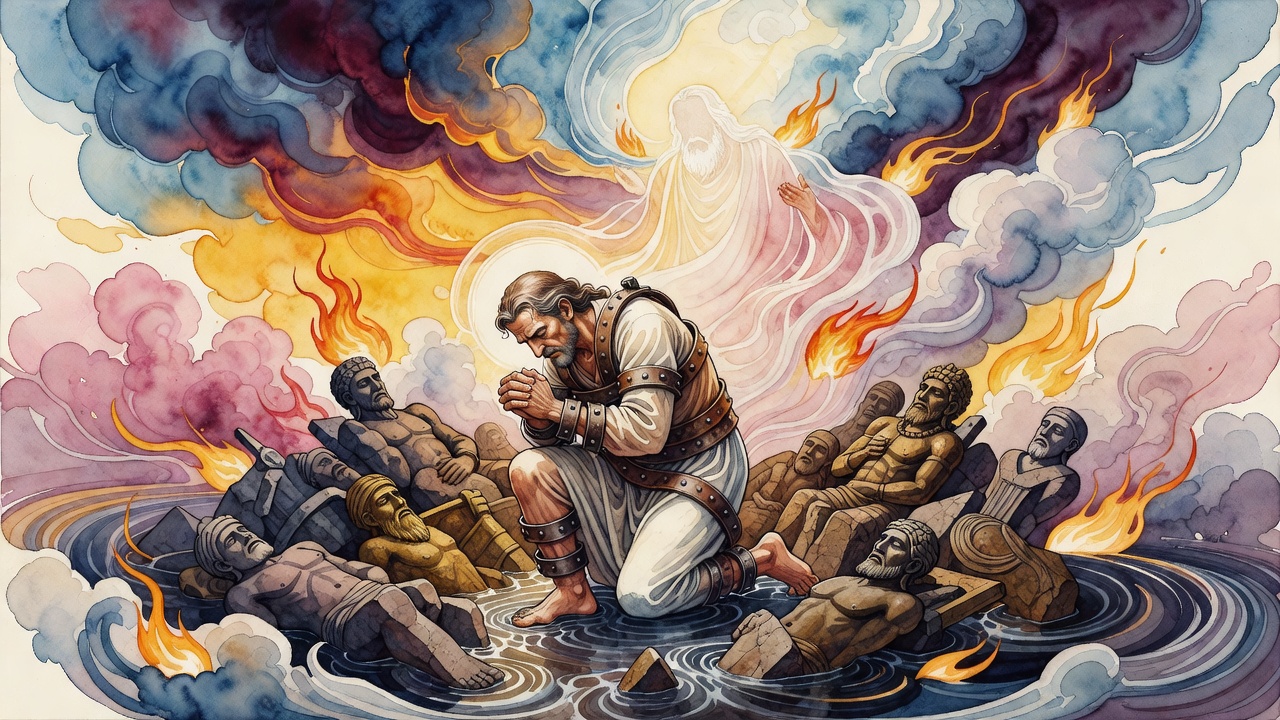
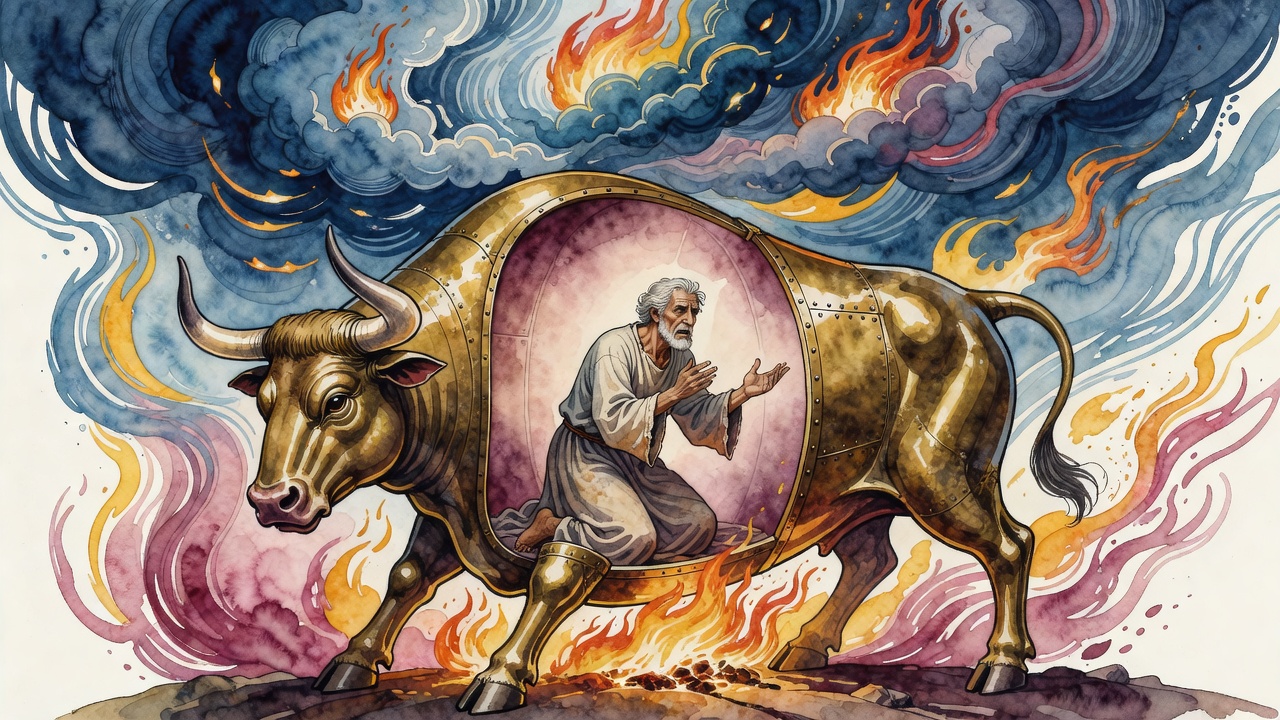
Manasseh could not lift his head. Iron bands held him bent, a king of Judah reduced to a shape of shame (2 Chronicles 33:11). The idols he had planted still stood in memory like teeth in a jaw. Innocent blood he had shed still stained the palace floors of recollection. Learning had not saved him. The tradition says he knew fifty-two readings of Leviticus and still ran after the age's pull toward foreign worship.

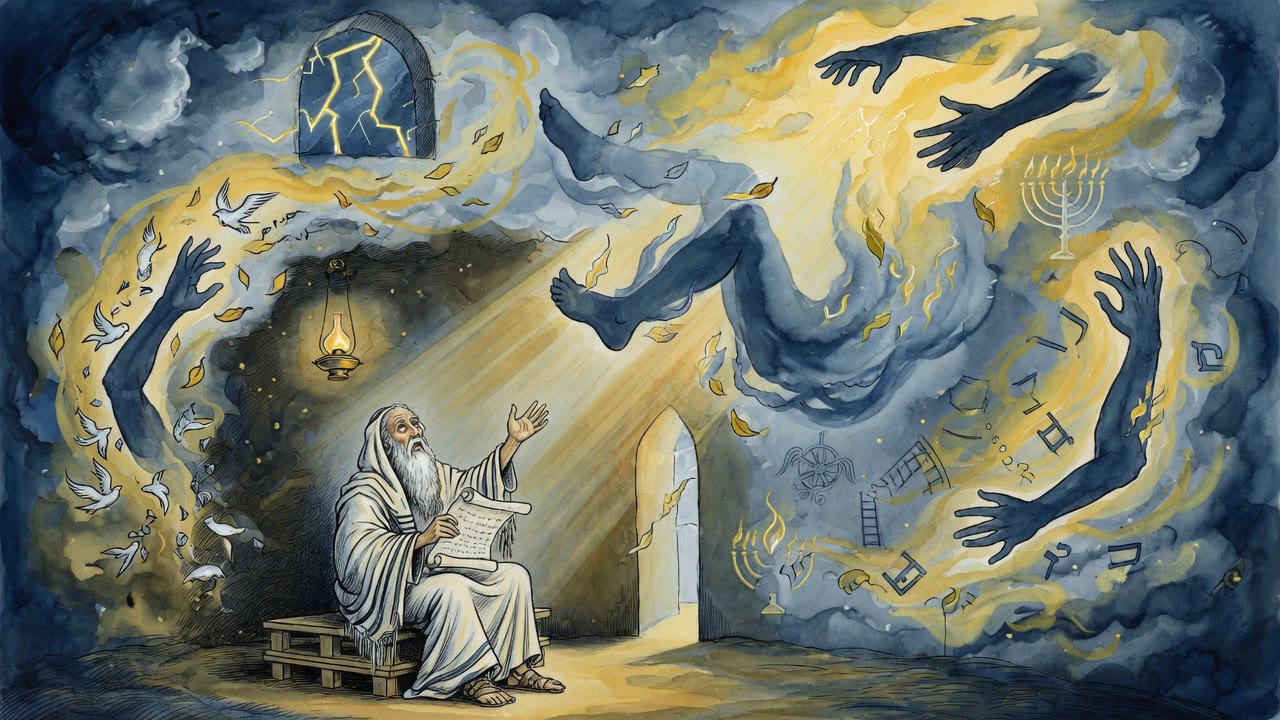
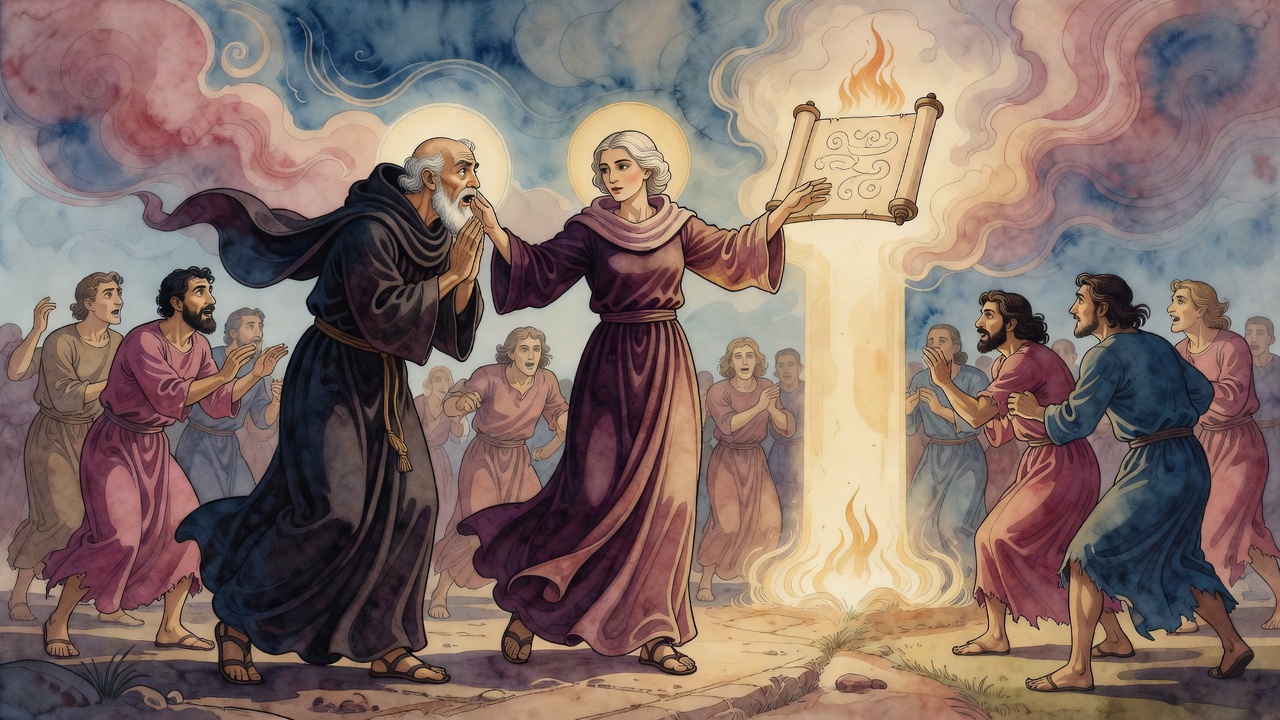
In a later dream told of Rav Ashi, the compiler of the Talmud, Manasseh appeared and solved a ritual question the rabbi could not answer. Ashi asked why such scholarship had served idols. Manasseh answered with a blade. Had you lived in my time, you would have seized the hem of my garment and run after me. The force of the generation was that strong. Knowledge alone was not a wall.

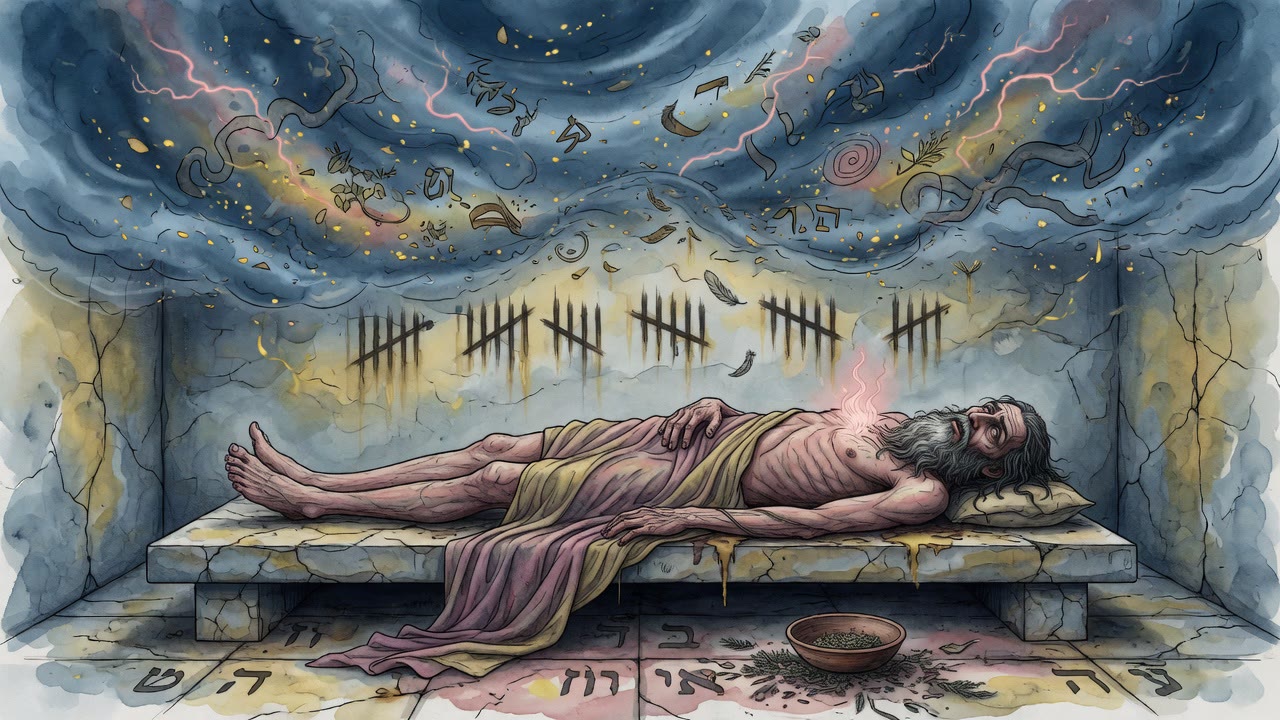
Now the wall was iron, and the only door left was speech. Guards laughed somewhere beyond the dark. He did not have breath enough to answer them. He had breath enough for God.

A Prayer That Named the Sea and the Depths

He began with scale. Adonai who made heavens and earth and their multitudes. Who limited the sea with a word and sealed the depths in an awesome name. No one can stand before that glory or bear furious anger against the wicked. Then the turn. Without measure is the mercy You have bestowed. Slow to anger, abounding in mercy, placing a path of repentance for the wicked so they may be saved.

Manasseh did not claim innocence. He claimed the path. He named Abraham, Isaac, and Jacob as righteous seed who did not need the same pardon, then placed himself opposite them. For me, a sinner, You have granted forgiveness, for I have sinned. My iniquities are beyond number. I should not raise my eyes. You afflicted me rightly and repaid me with captivity for the work of my hands.

The iron pressed. The prayer pressed harder. Salt from his eyes met the metal and made a thin sting. He welcomed the sting. It proved he was still a body capable of return.

The Knee of the Heart

And now I bend the knee of my heart, for I desire Your goodness. I have sinned, Adonai, I have sinned, and of my transgressions I am well aware. Forgive. Do not let me die in sin. Do not keep iniquities forever. Do not cast me into the depths of the earth. You are God of the repentant. Show goodness even to me, though I am not worthy to see it.

The body could not kneel freely. The heart still could. That distinction is the whole drama. A spine locked in metal. A will unlocked by terror and want. He had multiplied abominations. He had set up disgusting idols. He had moved against the divine spirit until the only honest posture left was confession without bargain.

Around him, the machinery of empire that had chained him did not care about Leviticus readings. Heaven did. The prayer aimed higher than the jailer's key. He repeated his own name of sin until the word stopped sounding like someone else's indictment.

God Turns Toward the Destitute Voice

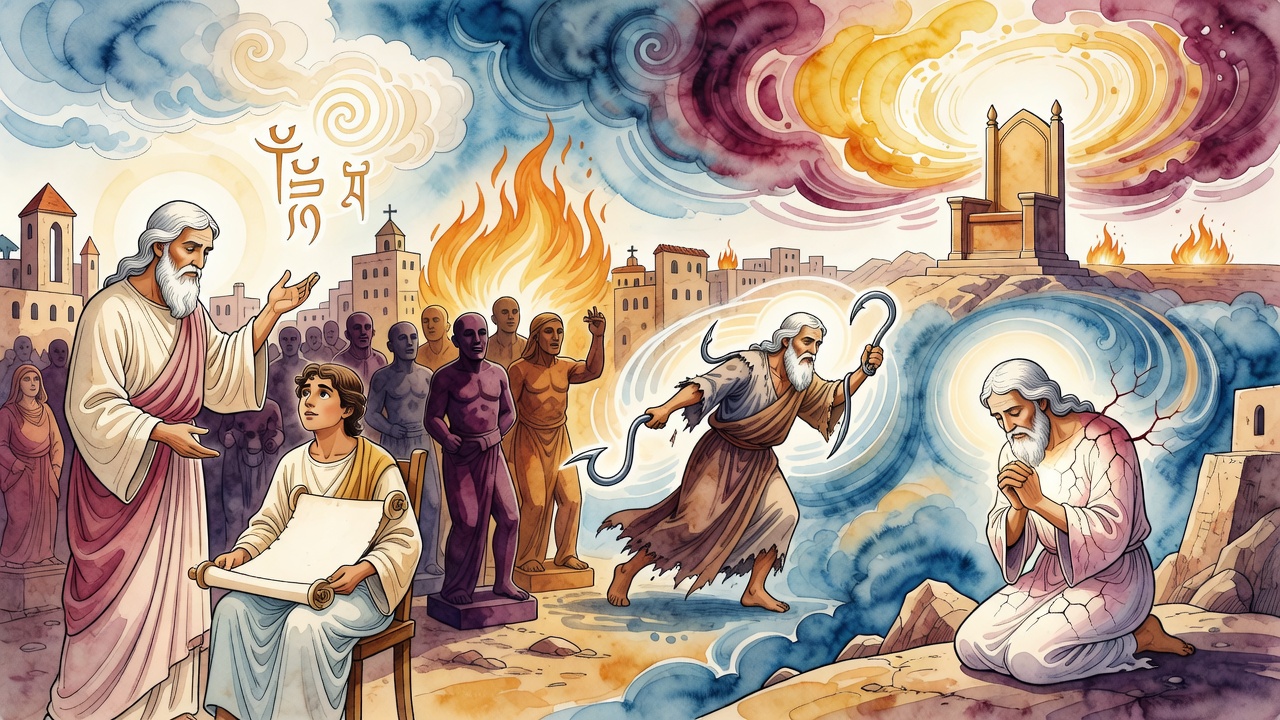
The sages later heard in David's psalm a key that fits this king. Sometimes David calls himself king when he foresees righteous descendants. Sometimes he calls himself poor when he foresees wicked ones, including Manasseh. Scripture says God turns toward the prayer of the destitute and does not despise their prayer (Psalms 102:17). The midrash names Manasseh as that solitary destitute voice, and the prayer of his fathers joined to his own.

Chronicles says God was entreated of him and heard his supplication and brought him again to Jerusalem into his kingdom, and Manasseh knew that the Lord He was God (2 Chronicles 33:13). One sage hears the verb of entreaty as a digging, a boring through. Mercy does not always open a polite door. Sometimes it tunnels.

In that hour Manasseh learned there is judgment and there is a Judge. The lesson did not erase the blood already spilled. It stopped the future from being only more of the same. When the first order came to loosen the bands, his shoulders shook as if the iron had taught the muscles a new language.

Return Without Erasure

He would praise all the days of his life, for the host of heaven praises, and honor belongs to Adonai forever. That vow is not a cleaned biography. It is a survivor's breath. The man who knew fifty-two readings had needed captivity to become a student of mercy. The iron had taught what the lecture hall could not.

When the bands finally yielded and the road to Jerusalem opened, the idols in the mind did not vanish by magic. A king who returns still walks streets that remember his decrees. The difference is the direction of the face. Eyes that would not lift now look toward the Name that sealed the sea and still left a path for the wicked who turn.

Somewhere a later scholar might still call him colleague in learning and flinch at the dream answer. Somewhere a prisoner without a crown might steal the same prayer and find the knee of the heart still bends when the body cannot. Manasseh's myth is not that sin was small. It is that mercy refused to be smaller. The city that received him back did not forget. Neither did he. Praise became the daily work of a man who had once thought himself beyond needing it.


← All myths

From the tradition

Sources

5 sources

The texts behind this telling. Some cards carry a translation of the source; others are our own retelling of it, and each card says which. Every card links out to the original.

Prayer of Manasseh 1:7Prayer of Manasseh

Retold in our words. Read the original at the link below.Sefaria Community Translation · CC-BY

Deeply. And it offers a lifeline. It's a lifeline we find in unexpected places – like the apocryphal Prayer of Manasseh.

This short, powerful prayer, traditionally attributed to King Manasseh, one of the most notorious kings of Judah, speaks directly to that feeling of being beyond redemption. Manasseh, the Bible tells us in 2 Kings, led his people astray, embracing idolatry and even shedding innocent blood. He was, to put it mildly, a spiritual disaster.

So, what do you say when you’re that guy?

The prayer begins with a sweeping declaration of God's power. "Who made the heavens and the earth and their multitudes." Think of the sheer scale of creation! And then, "Who limited the sea with Your word, and closed and sealed the depths, in Your awesome and glorious name." It's a vision of a God in complete control, whose very word shapes reality.

But it's not just about power, is it?

The prayer continues, acknowledging that "one cannot stand before Your majestic glory, or bear Your furious anger against the wicked." It's a stark recognition of the consequences of wrongdoing. The weight of sin, the chasm it creates between us and the Divine.

Yet, and this is the crucial turning point, "without measure or bound is the mercy You have bestowed." Despite the immensity of God's power, despite the consequences of our actions, God's mercy knows no limits.

Adonai Most High, the prayer proclaims, "slow to anger and abounding in mercy, and forgiving the evils of men." This isn't just a statement; it's a plea. A desperate grasping for hope. The text continues, "You, Adonai, in Your great goodness, have bestowed forgiveness to sinners dwelling in transgressions.": forgiveness even for those dwelling in sin.

And the most incredible part? "In Your great compassion have placed a path of repentance for the wicked so that they may be saved." Teshuvah (repentance) – repentance – isn't just about saying sorry. It's about changing direction. It’s about turning back towards God. The prayer suggests that God, in His infinite compassion, has paved that path for us. He's made it possible to return, no matter how far we've strayed.

The Prayer of Manasseh is evidence of the enduring power of hope, even in the face of seemingly insurmountable odds. It's a message that resonates across the ages, offering solace and a glimmer of light to anyone who feels lost in the darkness.

What does it mean to you that even someone like Manasseh could, according to this prayer, find redemption? And what does that say about the possibilities for us all?

Full source
Prayer of Manasseh 1:10Prayer of Manasseh

Retold in our words. Read the original at the link below.Sefaria Community Translation · CC-BY

The Prayer of Manasseh, though considered apocryphal by some, gives voice to that very human feeling. It's a raw, honest cry from the heart of someone who knows they've messed up – big time.

The prayer doesn’t pull any punches. It starts with acknowledging God's righteousness, pointing out that Abraham, Isaac, and Jacob – the patriarchs themselves – didn't need forgiveness in the same way Manasseh does. Why? Because they hadn't sinned in the same way. "You, Adonai, God of the righteous, did not grant forgiveness to the righteous Abraham, to Isaac, and to Jacob, as they had not sinned to you; but for me, I, a sinner, You have granted forgiveness, for I have sinned."

He admits, plain and simple, "I am a sinner."

The weight of his sins is almost unbearable. He feels like he can’t even look up to the heavens because his transgressions are just too great. "My iniquities are beyond number, and I should not see, or raise my eyes, or look towards on high, from the greatness of my transgressions." Imagine carrying that around with you. The feeling that you don't even deserve to look up.

And he accepts the consequences. He acknowledges that his suffering – his captivity – is a direct result of his actions. "And now, Adonai, rightfully have You afflicted me, and have repaid me according to my hands’ work with captivity." There's no blaming others, no making excuses. Just a stark recognition of cause and effect.

The image he paints is vivid: "I am bent down with iron bands, I cannot even raise my head from my soul’s sins." He's not just physically weighed down, but spiritually crushed. The "iron bands" are not just literal chains, but the chains of his own guilt and regret.

What did he do that was so terrible? He says, "I moved Your spirit and was evil in your eyes – I did not do Your will and did not guard Your commandments, and I set up disgusting idols and I increased abominations." It wasn't just a matter of breaking a few rules. It was a wholesale rejection of God’s will, a turning to idolatry and "abominations."

It’s a powerful and uncomfortable prayer. It forces us to confront our own failings, our own moments when we’ve fallen short. But within that discomfort, there’s also a glimmer of hope. The very act of praying, of acknowledging his sin and turning to God, suggests a path towards redemption. Even in the depths of despair, there's a recognition that forgiveness is possible.

The Prayer of Manasseh reminds us that we all make mistakes. We all stumble. But it’s what we do after we fall that truly matters. Do we stay down, crushed by our guilt? Or do we find the strength to look up, to acknowledge our failings, and to ask for forgiveness? The prayer leaves us pondering: what does true repentance really look like, and how do we begin the journey back to what is.

Full source
Prayer of Manasseh 1:14Prayer of Manasseh

Retold in our words. Read the original at the link below.Sefaria Community Translation · CC-BY

That feeling of being utterly unworthy. it's a human experience that echoes through centuries, and finds a powerful voice in a short, potent prayer attributed to a very unlikely source: Manasseh, King of Judah.

Manasseh wasn't exactly known for being a righteous ruler. The Bible paints him as one of the worst kings Judah ever had. He rebuilt pagan altars, embraced idolatry, and even sacrificed his own son! 2 Kings 21 tells us the gruesome details. He led the people astray on a massive scale. So, what's his prayer doing in the Apocrypha – those texts considered canonical by some, but not included in the standard Hebrew Bible? That's part of what makes it so compelling.

This prayer, simply titled "Prayer of Manasseh," offers a glimpse into a repentant heart. It's raw, vulnerable, and surprisingly moving. The prayer isn't found in the Hebrew Bible, appearing instead in the Greek Septuagint, a translation of the Hebrew scriptures, and later in the Latin Vulgate. to the heart of it. It begins with a profound act of humility: "And now I bend the knee of my heart, for I desire Your goodness." It's not just a physical gesture, but a complete surrender, a bending of the very core of his being toward the divine. He doesn’t say “I bend my knee," but "the knee of my heart". He's not just going through the motions; he’s opening himself to the possibility of grace.

Then comes the stark confession: "I have sinned, Adonai, I have sinned, and of my transgressions I am well aware." Adonai, meaning "Lord," is a name we use to reverently address God. There's no sugarcoating here, no excuses. Just a direct acknowledgement of wrongdoing. "And of my transgressions I am well aware" is key. Manasseh isn't just saying he messed up; he understands the weight and scope of his sins.

And it continues, a desperate plea rising from the depths of despair: "And thus I will plead unto you, Adonai, forgive – please! – forgive me, and do not let me die in sin, and do not forever guard and keep iniquities, and do not cast me away from You and place me in the depths of the earth, for You are Adonai, God of the repentant are You!"

Did you catch that? The repetition, the urgency? It's the sound of a soul clinging to hope. He's begging not to be defined by his mistakes, not to be eternally condemned. He acknowledges God's attribute as the God of the repentant. This is a crucial point. Manasseh isn't just asking for forgiveness; he's appealing to God's very nature, to the divine capacity for compassion and redemption.

The prayer concludes with a humble request: "Show me – please! – Your goodness even to me and save me in Your great compassion, though I am not worthy to see it." The honesty is striking. He knows he doesn't deserve it. He admits his unworthiness. Yet, he still dares to ask for a glimpse of God's goodness, a touch of salvation.

The story of Manasseh, both his wicked reign and his supposed repentance, raises so many questions. Can someone truly be forgiven for such egregious sins? Is redemption possible, even for those who seem beyond hope? The Prayer of Manasseh doesn't offer easy answers, but it does offer a powerful reminder: that even in the darkest of times, the possibility of turning towards the light remains. It’s evidence of the enduring human need for forgiveness, and the belief, however fragile, that such forgiveness might be possible.

Full source
Pesikta DeRav Kahana 27:3Pesikta de-Rav Kahana

Translation of the source text.Pesikta de Rav Kahana according to an Oxford manuscript, Dov Mandelbaum ed., N.Y. 1987 · CC-BY

"He has turned to the prayer of the destitute" (Psalms 102:18). Rabbi Reuben said, we cannot make sense of David's manner: sometimes he calls himself a king and sometimes he calls himself poor. How so? When he gazes and sees that the righteous are destined to arise from him, such as Asa, Jehoshaphat, Hezekiah, Josiah, he calls himself a king, "O God, give Your judgments to the king and Your righteousness to the king's son" (Psalms 72:1). And when he gazes and sees that the wicked are destined to arise from him, such as Ahaz, Amon, Manasseh, he calls himself poor, "A prayer of the poor when he is faint" (Psalms 102:1).

Rabbi Alexandri interpreted the verse concerning a laborer: just as this laborer sits and watches all day for when his employer will set him a little aside and gather it for him at the end. What is "the feebler" (Genesis 30:42)? Rabbi Isaac bar Hakila said, the latecomers. Resh Lakish said, this verse has no end that fits its beginning nor beginning that fits its end. "He has turned to the prayer of the destitute" (Psalms 102:18) should have said, He did not despise his prayer; "He did not despise their prayer" (Psalms 102:18) should have said, He turned to the prayer of the destitute ones. Rather, "He has turned to the prayer of the destitute," this is Manasseh king of Judah; "and He did not despise their prayer," this is his prayer and the prayer of his fathers. This is what is written, "And He was entreated by him" (2 Chronicles 33:13), but it is written "and He dug through for him." Rabbi Lazar bar Simeon said, in Arabia they call digging "entreating." "And He brought him back to Jerusalem" (2 Chronicles 33:13), by what did He bring him back? Rabbi Samuel bar Jonah in the name of Rabbi Aha said, by a wind He brought him back, as you say, "who makes the wind to blow." "And Manasseh knew that the LORD is God" (2 Chronicles 33:13), at that moment Manasseh said, there is judgment and there is a Judge.

Rabbi Isaac interpreted the verse concerning these generations that have neither king nor prophet nor Urim nor Thummim, but only this prayer alone. David said before the Holy One, blessed be He, Master of the worlds, do not despise it. "Let this be written for the last generation" (Psalms 102:19), from here that the Holy One receives the penitent. "And a people yet to be created shall praise the LORD" (Psalms 102:19), for the Holy One, blessed be He, created them a new creation. Another interpretation: "Let this be written for the last generation," this is the generation of Hezekiah, whom God made a new creation. Another interpretation: this is the generation of Mordecai and Esther, who were doomed to death; and "a people yet to be created shall praise the LORD," for the Holy One created them a new creation. Another interpretation: these are the generations doomed to death, and "a people yet to be created shall praise the LORD," for the Holy One, blessed be He, is destined to create them a new creation. And what is upon us to take? The lulav and etrog, to praise the Holy One, blessed be He. Therefore Moses warns Israel and says to them, "And you shall take for yourselves" (Leviticus 23:40).

Full source
Legends of the Jews 9:47Legends of the Jews

Retold in our words. Read the original at the link below.The Legends of the Jews by Louis Ginzberg (1909) · Public Domain

Manasseh wasn't just any king. Leviticus! But here's the kicker: despite all that knowledge, he fell headfirst into idolatry.

How does that even happen?

The Talmud, in Sanhedrin 103a, paints a pretty stark picture of his reign, describing him as one of the kings who forfeited their place in the world to come because of their wickedness. But the story doesn't end there. There’s a fascinating little tale involving Rab Ashi, the brilliant mind behind the Babylonian Talmud.

Rab Ashi, planning a lecture on Manasseh, casually announced, "Tomorrow I shall speak about our colleague Manasseh." Can you imagine the audacity? Treating a king, and a controversial one at that, like a peer!

But that night, something extraordinary happened. Manasseh appeared to Rab Ashi in a dream. He posed a ritual question, a real stumper, and Ashi was stumped! Manasseh, the very king who'd succumbed to idol worship, then provided the answer. Ashi, awestruck by the king's immense scholarship, couldn't help but ask the obvious: "Why, if you were so learned, did you serve idols?"

Manasseh's reply is what really sticks with you. He said, "Hadst thou lived at my time, thou wouldst have caught hold of the hem of my garment and run after me."

Wow. for a second. Manasseh wasn't excusing his actions. He was suggesting that the pull of idolatry was so incredibly strong, so deeply ingrained in the culture of the time, that even someone as righteous and learned as Rab Ashi would have been swept away by it. According to this perspective, it was a sign of the times, the zeitgeist, an environment so powerful that it could overwhelm even the most brilliant minds.

Is it an excuse? Perhaps. But it's also a sobering reminder of the power of influence, the strength of societal pressures, and the constant struggle we all face to stay true to our values in a world that often pulls us in other directions. What would we do? What will we do?

Full source