5 min read

Beruria Turns Meir's Death Prayer into Mercy

Hooligans bait Rabbi Meir until he prays for their deaths. Beruria stops his mouth mid-curse, flips one word in a psalm, and forces mercy to finish the verse.

Curated by Arthur · Told by Maggid ·
Table of Contents
  1. The Prayer That Wanted Blood
  2. Read to the End of the Line
  3. Why a Sage May Not Sit Quiet
  4. Mercy as Harder Work
  5. A House That Would Not Curse
Beruria Turns Meir's Death Prayer into Mercy Click for full size

The Prayer That Wanted Blood

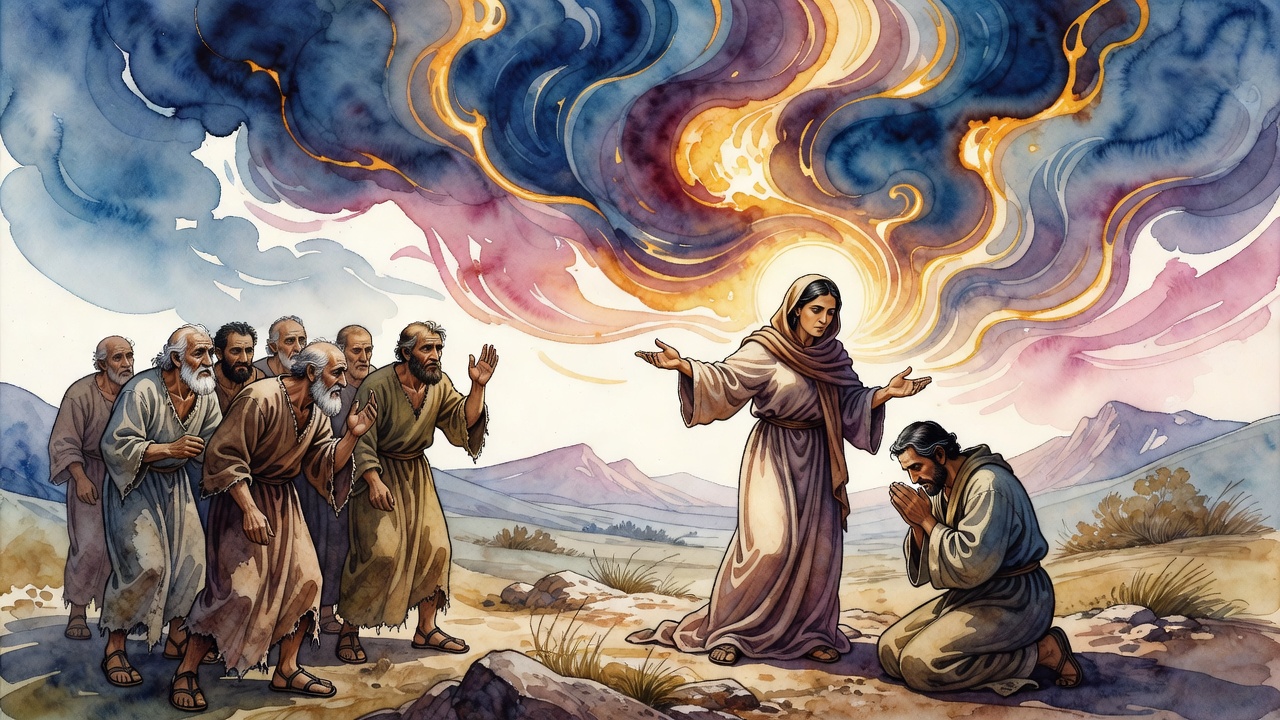
Rabbi Meir stood in his courtyard with his fists closed and his mouth already shaping a curse. The hooligans of the street had not merely mocked him. They had made study a siege. Night after night their noise cut the page. Day after day their hands found his door. He was done with patience. He lifted his face and asked Heaven for a clean ending. Let them die. Let the street go quiet over their bodies.

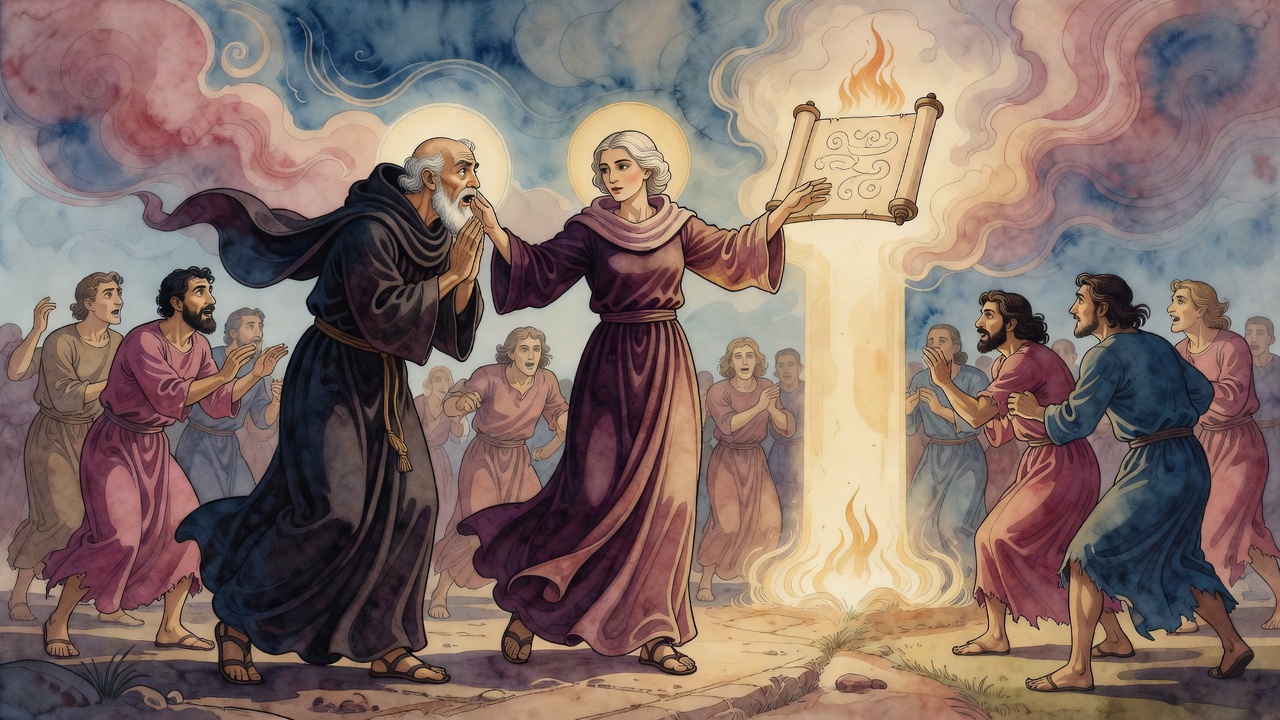
Beruria heard the shape of the prayer before the last word fell. She stepped between her husband and the open air as if she could block the petition with her own body. "What is in your mind?" she said. "Because it is written, Let sins cease from the land? Does the verse say sinners? It says sins." One letter, one turn of the tongue, and the whole death-wish cracked.

She pressed the end of the verse against him like a hand on a blade. "And the wicked will be no more. If they are dead, how can the wicked be no more? They can only stop being wicked if they live long enough to turn." Meir's prayer stalled in his throat. The hooligans still shouted somewhere beyond the wall. He did not answer them with a corpse. He answered them with a revised plea. Have mercy. Let them repent. And the street, the tradition says, changed its men.

Read to the End of the Line

Beruria's method was always the same. She did not invent soft feelings and call them Torah. She finished the verse. A heretic once sneered at the barren woman who sings in Isaiah, as if joy without children were a joke. Beruria called him a fool and dragged him to the close of the line, where the barren community of Israel becomes a mother who does not raise children for Gehinnom (the place of punishment after death). The ending rewrote the middle. The psalm that seemed to demand dead neighbors demanded dead wickedness instead.

Meir was no small man. He was a master of the generation after the Temple's fall, a student of Akiva, a voice that could cut law from law. But in his own courtyard he almost made Heaven into a hired knife. Beruria would not let the house of study become a house of vengeance. She forced the prayer to match the page, not the bruise on his pride.

Why a Sage May Not Sit Quiet

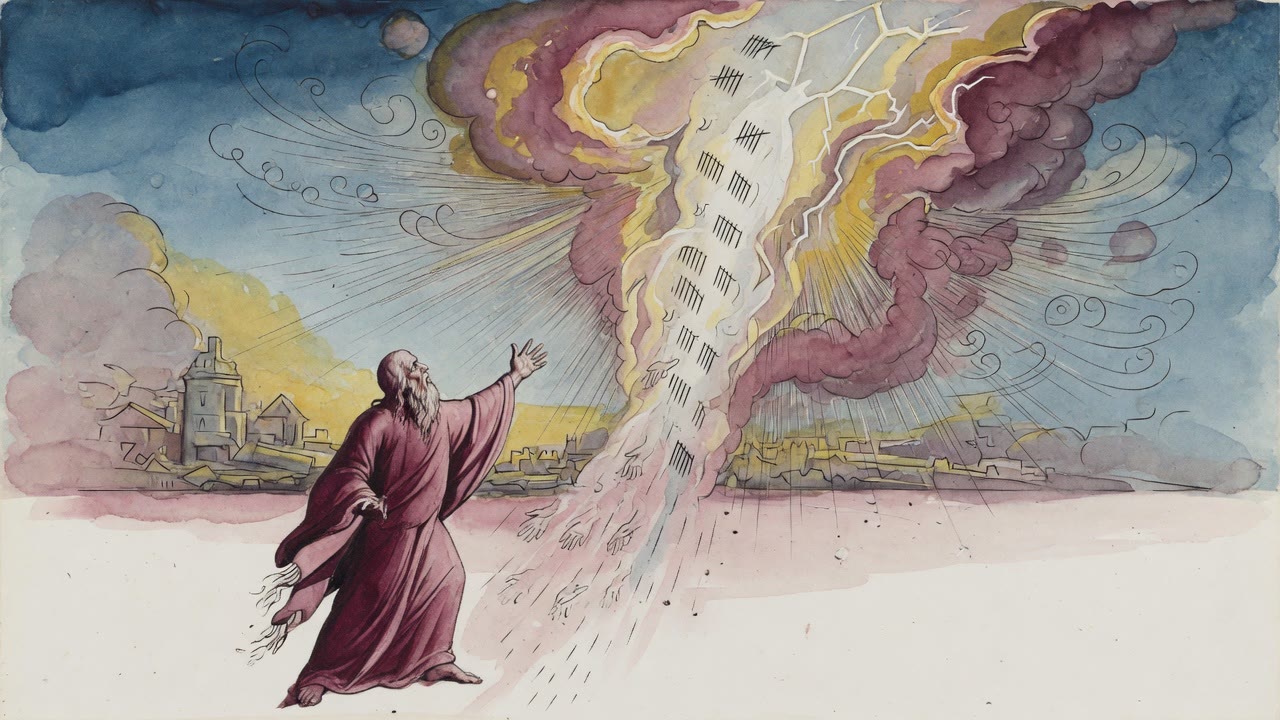
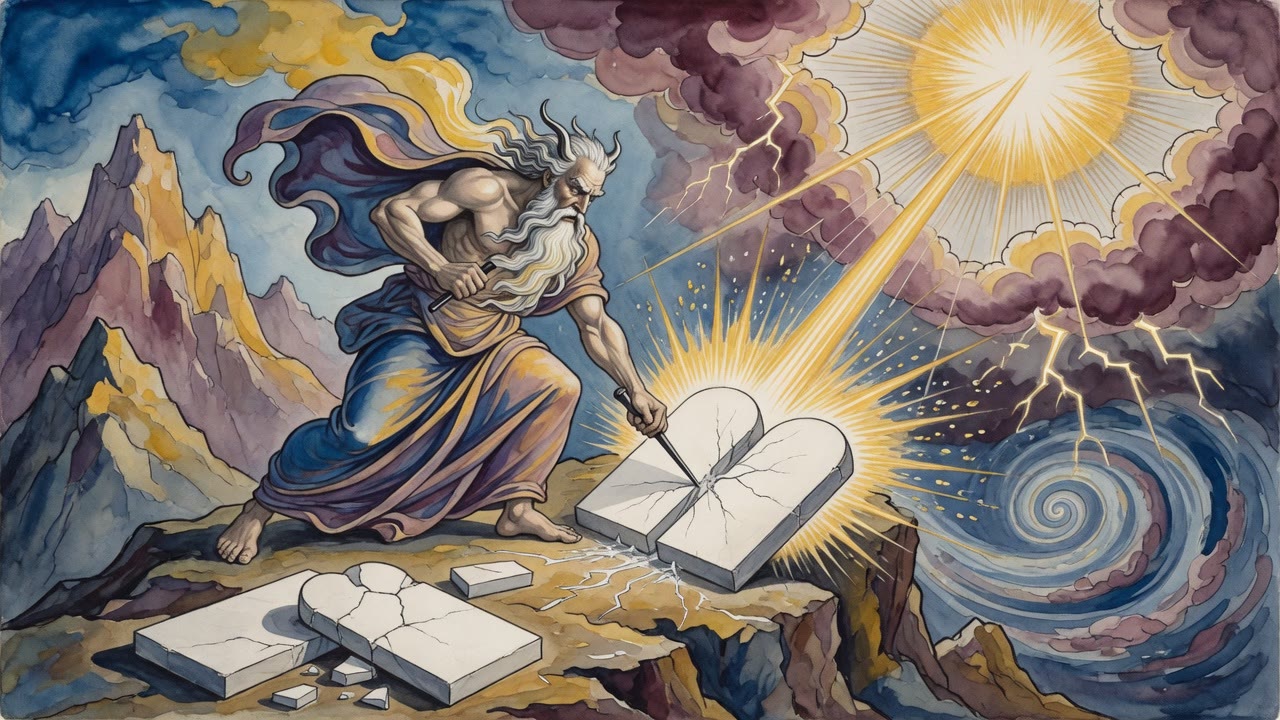
There is another voice the tradition will not leave alone, the voice that says, I will eat and drink in my own house while the street burns. At Sinai, God spoke in thunder to the many and in singular address to each person. Every soul may say, For my sake the world was created. Nobody may use that sentence as a permit to retreat into comfort while the community suffers. Even Moses. Even Aaron. A private room is not holiness when the public wound is open.

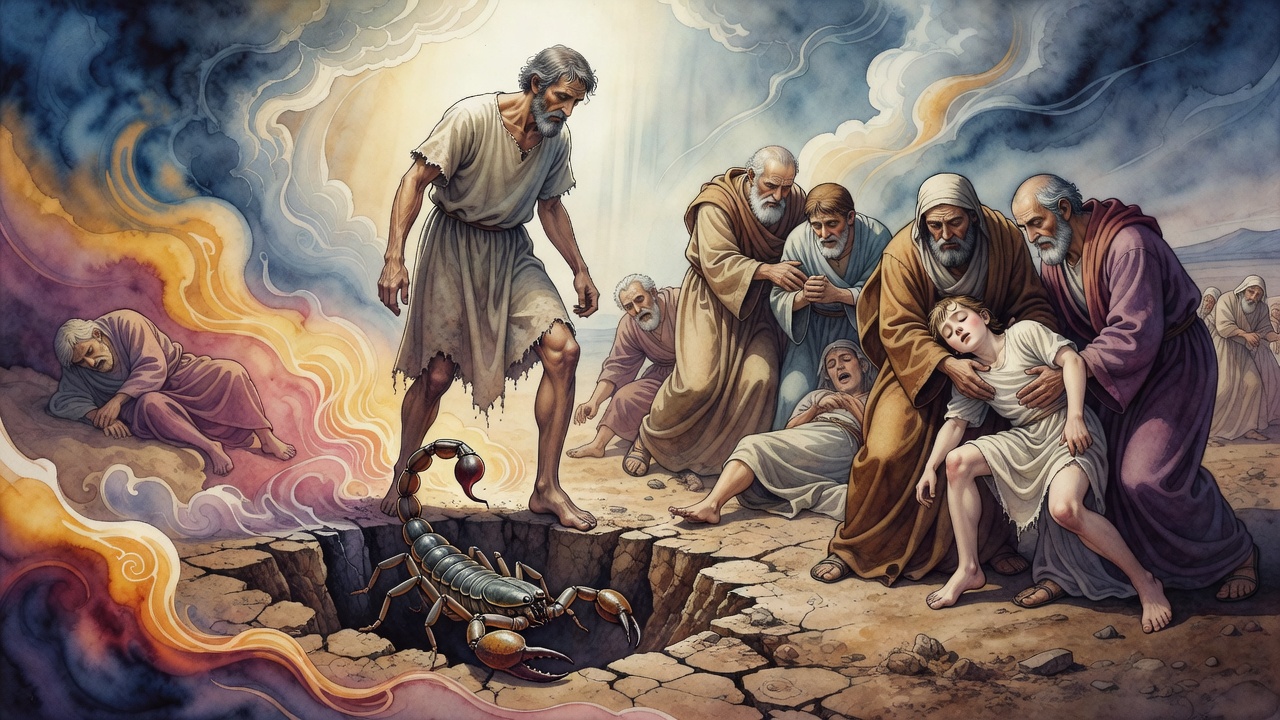
Meir's first prayer was a retreat of another kind. It tried to erase the neighbors instead of carrying them. Isaiah already named the shrug that pretends despair is wisdom. Eat and drink, for tomorrow we die. Heaven does not treat that shrug as harmless. It is a refusal to share the burden. Beruria would not let her husband refuse. She made him stay in the trouble without becoming the trouble's mirror.

Mercy as Harder Work

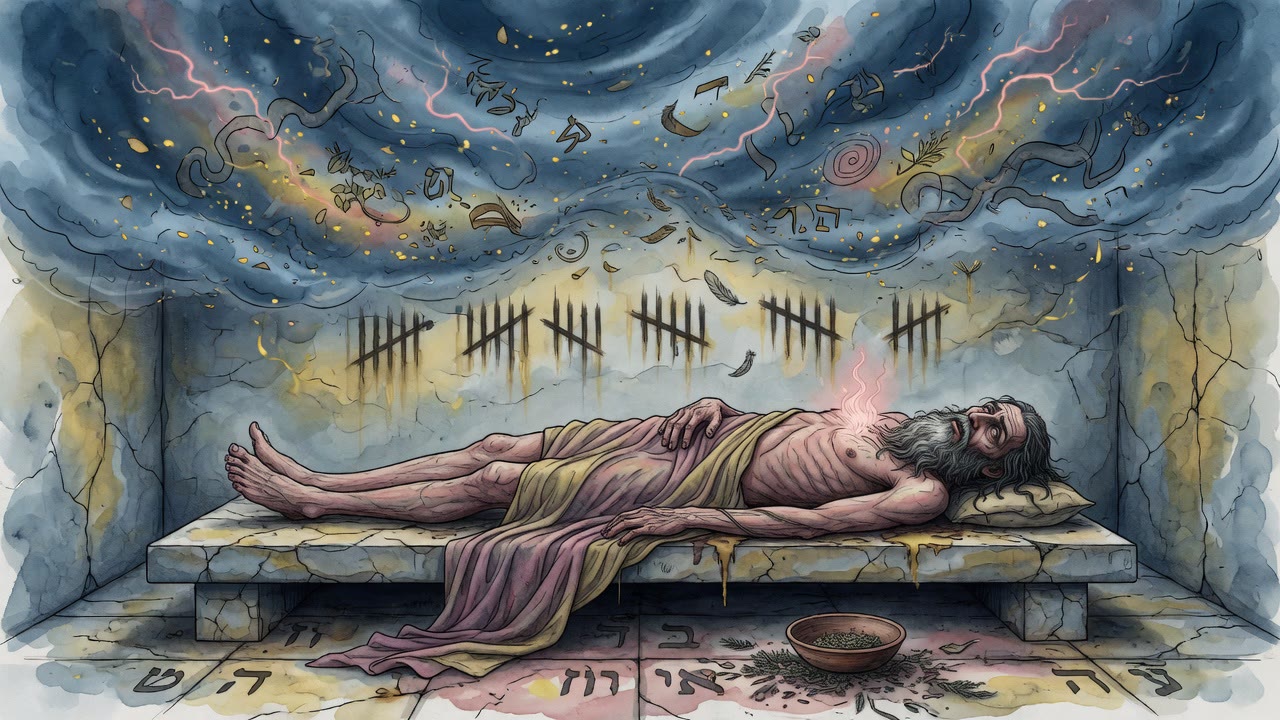
Death is simple. One petition, one silence, one empty alley. Mercy is labor. It requires the offender to remain in the world and change. It requires the offended to risk being wrong about whether change is possible. Beruria demanded that risk. She did not deny that the hooligans were cruel. She denied that cruelty is a permanent name burned into a living face.

When Meir finally prayed for their return, he was not weaker than the man who had asked for their graves. He was more dangerous to sin. A dead sinner cannot repent. A living one can be hunted by kindness until the old name no longer fits. The verse's second half, the wicked will be no more, becomes true only if the first half, let sins cease, is allowed to work on breath and blood.

A House That Would Not Curse

Picture the courtyard after the prayer changed. The same walls. The same books. The same rough voices somewhere down the lane. What was different was the direction of the master's mouth. He no longer aimed Heaven at his enemies like a stone from a sling. He aimed Heaven at their yetzer, at the inclination that made them what they were, and asked that it be broken without breaking the men.

Israel's greatness is not only that it can endure a blow. It is that it can refuse to answer a blow with a smaller Torah. Beruria's correction left a mark on the whole house. Prayer is not a private weapon. It is a public responsibility. The sage who carries the community must not wish the community smaller so that his ears can rest.


← All myths

From the tradition

Sources

2 sources

The texts behind this telling. Some cards carry a translation of the source; others are our own retelling of it, and each card says which. Every card links out to the original.

Berakhot 10aTalmud Bavli, Berakhot

Translation of the source text.William Davidson Edition - Vocalized Aramaic + William Davidson Edition - English · CC-BY-NC

Every chapter that was dear to David, he began with “happy is” and concluded with “happy is.” He opened with “happy is,” as it is written: “Happy is the man who has not walked in the counsel of the wicked or stood in the way of sinners or sat in the dwelling place of the scornful�� (Psalms 1:1). And he concluded with “happy,” as it is written at the end of the chapter: “Pay homage in purity, lest He be angry, and you perish on the way when His anger is kindled suddenly.

Happy are those who take refuge in Him” (Psalms 2:12). We see that these two chapters actually constitute a single chapter. With regard to the statement of Rabbi Yehuda, son of Rabbi Shimon ben Pazi, that David did not say Halleluya until he saw the downfall of the wicked, the Gemara relates: There were these hooligans in Rabbi Meir’s neighborhood who caused him a great deal of anguish. Rabbi Meir prayed for God to have mercy on them, that they should die.

Rabbi Meir’s wife, Berurya, said to him: What is your thinking? On what basis do you pray for the death of these hooligans? Do you base yourself on the verse, as it is written: “Let sins cease from the land” (Psalms 104:35), which you interpret to mean that the world would be better if the wicked were destroyed? But is it written, let sinners cease?”

Let sins cease, is written. One should pray for an end to their transgressions, not for the demise of the transgressors themselves. Moreover, go to the end of the verse, where it says: “And the wicked will be no more.” If, as you suggest, transgressions shall cease refers to the demise of the evildoers, how is it possible that the wicked will be no more, i.e., that they will no longer be evil?

Rather, pray for God to have mercy on them, that they should repent, as if they repent, then the wicked will be no more, as they will have repented. Rabbi Meir saw that Berurya was correct and he prayed for God to have mercy on them, and they repented. The Gemara relates an additional example of Berurya’s incisive insight: A certain heretic said to Berurya: It is written: “Sing, barren woman who has not given birth, open forth in song and cry, you did not travail, for more are the children of the desolate than the children of the married wife, said the Lord” (Isaiah 54:1).

Because she has not given birth, she should sing and rejoice? Berurya responded to this heretic’s mockery and said: Fool! Go to the end of the verse, where it is written: “For the children of the desolate shall be more numerous than the children of the married wife, said the Lord.” Rather, what is the meaning of: “Sing, barren woman who has not given birth”?

It means: Sing congregation of Israel, which is like a barren woman who did not give birth to children who are destined for Gehenna like you. In explaining passages from Psalms, the Gemara relates another instance of a response to the question of a heretic: A certain heretic said to Rabbi Abbahu, it is written: “A Psalm of David, when he fled from his son, Absalom” (Psalms 3:1), and similarly it is said: “To the chief musician, al tashḥet, a mikhtam of David when fleeing from Saul into the cave” (Psalms 57:1).

Which event was first? Since the event with Saul was first, it would have been appropriate to write it first. Rabbi Abbahu said to him: For you, who do not employ the homiletic method of juxtaposition of verses, it is difficult. But for us, who employ the homiletic method of juxtaposition of verses, it is not difficult, as the Sages commonly homiletically infer laws and moral lessons from the juxtaposition of two verses.

Regarding the juxtaposition of verses, Rabbi Yoḥanan said: From where in the Bible is it derived that one may draw homiletical inferences from the juxtaposition of verses? As it is said: “The works of His hands in truth and justice, all His commandments are sure. Adjoined forever and ever, made in truth and uprightness” (Psalms 111:7–8). Conclude from here that it is appropriate to draw inferences from the juxtaposition of God’s commandments.

Accordingly, David’s fleeing from Absalom is situated where it is in order to juxtapose it to the next chapter, which mentions the war of Gog and Magog; the second chapter of Psalms opens: “Why are the nations in an uproar?” Why was the chapter of Absalom juxtaposed with the chapter of Gog and Magog? They are juxtaposed so that if a person should say to you, expressing doubt with regard to the prophecy of the war of Gog and Magog “against the Lord and against His anointed”: Is there a slave who rebels against his master?

Is there someone capable of rebelling against God? You too say to him: Is there a son who rebels against his father and severs the relationship with the one who brought him into the world and raised him? Yet, nevertheless, there was such a son, Absalom, and so too there can be a situation where people will seek to rebel against God. Rabbi Yoḥanan said explanations of other verses in the name of Rabbi Shimon ben Yoḥai: What is the meaning of that which is written: “She opens her mouth with wisdom, and the teaching of loving-kindness is on her tongue” (Proverbs 31:26)?

The Sages explain that this chapter discusses the wisdom of Torah and those who engage in its study, so with reference to whom did Solomon say this verse? He said this verse about none other than his father, David, who was the clearest example of one who opens his mouth in wisdom, and who resided in five worlds or stages of life and his soul said a song of praise corresponding to each of them. Five times David said: “Bless the Lord, O my soul,” each corresponding to a different stage of life.

He resided in his mother’s womb, his first world, and said a song of praise of the pregnancy, as it is stated: “Of David. Bless the Lord, O my soul and all that is within me bless His holy name” (Psalms 103:1), in which he thanks God for creating all that is within his mother, i.e., her womb. He emerged into the atmosphere of the world, his second world, looked upon the stars and constellations and said a song of praise of God for the entirety of creation, as it is stated: “Bless the Lord, His angels, mighty in strength, that fulfill His word, listening to the voice of His word.

Bless the Lord, all His hosts, His servants, that do His will. Bless the Lord, all His works, in all places of His kingship, bless my soul, Lord” (Psalms 103:20–23). David saw the grandeur of all creation and recognized that they are mere servants, carrying out the will of their Creator (Ma’ayan HaBerakhot). He nursed from his mother’s breast, his third world, and he looked upon her bosom and said a song of praise, as it is stated: “Bless the Lord, O my soul, and do not forget all His benefits [gemulav]” (Psalms 103:2).

The etymological association is between gemulav and gemulei meḥalav, which means weaned from milk (Isaiah 28:9). We still must understand, however, what is meant by all His benefits? What in particular is praiseworthy in what God provided, beyond merely providing for the infant? Rabbi Abbahu said: In contrast with most other animals, God placed her breasts near her heart, the place that is the source of understanding.

What is the reason that God did this? Rav Yehuda said: So that the nursing child would not look upon the place of his mother’s nakedness. Rav Mattana said: So that the child would not nurse from a place of uncleanliness. He witnessed in both vision and reality the downfall of the wicked and he said a song of praise, as it is stated: “Let sinners cease from the earth, and let the wicked be no more.

Bless the Lord, O my soul, Halleluya” (Psalms 104:35). The fifth world was when David looked upon the day of death and said a song of praise, as it is stated: “Bless the Lord, O my soul. Lord my God, You are very great; You are clothed in glory and majesty” (Psalms 104:1); for even death is a time of transcendence for the righteous. The connection between this final praise and the day of death is unclear.

The Gemara asks: From where is it inferred that this verse was stated with regard to the day of death? Rabba bar Rav Sheila says: We can derive this from the verses at the end of the matter, where it is written: “You hide Your face, they vanish; You gather Your breath, they perish and return to the dust” (Psalms 104:29). Other interpretations of this verse exist. The Gemara relates how Rav Shimi bar Ukva, and some say Mar Ukva, would regularly study before Rabbi Shimon ben Pazi, who was well versed in aggada and would arrange the aggada before Rabbi Yehoshua ben Levi.

Once, Rabbi Shimon ben Pazi said to him: What is the meaning of that which is written: “Bless the Lord, my soul, and all that is within me bless His Holy name”? Rav Shimi bar Ukva said to Rabbi Shimon ben Pazi: Come and see that the attribute of the Holy One, Blessed be He, is not like the attribute of flesh and blood, as this verse praises the formation of man in his mother’s womb. The attribute of flesh and blood is such that he shapes a form on the wall for all to see, yet he cannot instill it with a spirit and soul, bowels and intestines.

While the Holy One, Blessed be He, is not so, as God shapes one form within another form, a child in its mother’s womb, and instills it with spirit and soul, bowels and intestines. And this is the explanation of what Hannah said with regard to the birth of Samuel: “There is none holy like the Lord, for there is none like You, and there is no Rock like our God” (I Samuel 2:2). What is the meaning of there is no rock [tzur] like our God?

There is no artist [tzayyar] like our God. The Gemara continues to interpret the rest of that verse homiletically: What is the meaning of “there is none like You”? Rabbi Yehuda ben Menasya said: Do not read the verse to mean “there is none like You [biltekha]”; rather, read it to mean “none can outlast You [levalotkha],” as the attribute of the Holy One, Blessed be He, is not like the attribute of flesh and blood: The attribute of flesh and blood is such that his creations outlast him, but the Holy One, Blessed be He, outlasts His actions.

This did not satisfy Rav Shimi bar Ukva, who said to Rabbi Shimon ben Pazi: I meant to say to you as follows: Corresponding to whom did David say these five instance of “Bless the Lord, O my soul”? He answered him: He said them about none other than the Holy One, Blessed be He, and corresponding to the soul, as the verse refers to the relationship between man’s soul and God. The five instances of “Bless the Lord, O my soul” correspond to the five parallels between the soul in man’s body and God’s power in His world.

Just as the Holy One, Blessed be He, fills the entire world, so too the soul fills the entire body. Just as the Holy One, Blessed be He, sees but is not seen, so too does the soul see, but is not seen. Just as the Holy One, Blessed be He, sustains the entire world, so too the soul sustains the entire body. Just as the Holy One, Blessed be He, is pure, so too is the soul pure.

Just as the Holy One, Blessed be He, resides in a chamber within a chamber, in His inner sanctum, so too the soul resides in a chamber within a chamber, in the innermost recesses of the body. Therefore, that which has these five characteristics, the soul, should come and praise He Who has these five characteristics. With regard to redemption and prayer, the Gemara tells the story of Hezekiah’s illness, his prayer to God, and subsequent recuperation.

Rav Hamnuna said: What is the meaning of that which is written praising the Holy One, Blessed be He: “Who is like the wise man, and who knows the interpretation [pesher] of the matter” (Ecclesiastes 8:1)? This verse means: Who is like the Holy One, Blessed be He, Who knows how to effect compromise [peshara] between two righteous individuals, between Hezekiah, the king of Judea, and Isaiah the prophet.

They disagreed over which of them should visit the other. Hezekiah said: Let Isaiah come to me, as that is what we find with regard to Elijah the prophet, who went to Ahab, the king of Israel, as it is stated: “And Elijah went to appear to Ahab” (I Kings 18:2). This proves that it is the prophet who must seek out the king. And Isaiah said: Let Hezekiah come to me, as that is what we find with regard to Yehoram ben Ahab, king of Israel, who went to Elisha the prophet, as it is stated: “So the king of Israel, Jehosaphat and the king of Edom went down to him” (II Kings 3:12).

What did the Holy One, Blessed be He, do to effect compromise between Hezekiah and Isaiah? He brought the suffering of illness upon Hezekiah and told Isaiah: Go and visit the sick. Isaiah did as God instructed, as it is stated: “In those days Hezekiah became deathly ill, and Isaiah ben Amoz the prophet came and said to him: Thus says the Lord of Hosts: Set your house in order, for you will die and you will not live” (Isaiah 38:1).

This seems redundant; what is the meaning of you will die and you will not live? This repetition means: You will die in this world, and you will not live, you will have no share, in the World-to-Come. Hezekiah said to him: What is all of this? For what transgression am I being punished?

Isaiah said to him: Because you did not marry and engage in procreation. Hezekiah apologized and said: I had no children because I envisaged through divine inspiration that the children that emerge from me will not be virtuous. Hezekiah meant that he had seen that his children were destined to be evil. In fact, his son Menashe sinned extensively, and he thought it preferable to have no children at all.

Isaiah said to him: Why do you involve yourself with the secrets of the Holy One, Blessed be He? That which you have been commanded, the mitzva of procreation, you are required to perform, and that which is acceptable in the eyes of the Holy One, Blessed be He, let Him perform, as He has so decided. Hezekiah said to Isaiah: Now give me your daughter as my wife; perhaps my merit and your merit will cause virtuous children to emerge from me.

Isaiah said to him: The decree has already been decreed against you and this judgment cannot be changed. Hezekiah said to him: Son of Amoz, cease your prophecy and leave. As long as the prophet spoke as God’s emissary, Hezekiah was obligated to listen to him. He was not, however, obligated to accept Isaiah’s personal opinion that there was no possibility for mercy and healing.

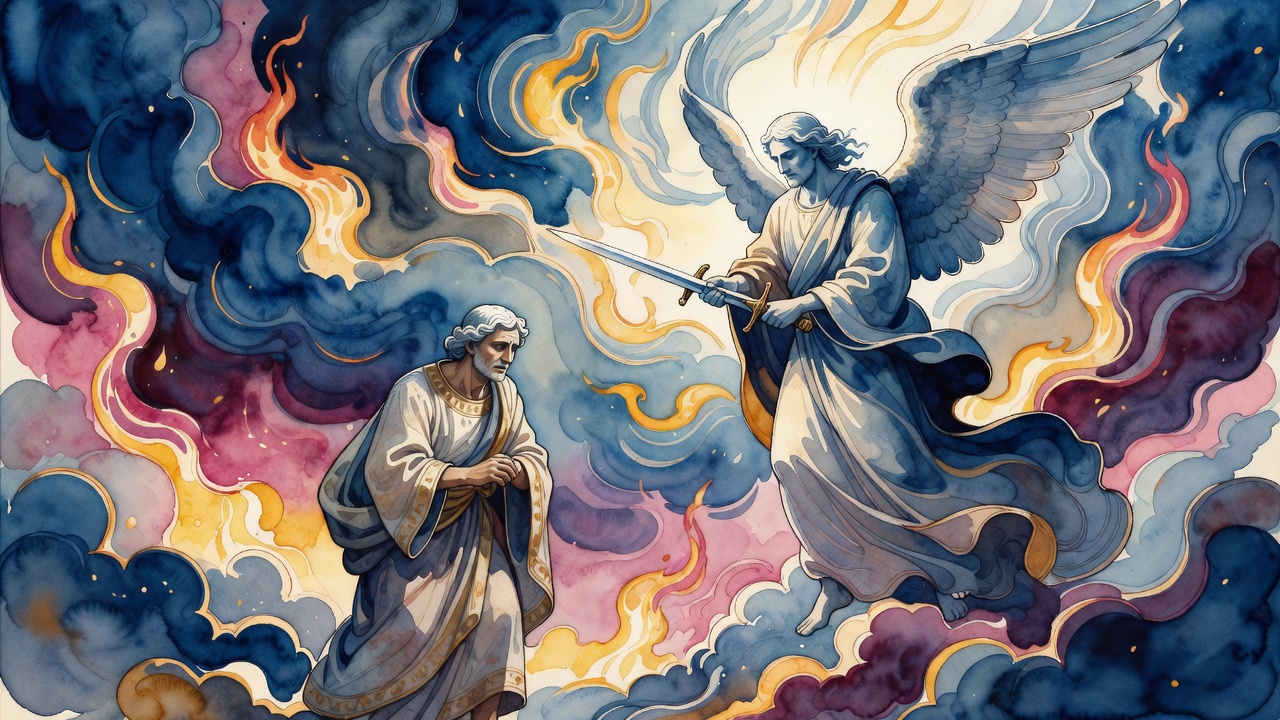
Hezekiah continued: I have received a tradition from the house of my father’s father, from King David, the founding father of the dynasty of kings of Judea: Even if a sharp sword rests upon a person’s neck, he should not prevent himself from praying for mercy. One may still hold out hope that his prayers will be answered, as was David himself when he saw the Angel of Destruction, but nonetheless prayed for mercy and his prayers were answered.

With regard to the fact that one should not despair of God’s mercy, the Gemara cites that it was also said that Rabbi Yoḥanan and Rabbi Eliezer both said: Even if a sharp sword is resting upon a person’s neck, he should not prevent himself from praying for mercy, as it is stated in the words of Job: “Though He slay me, I will trust in Him” (Job 13:15). Even though God is about to take his life, he still prays for God’s mercy.

Full source
Tanna DeBei Eliyahu Rabbah 25:1Tanna DeBei Eliyahu Rabbah

Translation of the source text.Sefaria Community Translation · CC0

"And God spoke all these words, saying: I am the LORD your God" and so forth (Exodus 20:1-2). Blessed is the Omnipresent, blessed be He, who chose Israel out of all the work of His hands, and acquired them as a complete acquisition, and called them sons and servants to His name. Sometimes He speaks with them as one speaks with the many, and sometimes He speaks with them as one speaks with the individual. And why all this? Rather, because of the love with which He loves them, and because of the joy in which He rejoices over them; therefore He speaks with them in the singular and in the plural. Accordingly I used to say that each and every one of Israel is obligated to say: When will my deeds reach the deeds of my fathers, Abraham, Isaac, and Jacob? For the fathers acquired this world and the world to come and the days of the son of David only because of their good deeds and the study of Torah. And thus the Sages taught in the Mishnah: Each and every one of Israel is obligated to say, "For my sake the world was created." And let a person not say in his heart to himself: The world to come is nothing but chaos and void, therefore I will walk in the stubbornness of my heart and eat and drink and take pleasure in this world, and afterward I will go out from this world. And if he does so, concerning him it says, "The fool said in his heart: There is no God" (Psalms 14:1). And if he is a scholar, wisdom and understanding are withheld from him; and if he has turned himself to other matters, concerning him Scripture says, "For the fool speaks folly" and so forth (Isaiah 32:6).

And likewise let a person not see the many in distress and say: I will walk in the stubbornness of my heart and eat and drink and take pleasure from this world. And if he does so, concerning him Scripture says, "And behold, joy and gladness, slaying oxen and slaughtering sheep, eating meat and drinking wine: let us eat and drink, for tomorrow we die" (Isaiah 22:13). What is written after it? "And the LORD of hosts revealed Himself in my ears: Surely this iniquity shall not be atoned for you until you die" (Isaiah 22:14). This far concerning the middling measure. But concerning the measure of the wicked, what is written? Scripture says, "Come, let me take wine, and let us fill ourselves with strong drink, and tomorrow shall be like this day, great beyond measure" (Isaiah 56:12). After it, what is written? "The righteous one perishes, and no man takes it to heart" and so forth (Isaiah 57:1). What is the matter of what is after it? "He shall enter into peace; they shall rest on their couches, each one who walks straight" and so forth (Isaiah 57:2). From here the Sages said: Even a sage of Israel who is like Moses our teacher, may peace be upon him, who was the father of the sages and the father of the prophets, and pious like Aaron his brother, should not say: Here I am in joy in my house, and peace be upon you, my soul. Rather, let him go out from his house and be with the community in their distress. Rather, with what does a person acquire his Father in heaven and the world to come? You must say that he acquires the Holy One, blessed be He, through good deeds and the study of Torah, and the Holy One, blessed be He, grants him in possession this world and the world to come and the days of the son of David.

And these are the good deeds through which a person acquires the Holy One, blessed be He, and the world to come within them: through love and brotherhood and reverence and peace and friendship, and through truth and peace, and through humility, and through meekness, and through much study and little commerce, and through attending upon the sages, and through the disputation of the students, and through a good heart, and through worldly conduct, and through one's "no" being a "no" and one's "yes" being a "yes." We have learned from Abraham our father, that at the beginning of his deeds he had reverence before the Holy One, blessed be He, as it is said, "After these things the word of the LORD came to Abram in a vision, saying: Do not fear, Abram, I am a shield to you" (Genesis 15:1); and one does not say to a person "Do not fear" except to one who is truly God-fearing. They told a parable: to what may the matter be compared? To a king who said to his son: My son, go and kill all these brigands, and take nothing of their money should they fall into your hand, so that they will not say, the king's son went out to kill these brigands only in order to take the money. Immediately he went out and killed all the brigands. On his return, his father went out to meet him and said to him: Blessed are you, my son, and may you have satisfaction in the world, for you did not benefit from their money at all. Now come with me and I will give you every precious vessel in the world, and precious stones and pearls from my treasure houses. And so to this Abraham our father was likened: at the time when he went out to kill the kings, on his return the king of Sodom went out to meet him, and it seemed to the king of Sodom that Abraham would not return anything to him, and he asked and said to Abraham: Please, give me the persons, and take the goods for yourself (Genesis 14:21-22). Immediately, "And Abram said to the king of Sodom: I have lifted up my hand to the LORD" and so forth, "that I will not take a thread or a sandal-strap, nor anything that is yours" and so forth; and I have already sworn that I will take nothing of all that is yours. And Abraham said to the king of Sodom: Fool of the world, do I need your silver and gold and all your precious vessels? I will cast everything before you to the ground, and you will see that I did not benefit from your money at all, "except only what the young men have eaten" and so forth. At that hour Abraham sanctified the name of the Holy One, blessed be He, and stood and returned all the goods of Sodom and Gomorrah. Immediately, "After these things the word of the LORD came to Abram in a vision" and so forth, "your reward is very great."

And likewise we have learned from Isaac, that at the beginning of his deeds he was truly God-fearing; for Isaac was seventy-five years old at the time when Abraham entered his eternal home, and Isaac said: Woe to me, perhaps there are not in me good deeds such as there were in my father; what will become of me before the Holy One, blessed be He? Immediately the mercy of the Holy One, blessed be He, was stirred upon him, and He stood with him at that hour, as it is said, "And the LORD appeared to him that night" and so forth (Genesis 26:24). And likewise we have learned from Jacob our father, that at the beginning of his deeds he had reverence before the Holy One, blessed be He, as it is said, "And he was afraid and said: How awesome is this place" and so forth (Genesis 28:17). And likewise we have learned from our first fathers, that at the beginning of their deeds they had reverence before the Holy One, blessed be He, as it is said, "And the people feared the LORD" and so forth (Exodus 14:31). From this you have learned that as the reward of the reverence with which our holy fathers Abraham, Isaac, and Jacob revered the Holy One, blessed be He, and as the reward of the faith with which Israel believed in the Holy One, blessed be He, when they were in Egypt, they were redeemed from Egypt and the sea was split for them.

And so it will be in the time to come, that the Holy One, blessed be He, will come and redeem Israel from among the idolaters, and bring them the days of the son of David and the days of our redemption, as it is said, "Writhe and labor, daughter of Zion, like a woman in childbirth" and so forth, "and you shall come to Babylon; there you shall be delivered, there the LORD shall redeem you from the hand of your enemies" (Micah 4:10). And all the iniquities of Israel they leave behind in Babylon, and they go up pure to the land of Israel, as it is said, "And I lifted up my eyes and looked, and behold, two women coming" and so forth, "and they lifted up the measure between the earth and the heaven; and I said to the angel who spoke with me: Where are they taking the measure? And he said to me: To build for it a house in the land of Shinar; and it will be established and set there" and so forth (Zechariah 5:9-11). And why is its name called Shinar? Because it shakes off (menaaret) all the iniquities from upon itself; therefore it is said, "to build for it a house in the land of Shinar." What is "and it will be established and set there upon its base"? Rather, this verse goes back and refers to the Tabernacle, which was hidden away in its place, and likewise the ark with the tablets that are within it, and the chest that the Philistines sent as a gift to the Holy One, blessed be He, and the rod of Aaron, and the flask of the anointing oil, and the jar of manna, as it is said, "And Moses said to Aaron: Take one jar and put there a full omer of manna" and so forth, "and Aaron laid it up before the Testimony to be kept" (Exodus 16:33-34), so that Jeremiah the prophet might say to them: This is the manna with which I fed Israel in the wilderness. The ark and the tablets within it, how so? As it is said, "These words the LORD spoke to all your assembly at the mountain out of the midst of the fire" and so forth (Deuteronomy 5:19); He said to them: These words are the Ten Commandments that I spoke with you at Sinai. And why was the Tabernacle hidden away until this day? Because the worthy ones made it with the freewill offerings of their heart, and it is hard before the Holy One, blessed be He, to let perish all that the worthy ones made with the freewill offerings of their heart; and in the time to come the Holy One, blessed be He, will come and dwell within it as in the first measure, as it is said, "Awake, north wind, and come, south wind" and so forth, "I have come to my garden, my sister, my bride; I have gathered my myrrh with my spice" and so forth (Song of Songs 4:16-5:1). (Another interpretation:) "I have come to my garden," these are the synagogues and study houses; "my sister, my bride," this is the community of Israel; "I have gathered my myrrh with my spice," these are Torah, Prophets, and Writings; "I have eaten my honeycomb with my honey," these are midrash, halakhot, and aggadot; "I have drunk my wine with my milk," these are the good deeds that the sages of Israel look forward to; and afterward, "Eat, friends, drink and be drunk with love."

Full source