David Smashed the Jebusite Idols That Wore Abraham's Covenant Mark
Jebusite idols wear Abraham's covenant mark as a lock on Jerusalem until David smashes the blind and lame gods and takes the stronghold.
Table of Contents
 Click for full size
The Stronghold That Mocked the Brit
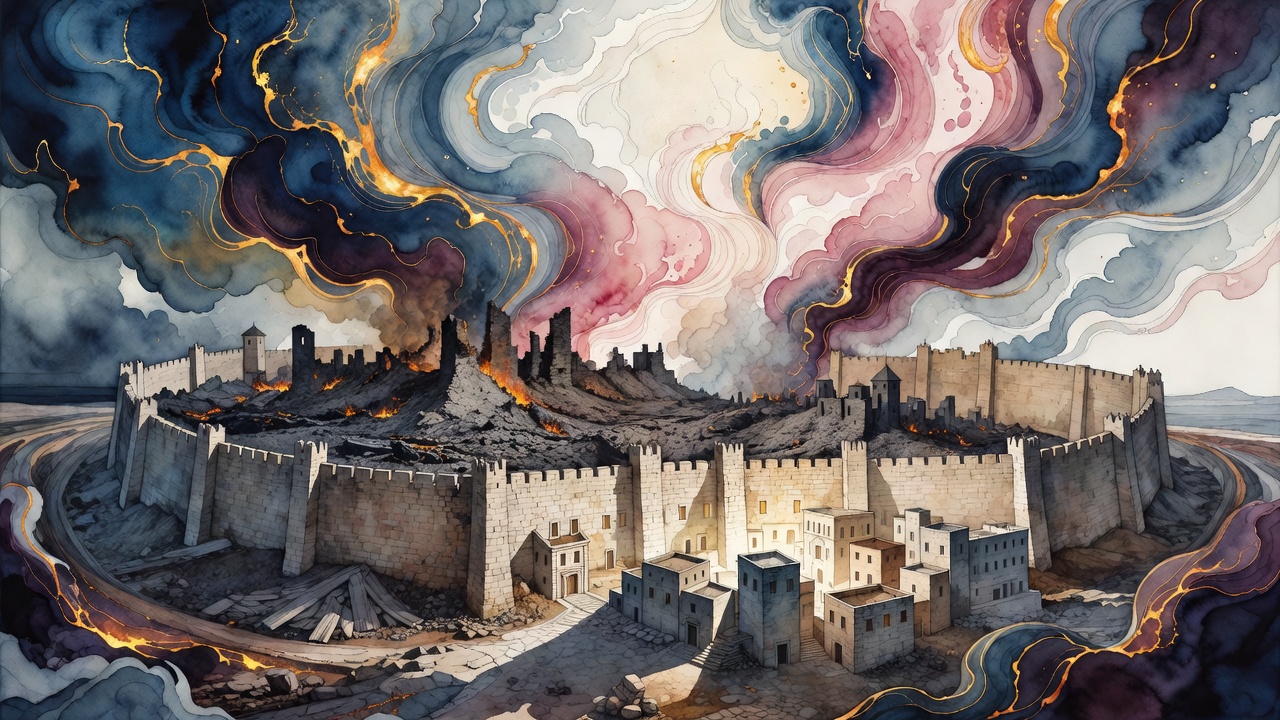
David stood under Jebus's walls with an army like sand and a problem sand could not solve. The city sat on rock. The gates stayed shut. From the battlements the Jebusites laughed the way men laugh when they think heaven itself has signed their lease.
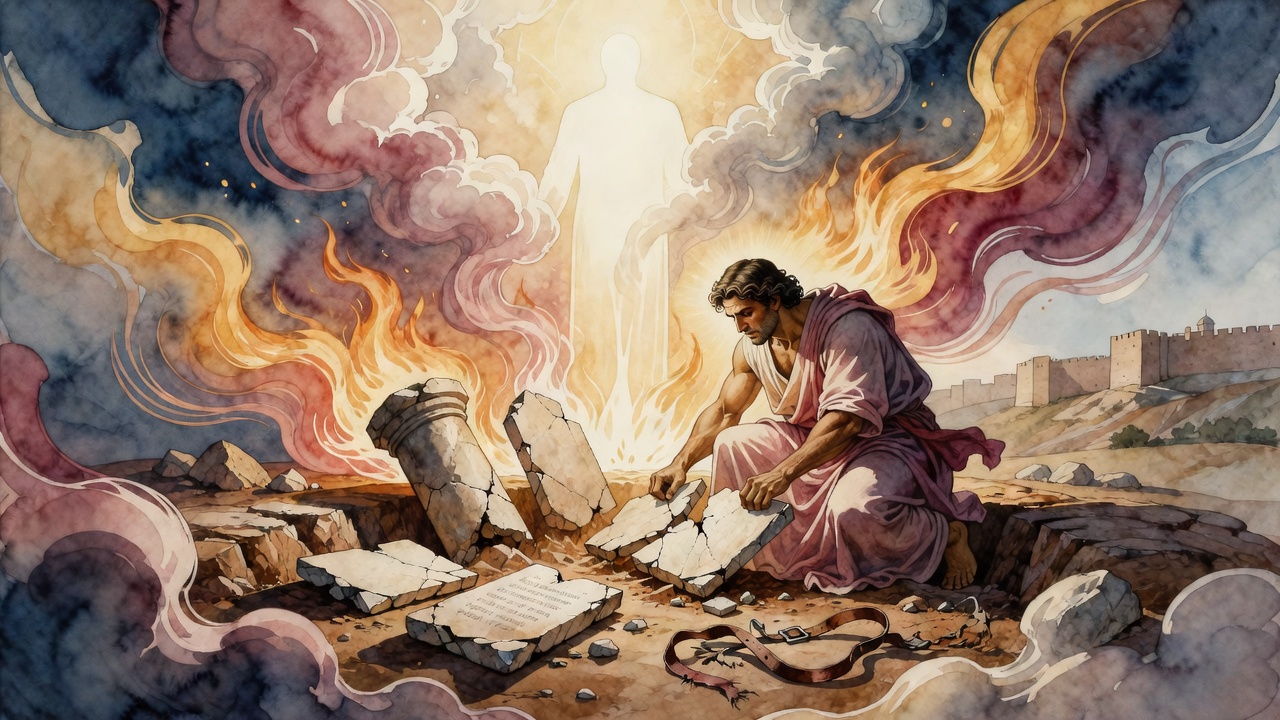
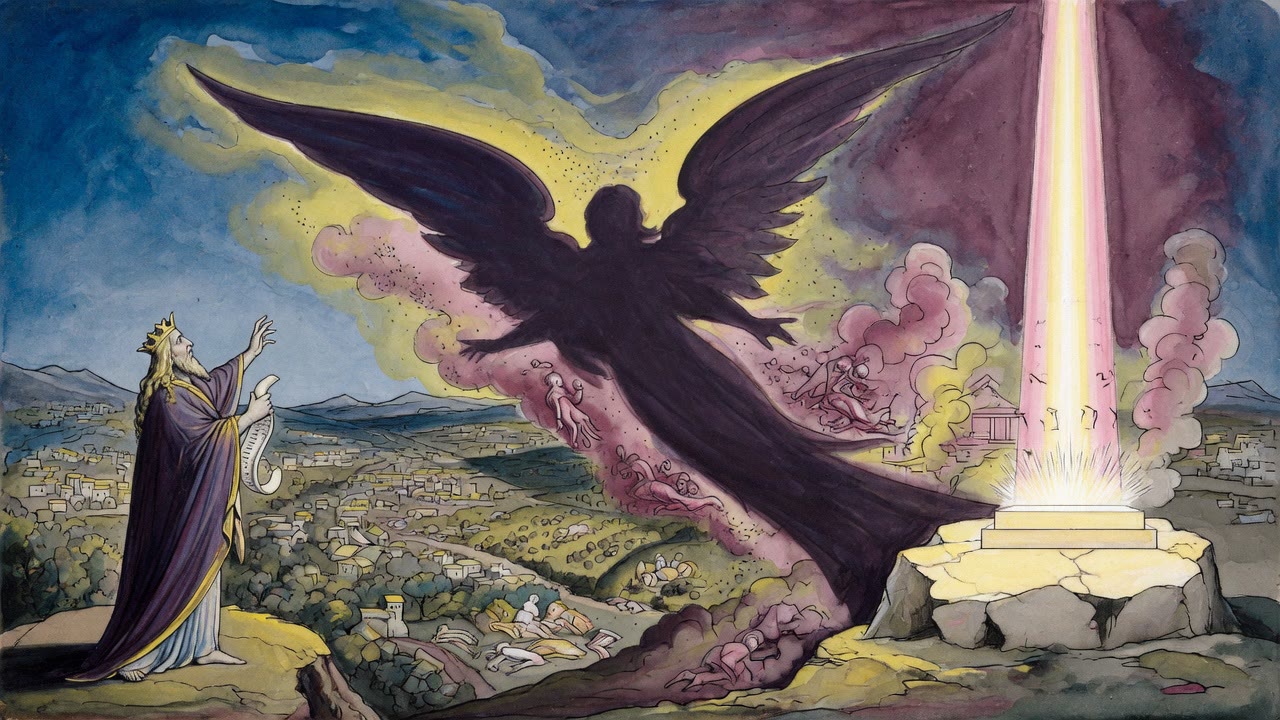
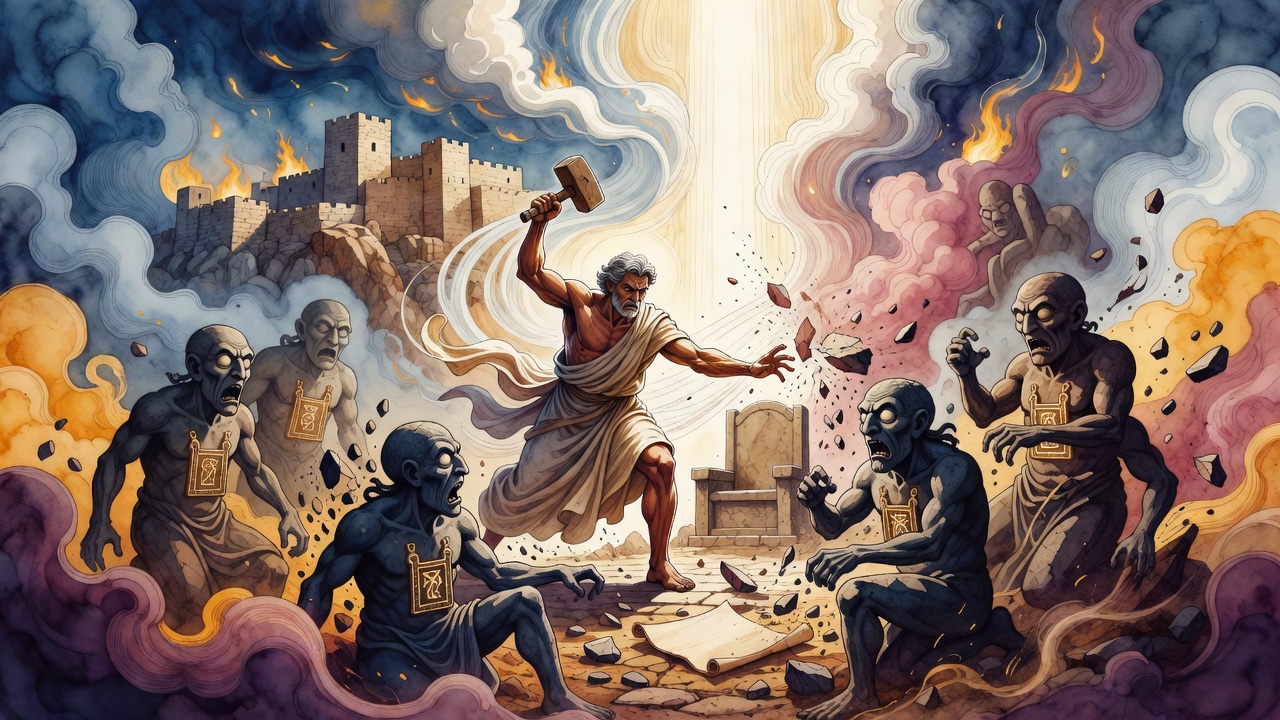
They had carved idols for the threshold, images the midrash later calls the blind and the lame, and on those false bodies they had written the sign of Abraham's covenant, the brit of circumcision, as if the oath that protected Israel could be flipped into a bolt against Israel's king (2 Samuel 5:6-9).
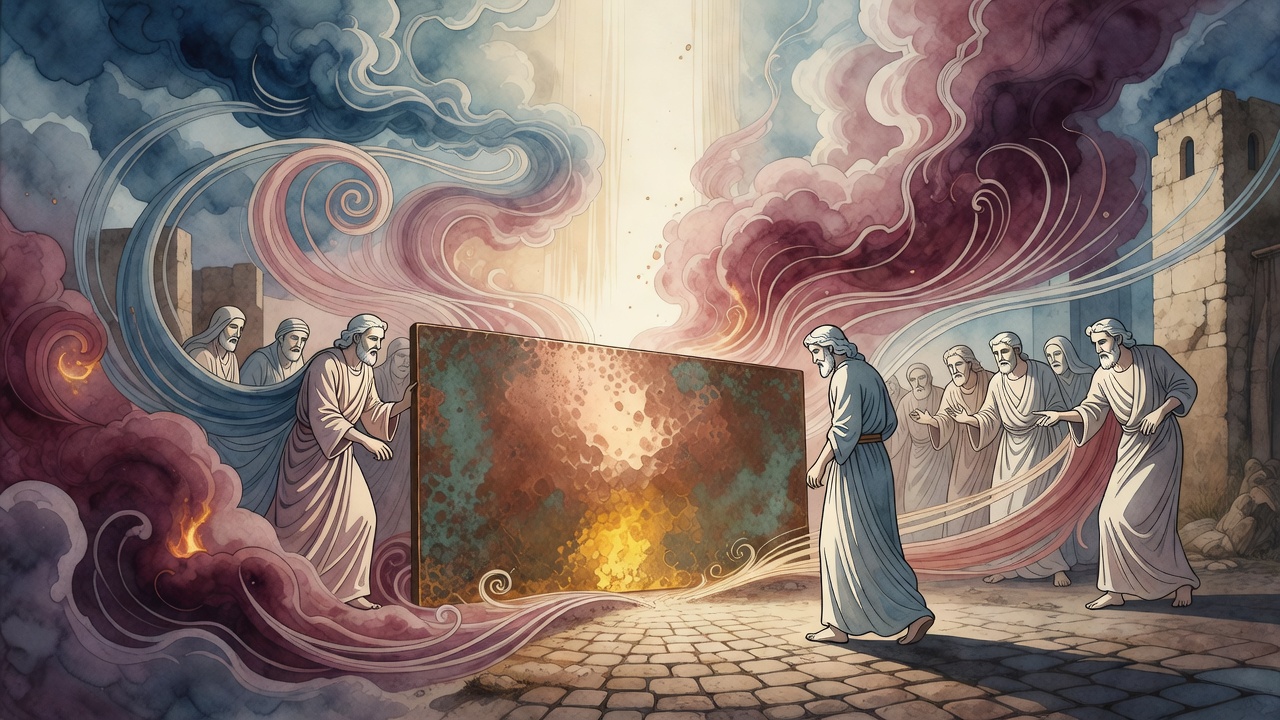
Elders of Israel told David he could not enter until those marks were gone. The covenant that made a people numerous had been pasted onto wood and stone and turned into a curse. A warrior can count spears. He cannot count a blasphemy that wears his grandfather's seal.
David hated the sight. Idolatry was not an abstract error to him. It was a smell he refused to breathe, a sound he refused to host. The images stood with painted eyes that saw nothing and painted feet that walked nowhere, and still they barred the road to the stronghold he meant to make his own.
Blind Gods, Lame Locks
"The blind and the lame shall not come into the house," the old taunt ran (2 Samuel 5:8). Some hear people. The tradition that guards David's conquest hears idols. Eyes that cannot see. Feet that cannot walk. Gods that demand worship and cannot lift a finger when the battering ram arrives.
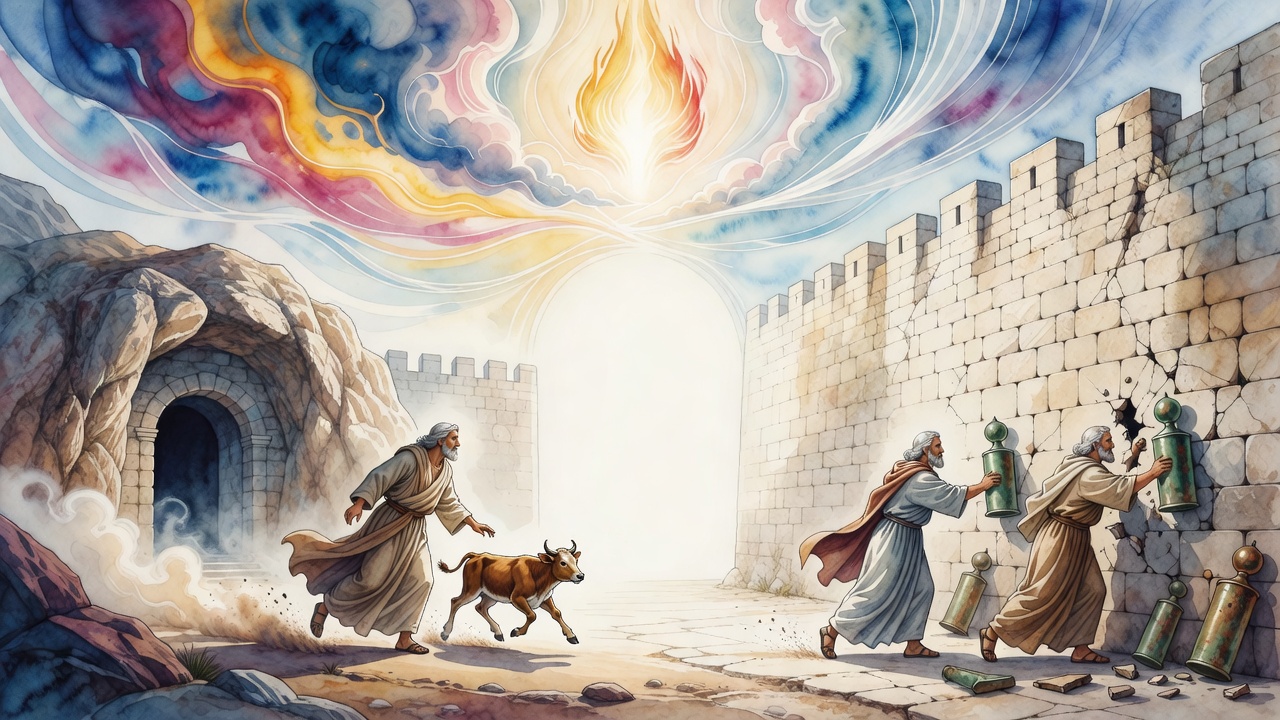
David ordered the images removed, broken, dragged from the gates. The covenant mark on dead wood did not protect the wood. The brit belonged to living flesh under heaven's command, not to a Jebusite joke carved to keep the house of David outside.
When the false seals fell, the army moved. Men who had waited with spears finally ran. The stronghold that had mocked the sand of Israel became Zion under David's roof. He dwelt in the fortress, and the city that had trusted idols learned what living covenant does when it meets living king.
Victory smelled of dust and crushed paint. Somewhere a soldier wiped his hands and found no holy ink, only the residue of a lie. Wood. Glue. A groove where a forged mark had sat like a stolen ring on a wrong finger.
The Lion's Power Is in the Mouth
Long before the walls of Jebus, Jacob had bent over Judah and called him a lion's whelp (Genesis 49:9). Listeners hear claws. The Mekhilta hears a mouth. A lion's force lives in the roar that freezes the plain and in the jaws that close. Judah's force lives in speech aimed at God.
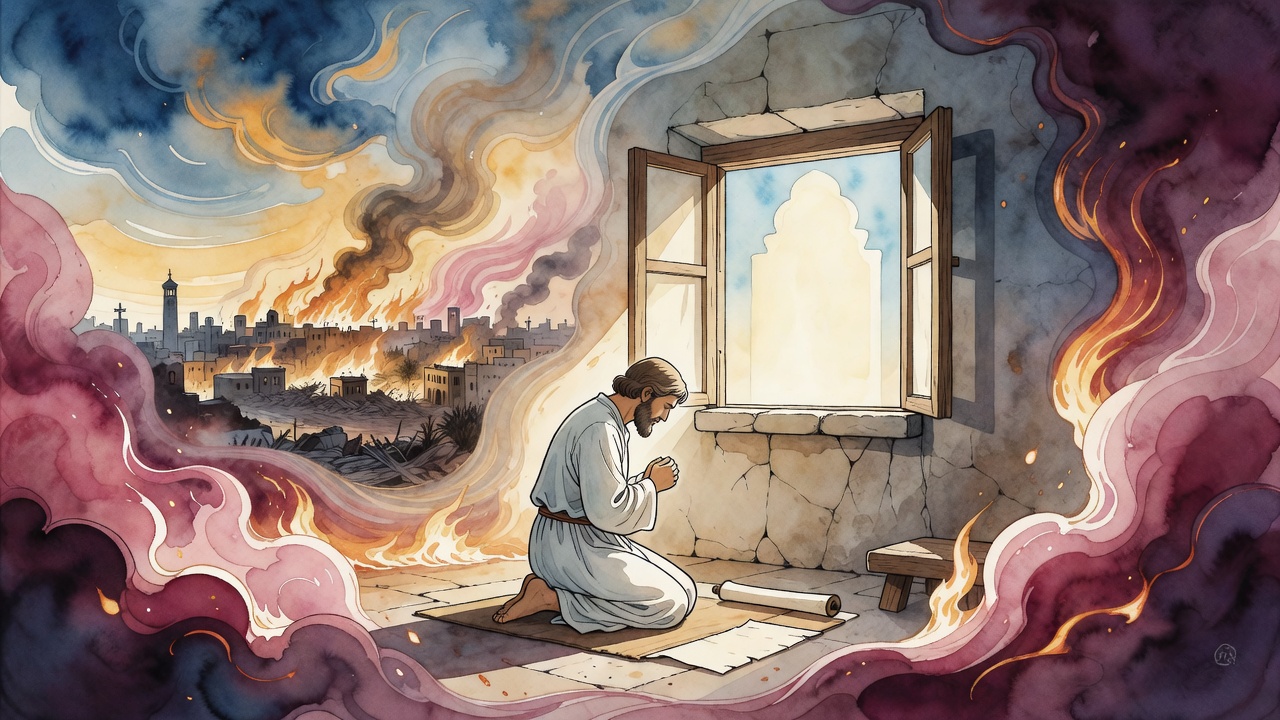
Moses later blessed the same tribe without asking for sharper swords. "Hear, O Lord, the voice of Judah" (Deuteronomy 33:7). Not the arm. The voice. Prayer is the royal weapon of the line that would one day seat David on a throne.
So the conquest of Jerusalem is not only siege craft. It is the mouth of Judah answering a city that tried to steal Abraham's sign. David does not win because he has more men than sand grains. He wins because the brit still answers the living, and because the lion tribe still knows how to open its mouth toward heaven when wood and stone pretend to own the oath.
In the quiet after the shouting, a man could still hear the echo of that roar shaped as prayer. Walls had come down. The sand of Israel stood on rock that no longer answered to painted eyes.
Sand Without Covenant Is Only Dust
Israel could fill valleys and still fail a locked gate. Numbers without covenant are weight without hinge. The Jebusites gambled that a copied mark could hold a true people. David proved the opposite. The covenant is not a sticker. It is a living bond that refuses to serve idols even when idols wear its name.
After the stronghold fell, David made the place his dwelling. The city that had trusted blind gods began a new history under a king who hated the sight of them. Zion rose not from clever blasphemy but from the removal of it.
David walked the threshold himself once the last image was gone. He wanted the empty doorframe more than the cheer. Empty meant the covenant no longer answered a Jebusite joke. That night cooks lit fires inside walls that had recently belonged to another people.
A young soldier asked whether the idols' eyes had ever blinked. An older one told him eyes that never saw cannot blink. The question still mattered, because fear of false locks can outlive the locks.
What the Gate Remembered
Years later, when pilgrims climbed toward the city, the story of the blind and lame idols traveled with them. Not as a joke about bodies, but as a warning about locks. Anything that steals a holy sign to bar holy work will be torn down by the same power it tried to counterfeit.
David's hatred of idols was not temper. It was fidelity with a face. He could not bear the covenant of Abraham turned into theater for a foreign gate. He broke the theater. He kept the covenant. He entered.
The stronghold held his sleep that first night. Outside, shattered wood still held faint grooves where someone had once carved a stolen brit. Wind moved through the grooves and found no prayer there, only emptiness where a lie had lived.
In the morning he would count gates and cisterns. He would name captains. He would begin the long work of making a fortress into a capital. None of that work would erase the lesson: the brit of Abraham protects the living who keep it, never the dead wood that steals its shape. Ordinary dark after false gods is a kind of holiness, and Zion's first night under David was that dark.
← All myths