A Runaway Calf Led Abraham to an Oath That Stopped David at Jerusalem
Inside the Cave of Machpelah, Abraham found Adam and Eve lying on their beds, lamps still burning. He wanted the ground. The Jebusites wanted an oath.
Table of Contents
 Click for full size
The Calf That Would Not Stay
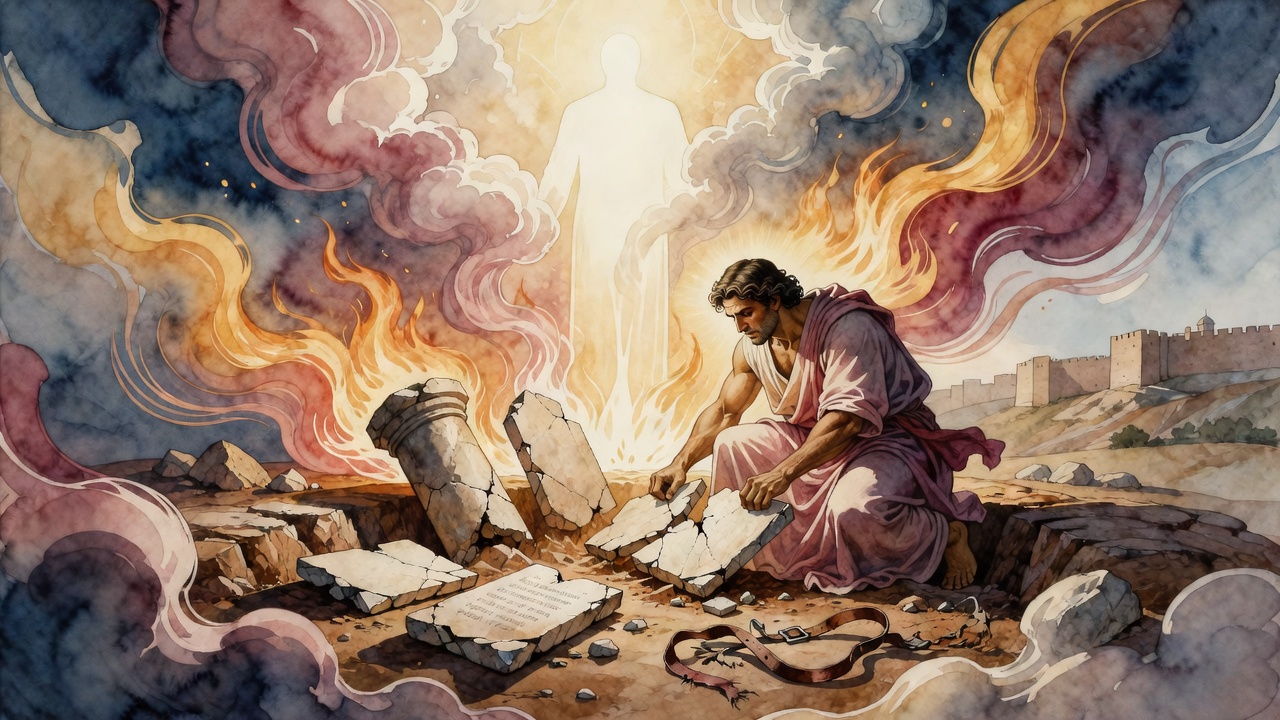
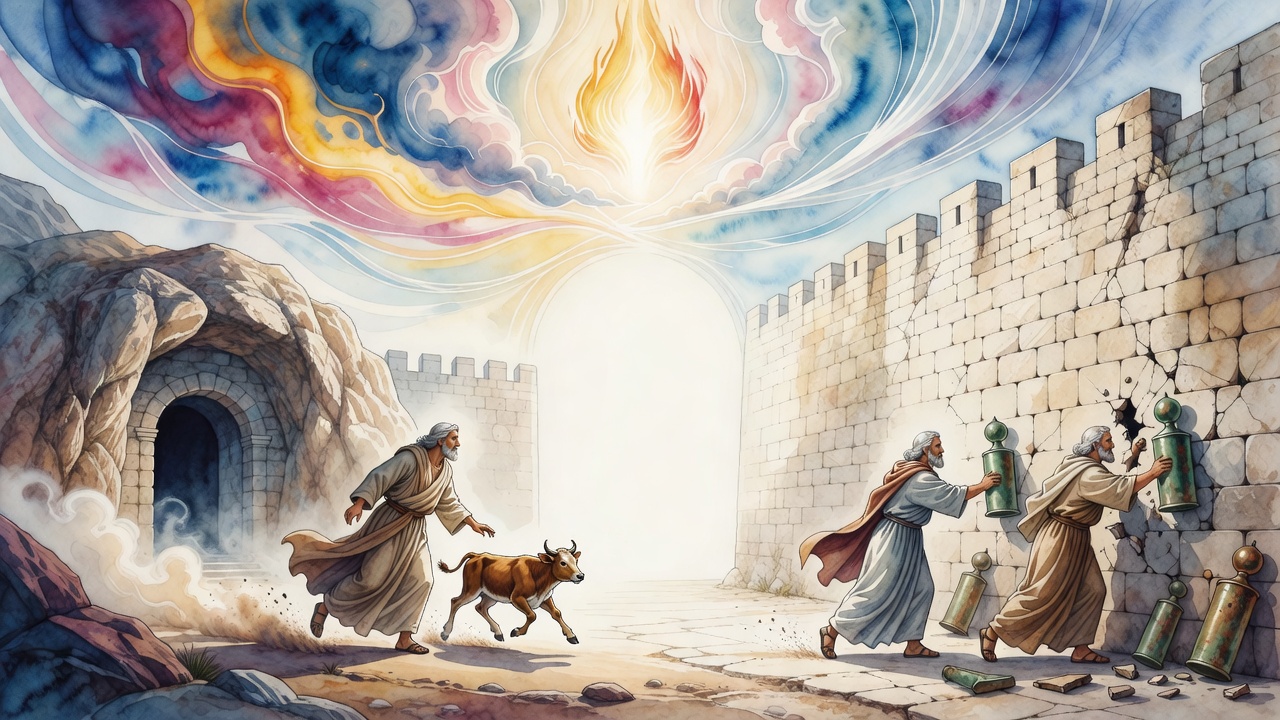
A calf bolted from Abraham's kitchen, and the chase that followed would one day decide how David took Jerusalem. Chasing the animal into the Cave of Machpelah, Abraham glimpsed Adam and Eve resting on their beds, lamps burning, a sweet fragrance in the air. From that moment he longed for the cave as a burial place.
A kitchen errand became a vision of the first parents. The runaway meat led the patriarch into the earth where death and memory already slept with light still lit.
The Oath Written in Copper
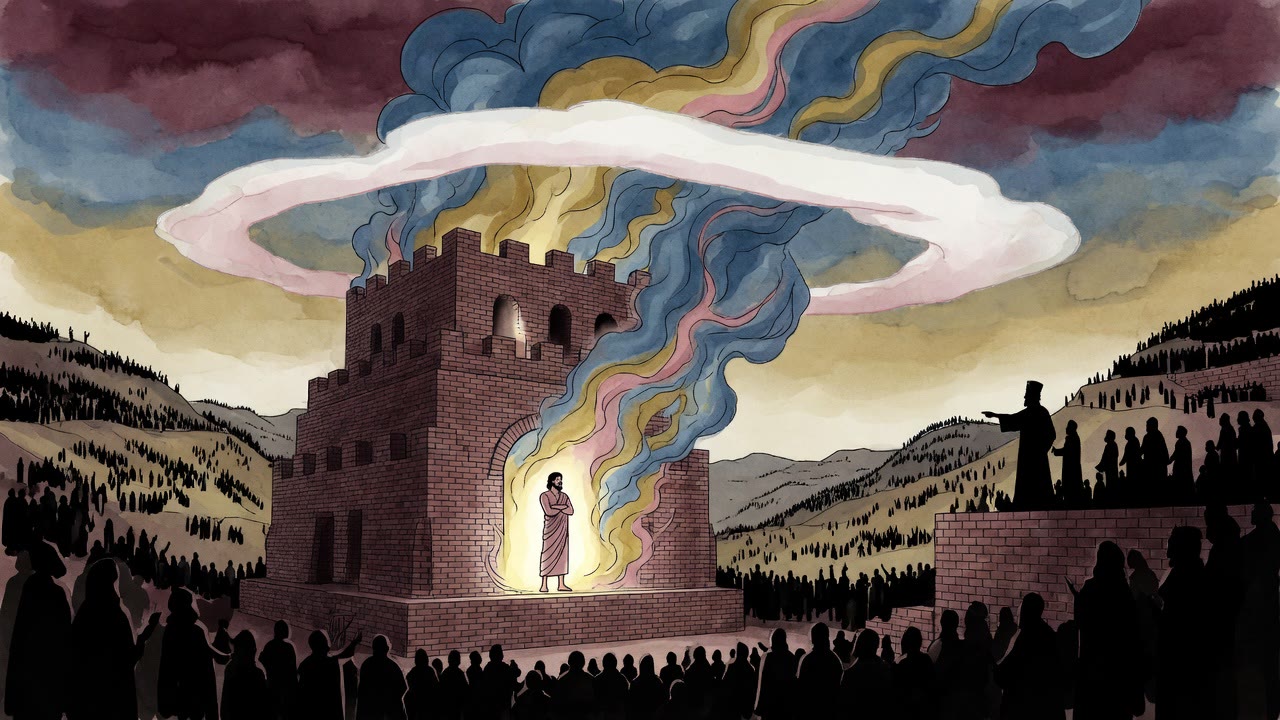
To get the cave he had to deal with the people of the region, called Jebusites after their city though they were really Hittites. They drove a hard bargain. Knowing God would one day give the whole land to Abraham's children, they demanded a covenant: your seed will not seize the city of Jebus by force.
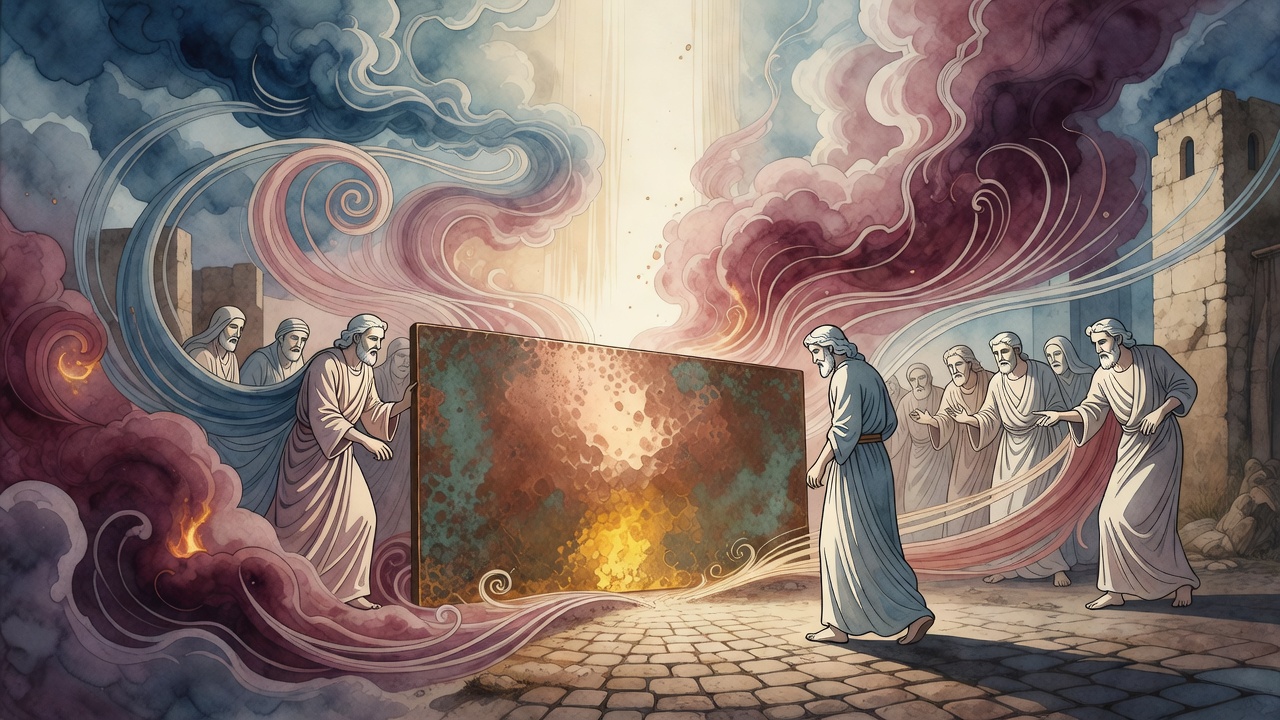
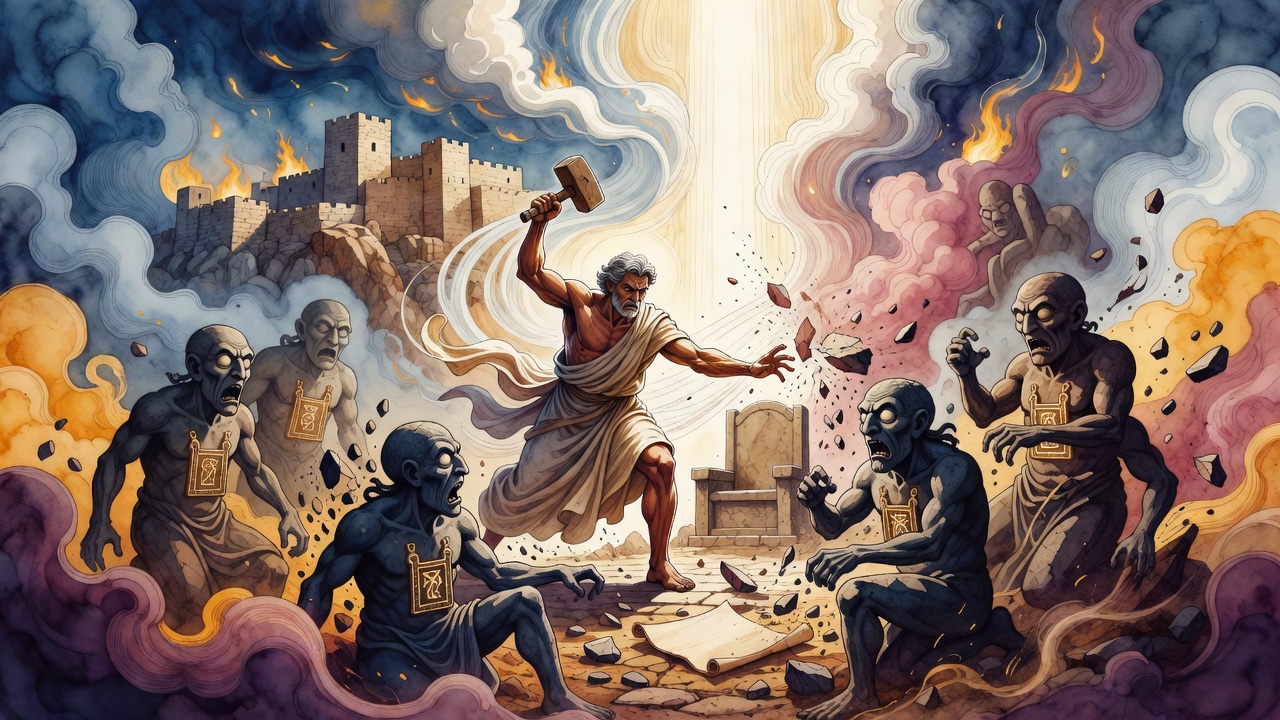
Abraham swore, bought the cave, and the oath was set in stone. The Jebusites took no chances. They forged copper idols, engraved the oath upon them, and planted them in the square. Generations later Israel could not take the city, and even David was turned away with the warning that he could not enter until he removed "the blind and the lame."
Those were the idols, the sages explain, statues with eyes that could not see, not actual disabled people kept from the Temple.
Joab Climbs for Command
So David made his offer. Whoever scaled the wall first and tore down the idols would be commander. Joab son of Zeruiah climbed up and won the rank. Only then, the covenant cleared, did David buy the site outright.
The calf's path had reached a wall. The oath Abraham spoke to secure a grave for Sarah had become a legal fence around a city. Copper faces in the square held a patriarch's word against his great-grandchildren's swords until a man climbed and broke the metal silence.
The City That Makes Its Dwellers Righteous
When the verse introduces the Canaanite ruler who first moved against Joshua, it names him Adoni-Zedek, king of Jerusalem. The sages pause on that name, for zedek means righteousness, and they notice it was not the first time a king of this city had carried it. Long before, in the days of Abraham, the city already wore the language of justice in its titles.
Jerusalem makes its dwellers righteous, the midrash insists. The place itself presses toward zedek. Even hostile kings catch the name. The city Abraham's oath delayed is the same city that names its rulers with justice and waits for David to purchase what force alone cannot cleanly take.
Forty-Seven Years of Courtesy
Why, asked the sages, did the Canaanites keep their land for forty-seven years before Israel arrived? Scripture had already taught that the Land of Israel measures every nation by its conduct. The answer hides in a single courtesy. When Abraham came to bury Sarah, the people of Hebron bowed and said, "You are a prince of God among us" (Genesis 23:6).
That honor delayed the conquest. Courtesy to the patriarch bought generations of tenure. The Jebusite oath was another kind of delay, harder and metal-bound. Between Hebron's bow and Jerusalem's copper idols, Abraham's dealings with the land's people keep rewriting the timetable of inheritance.
David does not erase the old bargains with a shout. He clears the idols, keeps the purchase clean, and takes a city that had been waiting under an oath since a calf fled a kitchen and a father of nations saw lamps in a cave.
Abraham ran with a rope and a temper meant for livestock, not for visions. The calf led him into cool dark where the first human pair lay as if death itself kept a Sabbath of light. Lamps. Fragrance. Beds that did not stink of ordinary graves. He wanted that place for Sarah and for the line that would sleep after her. The Hittites of Jebus heard the want and sold him a cave with a chain attached: swear your children will not take our city by force.
He swore. They cast the oath in copper and stood the blind, unseeing idols in the square as public memory. Centuries later David's men stared at those faces and heard a legal wall taller than stone. Scale it. Tear them down. Joab's climb bought command cleared the patriarch's word so a later purchase could be clean.
Meanwhile the city's own name kept whispering zedek, righteousness, even through Canaanite mouths like Adoni-Zedek. Hebron's courtesy to Abraham at Sarah's burial bought the land's peoples forty-seven years of tenure by one count. Jerusalem's copper courtesy was harder, a delay enforced by metal until David's house paid and climbed. The calf's flight ends in a capital. The kitchen loss becomes a throne's foundation, and every step between is oath, idol, honor, and coin rather than simple conquest.
← All myths