Copper Oaths Barred David from Jerusalem
The images stood in the street. Abraham's oath was cut into the copper. David's men halted with their spears still raised.
Table of Contents
David stopped on the ridge above Jebus with his men still climbing behind him.
 Click for full size
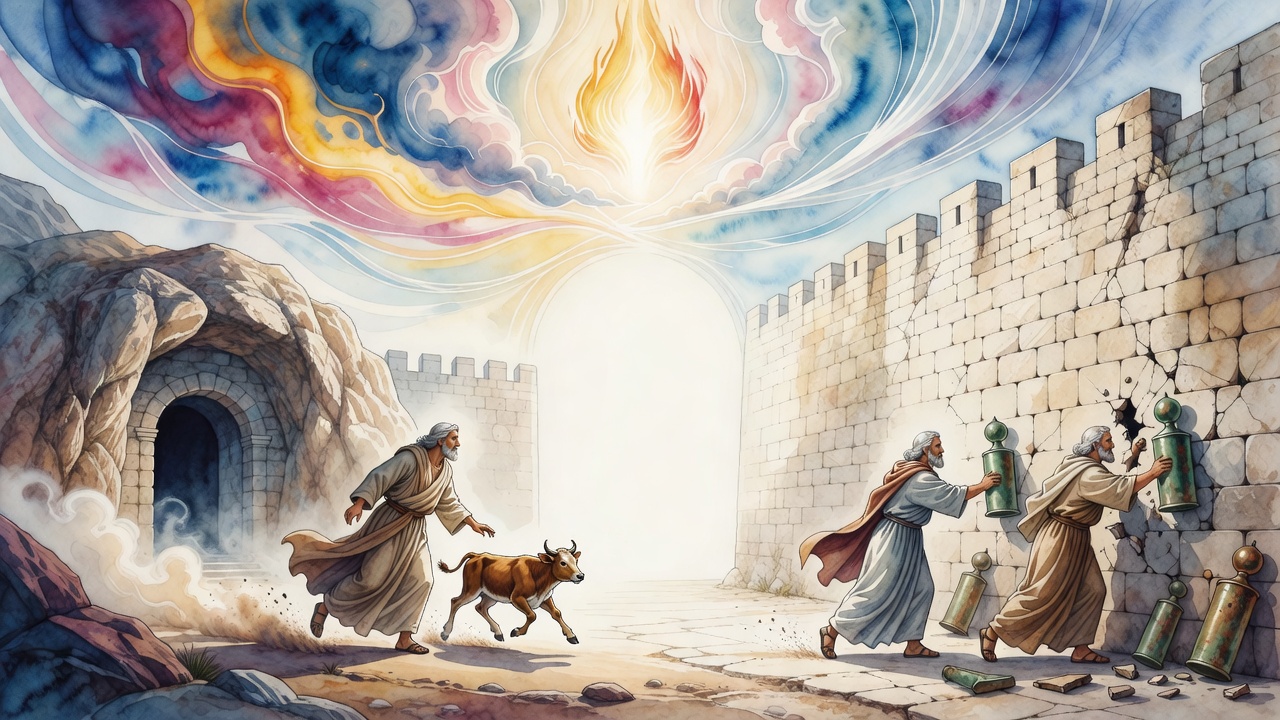
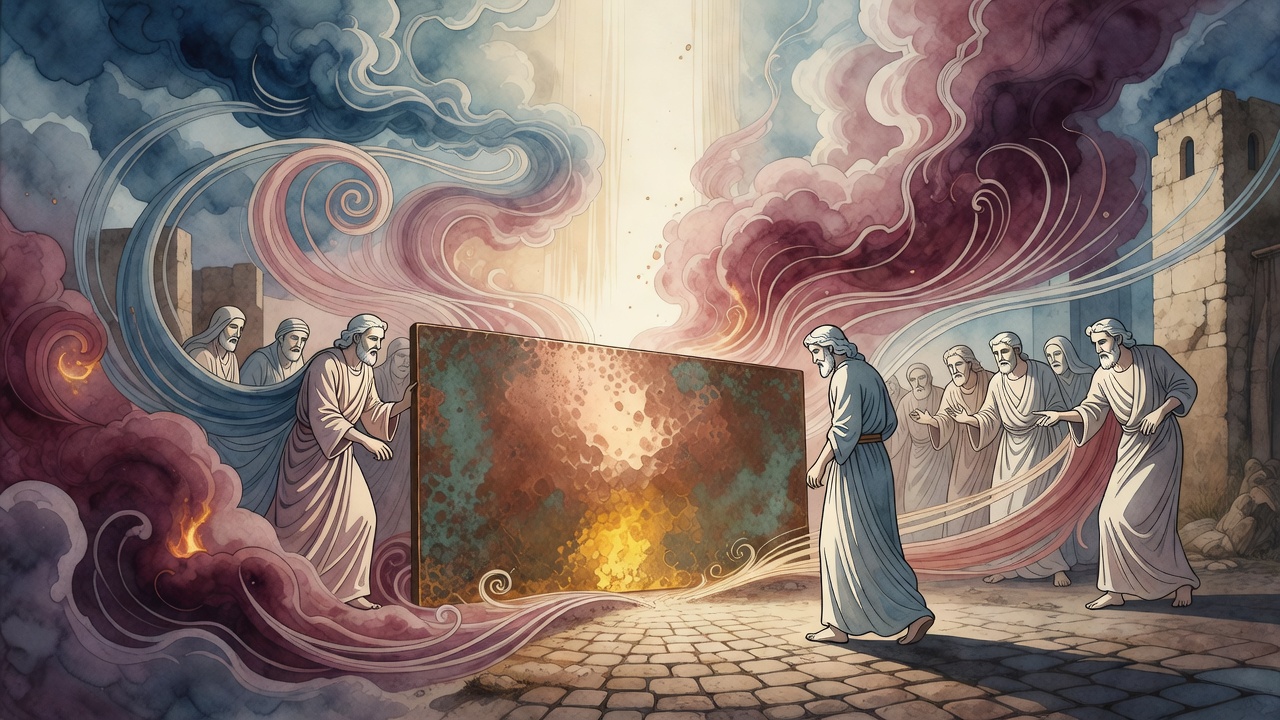
The city did not meet them with taller towers. It met them with copper. Images stood in the street, hammered and set where every Israelite eye would hit them first. On the metal the Jebusites had written the covenant oath of Abraham. The letters caught the sun. Spears lowered without an order.
Copper Faces in the Street
The men of Jebus knew Israel was coming for the land. They also knew the weight of the oath that had once passed between Abraham and the peoples of the region. So they cast that oath into copper and planted the images where no army could pretend not to read them. Boots halted. Eyes climbed the letters.
David put his hand on the hilt and did not draw. A king who charged through a patriarch's name risked more than a failed siege. He risked tearing the claim that held his own throne. The metal did not care how many songs he had written. It held Abraham's language outward like a shield, bright enough to stop a charge that steel alone could not stop.
He stood there with dust on his tongue and the city's height in front of him. Jerusalem sat on those rocks. He wanted it under his name. The copper watched him from the street with a dead man's oath cut into its skin.
Benjamin Could Not Drive Them Out
When Israel first entered Canaan, the children of Benjamin tried the city and failed. They could not drive out the Jebusites who lived in Jerusalem (Judges 1:21). The sign of Abraham's covenant stood between spear and gate. A promise meant for peace became a bolt on a door that would not open for blood alone.
Generations later David wanted the same heights. The Jebusites met him with the same metal sentences. "You shall not come in hither," they told the king and his men (2 Samuel 5:6). They did not need a larger garrison. They had Abraham's name in the street, and the name did the work of a wall.
David's breath sat high in his chest. He could take a city of stone. He could not take a city that had dressed itself in his father's word and dared him to rip it.
David Took Isaac's Bridle from the Philistines
He turned toward Philistine country with the taste of unfinished conquest still in his mouth, and the land refused him again.
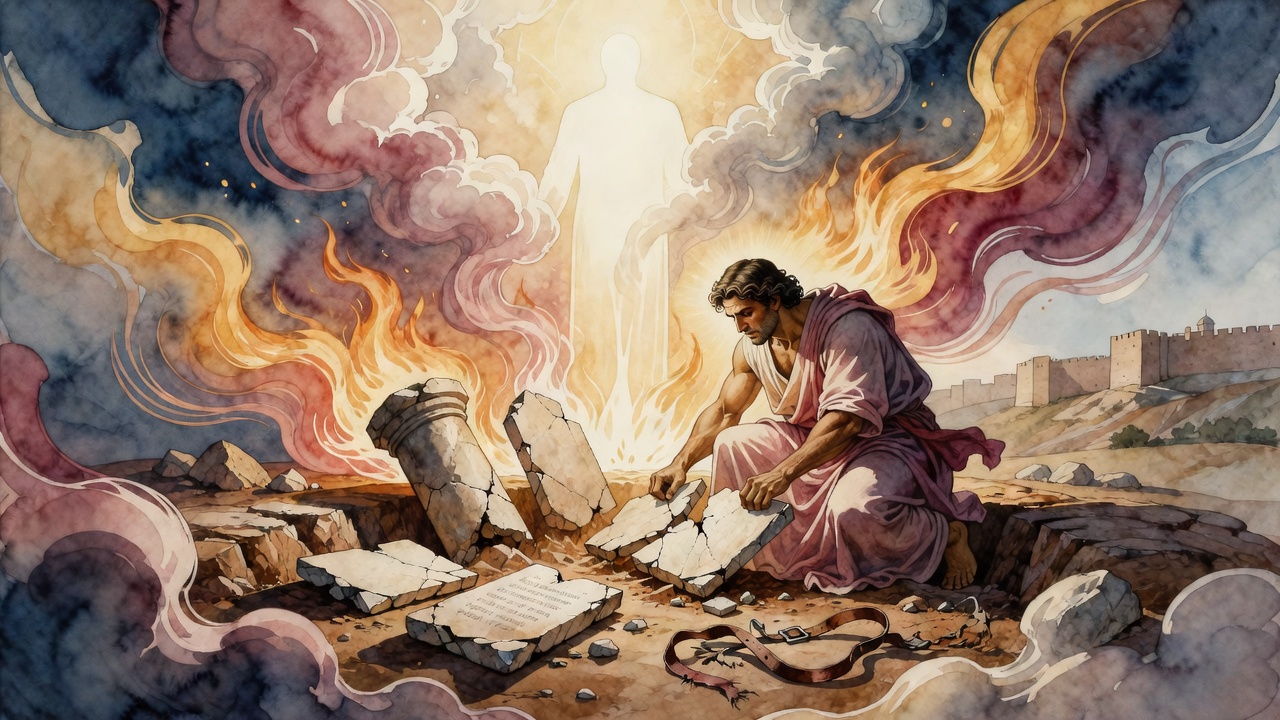
He desired to enter, and could not, because of the power of the sign of the covenant oath of Isaac. The old bond held the border the way a rope holds a stallion. Until David took from them the sign of Isaac's oath, the road would not open. The verse remembers the act as taking the bridle of the cubit out of the hand of the Philistines (2 Samuel 8:1).
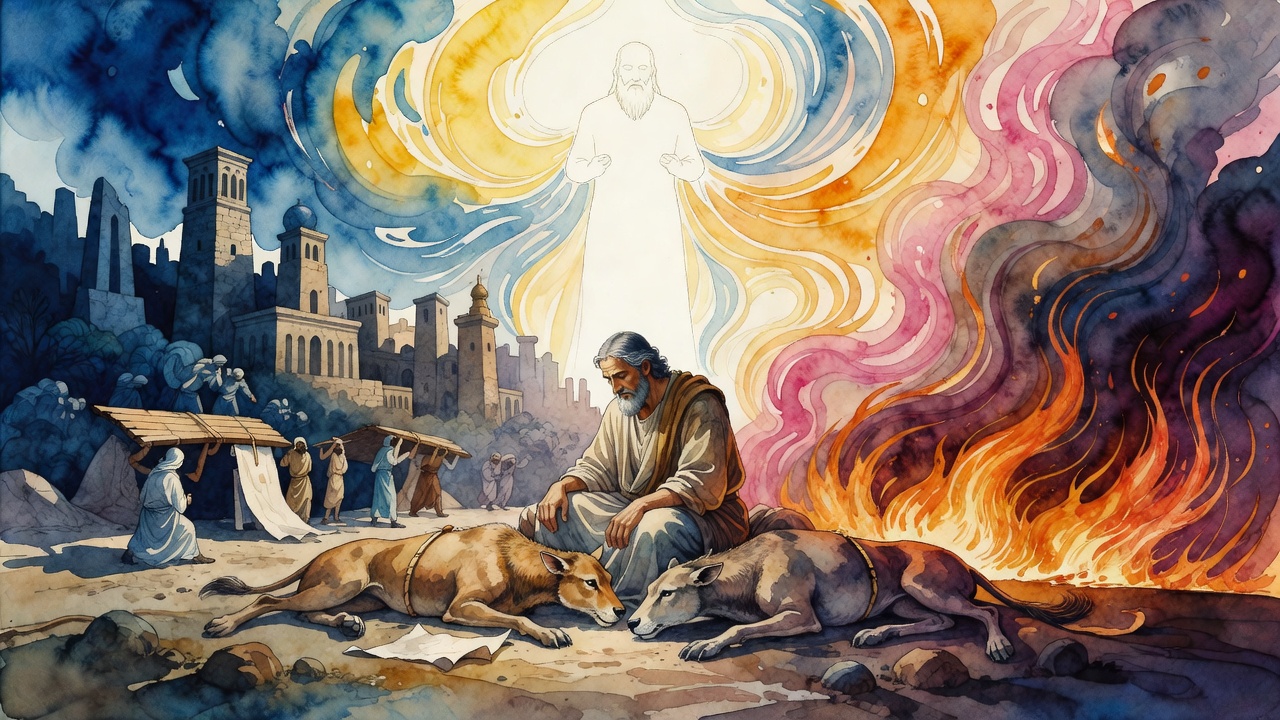
He put his hands on it. The bridle was a covenant-sign, a handle on an agreement that had steered kings for generations. He tore it free. The old restraint gave. After that seizure the Philistines were subdued and came no more within Israel's border (1 Samuel 7:13).
A bridle is for turning a beast. David had to grip the symbol itself before the map would move under his feet. The metal in Jebus and the bridle in Philistia were the same kind of stop: sacred speech made into a thing a man could hold, or a thing that could hold him.
Jacob and Laban Raised a Heap of Stones
Long before either siege, Jacob stood with Laban at a heap of stones and felt the future pressing on the present. Laban knew the Holy One would give Jacob's seed the lands ahead. He wanted a covenant that Israel's children would not swallow Edom whole for harm, and that Edom would not cross back into Israel for evil.
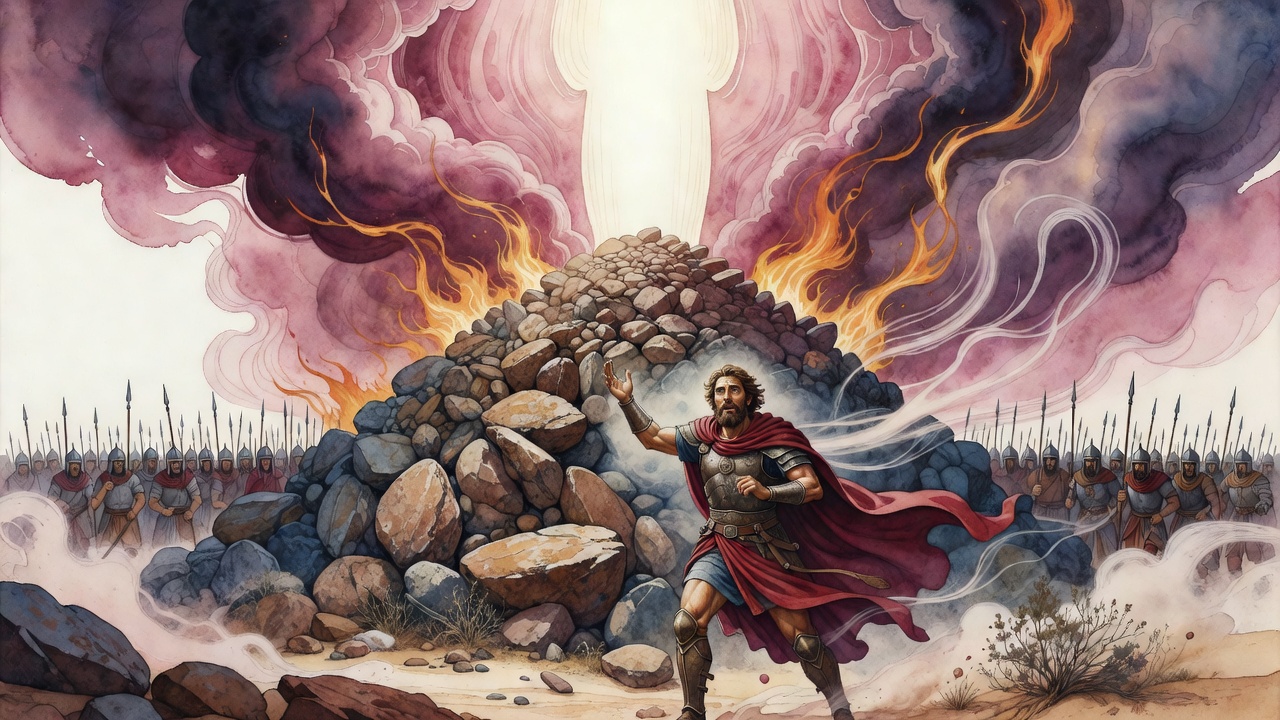
Jacob told his brethren to gather stones (Genesis 31:46). His sons lifted rock. Hands split. The heap rose. The pillar stood. Neither side would pass that marker for harm (Genesis 31:52). A border got a body of stone, and later kings would still have to read it.
That same logic later met David in the streets of Jebus. Agreements outlive the hands that seal them. Enemies can read them. A king must either honor them or take their signs with open eyes, knowing what he is breaking.
The King Crossed the Copper Line
David wanted Jerusalem. Copper faces watched him from the street. He wanted Philistine ground. Isaac's sign held the road until he tore the bridle free.
The Jebusites had gambled that a patriarch's word, once turned outward by the wrong city, still bound the people who carried the patriarch's blood. For a long stretch of Israel's history that gamble held. Benjamin could not enter. David was told to stay out while the copper flashed. When the city finally opened, it opened to a king who had already learned that a father's oath can walk the land as a lock, not only as a gift.
In the street of Jebus the copper cooled. Somewhere the heap Jacob raised with Laban still waited for the next hand. A spoken bond can outlast the men who spoke it. The next generation meets it as wall or as path, depending on who holds the sign and who is willing to take it out of a rival's grip.
← All myths