Jacob's Oath to Laban Halted David's Army at Edom
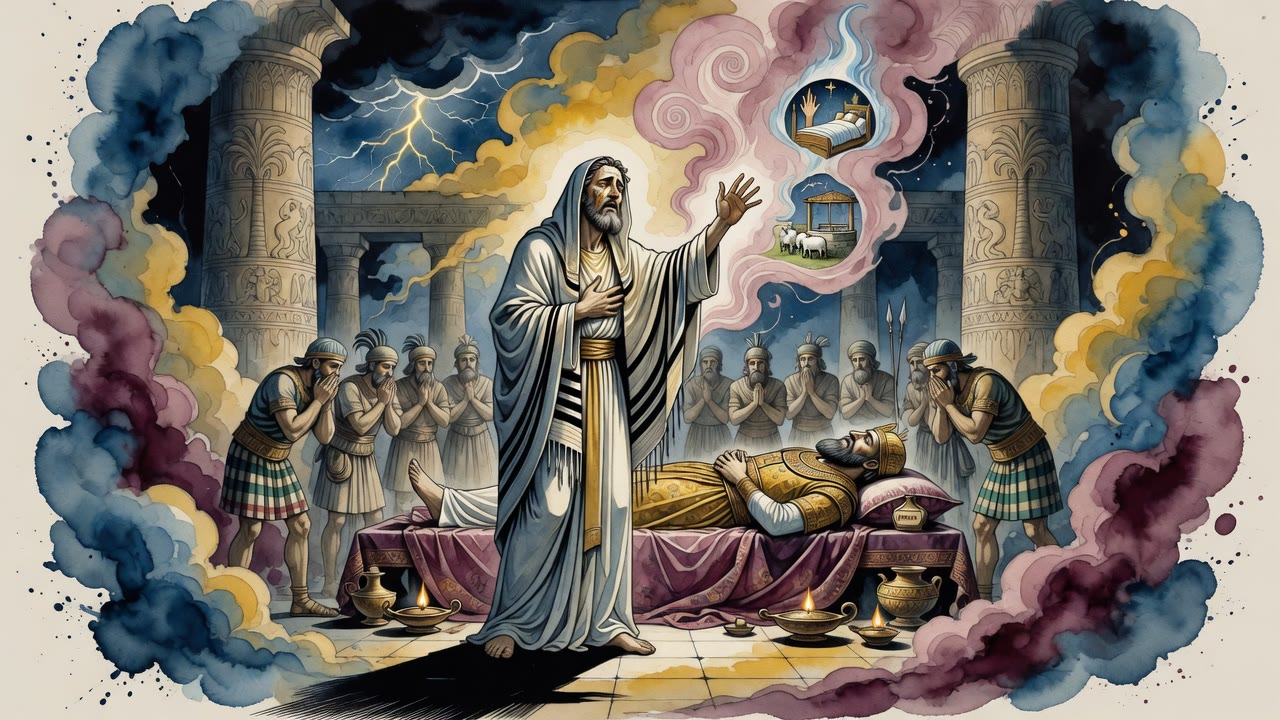
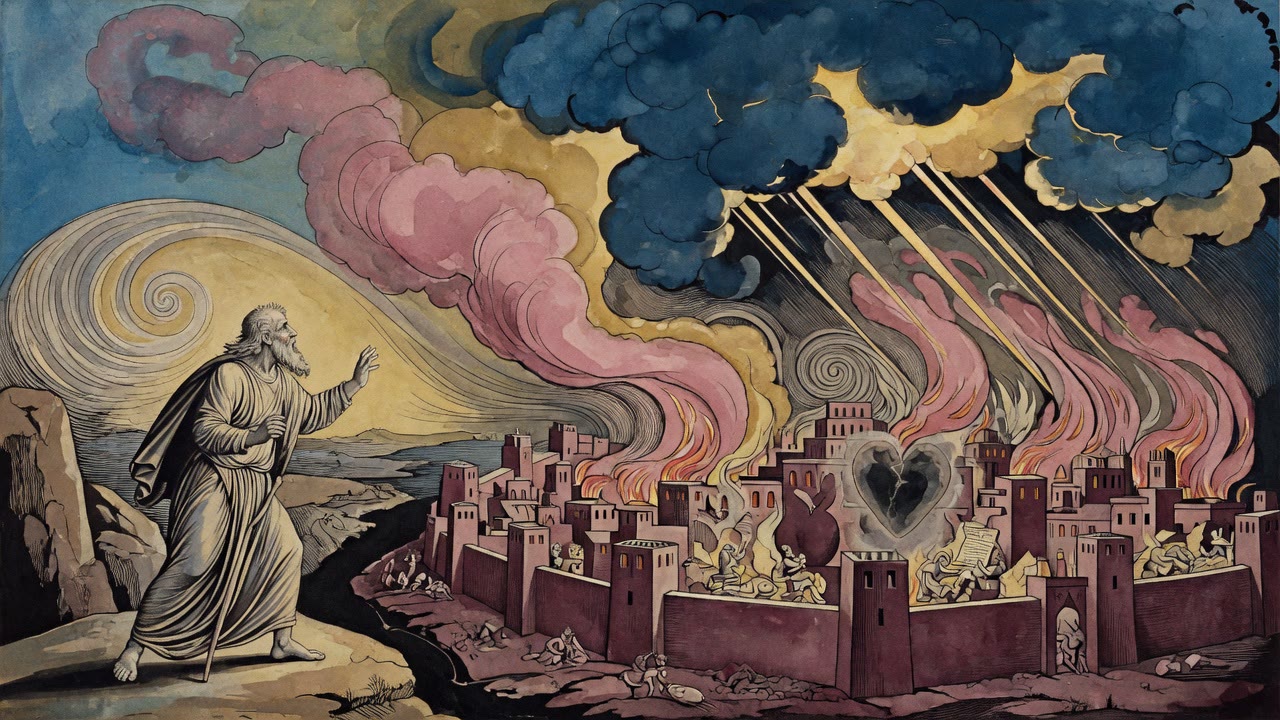
David marshaled his army against Edom and Philistia, but a covenant Jacob swore to Laban at a heap of stones held the warrior-king's hands.
Table of Contents
The army stood ready at the edge of Edom. David had counted them, blessed them, and set their faces toward the red hills where his enemies waited. Every sword was drawn. Every man watched the king for the word to march.
 Click for full size
The word did not come.
Something older than the army stood in the pass, and David felt it the way a horse feels a wall in the dark. He had beaten kings from the great river to the sea, yet here his hand would not close on the order. An oath was in the ground. It had been sworn generations before he was born, and it held the greatest warrior in Israel the way a stone holds still water.
The Pillar and the Bridle That No Sword Could Cut
Two borders refused him. To press into the land of the Philistines, David would have to break the sign of an oath Isaac had sworn long before at a well, a covenant remembered now in a single carved token the Philistines still carried. To enter Edom, he would have to shatter a pillar, a plain heap of stones raised on a hill in Gilead by his own forefather. No enemy defended these things. That was the terror of it. The barrier was not an army. It was a promise, and a promise built to endure cannot be answered with iron.
So David sent his mind back through the fathers to find where the promise began. It began with a man running for his life between two beasts.
Jacob Fled Between the Lion and the Bear
Jacob had left the house of Laban with his wives, his children, and his flocks, and the road behind him and the road ahead had each become a mouth. Behind came Laban, who had chased him into the hills to destroy him. Ahead waited Esau, planted by the wayside like a bear robbed of her cubs, ready to fall on the mother with the children. A man flees a lion, and a bear meets him. That was the whole of Jacob's night.
One difference stood between the two beasts, and Jacob knew it in his skin. The lion carries shame. The bear carries none. Laban had cheated Jacob for twenty years and would cheat him again, yet somewhere in Laban there was a floor he would not go beneath. Esau had no floor. So Jacob, caught between the shameless brother and the merely treacherous uncle, turned his face up and prayed. "Sovereign of all the Universe," he said, "did You not speak to me, 'Return to the land of your fathers and to your kindred, and I will be with you'?" He was holding God to a word, because a word was the only wall he had.
The Heap of Stones at Gilead
Laban overtook him, and the meeting did not end in blood. It ended in stones. Laban had come to understand something that turned his fury into cunning. The Holy One, blessed be He, would give all these lands to Jacob's seed in the days to come. If the children of Israel would one day hold the land, then Laban wanted his own line, the line bound up with Edom, walled off from them for good.
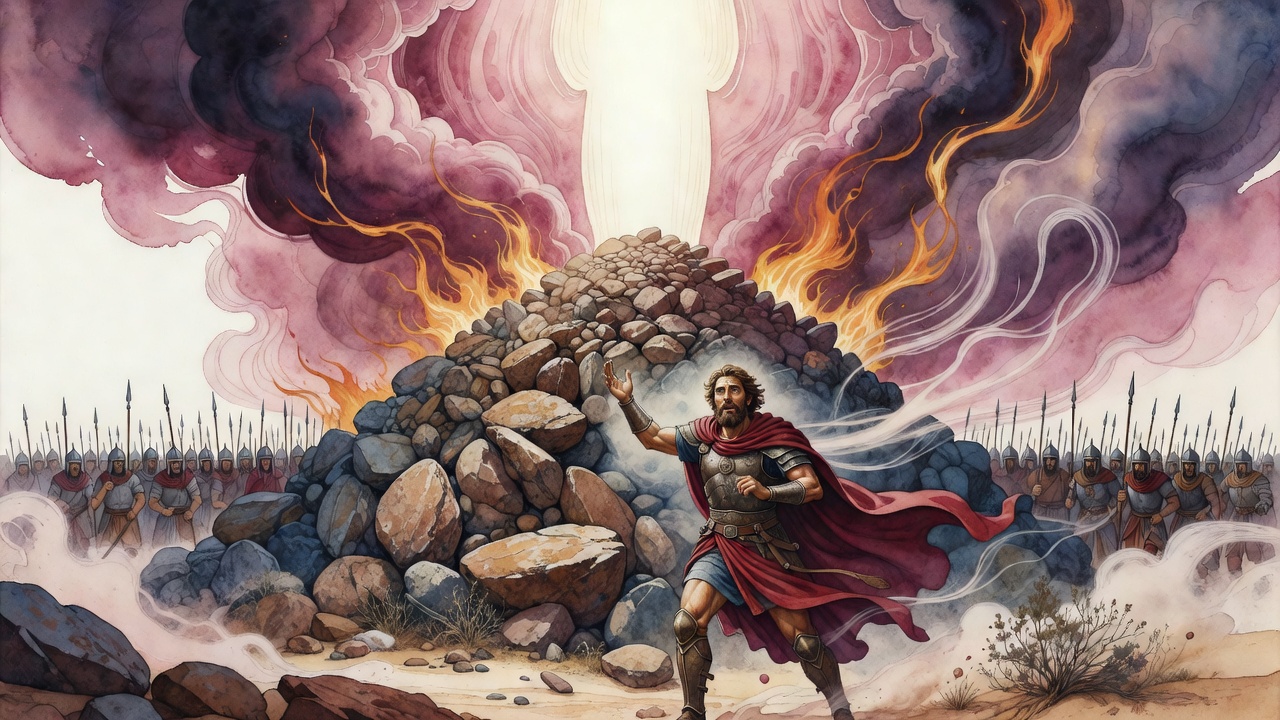
"Gather stones," Jacob said to his brethren, and they gathered them and built a heap. His brethren were in truth his sons, for a man's sons stand to him as brothers, one flesh reaching across the generations. On that heap, beside a single standing pillar, the two men swore. If Israel came to possess the land of Canaan, Israel would not enter Edom to do it harm. If Edom rose first, Edom would not cross into Israel for evil. "I will not pass over this heap to you," they said, "and you shall not pass over this heap and this pillar to me, for harm." Then they ate together on the mountain, and the oath lay down in the ground and waited.
It waited through Jacob's death. It waited through Egypt, through the sea, through the wilderness and the long years of the judges. It was still waiting when a shepherd boy from Bethlehem was anointed with oil.
The King Broke the Sign and the Border Opened
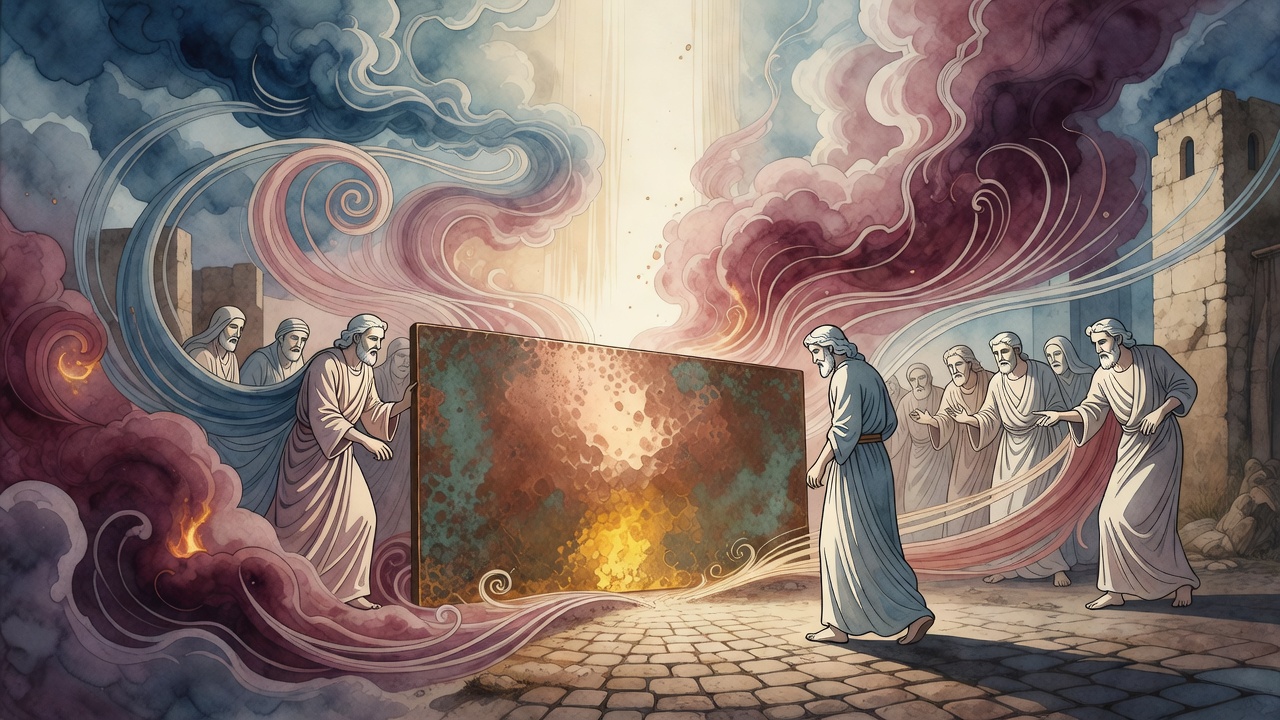
Now the halt in the pass had a face. His own grandfather's oath was the wall. David could not simply trample it, for an oath sworn on the Name does not dissolve because a later king finds it in his way. But it could be answered. The covenant did not float free. It lived in a sign, in the pillar of stones and in the carved token the Philistines carried, and a sign can be lifted.
So David rode to the border and broke the pillar. "Break in pieces their pillars," the old command read, and he took it as leave to do exactly that. From the hand of the Philistines he took the bridle, the metheg-ammah, the last emblem of Isaac's ancient oath, and once the emblem was gone the oath had nothing left to stand on. The wall came down. The Philistines were subdued and came no more into the borders of Israel. And David struck Hadadezer son of Rehob, king of Zobah, as he went to recover his dominion at the river, and Edom lay open at last.
The heap on the hill in Gilead was rubble now. The warrior-king had not out-fought his forefather's promise. He had walked to the exact stone where it was buried, lifted it, and only then let the army march.
← All myths