Parshat Vayera6 min read

Abraham's Seven Ewes Cost Israel Seven Sanctuaries

To seal a peace with a Philistine king, Abraham handed over seven ewes. God had not asked for them, and Samson, Saul, and Eli's sons paid the bill.

Curated by Arthur · Told by Maggid ·
Table of Contents
  1. Seven Ewes Set Apart
  2. The Gift God Did Not Ask For
  3. Seven Against Seven
  4. The Body on the Same Calendar
  5. The Ark Comes Home to Mockers
  6. Dust on the Hoofprints
Abraham's Seven Ewes Cost Israel Seven Sanctuaries Click for full size

Seven Ewes Set Apart

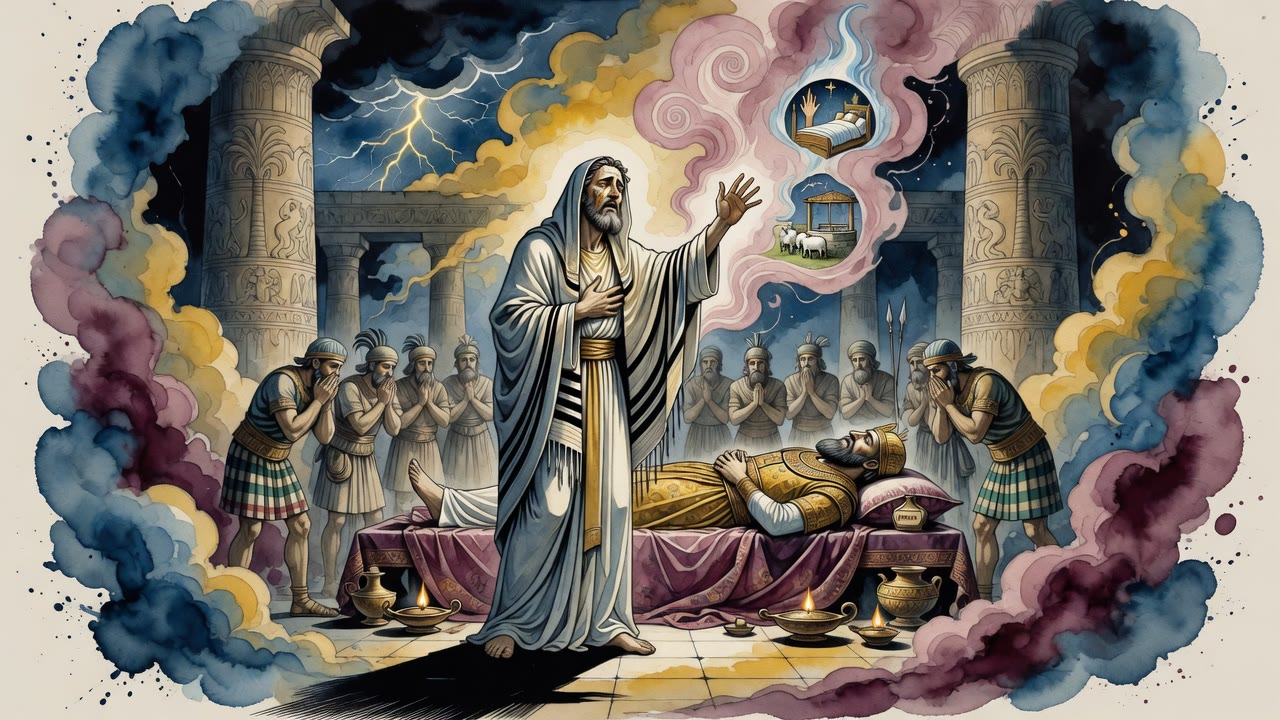
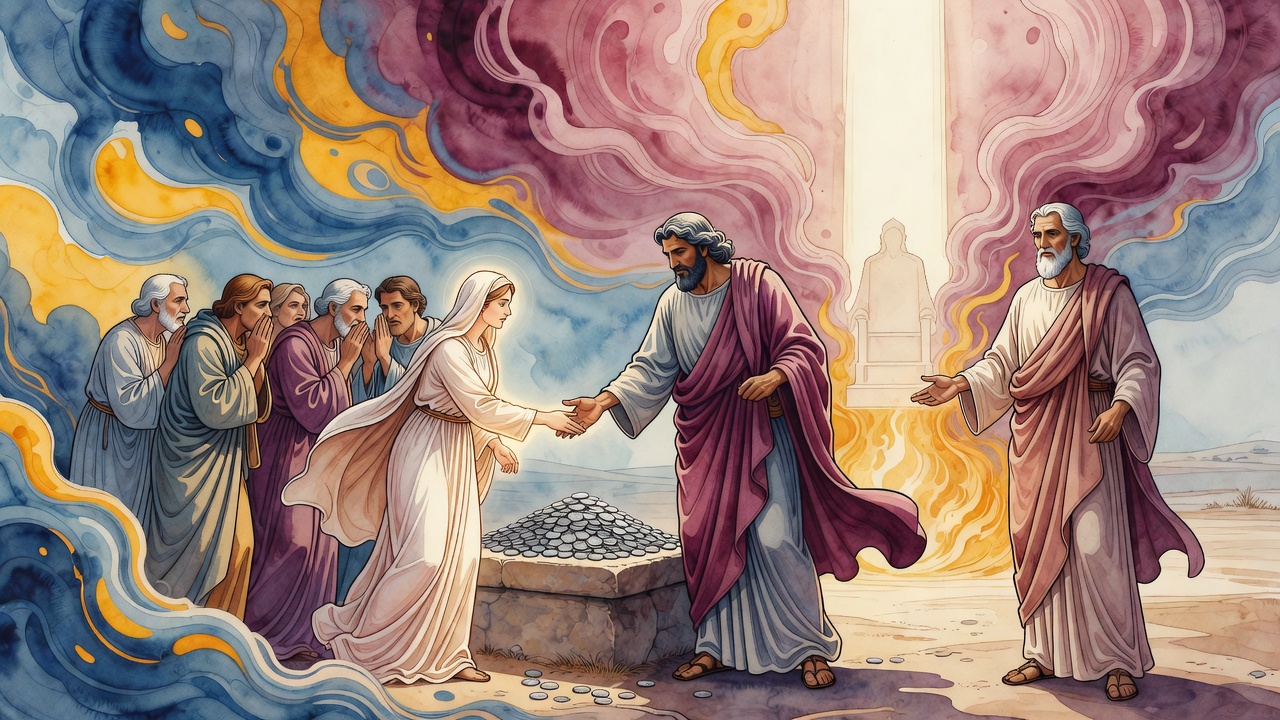
Abraham stood in the open country with a Philistine king and a line of animals between them. The wells had been a quarrel. The names of places had been a quarrel. Now both men wanted a peace they could point to when the herdsmen started shouting again. He took flocks and cattle and put them into Avimelekh's hands, and the two of them cut a covenant (Genesis 21:27).

Then Abraham did one more thing. He set seven ewes apart by themselves.

Avimelekh frowned at the little cluster of wool. "What are these seven ewes that you have set by themselves?" Abraham answered as a man answers when he wants a treaty to hold. "Take them from my hand, so they will be a witness that I dug this well." The king took them. The deal closed. Dust settled over the hoofprints.

Heaven did not settle.

The Gift God Did Not Ask For

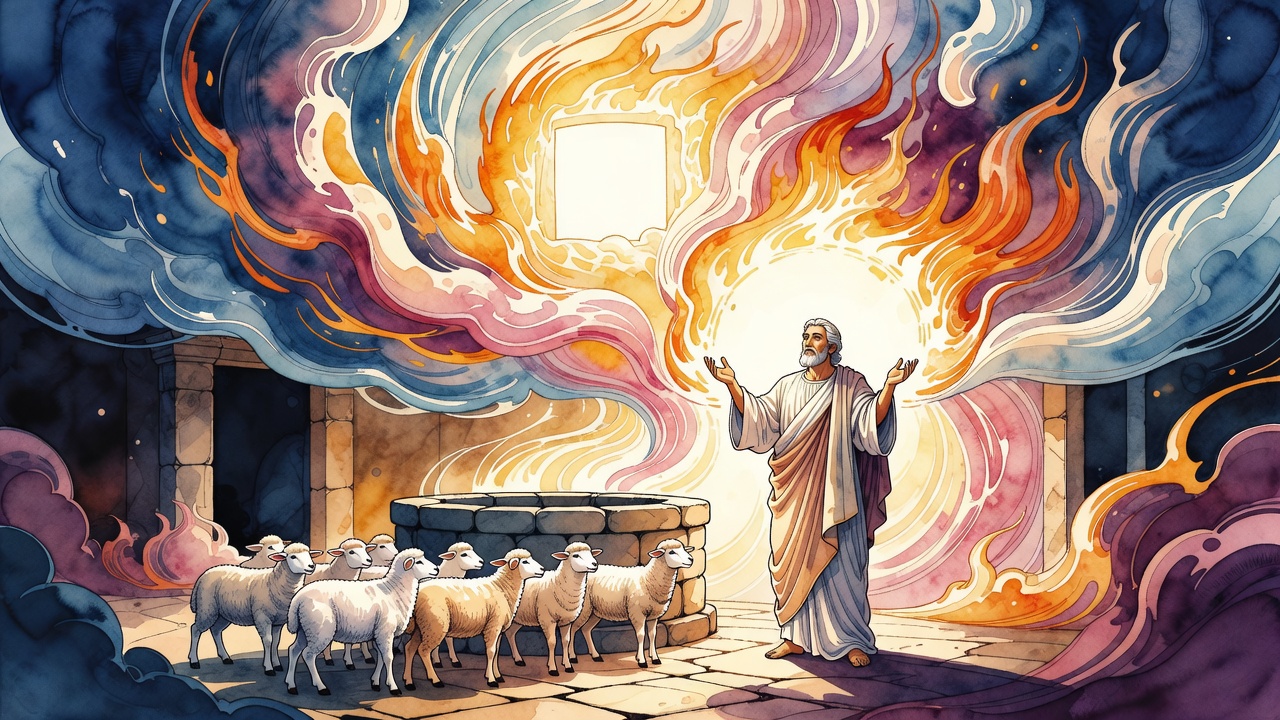
The voice of God that had walked Abraham out of Ur pressed hard against the gift. "You gave seven ewes against My wishes. You bound yourself to an idolater with sheep I did not request. By your life, I will delay the rejoicing of your descendants for seven generations." The Exodus would wait. Joy deferred is not a small fine. It is ages of bricks before song.

Abraham had made covenants before, and heaven had signed those. Between the pieces, fire had passed through split animals while a great darkness lay on him, and the land had been promised in a tense that treated the future as finished. "I have given," not "I will give." When the Holy One speaks, the word lands as deed. This Philistine oath was different. It was Abraham's own handiwork, and the seven ewes were his flourish, a human addition to a divine plot. Human additions write their own invoices.

Seven Against Seven

The decree unfolded like a ledger. "You gave him seven ewes against My wishes. By your life, they will kill seven righteous men of your descendants." The names would arrive in history's own mouth. Hofni and Pinhas, sons of Eli, dead in one day beside the captured Ark. Samson, blinded at a Philistine feast. Saul and his three sons, fallen on Mount Gilboa with Philistine arrows still in the air.

"You gave him seven ewes against My wishes. They will destroy seven sanctuaries of your descendants." The Tent of Meeting. Gilgal. Nov. Givon. Shilo. Then the two eternal houses in Jerusalem, stone after stone, until fire took what prayer could not hold.

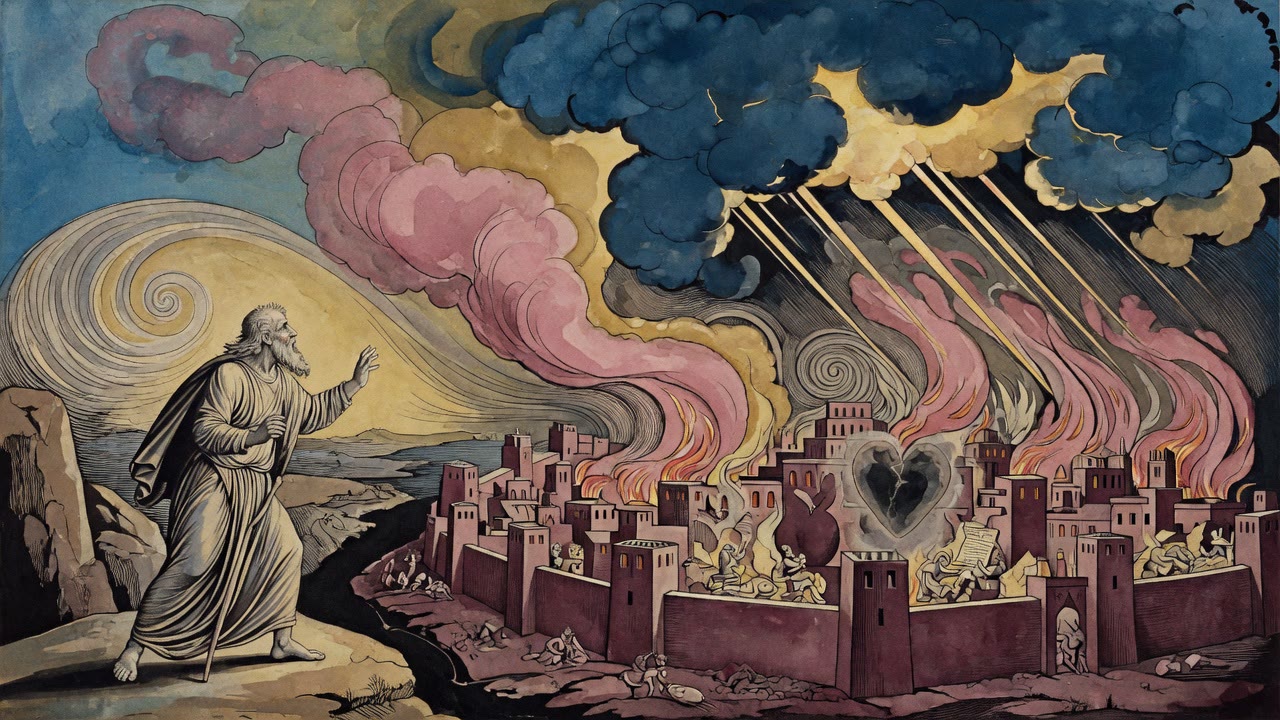
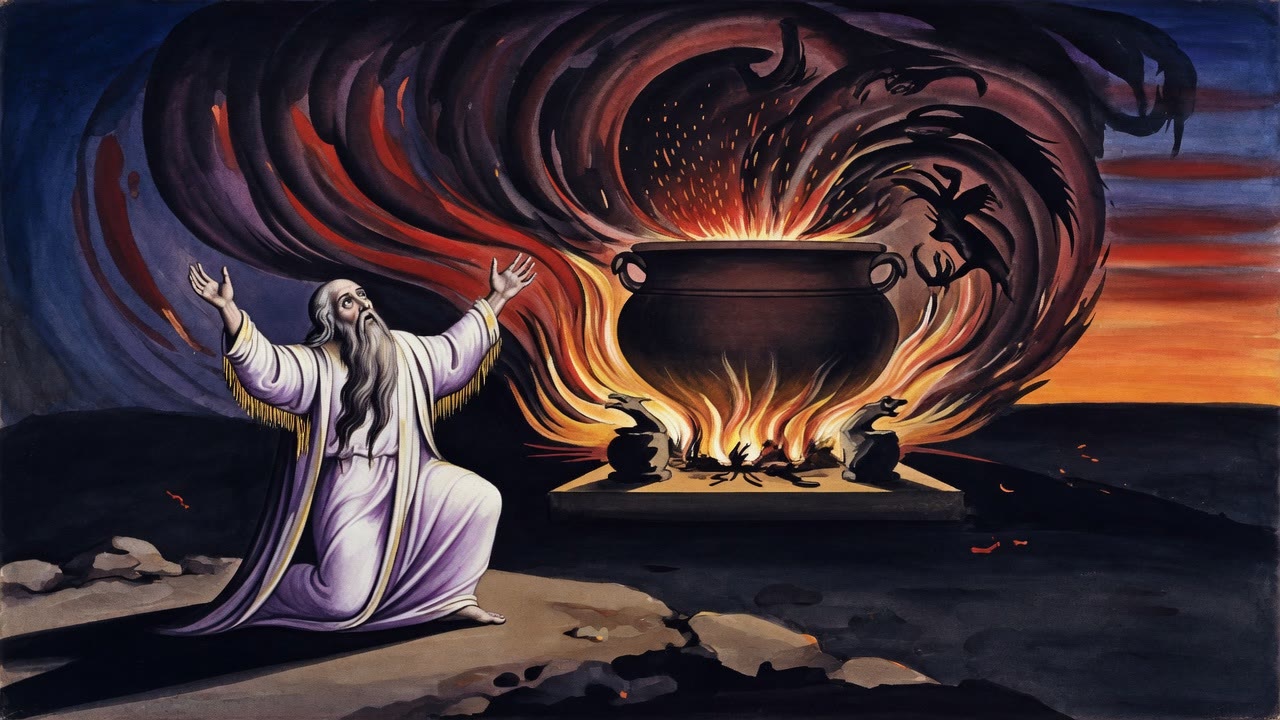
"You gave him seven ewes against My wishes. My Ark will circulate in the Philistine countryside for seven months." Strength sent into captivity, splendor into the hand of the foe (Psalms 78:61). The chest that should have rested between cherubim would ride foreign carts through enemy grain while Dagon fell on his face and tumors walked through Philistine towns.

The Body on the Same Calendar

Promise and penalty moved on one clock. In those same years Abraham's own flesh waited for its mark. Circumcision came only at ninety-nine, timed so the door would stay open for converts of any age, and so that Isaac would be conceived from a body already under the covenant's seal. Ishmael was born before the cut. Isaac would not be. The same precision that scheduled a patriarch's skin now scheduled the cost of seven sheep, and the man who had been shown kingdoms rising and falling still had to live inside the small choices that bruise the far future. A king on a road. A well. Seven animals set aside because a treaty felt safer with a witness a man can count.

The Ark Comes Home to Mockers

Seven months later the Ark returned on a cart the Philistines sent themselves, drawn by lowing cattle no man drove. In Beit Shemesh the people rejoiced, and the rejoicing curdled. They unloaded the holy chest while going about their ordinary work, field tools still in hand, as if the seat of the Presence were freight. Some looked at it and mocked. "Who vexed these that thou didst feel offended, and what had mollified thee now?"

The answer came as a plague of its own. Seventy of the Sanhedrin (Israel's high court of sages) died, and fifty thousand of the people with them. The charge heaven laid against them was smaller and sharper than blasphemy. Had one of them lost a chicken, he would have gone to many doors to recover it, but the Ark sat in Philistine country for seven months and no one paid it any attention. Reverence delayed is also a debt, and the seven-ewe covenant and the casual unloading sit on one spine. Holy things are not tokens for politics, and not furniture for a harvest day.

Dust on the Hoofprints

Avimelekh rode home with livestock and a sealed peace. Abraham stood under a sky that had already begun to collect interest. None of it canceled the land spoken between the pieces. "I have given" remained given in heaven's grammar. But the ewes remained in the verse too, quiet and white, while the bill came due across centuries, in dead priests at a doorway, a strongman's eyes, a king's sword on Gilboa, sanctuary after sanctuary going down in a count that matched a border gift.

He had wanted a quiet border. He bought a loud future. Later Israel, walking past a blackened sanctuary, could hear it if they listened, seven sheep bleating at the edge of memory, mild and expensive.


← All myths
From the tradition

Sources

4 sources

The texts behind this telling. Some cards carry a translation of the source; others are our own retelling of it, and each card says which. Every card links out to the original.

Bereshit Rabbah 54:4Bereshit Rabbah

Retold in our words. Read the original at the link below.The Sefaria Midrash Rabbah, 2022 · CC-BY

The story begins with Abraham making a covenant with Avimelekh, a Philistine king. As (Genesis 21:27) tells us, "Abraham took flocks and cattle, and gave them to Avimelekh, and the two of them established a covenant." All seems well. But then Abraham sets aside seven ewes, and Avimelekh is understandably curious. "What are these seven ewes that you have placed by themselves?" he asks (Genesis 21:29).

In Bereshit Rabbah, 54, this seemingly innocent act of giving those seven ewes didn't sit well with God. Why? Because Abraham was making a covenant with an idolater. The text pulls no punches: God says, in effect, "You gave seven ewes against My wishes." That, because of this act, the rejoicing of Abraham's descendants would be delayed for seven generations. We find a similar sentiment in (Exodus 23:32) which cautions against making covenants with idolaters.

It doesn't stop there. The consequences multiply. "You gave him seven ewes against My wishes," the text continues, "by your life, they [the Philistines] will correspondingly kill seven righteous men of your descendants." Who are these righteous men? Ḥofni and Pinḥas, the sons of Eli the priest, Samson, and Saul and his three sons. That's a heavy price for a few sheep!

Still, there's more. The text continues, "You gave him seven ewes against My wishes, they [the Philistines] will correspondingly destroy seven Sanctuaries of your descendants." These sanctuaries include the Tent of Meeting, Gilgal, Nov, Givon, Shilo, and the two eternal Temples in Jerusalem. – the destruction of the Temples, traced back to this one act!

Finally, the text concludes this chain of consequences by stating, "You gave him seven ewes against My wishes, My Ark will correspondingly circulate in the Philistine countryside for seven months." We see this reflected in (Psalms 78:61), which speaks of God sending "His strength into captivity." This refers to the Ark, which, as we read in I (Samuel 6:1), remained in Philistine territory for seven months. The priestly vestments, described in (Exodus 28:2) as being made "for splendor," also fell into enemy hands.

So, what are we to make of this seemingly harsh judgment? Well, the Rabbis don't shy away from examining even the most difficult aspects of our tradition. The story takes an interesting turn when it discusses the people of Beit Shemesh. Remember when the Ark was returned by the Philistines and the people of Beit Shemesh were struck down? Rabbi Yirmeya, citing Rabbi Shmuel bar Rav Yitzḥak in the name of Rabbi Abba, explains that it was because they demeaned the Ark. God says, "Had one of them lost a chicken, he would have gone around to many doors in order to recover it, yet My Ark was in the Philistine countryside for seven months, and you paid it no attention."

But even in this moment of seeming divine anger, there's a glimmer of hope. The text references (Psalms 98:1), "His right hand and His holy arm have wrought salvation for Him," connecting it directly to the retrieval of the Ark. And then we get to the image of the cows pulling the cart carrying the Ark. I (Samuel 6:12) tells us that they "went directly [vayisharna] on the road." But the Rabbis offer a beautiful alternative interpretation: that vayisharna means they turned their faces toward the Ark and sang a song of praise, shira.

Rabbi Meir suggests they sang the Song of the Sea (Exodus 15), drawing a parallel between "they went, lowing [vega’u] as they went" (I (Samuel 6:1)2) and "As He is greatly exalted [gao gaa]" (Exodus 15:1). Other Rabbis suggest they sang (Psalms 98:1) ("Sing to the Lord a new song"), (Psalms 97:1) ("The Lord reigns; let the earth rejoice"), or even a combination of (Psalms 98:1), 96:1, and 99:1. Eliyahu even provides a specific song, a poetic tribute to the acacia wood of the Ark, adorned with gold and cherished in the Temple.

Rabbi Shmuel bar Naḥman marvels at these cows, pointing out how much effort Moses invested in teaching the Levites to sing, and yet these animals spontaneously burst into song. "May your strength be true," he exclaims.

What's the takeaway from all this? Perhaps it's a reminder that our actions, even those that seem small or insignificant, can have ripple effects we can't even imagine. It's a call to be mindful, to consider the consequences of our choices, and to always strive to act in accordance with what we believe is right. And it's also a reminder that even in moments of perceived divine judgment, there's always the potential for redemption, for song, and for praise.

Full source
Legends of the Jews 3:19Legends of the Jews

Retold in our words. Read the original at the link below.The Legends of the Jews by Louis Ginzberg (1909) · Public Domain

The ancient Israelites knew that feeling all too well.

The scene: the Ark of the Covenant, the most sacred object in their possession, finally brought into their land. You’d expect unbridled joy. And there was joy. But according to the ancient texts, something was off.

The story, as told in Legends of the Jews by Ginzberg, is a powerful one. When the Ark entered the Israelite domain, the rejoicing was "exceeding great." But beneath the surface, something was amiss. The people, in their excitement, didn't treat the Ark with the respect it deserved. They unloaded it while going about their everyday tasks, blurring the line between the sacred and the mundane.

You might be thinking, "What's the big deal? They were just trying to get the job done." But remember, this wasn't just any object. This was the Ark of the Covenant, the physical representation of God’s presence. It demanded reverence, a recognition of its holiness.

And God, according to the legend, noticed their lack of respect. The punishment was swift and severe. Seventy members of the Sanhedrin, the high court of ancient Israel, perished, along with fifty thousand other people. Fifty thousand! A devastating blow.

Why such a harsh punishment? The Legends of the Jews suggests another reason. Upon seeing the Ark, some people exclaimed, "Who vexed these that thou didst feel offended, and what had mollified thee now?" Their words implied a lack of understanding, a failure to grasp the true significance of the Ark and the Divine Presence it represented. It was as if they were speaking of it as some fickle, easily-offended being, rather than the embodiment of God's covenant with them. It wasn't enough to simply possess the Ark. The people needed to understand its meaning, to approach it with humility and reverence. They needed to recognize the awesome power it held, a power connected directly to the Divine.

The ancient text invokes the image of an acacia tree: "Arise thou, O Acacia! Soar aloft in the fulness of thy splendor, Thou who art reverenced within the Holiest of the palace..." This isn't just about wood; it’s about the inherent holiness that can reside even in the simplest of things, if treated with the proper respect and understanding. The acacia wood, used to build the Ark, was not just wood; it was sacred.

This story, found in Legends of the Jews, is a powerful reminder that true celebration isn't just about outward displays of joy. It's about inward reverence, about recognizing the sacred in the midst of the mundane. It’s about understanding the weight and responsibility that comes with possessing something truly holy. Perhaps the fate of those Israelites serves as a cautionary tale, urging us to approach the sacred with the awe and respect it deserves.

Full source
Bereshit Rabbah 44:22Bereshit Rabbah

Retold in our words. Read the original at the link below.The Sefaria Midrash Rabbah, 2022 · CC-BY

Bereshit Rabbah turns to What God Revealed to Abraham in the Covenant.

Rabbi Yudan brings us a fascinating debate between Rabban Yoḥanan ben Zakkai and Rabbi Akiva. One sage believed God only told Abraham about the events of this world, specifically the rise and fall of the Four Kingdoms that would subjugate Israel. The other, however, held that Abraham was privy to both this world and the World to Come!

The discussion doesn't end there. Rabbi Berekhya, citing Rabbi Elazar, and Rabbi Yosei bar Ḥanina offer another perspective. One suggested Abraham was shown events up to the Exodus from Egypt, while the other claimed the vision extended all the way to the messianic redemption – that glorious time when, as Zechariah (14:9) tells us, “on that day the Lord will be one and His name one.” That’s quite a range of possibilities!

Then the midrash shifts focus, dwelling on the power of God's word. The verse continues, "To your descendants I have given…" Rav Huna and Rabbi Dostai, in the name of Rabbi Shmuel bar Naḥman, emphasize that even a mere statement by the Holy One, blessed be He, is as good as done. It's not written, "I will give this land," but "I have given this land." The act is already complete in the divine realm.

Rabbi Yudan, in the name of Rabbi Abba bar Kahana, draws a parallel from (Psalms 107:2): "Let those whom the Lord has redeemed say." It doesn't say "those whom He redeems", but "has redeemed." Rabbi Avun echoes this sentiment with (Jeremiah 31:11), noting it says "the Lord has redeemed Jacob," not "is redeeming." The Rabbis bring (Zechariah 10:8), "I will whistle to them and gather them…for I have redeemed them", again, the past tense emphasizes certainty. Rabbi Yehoshua adds, from (Isaiah 4:5), that it says "He has created", not "will create" over Mount Zion.

What does this all mean? It speaks to the profound and unwavering nature of God's promises. Once God declares something, it's as good as done. It’s already a reality in some form. It's a powerful message of hope and assurance.

This passage from Bereshit Rabbah leaves us pondering the nature of time, prophecy, and the sheer power of divine utterance. It prompts us to consider: how much of the future is already written? And how much is still in our hands? Perhaps the answer lies somewhere in the delicate balance between divine decree and human action.

Full source
Bereshit Rabbah 46:2Bereshit Rabbah

Retold in our words. Read the original at the link below.The Sefaria Midrash Rabbah, 2022 · CC-BY

"For everything there is a season, and a time for every purpose under heaven." The familiar version gives us the famous line from Ecclesiastes (3:1). But have you ever stopped to consider just how meticulously timed events are in the grand scheme of things, especially in the unfolding story of Judaism?It's a story filled with divine purpose and insightful reasons.

The passage points out that there was a specific, divinely ordained time for Abraham to undergo circumcision. (Genesis 17:26) tells us, "On that [hazeh] very day Abraham was circumcised, and Ishmael his son." The word hazeh, "that," isn't just a throwaway word. It signifies a preordained moment. And, as Bereshit Rabbah continues, this wasn't just a one-time event. It foreshadowed the mass circumcisions of Abraham's descendants, first in Egypt, before they could partake in the Passover sacrifice (Exodus 12:48). And later in the wilderness during the time of Joshua (Joshua 5:3, 5).

Here's the big question: Why at 99? Why not sooner? Abraham, the text notes, could have been circumcised much earlier, perhaps as early as age 48, when, according to Bereshit Rabbah 30:8, he first came to know his Creator.

The text offers compelling explanations. First, to keep the door open for proselytes. The Rabbis, in their wisdom, understood that if Abraham had been circumcised at a younger age, it might discourage older individuals from converting. By waiting until 99, God demonstrated that even at an advanced age, conversion is possible.

And if you're thinking, "Okay, but why not at 85, before Ishmael was conceived, or at 70, when God spoke to Abraham at the covenant between the pieces?" The text has an answer for that too! It was so that Isaac would emerge "from a sacred drop." In other words, only Isaac's conception, not Ishmael's, would occur after Abraham's circumcision, imbuing Isaac with special sanctity.

Then, Reish Lakish offers another intriguing perspective. God, in a sense, says: “I am producing cinnamon in the world.” Cinnamon, the text explains, is like the righteous. Even when old, if nurtured, it still yields fruit. So too with Abraham. Even when his blood had become sluggish and his desire dissipated, he could still bring forth a child of promise. This beautiful metaphor highlights that even when things seem impossible, divine intervention can bring forth new life and blessings.

Finally, the text touches on a question that may have crossed your mind: If circumcision is so important, why wasn't it given to Adam, the first human? This is a shorter version of a discussion that appears in Bereshit Rabbah 11:6. It's a reminder that God's plan unfolds in stages, each with its own unique purpose and timing.

So, what do we take away from all of this? That timing is everything. That God's plan is intricate and deliberate. And that even in the face of seemingly impossible circumstances, there is always hope for renewal and growth. It's a reminder that even when we feel like our "blood has become sluggish," as it were, we can still be vessels for something sacred and meaningful. Isn’t that a comforting thought?

Full source