Parshat Lech Lecha5 min read

A Horror of Darkness Fell on Abraham at Sundown

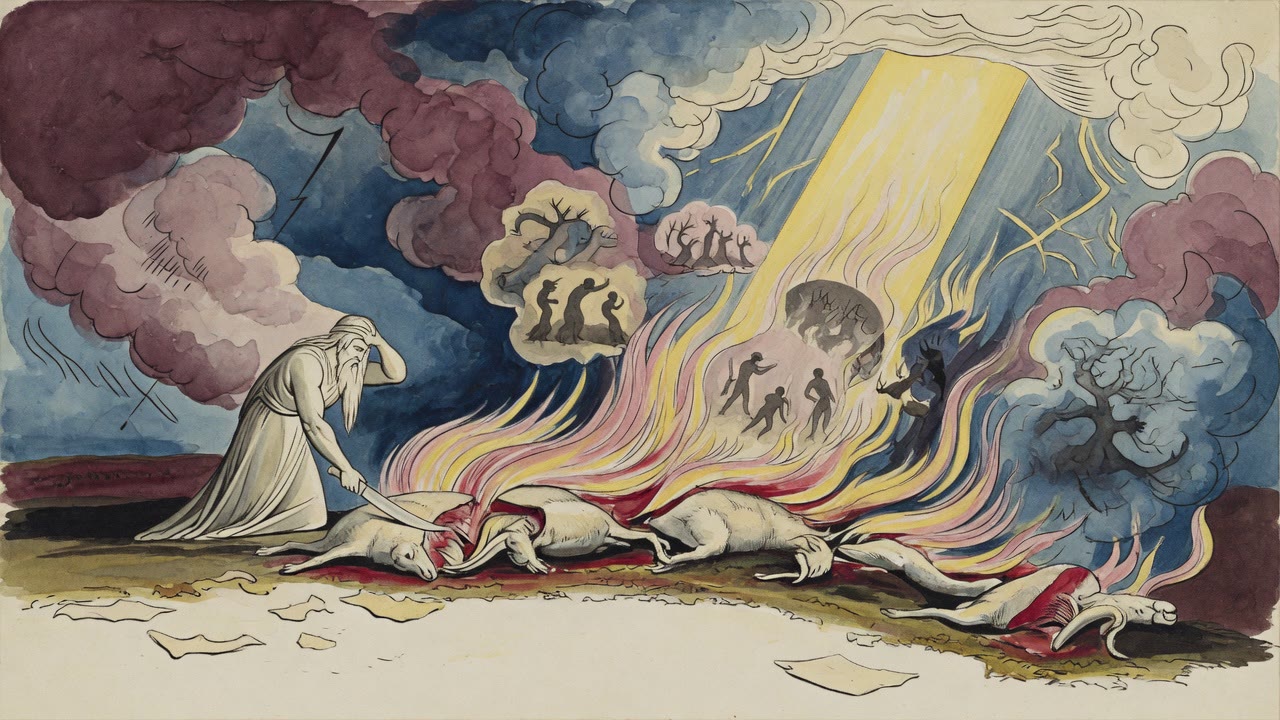
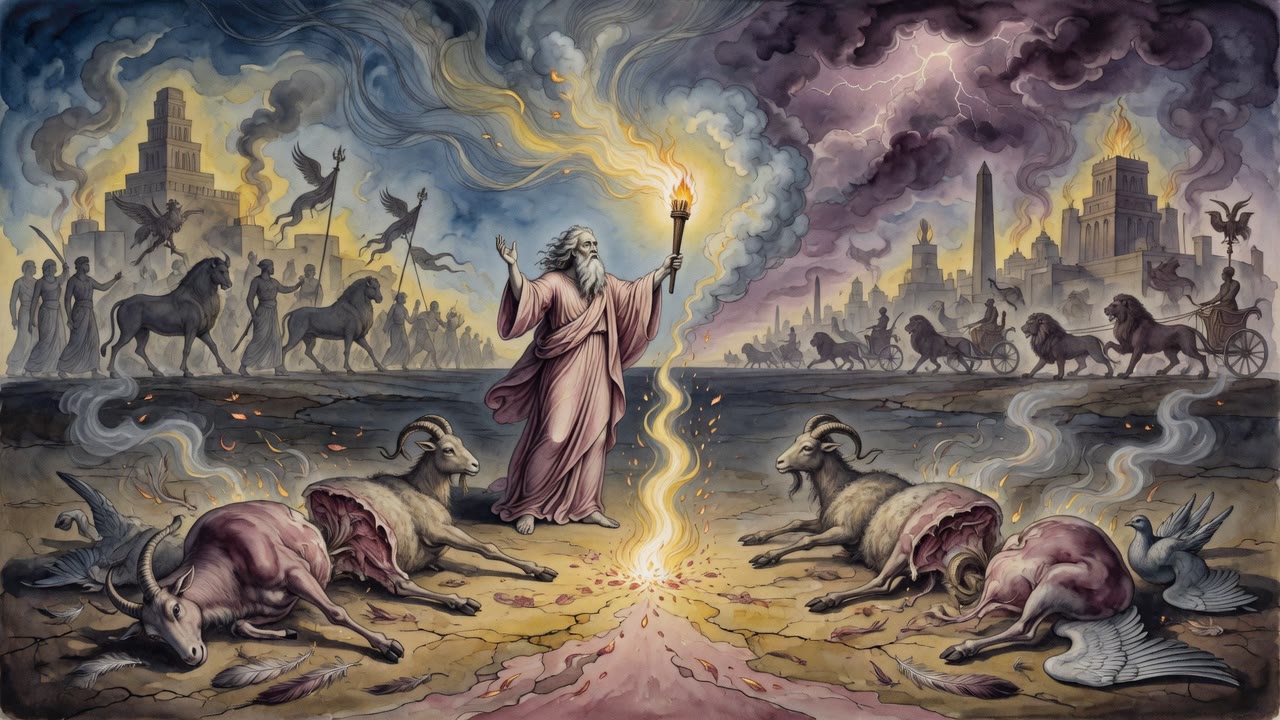
Heifer, goat, and ram lay cut in halves, and the birds of prey came down for them. Abraham drove the birds off and sat with the meat until sundown.

Curated by Arthur · Told by Maggid ·
Table of Contents
  1. When the Sun Went Down on the Covenant
  2. Exile Shown Before It Happened
  3. The Mind Wandering Beyond Itself
  4. Sitting on the Birds of Chaos
  5. Dawn After the Horror
A Horror of Darkness Fell on Abraham at Sundown Click for full size

When the Sun Went Down on the Covenant

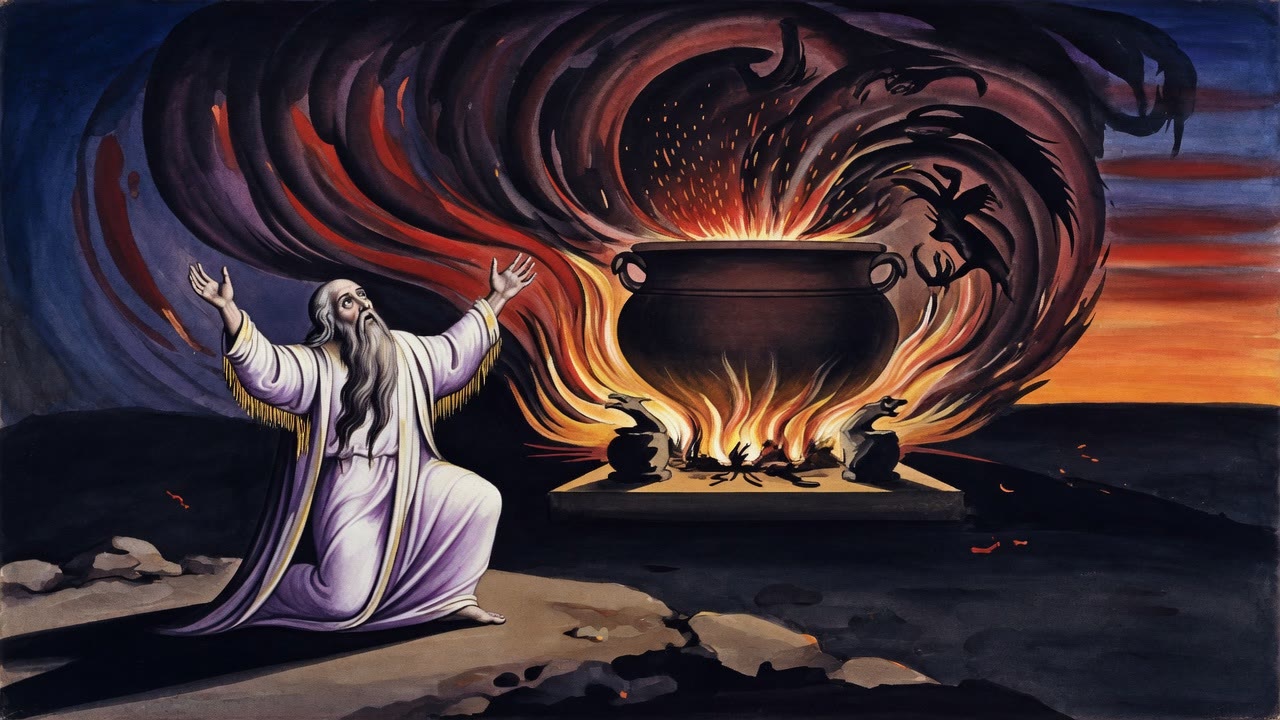
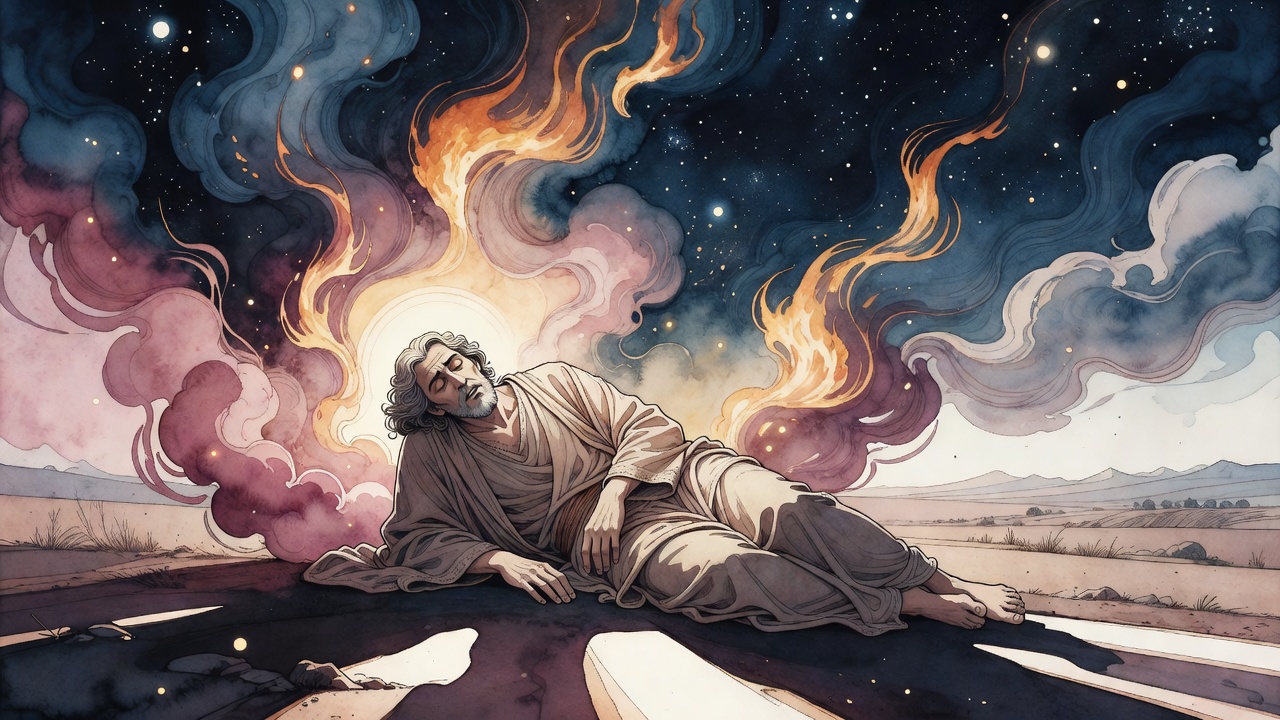
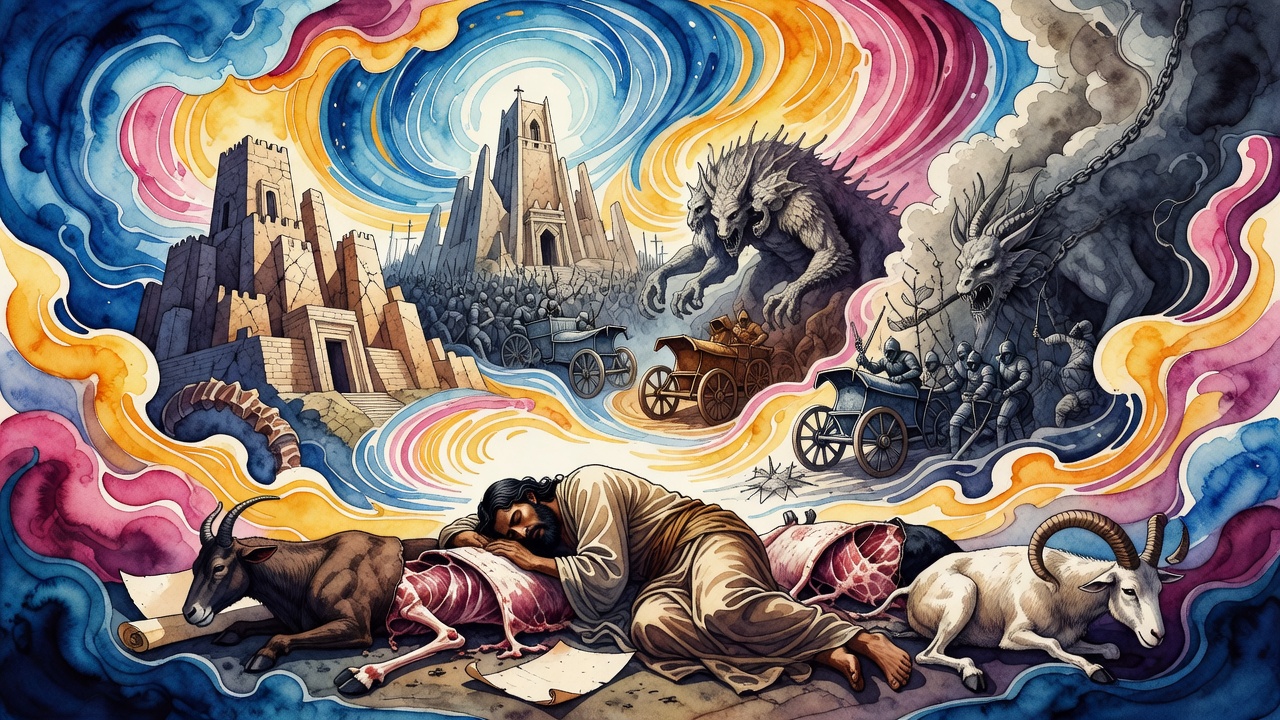
Animals lay divided on the ground. Birds of prey circled the pieces as if the promise itself were meat. Abraham drove them off and sat among the signs of a covenant still forming, a man keeping watch over halves of heifer, goat, and ram while heaven prepared speech. Genesis says that about the time of the setting of the sun a trance fell upon him, and lo, a great horror of darkness came over him. The promise of stars for descendants arrived with a night that pressed on the chest until breath itself felt borrowed.

Philo of Alexandria would not leave the sentence as weather. He treated the horror as a many-sided event, a single dusk holding several truths at once, none of them small enough for a traveler's ordinary fear of night on open ground.

Exile Shown Before It Happened

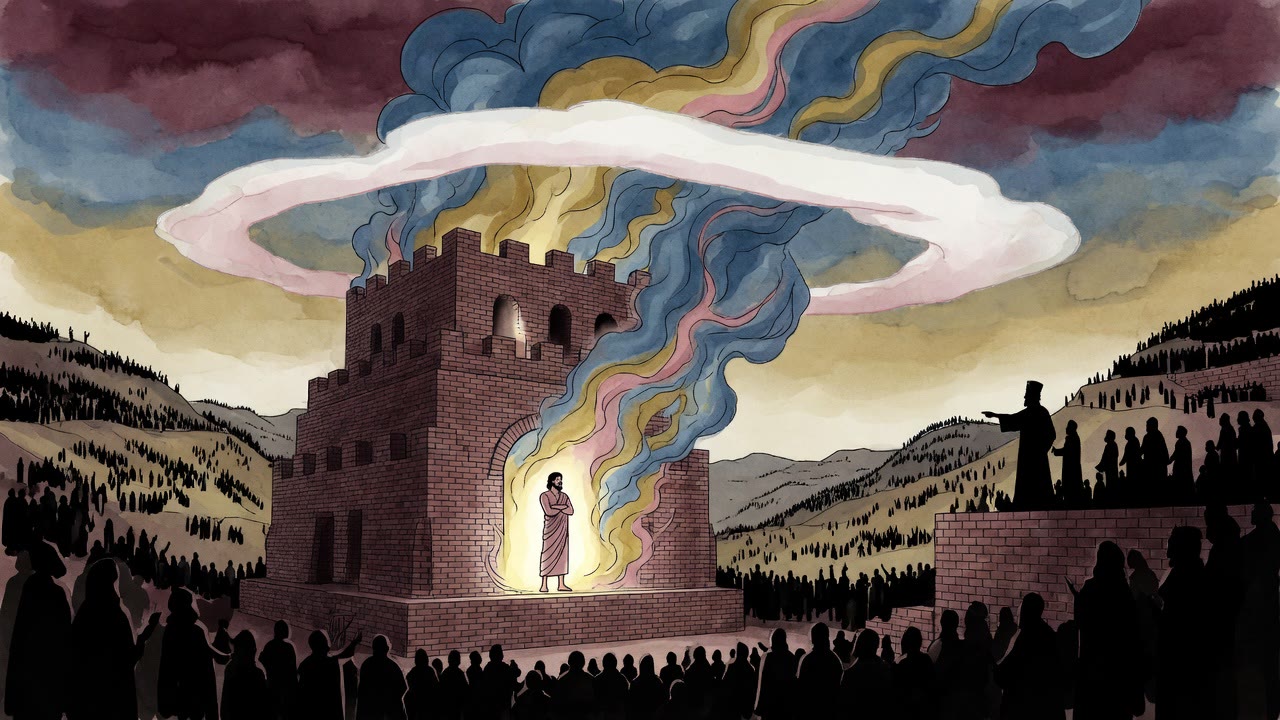
One reading says the darkness was a premonition. Abraham saw the sufferings prepared for his seed. Egypt with its brick and lash. Later destructions of sanctuaries not yet built. Roads of exile that would outlast any single empire's map. The man who had been told his children would be as the stars was shown the price those children would pay for carrying the name through centuries of other people's kings. Horror was not failure of nerve. It was accurate vision arriving too early for comfort and too true for sleep.

Another reading treats the darkness as a test. Promise invites doubt the way light invites moths. Would Abraham still trust when the sky went black over the cut animals and the stars he had been shown could not be found with open eyes? The horror asked whether covenant is only for clear nights, or also for the hour when sight itself fails and only the word remains.

The Mind Wandering Beyond Itself

Philo describes prophetic ecstasis as a departure of the mind wandering beyond itself. The prophet does not merely think harder inside familiar walls. The intellect is seized. Spirit does not creep like dusk. It rushes down suddenly. While the prophet is divining, he no longer exists solely inside his ordinary borders. He becomes a vessel, a throat for speech that did not begin in his own plans. The horror of darkness is part of that seizure, the disorientation that accompanies the shattering of normal perception when the Infinite leans close.

Standing on the edge of an abyss and peering into the infinite is the image Philo reaches for. Unsettling. Transformative. An indication, he says, of the evident knowledge of prophecy by which oracles and laws are given from God. Abraham's dusk was not private panic alone. It was the signature of a mind forced open so covenant speech could enter without the usual defenses of a merchant's caution or a traveler's fatigue after a long day of birds and blood.

Sitting on the Birds of Chaos

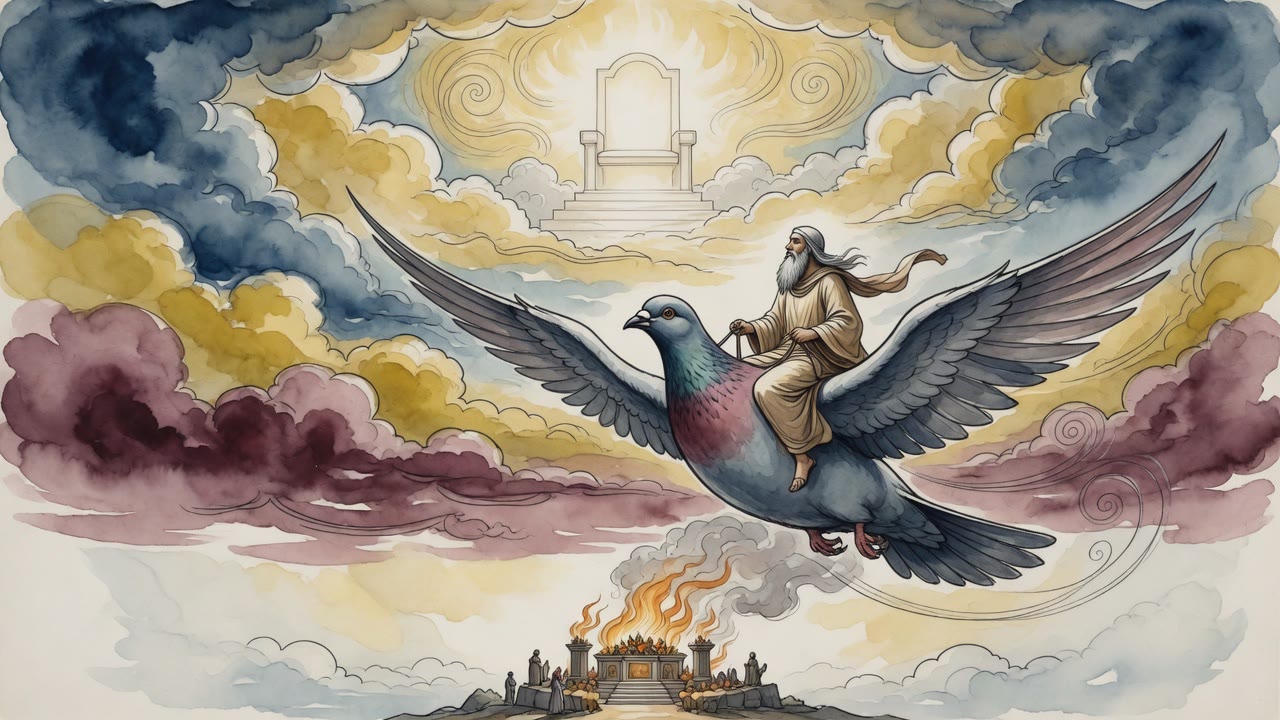
Elsewhere Philo turns to the verse that Abraham sat upon the birds. He rejects the notion that the patriarch was reading entrails like a temple diviner of the nations. Trust Moses. Do not lean on sophistical appearances and prognostications. The birds congregated and flying about symbolize injustice, covetousness, quarrels, and wars. Abraham sits as a guardian of peace, hindering the flock of evils that would settle on the covenant pieces and foul the cut animals with the same chaos that ruins cities.

Kingdoms and households find stability when a virtuous person rises and quiets disturbance. God grants good habits to those who pursue virtue, and the benefit spills to neighbors who never know why the air cleared. The man in horror at sundown is the same man who sits on chaos birds by day. Vision and guardianship share one body on the same hillside where animals wait in halves for a torch to pass between them.

Dawn After the Horror

Darkness, Philo hints, can be prelude. Setting sun yields to stars if the watcher lives until they show. The horror that fell was a crucible before further speech about four hundred years and a return with great substance. Abraham woke into a longer story than fear could finish. The trance ended. The covenant did not. What fell at sundown rose again as knowledge, costly and binding, for a people not yet born who would walk through the very night he had seen and still count themselves children of the man who sat through it without abandoning the pieces.

The pieces of the animals still lay where he had set them when the dark came. Covenant is messy work before it becomes clean speech. Abraham had kept the birds of prey from the carcasses with the stubbornness of a man who knows that promises attract scavengers. Philo's reading of those birds as wars and injustices only sharpens the scene. The patriarch sat on chaos in daylight and was swallowed by horror at dusk, as if the two labors were one: keep the pieces clean, then endure the vision of what the pieces will cost.


← All myths
From the tradition

Sources

3 sources

The texts behind this telling. Some cards carry a translation of the source; others are our own retelling of it, and each card says which. Every card links out to the original.

The Midrash of Philo 12:1The Midrash of Philo

Retold in our words. Read the original at the link below.The Works of Philo Judaeus, trans. C. D. Yonge, London, H. G. Bohn, 1854-1890 · Public Domain

Our ancestor Abraham felt it too.

The Torah tells us, in (Genesis 15:12): "About the time of the setting of the sun a trance fell upon Abraham; and lo, a great horror of darkness came over him." But what does it mean? What was this "horror of darkness" that descended upon him?

The Midrash of Philo asks this very question. And, typical of midrash (rabbinic interpretive commentary), it doesn’t give us one simple answer, but a cascade of possibilities, each one illuminating a different facet of the experience.

One interpretation suggests this "horror of darkness" was a premonition, a glimpse into the future sufferings of Abraham’s descendants. Imagine, for a moment, being shown the exile in Egypt, the destruction of the Temple, the long, arduous journey of the Jewish people through history. It would be a terrifying vision, wouldn't it?

Another interpretation, equally compelling, sees this darkness as a test of Abraham’s faith. Remember, Abraham was promised descendants as numerous as the stars. But promises, as we all know, can be tested. Perhaps this "horror of darkness" was a moment of doubt, a challenge to his belief in the divine promise. Would he still trust, even when faced with darkness? How often are we tested by doubt, by uncertainty? How often does the "horror of darkness" descend upon us, challenging our own faith, our own beliefs?

And yet, there's another layer. The Midrash of Philo also hints at the idea that this darkness was a necessary prelude to something greater. Just as the setting sun gives way to the stars, so too does darkness sometimes pave the way for illumination. Perhaps this "horror of darkness" was a crucible, a transformative experience that would ultimately strengthen Abraham’s resolve and prepare him for his destiny.

The midrash, that beautiful rabbinic form of storytelling and interpretation, isn't about finding one definitive answer. It's about exploring the richness and complexity of the text, about finding meaning in the nuances.

So, the next time you feel that "horror of darkness" descending, remember Abraham. Remember that even in the darkest of times, there is the potential for growth, for transformation, and for the eventual dawn.

Full source
The Midrash of Philo 12:2The Midrash of Philo

Retold in our words. Read the original at the link below.The Works of Philo Judaeus, trans. C. D. Yonge, London, H. G. Bohn, 1854-1890 · Public Domain

Philo, the great Jewish philosopher of Alexandria, writing millennia ago, gives us a fascinating glimpse into this concept of divine ecstasis, or trance. He describes it as "a departure of the mind wandering beyond itself." It's more than just daydreaming, though. It's a state where the mind leaves its usual boundaries, venturing into realms unknown.

Who experiences this? Well, according to Philo, it's the prophets. Those individuals chosen to receive and transmit divine messages. How else could someone truly grasp the enormity of God's word, if not by temporarily stepping outside the confines of their own limited understanding?

Philo suggests that when a prophet is actively "divining," when their intellect is truly inspired, they no longer exist solely within themselves. Instead, they become a vessel, a conduit for the divine spirit. It's not a gradual process, either. Philo emphasizes the suddenness of it, describing how "spirit falls upon him; since it does not come slowly over him, but rushes down upon him suddenly. Like a waterfall of inspiration crashing down.

It's not always pleasant. Philo adds that “a great horror of darkness fell upon him.” This darkness, this sense of overwhelming awe and perhaps even fear, is also part of the experience. It's a disorientation that accompanies the shattering of one's normal perceptions. The world looks different, feels different.

Imagine standing on the edge of an abyss, peering into the infinite. That's the kind of experience Philo seems to be describing. It's unsettling, disorienting, but ultimately transformative. It's a glimpse into something far greater than ourselves.

Why is this important? Why did Philo dedicate thought to describing the prophet's state of mind? He tells us: it's "an indication of the evident knowledge of prophecy by which oracles and laws are given from God." In other words, understanding the ecstasis of the prophet helps us understand the very source of divine law and wisdom. It's a reminder that these laws and oracles aren't just human constructs, but emanate from a place beyond our ordinary comprehension.

So, the next time you feel a sense of awe, or even a moment of disorientation, remember Philo's words. Perhaps, in a small way, you're catching a glimpse of that same divine ecstasis, a moment where your mind wanders beyond itself, and maybe, just maybe, touches the infinite.

Full source
The Midrash of Philo 11:7The Midrash of Philo

Retold in our words. Read the original at the link below.The Works of Philo Judaeus, trans. C. D. Yonge, London, H. G. Bohn, 1854-1890 · Public Domain

It all starts with the verse: "Abraham passed over and sat upon them" (Genesis 15:11). Simple enough. But what does it mean? What is Abraham sitting on?

Some interpret this verse as a symbolic description of sacrifice. They say that Abraham, acting like someone scrutinizing the entrails of sacrificial animals in a temple, is seeking truth in omens. But is that really the message here?

Philo, a Jewish philosopher who lived in Alexandria in the first century CE, offers a different take. He urges us to adhere to Moses, to trust in God, and not to rely on "sophistical appearances and prognostications." So, what is Abraham doing with these birds?

Philo suggests that Abraham, this righteous man, is among the birds, who are “congregated together and flying about over him.” These aren’t just any birds, though. They symbolize injustice, covetousness, quarrels, and wars. Abraham, in this scene, embodies the desire to hinder these negative forces. He is a "guardian of peace.": How often do we see injustice and conflict thriving when good people are absent or silent? Philo argues that kingdoms, societies, even our own lives, find stability only when virtuous individuals rise up and quell disturbances.

The idea is that virtue isn’t just a personal attribute; it has the power to create positive change in the world around us. God, according to Philo, grants good habits – habits that lead to honor – to those who earnestly pursue virtue. And not just to them, but to those who benefit from their actions as well.

So, what does this all mean for us today? Maybe it’s a call to be more like Abraham in this midrashic (rabbinic interpretive commentary) interpretation. To stand against the "birds" of negativity, seeking to create a more harmonious world. And that's a powerful thought to carry with us.

Full source