Angels Protested Abraham's Treaty With Abimelech
Abraham swore peace with a Philistine king over some wells. The angels told God it was a betrayal, and God answered by asking for Isaac.
Table of Contents
 Click for full size
Sheep, Oxen, and a Cut
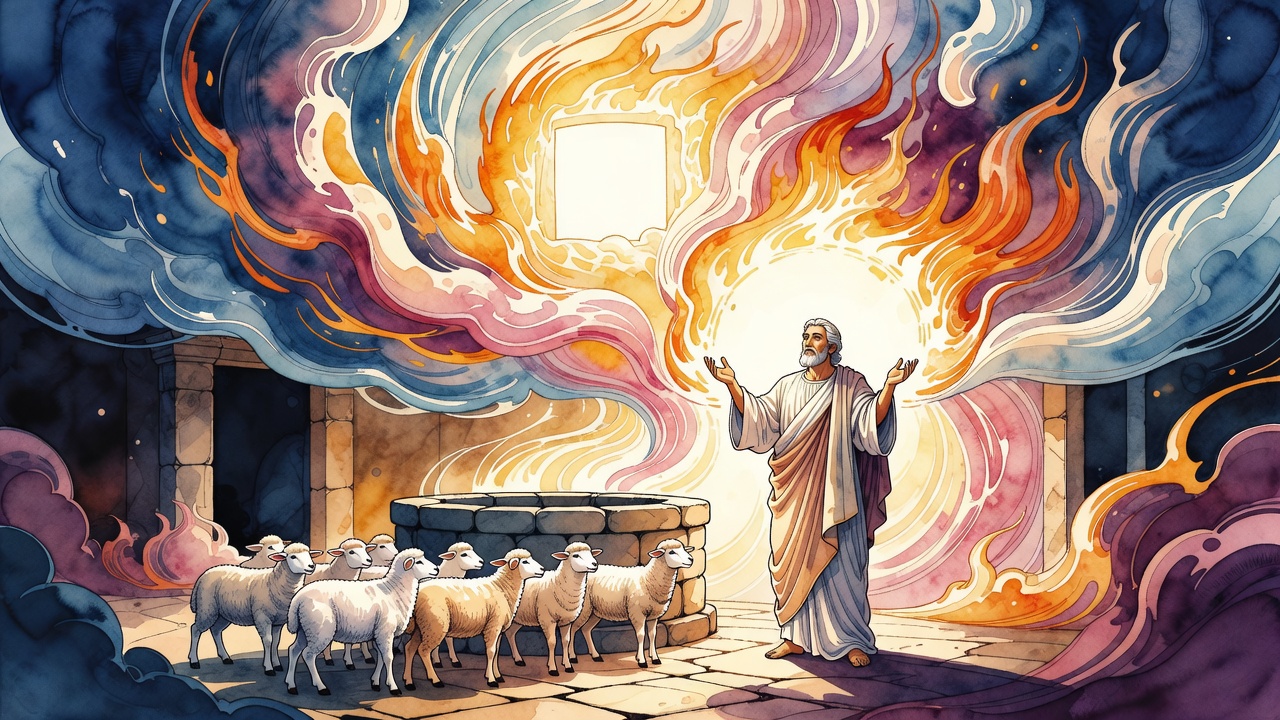
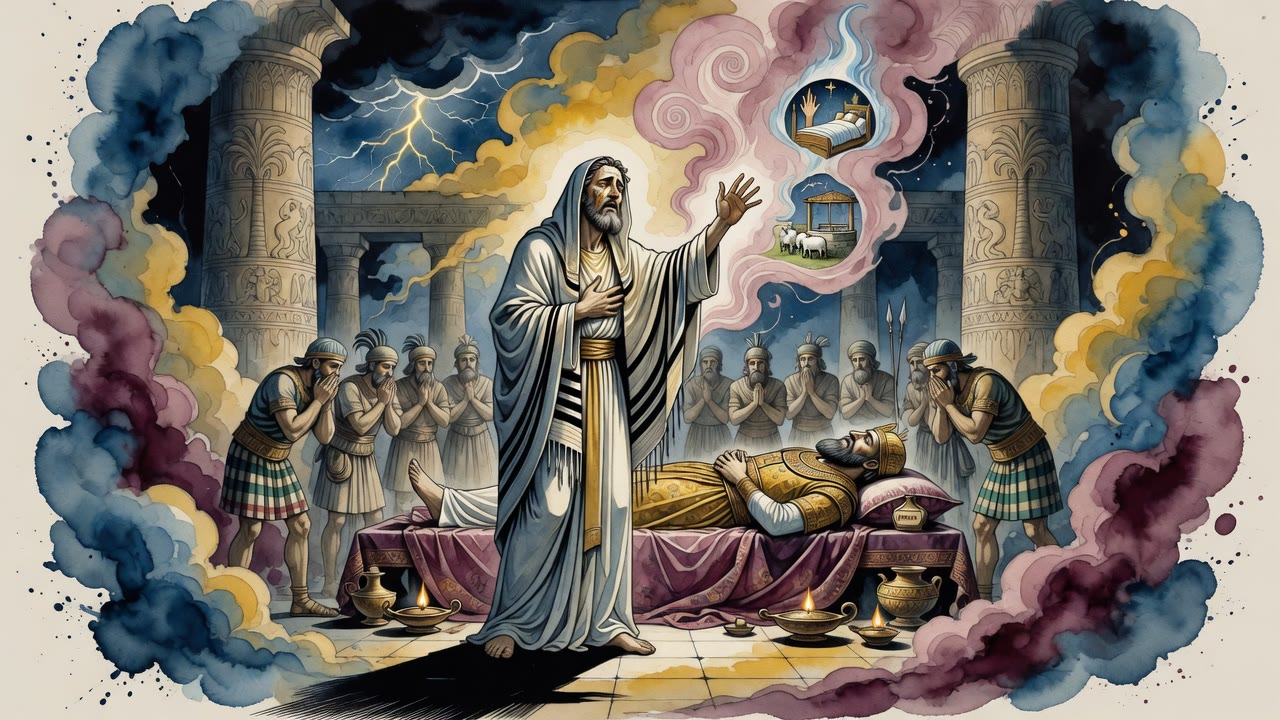
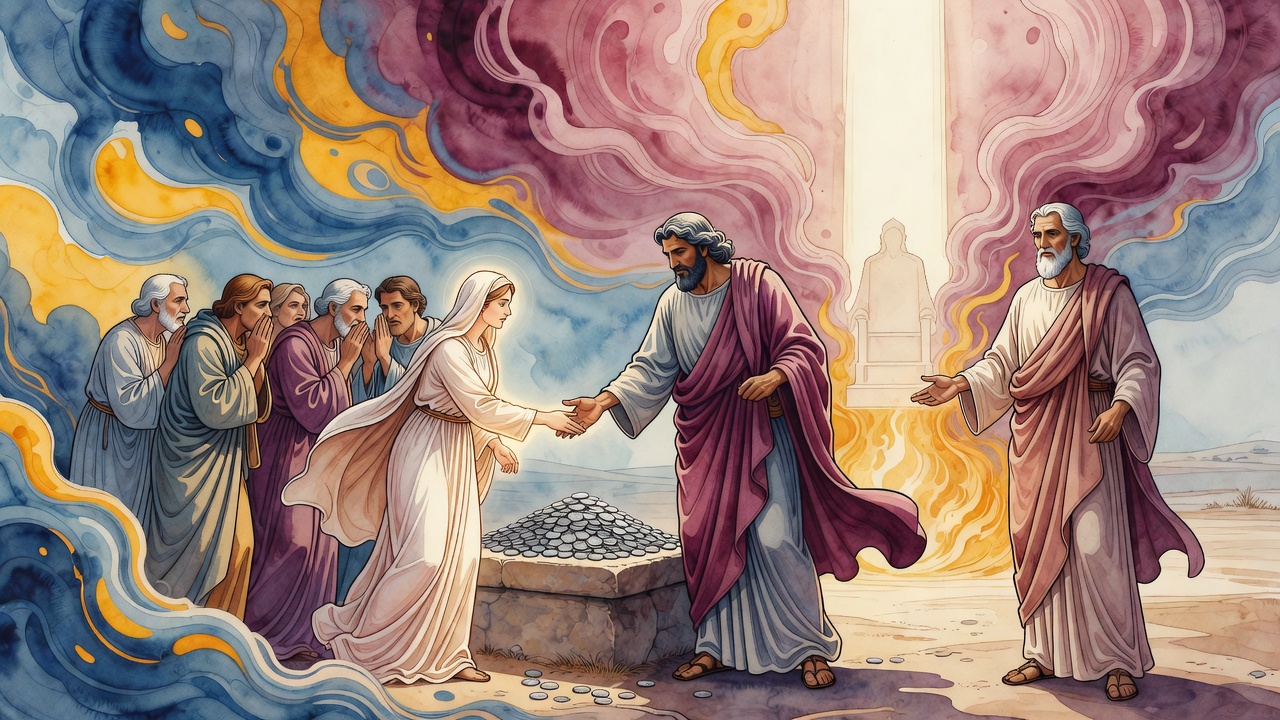
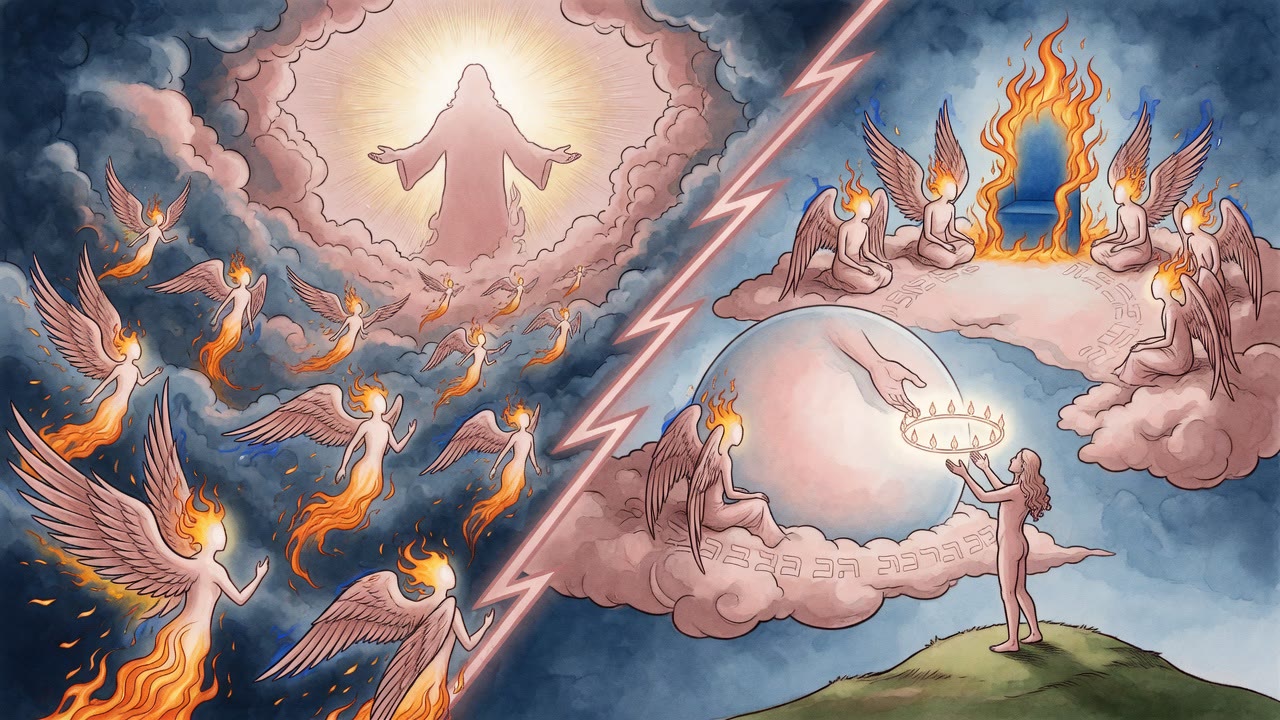
Abraham took sheep and oxen and cut a treaty with Abimelech. The deal looked like peace. Wells would be recognized. Oaths would hold. Two men of power would stop circling each other like dogs over water rights. Then the ministering angels rose before heaven with a complaint that had no soft edges. Master of the universe, You chose this one man out of seventy nations, and now he binds himself to the nations of the world?
The Holy One, blessed be He, did not strike Abraham for the treaty. He held judgment open and named the next test as the measure. Peace on earth had just filed a case in the court of heaven, and heaven would answer with a mountain, not a lecture.
If He Obeys, His Greatness Stands
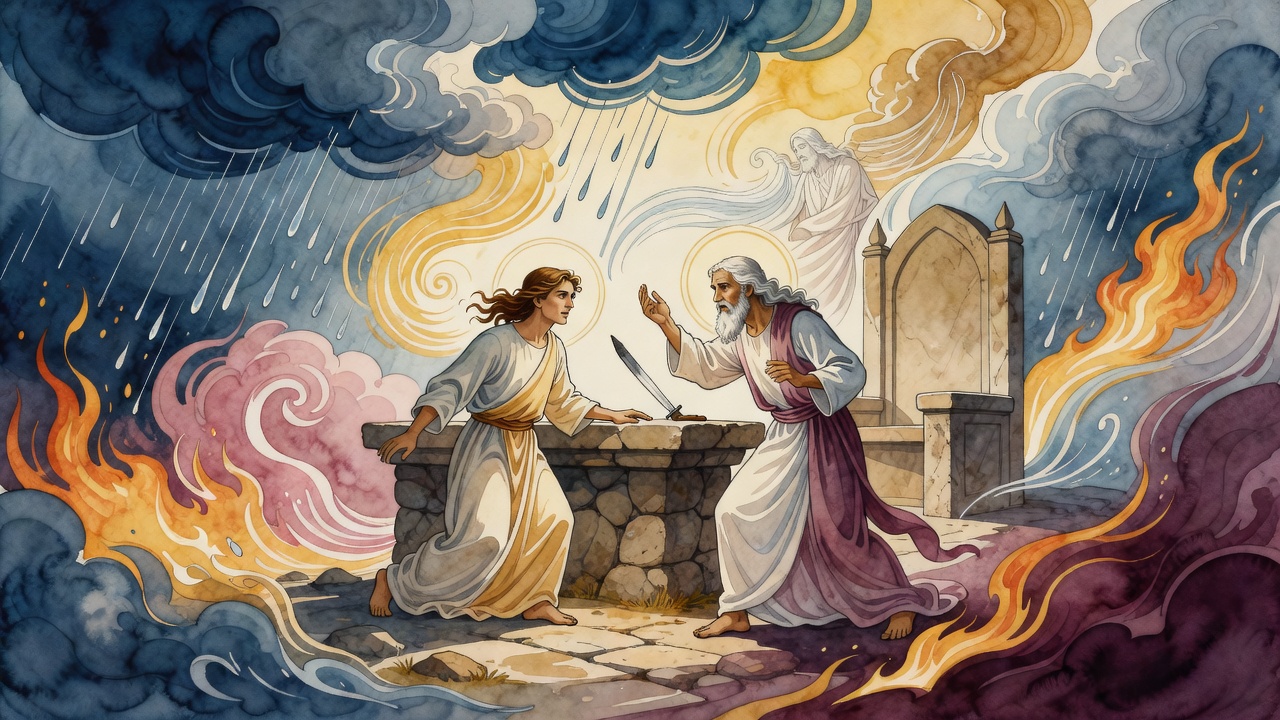
I gave Abraham an only son, God said, and now I will command him to offer that son up to Me. If Abraham obeys, his greatness stands. If not, your complaint is justified. So the binding of Isaac follows directly upon the treaty, framed as the exam that will decide whether the man who mixed covenants still belongs wholly to the One who called him from Ur. The banner of those who fear the LORD is also a trial. The same root that means a raised standard means a test that lifts a man into wind he cannot control.
Abraham had made a human alliance. Heaven answered with a demand that no Philistine king could underwrite or cancel. The angels who watch borders of holiness watched a sojourner shake hands across a line they preferred sealed. God did not deny their concern. He put Abraham under a weight heavy enough to silence it or confirm it.
The Hardest Subjugation
From this episode the sages drew a heavy line of consequence. No nation subjugated Israel more harshly than the Philistines, and they trace that bondage back to the covenant Abraham cut with Abimelech. A handshake across peoples can plant a thorn that flowers centuries later in iron and raid and closed wells. The principle widens into a curse on careless alliances: whoever partners without guard ends up bound, and a Torah scholar who does so degrades his learning, shames his father's name, widows his wife, orphans his children, and ties an evil reputation to his descendants for generations.
The warning is blunt because the history was blunt. Peace treaties are not free. Some debts are paid by children who never signed. Guard your heart, the teaching says, before you cut animals with a partner whose gods do not share your altar. Abraham meant wells and honesty. He also opened a door through which later Philistine pressure would walk as if it owned a key.
The Tenth Trial After the Handshake
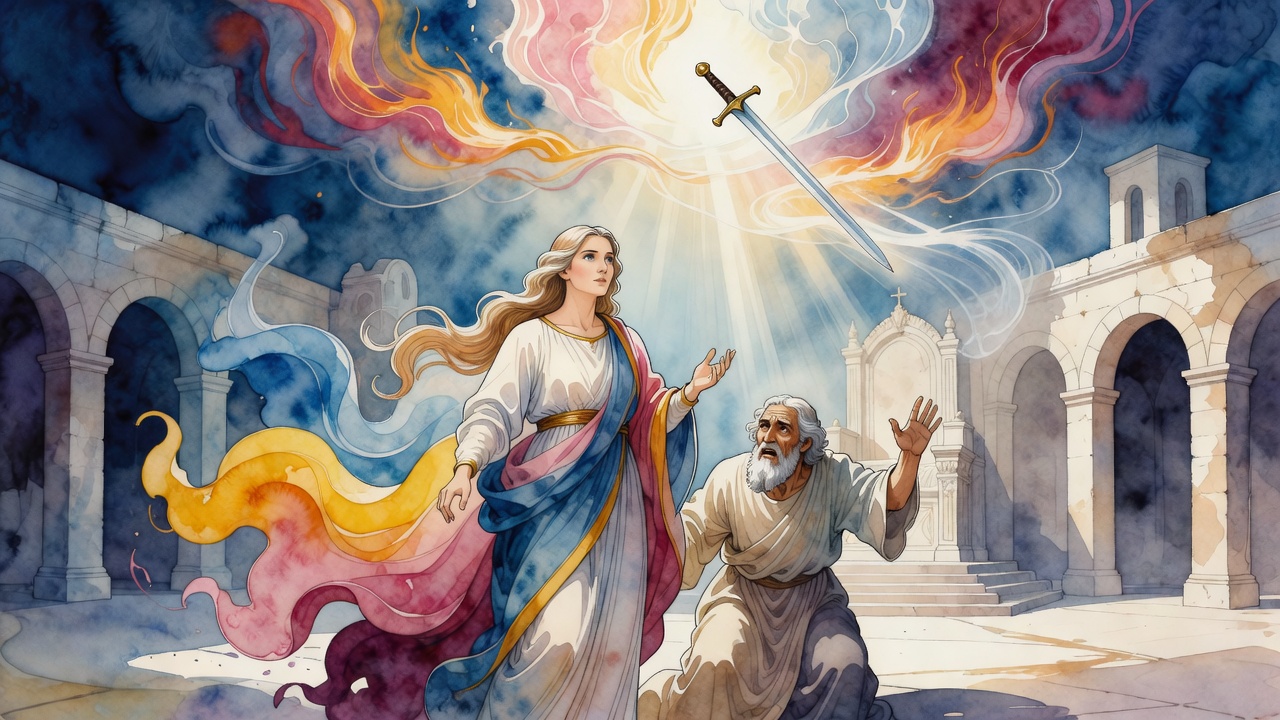
After these things, God tested Abraham. The Psalm's banner rises again. To those who fear Him He gives a standard to be raised because of truth. Abraham, a hundred years old when Isaac finally came, rose early, split wood, and walked three days without turning the command into a negotiation. The angels who had protested the Philistine treaty watched a man prove he was still heaven's, not Abimelech's. The knife rose. The angel spoke. The ram appeared. Greatness stood.
The treaty did not vanish from the record. The test answered the charge against it. Abraham could cut a covenant with a king and still, when called, cut only a ram on Moriah. That does not make every later alliance wise. It makes this man's loyalty legible after the angels had doubted it. Justice is made beautiful when favor is shown to rest on proof, not on whim.
Guard Your Heart
Business partnership that becomes a binding covenant you never meant to make is the danger the midrash names for later ages. Abraham's case is the proof text and the tragedy mixed. He meant water rights. He got a heavenly audit and a mountain of firewood. The midrash does not pretend the Binding was only abstract theology. It was, among other things, heaven's reply to angels who thought the chosen man had begun to look ordinary among the nations.
Sheep and oxen on one day. Wood and fire on another. Between them, a complaint in heaven and a banner that doubles as a trial. Abraham carried both, and Israel still lives in the weather those choices made: Philistine hardness in the long story, and a father on a ridge who proved, under the hardest exam, that the handshake had not bought his soul. Guard your heart before the animals are cut. Raise the banner when it is handed to you, even when angels have already filed their complaint. Know that some treaties summon tests that no notary can foresee, and that greatness, when it stands, answers both the human ally and the heavenly court in a single climb.
← All myths