Abraham Cut Beasts and Saw Four Kingdoms
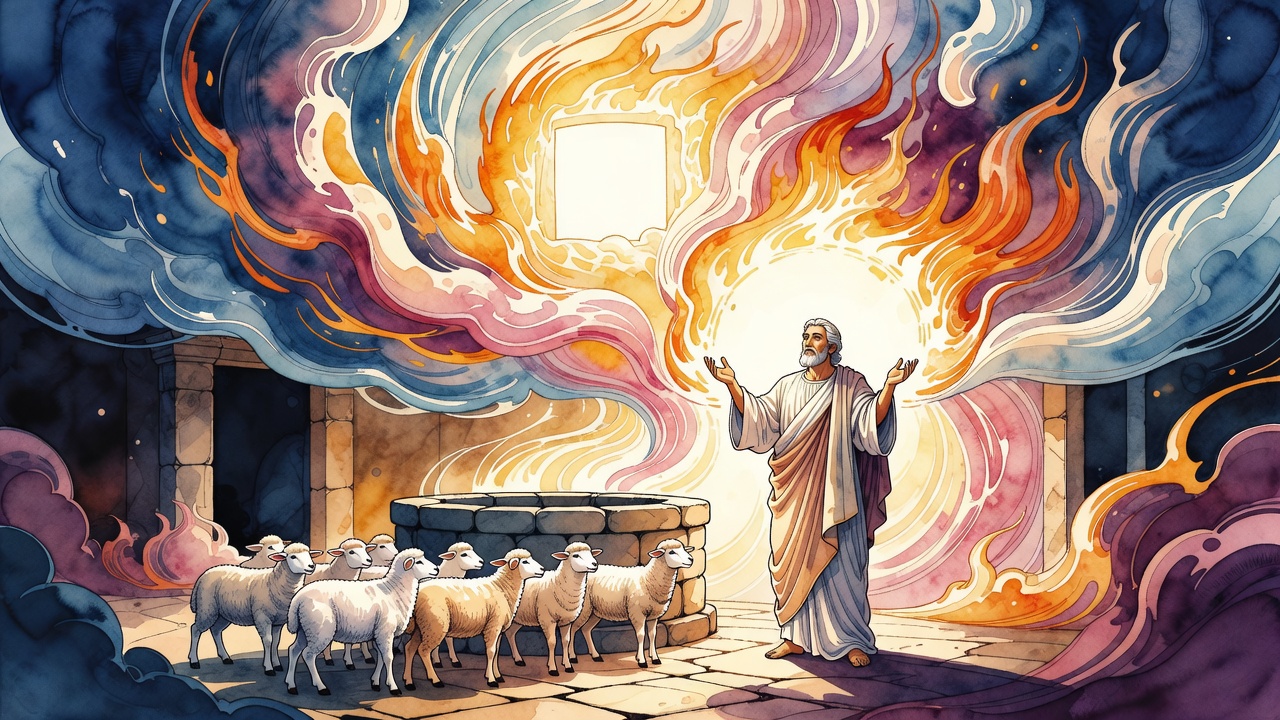
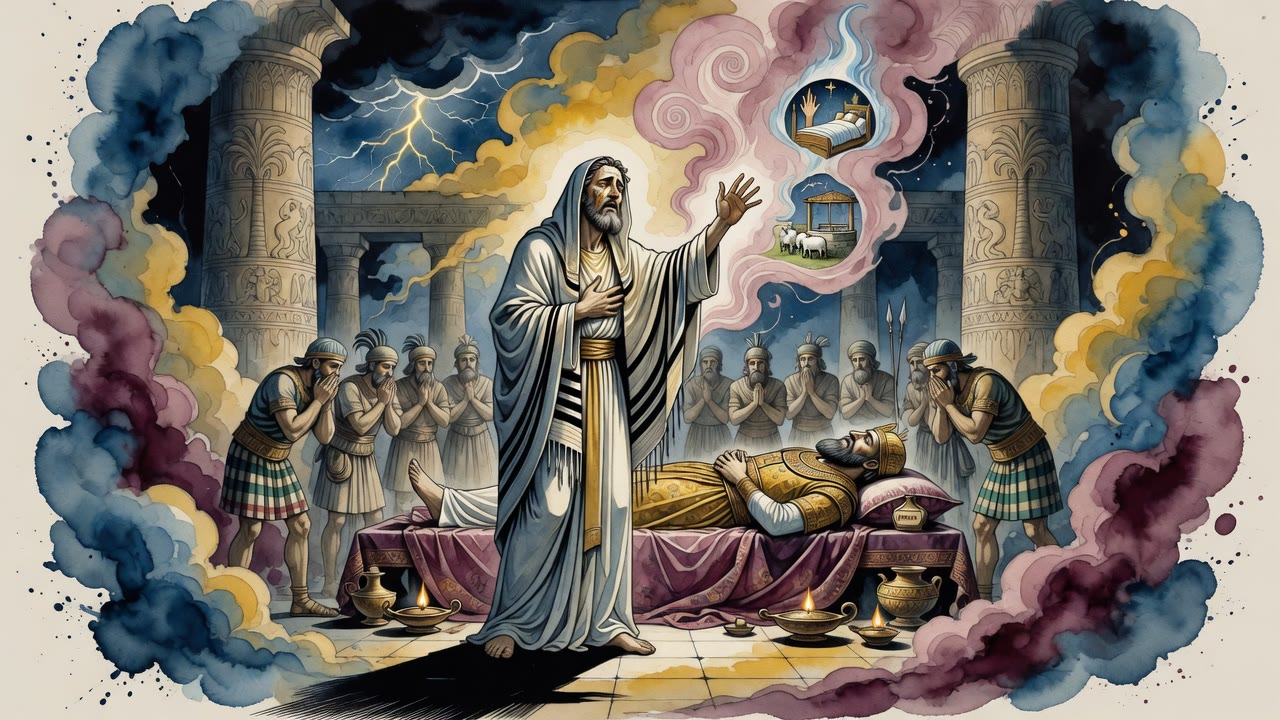
Abraham hands Abimelech seven ewe-lambs and seals a peace over a well. Heaven counts the lambs and sends the bill: seven righteous men, seven sanctuaries.
Table of Contents
 Click for full size
Flesh on the Ground, Future in the Cut
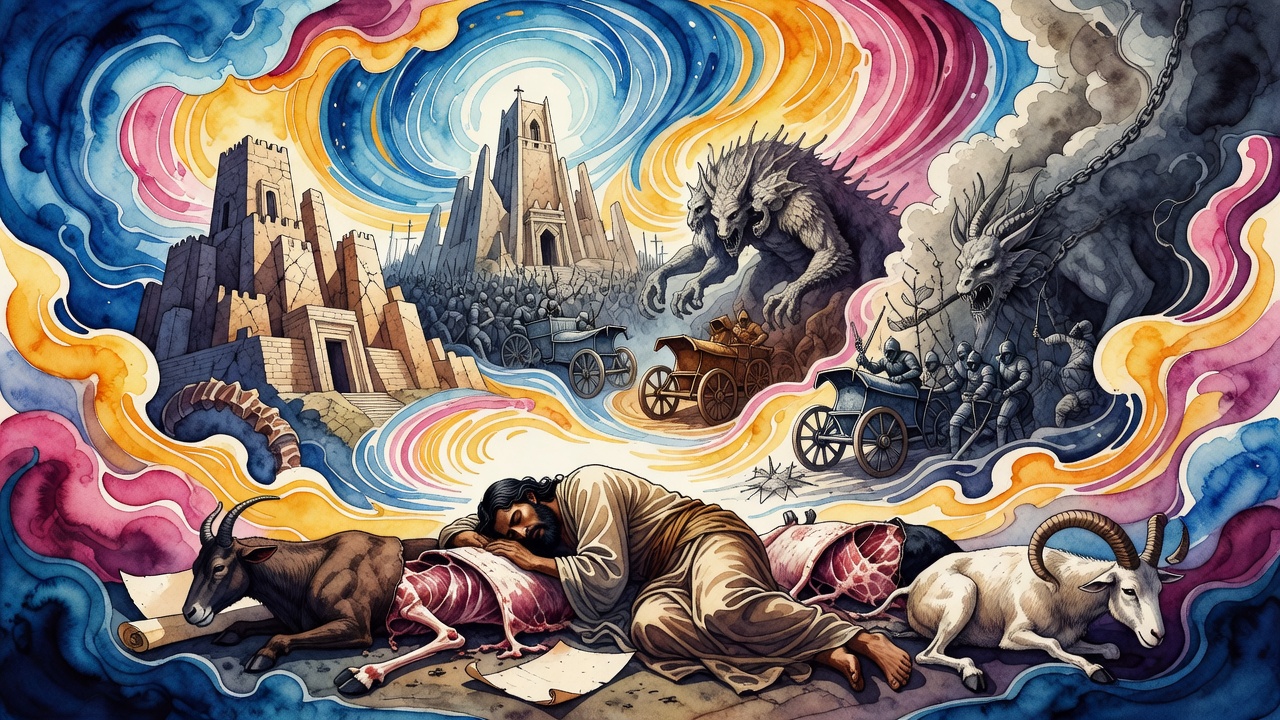
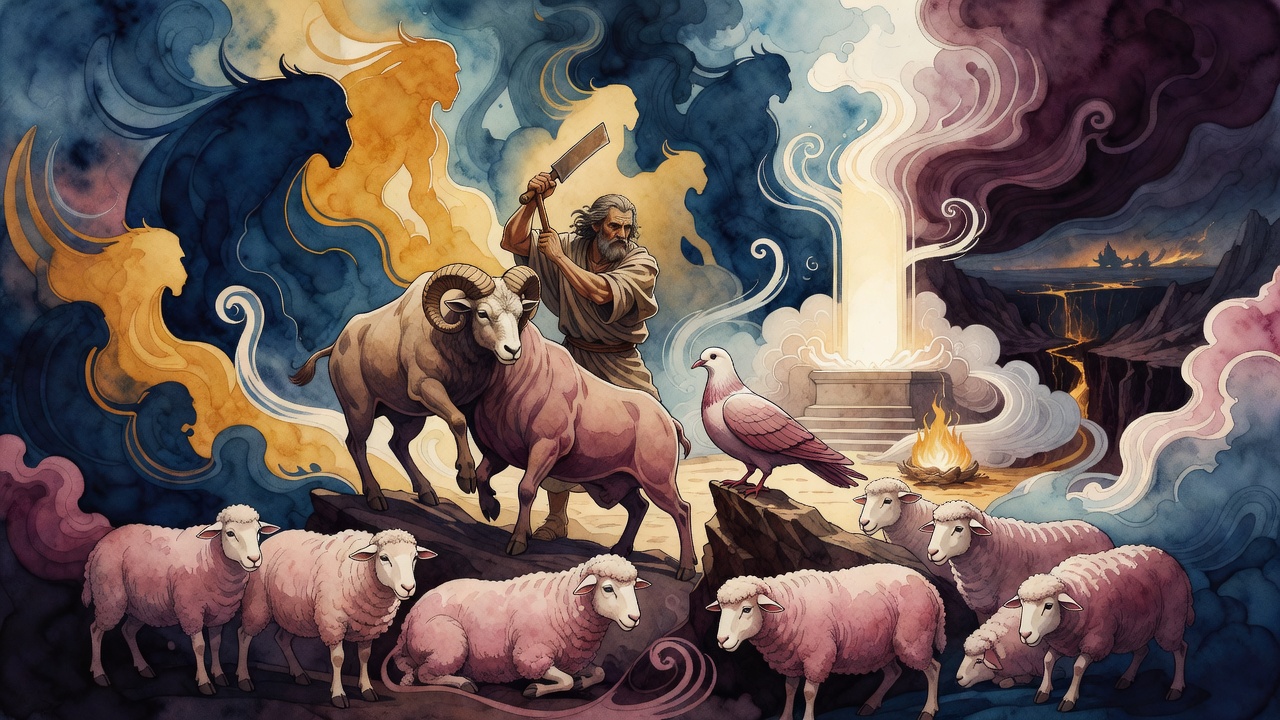
Abraham lays out the covenant offerings and does not only cut beasts in two. He reads the future of his children written in flesh and blood and the stubborn fact of a bird left whole. The heifer that loves to thresh is Babylon, who will thresh Israel under three kings from Nebuchadnezzar to Belshazzar. The she-goat from the west is Greece, who will darken Israel's eyes with decrees and carve blasphemies where praise should be. The ram with two horns is Media, the kingdom of Cyrus and of Ahasuerus. The silent turtledove is Edom, last and most dreadful of the four, quiet the way a predator is quiet before the spring.
One bird he does not divide: the young pigeon. That is Israel, robbed by all four kingdoms yet never severed, kept whole so it can outlast every decree that thinks a people can be split the way meat is split for a treaty.
Abraham's knife knows more than butchery. It knows maps.
Birds of Prey
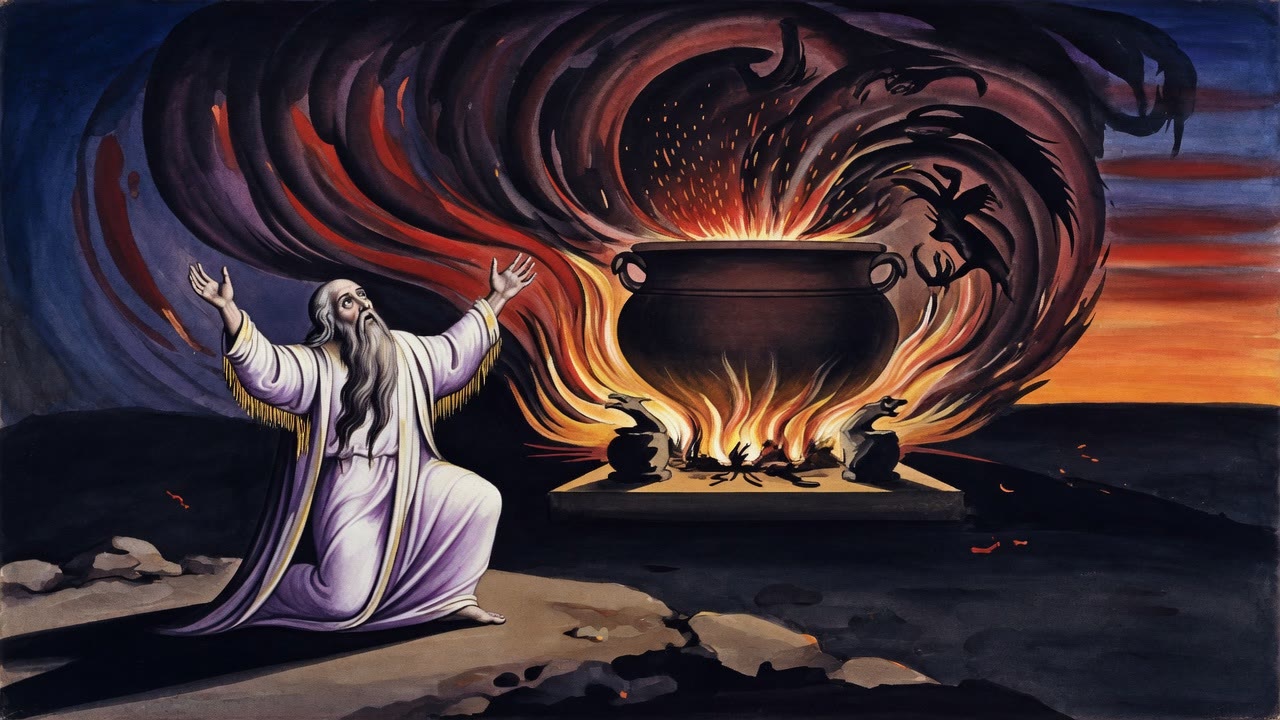
Birds of prey swoop toward the split meat as if the future were already carrion. Abraham drives them off with the same arms that welcomed strangers in the heat of the day. Those birds are the enemies who will claw at his seed. He scatters them so they will have no share in the World to Come. His staff moves through air that already smells like empire and ash and the long patience of a God who shows a man too much and still asks him to walk.
The carcasses steam. The sun lowers. The pigeon remains one body on the earth, a small insistence.
The Choice at Sunset
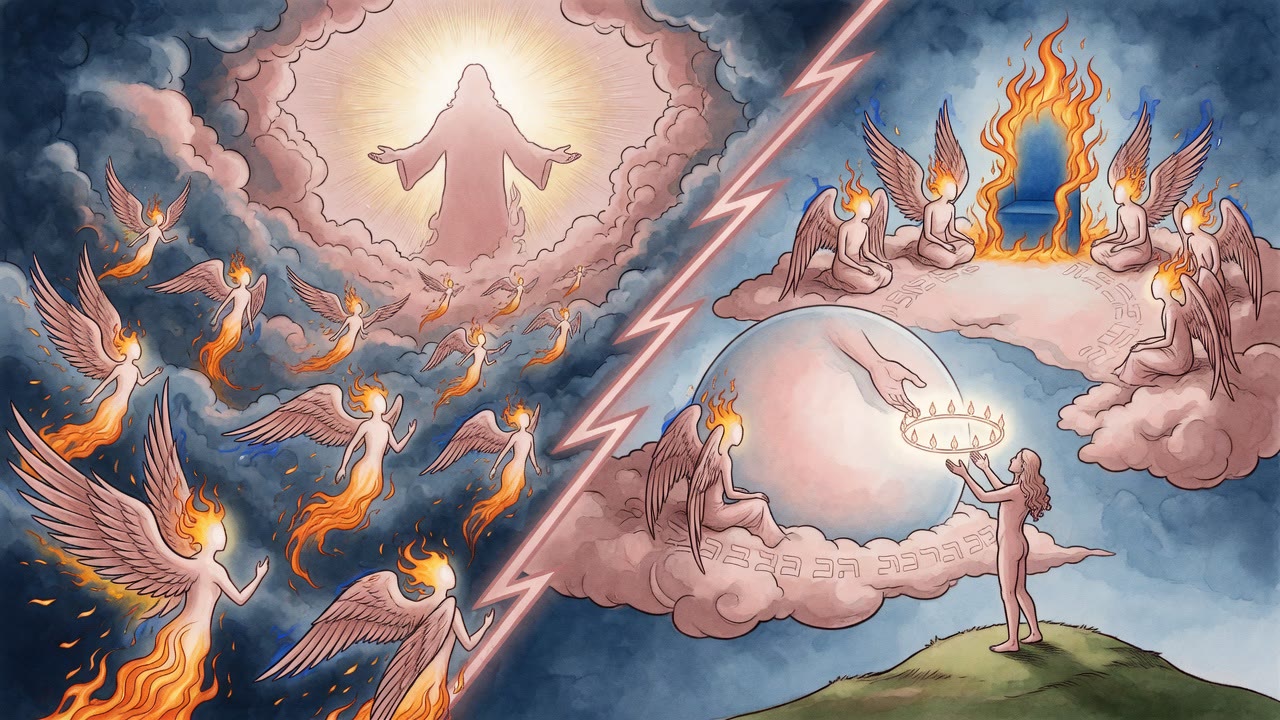
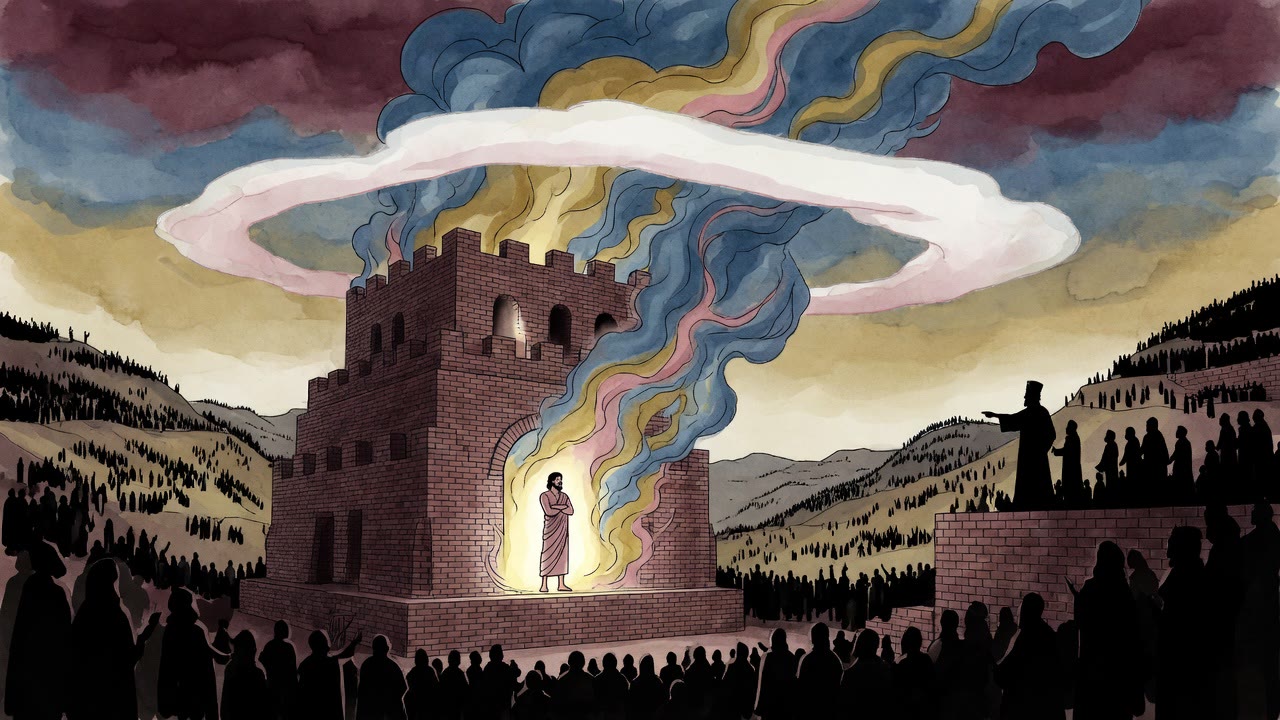
As the sun sinks, slumber takes him the way a heavy cloak takes a man who has been standing too long. The LORD shows him four things: Torah, sacrifices, the kingdoms, and Gehinnom (the fiery place of punishment after death). "While your children cling to Torah," God says, "they are spared." Then the terrible choice lands without soft edges: Gehinnom (the realm of judgment after death) or the yoke of empires?
Abraham, the rock from which Israel is hewn, chooses the kingdoms. Better the long grind of history than the pit. Better four empires with gaps of breath than a single unending fire. He does not know he has just prayed, in another key, the prayer Jacob will later hide inside spaced droves. He only knows he will not hand his children to the mouth that never stops.
Smoke and dread pass between the pieces. He stays in the vision until the choice is finished and cannot be unchosen.
Seven Ewes at Beersheba
Later, at Beersheba, Abraham sets seven ewe-lambs into the hand of Abimelech the Philistine and seals a covenant of peace with water rights and polite speech. The Holy One weighs each lamb. A gift can ripen into grief. Kindness given to the wrong house can echo for centuries. Four times a voice comes to Abraham, and four times it begins the same: "You gave him seven ewe-lambs."
For the seven, Philistines will war against Israel and prevail. For the seven, Philistine hands will cut down seven of Israel's righteous: Samson; Hophni and Phinehas; Saul and his three sons. For the seven, seven sanctuaries will fall: the Tent of Meeting, Gilgal, Nob, Gibeon, Shiloh, and the Eternal House twice over. For the seven, the Ark itself will sit abandoned in Philistine fields seven months long (1 Samuel 6:1).
The patriarch's lambs return as seven sorrows. Deeds of the fathers write on the days of the children, even when the fathers meant only peace at a well.
Whole Bird, Split World
On the covenant ground Israel stays whole while empires split and fall. At Beersheba a polite treaty plants thorns for centuries. Abraham can drive off carrion birds in an afternoon. He cannot always see which handshake will cost seven sanctuaries. He still walks between the pieces. He still chooses history over the pit. He still gives ewes because peace at a well looks, in the moment, like wisdom.
The pigeon remains one body. The kingdoms take their turns. The children cling to Torah when they can, and when they cannot, the vision's other branch waits like a door Abraham refused to open for them.
When he wakes from the dread sleep, the pieces are still there and the future is still there. He does not tell Sarah every empire he saw. Some visions are too heavy for a tent conversation. He keeps the choice like a stone in the pocket: kingdoms, not the pit. Later, when he presses ewes into a Philistine king's hand, he is still the same man who prefers a hard history to a closed fire, and still able to misread which kindness will cost sanctuaries.
The undivided bird in the vision is the argument he leaves his children: stay one body when the threshing floors of empire try to make you parts.
← All myths