Enoch Taught That Every Human Face Belongs to God
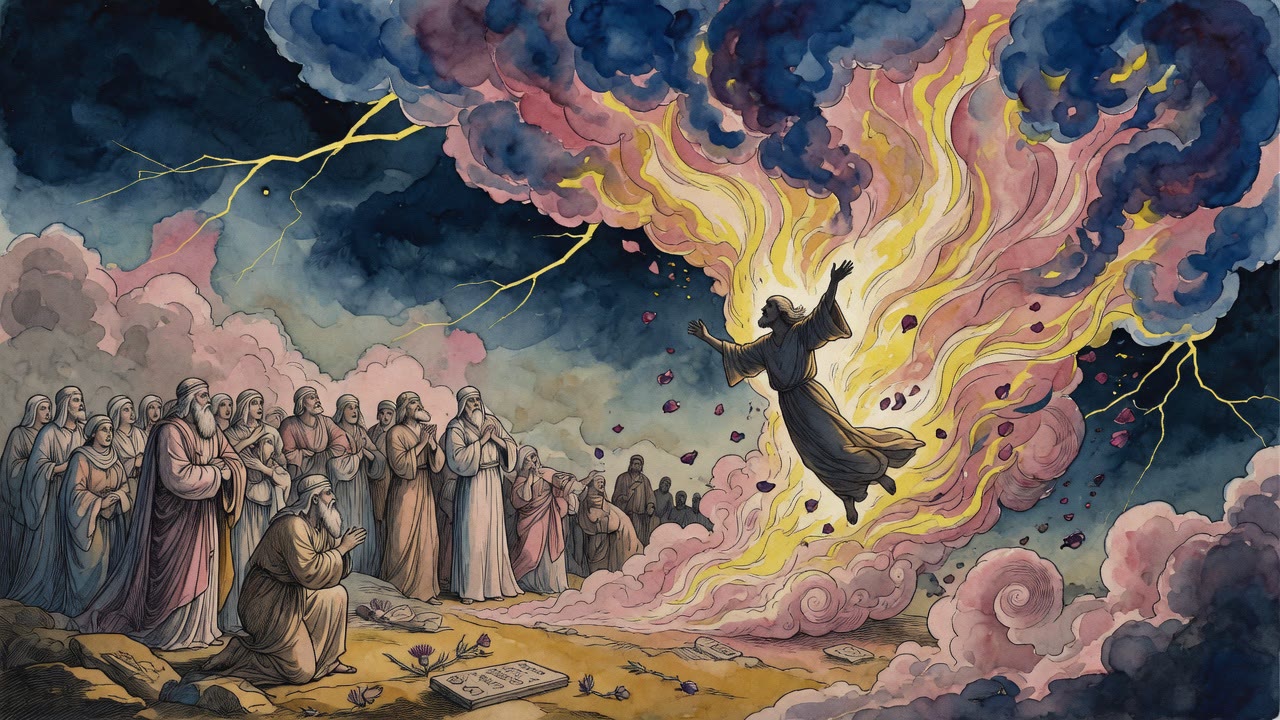
Enoch had thirty days left on earth. He told his children that God made every human face like his own, so to spit on a man is to spit on God.
Table of Contents
 Click for full size
A Man About to Leave
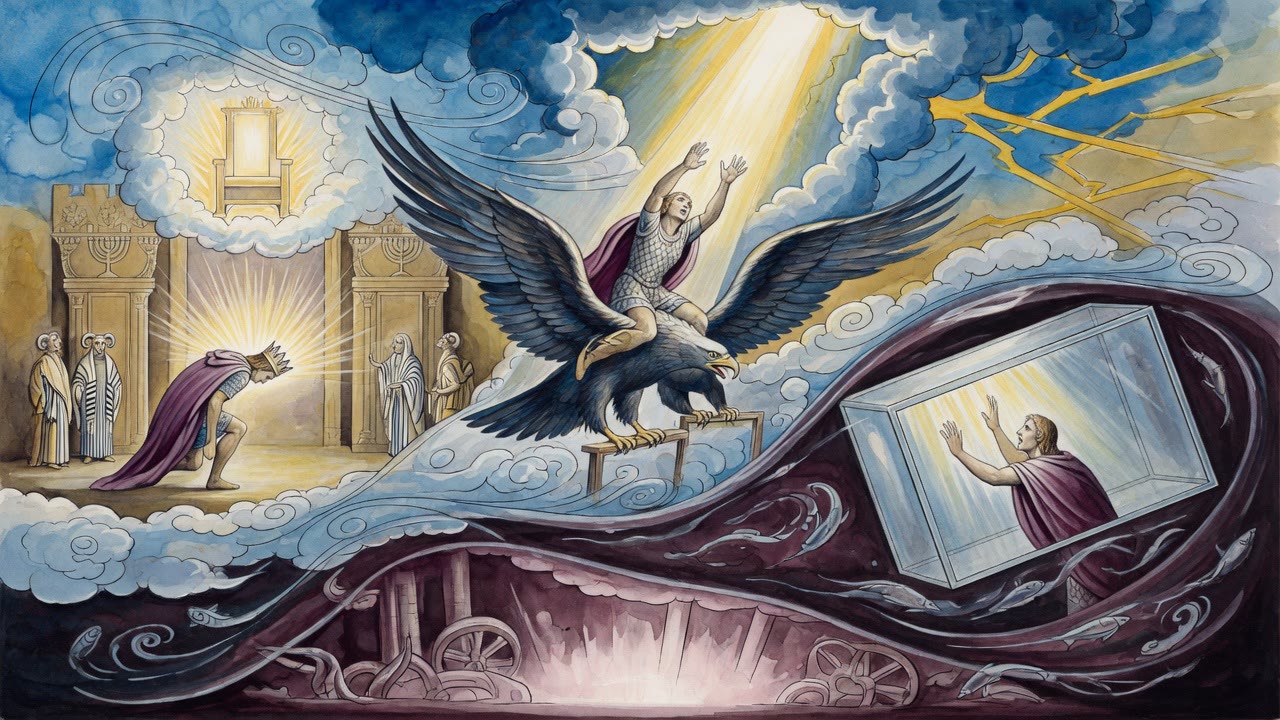
Enoch had thirty days. God had given him thirty days to come down from the tenth heaven and say everything to his children that could be said in thirty days. He had written 366 volumes of divine dictation in the presence of the archangel Pravuil. He had been anointed with the oil of glory and clothed in the garments of the divine court. He was not the same man who had left, and his children could see the difference when they looked at him.
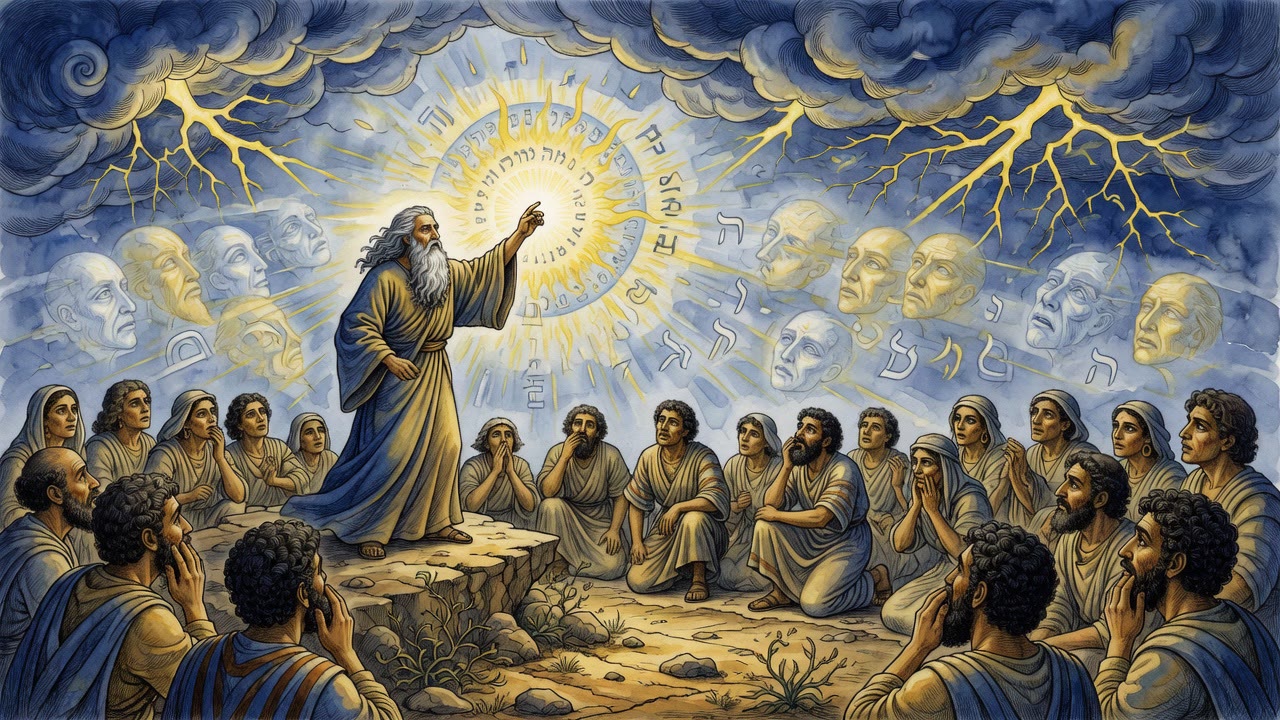
He stood before them. He did not begin with cosmology. He began with faces.
The Law of the Face
God created every human being with his own hands, in the likeness of his own face. That was the premise. Not merely in the likeness of human faces, not merely in the image of each other, but in the likeness of the original face, the one Enoch had seen shining like sunrays in the tenth heaven, the one that filled everything it touched with light too bright to look at directly.
Therefore: to insult any person is to insult God's face. To spit on a human being is to spit on God's face. To strike anyone, for any reason, however small, however justified it seemed in the moment, was to strike the person God had made with his own hands in his own image. The insult did not land on the human. It passed through the human and landed on the original.
This was not a principle Enoch had arrived at through moral reasoning. He had been in the tenth heaven and seen what he was talking about. The law of the face came from the same place as the courses of the sun and the number of the angels.
The Measure of Worth
Before he gave them the law of the face, he established what did not matter. Wealth does not matter. Wisdom does not matter, in the sense of cleverness. Beauty, strength, youth, cunning, eloquence: none of these are the measure of a person's worth. He was not speaking abstractly. He had been in the court where the actual measures were kept, where the weights and counterweights of human action were recorded, and none of those qualities appeared in the accounting.
"There is none better than he who fears God," he told them. "He shall be more glorious in the time to come." Not he who accumulates, not he who defeats rivals, not he who builds the most impressive structure. The one who recognizes the face behind every face and behaves accordingly.
The Books He Left Behind
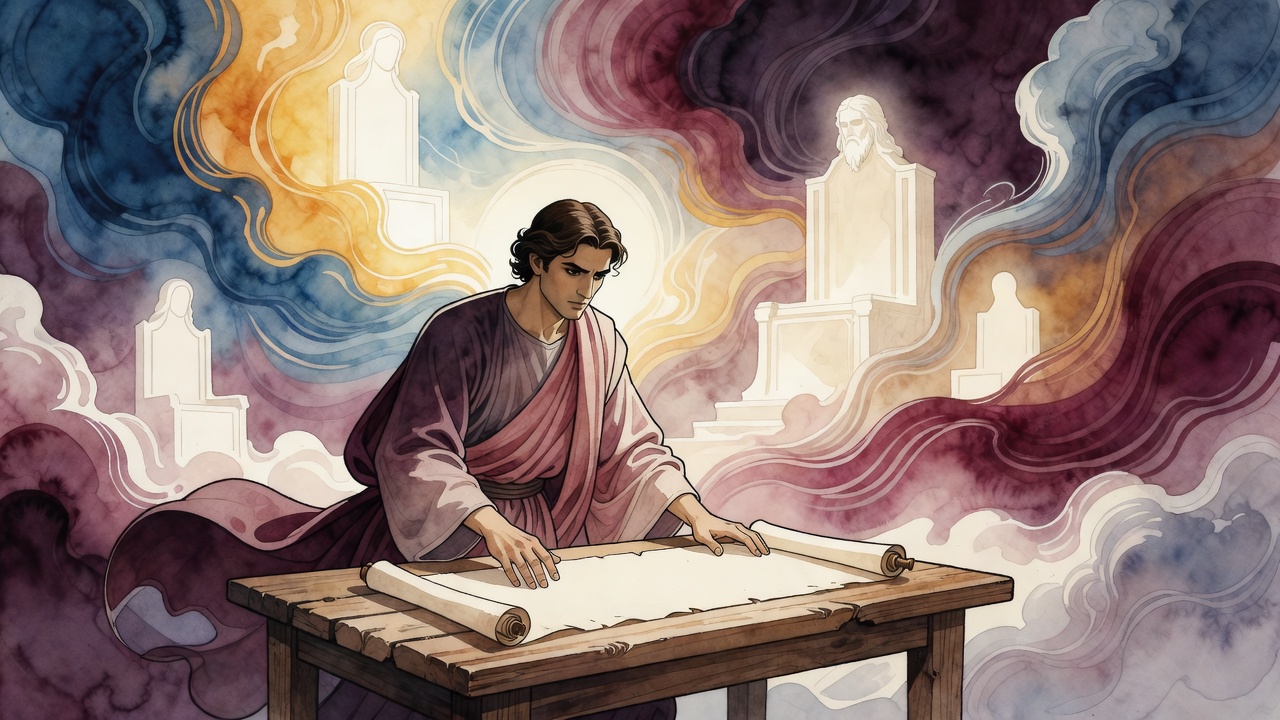
He had written 366 volumes. He gave them to his children to keep. "If you keep my writings," he said, "you will not sin against God." The books were not a complete record of what he had seen, because some of what he had seen could not be put into language. But they were as much as language allowed, and they were meant to function as a map for people who could not make the ascent themselves.
"Mark well the words of your father," he said, "which have all come from the Lord's lips." Not his words, not even words he had shaped or interpreted. Words he had received and was transmitting. The distinction mattered to him. He was a conduit, not an author. The 366 volumes were God's books that Enoch had written, not Enoch's books about God.
He blessed them. He told them that the books would survive. He did not say how. He said the teaching would persist, and that the face of God in every human face was the central fact they needed to carry forward, the thing that should govern how they treated every person they encountered from that day until the end of the world.
← All myths