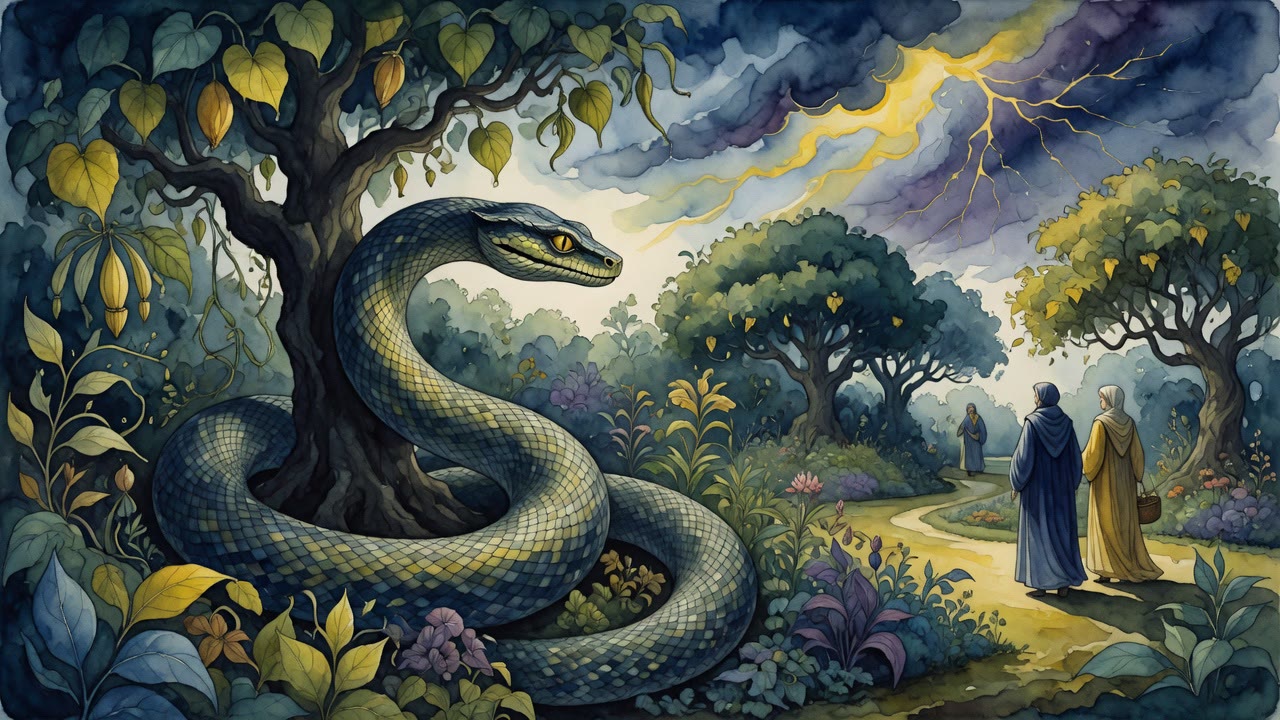
Eve Repaid Adam's Blood With Lamp and Dough
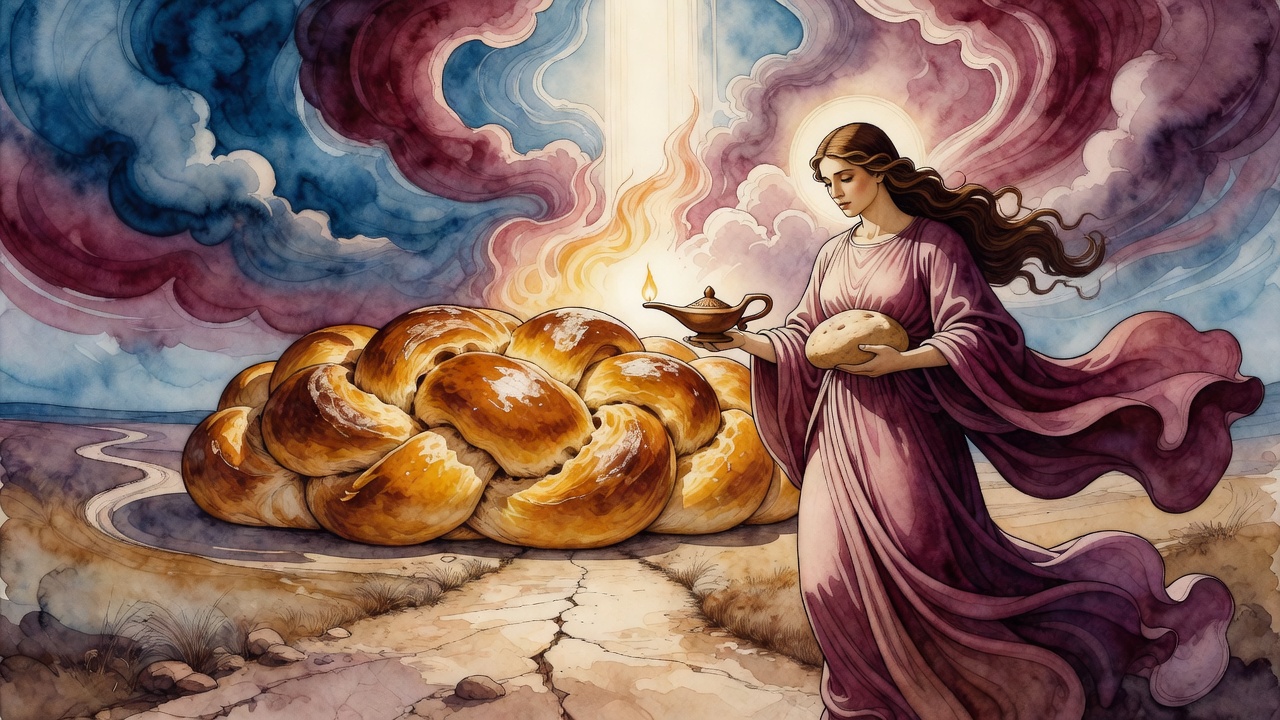
A woman pours water into dough and lifts out the first portion. God poured mist onto the earth and lifted Adam. He was the loaf, and the lamp too.
Table of Contents
 Click for full size
Three Commands for Three Wounds
Why were three commandments laid upon women: guarding niddah, separating challah from the dough, and kindling the Sabbath lamp? The midrash answers from the dawn of the world. Adam was formed first. Life entered him by breath. Then Eve came, and through her counsel his blood was destined to spill. "For dust you are, and to dust you shall return." So the Holy One gave her the law of niddah blood, that she might find atonement for the blood she set in motion.
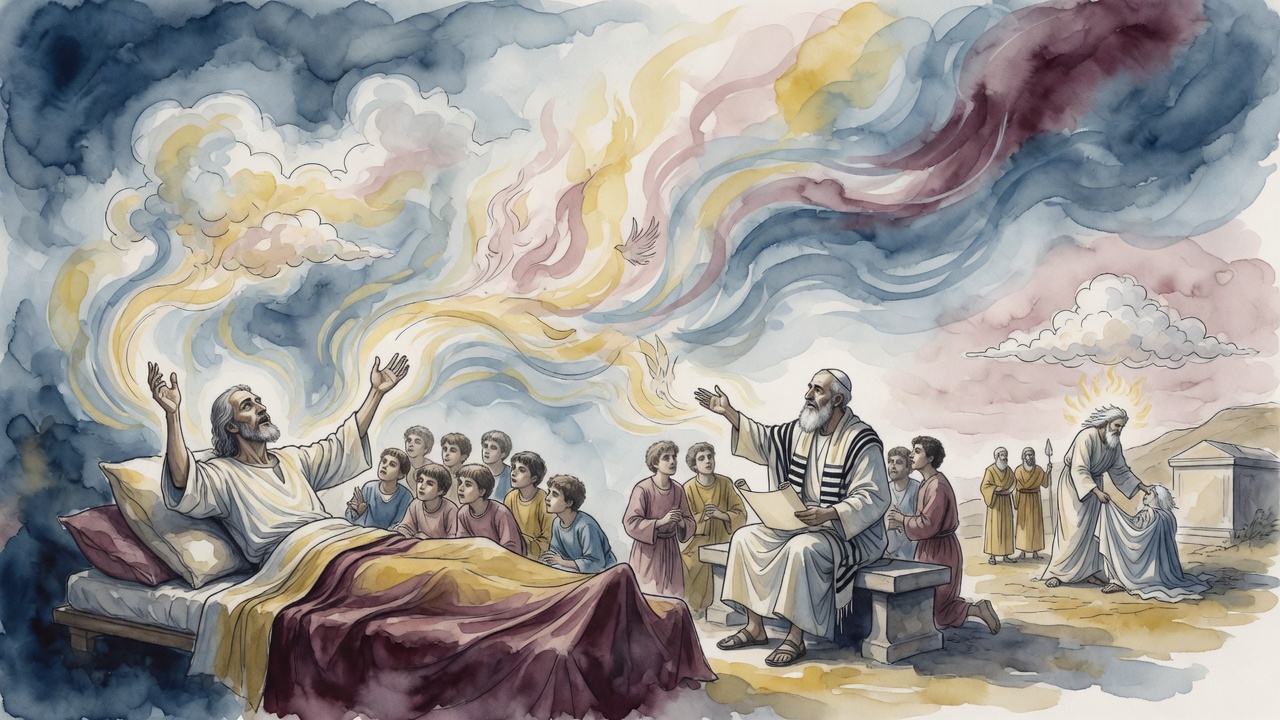
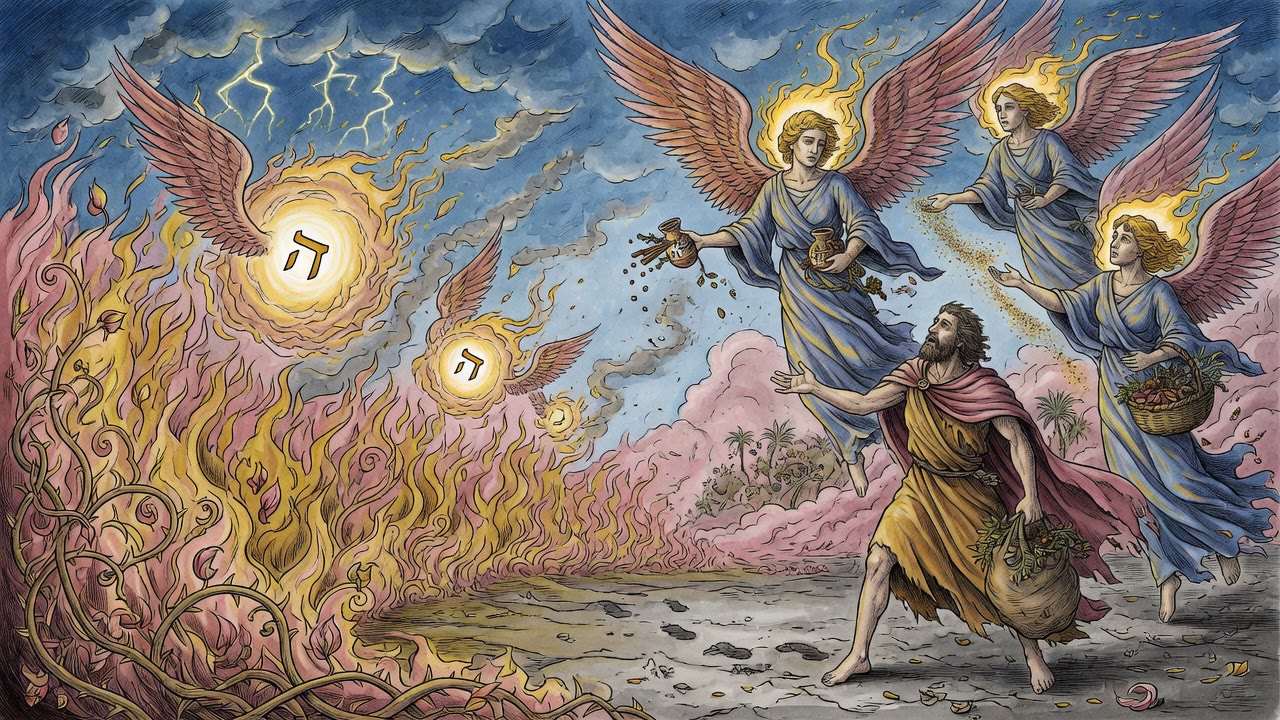
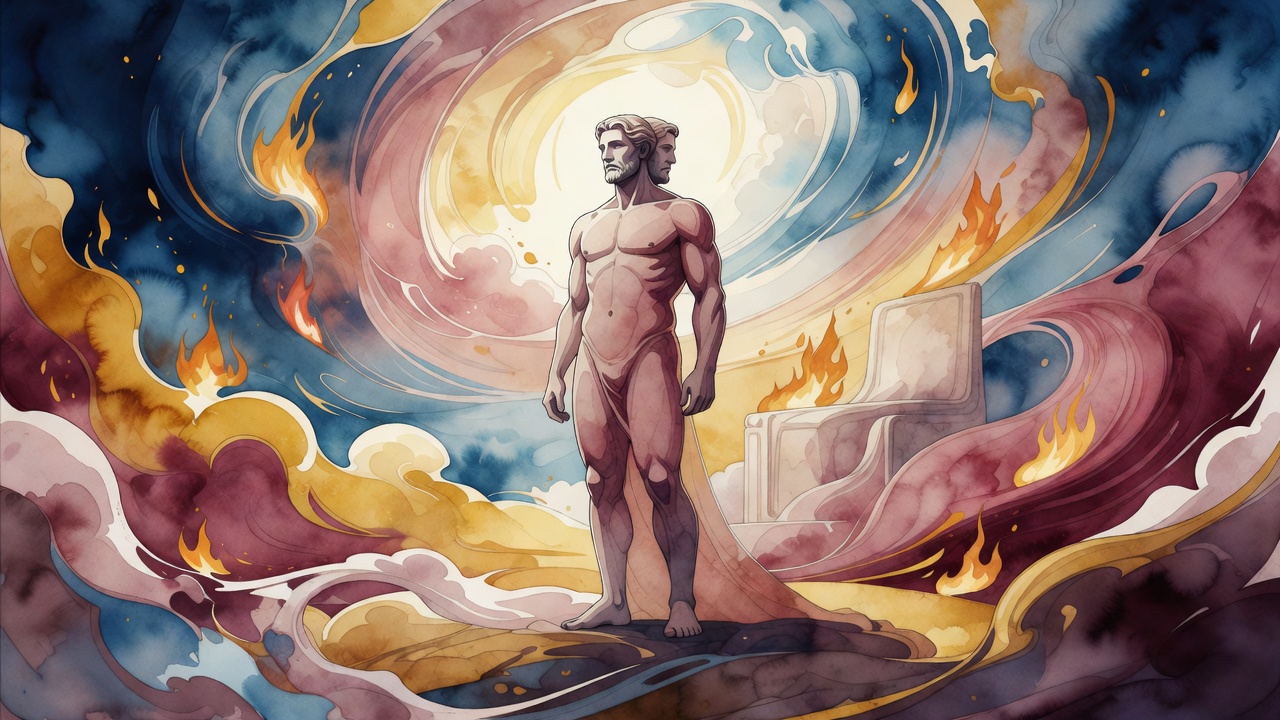
Adam was the challah of the world. As a woman pours water into dough and lifts the first portion, so the Holy One poured mist upon the earth and lifted man, His own dough, from the ground. Eve defiled that holy first-portion. Therefore challah was given to her for repair. And Adam was the lamp of the Holy One. "The lamp of the Lord is the soul of man." Eve extinguished it. So she received the Sabbath lamp to kindle, that she might mend the light she darkened. Light answered by light. The promise seals it. If you are careful with the Sabbath lamp, I too will shine for you. The Lord shall be your everlasting light.
Three wounds, three mends. Blood, dough, and flame become the grammar of a household that still remembers Eden's first failure and refuses to leave it unrepaired.
Dough of Justice and a Living Soul
Bereshit Rabbah opens the same image from another angle. "The Lord God formed the man of dirt from the ground and He breathed into his nostrils the breath of life" (Genesis 2:7). Rabbi Yosei ben Ketzarta calls Adam the challah of the world's completion, the sacred finale of the kneading. Mist rises. Dough forms. Then the shaping hand. Creation under the name Elohim is justice. A king upholds land with justice. A man of terumot, of sacred portions gone wrong, can destroy it.
Adam was meant to be that sacred offering. The breath in the nostrils was not decoration. It was the moment dust became a living soul. When that soul fails its charge, the whole loaf of the world feels the tear. The midrash does not soften the charge. The first man was designed as completion and became the crack in the crust. Justice built the stage. A misused portion of holiness wrecked the finale.
Every later separation of dough in a Jewish kitchen answers that first lifting of man from wet earth. The portion set aside is not only law. It is memory of a body that was itself a portion.
Exile and a Path Chosen Alone
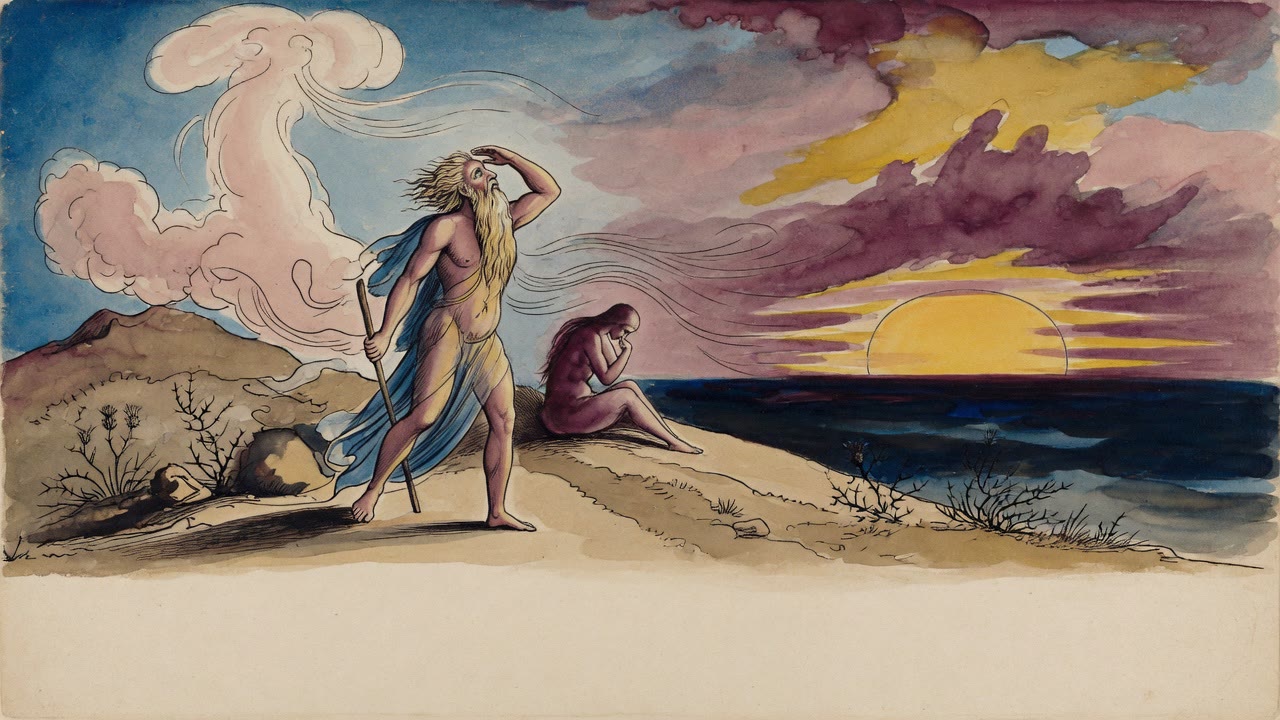
Job's line becomes Adam's story. You grant him power forever, and he is gone. You alter his countenance and send him away. He turned from God's mindset toward the serpent's and was banished. Rabbi Papus heard "the man was as one of us" as angelic rank. Rabbi Akiva cut him short. Enough, Papus. God set life and death before Adam. Adam chose a third path of death from himself, mimenu, of his own making.
Others compare him to Gabriel clothed in linen, or to a body once covered in a fingernail-like garment of glory. Reish Lakish pairs him with Jonah, who fled the mission and lost the prophetic spirit. Rabbi Berekhya recalls Elijah, who never tasted death, and says Adam was not supposed to taste it either while he remained whole. When his side was taken to form Eve, knowing good and evil entered the story. Exile is not only geography. It is the loss of a skin of light and the beginning of a long road out of the garden.
The midrash stacks images until Adam is angel, grasshopper-garment, fleeing prophet, and almost-immortal at once. Each image measures the same fall from another angle.
Fifty Days for Abel
The next generation inherits a short calendar. Rabbi Eliezer places the world's birth in Tishrei. Rabbi Yehoshua places it in Nisan. Either way, Abel's life stretches only from one festival season to the next. From Sukkot (the autumn feast of booths) to Hanukkah, or from Passover to Shavuot (the feast seven weeks later). The midrash states he lived no more than fifty days. Some read seventy. The righteous brother dies before a season can turn twice.
Cain and Abel bring offerings inside that brief window. The first blood after Eden is not a long epic. It is a short, sharp failure under a sky that still remembers the lamp Eve darkened and the dough Adam was meant to be. The three commands on women and the exile of the first man are not separate books. They are one wound told from two sides of the same loaf, and Abel's short life is the first harvest of that wound.
So the house that kindles a Sabbath lamp, separates dough, and guards blood is not performing empty custom. It is answering an old extinguishing with fire, an old defilement with a lifted portion, and an old spilled life with ordered blood. The breath that made Adam a living soul still asks whether the loaf of the world will be completed or cracked again in every generation that kneads and lights and waits for dawn.
← All myths