4 min read

A Father Brings Satan Home in a Beautiful Captive

A man desires a captive of beautiful form and walks the Accuser through his door. Years later his son steals meat and wine, and stones finish the path.

Curated by Arthur · Told by Maggid ·
Table of Contents
  1. Desire Walks Through the Door First
  2. Meat, Wine, and a Son Who Will Not Hear
  3. The First Stone, Then Another
  4. What the Court Thinks It Is Doing
  5. A Door That Should Have Stayed Shut
A Father Brings Satan Home in a Beautiful Captive Click for full size

Desire Walks Through the Door First

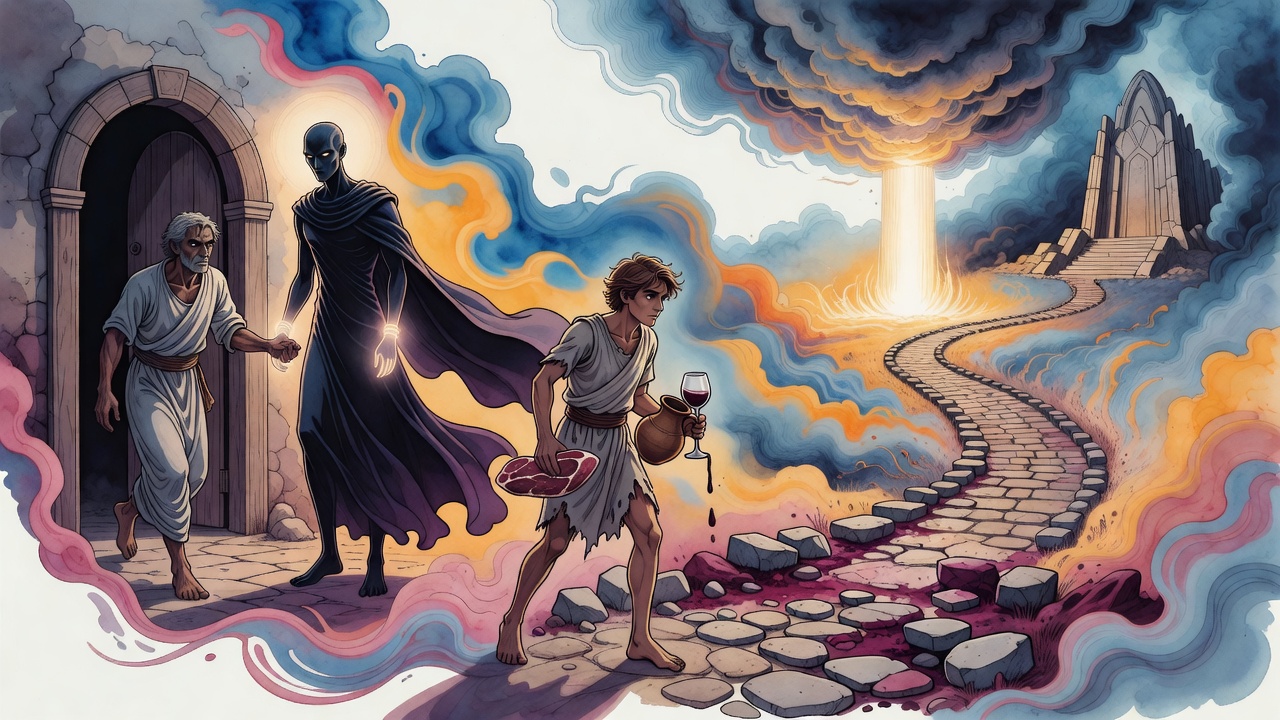
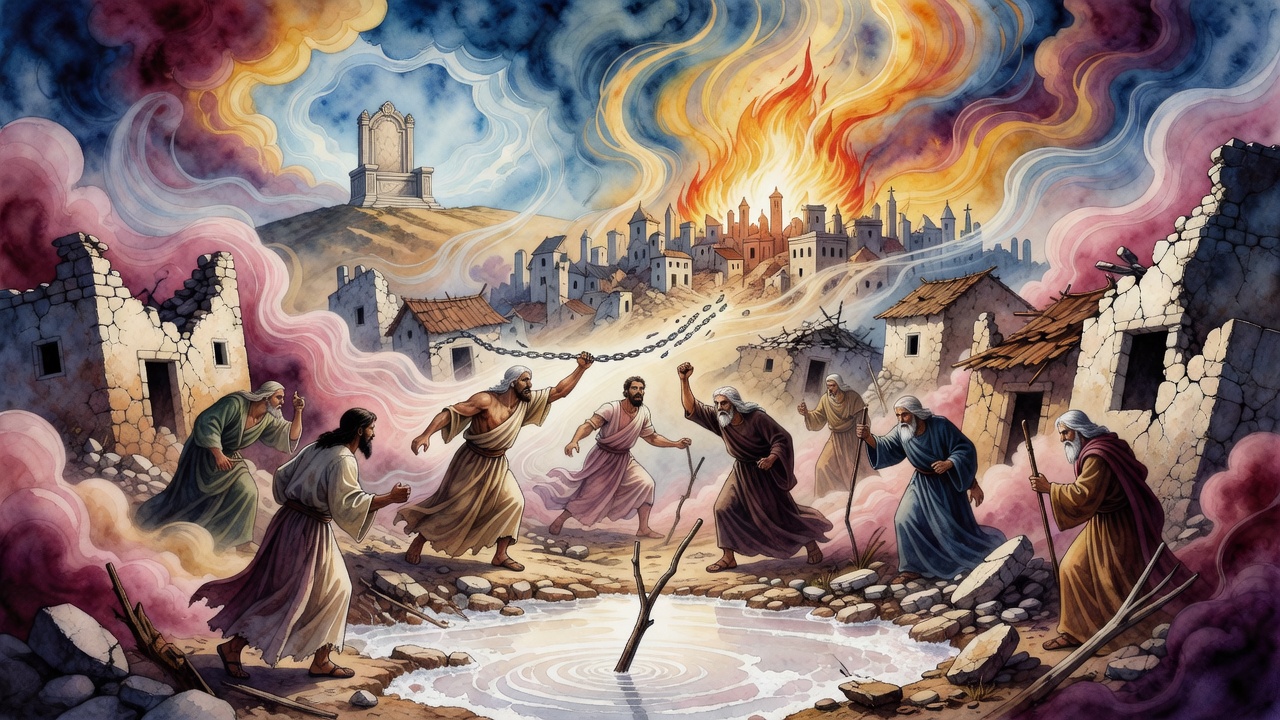
The father saw her among the captives and his eyes stopped. The law would later name her a woman of beautiful form. He took her hand under the canopy of permission and walked her through his door. Something else entered with her footsteps. The Accuser does not need a trumpet. He needs a house that has made room for a hunger the father will not name.

The boy watched from the stair. He saw how beauty rewrote a table's rules. He saw how a man could call appetite a prize of war. He sat through meals that tasted of victory and learned the wrong lesson with perfect attention. Years later the same boy would steal meat and wine as if the house still belonged to appetite alone.

Meat, Wine, and a Son Who Will Not Hear

They caught him with grease on his chin and a flask still wet. He cursed his parents and fled into the alley, then came back laughing. Rabbi Yossi would ask the hard question over this son: is he stoned because he ate a tartimar of flesh and drank half a log of wine? The Torah, he said, probed to the end of this one. Let him die innocent, not guilty of the worse violence his path is already writing. The death of the wicked can be a mercy for them and for the world. Quiet for the wicked is bad for them and bad for the world. Wine and sleep for them can be a kindness that keeps a knife from being drawn later.

The father had wanted a captive. He had brought the Accuser into his house. The son became a stubborn and rebellious son whose end was a violent death. The chain was not mystical theater. It was a home that taught desire before it taught limit.

The First Stone, Then Another

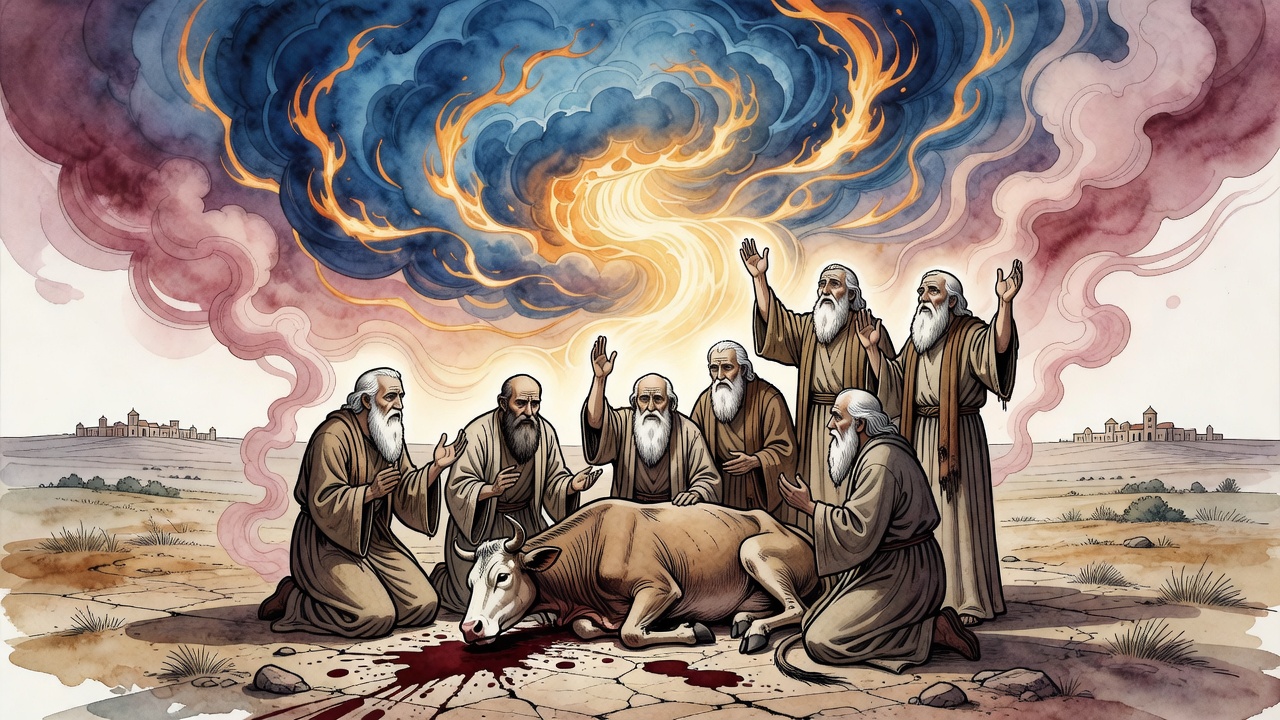
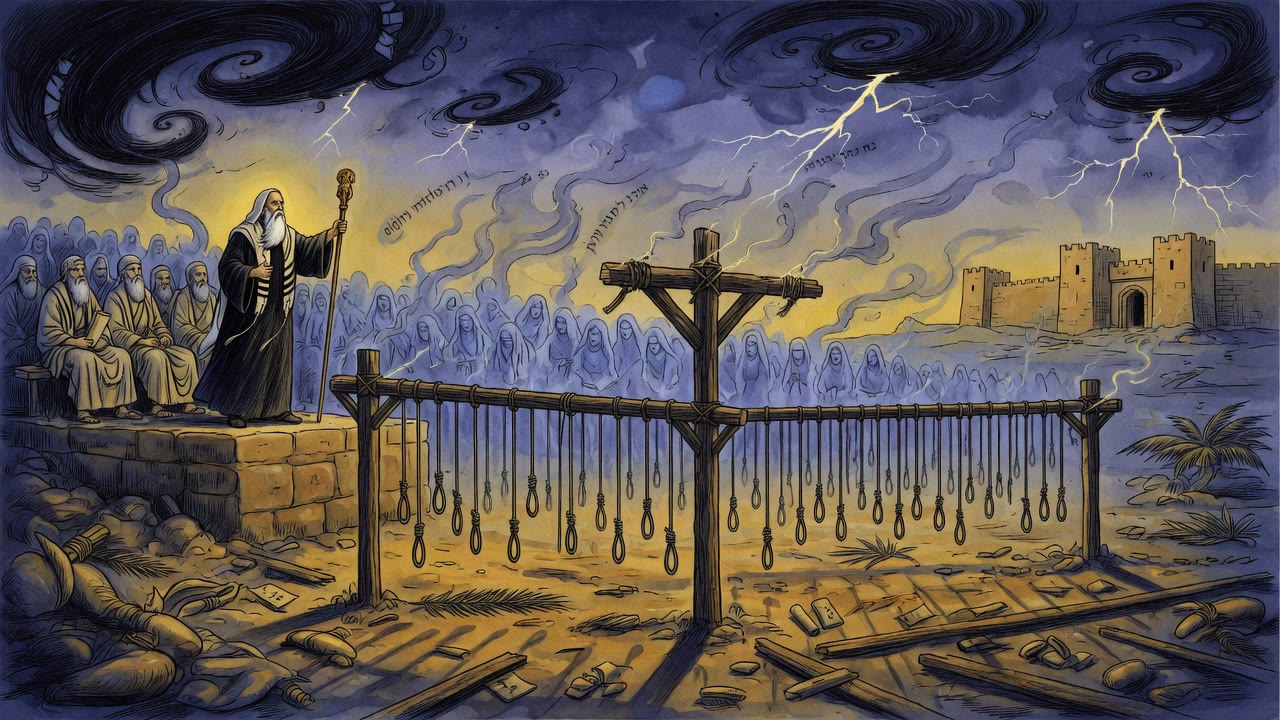
At the edge of the town the court gathered. Witnesses spoke. The son stood with the look of a boy who still thought the story was about meat. "With stones," the verse says, and also "with a stone." If many, why one? If one, why many? The answer was brutal and practical: if he does not die with the first, he is dispatched with a second. Death is not a spectacle of counting. It is an end that must be reached without cruelty for cruelty's sake and without hesitation that leaves him half alive.

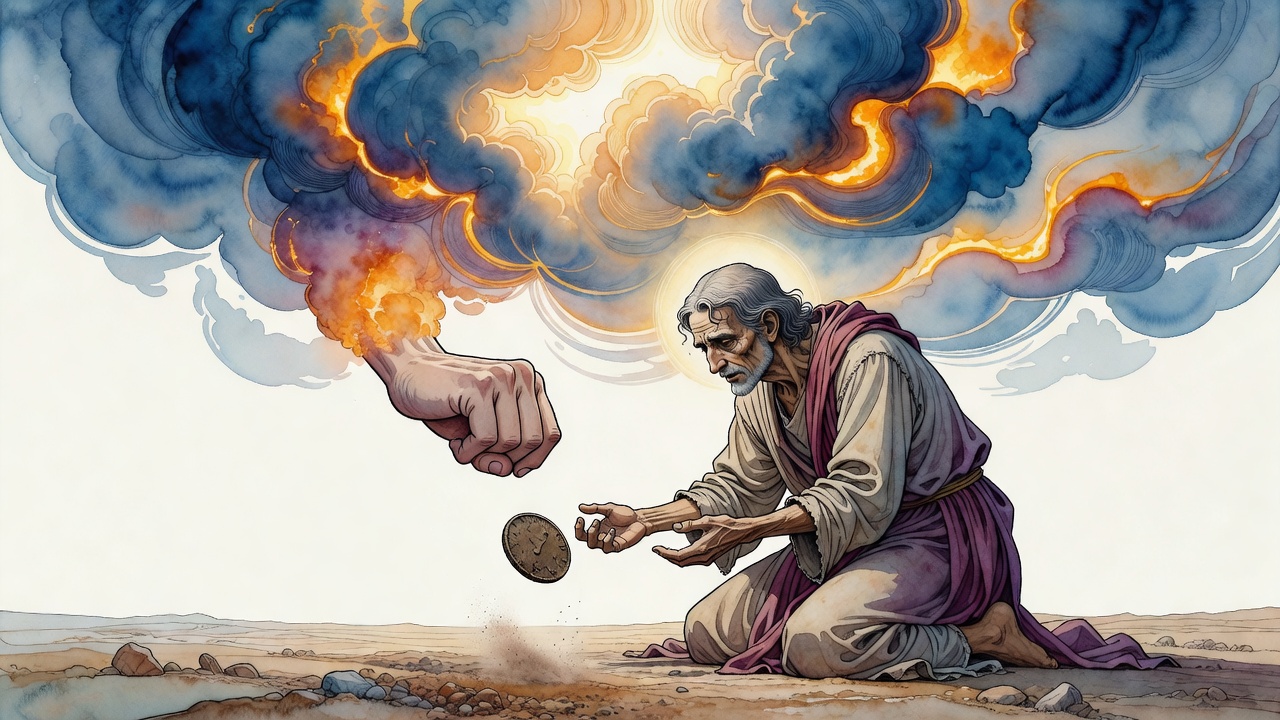
A man raised a stone and threw. Another followed. The father fell to his knees and cried without sound. He could not un-open the door from years ago. The Accuser did not laugh aloud. He did not need to.

What the Court Thinks It Is Doing

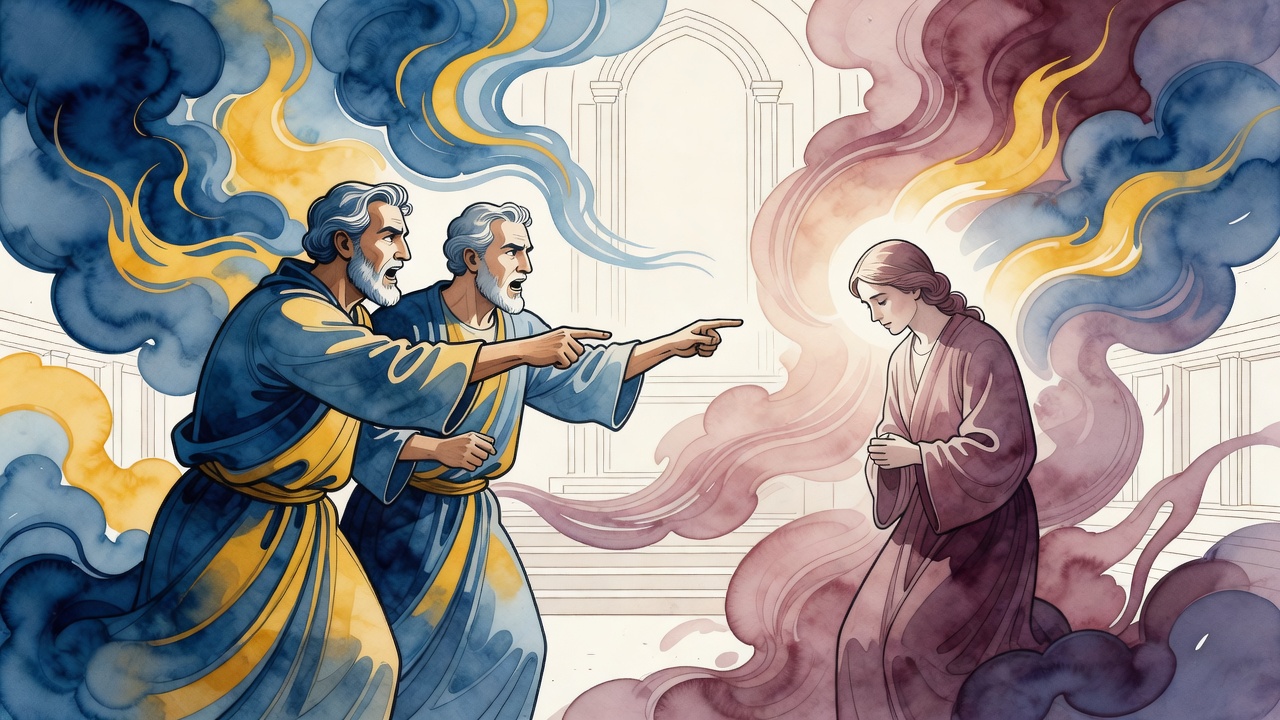
The judges were not hunting a glutton for sport. They were cutting a road short before robbery and blood filled it. The son's crime looked small in the market. It looked large in the future the Torah read like an open scroll. Beneficial for them and beneficial for the world, the teaching said of the death of the wicked. The sentence was still a horror. The alternative was a longer horror with more names on it.

Someone gathered the stones afterward. Someone washed a courtyard. The house where the captive once entered still stood, quieter, emptier, educated too late. A neighbor closed his shutters and refused to speak the boy's name for a week.

A Door That Should Have Stayed Shut

In the years that followed, men argued the law of the rebellious son as if it were only a riddle. The story inside the law was simpler. A father walked desire through his doorway and called it spoil. A son learned the lesson without the fine print. The Accuser found a seat at the family table and waited for the boy to grow into the end already written in the father's first look.

No foreign demon ruled this house. The Accuser works the openings people cut for him. The stones finished what appetite began. The court walked home under a sky that did not congratulate anyone. At dusk the father stood in the empty doorway and raised a hand as if to stop a guest who had already left years earlier. The hand found only air.


← All myths

From the tradition

Sources

2 sources

The texts behind this telling. Some cards carry a translation of the source; others are our own retelling of it, and each card says which. Every card links out to the original.

Sifrei Devarim 220:3Sifrei Devarim

Retold in our words. Read the original at the link below.Sifrei by Rabbi Shraga Silverstein · CC-BY

In Sifrei Devarim, a collection of legal interpretations related to the Book of Deuteronomy, we encounter a fascinating discussion about the stoning of a rebellious son, a sorer umoreh. The passage explores the seeming contradiction of the verse specifying both "stones" and "a stone" in the context of capital punishment. Why the apparent ambiguity?

The text wrestles with this: "I might think, with many stones; it is, therefore, written 'with a stone.' I might think with one stone; it is, therefore, written 'with stones.'"

So, what’s the solution? The passage concludes: "How so? If he does not die with the first stone, he is dispatched with a second." It's a pragmatic approach, acknowledging the grim reality of the situation. If one stone isn't sufficient, then more must be used to carry out the sentence.

The discussion doesn't end there. Rabbi Yossi offers a compelling, almost heartbreaking, perspective. He questions the severity of the punishment relative to the apparent crime. "Now is this one stoned because he ate a tartimar of flesh and drank half a log of wine?" (A tartimar is a measurement of volume, here referring to meat, and a log is a liquid measure. So, essentially, is someone really put to death for overeating and drinking?)

Rabbi Yossi argues that the Torah, in its wisdom, is actually looking beyond the immediate act. He suggests, "Rather, the Torah probed to the 'end' of this one, and said: 'Let him die innocent, and let him not die guilty.'" This is a profound statement, implying that the Torah, in anticipating a life of further wickedness, chooses to intervene preemptively.

He continues with a powerful, almost cyclical view of justice and societal well-being: "For the death of the wicked is beneficial for them and beneficial for the world. What is bad for the righteous is bad for them and bad for the world. Wine and sleep for the wicked is good for them and good for the world; for the wicked, bad for them and bad for the world. Quiet for the wicked is bad for them and bad for the world; for the righteous, good for them and good for the world." It's a stark reminder that the fates of individuals and the fate of the world are intertwined. What benefits one can harm the other, and vice versa.

The passage then takes a surprising turn, delving into the potential root causes of this tragic outcome. "The father of this one desired a yefath toar (a woman of beautiful form), and he brought the Satan into his house and his son became a sorer umoreh, whose end is to die a violent death, it being written (following) 'And if there be in a man a sin whose judgment is death, then he shall be put to death.'"

This isn't just about a rebellious son; it's about a chain of events, a consequence of unchecked desire. The father's lust, his longing for a "woman of beautiful form," is seen as opening the door to negative influences, ultimately leading to the son's tragic fate. It's a cautionary tale about the ripple effects of our choices, how even seemingly personal desires can have far-reaching consequences.

So, what do we take away from this complex passage? It’s not simply a legal discussion about the mechanics of stoning. It’s a profound meditation on justice, destiny, and the interconnectedness of individual actions and societal well-being. It challenges us to look beyond the surface, to consider the underlying causes of wrongdoing, and to recognize the profound impact of our choices on ourselves and on the world around us. Are we truly ever just dealing with "stones," or are we wrestling with something far more profound?

Full source
Sifrei Devarim 90:1Sifrei Devarim

Retold in our words. Read the original at the link below.Sifrei by Rabbi Shraga Silverstein · CC-BY

Sifrei Devarim turns one punishment verse into a counting problem: how many stones are required?

The verse in (Deuteronomy 13:11) states, "And you shall stone him with stones and he shall die." Okay, sounds straightforward. But the sages of old weren't ones to take things at face value. They immediately ask: How many stones are we talking about here? A whole heap?

That’s where the book of Vayikra (Leviticus) 24:23 comes in. It says "and they stoned him with a stone." Singular! So, which is it? Multiple stones, or just one big one?

This is where the brilliance of rabbinic interpretation shines through. The text continues: If it says "with a stone," would we think just one is enough? The Sifrei Devarim answers its own question. Not necessarily. So, what's the answer? If the person doesn't die from the first stone, then you use a second.

It's a seemingly simple point, but think about what's happening here. The rabbis are confronting the nuances of justice, with the tension between mercy and retribution. They're not just blindly following the letter of the law. Instead, they're actively interpreting, debating, and refining its meaning.

Why this meticulous focus on the number of stones? Well, perhaps it's a reflection of the weightiness of taking a life. Each stone represents a deliberate act, a conscious decision to carry out a severe punishment. It's not a casual thing.

This passage isn't just about the mechanics of stoning. It’s about how we approach the law itself. Do we take it literally, or do we delve deeper, searching for the underlying principles and values? The rabbis of the Sifrei Devarim clearly believed in the latter.

Remember the rabbis confronting the meaning of "stones." And remember that even the simplest instruction can hold layers of complexity, waiting to be uncovered. What other "simple" instructions might contain hidden depths?

Full source