Parshat Chayei Sarah6 min read

Geviah Turned the Nations Own Scripture Against Them in Court

Four nations sued Israel before Alexander using her own Torah, and one untitled man turned every verse back until they fled in shame.

Curated by Arthur · Told by Maggid ·
Table of Contents
  1. The Children of Ishmael Came for the Double Portion
  2. The Canaanites Claimed the Ground Beneath Israel's Feet
  3. Egypt Demanded Its Silver and Gold Returned
  4. Out of Africa Came the Last Claimants
  5. The Tax Lifted From Jerusalem

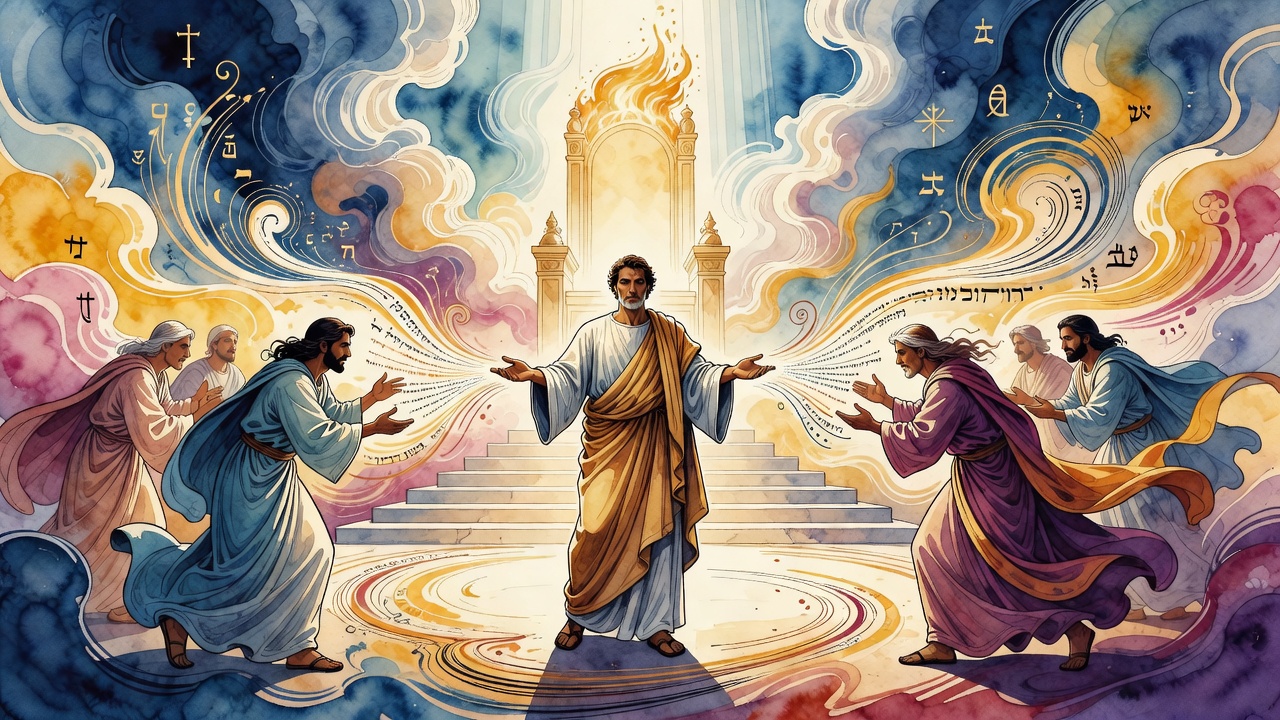
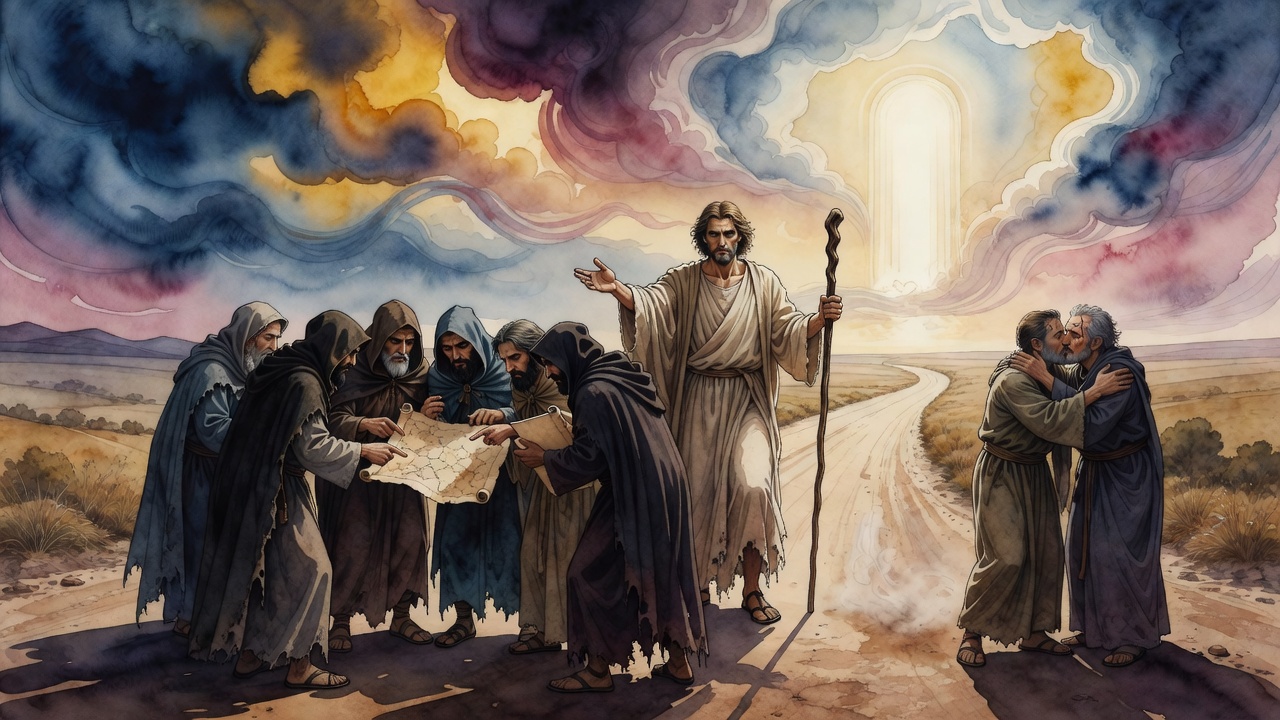
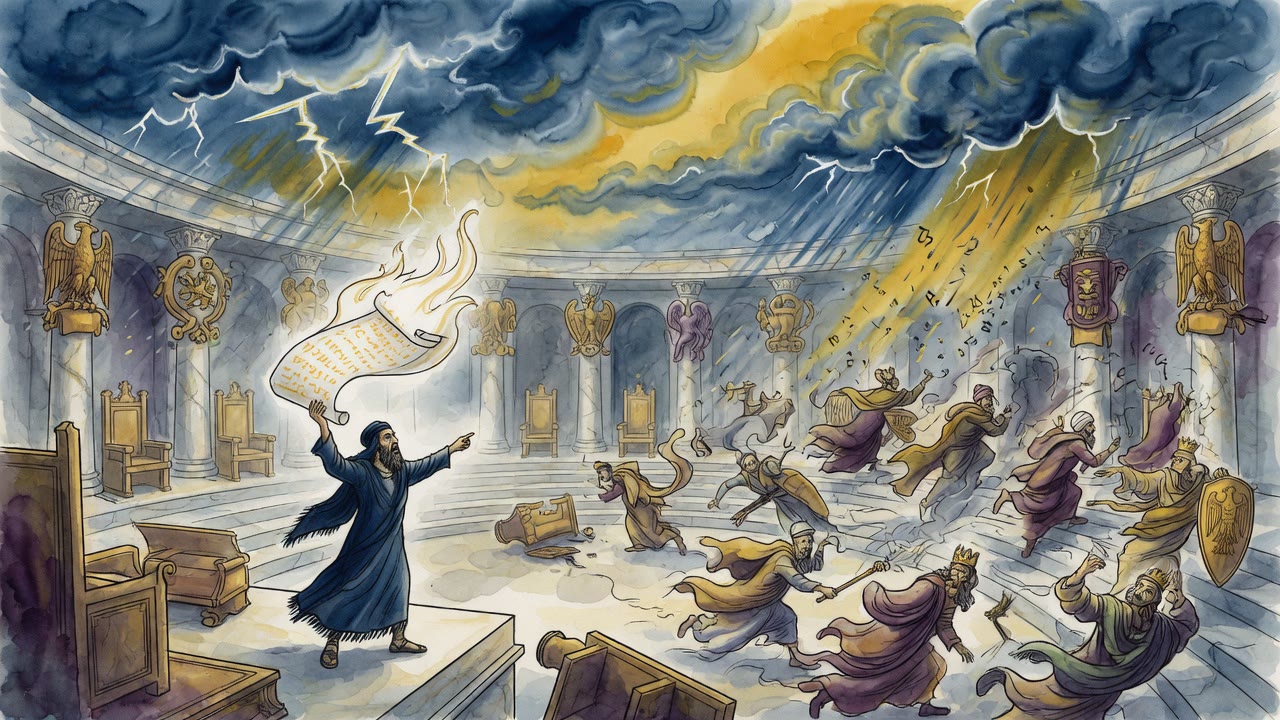
The summons came to the study house of Israel like a blade laid flat on the table. Alexander of Macedon had pitched his court, and four delegations stood waiting to claim Israel apart, piece by piece, until nothing of the inheritance remained. The Ishmaelites came for the birthright. The Canaanites came for the soil itself. The Egyptians came for their silver and gold. And out of Africa came men with a claim older than memory. Each had sharpened the same weapon: not swords, but verses from Israel's own Torah, turned around to point at her throat.

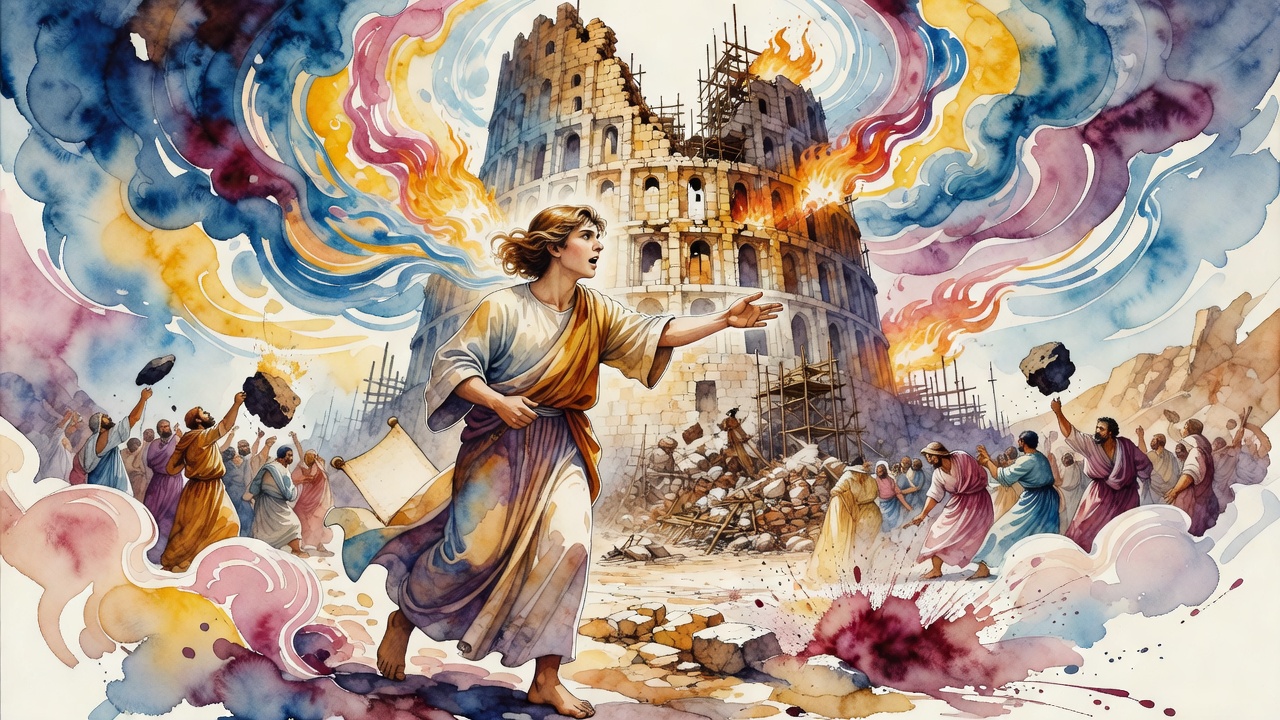
The sages looked at one another in the silence. To plead before a king who could deed away a homeland with a nod was to risk everything on a single tongue. Then a man rose who carried no pedigree, a plain man among them. "Give me leave, and I will go down and plead against them," said Geviah ben Kosem. They warned him. "Take care that you do not forfeit the Land of Israel by your mouth." He answered without flinching. "If I win, the inheritance stands. And if I lose, you have only to say, what is this lowly one who testified concerning us, and the shame is mine alone." They let him go.

The Children of Ishmael Came for the Double Portion

Alexander looked over the crowded court. "Who brings claim against whom?" The children of Ishmael spoke first, and they were clever. "We come at them from their own Torah. It is written that a man must acknowledge the firstborn, the son of the hated, and give him a double portion. Ishmael was Abraham's firstborn. By their own law, the double share is ours."

Geviah did not argue the verse. He turned it. "My lord the king, may a man not do as he wishes among his own sons while he lives?" Alexander said, "He may." Geviah pressed. "Then hear what is written. And Abraham gave all that he had to Isaac." The king's own question landed exactly where Geviah wanted it. "And the others? What did Abraham give the sons of the concubines?" Geviah had the verse ready. "To the sons of the concubines that Abraham had, Abraham gave gifts, and he sent them away from Isaac his son while he yet lived." Gifts in hand, sent eastward, severed by the father's own deed. The Ishmaelites had no answer. They withdrew with their faces burning.

The Canaanites Claimed the Ground Beneath Israel's Feet

The Canaanites stepped into the space the first delegation had emptied. "We too come from their Torah. Everywhere it names the land the land of Canaan. The name is ours. Let them give us back our country."

Again Geviah refused to wrestle the verse head on. He asked the king a small question instead. "My lord, may a man not do as he pleases with his own slave?" Alexander said, "He may." Then Geviah read them the curse spoken at the dawn of the nations. "Cursed be Canaan. A servant of servants shall he be to his brothers." He spread his hands toward the king. "Behold, the land is ours by inheritance, and these men before you are slaves to my lord the king. A slave owns nothing. Whatever he holds, he holds for his master." The Canaanites had come to reclaim a homeland and stood branded the property of the conqueror they had hoped would champion them. They too withdrew shamefaced.

Egypt Demanded Its Silver and Gold Returned

Then Egypt pushed forward, and their claim had the weight of plundered treasure behind it. "Six hundred thousand of them went out from our land laden with our vessels of silver and our vessels of gold. It is written plainly that they despoiled Egypt. Let them return what they carried off."

Here Geviah did not soften the blow. He answered debt with debt. "Six hundred thousand men labored in your service for two hundred and ten years. Some were silversmiths. Some were goldsmiths. Some hauled brick under the lash. Pay each of them a single dinar a day for the years they served, and then we will speak of vessels." The king told his philosophers to reckon the sum. They bent to the arithmetic, counting wages against treasure, and before they had even reached a hundred years the land of Egypt itself stood forfeit, swallowed whole by the wages it owed. The Egyptian delegation fled the court in shame.

Out of Africa Came the Last Claimants

One delegation remained. On the twenty-fifth of Nisan the children of Africa came forward, and now a second man rose for Israel, Geviah ben Pesisa, who asked the sages for the same leave the first Geviah had asked. "If they defeat me, tell them only that you sent out a commoner to be beaten. But let me plead." They gave him leave.

The Africans claimed the land of Canaan as their ancient possession, descended from Canaan himself. Geviah met them on that very ground. "You stand here as the seed of Canaan. And Canaan was a slave. A slave who acquires property, whose is the slave, and whose is the property? Both belong to the master. By your own pedigree, whatever you claim already belongs to us." He let the trap close. "And not only that. Reckon the years you never served us, and tell me who is owed by whom." They had no reply. "Return us an answer," he said. They begged for time. He gave them three days.

They searched for three days and found nothing. No verse, no precedent, no escape from the arithmetic of their own claim. On the third day they did not return to the court at all. They abandoned their fields with the grain still standing and their vineyards with the vines still rooted, and fled the country, and that year happened to be a sabbatical year, when no Israelite could have sown the ground they left behind in any case.

The Tax Lifted From Jerusalem

So the assessors who had pressed Judah and Jerusalem for tribute were sent away. On the twenty-fifth of Nisan they struck the levy from the books, and the day was marked as a small festival. Four nations had come to carve up a people with Scripture as their knife, and a plain man without a title had handed each of them the blade backward.


← All myths
From the tradition

Sources

6 sources

The texts this telling draws on, in full. Open a card to read inline, or expand it for a wider, quieter read.

Yalkut Shimoni on Torah 110:2Yalkut Shimoni on Torah

"And to the sons of the concubines that Abraham had, Abraham gave gifts" (Genesis 25:6). In the days of Alexander of Macedon, the children of Ishmael came to contend with Israel over the birthright, and two wicked families came with them, the Canaanites and the Egyptians. They said: who will go and plead against them? Geviah ben Kosem said: I will go and plead against them. They said to him: be careful that you do not forfeit the Land of Israel. He said: I will go and plead against them. If I win, well and good; and if not, you will say, what is this lowly one who testified concerning us? He went and pleaded against them. Alexander of Macedon said to him: who is claiming against whom? The children of Ishmael said: we claim against them, and we come against them from their own Torah. It is written, "for he shall acknowledge the firstborn, the son of the hated, by giving him a double portion" (Deuteronomy 21:17), and Ishmael by law should take a double portion. Geviah ben Kosem said to him: my lord the king, does a man not do as he wishes among his sons? He said to him: yes. He said to him: but it is written, "And Abraham gave all that he had to Isaac." He said to him: and where did he give to the children of Keturah? He said to him: "And to the sons of the concubines that Abraham had, Abraham gave gifts." And they withdrew from there shamefaced.

The Canaanites said: we come against them from their own Torah. Everywhere it is written "the land of Canaan"; let them give us our land. He said to him: my lord the king, does a man not do as he wishes with his slave? He said to him: yes. He said to him: but it is written, "And he said, Cursed be Canaan; a servant of servants shall he be to his brothers" (Genesis 9:25). Behold, the land is ours, and they are slaves to my lord the king. And they withdrew shamefaced.

The Egyptians said: we come against them from their own Torah. Six hundred thousand went out from our land laden with vessels of silver and vessels of gold, as it is written, "and they despoiled Egypt" (Exodus 12:36); let them give us back our silver and our gold. Geviah ben Kosem said to them: my lord the king, six hundred thousand did labor among them for two hundred and ten years, some of them silversmiths, some of them goldsmiths; let them give us a dinar a day each. The philosophers sat and reckoned, and they had not reached a hundred years before the land of Egypt was found forfeit, and they withdrew from there shamefaced.

He sought to go up to Jerusalem. These Cutheans went and said to him: beware, for they will not let you enter their Holy of Holies. When Geviah ben Kosem sensed this, he went and made two slippers and set in them two precious stones worth two myriads of silver. When he reached the Temple Mount he said to him: my lord the king, remove your shoes and put on these two slippers, for the floor is smooth, lest your feet slip. When he reached the Holy of Holies he said to him: this far we have permission to enter; from here on we have no permission to enter. He said to him: when I come out I will straighten your hump. He said to him: if you do so, you will be called an expert physician and take a great fee.

Full source
Yalkut Shimoni on Torah 110:3Yalkut Shimoni on Torah

The rabbis taught: on the twenty-fifth of Nisan the tax assessors were removed from Judah and from Jerusalem, when the children of Africa came to plead against Israel, and so forth. Geviah ben Pesisa said to the sages: give me permission, and I will plead against them. If they defeat me, say to them, you have defeated a commoner among us. They gave him permission, and so forth, until: a slave who acquired property, the slave belongs to whom, the property belongs to whom? And not only that, but how many years that you did not serve us! He said to them: return him an answer. They said: give us time. He gave them three days' time; they searched and found no answer. Immediately they abandoned their fields while still sown and their vineyards while still planted and fled, and that year was a sabbatical year.

Up to "And Abraham gave all" and so forth. "And to the sons of the concubines that Abraham had, Abraham gave gifts." A father who wrote a deed for his sons during his lifetime and sent one away from the other, does the one have any claim upon the other? What were the "gifts"? Rabbi Yirmeyah said: that he handed them a name of impurity, and so forth. "And he sent them away from Isaac his son" (Genesis 25:6): he said to them, as far as you are able to remove yourselves, remove yourselves, so that you not be scorched by the coal of Isaac. But Esau, because he came and joined himself to Jacob, took what was his from beneath his hand, as it is written, "Is this your joyous city? Who has counseled this against Tyre the crowning city?" and so forth (Isaiah 23:7-8). "And these are the days of the years of Abraham's life" (Genesis 25:7): "The LORD knows the days of the wholehearted" (Psalms 37:18), this is Abraham; "and their inheritance shall be forever," "And these are the days of the years of Abraham's life."

Full source
Sanhedrin 91aHebraic Literature (1901)

Sanhedrin 91a preserves a courtroom drama from the age of Alexander of Macedon. The people of Egypt appeared before the conqueror to lodge a complaint against Israel. Their argument was pulled straight from Scripture. "It is written, the Lord gave the people favor in the sight of the Egyptians, so that they lent them (Exodus 12:36)," they said. "Give us back the gold and silver that your ancestors took when they left."

The sages of Israel froze. Then a man named Givia ben Pesisa stepped forward. He was not a scholar by pedigree, a plebeian, they called him. "Let me argue the case," he said. "If I lose, say only that a commoner was defeated. If I win, say that the Torah of our master Moses has triumphed."

Alexander's court opened. Givia faced the Egyptian delegation. "Where is your proof?" he asked. "From the Torah," they said. "Then I will answer from the Torah. It is written, the sojourning of the children of Israel who dwelt in Egypt was four hundred and thirty years (Exodus 12:40). Pay us now the wages of the six hundred thousand men you enslaved for four hundred and thirty years. The gold and silver you want returned are a tiny advance against back pay."

Alexander gave the Egyptians three days to prepare a reply. They never came back. They fled from their own country, leaving fields and vineyards behind. A plebeian's sharper reading of a single verse emptied Egypt of its plaintiffs.

The Torah pays its own debts. And collects them.

Full source
Exempla of the Rabbis, No. 6Exempla of the Rabbis (Gaster, 1924)

When Alexander the Great conquered the known world, he did not merely defeat armies, he rearranged the claims of nations. The Talmud (Sanhedrin 91a) records that after his conquests, both the Ishmaelites and the Egyptians brought legal claims against the Jewish people before Alexander's tribunal.

The Ishmaelites spoke first. "The Land of Canaan belongs to us," they declared. "We are the descendants of Ishmael, the firstborn son of Abraham. The land was promised to Abraham's seed. And Ishmael was the elder son." It was a clever legal argument, one rooted in the very Torah the Jews held sacred.

Gebiha ben Pesisa, a humble and possibly hunchbacked sage, asked the rabbis for permission to argue on behalf of Israel. "If I win, say that the Torah won," he told them. "If I lose, say it was only a commoner who lost." They agreed.

Before Alexander, Gebiha made his case simply. "You claim through Abraham? The Torah says Abraham gave gifts to the sons of his concubines and sent them away eastward, while everything he had, his inheritance, went to Isaac alone" (Genesis 25:5-6). The Ishmaelites had no answer. They fled, abandoning their planted fields and sown vineyards to Israel.

The Egyptians came next, demanding reparations for the gold and silver the Israelites had taken during the Exodus. Gebiha replied: "Calculate first the wages for 600,000 men you enslaved for 430 years." The Egyptians asked for three days to prepare a response. They never returned.

Full source
Exempla of the Rabbis, No. 62Exempla of the Rabbis (Gaster, 1924)

The Egyptians brought their case before Alexander of Macedon, and they were confident they would win. Their claim was simple: when the Israelites left Egypt during the Exodus, they carried away enormous spoils of gold, silver, and fine garments. The Egyptians wanted it all back, with interest.

The sages of Israel were alarmed. Who could stand before Alexander the Great and argue against an entire nation? A man named Gabiha ben Pesisa stepped forward. He was no great scholar, but he had sharp wits and an even sharper tongue. "Give me permission to debate them," he said. "If I win, say it was the wisdom of Torah. If I lose, say it was just an ordinary man who failed."

Gabiha stood before the conqueror's throne and faced the Egyptian delegation. "You demand restitution for the spoils of the Exodus?" he asked. "Very well. Then let us first settle an older debt. For four hundred and thirty years, six hundred thousand Israelites labored as your slaves. You never paid them a single coin. Calculate the wages for four centuries of forced labor by an entire nation. And then we will discuss who owes whom."

The Egyptians fell silent. But Gabiha was not finished. "And while we are settling accounts," he continued, "let us also discuss the countless infant boys you drowned in the Nile. What is the price of a child?" Alexander gave the Egyptians three days to prepare a response. They never came back.

Full source
Gaster, Exempla No. 62 (Sanhedrin 91a)The Exempla of the Rabbis (1924)

When Alexander of Macedon conquered Egypt, a delegation of Egyptian nobles came before him with a centuries-old complaint against the Jews. They pointed to the book of Exodus itself. Chapter 12, verse 36, where the Israelites, leaving Egypt, "borrowed of the Egyptians jewels of silver, and jewels of gold, and raiment."

The Egyptians called it theft. They wanted restitution. And they wanted the conqueror of the world to rule in their favor.

The Jewish Advocate

Gabiha ben Pesisa, a humble sage, offered to represent the Jewish people. The Sanhedrin hesitated, he was not trained in rhetoric, and the stakes were existential. But Gabiha insisted. "If I lose, you can say it was a simple man who argued poorly. If I win, no one can say you won by legal tricks."

He appeared before Alexander and listened to the Egyptian claim. Then he stood and said something nobody expected.

The Counterclaim

"Our ancestors worked as slaves in your land for hundreds of years. (Genesis 15:13) says it was to be four hundred years, and the slavery of Exodus was the fulfillment. Have you paid them? Have you given wages to the six hundred thousand men who built your cities Pithom and Raamses? Let us calculate the back wages for every Israelite for every day he worked, at the going rate for an Egyptian laborer. We will deduct the cost of the silver and gold we carried out. Whoever owes the other, let him pay."

He paused.

"And there is more. We also claim recompense for every male Hebrew child drowned in the Nile at Pharaoh's decree" (Exodus 1:22).

The Egyptians went silent. Alexander dismissed the case. The Jews had not stolen the silver of Egypt. They had been given a partial, belated, deeply incomplete wage.

Gaster preserved this exempla from Sanhedrin 91a as a reminder that justice, in a Jewish reading, does not begin with the last accusation. It begins with the first unpaid day.

Full source