Retold in our words. Read the original at the link below.Townsend 1989 translation of Midrash Tanhuma, S. Buber Recension · CC-BY
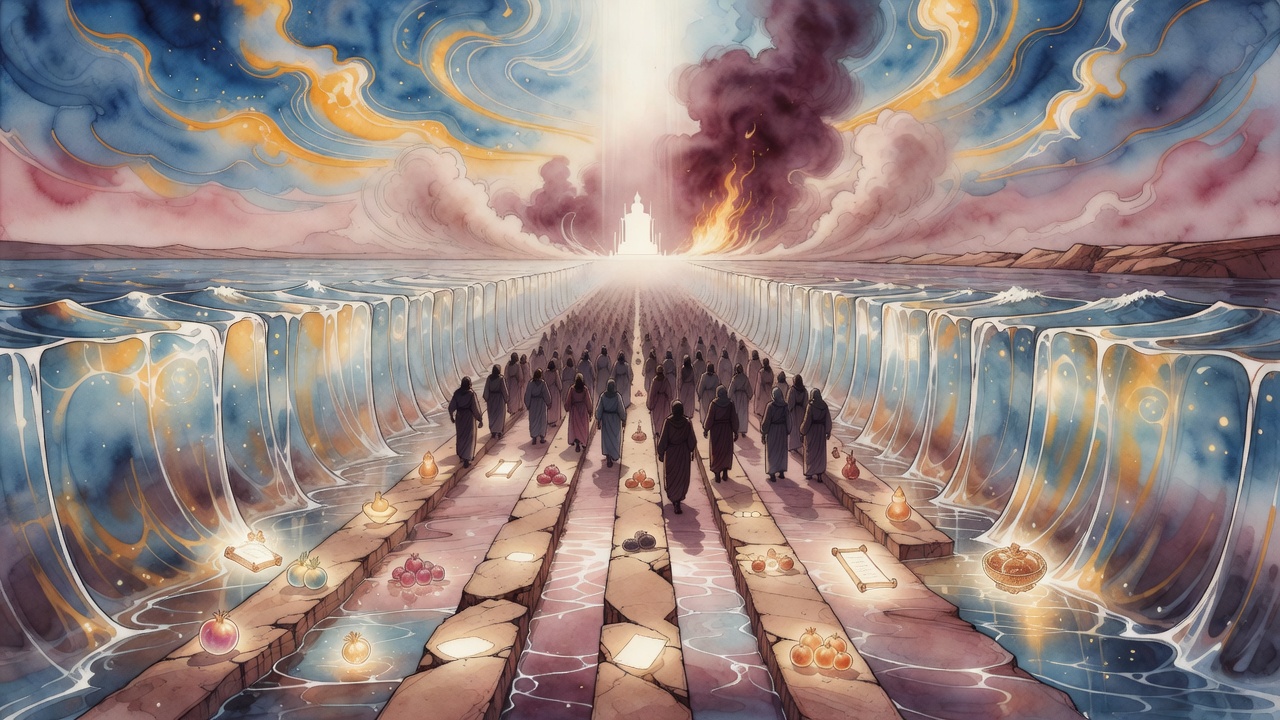
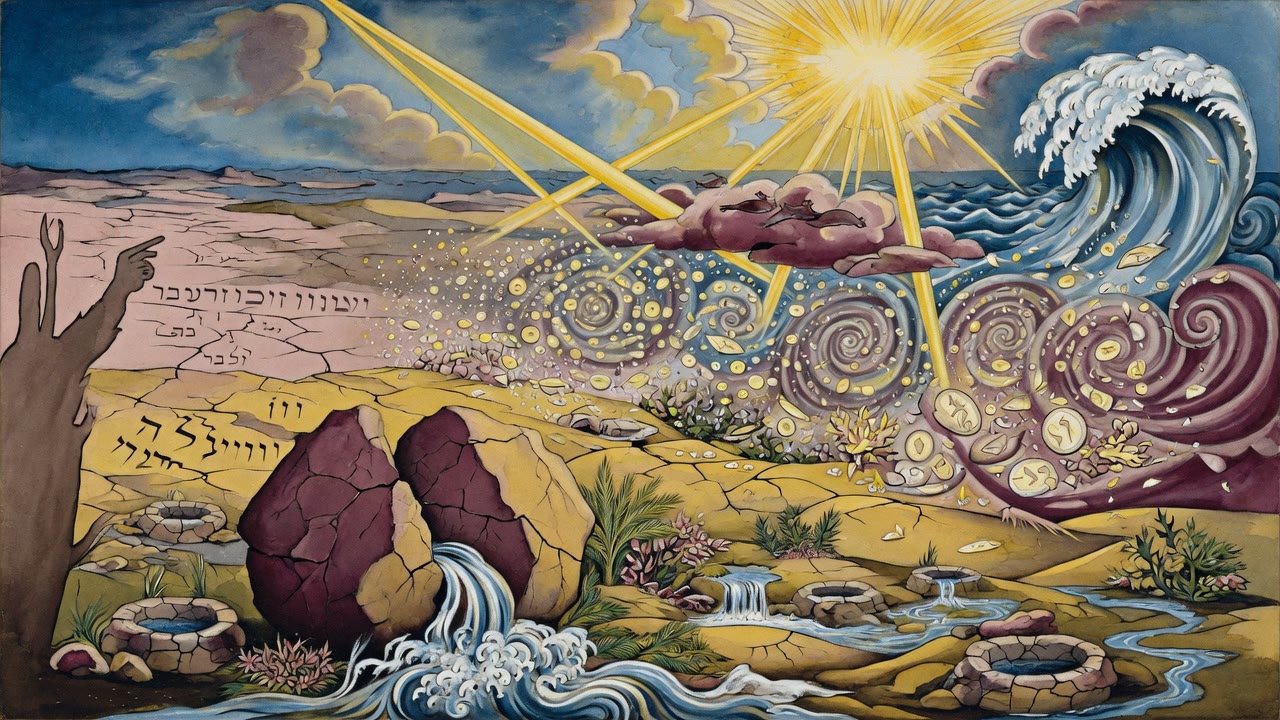
And lift thou up thy rod (Exod. 14:16). Ten miracles were performed in their behalf at the sea. The sea was split asunder for them, and became a kind of vault, as it is said: Thou hast struck through with his own rods the heads, etc. (Hab. 3:14). It was divided into twelve paths, as it is said: And stretch out thy hand over the sea and divide it (Exod. 14:16). It was turned into dry land, as it is said: And the children of Israel walked upon dry land the midst of the sea (ibid., v. 29). It was converted into a kind of clay, as is said: Thou hast trodden the sea with thy horses, the mud of mighty waters (Hab. 3:15). The water was made into pieces, as it is said: Thou didst break the sea into pieces by Thy strength (Ps. 74:13). It was changed into rocks, as is said: Thou didst shatter the heads of the sea monsters in the waters (ibid.). It was torn asunder, as it is said: To him who divided the Red Sea asunder (ibid. 136:13). It was piled up into stacks, as it is said: And with the blast of Thy nostrils, the waters were piled up (Exod. 15:8). It was made into a heap, as is said: Stood upright like a heap (ibid.). Barrels of sweet water flowed out of the salt water for them, and the sea congealed and became like a glass vessel, as it is said: The deeps were congealed (ibid.).
R. Judah declared: These ten verses are derived from various sources. It may be compared to a man traveling over a road, preceded by his son. If robbers approach from the front to seize the lad, he places him behind himself. If a wolf comes from behind to snatch him, he puts the lad in front of him. If he sees robbers behind him and the wolf before him, he takes his son in his arms. The Holy One, blessed be He, did likewise for Israel. When the sea was before them and the Egyptians behind, He bore them in His arms. When Israel began to suffer from the sun, He spread His cloak over them, as it is said: He spread a cloud for a screen (Ps. 105:39). When Israel became hungry, He gave them bread, as is stated: Behold, I will cause to rain bread from heaven for you (Exod. 16:4). When they became thirsty He gave them water, for He brought streams also out of the rock (Ps. 78:15).
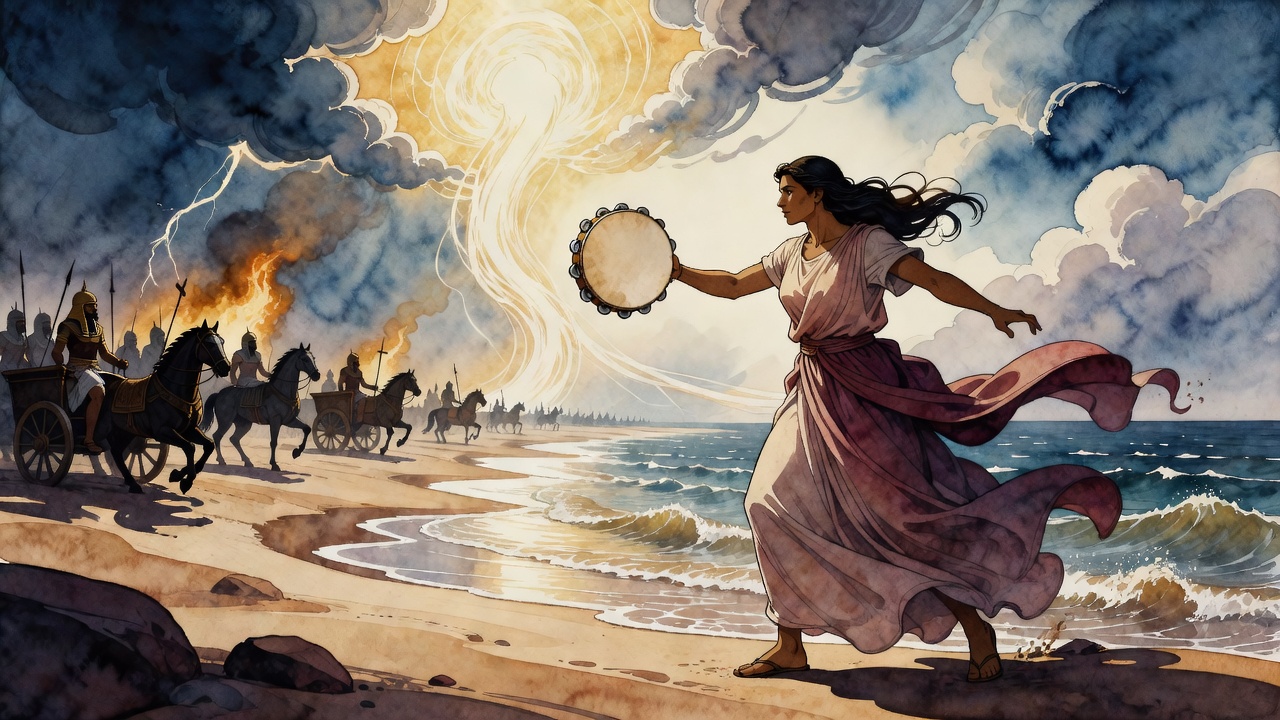
The Israelites sang ten songs because of the ten miracles performed in their behalf. The first was in Egypt, as is said: You shall have a song as in the night when a feast is hallowed (Isa. 30:29). The second was at the Red Sea, as it is said: Then Moses sang (Exod. 15:1). The third was at the well: Then Israel sang this song (Num. 21:16). The fourth took place when Moses said: And it came to pass when Moses had made an end of writing (Deut. 31:24). The fifth: Then spoke Joshua to the Lord (Josh. 10:12). The sixth: Then sang Deborah and Barak the son of Abinoam (Judg. 5:6); the seventh: And David spoke unto the Lord the words of this song (II Sam. 22:1); the eight: A song at the dedication of the House; of David (Ps. 30:1). Did David actually dedicate the House (Temple)? The fact is that Solomon dedicated it, but inasmuch as David had set his heart upon erecting it, the song of dedication was ascribed to him. A similar example is contained in the verse And his sister stood far off (Exod. 2:4). Was she not the sister of both of them? Indeed she was, but inasmuch as she had devoted herself to Moses’ welfare, she is referred to by his name. Another instance of this is contained in the verse And the two sons of Jacob, Simeon and Levi, Dinah’s brothers took (Gen. 34:25). Was she not the sister of each of the tribal ancestors? She was, but because these two had devoted themselves to her welfare, she is mentioned with their names. Another illustration is contained in the verse Cozbi the daughter of the chief of Midian, their sister (Num. 26:18). Was she actually a sister to all of them? (Hardly!) She was called their sister because she was deeply devoted to her people.
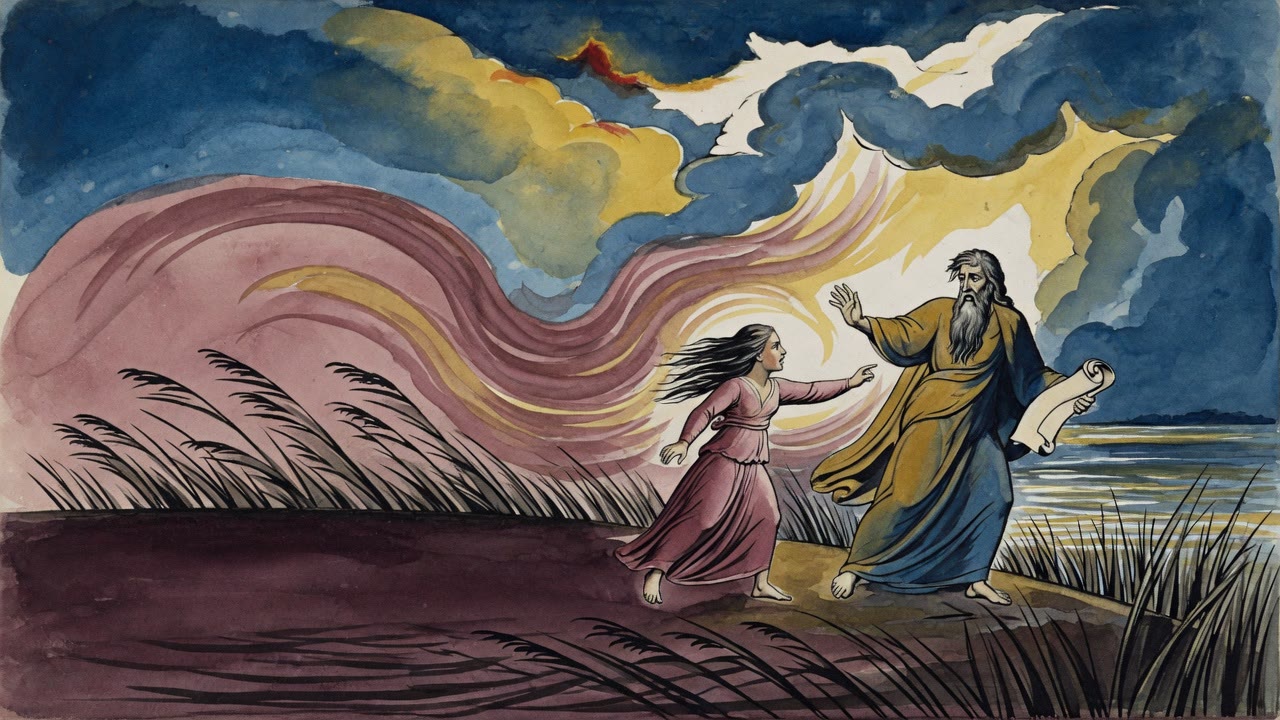
Then sang Moses (Exod. 15:1). They had faith in God (ibid. 14:31) and therefore merited acquiring the land. You find that because of his faith in God, our patriarch Abraham inherited both this world and the world-to-come, as is written: And he believed in the Lord; and He counted it to him for righteousness (Gen. 15:6). Similarly, because the people believed (Exod. 4:31), it is written: The Lord preserveth the faithful and plentifully repayeth him that acteth haughtily (Ps. 31:24). Similarly, with reference to Moses it says: And his hands were steady (faithful) until the going down of the sun (Exod. 17:12).
Scripture states: This is the gate of the Lord, the righteous shall enter into it (Ps. 118:20). Who are the righteous ones that will enter? The faithful ones, as it is said: Open ye the gates, that the righteous nation that keepeth faithfulness may enter in (Isa. 26:2). This is the gate that the faithful enter, as it is said: It is a good thing to give thanks unto the Lord, and to sing praises unto Thy name, O Most High, to declare Thy loving-kindness in the morning (Ps. 92:2). What is written after that? For Thou hast made me glad. What makes us glad? It is the faith which our fathers professed in this world, which is all night, as it is written: And thy faithfulness in the night seasons (ibid., v. 3). And it is also written: But the righteous shall live by his faith (Hab. 2:4), and They are new every morning, great is thy faithfulness (Lam. 3:23).
In the future exiles will not be redeemed except as a reward for faithfulness, as it is said: Come with me from Lebanon, my bride, with me from Lebanon; look from the top of Amana (Song 4:8). It says likewise: And I will betroth thee unto Me in faithfulness (Hos. 2:28). Thus you learn that faith is powerful, for in reward for faith, the Shekhinah (the Divine Presence) hovered over them and they sang the song, as it is said: And they believed in the Lord … and Moses sang (Exod. 14:31–15:1), and it says also: Then believed they his words; they sang his praise (Ps. 106:12).
Then sang Moses. At times the word then refers to events that happened in the past, and at other times it refers to events that are to transpire in the future. The word then refers to past events in the following verses: Then began man to call upon the name of the Lord (Gen. 4:26), Then she said: “A bridegroom of blood” (Exod. 4:26), Then sang Israel this song (Num. 21:17), Then Solomon spoke (I (Kings 18:1)2). All of these refer to past events. Instances in which the word then alludes to future events are: Then thou shalt see (Isa. 60:5), Then shall thy light break forth (ibid. 58:8), Then shall the lame man leap as a hart (ibid. 35:6), Then the eyes of the blind shall be opened (ibid., v. 5), Then shall the virgin rejoice (Jer. 31:13), Then was our mouth filled with laughter, and our tongue with singing (Ps. 126:2), and Then said they among the nations (ibid.). All these allude to future events. From this we learn that the concept of the resurrection of the dead is derived from the Torah.
Moses and the children of Israel (Exod. 15:1). This verse implies that Moses was equal to all the Israelites. Another explanation of Moses and the children of Israel is that Moses sang the song before the children of Israel did.
This song. Is there only one song? Was it not stated previously that there were ten songs? The eighth song is A psalm, a song at the dedication of the house, of David (Ps. 30:1). The fact is that Solomon was the one who dedicated it, as it is said: So the king and all the children of Israel dedicated the house of the Lord (I (Kings 8:6)3). However, because David had set his heart upon dedicating it, the song was ascribed to him. Similarly, it says: Lord, remember unto David all his afflictions; how he swore unto the Lord, and vowed unto the Mighty One of Jacob: “Surely I will not come into the tent of my house, nor go up into the bed that is spread for me … until I find out a place for the Lord, a dwelling-place for the Mighty One of Jacob.” Lo, we heard it as being in Ephrath; we found it in the field of the wood (Ps. 132:1–6). Observe that it is written concerning it: Now see to this house, O David (I (Kings 12:1)6). Hence you learn that because David desired with all his soul to build the Temple, it was called by his name.
Similarly, because Moses yearned for the Torah, it is called by his name. Whence do we know that he yearned for the Torah? It is said: And Moses was in the mount forty days and forty nights (Exod. 24:18). Where do we find that it is called by his name? It is written: Remember ye the law of Moses My servant (Mal. 3:22). Because he offered to sacrifice his life for Israel, Yet now if thou wilt forgive their sin (Exod. 32:33), they were called by his name: And his people remembered the days of old, the days of Moses (Isa. 63:11). And it is also written: Go, get thee down; for thy people have dealt corruptly (Exod. 32:7). Since He risked his life for the sake of justice, as it is written: Wherefore smitest thou thy fellow? (Exod. 2:13), he fled because of justice and returned because of justice. He executed righteousness, Lord, and his ordinances with Israel (Deut. 33:21). Does not justice, however, belong to God? Indeed! But since he devoted his life to justice, it is called by his name.
Similarly, it is written concerning Jehoshaphat: And when he had taken counsel with the people, he appointed them that should sing unto the Lord, and praise in the beauty of holiness, as they went out before the army, and say: “Give thanks unto the Lord, for His mercy endureth forever” (II Chron. 20:21). What is the difference between this song of praise and others found in the Torah? In all the other songs, For He is good is added, but in this instance For He is good is omitted, since there can be no rejoicing before Him on High over the destruction of the wicked. And since there could be no rejoicing before Him over the destruction of the wicked, surely there could be no joy at the destruction of the righteous, a single one of whom is equal to all the world in His sight. Hence it is said: But the righteous is an everlasting foundation (Prov. 10:25). The ninth song is the Song of Songs of Solomon. The tenth song is the song of the future: A psalm, O sing unto the Lord a new song; for He hath done marvelous things (Ps. 98:1).

 Click for full size