God Stood Out Among Twenty-Two Thousand Chariots at Sinai
Rabbi Abdimi counted the angels who came down with God at the mountain. Every one of their chariots looked like the one Ezekiel saw by the river.
Table of Contents
The mountain was not empty when God spoke from it.
 Click for full size
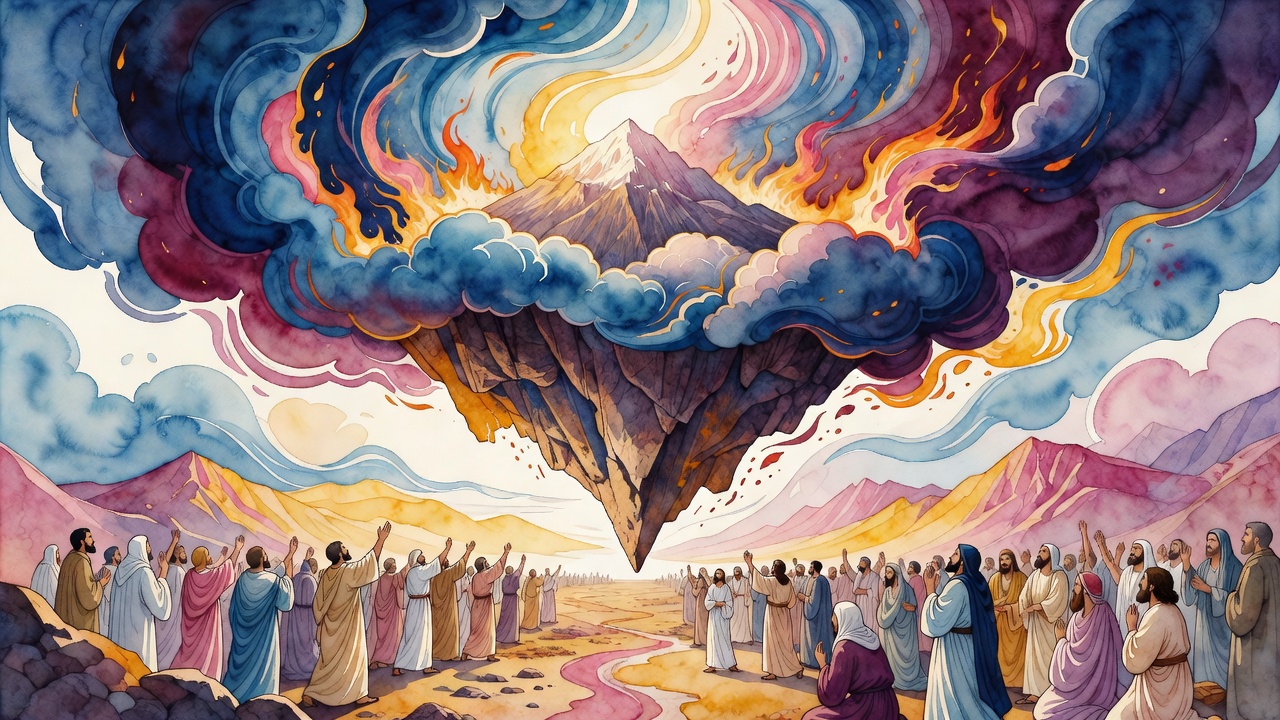
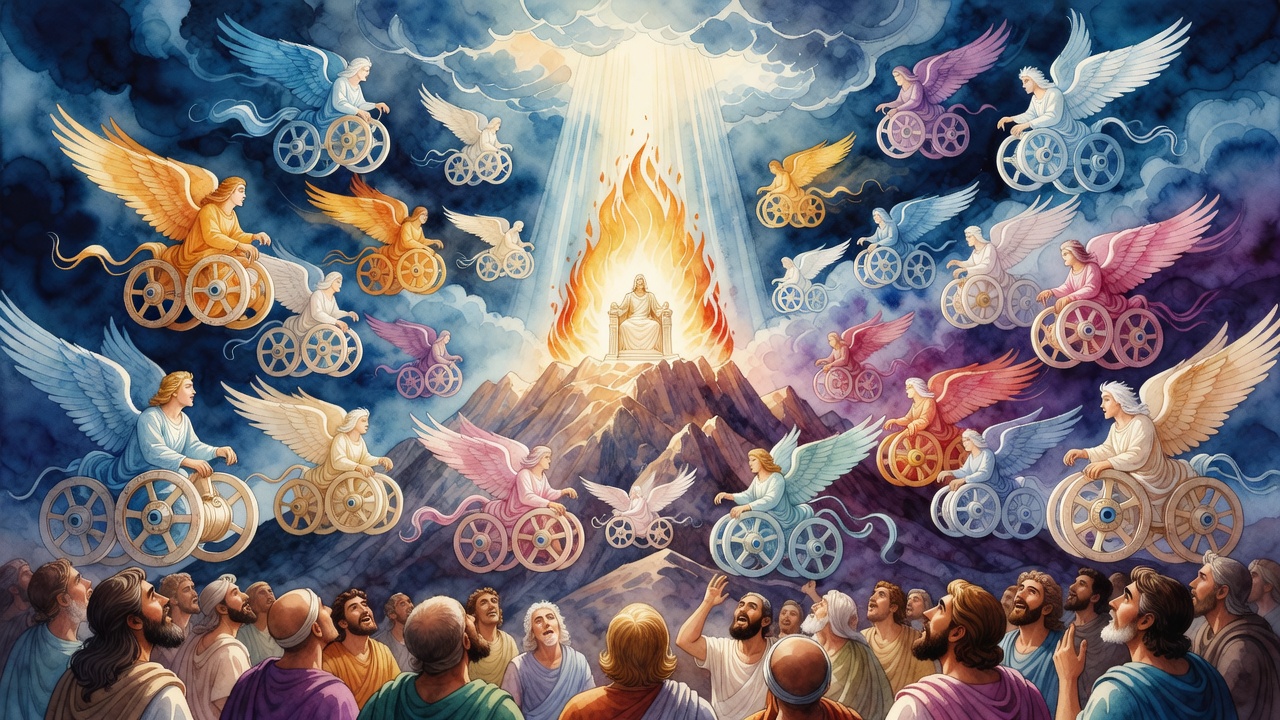
Before the first commandment was opened, the sages looked at the Psalm and saw what arrived with God at Sinai: the chariots of God are myriads upon myriads, thousands of angels. The Holy One did not come to the mountain alone. Rabbi Abdimi of Haifa reported what he had learned: twenty-two thousand companies of ministering angels descended on Sinai with God, a host beyond counting gathered to witness the moment Israel received the Torah.
Twenty-Two Thousand Companies Came Down With God
The number had been read carefully. The Psalm says myriads and thousands, and the rabbis pressed on each term until twenty-two thousand companies emerged. Not a round number or an approximation. A number with a meaning, tied to the census of a tribe and to the love of a God who counts His servants and His people in the same breath.
The scale of the host was not incidental decoration. It was the announcement. When a king came to meet his people, the size of his retinue declared his rank. God came to Sinai with a host that made the earth shake and the mountain smoke. Israel stood at the foot of the mountain and saw what kind of king had chosen them. The terror was part of the message.
The Mountain Became a Camp of Angels
Rabbi Berekhiah noticed something precise in that number and read it as a sign of love. Twenty-two thousand was exactly the count of the camp of Levi, the tribe set apart for sacred service among all of Israel. Why would God match the angelic host to the Levites? Because He looked ahead and saw that Israel, even the Levites, would one day fail. When that day came, He was already prepared to show them that the angels had been standing at the number they held.
The match between the camp above and the camp below carried tenderness inside the terror. The mountain surrounded by twenty-two thousand angelic companies was also a mirror. God had arranged heaven to reflect the shape of what Israel was called to be.
Each Chariot Was Ezekiel's Vision, Multiplied
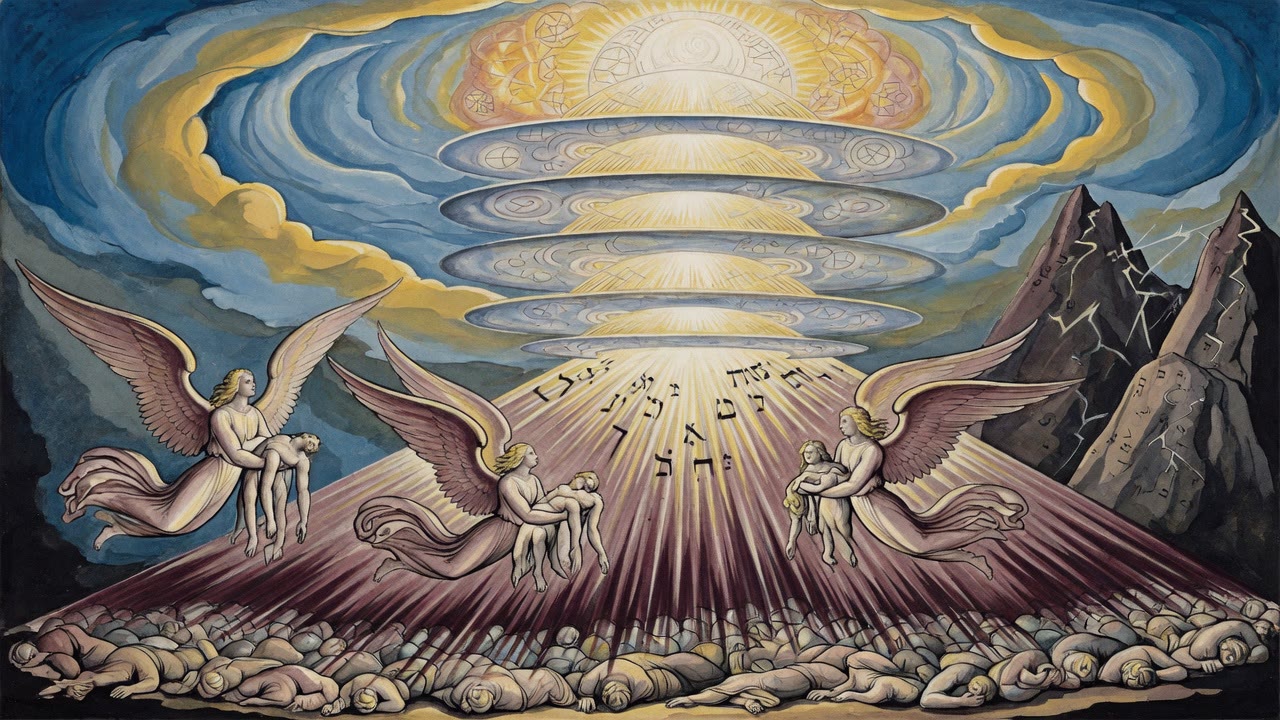
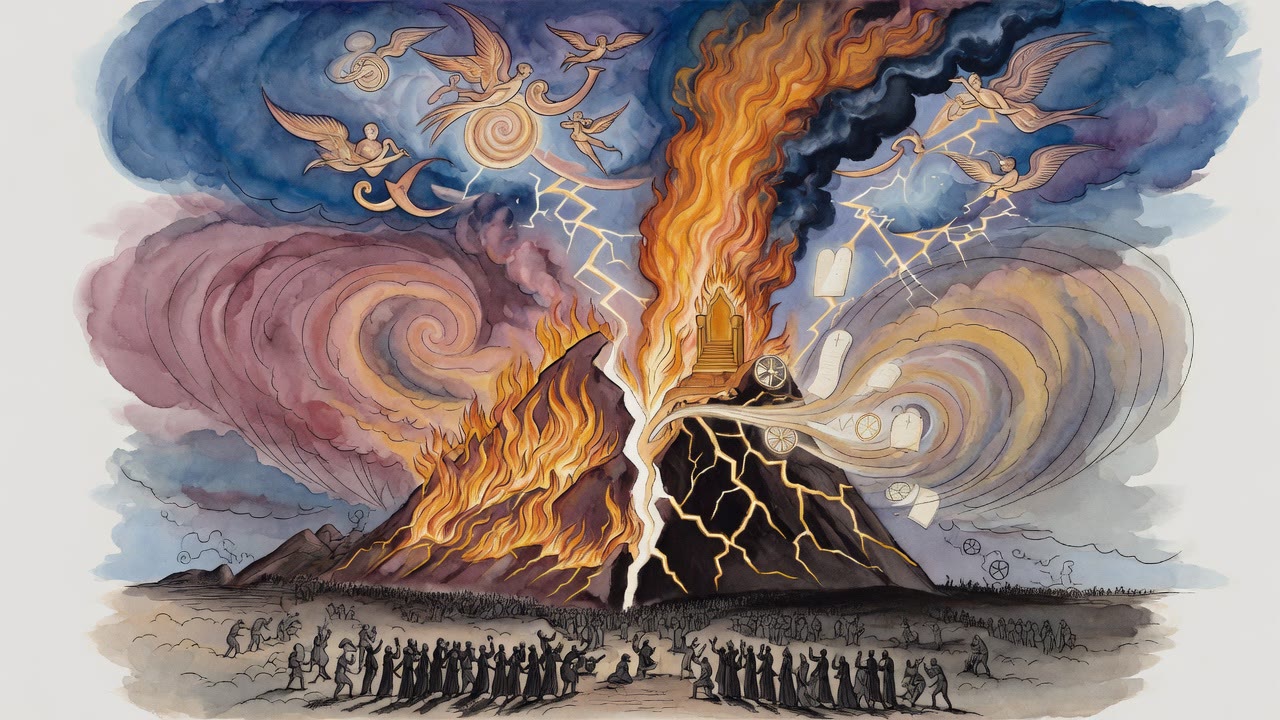
The sages returned to the chariots and pressed the vision further. Each of the twenty-two thousand that came down on Sinai was no ordinary thing. Every single one of them matched the overwhelming chariot that Ezekiel saw by the river Chebar: the wheels and faces and living creatures and fire of the merkavah, the divine throne-chariot, multiplied past imagining twenty-two thousand times.
How many angels filled them? Rabbi Tanhum shrugged toward infinity: as many as an accountant could ever manage to count, and then beyond. Rabbi Eleazar ben Pedat added a sharper note. The angels descended sharpened, ready to destroy Israel if the people refused the Torah. The sages softened the phrasing to the enemies of Israel, but the meaning was plain. The same moment that could crown the nation could also have ended it. Acceptance of the Torah was the difference between twenty-two thousand chariots arriving as a wedding escort and arriving as a judgment.
The Living King Did Not Blend In
Israel looked into that host and had to find their God. Rabbi Eleazar ben Pedat described the host as made of the most radiant and praiseworthy angels in heaven. And yet the verse insists the Lord is among them, set apart, recognizable in the crowd.
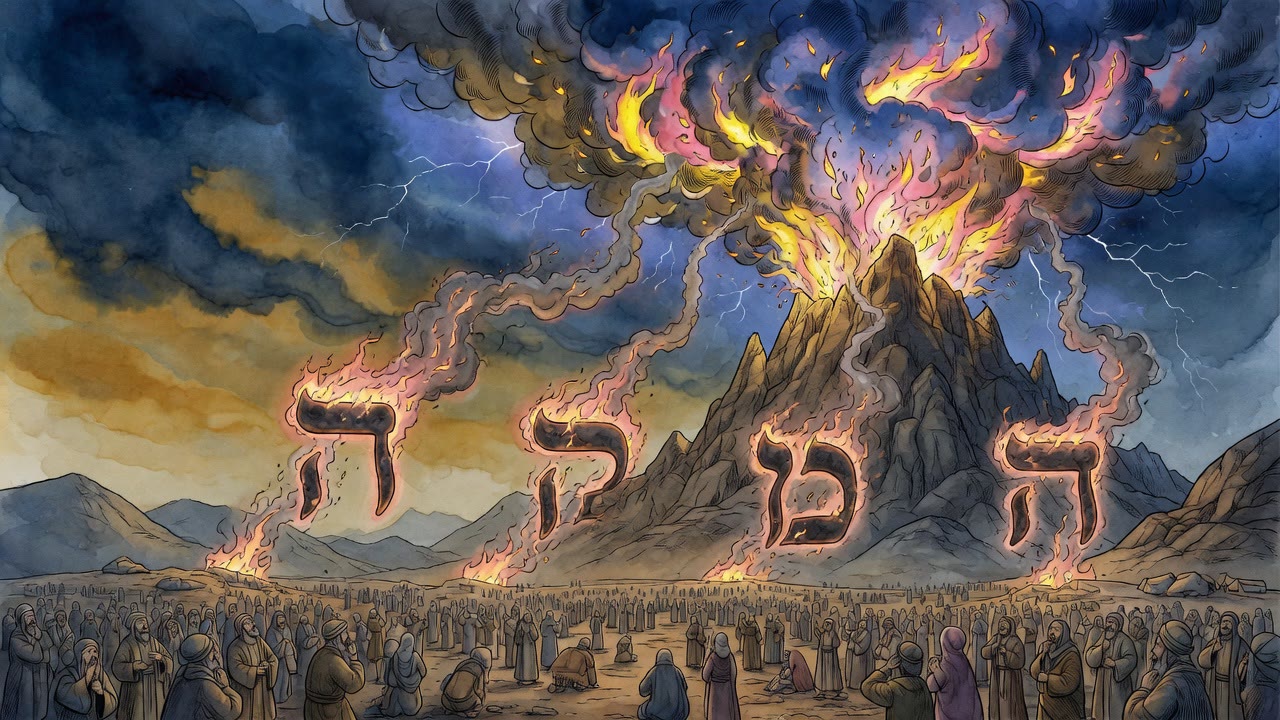
The Assembly of Israel says it in the words of the Song of Songs: my beloved is dazzling and ruddy. The sages pressed the comparison. When a human king rides out among his troops, he is one handsome man among many soldiers. There are men in his army as strong as he, as good-looking, as richly armed. He blends into his own command. But God did not blend in at Sinai. He came surrounded by His most beautiful angels, the most radiant beings in creation, and still stood out among them all.
That is the claim Israel made at the sea and carried to the mountain. We know our God among the host. We know the King's face in the crowd of radiance. The covenant was not only instruction received from an invisible source. It was recognition between Israel and the one face they could not mistake, even in a host of twenty-two thousand chariots.
Rabbi Judah son of Rabbi Simon sealed the teaching with a final observation. God had said to Israel: you saw what I did to the Egyptians, how I bore you on eagles' wings and brought you to Myself. The eagles' wings were not a metaphor for speed. They were a description of what happens when a host that could have overwhelmed you instead carries you, when the power that surrounds you chooses tenderness over terror, when twenty-two thousand chariots arrive not as judgment but as escort.
← All myths