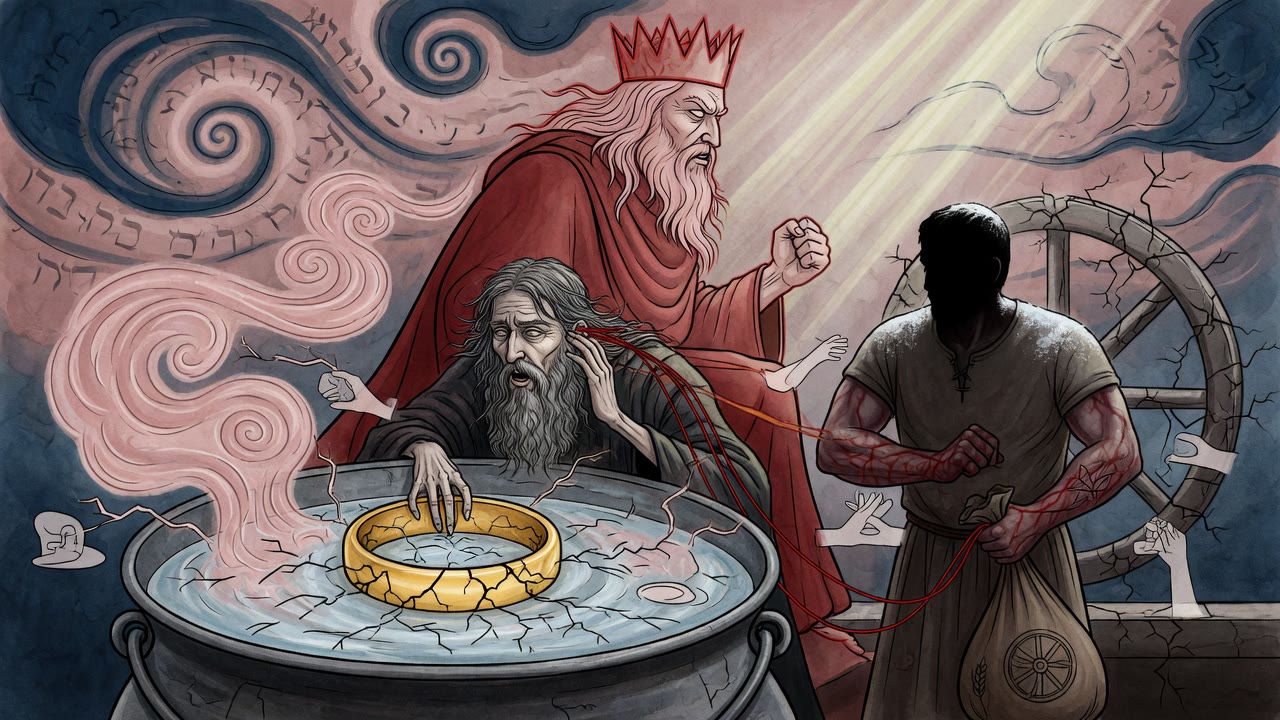
The Woodcutter Wished That Everything He Touched Would Turn to Gold
He lifted the jug to drink and the water went hard and bright in his hands. The loaf did the same. A rich man was about to starve in the woods.
Table of Contents
The woodcutter had a complaint and he made it out loud, to the trees, to the road, to God.
 Click for full size
He worked the way an ox works, all day, and he carried loads that bent him, and at the end of it he had enough to stay alive and not one coin past that. Bread. Water. The same bread and the same water tomorrow. He was not a wicked man. He was a tired one, and tired men talk.
One day in the wood he stopped and prayed about it, and then he lay down in the leaves and slept.
One Request in a Dream
A boy came into the dream and stood over him.
"Make one request and it will be granted," the boy said. "But be careful."
The woodcutter did not need time. He had been composing the request for years without knowing it, every morning under the strap of the bundle.
"Let everything I touch turn to gold."
The boy did not argue with him and did not explain. The dream ended. The woodcutter woke in the leaves with his hands still empty and the faggots lying where he had dropped them.
The Jug and the Loaf
He touched the bundle first.
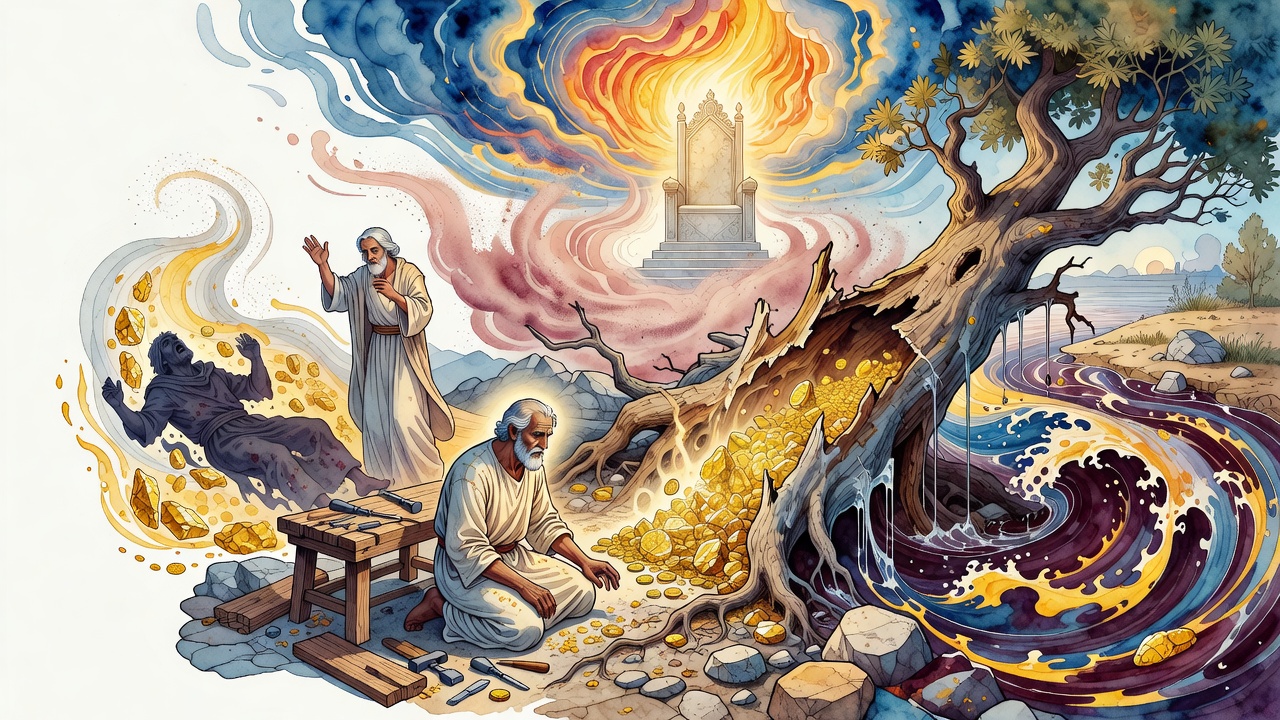
Wood went to metal under his fingers, the whole load of it, heavy and yellow and worth more than his village. He shouted. He laughed. He had been poor that morning and he was not poor now, and he had done nothing to earn it but fall asleep in the right part of the forest.
Then he reached for his jug, because a man who has been shouting is thirsty.
The clay went hard and bright in his hand, and the water inside went with it, sealed in, a gold jug with a lump of gold where the drink had been. He set it down carefully. He picked up his loaf. The bread turned in his fingers, cold and beautiful and heavier than bread has any business being.
He stood in the wood holding a fortune he could not eat, and the fortune grew every time he tried to feed himself.
Bread Again
So he prayed again. Not the old prayer. There was nothing in this one about the unfairness of loads.
The boy came back and took the gift away, and the gold went out of the world. The bundle was faggots again. The jug was clay. The bread was bread, and the woodcutter sat down in the leaves and ate it, and no one in that forest had ever rejoiced over a plain loaf the way he rejoiced over that one.
He chewed slowly. He drank. The water was only water, and it was enough. The strap of the bundle waited where he had dropped it. He would carry wood again. He would be tired again. He did not complain to the trees that afternoon.
The Demon at the Wall
Another man went looking for the same kind of shortcut, and found a worse one.
He was lame, and he was a Jew, and the rumor moving through the cities was that an idol in a certain temple healed the lame overnight. Men were carried in on boards and walked home on their own feet. Pain takes a man places his beliefs would never have taken him. He went, and he lay down on the floor among the worshippers, and he waited.
At midnight something came out of the wall.
It moved along the row of sleepers and anointed them one by one, and one by one the crooked legs straightened under its hand. When it reached the Jew it stopped, and it did not touch him.
"Not you," the demon said. The rest it healed on purpose, so they would keep believing in the house they were lying in. Then it told him what he had done. His healing had been coming. It was due to him that very night, from God, and he had gotten up and carried his bad leg across the country to beg it from a wall.
He went out the way he came in, limping, past a row of strangers sleeping soundly on their new legs.
Two Men Who Asked Wrong
The woodcutter sat in the leaves with crumbs on his mouth. The lame man sat on the temple steps with the same leg he had carried in. One had asked for too much and lived to take it back. One had asked in the wrong house and lost what was already on the way.
Night came down through the trees. The bundle was wood again, and it would be wood in the morning, and that was the mercy. In the city the idol's floor cooled under the feet of men who did not know they had been healed so that a lie would keep its congregation.
The woodcutter lifted the empty jug, only clay now, and did not wish it otherwise.
← All myths