Rabbi Yudan Gave Until One Cow and Half a Field Remained
He chased the alms-collectors down his own street to give before they passed, until ruin left him one cow that broke its leg into a buried fortune.
Table of Contents
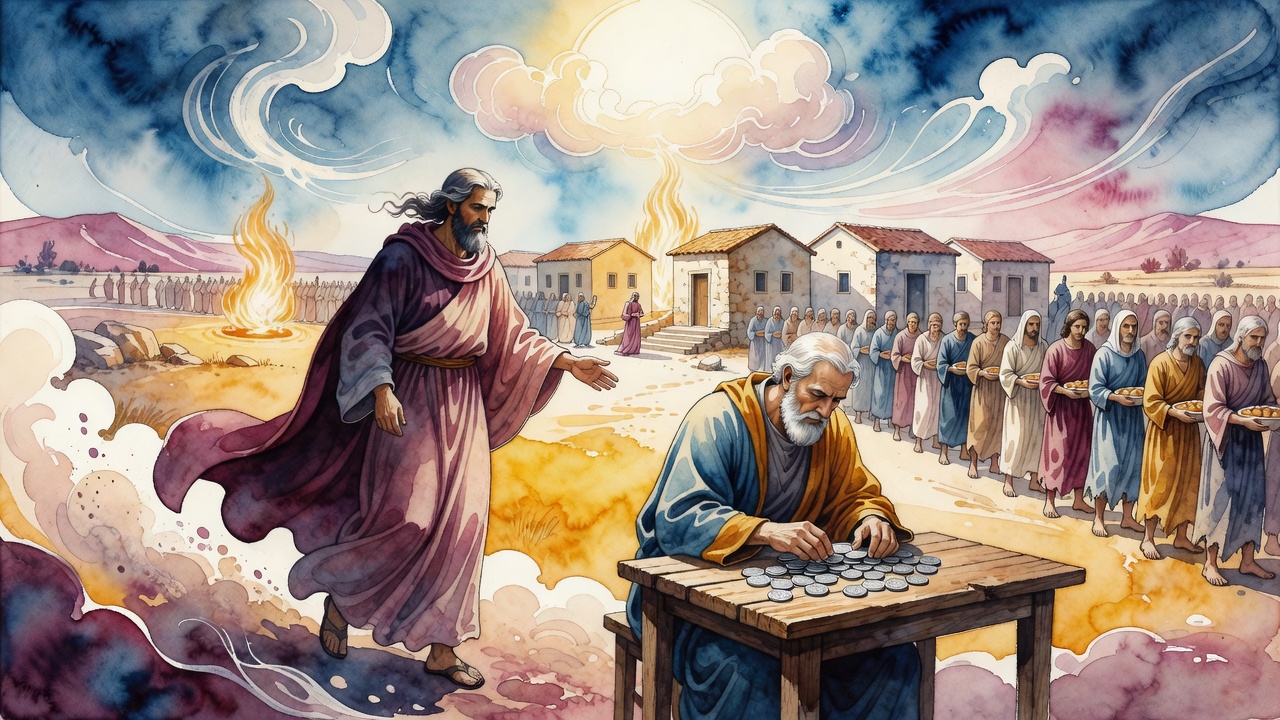
Rabbi Yudan used to wait by his window for the sound of footsteps. When the collectors of alms came up his street, he did not let them knock. He went out the door and chased them down before they reached the next house, pressing coins into their hands while they were still mid-stride, as if the poor of his city were a debt that came due hourly and he could not bear to be a moment late paying it.
 Click for full size
For years his wealth could absorb it. Then it could not.
The giving did not stop when the money thinned. It outlasted the money. By the end Yudan owned one field and one cow, and the field was not even whole, only a strip of it, and the cow was old. A farmer now, barely. The man who had run after beggars stood at his own gate with empty hands.
The Knock He Could Not Answer
One morning three men came through his town gathering for the poor. Rabbi Eliezer, Rabbi Joshua, and Rabbi Akiva walked the street with a donation bag, and they stopped at Yudan's door.
He heard the knock and did not move. There was nothing behind the door to give. He stood in his own doorway, and the shame climbed up his neck and sat in his face, and he could not make himself open it wide.
His wife watched him from across the room. She knew that face. She had seen it on him in better years, the look of a man who could not stand to let a chance to give pass by, except now there was nothing left to give it with.
"Sell half the field," she said. "Whatever it brings, put it in their bag."
Half of half. The last solid ground under them, and she was telling him to sell a piece of it to strangers collecting for strangers. He went out and did it. He sold the half, took the coins, and walked them to the three sages, and dropped them into the bag with the same speed he had once chased collectors down the street. The Rabbis blessed him and thanked him and went on to the next door. Yudan watched the bag move away down the road with a part of his field inside it.
The Furrow That Swallowed the Cow
The next morning he took the cow out to plow what land was left to him.
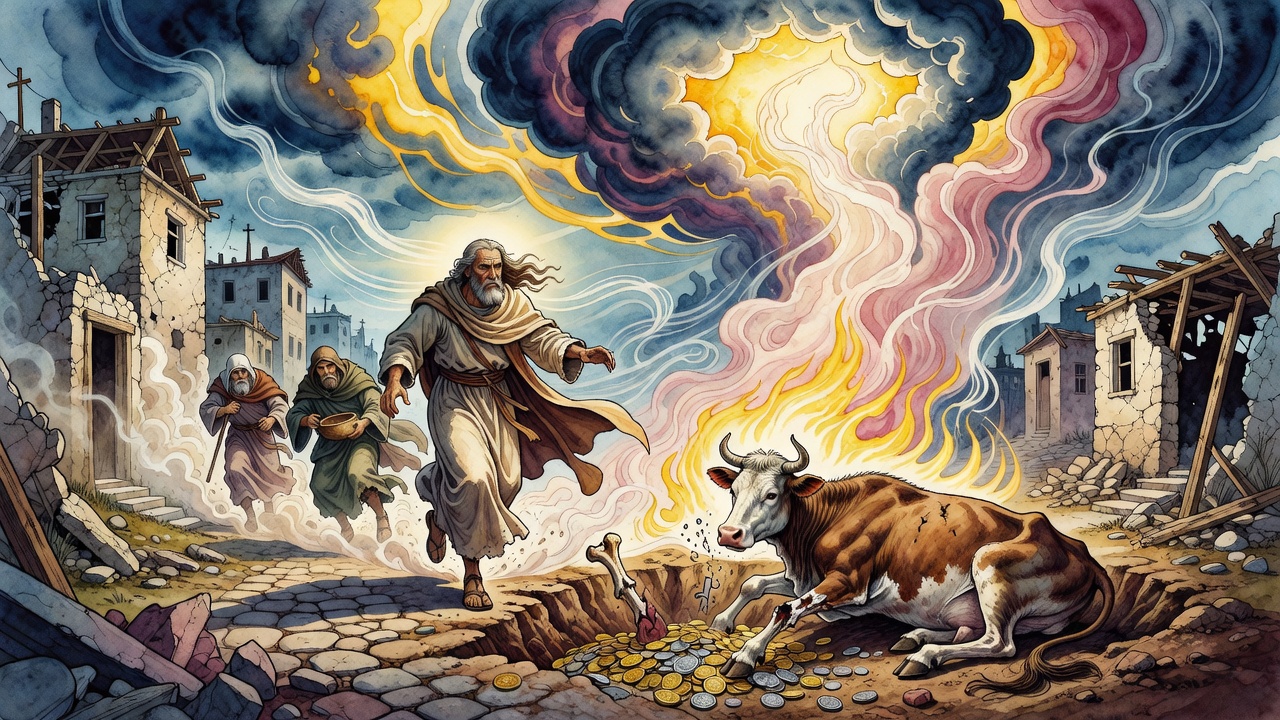
The ox-strap, the old animal, the thin strip of dirt. He set the blade and walked behind her, opening one slow furrow in the ground, and the cow leaned into the yoke and pulled. Then her foreleg went out from under her. The earth was not solid where she stepped. There was a hollow under the crust, a hidden pit, and she dropped into it and her leg snapped in the furrow with a sound he felt in his own teeth. She went down screaming the way a cow screams, and Yudan stood over a broken animal he could not replace, on a field he had just cut in half, with no money and no plan and the whole of his ruin lying in front of him in the dirt.
He climbed down into the hole to lift her.
What Was Waiting Under the Field
At the bottom of the pit, beside the leg of his fallen cow, the ground gave back something it had been holding.
Treasure. Buried, forgotten, packed into the earth under his own strip of field, enough of it to restore everything he had given away and everything he had lost, enough to make him richer than he had been in the years when he ran after beggars with both hands full. It had been lying under his feet the whole time he stood ashamed in his doorway with nothing to give. It surfaced only when the cow fell, only when the field was already half sold, only on the morning after he had stripped himself down to the last coin for three men with a bag.
He did not finish the plowing. He left the furrow open. He got the cow up out of the hole, broken leg and all, and went home, and the news went with him.
The Other House That Had Nothing
The story of a poor and giving house finding bread it did not have was not Yudan's alone.
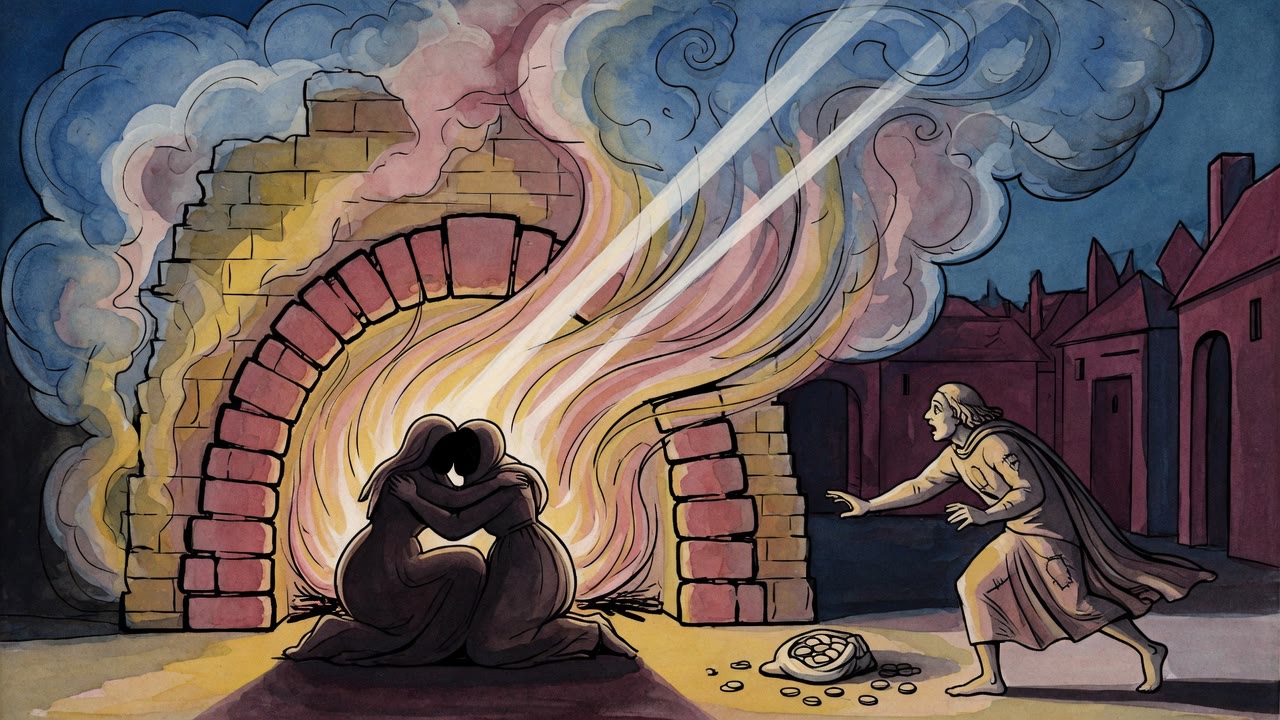
In another generation, Rabbi Hanina ben Dosa lived so far below want that a heavenly voice went out daily to say the whole world was sustained for his sake while he himself lived on a single measure of carobs from one Sabbath eve to the next. One Friday his wife had nothing at all to set on the table. The shame of it, with every neighbor's house full of Sabbath food, was more than she could carry. She lit the oven and put something in it, straw, or worse, only so smoke would rise from the chimney and the neighbors would believe she was cooking.
A neighbor came anyway, suspicious. "I know you have nothing," the woman said. "What is all that smoke?" Hanina's wife went to open the oven so the lie would at least be quiet. The oven was full of bread. The smoke had been real all along. When her husband came home to a set table, he did not celebrate. "Do not become accustomed to miracles," he told her, gently. But that Sabbath, in that house, the bread had come.
Two poor houses. Two furnaces of shame, the empty oven and the empty doorway. And in both, the ground and the fire gave up something at the exact moment the people inside had given away the last of what they had.
← All myths