6 min read

The Girl Who Pinned Her Brooch Into a Crack in the Wall

A stargazer swore she would die of snakebite on her wedding night, but a brooch pressed into a wall cracked the decree by dawn

Curated by Arthur · Told by Maggid ·
Table of Contents
  1. The Charge Her Dying Mother Laid On Her
  2. The Reading the Stargazers Made of Her Wedding
  3. The Pauper at the Door and the Brooch in the Wall
  4. The Pin Drawn Out at Dawn
  5. What Her Father Asked Her by the River

The Charge Her Dying Mother Laid On Her

The first wife of Rabbi Akiva had fed and housed five hundred students for years. Bread by the basketful, water drawn before light, a roof over young men who owned nothing but their hunger for Torah. When she lay dying she called her daughter to the bed and gave her not jewels, not land, but the work itself.

"Keep the students," she said. "Let no one leave this house empty."

The girl took the charge. She rose early and slept late. She learned which student could not stomach lentils and which one wept for his mother and which one would faint if no one set food in front of him by midday. She did it quietly, the way her mother had, expecting nothing back.

The Reading the Stargazers Made of Her Wedding

When the time came for her to marry, a stargazer cast her chart. He read the houses of the sky the way other men read a deed, and his face closed.

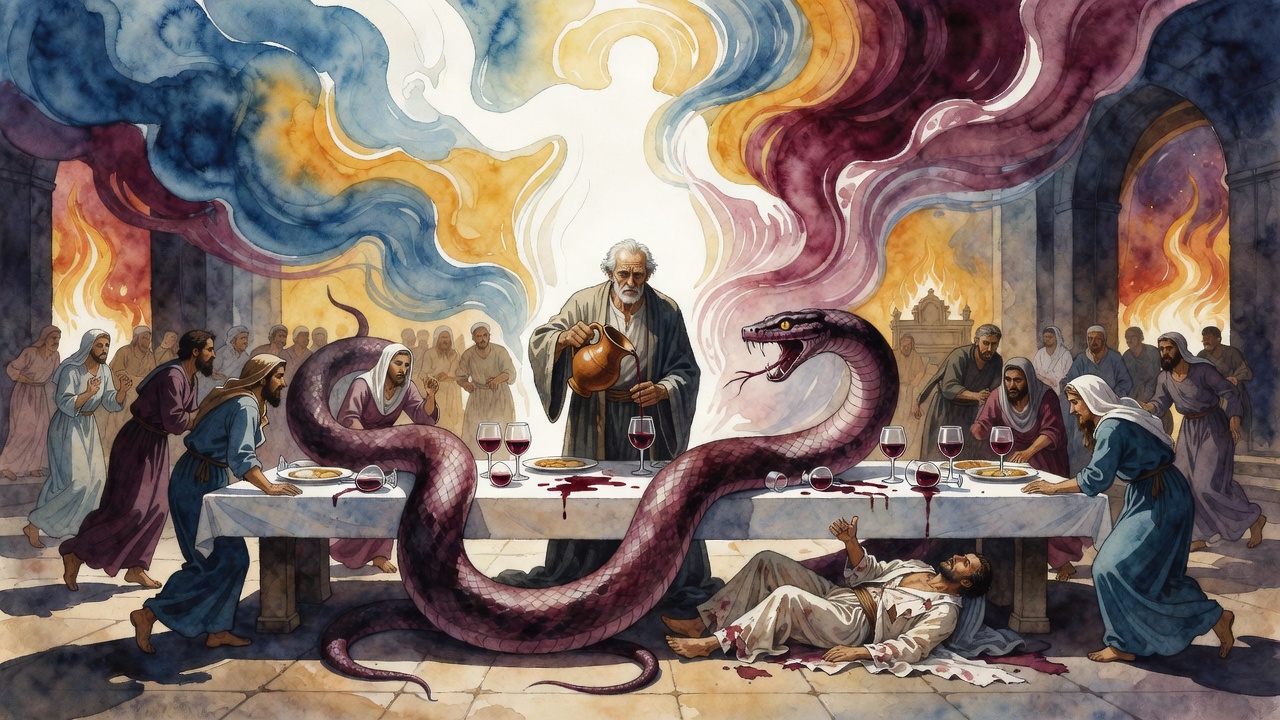
"On the night she enters the marriage canopy," he told those who asked, "a serpent will bite her, and she will die before morning."

The word traveled. It always does. Some pitied her. Some kept their daughters from her wedding. The girl heard the prophecy and said nothing against it, because she did not live in argument with the stars. She lived in the work her mother had left her, and the work did not stop because a man with an astrolabe had counted the days she had left.

The feast was prepared. The canopy was raised. Whatever the heavens had written, the household lit its lamps and welcomed the bride.

The Pauper at the Door and the Brooch in the Wall

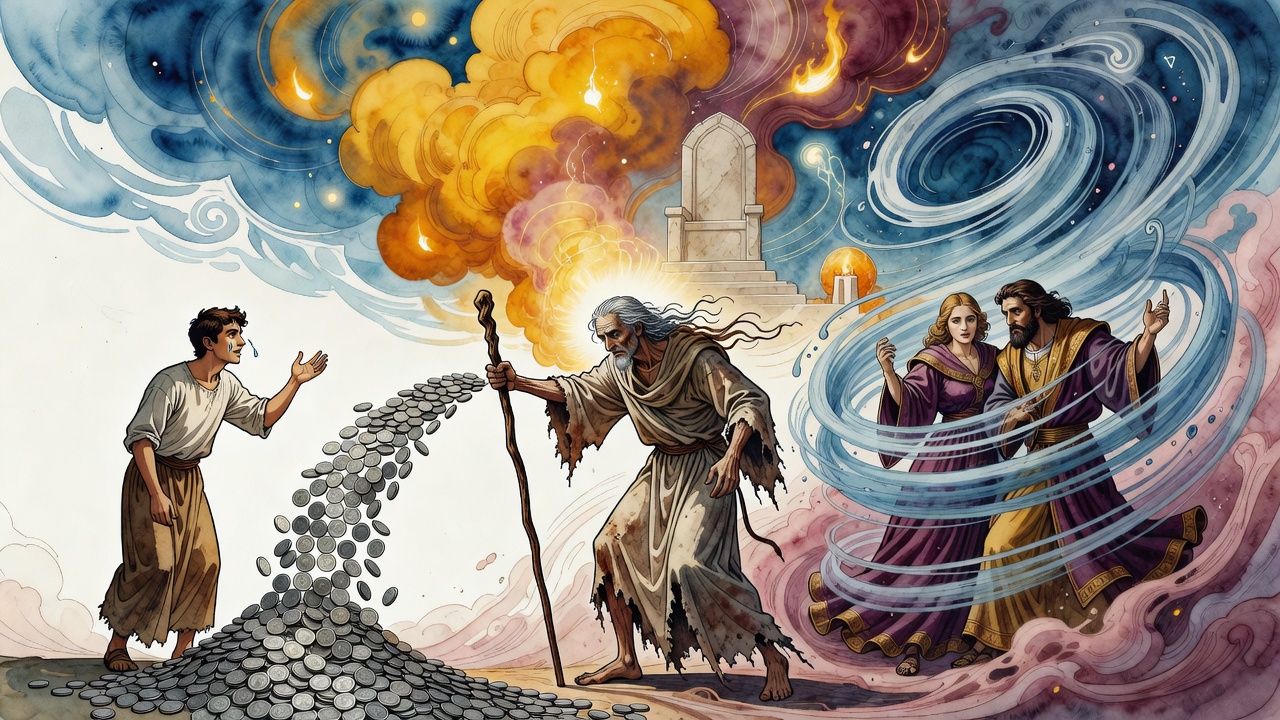
The night of the wedding the hall was loud with music and crowded with guests, and no one was counting the men at the edges of the room. So no one but the bride saw the beggar standing in the doorway, gaunt, ignored, swaying on his feet from hunger while a wedding swallowed bread by the loaf two arms' length away.

She saw him. Of course she saw him. She had spent her whole life seeing the man at the edge of the room.

She went to him herself. She put food in his hands and watched him eat, and she sent him off fed and steadied. It took moments. It was nothing. It was the smallest thing she did all day, and she thought no more about it than she thought about breathing.

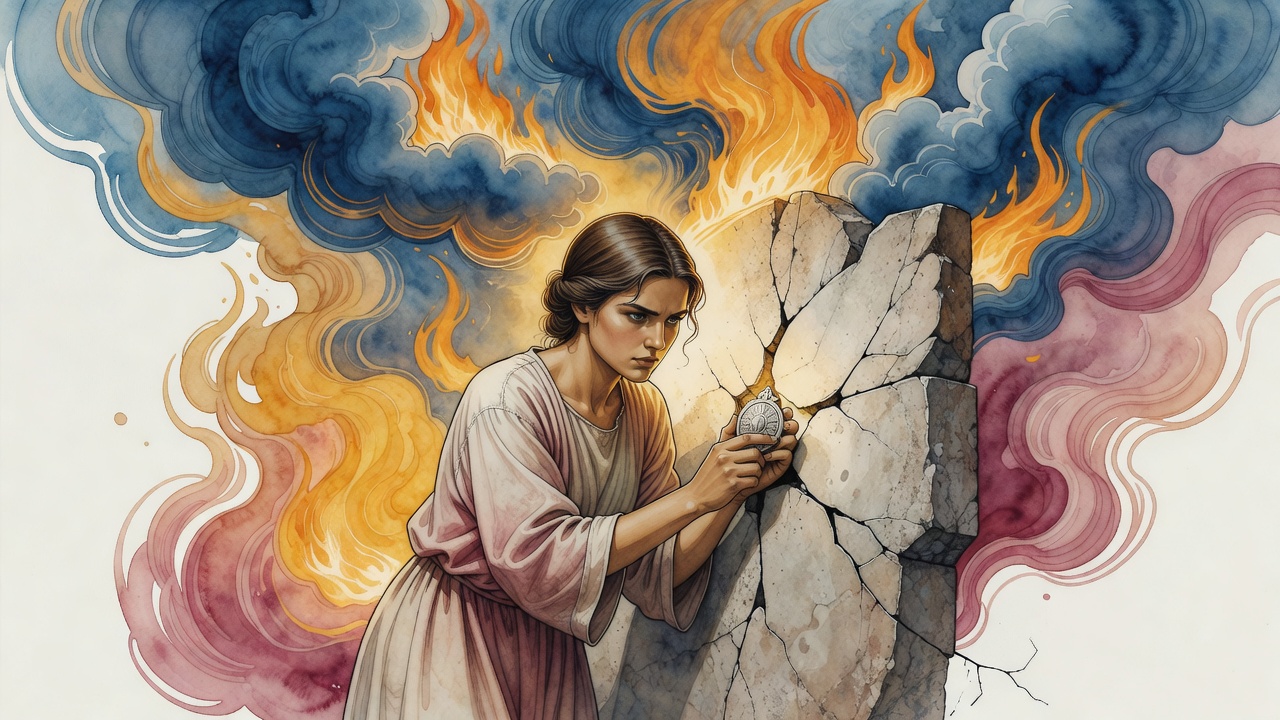
Later, alone for a moment in the bridal chamber, she unfastened the brooch from her gown. There was a crack in the plaster of the wall, and without thinking, the way a person sets down a thing she means to take up again, she pressed the long pin of the brooch into the crack and left it there. Then the noise of the feast pulled her back, and she forgot it.

The Pin Drawn Out at Dawn

Morning came. The bride was alive.

She went to the wall to take back her brooch. She closed her hand on it and pulled, and it came out heavy, dragging something with it. Skewered on the long pin, run clean through the eye, hung a dead serpent.

The snake had come in the night, as the stargazer swore it would. It had slid along the wall toward the sleeping bride and put its eye against the very crack where the pin waited, and the sharp tip had gone straight through its skull. It had died on the spot it had come to kill her.

When the household understood what had happened, the silence in the room was its own kind of noise. The stars had not lied. The serpent had come on the appointed night to the appointed bed. And it had bitten plaster and steel and died there, while the girl slept on, untouched.

What Her Father Asked Her by the River

Rabbi Akiva did not let the matter rest as a marvel. He took his daughter aside, near the water where she had gone to wash, and asked her plainly what she had done.

"Nothing," she said. "Nothing out of the ordinary." And then she remembered. "In the evening a poor man came to the door. Everyone was at the feast. The food was passing all around him and no one gave him any. So I took my own portion and I fed him."

Her father looked at her for a long moment.

"You have done a great thing," he said.

For he knew the teaching, and now he had seen it stand up in his own house: that an act of tzedakah given without an audience does not merely soften a decree. It can break it outright. The stars had sentenced her to die. A loaf passed to a hungry stranger had cut the sentence in half and then to nothing, and the proof of it lay coiled and dead on the pin of her wedding brooch.

By the river where she stood, the same riverbank where the prophet Elijah waits in every telling of her line, the verdict was already settled. Charity does not wait for the world to be watching. Neither, it turns out, does rescue.


← All myths
From the tradition

Sources

2 sources

The texts this telling draws on, in full. Open a card to read inline, or expand it for a wider, quieter read.

Gaster, Exempla No. 450The Exempla of the Rabbis (1924)

Rabbi Akiva had a pious first wife who fed and housed his five hundred students for years. On her deathbed she asked her daughter to continue the work. The daughter accepted the trust.

Akiva, a widower, later remarried a woman who was hard and cold. The new wife grew jealous of her stepdaughter's goodness and the steady flow of students through the house. She bribed the household washerman to take the girl out to a solitary place and kill her. She told her stepdaughter to follow the washerman with a bundle of laundry as cover. At the girl's weeping plea, the washerman could not bring himself to murder her, but fearing the stepmother, he cut off the girl's hands and feet and left her for dead in the wilderness.

The girl, bleeding, dragged herself to a clearing. It happened to be the eve of Shabbat. A traveling merchant set up his tent nearby, said his Friday-evening prayers, and welcomed the Shabbat with the full liturgy. From behind a bush, the girl, not wanting to miss the responses even in her agony, answered Amen. The merchant heard the voice, searched, and found her. He wrapped her wounds, took her home, and, when she was healed, married her.

He was a kind and wealthy man. He had hands of gold crafted for her, jointed so she could work, and feet of silver fitted to her legs. A son was born to them. As the boy grew, she urged her husband to send him to study Torah with a great sage named Akiva. The boy was sent off, not knowing he was the rabbi's grandson, and joined the academy.

In Akiva's house the stepmother overheard where the boy came from. She realized at once that her stepdaughter was alive. She forged a letter in the husband's name, sent it to his household, and ordered that the wife be stripped of her gold hands and silver feet, the baby tied to her back, and she be cast out as a woman of low origin. The servants obeyed.

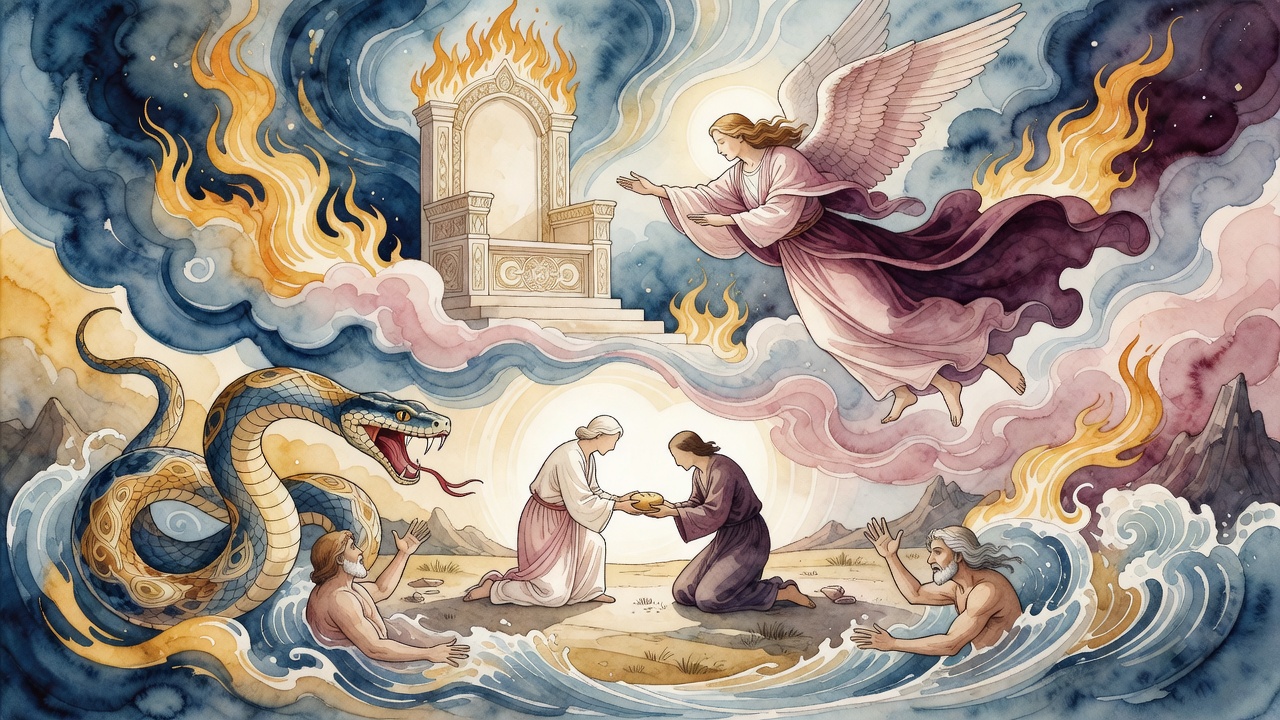
She dragged herself on her stumps to a riverbank. The baby on her back cried for water. She bent to let him drink and feared he would slip from the sling into the current. She wept helplessly.

The prophet Elijah appeared beside her. "Put your stumps into the water," he said. She obeyed. Hands of flesh and feet of flesh, whole and living, grew back.

Elijah told her to go to the next town. There, he said, she would find a treasure buried in a certain spot. She should dig it up, buy a fine palace with it, and build an inn beside the palace for all travelers passing through. She did exactly as he instructed.

Her husband, meanwhile, had returned home and learned the truth of the forged letter. He set out to find her. He passed through many cities. Eventually he came to her inn. Her son, now nine years old, served the guests. The father refused to eat or drink. When asked why, he said his appetite had died with his wife, and he told his story. His wife, listening from the kitchen, recognized him at once. Husband and wife were reunited. They sent for his parents and brought them to live with them, and the whole family lived in peace ever after (Gaster, Exempla No. 450).

The sages tell this tale as a cluster of Jewish virtues working in sequence. A stepdaughter's promise to her dying mother. A merchant's willingness to marry a wounded stranger. A young bride whose first response to pain was still to answer Amen. Elijah on the riverbank, as always, where redemption begins.

Full source
Gaster, Exempla No. 138The Exempla of the Rabbis (1924)

The son of Rabbi Reuben the Libellarius was being married. The feast was in full swing. The music was loud, the wine was generous, and the family was radiant.

An old stranger came to the door.

Elijah the Prophet, who attends every Jewish wedding unseen, quietly took Rabbi Reuben aside and told him to welcome the stranger with special honor. Rabbi Reuben had once, years before, rudely dismissed an elderly guest from his table. This was his moment to repair that insult.

He seated the old man in a place of dignity. He served him first. He treated him as if he were the guest of honor.

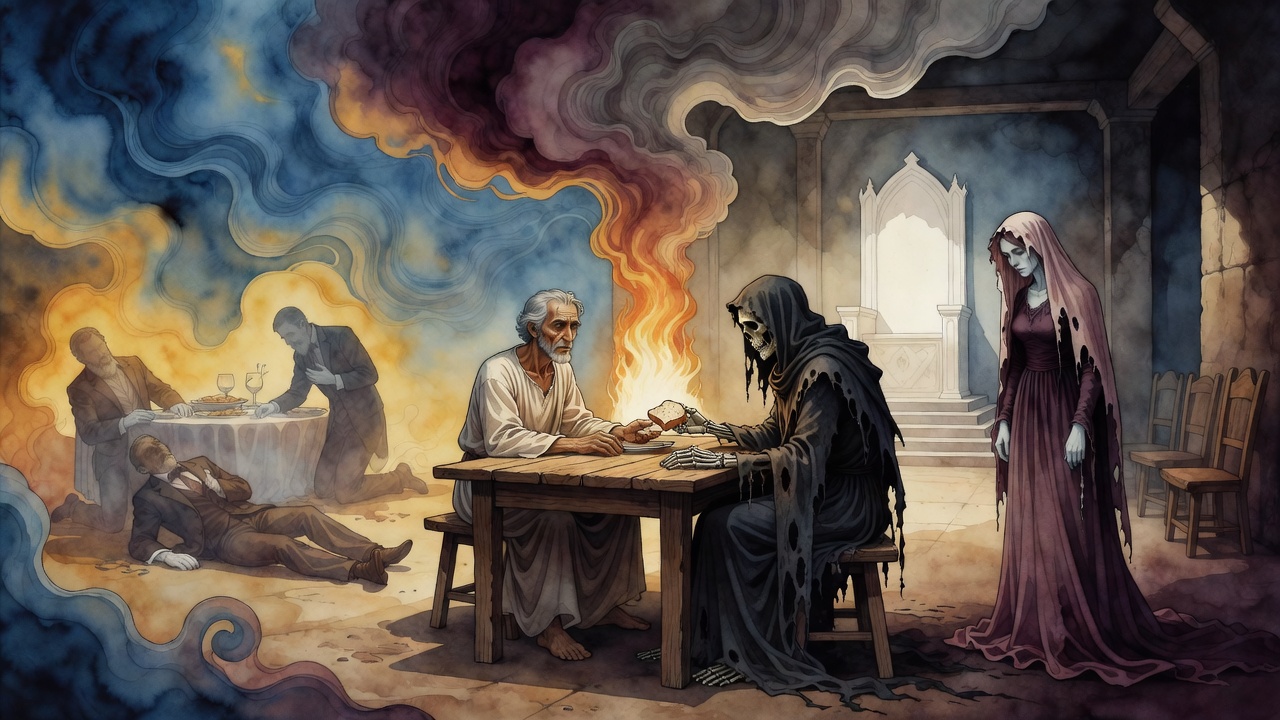
Then the old man's face changed. His body shifted. The guests at the table drew back in terror. This was no old man. This was the Malach ha-Mavet, the Angel of Death, come for the bridegroom.

The father, Rabbi Reuben, offered his own life in his son's place. He said the words, then saw the angel's true form and fled in terror. The mother offered her life next, and she too, seeing the face of death at close range, ran away. The guests scattered.

Only the bride did not move.

She stepped forward and interceded for her new husband. She did not offer her life, she pleaded. She turned directly to heaven, bypassing the angel, and argued before God for the man she had just married.

Death had compassion. Heaven granted her request. The groom lived. (Gaster, Exempla No. 138)

The story preserves a wild teaching: parents will love a child from a distance when the distance is safe, but a bride, on her first day as a wife, can stand her ground in front of the Angel of Death and win her husband back from him.

Full source