The Boy in the Boat and the Hidden Tests on the Road
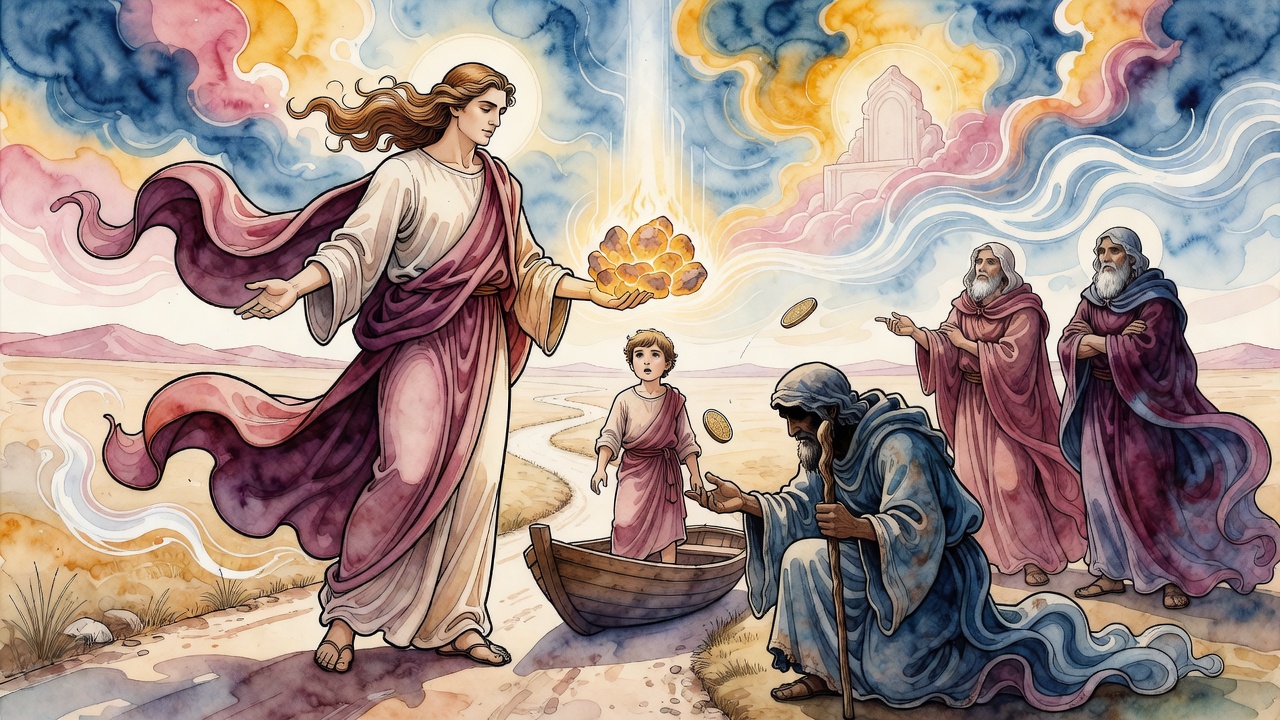
Elijah hands a boy the burning stones of future Jerusalem, while a coin to a blind beggar and a shrug decide two travelers' fates on the road.
Table of Contents
A small boy sat alone in a fishing boat, drifting along the coast where the water turns the color of beaten copper at evening. He was not lost. He was waiting, though he did not know it, for the man who would step out of the haze and choose him.
 Click for full size
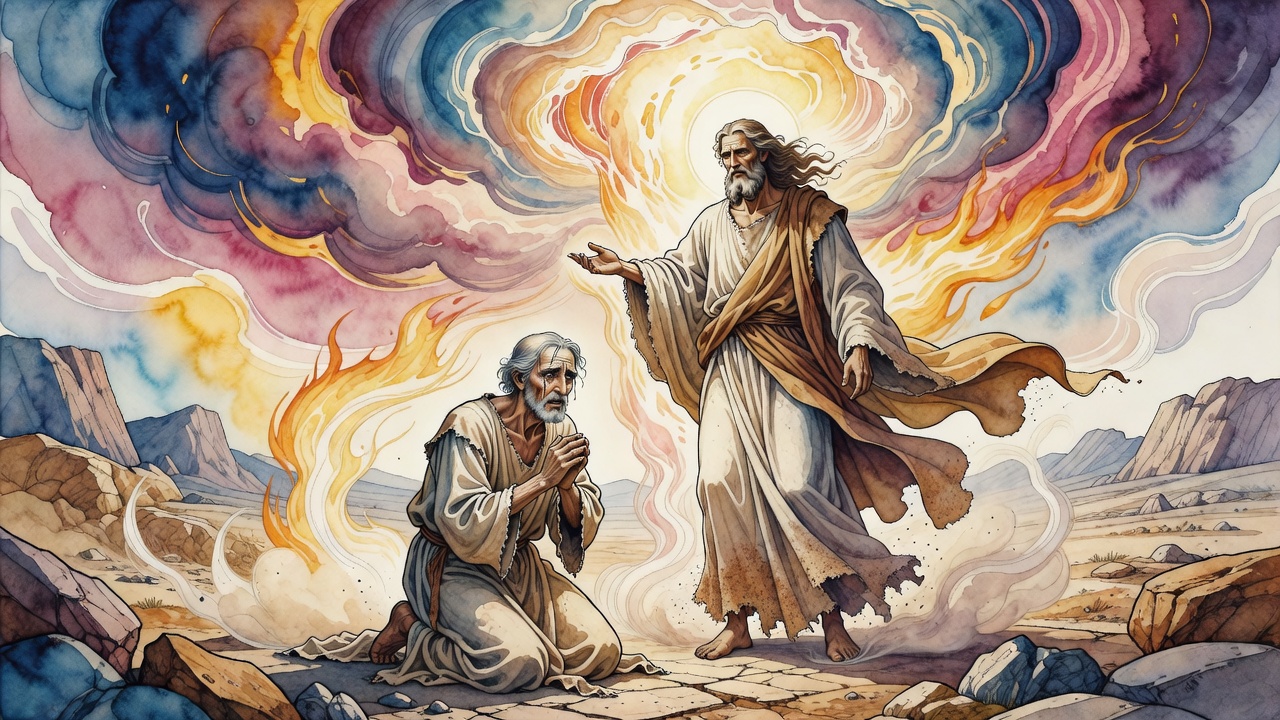
The man came across the water the way light comes, without footprints. He wore the dust of a hundred roads. This was Elijah, who had not died but had gone up in fire and never stopped walking the earth, who put on the clothes of beggars and merchants and old men to find out what people were made of when they thought no one was counting. He had business that day, and the business needed a child.
The Stones That Belonged to a City Not Yet Built
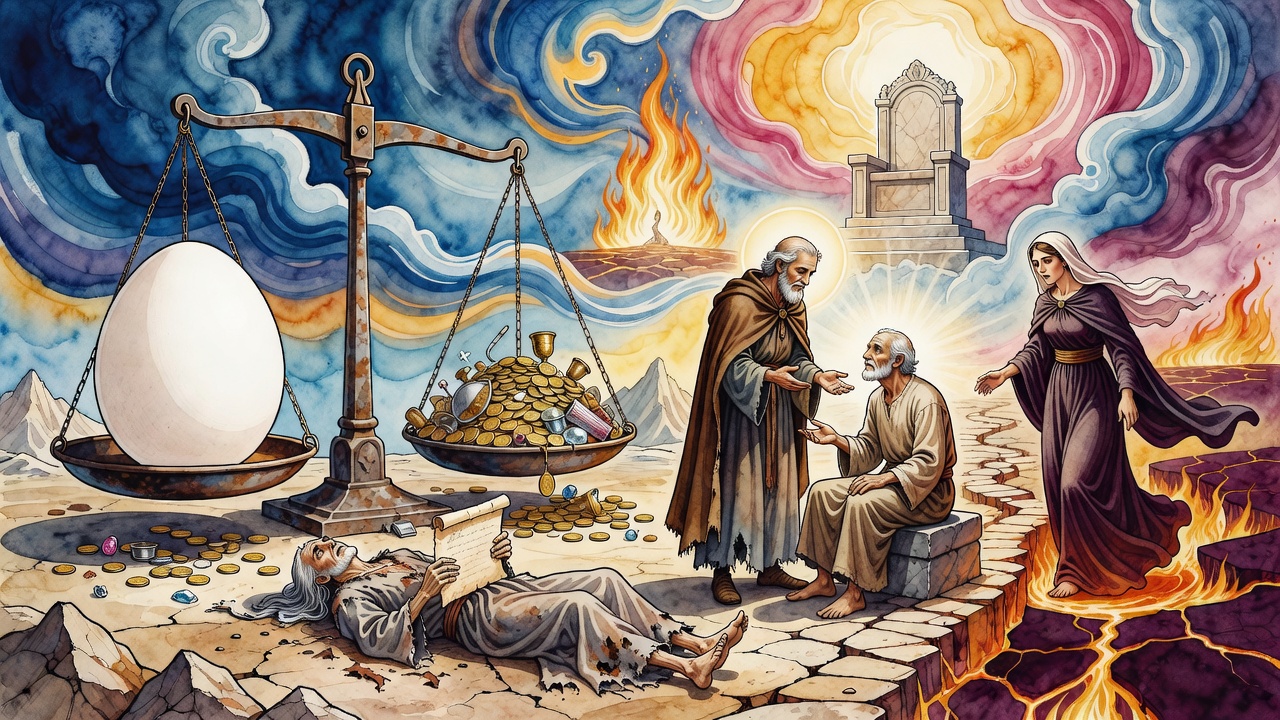
Elijah leaned over the side of the boat and opened a window in the air. Through it the boy could see a storehouse in heaven stacked with carbuncles, red gems the size of fists, glowing as if a coal lived inside each one. These were the stones that would one day be set into the rebuilt walls of Jerusalem, the gates of glowing rock the prophet Isaiah had promised. They burned in their heavenly shelf, waiting for a city that did not yet exist.
"Take them," Elijah said. "But they are not yours to keep, and they are not yours to show. Carry them to Rabbi Joshua ben Levi in the town of Lud. Put them in his hands. Only his. Swear it to me."
The boy swore. Elijah was gone between one breath and the next, and the moment the prophet vanished the gems went from vision to weight. Real stones, hot in the boy's lap, rolling against his knees in the bottom of a boat. He had the walls of the future in his arms and a single instruction wrapped around them.
A Merchant and an Innkeeper Take the Same Road
Far inland, on a dry road where the dust rose to the knee, two men were walking who had never met before that morning. One was a merchant with a purse on his belt. The other kept an inn, and had asked to travel together for the company and the safety of the road.
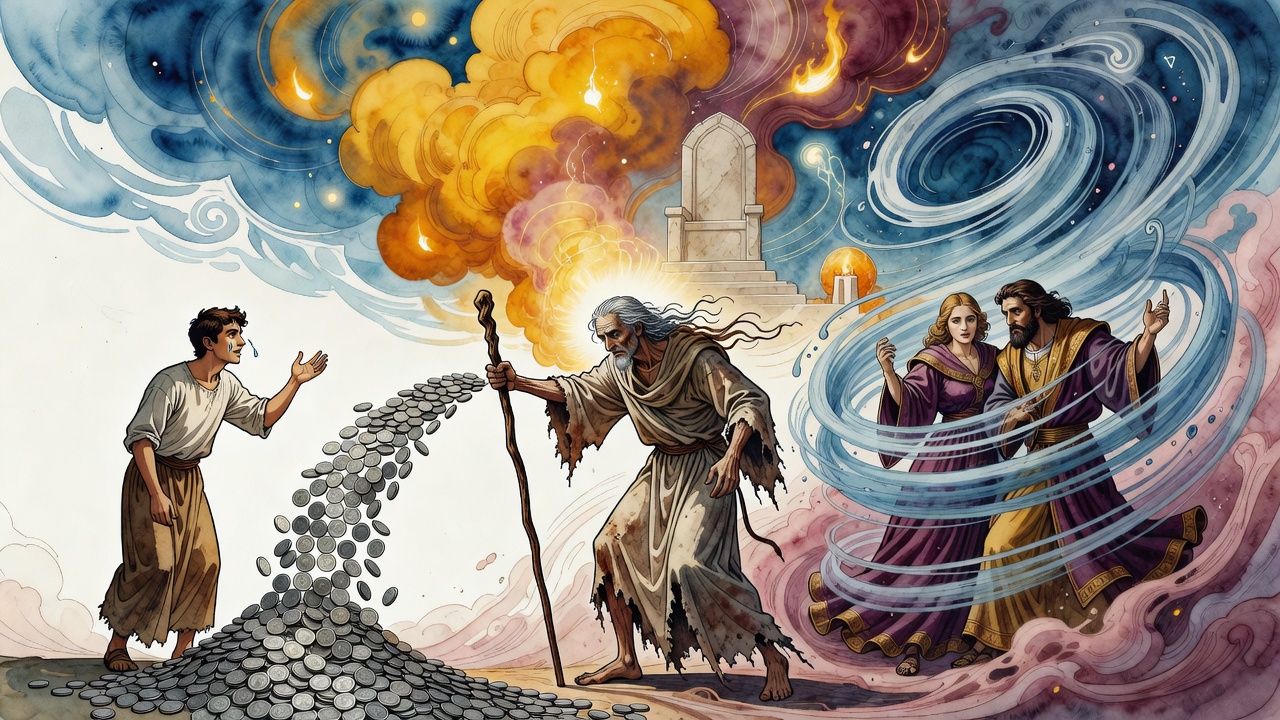
A blind man sat at the roadside with his hand out. The merchant stopped. He worked the knot of his purse, drew out a coin, and pressed it into the open palm. The innkeeper kept walking and did not slow.
"I don't know him," the innkeeper said when the merchant caught up. "Why would I give to a man I've never seen?"
They walked on, two sets of footprints in the same dust, and neither of them knew that the giving and the not-giving had already been written down somewhere and weighed.
The Figure Standing in the Road Ahead
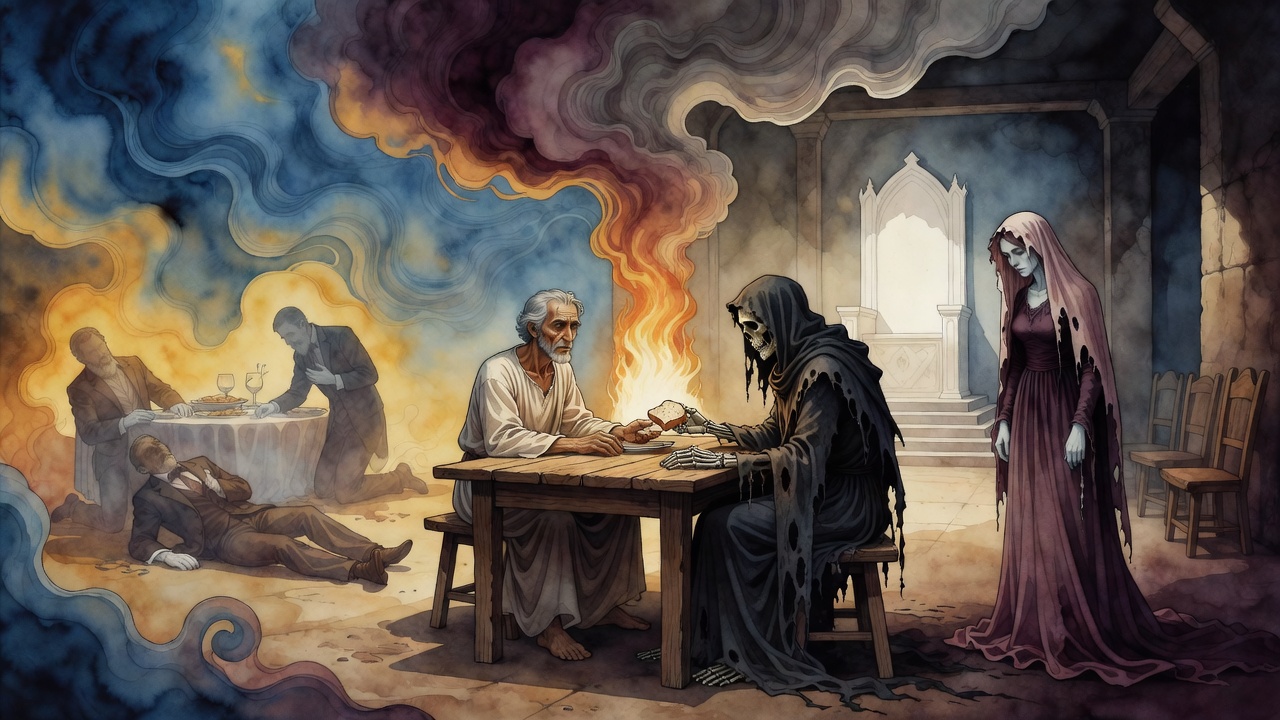
Where the road bent, a third figure waited with a face like a shut door. The angel of death had come for one of them that day, and he had already decided which.
He looked at the merchant and saw the coin still warm in the blind man's fist. "Fifty years," the angel said, and added them to the merchant's life on the strength of one act of charity given to a stranger he would never see again.
Then he looked at the innkeeper, and the innkeeper went cold in the sun, certain he had reached the end of his road. But the angel did not strike. "Live," he said. "Live, so that you can go and tell what you saw here, and give the glory to God." Two men walked away from that bend in the road who had expected, between them, to leave only one. The one who had given got years. The one who had withheld got a story he would have to carry like a stone, telling it at every table for the rest of his life.
The Treasure Slips Through the Boy's Hands
The boy reached Lud. He found Rabbi Joshua ben Levi, the sage who legend said had once climbed over the wall of Eden and bargained with the angel of death himself, and held out the carbuncles. The old man looked. The walls of the city to come gleamed in a child's two hands for as long as a man can hold his breath. The vision had been delivered to the one eye in the world that was meant to see it.
Then the boy turned for home. Three miles out of Lud something loosened. Perhaps he had grown proud of the fire in his bag. Perhaps he stopped to show it off to someone on the way. Perhaps the gift had only ever been lent to his fingers for the single moment it took to deliver. The stones rolled out of his grip, bounced down the road, and dropped into a cavern that opened in the earth. The ground sealed shut over them like water closing over a thrown coin. The walls of Jerusalem went back into the dark to wait for the day they would be earned.
Two Tests Closed on the Same Evening
The boy had passed his test without knowing its weight, and lost the proof the instant he relaxed his grip on it. The merchant had passed his with a coin he barely noticed parting with. The innkeeper had failed his with a shrug, and lived, sentenced to publish his own failure aloud forever. None of the four had been told that the stranger in the boat, the beggar on the road, the figure at the bend, were the examiners. The road had looked, all day, exactly like an ordinary road.
← All myths