5 min read

Elijah Sold Himself and Built a Palace Overnight

A poor father prayed for death instead of hunger. Elijah appeared, let himself be sold for eighty denarii, and turned bondage into rescue.

Curated by Arthur · Told by Maggid ·
Table of Contents
  1. The Prophet Named His Price
  2. The Slave Became an Architect
  3. The Beggar at the Wedding Table
  4. Four Wingbeats Around the World

The poor man did not ask for a miracle first. He asked for death.
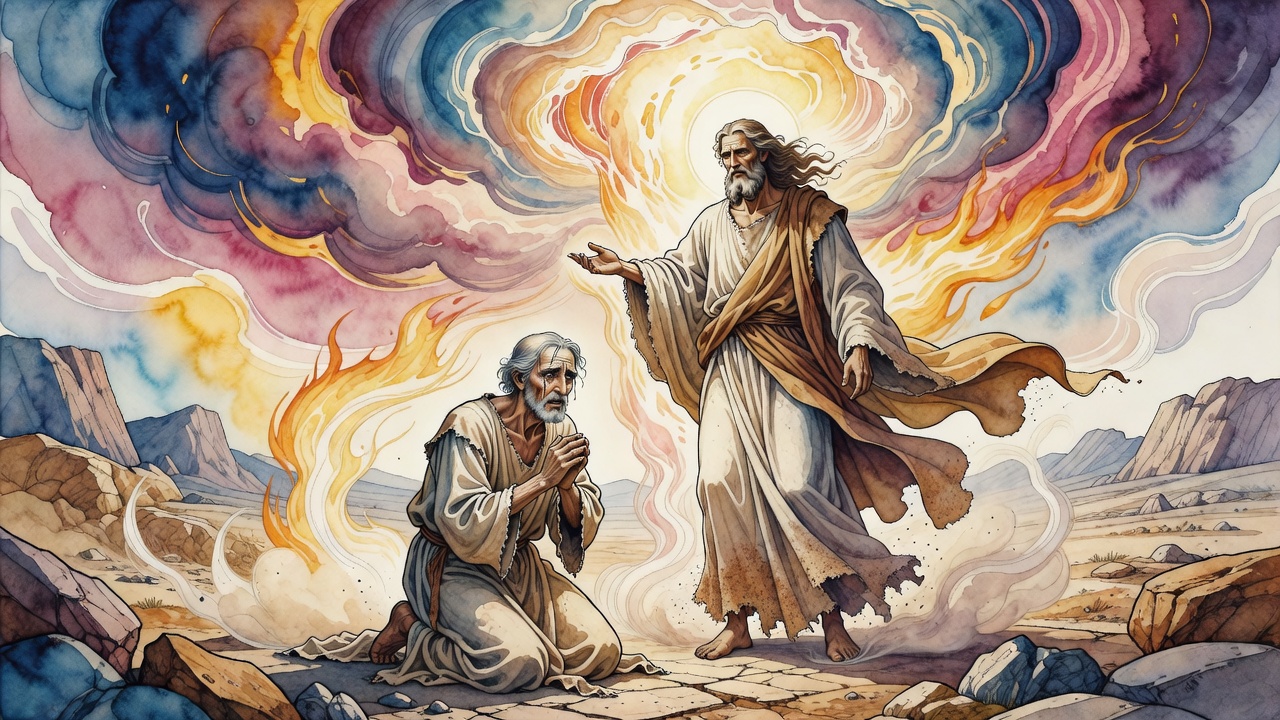
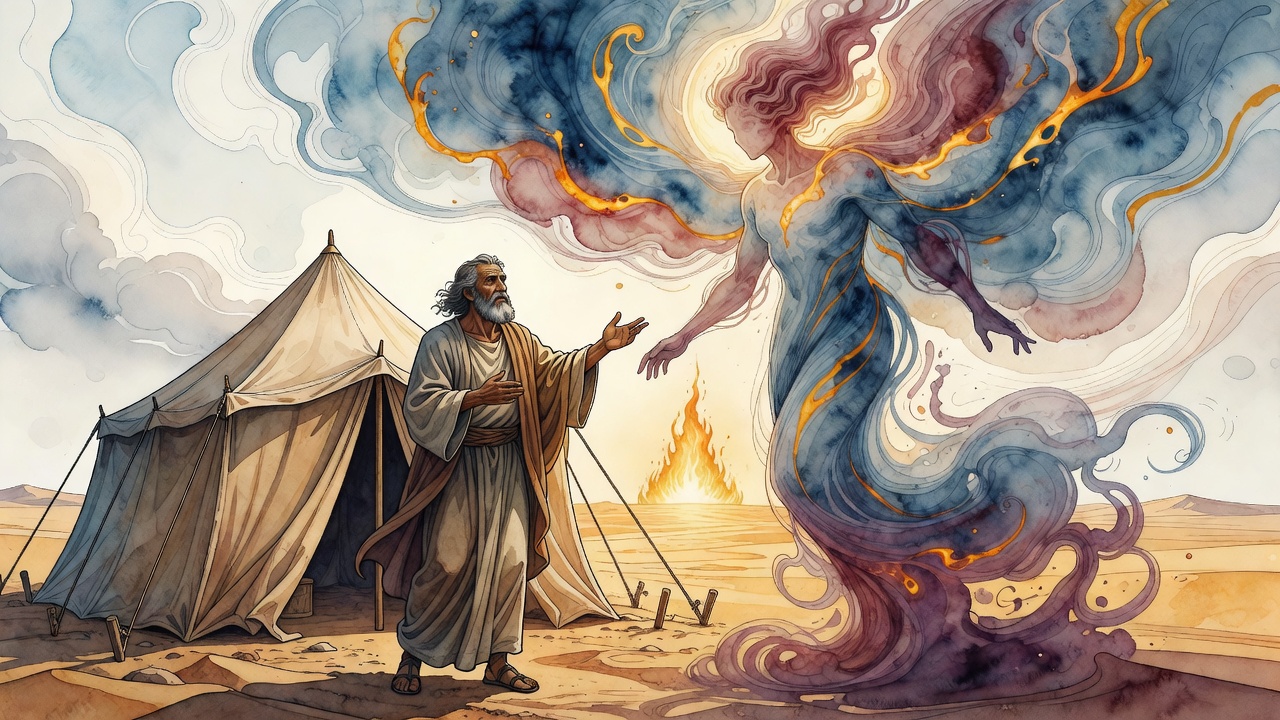
His children were hungry. His house had no uncle with coins, no neighbor with grain, no friend whose door could open into relief. He lifted his voice to the Master of the world and said the sentence a father says only when hunger has burned through shame: have mercy, or let death end our pain.

Elijah appeared before the prayer had cooled.

The Prophet Named His Price

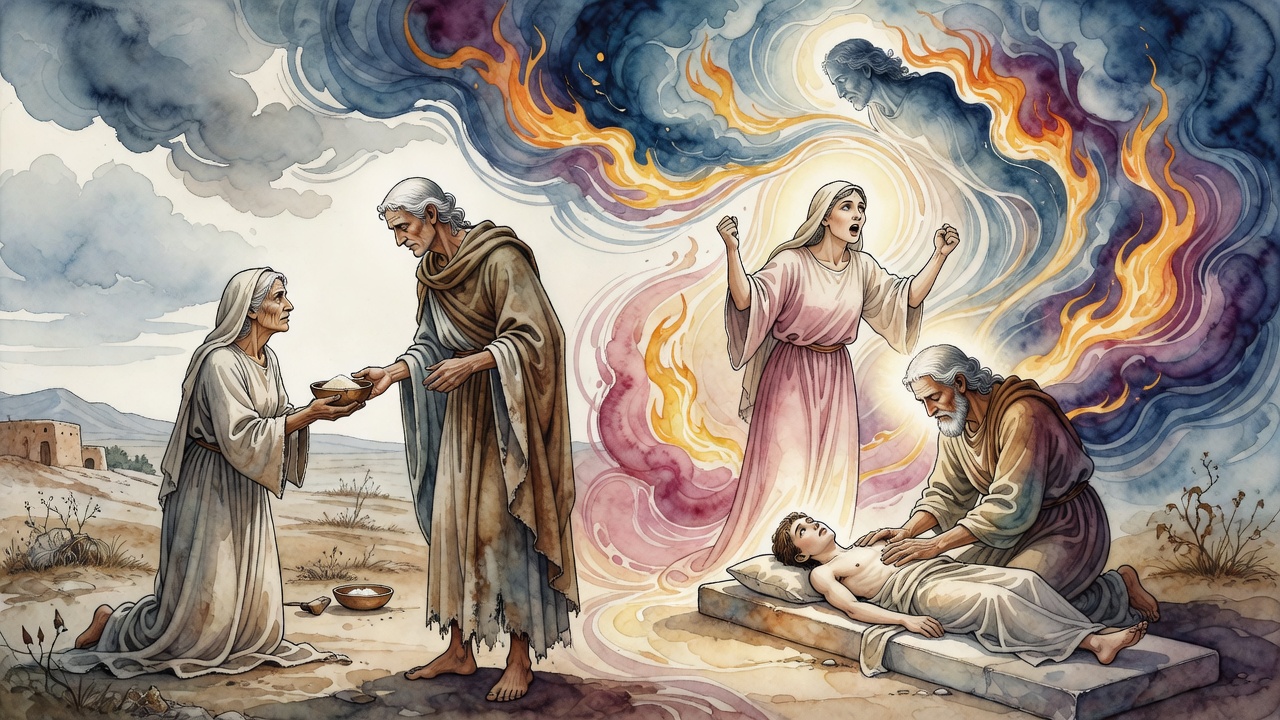
He did not arrive with fire. He arrived as a man standing in front of another man, asking why he wept. The poor father poured out the whole ruin. There was no plan to offer, no hidden resource, no final dignity left to sell.

Elijah gave him one.

"Take me," he said, "and sell me as a slave. The money will sustain your household."

The father refused at first. Even desperation has borders. Selling a stranger who had come to help him felt like stepping across the last human line he still possessed. Elijah pressed him until the man obeyed. A prince bought the prophet for eighty denarii, enough silver to turn the father's house from a deathwatch into a future. The poor man walked away carrying the price of Elijah's freedom in his hand.

The Slave Became an Architect

The prince wanted a palace. He was delighted to learn that the new slave could build.

"Six months," the prince said. "Finish it in six months and go free."

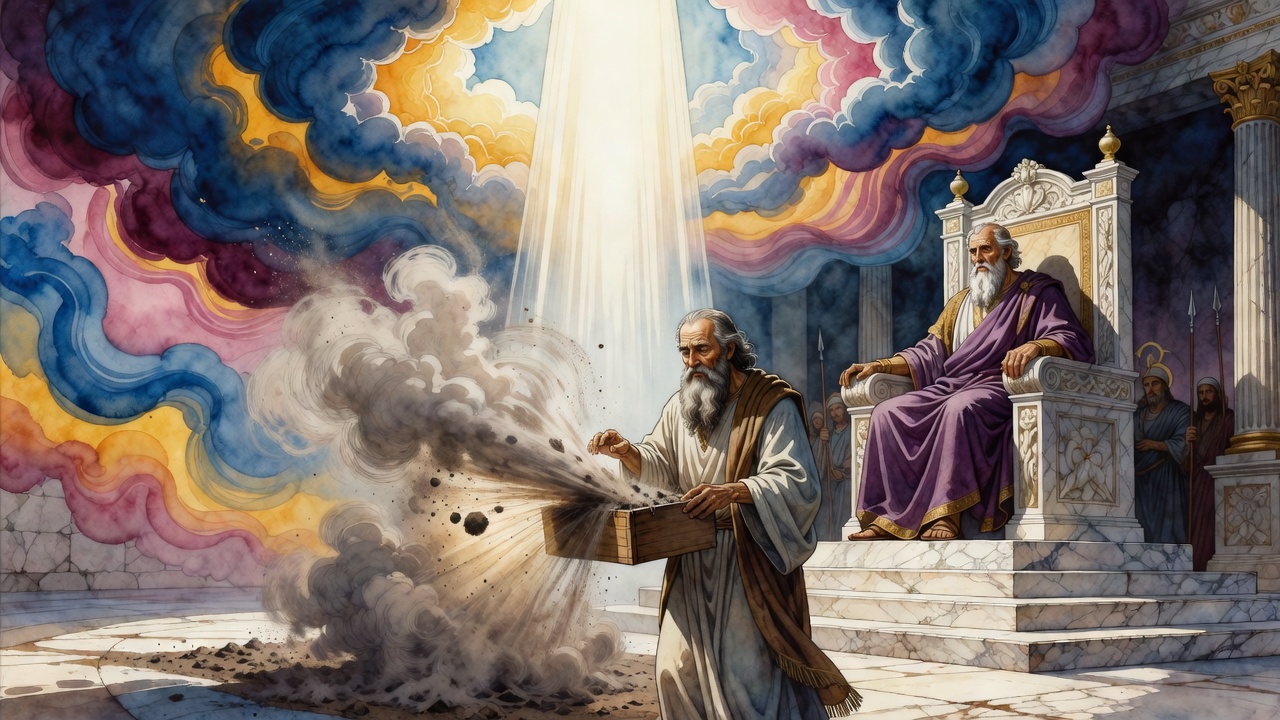
That night, when the household slept and the unfinished foundations lay under the dark, Elijah prayed. No hammers rang through the city. No carts groaned under stone. No overseer shouted men awake. By morning the palace stood complete, walls lifted into place as if the night itself had labored. The prince opened his eyes on a building that had not existed at sunset.

Elijah did not wait to be celebrated. He had not sold himself in order to become a marvel at court. The palace was only the mechanism by which bondage became release. He vanished as he often vanished, leaving behind proof and no body to thank.

The Beggar at the Wedding Table

In another house, death waited for a groom.

A pious man's daughter had married three husbands, and each had died the day after the wedding. When a poor kinsman came to seek help and fell in love with her, everyone knew the danger. He married her anyway.

Elijah came disguised as an old man beneath the wedding canopy and gave him one instruction. At the feast a ragged beggar would arrive, filthy, wild-haired, impossible to seat with honor unless a man chose honor over disgust. "Give him a place beside you. Feed him. Pour drink for him. Grant what he asks."

The beggar came. The groom remembered. He seated him like a guest of rank.

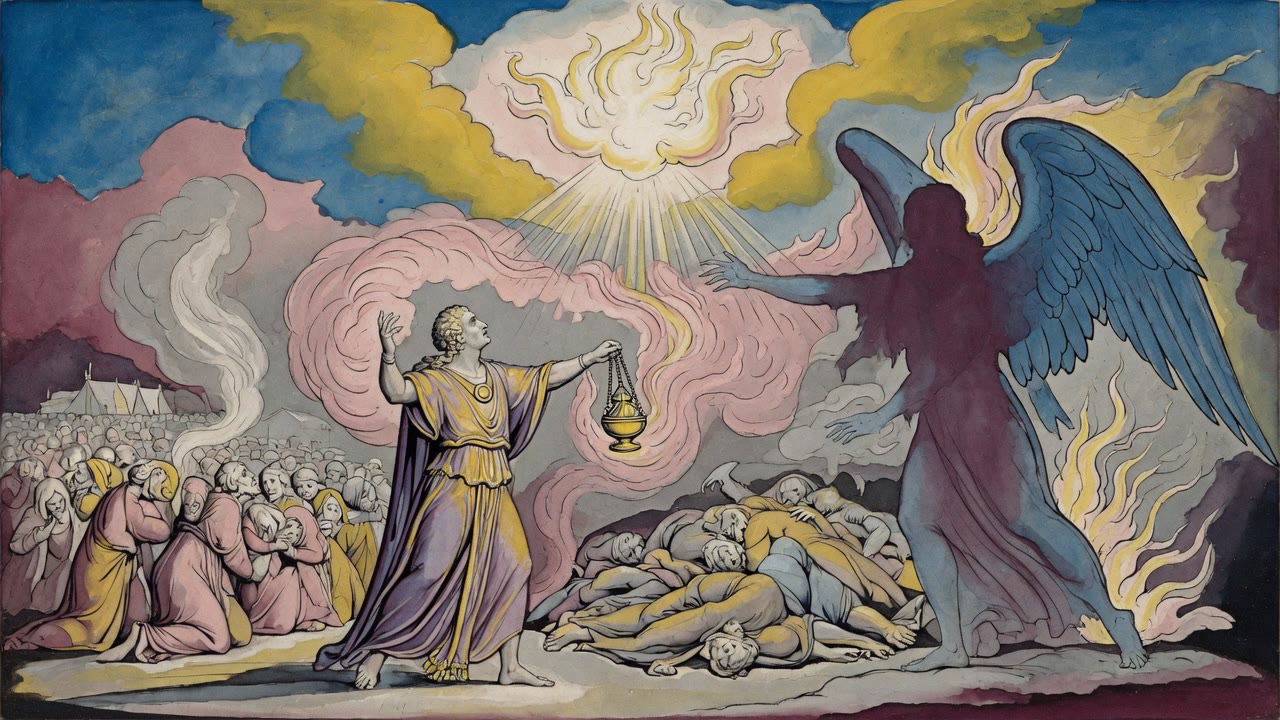
After the wedding, the beggar revealed himself as the Angel of Death. He had been sent to take the groom, but hospitality had changed the encounter. A man who could make room for the hideous stranger had made room for life.

Four Wingbeats Around the World

Elijah could do this because he had not died the ordinary death. The chariot and whirlwind had taken him from the earth, and afterward he moved through the world as a helper whose forms could not be predicted. Four strokes of his wings could carry him from one end of the world to the other.

Sometimes he came as a man. Sometimes as a horseman. Sometimes as a court official. Sometimes in a disguise so low that only the work revealed the messenger. The form was never the center. The rescue was.

That is why his help does not look like one kind of mercy. To one desperate father he gives money by making himself saleable. To one endangered groom he gives a test at the table. To another poor man he gives three gifts: immediate relief, practical means, and a word that can keep the future from collapsing back into hunger.

Elijah does not merely descend from heaven. He enters the precise place where the human being has run out of moves and becomes, for one night, the move that remains.


← All myths
From the tradition

Sources

5 sources

The texts this telling draws on, in full. Open a card to read inline, or expand it for a wider, quieter read.

Legends of the Jews 7:29Legends of the Jews

It's a story featuring none other than the prophet Elijah, that fiery figure who pops up throughout Jewish lore.

Readers often think of Elijah helping scholars. Like saving those struggling teachers of the law. But according to the Legends of the Jews, Elijah’s assistance wasn't limited to just them. Anyone in genuine need, anyone deserving of help, could call upon him.

There was this one man. A father, burdened by poverty. He was desperate, with hungry children and no one to turn to. He cried out to God, lamenting that he had no family, no friends, no one to ease his suffering. "Lord of the world," he prayed, "have mercy, or let death end our pain." According to Ginzberg's retelling, his prayer was heard, because in that very moment, Elijah appeared.

That! The prophet himself, standing before you, asking why you're weeping. The poor man poured out his troubles, and Elijah, in a truly selfless act, offered a solution. "Take me," he said, "and sell me as a slave. The money you get will be enough to take care of your family."

Can you believe it? The poor man, naturally, refused at first. But Elijah insisted, and finally, reluctantly, the man agreed. He sold Elijah to a prince for eighty denarii (an ancient Roman coin). That money became the foundation of a fortune that sustained him for the rest of his life.

Now, the prince who bought Elijah was planning to build a palace. And he was thrilled to learn his new slave was an architect. He promised Elijah freedom if he could complete the palace within six months. But Elijah, being Elijah, had other plans.

That very night, after everyone was asleep, Elijah offered a prayer. And instantly, the palace was complete! Standing there in all its glory, a evidence of divine intervention. Then, just as quickly as he'd appeared, Elijah vanished.

The next morning, the prince was astonished. He had a palace! But when he went to reward his slave, Elijah was nowhere to be found. It dawned on the prince that he had encountered something…more than human. He had been in the presence of an angel.

Meanwhile, Elijah went back to the man who had sold him. He told him the whole story, making sure he understood that he hadn’t cheated the prince. Quite the opposite! He had enriched him, because the palace was worth a hundred times more than the money paid for the “slave.”

What does this story tell us? It's a powerful reminder that help can come from the most unexpected places. It speaks to the immense compassion of Elijah, willing to sacrifice himself to alleviate another's suffering. And perhaps most importantly, it emphasizes the idea that even in our darkest moments, we are not truly alone. There is a listening ear, a helping hand, a divine presence ready to intervene. Maybe not always in the form of a completed palace overnight, but in ways that, if we're open to them, can be just as miraculous.

Full source
Legends of the Jews 7:74Legends of the Jews

A wealthy, pious man blessed with a beautiful and saintly daughter. Sounds like a fairy tale beginning. But tragedy had struck repeatedly. She'd lost three husbands, each one dying on the very day after their wedding. Understandably, she vowed never to marry again. Who could blame her?

Enter a distant cousin, a nephew of her father. He was driven by the poverty of his own family to seek help from his rich uncle. But as soon as he saw his lovely cousin, well, all thoughts of financial assistance flew out the window. He was smitten. He wanted to marry her!

Her father, knowing the tragic history, tried to dissuade him. But the young man was undeterred. He wasn't afraid of the fate that had befallen his predecessors. Love, it seems, can be a powerful force. So, the wedding took place.

As he stood beneath the chuppah, the wedding canopy, a figure approached him. It was Elijah, the prophet, disguised as an old man. Elijah, a figure who often appears in Jewish lore to offer guidance and assistance, gave him a crucial piece of advice. "My son," he said, "at the wedding dinner, a ragged, dirty beggar with wild hair will approach you. Seat him beside you, offer him food and drink, and grant whatever he asks. Do this, and you will be protected." Then, just as quickly as he appeared, Elijah vanished.

Sure enough, at the wedding feast, a stranger matching Elijah's description appeared. The groom, remembering the prophet's words, did exactly as he was instructed. He welcomed the beggar, sharing his food and drink, treating him with utmost respect.

After the wedding, the stranger revealed his true identity. He was the malach ha-mavet, the Angel of Death, sent by God to take the young husband's life. Can you imagine the groom's terror?

He pleaded with the Angel of Death, begging for his life. But the angel was unmoved, refusing even a single day's respite. The only concession he offered was permission for the young husband to say farewell to his new bride.

When the bride realized what was happening, that her worst fears were coming true, she took matters into her own hands. She went to the Angel of Death and argued with him, and this is where the story takes a truly remarkable turn.

"The Torah," she declared, "clearly exempts the newly wed from all duties for a whole year! If you take my husband's life now, you will be contradicting the very word of God!" According to Ginzberg's Legends of the Jews, she used her knowledge of Jewish law to challenge the angel’s decree.

And here's the unbelievable part: God listened! He commanded the Angel of Death to desist. When the relatives of the bride, already mourning, went to prepare the grave, they found the groom alive and well!

What does this story, found within Legends of the Jews, tell us? Is it simply a fantastical tale? Or is it a powerful reminder of the strength of love, the importance of hospitality, and the unwavering power of faith? Perhaps it suggests that even death itself can be challenged, even negotiated with, especially when the arguments are rooted in justice and the sacred word. Maybe, just maybe, we have more power than we think.

Full source
Exempla of the Rabbis, No. 355Exempla of the Rabbis (Gaster, 1924)

The prophet Elijah gave three gifts to a poor man. And the story of those gifts became a parable about the nature of divine assistance. The details of the gifts vary across different sources, but the structure is always the same.

Elijah appeared to a man in desperate circumstances, starving, homeless, on the verge of giving up. And offered him three things. The first gift was immediate: food, money, or some other form of instant relief that addressed the man's most pressing need. The second gift was practical: a tool, a skill, or a connection that would help the man sustain himself over time. The third gift was spiritual: a teaching, a blessing, or an insight that transformed the man's understanding of his own life.

The three gifts corresponded to the three dimensions of human need. The body needs food today. The mind needs a plan for tomorrow. The soul needs meaning for always. Elijah, acting as God's agent, addressed all three in sequence.

The sages noted that Elijah did not simply give the man unlimited wealth. He gave him enough to survive, enough to rebuild, and enough wisdom to ensure that the rebuilding would last. The gifts were calibrated, generous but not excessive, transformative but not miraculous beyond what the man could comprehend.

This pattern, immediate relief, practical assistance, spiritual transformation, became the model for Jewish charity. The highest form of giving, Maimonides later taught, is not a handout but a hand up: giving someone the means to support themselves. Elijah's three gifts anticipated this teaching by centuries.

Full source
Legends of the Jews 7:22Legends of the Jews

His story doesn't end there. According to tradition, Elijah didn't die. Instead, he ascended to heaven in a whirlwind, riding a chariot of fire (2 (Kings 2:1)1). And that's where things get really interesting.

Because after that, Elijah's role shifted. He became something more than just a prophet. He became a protector, a guardian angel, especially during the time of the Tannaim and Amoraim – the great scholars of the Talmudic period. These were the brilliant minds who shaped Jewish law and thought, and according to tradition, Elijah was right there with them.

Think of him as this ever-present force, hovering over the just and the pious. He's a friend in need, always ready to swoop in and protect the innocent from harm. And he can do it quickly! Tradition tells us that with just four strokes of his wings, Elijah can traverse the entire world. Ginzberg, in his Legends of the Jews, paints a vivid picture of Elijah's incredible speed and reach. No matter where you are, no matter how far-flung a corner of the earth you find yourself in, Elijah is never too far to offer his help.

Here's the really fascinating part: Elijah isn't limited to one form. As an angel, he has the power to assume all sorts of appearances to accomplish his missions. Sometimes he looks like an ordinary man, blending into the crowd. Other times, he might appear as an Arab, a horseman, even a Roman court official. And yes, tradition even suggests he could appear as.. a harlot. It sounds shocking, doesn’t it? But the point is, Elijah will do whatever it takes, assume whatever disguise is necessary, to carry out his divinely appointed tasks.

What does this tell us? Maybe it's about the unexpected places we find help. Maybe it's about the importance of seeing beyond appearances. Or maybe, just maybe, it's a reminder that even when we feel most alone, there's a watchful presence looking out for us, ready to intervene in ways we can't even imagine.

Full source
Gaster, Exempla of the Rabbis No. 415 (Nissim, Hibbur Yafeh)The Exempla of the Rabbis (1924)

A poor man, driven by his weeping wife and starving children, went to the marketplace in despair. He had nothing to sell and no trade to offer. He prayed to God for help, and the prophet Elijah appeared at his side.

"Sell me," Elijah said. "Sell me in the market as your slave, and use the money to feed your family." The man recoiled in horror. To sell Elijah the Tishbite into slavery was unthinkable. But Elijah reassured him. "Only take one coin from the proceeds and return it to me. That is all I ask."

The man obeyed. Elijah was purchased by the king of that country for eighty dinars. The poor man gave one coin to Elijah, who handed it right back. And told him that from this moment on his household would flourish. The man returned home and found his fortunes reversed.

Meanwhile Elijah was brought before the king. "What can you do?" the king asked. "I am a builder," Elijah replied. The king had recently purchased slaves and construction materials for a grand new palace, and he struck a bargain: if Elijah could finish the palace in six months or less, he would be set free.

That night Elijah built the entire palace while the city slept. In the morning the king awoke to find his new palace complete and the builder vanished. Elijah had disappeared in the night. He returned to the poor man and said, "The king has profited a thousand times more from me than he paid for me. Now thank God for the mercy He has shown you."

Gaster's Exempla of the Rabbis (1924, No. 415, from Rabbi Nissim's Chibbur Yafeh me-ha-Yeshuah) preserves this as a parable of how divine rescue often works through unlikely arithmetic. The prophet allowed himself to be sold; the king thought he was getting a bargain; the poor man received a miracle; and God balanced the books in a single night of impossible construction.

Full source