6 min read

Three Decrees the Stars Wrote and the Dead Snakes Found at Dawn

Astrologers handed down three death sentences from the heavens, and three small unwitnessed kindnesses left a serpent dead by morning instead.

Curated by Arthur · Told by Maggid ·
Table of Contents
  1. The Bride Who Fed a Beggar at the Door
  2. The Thief the Stars Promised and the Mother Who Refused It
  3. The Two Men the Rabbis Watched Walk Out to Die
  4. What the Astrologers Could Not See in the Chart

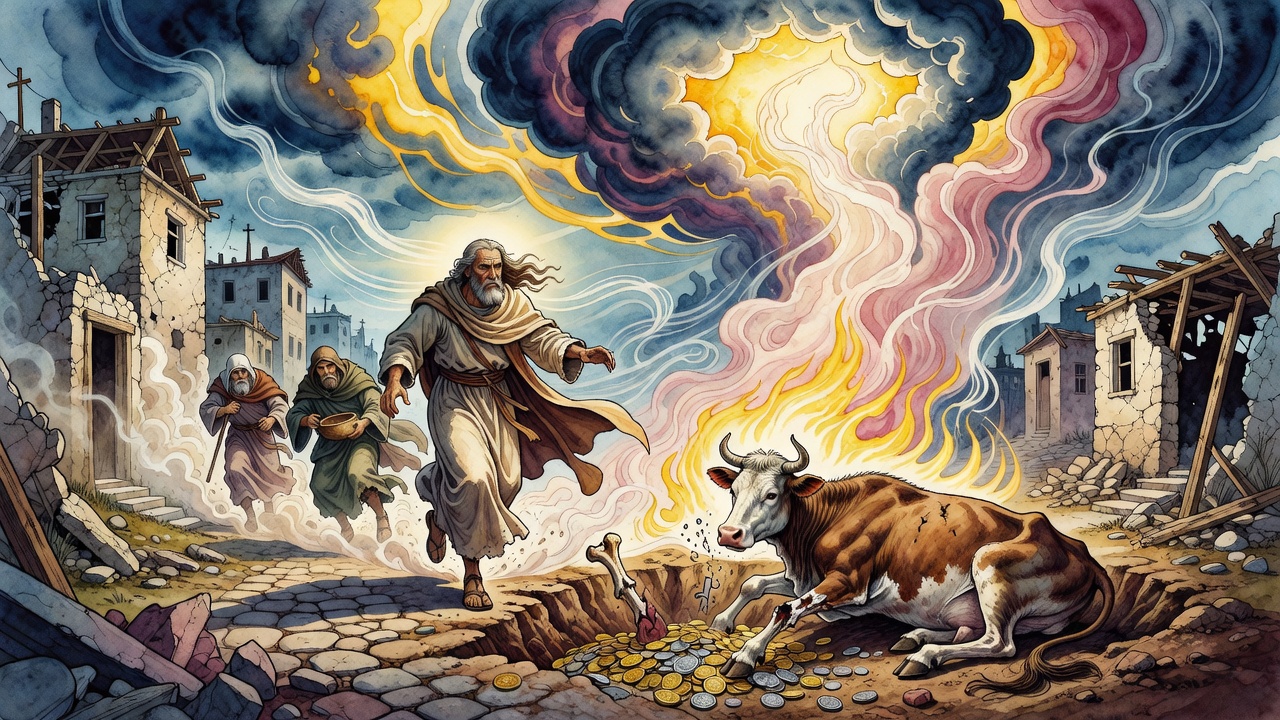
Rabbi Akiva knew the night his daughter would die, and he told no one. The astrologers had read her chart and handed him the sentence plainly. On her wedding night a serpent would bite her, and she would not see morning. He did not cancel the marriage. He did not lock her in a room. He set the date, hired the musicians, and watched the hours pass with his heart in his throat.
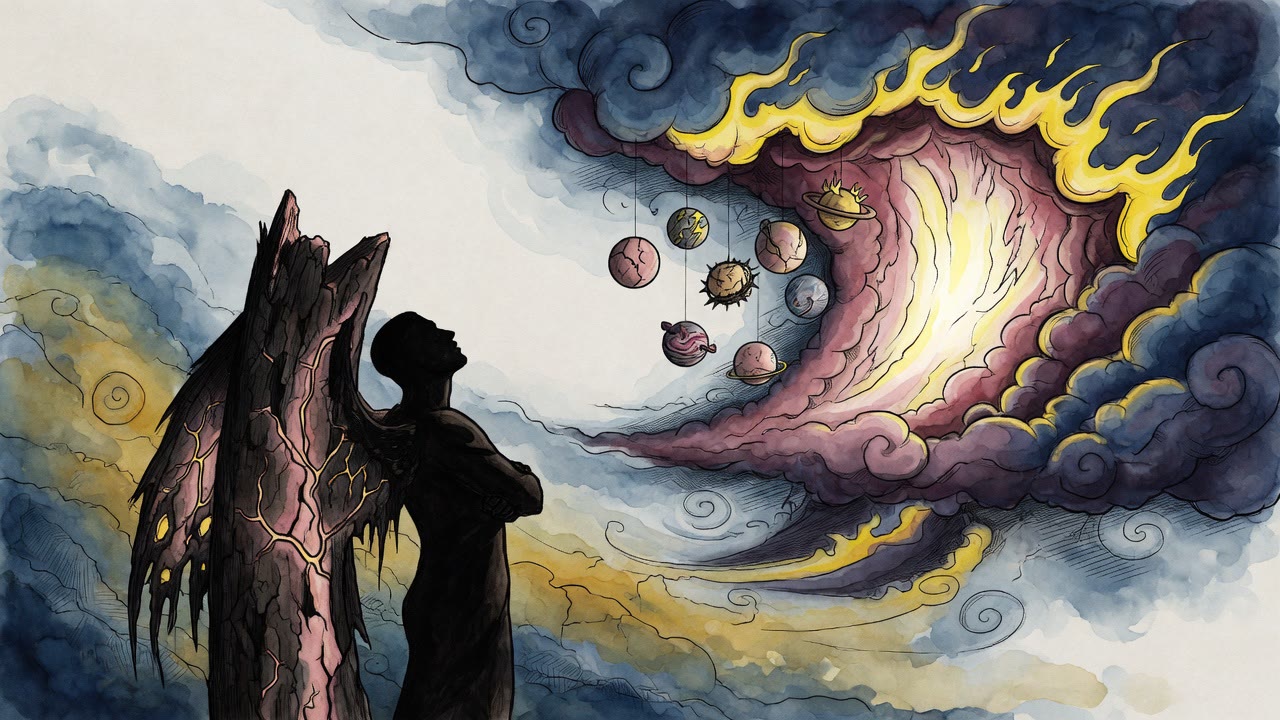
This is one of three decrees the stars wrote in the rabbinic memory. Three people marked for death by men who read the sky with real skill. Three serpents already coiled and waiting. And in each story the killing was undone not by prayer aimed at the threat, but by a hand that reached toward someone hungry while the danger went forgotten.

The Bride Who Fed a Beggar at the Door

The wedding of Akiva's daughter ran loud and late. Music, dancing, a feast that did not break until the sky paled. The father watched his child from across the room and counted every hour she stayed alive.

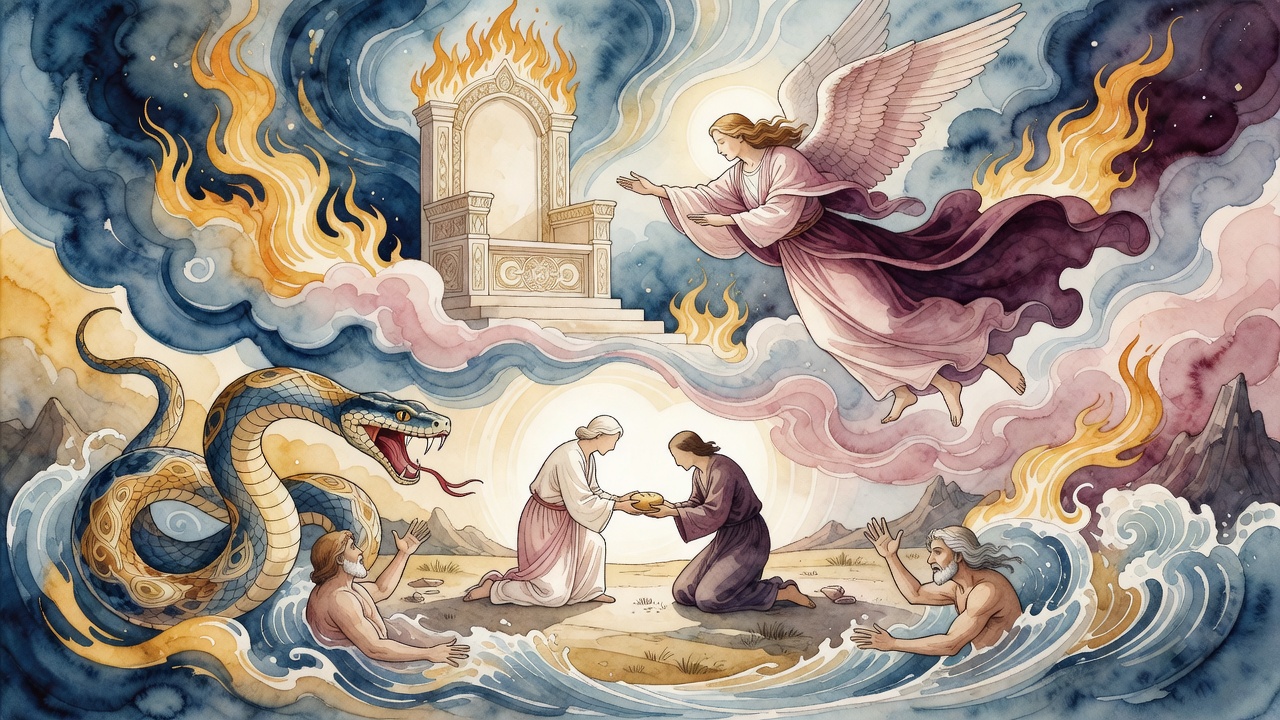
Near the edge of the celebration a beggar came to the door. The guests were full of wine and noise, and no one turned to look at him. The bride did. She lifted her own portion of food, the plate set in front of her on her own wedding day, and carried it to the man at the threshold. No announcement. No one saw. She fed him and went back to the dancing.

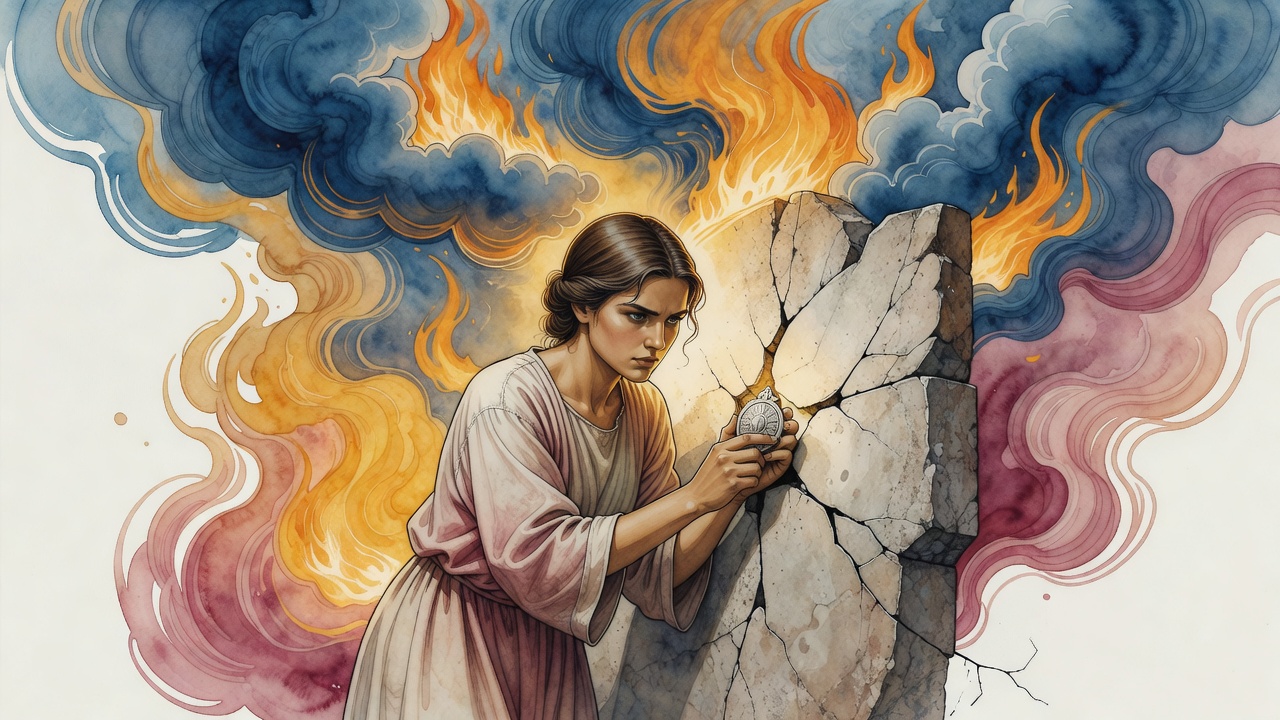
When the feast ended she went to her chamber. Before sleep she pulled the ornamental pin from her hair and pressed it into a crack in the wall, the small habit of her hands, and lay down beside her husband.

In the morning she drew the pin out of the wall, and a dead serpent came with it. The pin had driven straight through the creature's eye. It had been coiled in the crack, poised to strike, and a careless gesture before sleep had killed it where it lay.

Akiva wept. He asked her what she had done the night before that heaven should answer for her. She thought, and then she remembered the beggar. God, he understood, had let charity reach the wall before the serpent could.

The Thief the Stars Promised and the Mother Who Refused It

A second woman carried a newborn son to the astrologers, and they read his future without softening it. "Your son will be a thief," they said. The fate was written. The sky had spoken.

She did not argue with the stars. She raised the boy against them. She taught him Torah, kept him from rough company, prayed over him for years. He grew honest, learned, open-handed, the opposite of everything the chart had promised.

One day, grown, he sat under a palm tree and reached up to fix his head covering. A thorn caught his hand and knocked a single date loose from the branch. It dropped into his lap, and without a thought he ate it.

The date belonged to the owner of the tree. By the letter of the law, the young man had stolen.

The astrologers had read true. A thief, exactly as they said. But the theft the heavens promised had shrunk to one dislodged date eaten by accident, the smallest crime the word could hold. The mother had not changed the sky. She had spent years pressing the decree down until almost nothing of it remained.

The Two Men the Rabbis Watched Walk Out to Die

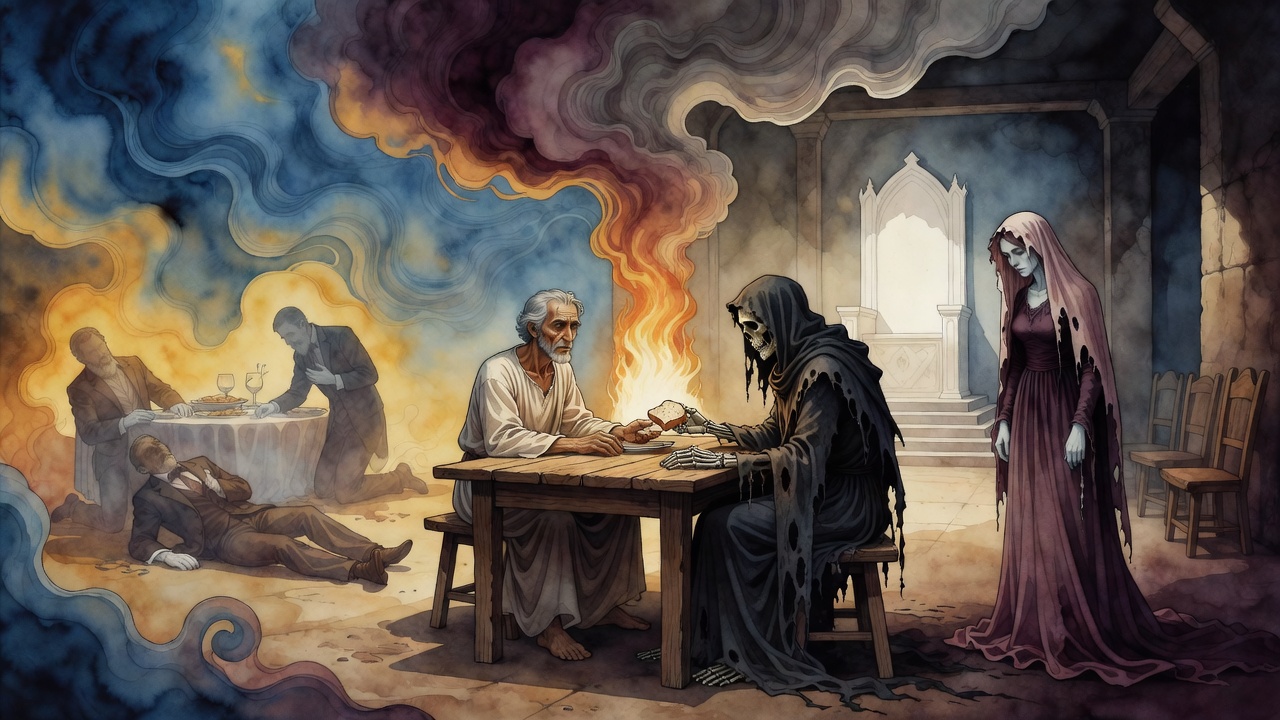
In the study house Rabbi Janai and Rabbi Johanan sat together and watched two men gather their things to leave. The rabbis carried a piece of knowledge the two men did not. Astrologers had foretold that a snake would kill both of them before the day was out.

The rabbis said nothing. They did not call the men back. They did not warn them of the road. They let them walk out into the day with the sentence over their heads, and they waited.

The men went to their work. Somewhere in the hours of it, the ordinary chores of cutting and bundling, one of them drove a stick down into the brush, or a blade through a tangle of reeds, the way a man does a hundred times without looking. The motion meant nothing to him.

At evening the two returned, alive, unmarked. And in the place where they had worked lay a serpent cut in two, pinned by the same careless stroke that should have been nothing at all. They had killed the thing meant to kill them and never known it was there.

One of them had given bread to a poor man that morning, or set a coin in a hungry hand, some small mercy he had already forgotten. The rabbis named what they had watched. "No astrology is of any avail against Jews."

What the Astrologers Could Not See in the Chart

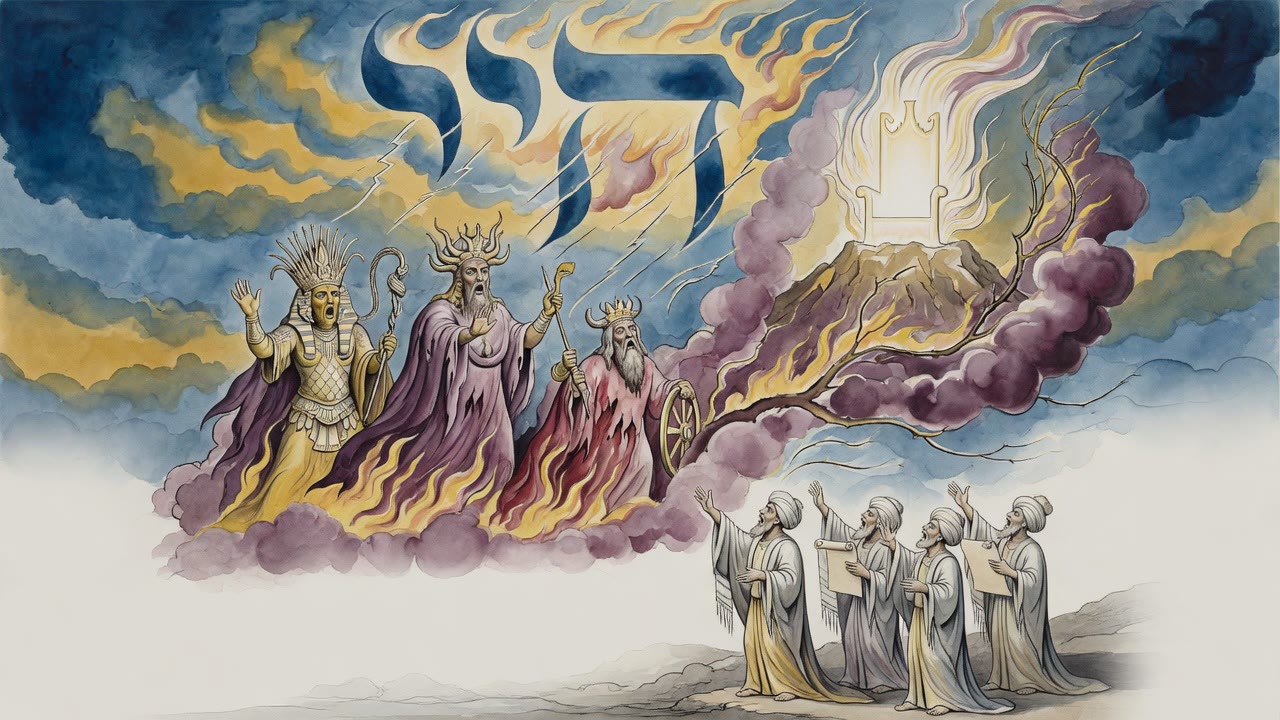
Three readers of the sky, and not one of them had lied. The serpent was real and waiting in every case. The thief was written. The death on the wedding night was set. The men who read the heavens read them with accuracy the rabbis never bothered to deny.

What the chart could not hold was the beggar at the door, the years of a mother's prayer, the coin pressed into a hand on the way to work. None of those acts aimed at a snake. The bride was thinking of a hungry man, not of the wall. The young man's mother was raising a son, not bending a constellation. The mercy went out toward the person in need, and the threat behind it fell as a side effect no one had planned.

By morning the proof lay in the open every time. A pin through an eye. A single date in a lap. A serpent split on a forgotten stick. The decree had arrived exactly as the stars had written it, and arrived already dead.


← All myths

From the tradition

Sources

4 sources

The texts this telling draws on, in full. Open a card to read inline, or expand it for a wider, quieter read.

Exempla of the Rabbis, No. 318Exempla of the Rabbis (Gaster, 1924)

Rabbi Akiba was the greatest sage of his generation, but even he could not escape the anxieties of a father. The astrologers had warned him: his daughter was destined to die on her wedding night, bitten by a serpent.

Akiba said nothing to his daughter. He did not cancel the wedding. He did not lock her away. He trusted in God, but the dread never left him. The night of the wedding arrived, and the celebration was magnificent, music, dancing, feasting that lasted until dawn. Akiba watched his daughter from across the room, his heart pounding with each passing hour.

When the party ended, the bride retired to her chamber. Before going to sleep, she removed the ornamental pin from her hair and stuck it into a crack in the wall, as was her habit. She thought nothing of it. She fell asleep beside her new husband.

In the morning, when she pulled the pin from the wall, a dead serpent came with it. The pin had pierced straight through the snake's eye. It had been coiled in the wall, poised to strike, and her casual gesture had killed it before it could reach her.

Rabbi Akiba wept with relief. "What did you do last night," he asked his daughter, "that merited such divine protection?" She thought carefully. "During the feast," she said, "a beggar came to the door. Everyone was so busy celebrating that no one noticed him. I took my own portion of food and gave it to him." Akiba nodded. Charity, the Talmud teaches in Shabbat (f. 156), has the power to overturn even the decrees of the stars.

Full source
Exempla of the Rabbis, No. 172Exempla of the Rabbis (Gaster, 1924)

The Talmud (Shabbat 156b) tells the story of a woman who consulted astrologers about her newborn son. They told her with certainty: "Your son will be a thief." She was devastated. Her child's fate, they said, was written in the stars.

Being a pious woman, she raised the boy with extra care. She taught him Torah, kept him away from bad influences, and prayed constantly that the astrologers were wrong. The boy grew into a fine young man, learned, honest, generous.

One day, years later, the young man was sitting under a palm tree. He reached up to adjust his head covering, and as he did, a thorn pricked him and dislodged a date from the tree. The date fell into his lap. He ate it without thinking.

Technically, the date belonged to the tree's owner. Technically, eating it was theft.

The astrologers had been right. But only in the most trivial possible way. The "theft" written in the stars amounted to an accidentally dislodged date. The mother's piety, her prayers, her devoted upbringing had not changed the stars, but they had reduced the decree to its absolute minimum.

Rabbi Hanina drew from this the teaching: "Israel is not subject to the stars." The heavenly configurations have real influence, but they can be overridden by merit, prayer, and righteous action. The astrologers see the potential. Torah determines the reality. A destiny of theft can be shrunk to a single date, if the person lives a life devoted to God.

Full source
Gaster, Exempla No. 172The Exempla of the Rabbis (1924)

Rabbi Janai and Rabbi Johanan sat watching two men leave the study house. They knew something about these men that the men did not know about themselves. Two astrologers had predicted that a snake would kill both of them on that very day.

The rabbis did not warn them. They did not send them home. They simply watched.

At evening the two men returned, unharmed. Gaster's Exempla (1924), No. 172, gives no further details, only the conclusion the rabbis drew. "No astrology is of any avail against Jews."

The teaching is not that the stars carry no information. The rabbis were comfortable admitting that Gentile astrologers often read the sky with technical accuracy. The teaching is that a Jew stands in a different relationship to the decree. Through Torah, through the mitzvot, through giving a coin to the poor at the right moment, a Jew can reroute what the stars had written. The Talmud elsewhere (Shabbat 156a) frames it in a line: ein mazal l'Yisrael, Israel has no constellation.

A snake may be written into your chart. A blessing recited over bread may be written deeper.

Full source
Exempla of the Rabbis, No. 172Exempla of the Rabbis (Gaster, 1924)

Rabbi Yannai and Rabbi Yochanan, teachers of the land of Israel, once watched two Jewish men about whom two astrologers had issued a dire prediction. According to the readers of the stars, a snake would kill these men on a particular day, and the sages observed to see whether the prophecy would hold. By every reckoning of the diviners, the two were marked for death.

Yet the men went out, did their ordinary work, and came home unharmed. The danger passed them by entirely, and the rabbis drew from this the conviction that astrology has no binding power over the people of Israel. The teaching rests on the talmudic principle that Israel is not subject to the constellations, in Aramaic ein mazal le-Yisrael, meaning that the fate written in the heavens does not govern those who serve the One who set the heavens in place.

Often such stories are paired with a hidden deed of righteousness that overturns the decree, a quiet act of charity or kindness performed without notice, since the rabbis taught that charity rescues from death (Proverbs 10:2). The lesson is not that the stars say nothing, but that they do not have the last word. A Jew bound to the Holy One through Torah and good deeds stands above the schemes of the zodiac. The astrologers read the sky correctly by their own art, and still the men walked home alive, because the God of Israel governs above the stars.

Full source