5 min read

He Heard the Holy Name Cursed and Stayed Silent

A man overheard someone curse the Name and never told a sage. The sources bind him to the thief who shares the crime by silence.

Curated by Arthur · Told by Maggid ·
Table of Contents
  1. Partner to the Thief
  2. If Someone Cursed Your Father
  3. The King's Command and the Oath
  4. God Walks in the Camp
  5. What Silence Buys

The words left another man's mouth like spit. The Name was cursed in the open air. One listener froze, then walked on. He told himself he had done nothing. He had only heard. His feet took the path of least trouble. His mouth stayed shut as if silence were cleanliness.
He Heard the Holy Name Cursed and Stayed Silent Click for full size

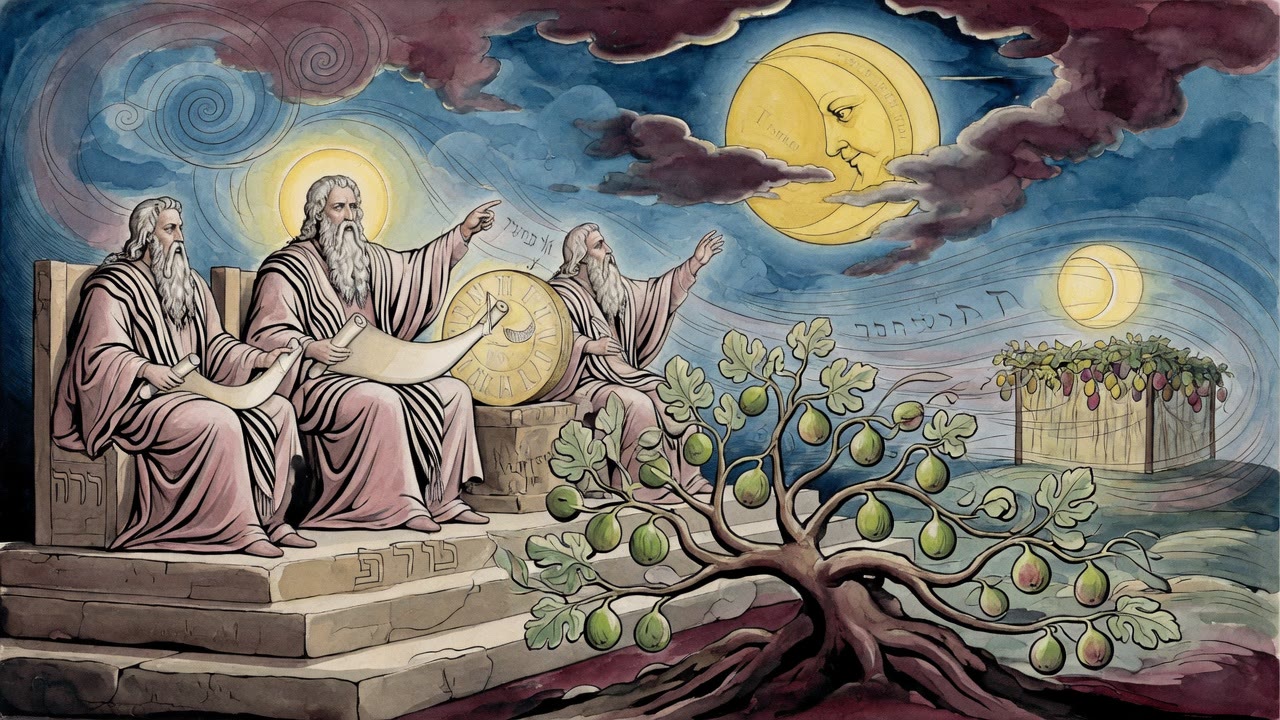
The verse does not let him off. "And he is a witness, whether he has seen or known it, if he does not tell, then he shall bear his iniquity" (Leviticus 5:1). Silence is not empty. Silence carries weight. The midrash asks the hard question out loud: why should a man bear iniquity merely for holding his tongue?

Partner to the Thief

Solomon said, "One who shares with a thief hates his own soul." When the thief is seized, the silent partner stands condemned beside him. The midrash binds the two cases with a tight rope. The man who overhears blasphemy and never comes to a sage shares the guilt the way a fence shares a robbery. He did not speak the curse. He also did not break it.

He may protest, "What slander would I even be repeating?" For ordinary speech, telling can be lashon hara. For cursing the Name, the Holy One carves an exception. Ordinary matters have slander in the telling. The Name does not. The Father of all has been struck. Silence makes the hearer a partner in the blow. The law of careful speech stops at the border where Heaven itself is insulted.

If Someone Cursed Your Father

Picture a man who curses his fellow. A bystander shrugs. It is no affair of his. The street keeps walking. Now let that same man curse a father to the son's face. The son risks his life to cry out, "You have cursed my father!" Blood rises. Honor rises. Fear of the fighter matters less than the insult to the house.

How much more the Name. Moses sang, "Is He not your Father who acquired you?" (Deuteronomy 32:6). The blasphemy is not abstract theology. It is a family insult aimed at the One who claimed Israel in Egypt and at Sinai. The midrash wants the hearer's body to react like a son's body, not like a clerk filing a report for later. The frozen listener failed that test. He treated the Name as less urgent than a human father's honor.

The King's Command and the Oath

"I observe the king's command, and the word of an oath to God" (Ecclesiastes 8:2). Rabbi Levi reads the king as the King of Kings. The command is the first word at Sinai: "I am the LORD your God" (Exodus 20:2). The oath binds to the second word and to the ban on taking the Name in vain (Exodus 20:3, 20:7). Earthly obedience collapses into covenant. The king you watch in the market is not the only king the verse means.

Keeping an oath is not only courtroom language. It is refusing to let the Name be cheapened, in your own mouth or in a mouth you hear and ignore. The man who walked away from blasphemy broke more than social courage. He broke the posture of one who keeps the king's command when the command is God's own first speech.

God Walks in the Camp

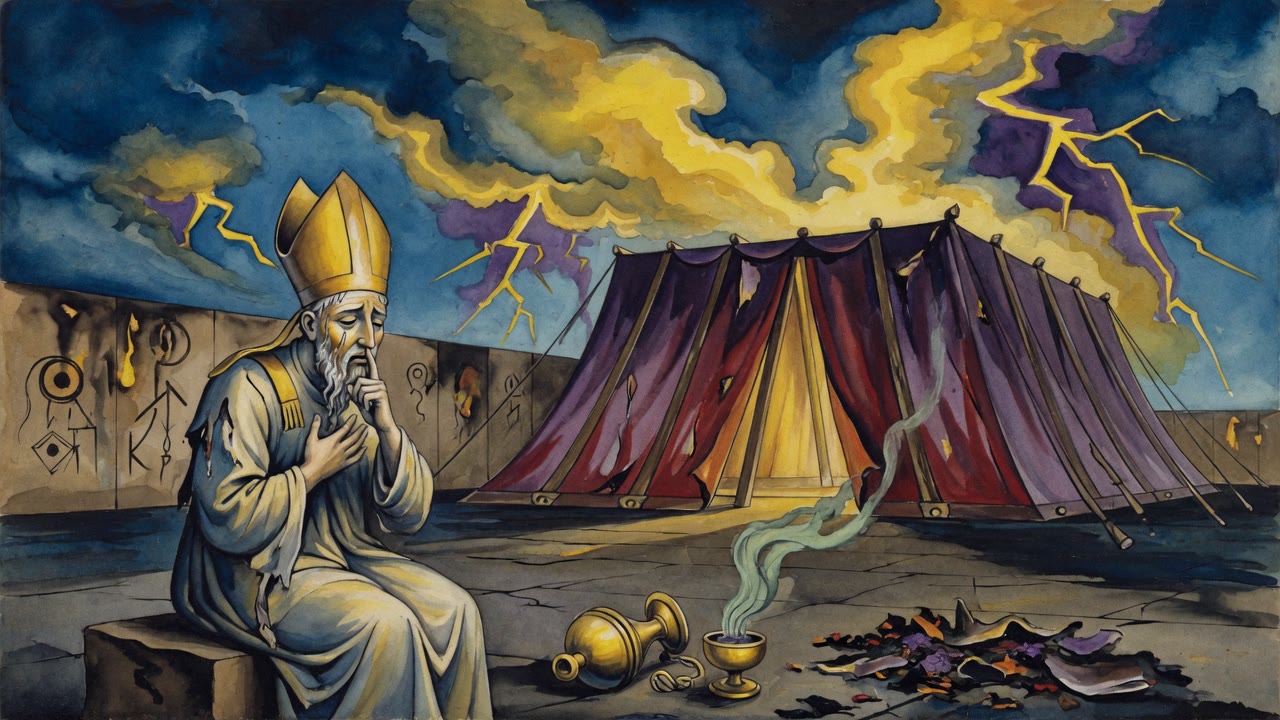
"For the LORD your God walks in the midst of your camp… and let your camp be holy" (Deuteronomy 23:15). Holiness is not a mood. The Sifrei turns it into places and acts. Do not recite the Shema (Hear O Israel) near the washers' foul dippings. Do not carry scrolls or tefillin (the leather boxes of scripture worn in prayer) into a bathhouse or a tannery. The Presence is pictured as moving among Israel, so the camp must be fit for that walking. Smell, filth, and casual impurity are not neutral when God is described as a walker in your rows.

If the camp must be clean of filth for prayer, how much more must it be clean of a curse left unanswered. A holy camp is not only washed. It is a place where the Name is defended when it is attacked. The silent man left a stain that water cannot lift.

What Silence Buys

The silent man bought a quiet hour. He avoided a scene. He kept his hands clean of gossip and his name out of a quarrel. The sources answer that he bought a share in the crime. Guilt travels through open ears as well as open mouths. When the Name is cursed, the witness is already inside the story. The only question is whether he speaks in time to stand with the Father, or stays quiet and stands with the thief.

Somewhere a sage waited for a report that never came. Somewhere the camp kept walking as if the air were still clean. The midrash will not join that pretense.


← All myths

From the tradition

Sources

3 sources

The texts behind this telling. Some cards carry a translation of the source; others are our own retelling of it, and each card says which. Every card links out to the original.

Midrash Tanchuma Buber, Vayikra 14:1Midrash Tanchuma Buber, Vayikra

Translation of the source text.Midrash Tanchuma (Buber), Public Domain, on Sefaria · CC-BY-SA

"And he is a witness, whether he has seen or known (it)" (Leviticus 5:1). This is what Scripture says: "One who shares with a thief hates his own soul; [he hears an oath but does not tell]" (Proverbs 29:24). What caused a person that it should be said of him, "If a soul sins"? Only because he did not come and tell a certain sage: "So-and-so blasphemed the name of the Holy One, blessed be He." Therefore he shares his iniquities with him, as it is said: "If he does not tell, then he shall bear his iniquity" (Leviticus 5:1). Therefore Solomon said: "One who shares with a thief hates his own soul" (Proverbs 29:24). And just as the thief is caught and his partner along with him is held liable, so too one who hears the blasphemy of the Holy One, blessed be He, and does not tell is held liable along with him. And let a person not say: "What slander am I uttering?" The Holy One, blessed be He, said: For every matter there is slander in it, except for cursing the Name. Why? Because just as when a person curses his fellow and someone hears, it does not concern him; but if he cursed his father in his presence, he gives up his soul and says, "You have cursed my father." Moses said: "Is He not your Father who acquired you?" (Deuteronomy 32:6).

Full source
Kohelet Rabbah 2:1Kohelet Rabbah

Retold in our words. Read the original at the link below.The Sefaria Midrash Rabbah, 2022 · CC-BY

Kohelet, Ecclesiastes, dives right into that tension. And Kohelet Rabbah, the rabbinic commentary on Ecclesiastes, unpacks it for us with layers of meaning. the story turns to one short but powerful verse: "I observe the king’s command, and the word of an oath to God" (Ecclesiastes 8:2).

Obey the king, keep your promises to God. But as is so often the case in Jewish tradition, there's more here than meets the eye.

Rabbi Levi, in Kohelet Rabbah, takes us on a journey, connecting the earthly king to the King of Kings – God. He reads "I observe the king's command" not as a reference to a flesh-and-blood ruler, but as a commitment to observing the word of God. And it's not just any word, but the very first words spoken at Sinai: "I am the Lord your God" (Exodus 20:2).

Suddenly, the verse takes on a whole new weight. It's not about political obedience, it's about covenant.

And what about that "word of an oath"? Rabbi Levi doesn't leave us hanging. He connects that to the second of the Ten Commandments: "You shall not have [another god before Me]" (Exodus 20:3). And then to the commandment about oaths: "You shall not take the name of the Lord your God in vain" (Exodus 20:7).

So, what's happening here? Rabbi Levi, through his interpretation, is essentially collapsing the earthly and the divine. The obligation to the king becomes an obligation to God. The oath to God is tied directly to those fundamental commandments we received at Sinai.

Every choice we make, every promise we keep (or break!), reflects our relationship with the Divine. How often do we treat our commitments – to our friends, our families, our communities – as sacred? How often do we see our daily lives as opportunities to fulfill the "king's command," to live in accordance with God's will?

This short verse, as interpreted by Rabbi Levi, challenges us to see the sacred in the everyday. To recognize that even the simplest act of obedience, the smallest promise kept, can be an act of devotion. What if we approached every commitment – large or small – with the same reverence we would bring to an oath sworn in God's name? What kind of world would we create?

Full source
Sifrei Devarim 258:1Sifrei Devarim

Retold in our words. Read the original at the link below.Sifrei by Rabbi Shraga Silverstein · CC-BY

Our tradition teaches us that G-d, blessed be He, dwells within us, within our communities, within our very lives. Deuteronomy, in chapter 23, verse 15, puts it this way: "For the L-rd your G-d walks in the midst of your camp… And let your camp be holy."

What does that even mean?

The Sifrei Devarim, a collection of early rabbinic legal interpretations on the Book of Deuteronomy, takes that verse and runs with it. "Make it holy," it urges. It's not enough to just be in a state of holiness; we have to actively create it.

That's where things get interesting. The text gives some very specific examples of what not to do.

For example, it says "One should not recite the Shema near the washers' dippings." Okay, what are "washers' dippings?" Well, imagine a place where clothes were being cleaned, probably involving… less-than-pleasant water and who-knows-what kind of cleaning agents. Not exactly the most spiritually uplifting environment. The Shema, of course, is the central Jewish prayer, declaring the oneness of G-d. It’s the prayer we say when we wake and when we go to sleep. It’s a moment of connection.

So, you wouldn't want to recite that prayer – a prayer of utmost devotion and focus – in a place that's, shall we say, spiritually… compromised.

The Sifrei Devarim doesn't stop there. It goes on to say that one shouldn't enter a bathhouse or a tannery with scrolls or tefillin (leather phylacteries worn during prayer) in hand. Tefillin, for those who might not know, are the small leather boxes containing scriptural passages that observant Jews wear on their arm and head during morning prayers. Again, bathhouses and tanneries weren’t exactly known for their pristine, spiritually-elevated atmosphere back in the day. The noise! The… everything!

The common thread here? Respect. Reverence. Creating a space that is conducive to holiness. It’s about recognizing that G-d is present, even – and perhaps especially – in the mundane.

But it's not just about avoiding unclean places. It's about actively creating an environment of holiness. It’s about being mindful of where we are, what we're doing, and how it all reflects on our relationship with the Divine. This isn't just about ancient laws and rituals. It's about how we approach our lives. Are we creating "holy space" in our interactions with others? In our homes? In our communities?

This teaching in Sifrei Devarim challenges us to be conscious of the atmosphere we cultivate, both internally and externally. It encourages us to transform the ordinary into the extraordinary, to find the sacred in the seemingly profane.

Full source