Abraham Refused a Thread and Earned Blue Fringes
The king of Sodom smiled at the gold. Abraham would not take a thread. His young men had already eaten, and that meal could not be given back.
Table of Contents
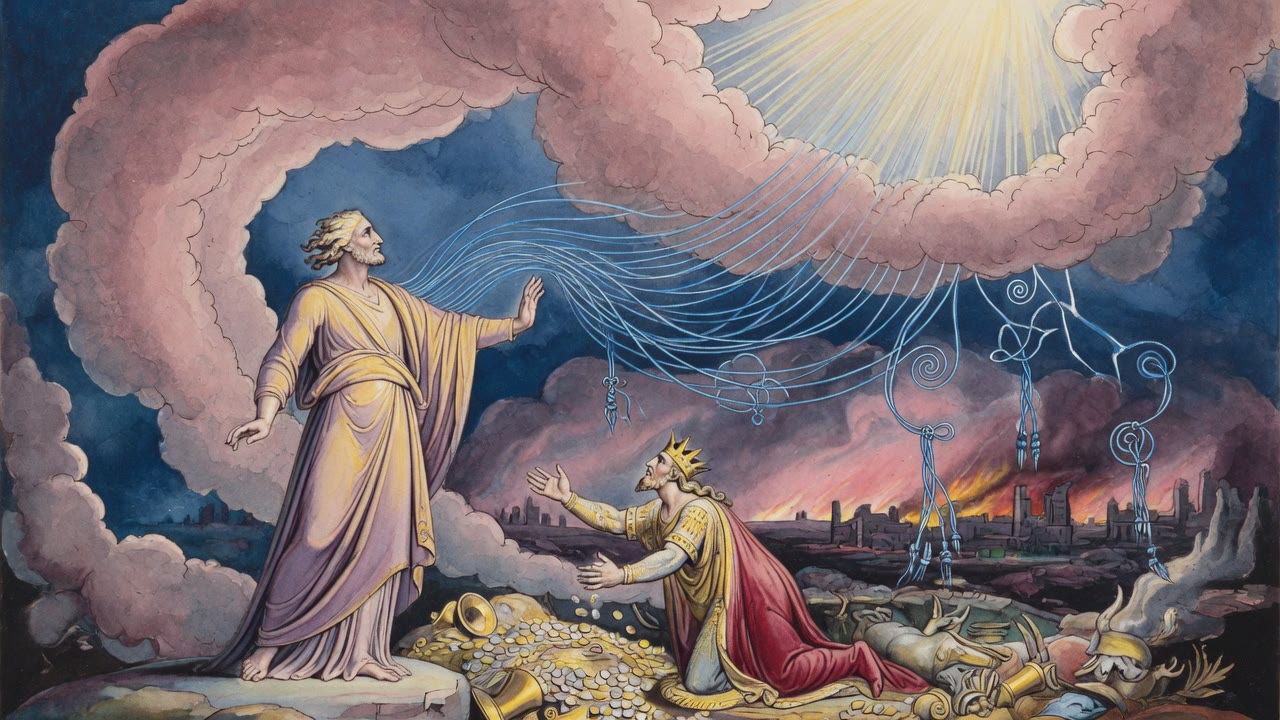
Abraham stood in the dust after the war of the kings with blood still drying on his sandals and a city's wealth piled at his feet.
 Click for full size
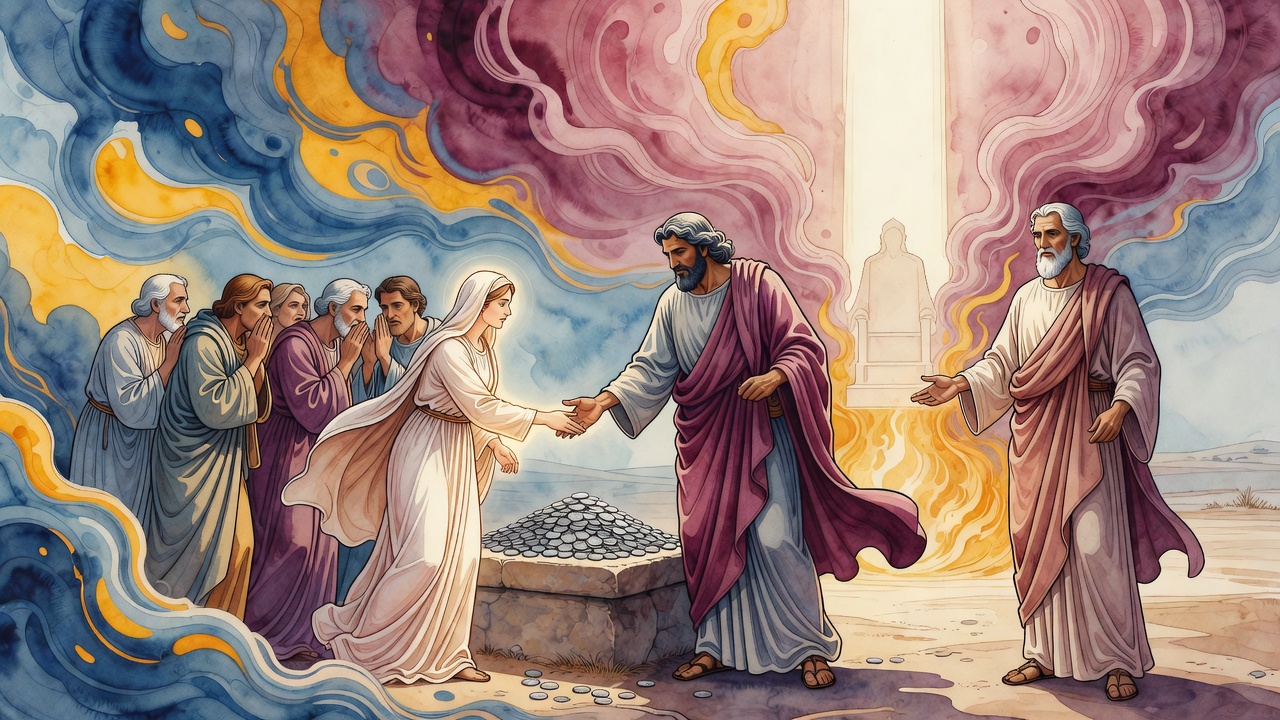
The king of Sodom smiled the way a man smiles when he thinks he has bought a savior. "Give me the souls," the king said, "and take the goods for yourself."
The offer sounded generous. The trap was simple. Take a thread, and forever after Sodom could say it had made Abraham rich. Take a sandal-strap, and the man who smashed idols would be rewritten as a man who got paid.
Abraham looked at the gold, the cloth, the leather straps, the animals still breathing hard from the march. He looked at the rescued people blinking in the light. Then he lifted his hand toward heaven.
The Hand That Would Not Close
The lift looked simple. It was a gift set aside, the way a portion is raised for God. It was an oath, the way a later prophet would raise both hands and swear by the One who lives forever. It was also a song, praise that turned refusal into worship. Abraham did all three with one empty palm.
"I have lifted my hand to the Lord, God Most High, Possessor of heaven and earth," he said, "that I will not take a thread or a sandal-strap or anything that is yours, lest you say, I have made Abram rich" (Genesis 14:22-23).
The young men who had marched with him had already eaten on the road. Bread, dried meat, whatever the spoils offered when hunger was louder than law. That food could not be given back. Eating is a one-way door. Abraham set that portion aside in the count and refused to pretend a full return was still possible.
Only the men who went with him, he said, could take their share. Aner, Eshkol, and Mamre had earned bread by risk. Abraham would not thin their portion to polish his own name. The refusal was for his hand, not for theirs.
Blue Thread for a Thread Refused
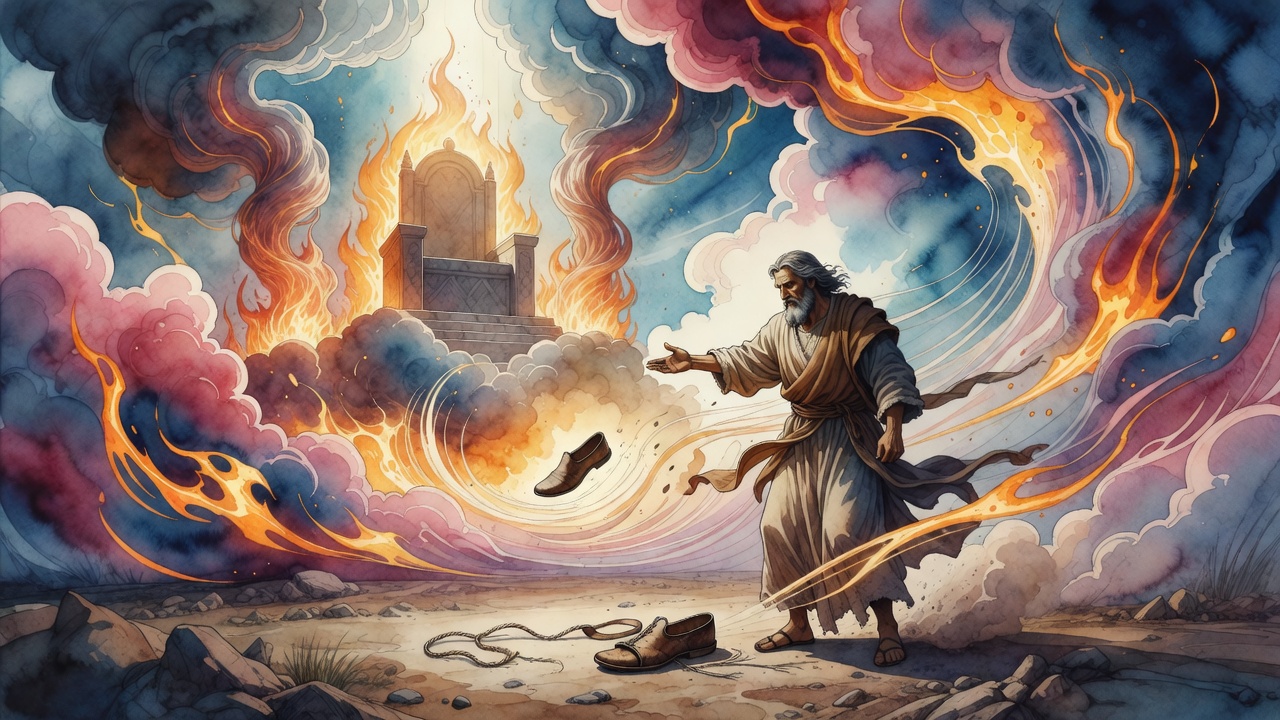
Heaven answered the empty hand measure for measure. For the thread Abraham would not take, his children would wear a thread of blue on the corner of every garment, a cord that pulls the eye upward. The Aramaic names it a thread of blue, a tzitzit (ציצית) fringe. For the shoelace he refused, his children would receive the rite of the loosened shoe, chalitzah (חליצה), the ceremony that protects a widow's future and a dead man's name when a brother will not raise seed for the fallen.
Abraham gave up two things a hand can hold. Israel received two commandments that hold a people together. Sodom's gold stayed in the dust. A blue cord was already on its way toward Abraham's children, though no one in that field could see it yet.
David and the Men Who Held the Baggage
Generations later, after a raid against Amalek, harsh men among David's troops wanted to starve the share of those who had stayed with the baggage. They had fought. The others had only watched gear. Why should equal spoils go where the risk had not been equal?
The tired men sat by the bags they had guarded. The fighters wanted them sent away empty. David refused. What the Lord had given and protected would not be carved into two classes of loyalty. He fixed equal division as a statute from that day and upward.
The odd word was upward. David did not invent the justice of spoil. He looked upward to the ancestor who had already set the measure for what men eat on the march and what a free people will not sell their dignity to reclaim. A meal already inside a body cannot be returned. A king can still refuse to build a lie on top of that fact. Abraham had said as much beside Sodom's pile. David said it beside the baggage.
The King Never Got His Receipt
Sodom burned later. The gold Abraham refused did not save the city that offered it. The hand that would not close on a thread closed on a covenant instead.
Abraham walked away poorer in Sodom's eyes. The king never got his receipt. Heaven got a partner who would not be bought. The young men's stomachs kept their truth. David's baggage-keepers kept their share.
Behind him the gold sat in the dust where the king of Sodom could count it and could not write Abraham's name on it.
← All myths