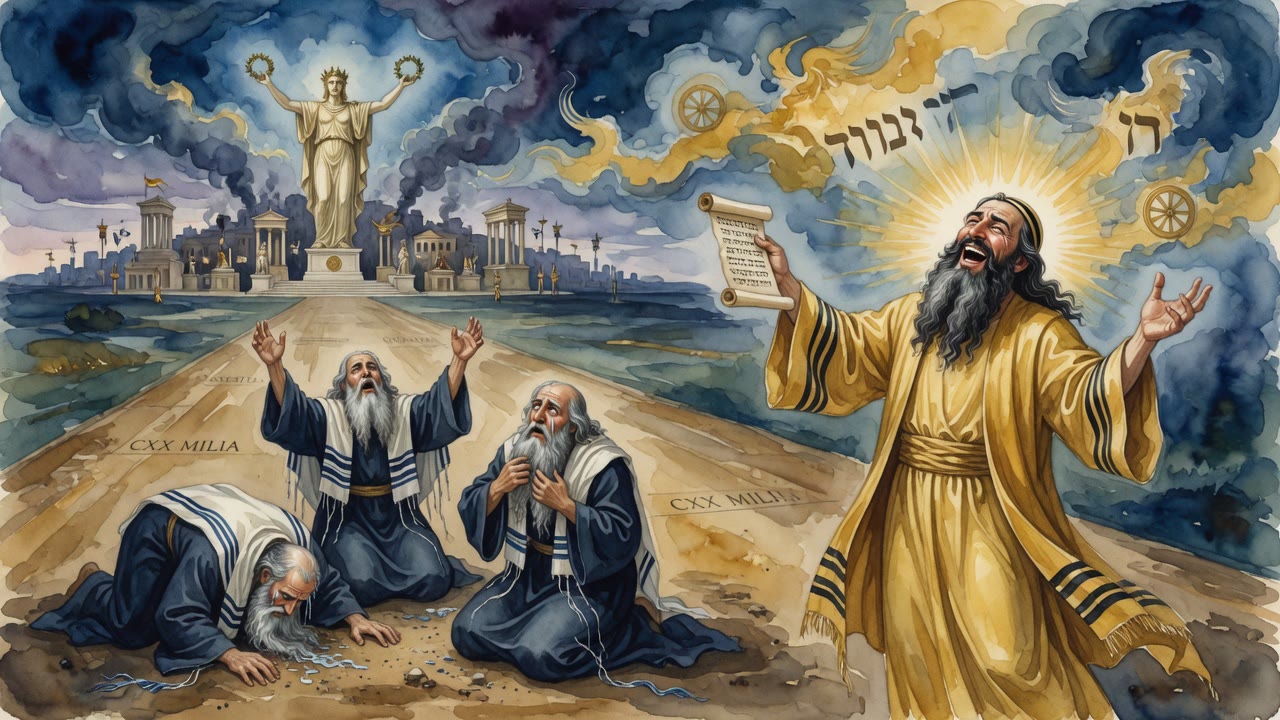
Honi Slept Seventy Years and Woke Up Forgotten
An old man pushed a carob seed into dirt he would never taste. Honi sat under a rock to think. He woke to a study house that used his name like a proverb.
Table of Contents
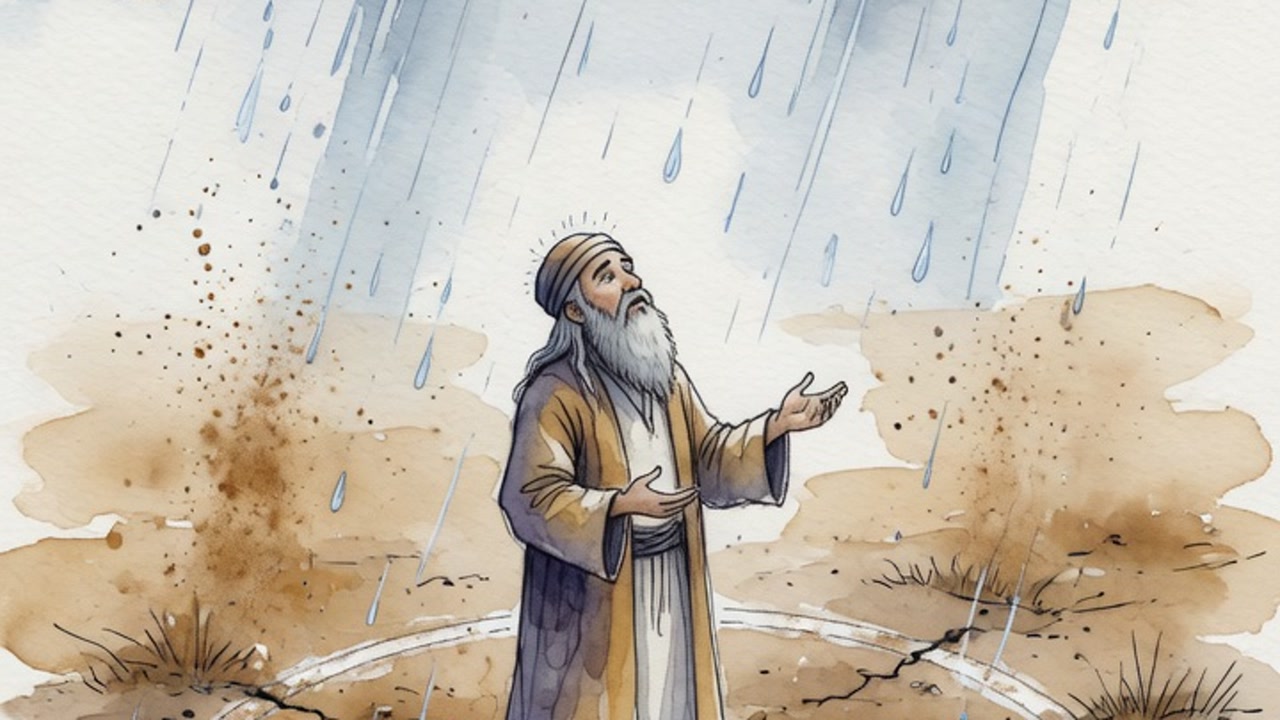
Honi the Circle-Drawer turned a verse until it snagged. "When the Lord returned the captivity of Zion, we were like dreamers" (Psalms 126:1). Seventy years of exile, and the singers called it a dream. Rain he understood. He had once scratched a circle in the dust and told God he would not step out until water came for the children. Exile swallowed names and graves. How does an absence that long feel like sleep?
 Click for full size
The Old Man and the Carob Seed
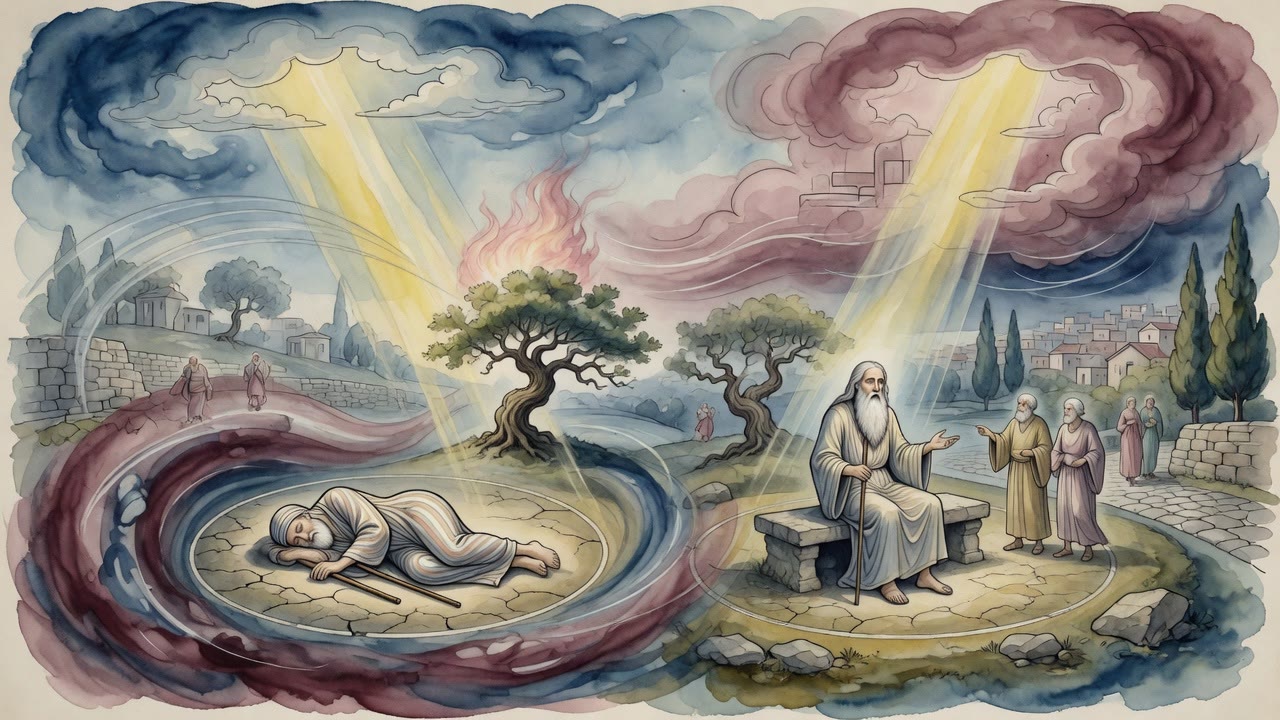
On the road with that question still in his mouth, Honi saw an old man pushing a carob seed into the dirt. He stopped. Carob takes seventy years to fruit. The planter would be bone before the first pod opened.
"Do you expect to eat from that?" Honi asked.
The old man did not hurry the answer. "My ancestors planted for me. I plant for those who come after me."
The logic was not hope. It was a debt paid forward. Honi sat down under a rock to think. Heat sat on the stone. The seed sat in the hole. His eyes closed.
He Woke to Fruit
He slept through a lifetime. When he woke, the stick was a tree, and the tree was heavy. A man stood in the branches gathering pods.
Honi called up. "Did you plant this?"
"No," the man said. "My grandfather planted it."
Seventy years. The psalm had put on bark and fruit. Honi stood. His knees remembered a younger man. The road did not. He walked toward his house with the taste of a question that had been answered in the body and not in the mouth.
No One Knew His Face
At the door he asked for himself. They showed him his grandson. He told the boy who he was. No one believed him. The Honi they kept was a name tied to a circle in the dust, a story a grandfather told. The man on the step was a stranger with that name in his mouth.
He went to the house of study. The sages were in the middle of a reading. "This analysis is as clear as in the days of Honi the Circle-Drawer," one said. Honi stepped in and told them he was Honi. They looked at him the way men look at a beggar who claims a throne. Respect needs a face it already knows. They did not have one for him.
The benches were the same wood. The arguments had moved on. His students were dead. The men who used his name like a measuring stick would not let him sit down as himself.
Companionship or Death
Honi prayed. He asked for the world he had known, the friends who knew his name, the room in which he was Honi. Or he asked to go. "Give me companionship, or give me death."
The prayer was answered. He died.
The saying was already a proverb by the time the teachers wrote it down. Honi's mouth had given it a body. A man can sleep through seventy years and wake able to walk. He cannot wake into a world that has spent his name without him and still live inside that name.
Another sleeper, called Onias, went under for a hundred years and rose to the same blank faces. The number changed. The door did not. Zion returned from Babylon and found the old addresses with new names on them. Honi had asked how that felt. Heaven put him under a rock and let the carob grow.
The tree kept fruiting. The grandson kept gathering. In the study house they still said "as clear as in the days of Honi," and no one in the room could have picked him out of a crowd.
← All myths