Judith Would Not Name the Plan Until It Was Done
The springs of Bethulia sat inside the Assyrian camp. Uzziah asked for a plan. She put ashes on her head and would not give him one.
Table of Contents
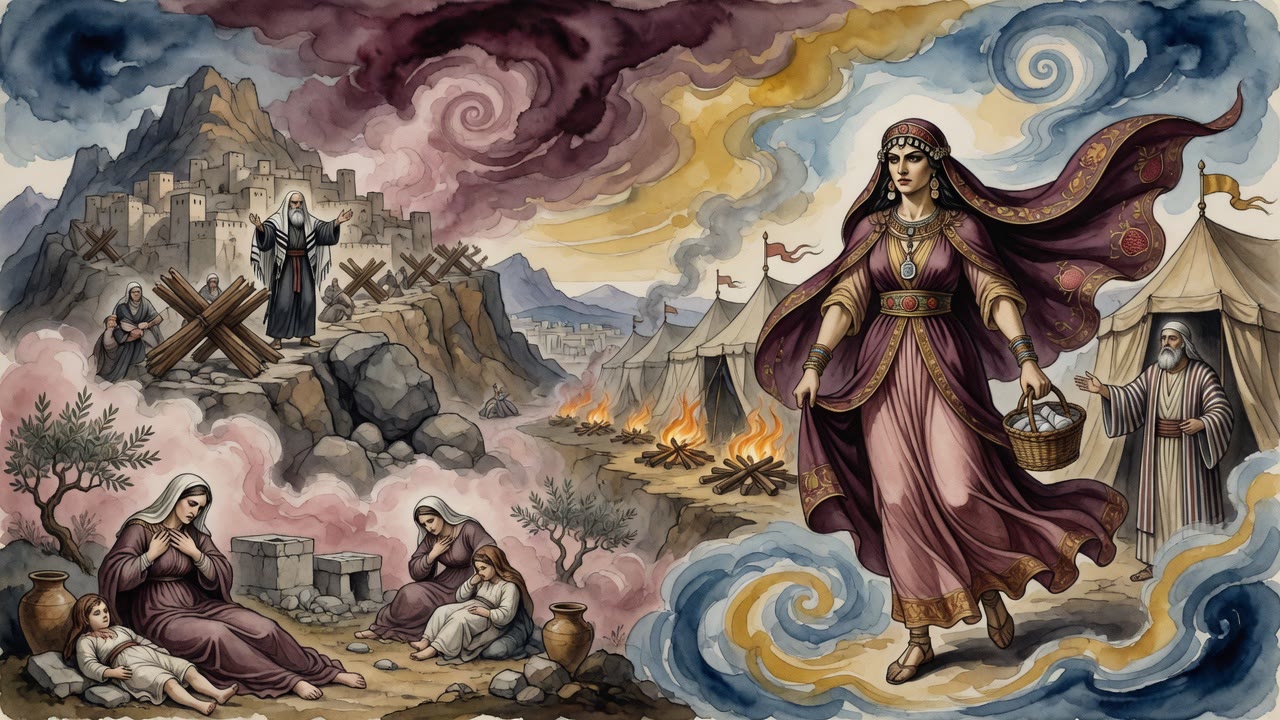
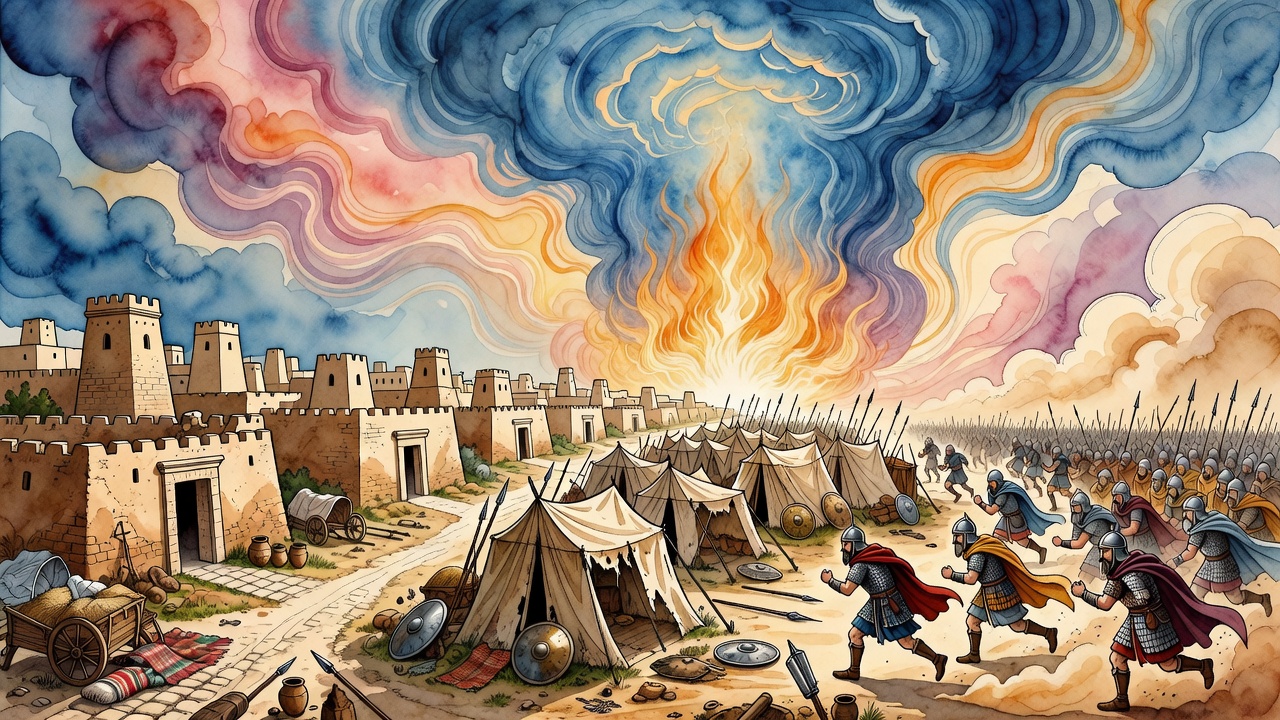
Holofernes planted his army on the spring before the gates of Bethulia finished counting. One hundred seventy thousand foot soldiers filled the valley. Twelve thousand horsemen moved with them, and still the men who hauled tents and iron had not been numbered. From Dothaim to Belmaim the camp ran wide. From Bethulia to Cynamon, opposite Esdraelon, it ran long.
 Click for full size
The water that had kept the city alive now sat inside enemy lines.
The Spring Under the Camp
Israelites on the wall looked down and said to one another that the multitude was too great. The fear was not poetry. A city on a hill without water is only a high tomb.
Children learned the sound of enemy hammers before they learned the sound of their own wells filling. Women counted jars. Men counted arrows and found both numbers too small. At noon the valley glittered with spearpoints. At night it glowed with cookfires, a second city built to starve the first.
Bethulia's elders measured days the way other men measure money. Each dawn without rain was a coin spent. Surrender looked like mercy if a man stared at the tents long enough. Holofernes did not need clever engines yet. He needed numbers and patience, and he had both.
Do Not Ask What I Will Do
Judith came to the leaders' tent when the city was already leaning toward the gate. She had a plan sharp enough to cut a general's throat, and she would not name it.
"Do not ask me what I will do," she said, "for I will not reveal it to you until the things that I do are completed."
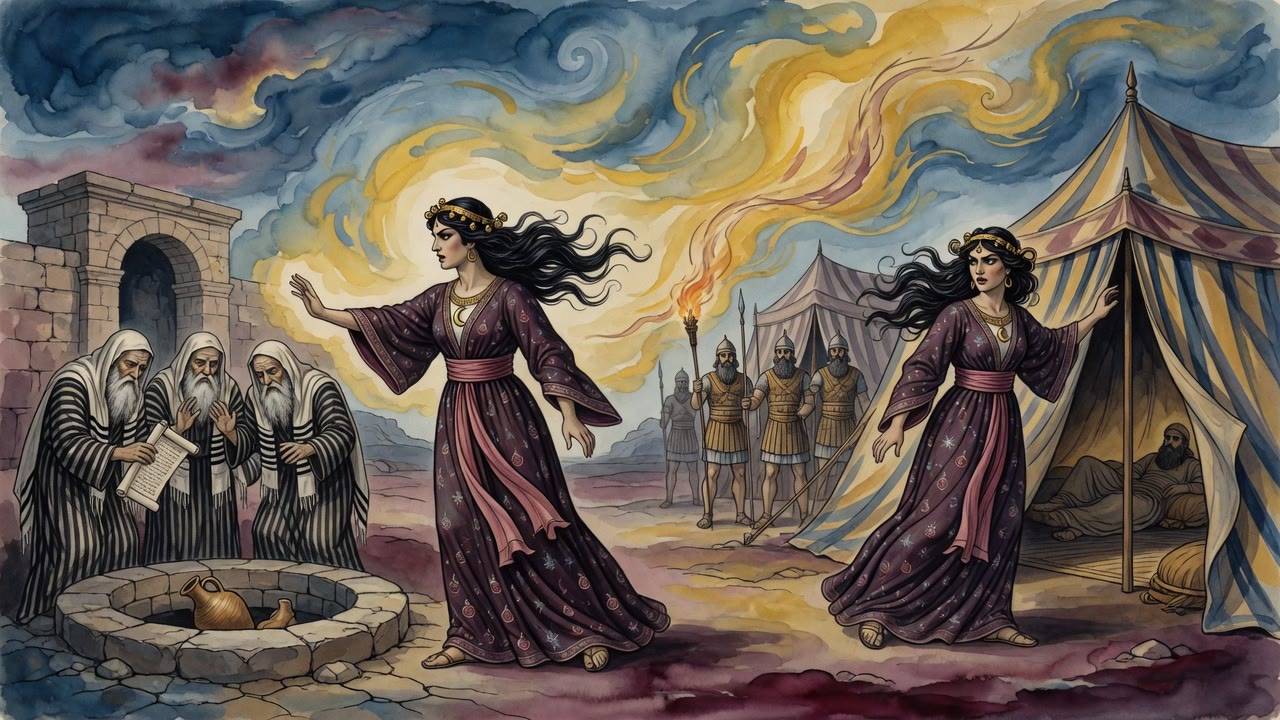
Uzziah and the princes did not press her. They said, "Go in peace, and may the Lord God go before you to take vengeance on our enemies." Then they went back to the wall, back to the math of dying slowly. Trust was the only weapon they still owned that fit in a sentence.
The elders had wanted a plan they could vote on. She gave them a sealed deed. Committees manage jars. One widow decided the jars were no longer the point.
Ashes When the Incense Rose
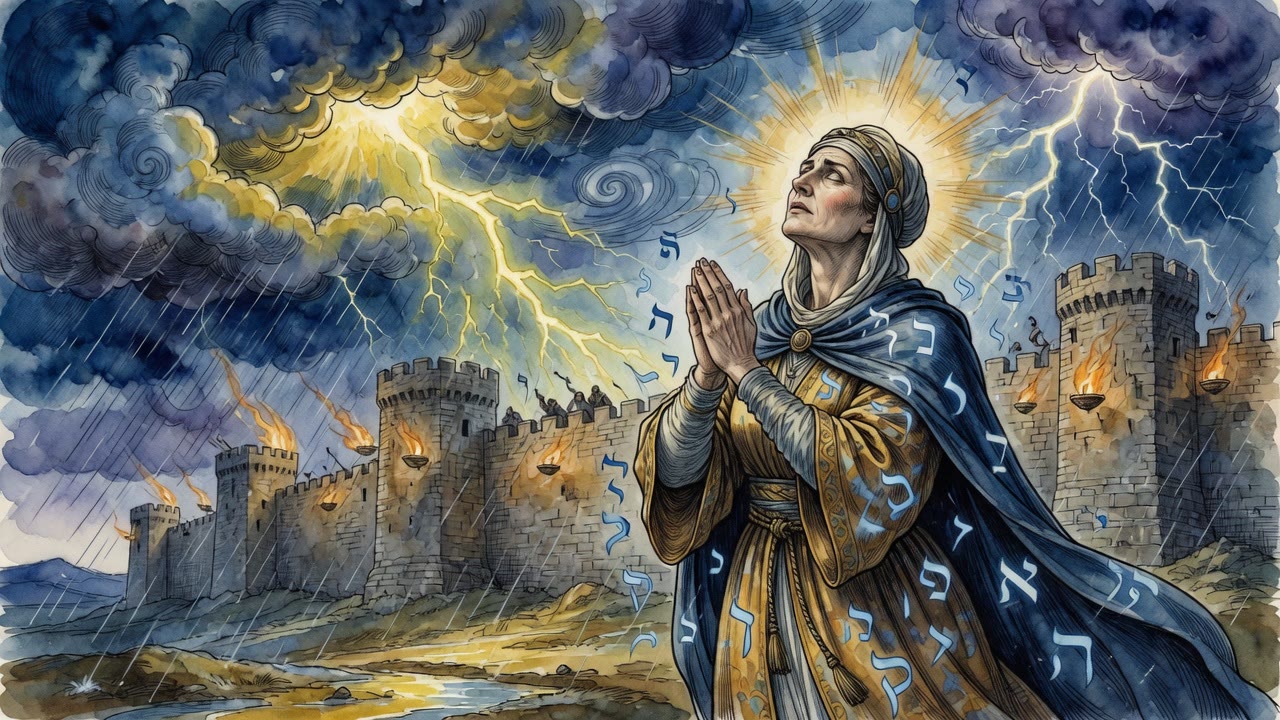
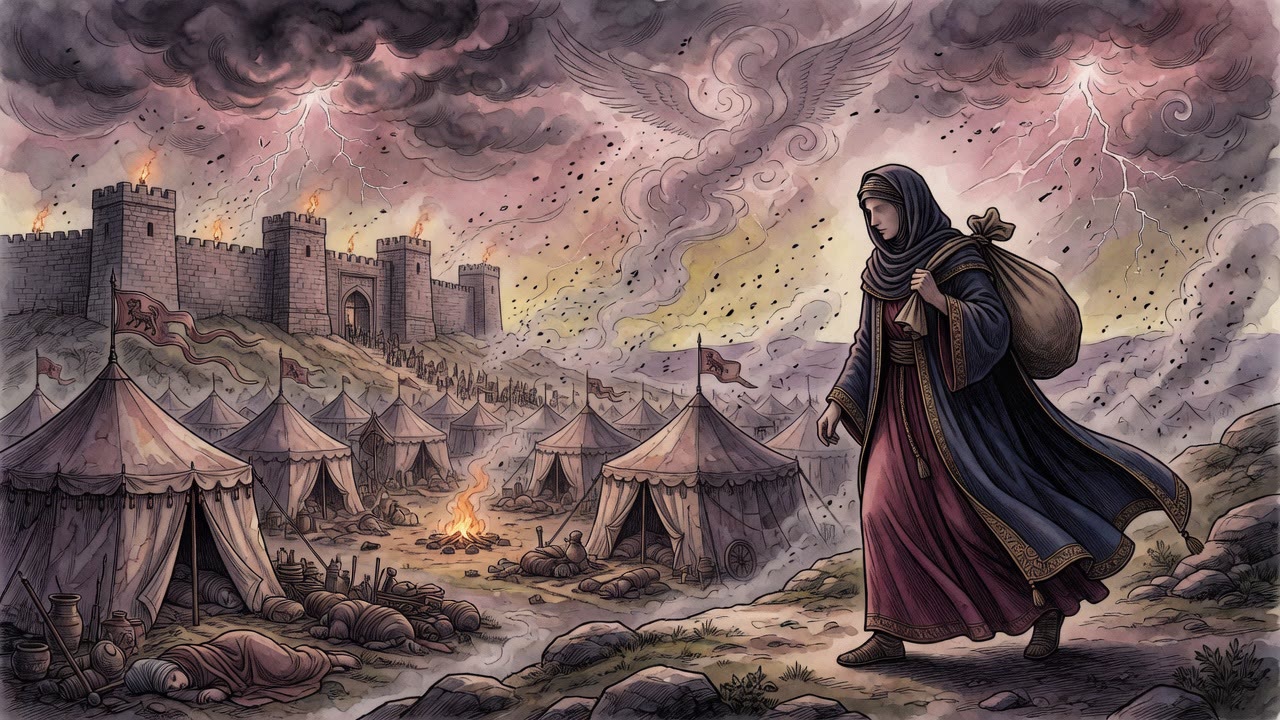
Judith did not stride out as a general. She fell on her face, put ashes on her head, and uncovered the sackcloth she already wore. The hour matched the evening incense offered in Jerusalem in the house of the Lord. While smoke rose from the Temple, a widow in a hill town made her body into an altar. She cried with a loud voice. The prayer came before the beauty, before the wine, before the blade.
Ash stuck to the sweat at her temples. Sackcloth scratched. The city behind her was already bargaining with thirst. She rose with the prayer still in her mouth and dressed for a banquet she did not mean to survive as a guest.
The Walk Into the Tent
A woman left a starving city and entered a camp built to swallow nations. The wall had no signal fire. The elders had no report to track. Only the absence of news held Bethulia upright for the hours that mattered.
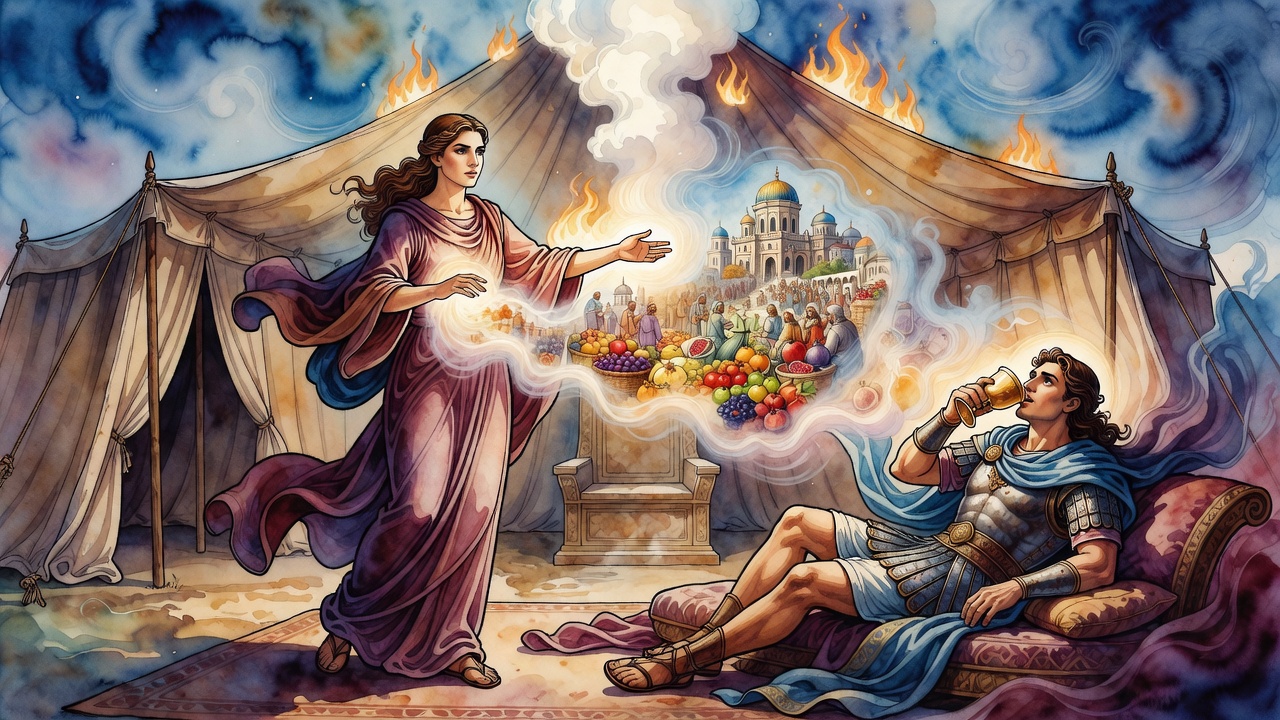
Inside the camp the air smelled of horse sweat and boiled meat. Outside, Bethulia's air smelled of dust. Judith carried both in her lungs and still walked forward. Holofernes had trusted quantity. One hundred seventy thousand men cannot guard every door if the guest is invited past the last threshold.
The general's tent was a country of its own. She entered it the way drought enters a field, quiet and total. He believed his own map. She believed a single night, a single cup, a single unwatched neck.
After the Head Came the Song
When the city woke to a new silence, she sang. "Let all creatures serve you. For you spoke and they were made. You sent forth your spirit and it created them, and there is none who can resist your voice."
She sang that mountains would move from their foundations with the waters, that rocks would melt like wax at the divine presence. Mercy still reaches those who fear the Lord. Fat and sacrifice, she said, are too little for a sweet fragrance. The one who fears the Lord is great at all times.
Then the edge returned. "Woe to the nations who rise up against my kindred! The Lord Almighty will take vengeance upon them on the Day of Judgment."
Bethulia drank again. The valley emptied of tents. Children ran to the springs and found water where an army had stood. The elders who had almost opened the gates learned that a withheld plan can be a kind of sword. The blade that had stayed hidden until the work was done no longer needed a secret.
← All myths