Judith Sells Bethulia With One Sacred Lie
Inside the Assyrian tent Judith invents a city about to eat holy first fruits, and Holofernes drinks the story like wine.
Table of Contents
 Click for full size
A Widow Walks Into the Command Tent
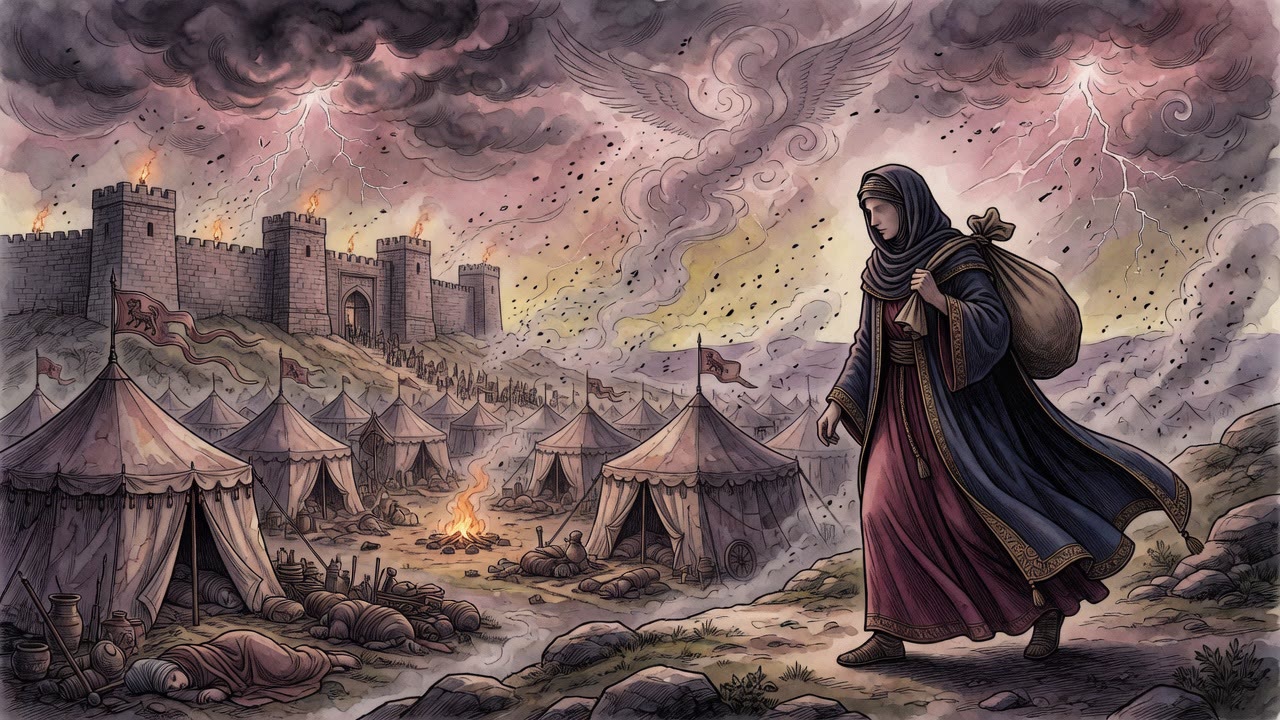
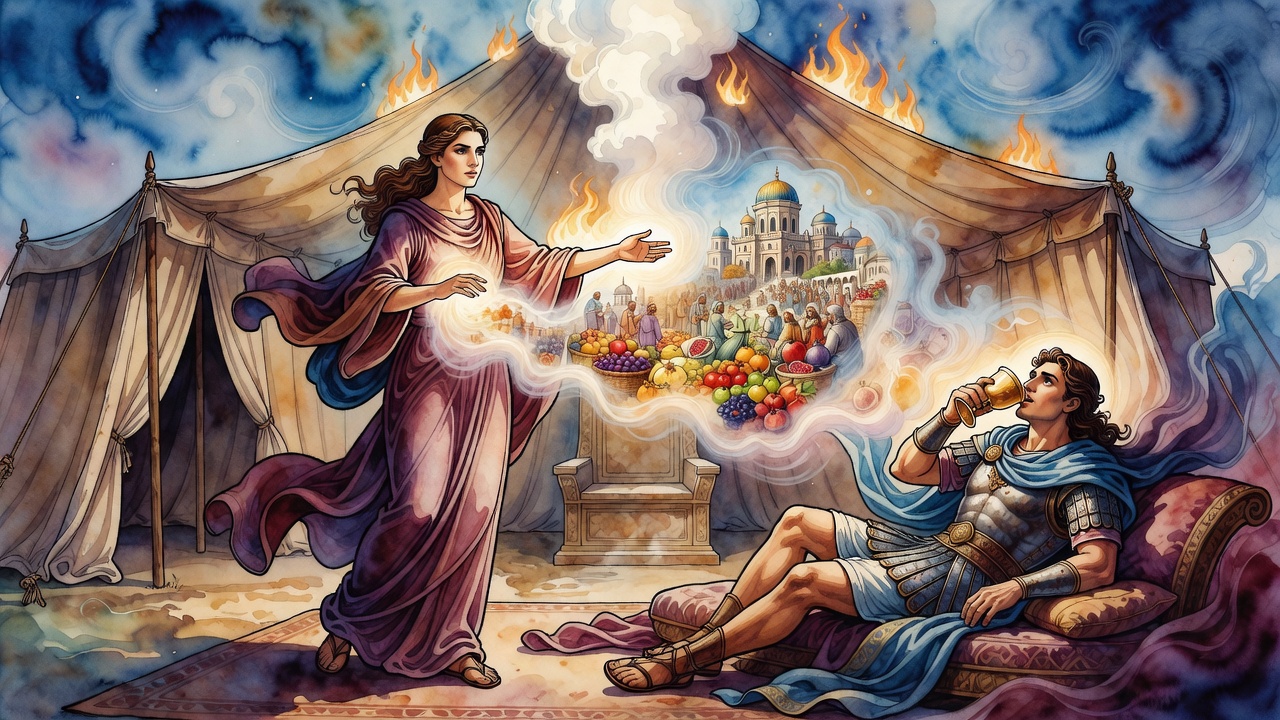
Judith bowed low enough that the dust of the camp stuck to her forehead. Outside, Bethulia's wells were nearly dry. Inside, Holofernes sat among lamps and plunder, a general who had already decided the mountain town would fall by thirst if not by sword.
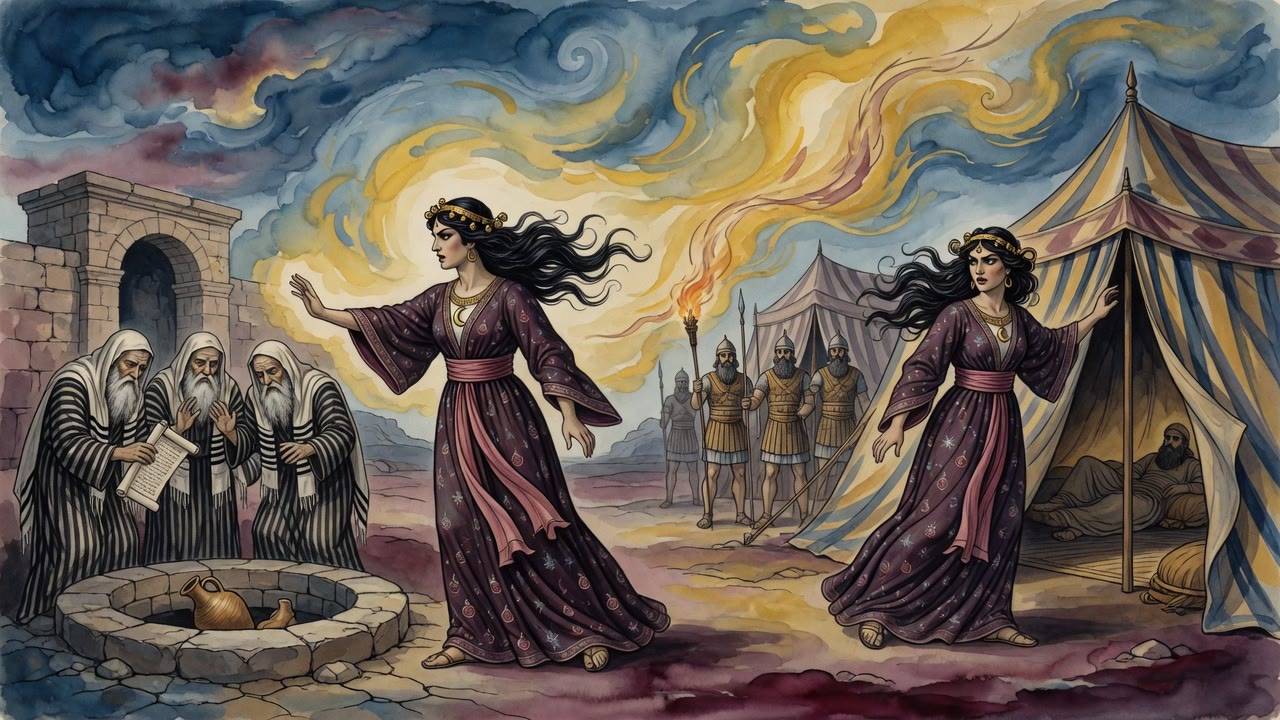
She did not open with fear. She opened with service. "My lord will not be defeated," she said, voice even, "if he knows what is about to happen inside those walls."
The officers leaned in. A widow from the besieged city was offering the siege its own ending. Her maid waited at the flap with a bag that looked like travel food and was not only food. Judith kept her eyes on the man who could end her people before breakfast.
She had bathed and dressed as if for a festival, not a funeral. Beauty was part of the kit. So was the calm of someone who had already chosen the risk.
She Invents a People Eating Their Offerings
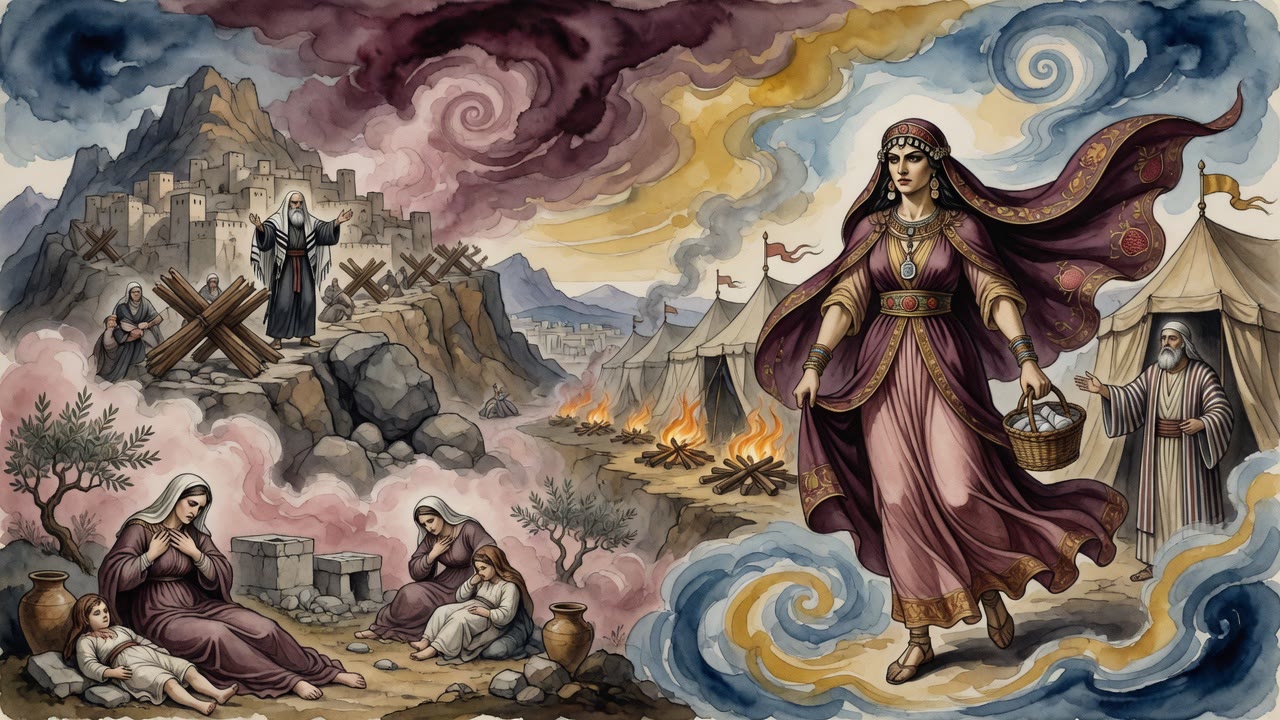
Judith painted Bethulia as a people already half-dead. Food stores failing. Water scant. Children crying in doorways she did not need to invent in full; the siege had done that work. Then she pushed the knife of her lie into the place Assyrian generals did not understand: holiness.
They have decided, she said, to lay hands on their cattle and on what God forbade them to eat. Worse: they mean to use up the first fruits and the tithes of wine and oil, the portions reserved for the priests who serve in Jerusalem before the face of God (Judith 11).
Holofernes did not know bikkurim from booty. He knew mutiny and starvation. Judith gave him both, dressed as theology. If Bethulia broke the laws that bound it to its God, the God would turn away, and the town would open like a soft fruit.
She watched his face change. The lie was not soft. It was precise. She was selling him a city already damned by its own hands, so he would stop watching the gates and start watching her. Every sacred term she used was a blade he could not inventory.
"Even death has fallen upon them," she added, "and their sin has overtaken them." She made desperation sound like prophecy. She made the missing water sound like a verdict already written in heaven and only waiting for a thirsty week to finish the ink.
The General Swallows the Story Whole
Holofernes heard a woman who claimed to hate her own people's coming sacrilege. He heard a guide. He heard victory without another week of boring siege work. Around him, captains who measured walls in ladders and hours suddenly measured them in someone else's sin.
No one in the tent checked the wells of Bethulia. No one asked a priest of Israel what a tithe was for. The general poured wine, and the night bent around Judith's voice. She ate what she could keep down. She prayed when she could step away. The camp thought she was his luck.
She was alone with a blade she had not yet drawn, and with a story sharp enough to cut an army's attention from the walls. When the head finally left the tent in her bag, the lie had already done half the killing by teaching Holofernes to stop fearing the town's God as an enemy and start counting on that God as an ally of Assyria.
Bethulia woke to a different mathematics: one dead general, one open camp, one woman climbing home under a sky that had not forgiven the thirst but had accepted the ruse.
After the Head, the High Priest Climbs the Hill
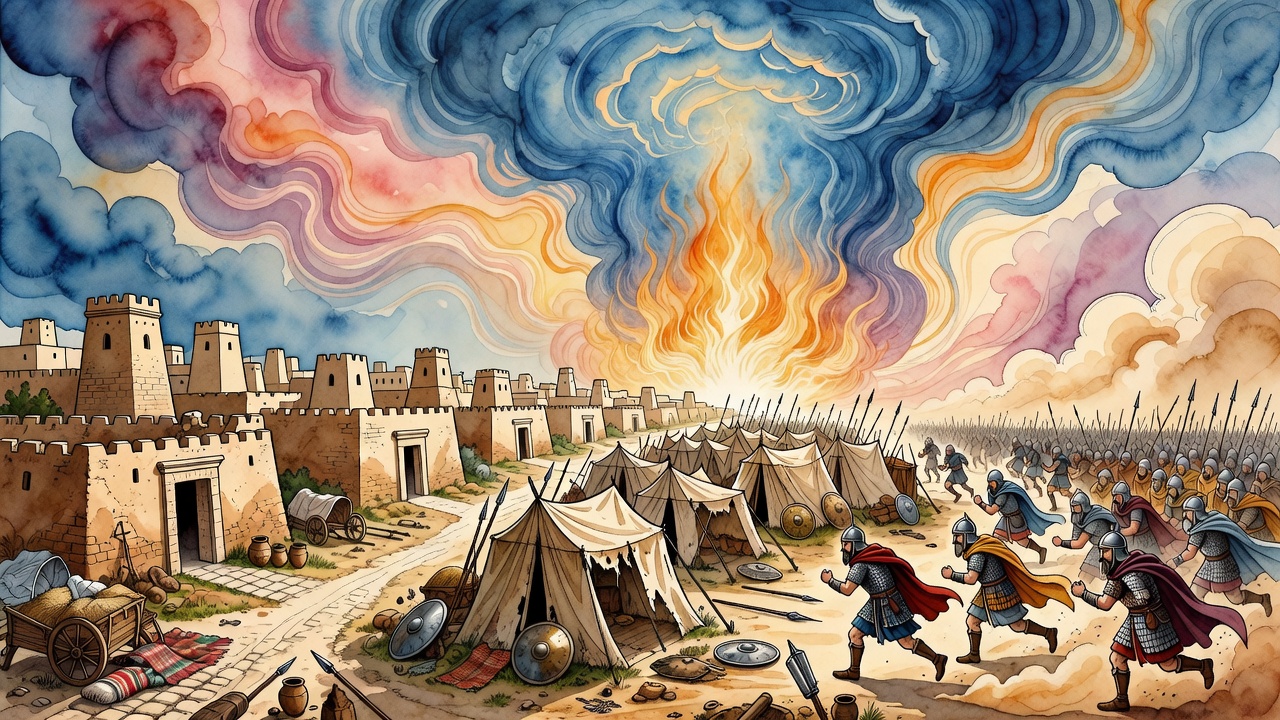
When the camp broke and the head of Holofernes hung where Bethulia could see it, the mountain towns spilled into the deserted tents for spoils. Riches lay where fear had slept. Men who had counted their last jars of water now counted bronze and cloth.
Then Joacim, the high priest, came down from Jerusalem with the elders. They did not speak to Judith as a widow of Manasseh's house only. They blessed her as if the city itself had found a mouth.
"You are the exaltation of Jerusalem," they said. "You are the great glory of Israel, you are the great rejoicing of our nation" (Judith 15).
The woman who had lied about sacred fruit stood under a priestly blessing. The lie had been a weapon. The blessing named the target it saved. Elders who had not walked into the tent still knew enough to bow to the result. Judith accepted honor the way she had accepted risk: without wasting motion.
She Goes Home to Manasseh's House
Judith returned to Bethulia and to her own property. Honor followed her through the country like a second shadow. Many desired her. None knew her all the days of her life. The book keeps that line spare on purpose. Desire stopped at a closed door.
She stayed a widow in the house of Manasseh. She freed her maidservant, the one who had carried the bag and the silence. She lived to one hundred and five, and when she died they buried her in her husband's cave, quiet as a closed book after a long war.
The tent where she sold a false sin still smelled, in memory, of wine and lamp oil. The city she saved went back to water, bread, and ordinary fear. On the mountain, the story that mattered was not the general's boast. It was a widow's careful sentence about tithes he never understood, spoken while her hand already knew the weight of a sword.
Children later pointed at the cave and said her name. The sacred lie did not become a teaching on how to fake offerings. It stayed a wartime tool in one woman's mouth, used once, then buried with her bones beside Manasseh.
← All myths