Judith Rebuked the Elders Then Walked Into the Camp
The cisterns in Bethulia were empty. The elders had a date to open the gates. Judith put on the clothes she had worn while her husband lived.
Table of Contents
 Click for full size
Water Gone, a Date to Surrender
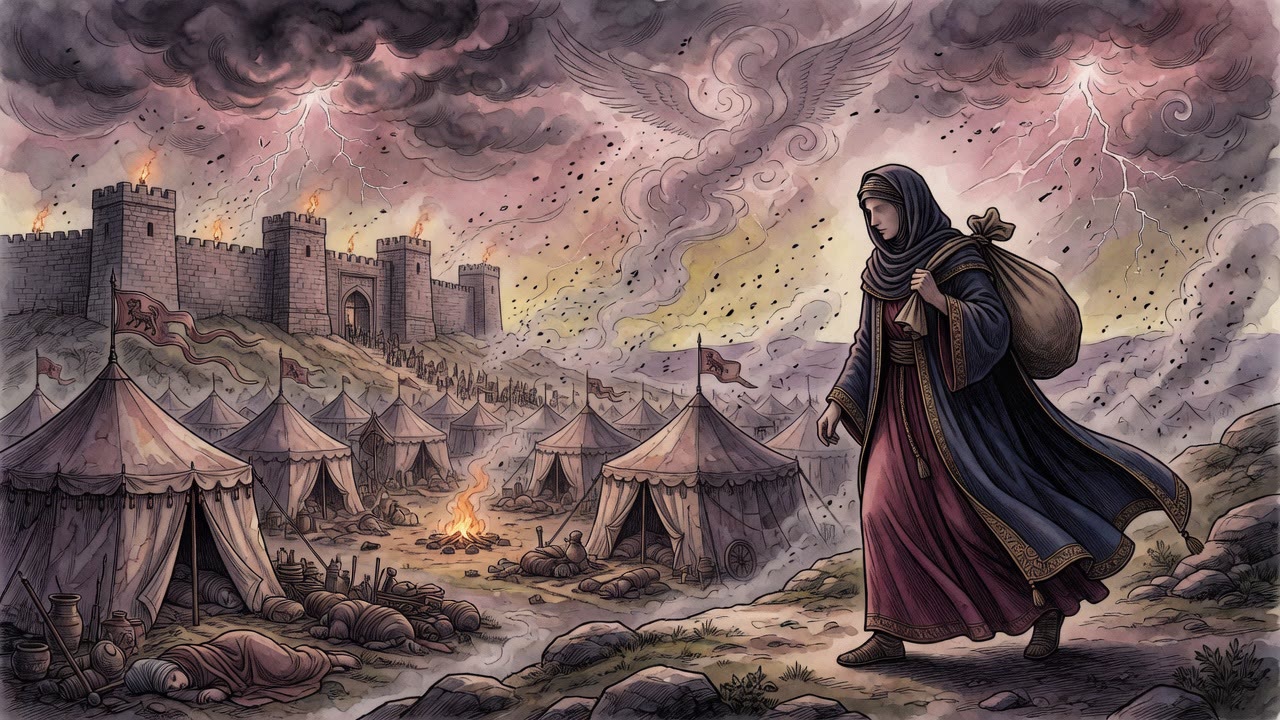
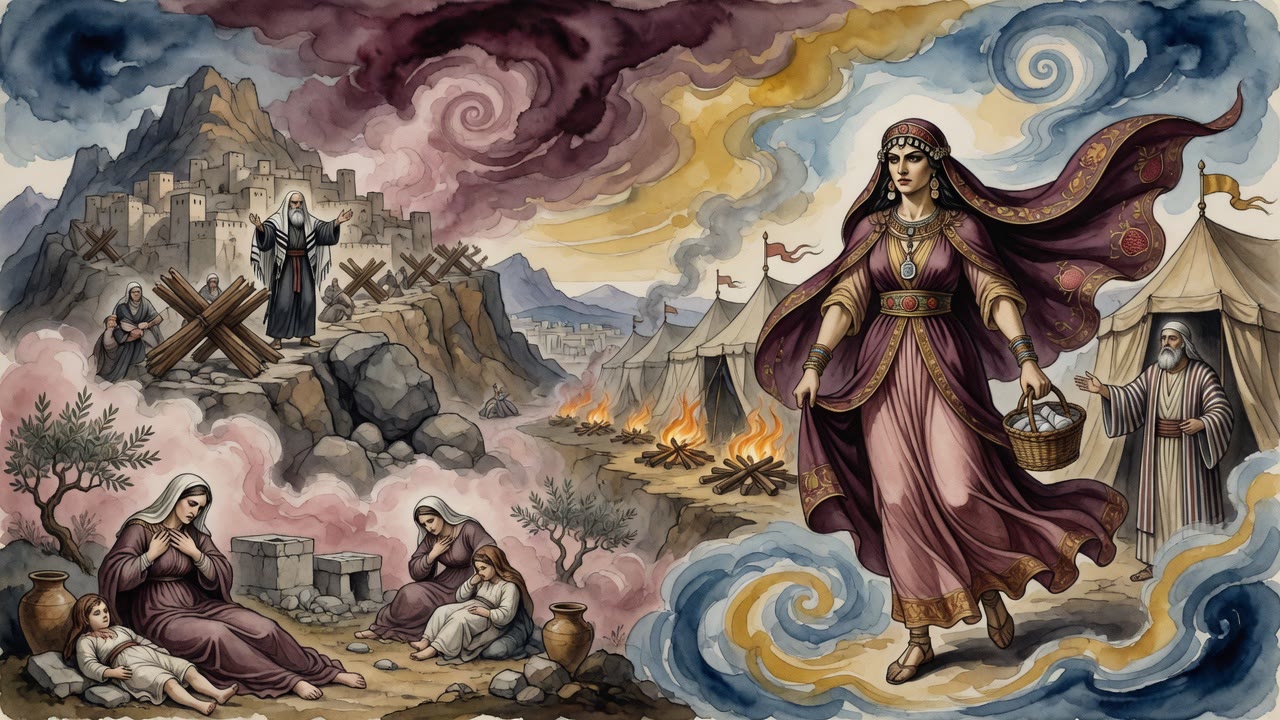
Bethulia sat under the Assyrian noose. The cisterns thinned. The fields beyond the walls belonged to Holofernes, general of a king who measured cities by how quickly they begged.
Inside the gates the elders counted days the way a debtor counts remaining coins. When the water failed, they prepared a bargain. Surrender would buy breath. They said it like statesmen. They meant it like men who had already lost the argument with thirst.
Judith heard the plan and refused its logic.
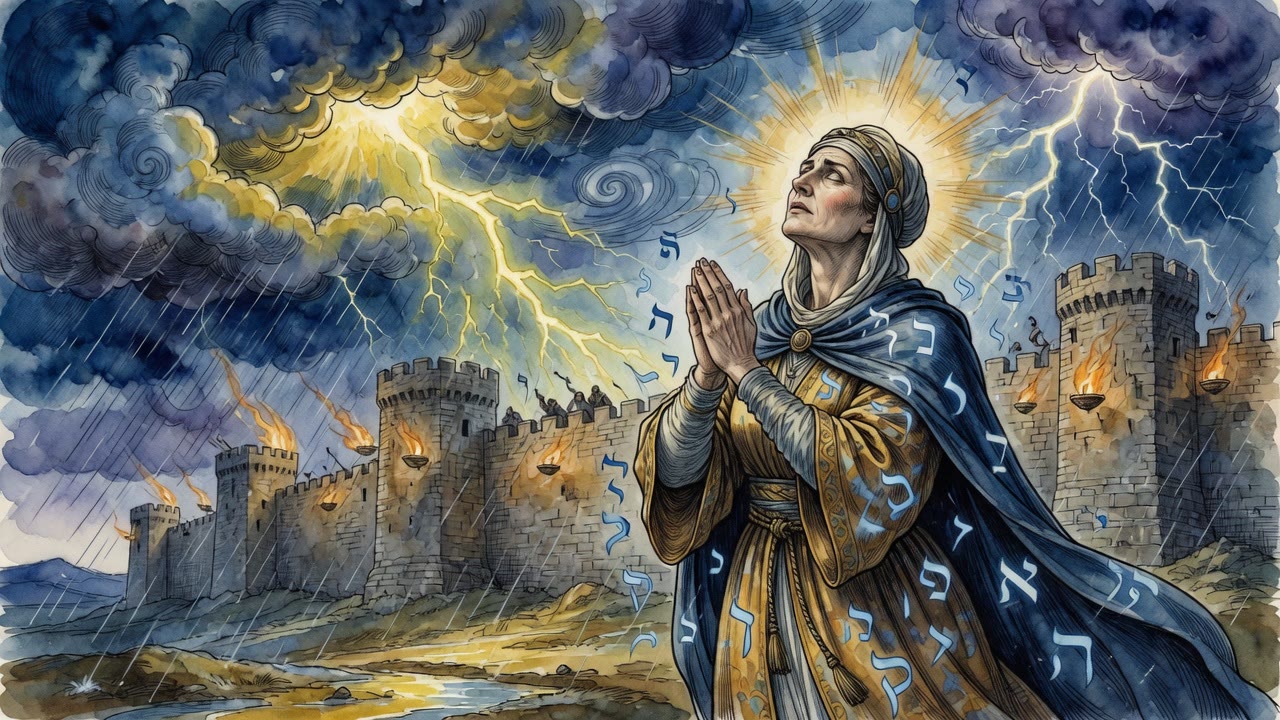
"For our servitude will not be directed towards our benefit, but the Lord our God will turn it to our dishonor."
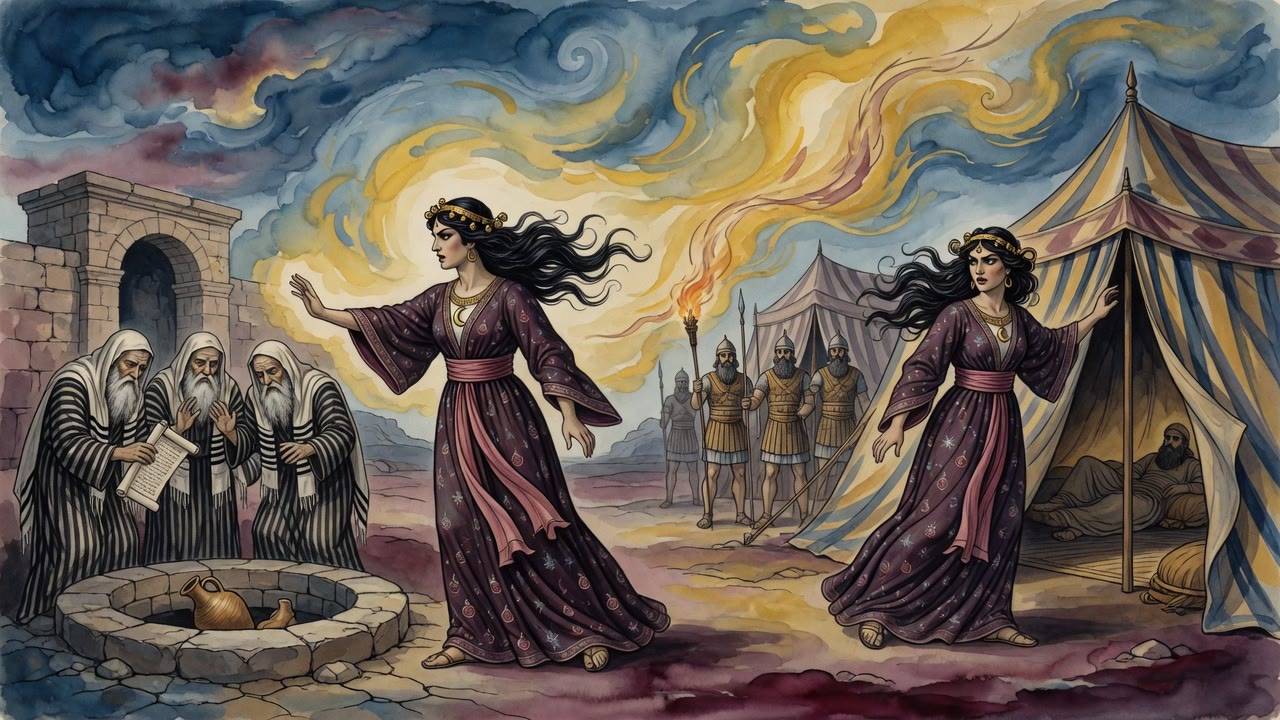
The sentence cut through the council. Survival without fidelity was not survival. It was a slower death wearing the name of peace. She forced them to look past their own lips. The hearts of the people depended on the elders. The sanctuary, the house, and the altar rested on them. A city could fall by spear or by the soft collapse of its leaders.
"Let us show an example to our brethren," she said, "because their hearts depend on us." She named Abraham, Isaac, and Jacob, men God tests rather than abandons. Then she chose a third road that looked like vanity and was war.
Garments of Gladness for a Widow
Judith washed her body with water and anointed herself with precious ointment. She braided her hair and set a headdress upon it. She put on the garments of gladness she had worn in the life of Manasseh her husband. Sandals. Bracelets. Chains. Rings. Earrings. She decked herself boldly to allure the eyes of men who might see her.
The widow stripped off widowhood the way a fighter strips off a cloak before entering the ring. Beauty became a tool aimed at a general who trusted wine and praise more than he trusted fences.
She gave her maid a bottle of wine and a cruse of oil, and filled a bag with parched grain and lumps of figs and fine bread. She would not eat the camp's food. She folded her own provisions and laid them on the maid. Then they went forth to the gate of Bethulia.
Behind her, the city watched a woman walk toward spears. Ahead of her waited a man who had never been defeated by a city and had never imagined he could be defeated by a face.
The General Who Took a Weapon for a Gift
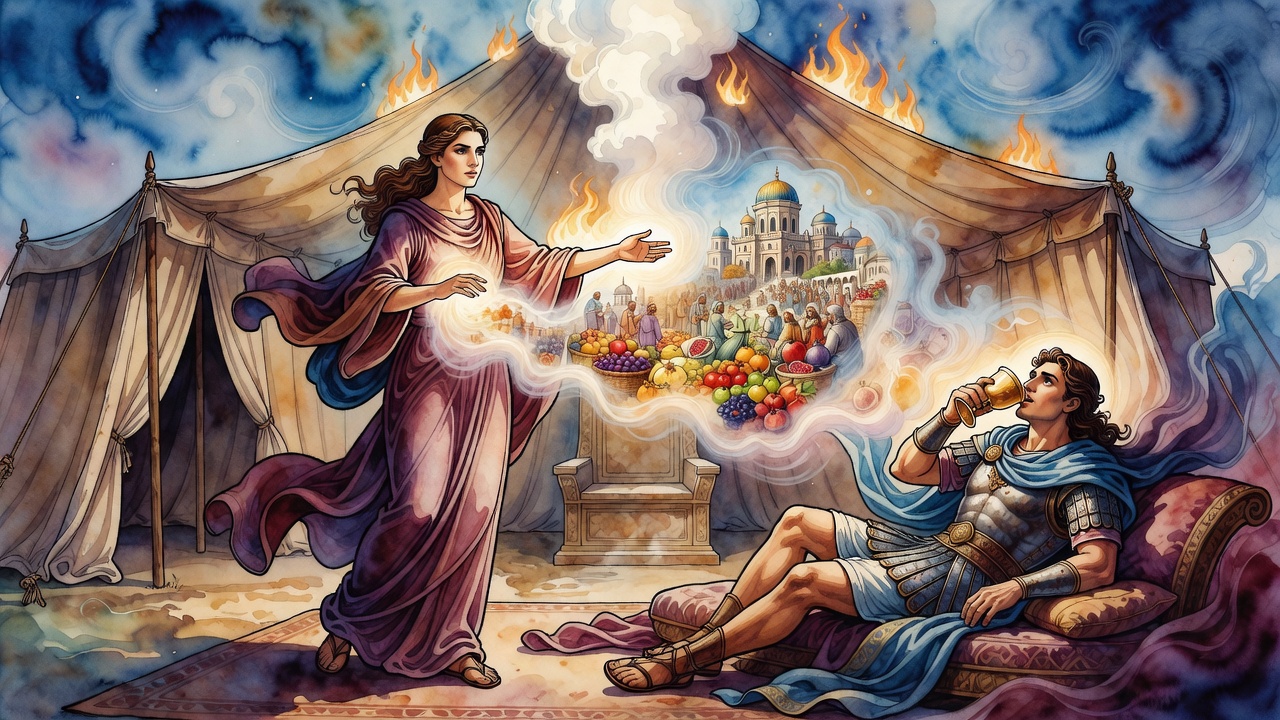
In the camp Judith spoke the language of useful treason. She told Holofernes that Bethulia's food and water were failing, that the people were ready to lay hands on cattle and on things the law of God forbade, that sin would provoke heaven against them. She painted despair as intelligence. She offered herself as the guide who could deliver Israel into his hand when their God abandoned them.
Holofernes heard what conquerors always hear gladly: that the enemy is already half dead from within. He did not hear the trap under the flattery. He received her as a prize and a prophet of convenience. Feasts followed. Wine followed. The mighty one of Assyria drank himself into the sleep of men who think the world cannot reach them in their own tent.
Later she told her people the line with care. Her attractiveness deceived him to his destruction, and he did not commit sin with her to defile and shame her. Deception served deliverance. Her body was a blade's sheath, not the blade's price.
A Head for a City
When Holofernes lay drunk, Judith took his own weapon. She came to the bedpost. She took down his sword. She gripped him by the hair. She struck twice, and cut off his head.
No young men of the Titans struck him. No lofty giants set upon him. "But the Almighty Lord has disappointed them by the hand of a woman." Judith the daughter of Merari weakened him with the beauty of her countenance, then finished him with steel while the camp snored in its certainty.
She put the head in the bag that had held the figs. She gave it to her maid. They walked out through the sleeping lines the way they had walked in, two women with provisions, and they did not run until the city wall was in sight.
She carried the head back to Bethulia. The people were astonished. They bowed not to Judith but to God, crying, "Blessed are you, O our God, who has this day brought to nothing the enemies of your people!"
The elders who had been ready to surrender watched the widow return with the proof that their bargain had been a lie. Courage had not been a speech. It had been a walk into a tent, a refusal of forbidden food, a hand that did not shake when the hour arrived.
Assyria's terror broke when its commander lost his head and his army lost its nerve. The general who had made water a weapon became a lesson hung on a wall of memory. Empires count chariots. That night heaven counted a widow's ointment, a bag of figs, and a sword that had been hanging over a drunk man's bed.
← All myths