5 min read

Judith Walked Into Holofernes' Camp While Bethulia Thirsted

Joacim sealed the mountain passes as Bethulia collapsed from thirst. Uzziah bought five days. Judith dressed for the enemy camp and did not wait.

Curated by Arthur · Told by Maggid ·
Table of Contents
  1. Passes Before the Flood of Spears
  2. Thirst That Put Leaders on Trial
  3. Five Days on a Clock
  4. Beauty as a Weapon at the Tent
  5. What the Camp Did Not Yet Know
Judith Walked Into Holofernes' Camp While Bethulia Thirsted Click for full size

Passes Before the Flood of Spears

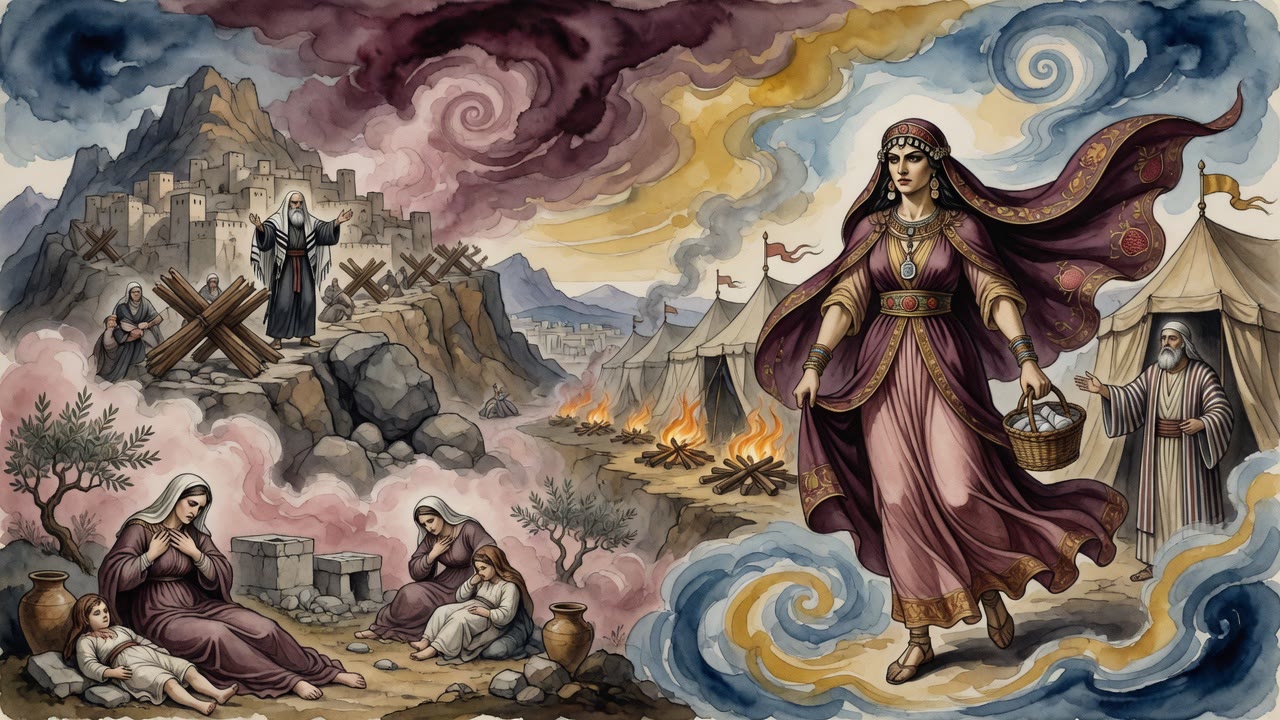
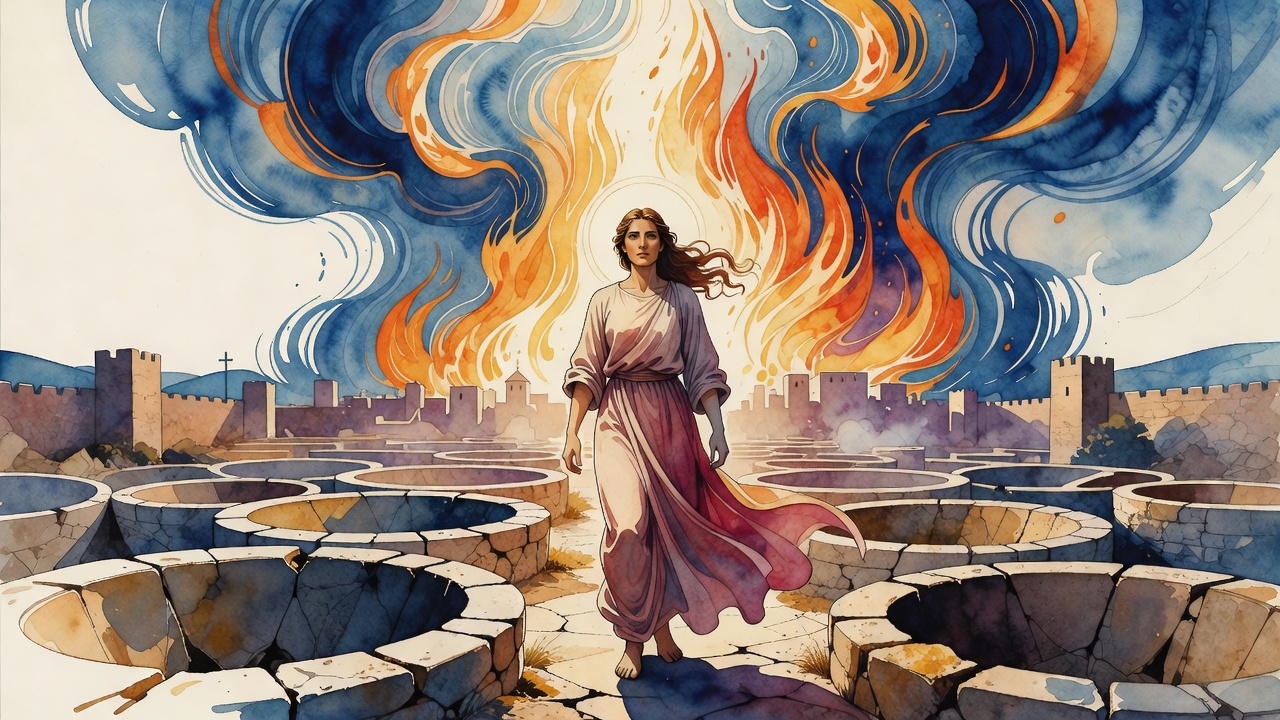
Before the Assyrian wave fully broke, Judea moved. Villagers seized high summits and fortified the settlements on them. Fresh harvest went into stores built for siege, not for market ease. Joacim, the high priest in Jerusalem, wrote to Bethulia and Betomestham opposite Esdraelon near Dothaim. Hold the hill passages. Two men abreast could block what an army needed as a throat into the land.

Geography became theology's first servant. Narrow stone would do what speeches could not if the people held their nerve. Food, height, and a priest's map of choke points prepared a small nation to meet a machine of empire.

Preparation still could not invent water where a siege cut the springs.

Thirst That Put Leaders on Trial

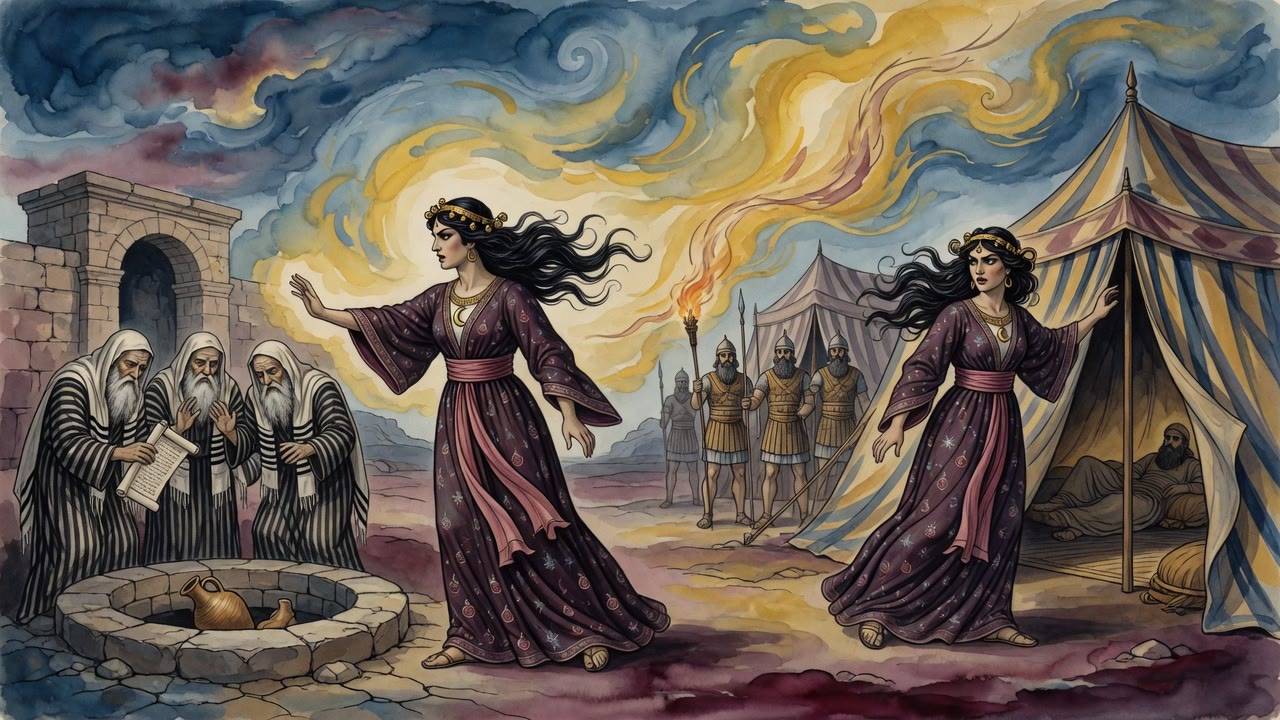
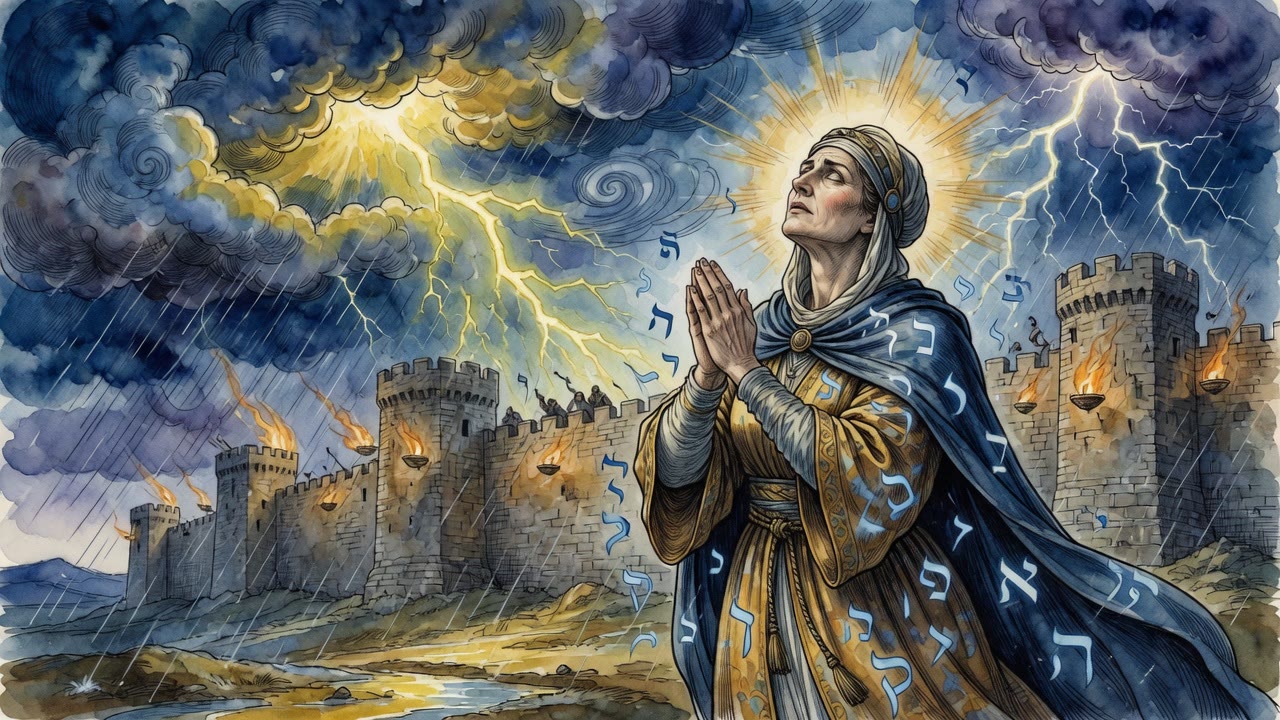
In Bethulia the children went gaunt. Women and young men fell in the streets by the gates, strength gone to dust. The people gathered before Uzziah and the chiefs with a cry that mixed prayer and indictment. "God be judge between us and you, for you have done us great injury in that you have not made peace with the children of Assur."

Desperation made theology into a courtroom against its own officers. Better a humiliating peace, the crowd implied, than holy stubbornness that kills the weak first. Uzziah heard a city ready to open its own ribs to Assyria if the alternative was dying polite.

Leadership without water is only a title. The gates collected bodies faster than arguments.

Five Days on a Clock

Uzziah answered with a bargain against heaven's silence. Give God five days. If no help arrives, he would do as the people said. The deadline was mercy to the mob and pressure on the Name. It was also a slow surrender wearing piety's cloak. Five days of hope. Then the keys.

Judith heard the clock and refused to live under it. A widow with a plan does not wait for a committee's calendar to expire. She would not let Bethulia's faith become a five-day coupon. While men measured remaining jars, she measured a path into the enemy's appetite.

The city's bargain with despair became her cue to leave the walls.

Beauty as a Weapon at the Tent

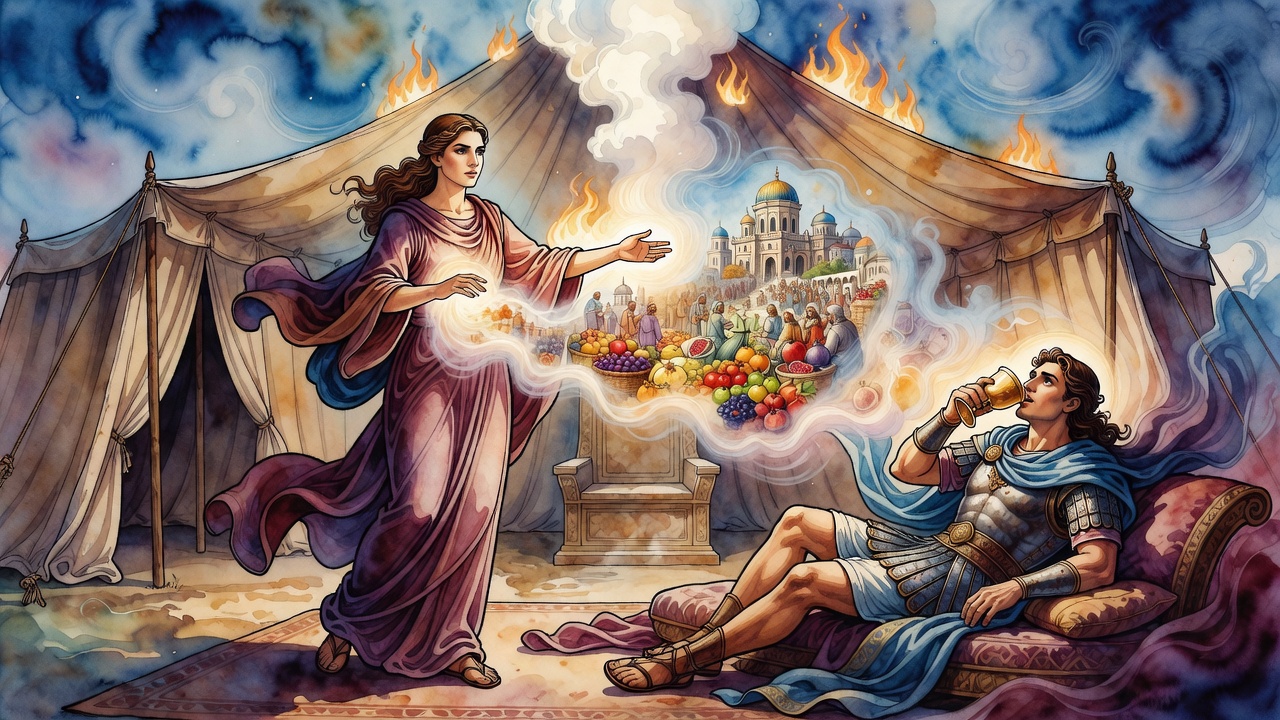
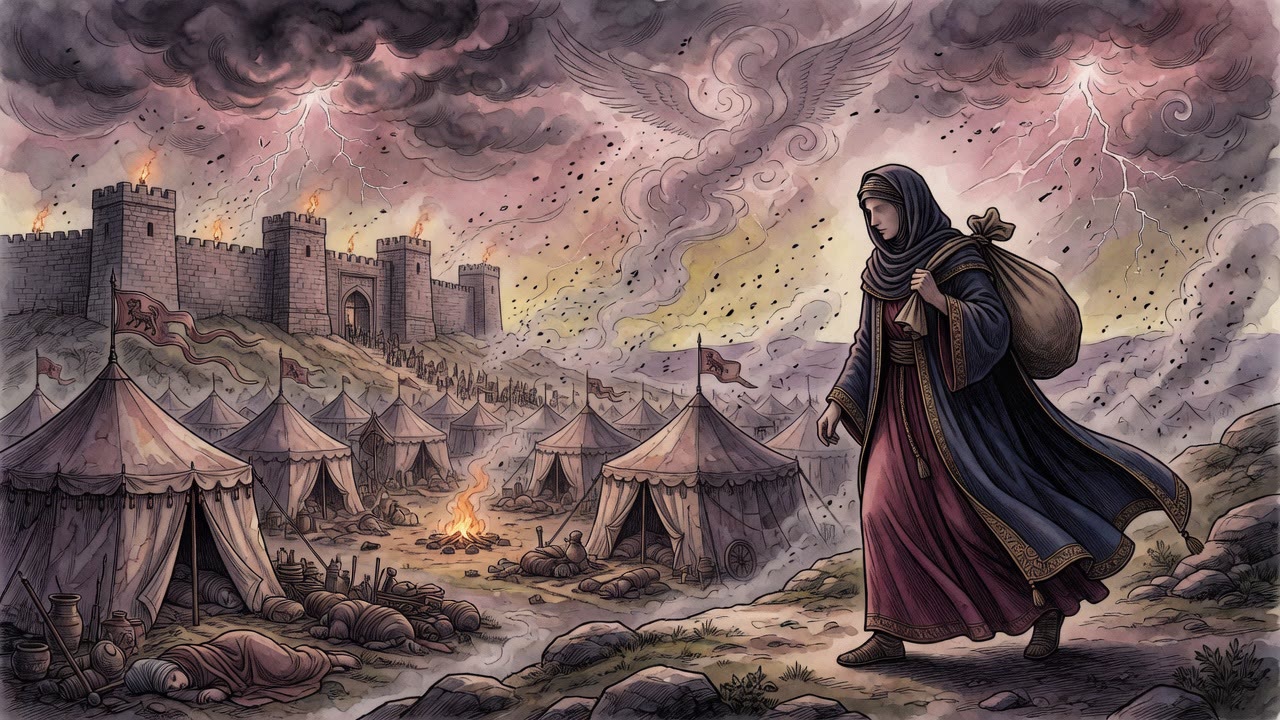
She left with a maid and, for a stretch, an escort of a hundred men, then walked the last danger as a woman dressed for a general's eye. Word ran through Assyrian tents faster than messengers. A crowd gathered outside Holofernes' tent until someone told him. They stared. They wondered at her beauty and, through her, admired the children of Israel.

Enemy soldiers became an unintended chorus of praise for the people they meant to break. Judith stood in the open of the camp as if the siege had inverted and Assyria were the audience. Fear was ordered out of her heart before she spoke. Reveal what you have said. He will treat you well. The instruction was simple. The risk was not.

One widow's body language rewrote the camp's gossip. Israel looked less like prey and more like a mystery with good bone structure and better nerve.

What the Camp Did Not Yet Know

Holofernes still breathed. The sword still hung for a later hour in the story. Bethulia still thirsted behind its wall with Uzziah's five days bleeding out. Joacim's passes still mattered. None of that canceled the turn already taken when Judith crossed from dying streets into a forest of spears and made the spears' owners stare.

Siege stories often end with walls cracked by engines. This one pivots on a woman who treated an enemy tent as a workplace. The high priest had mapped stone bottlenecks. Judith mapped a general's vanity. Between them Judea fought with geography and with daring that looked like surrender until it was not.

The children who fell by the gates did not know her name yet as salvation. They only knew thirst. Uzziah knew a deadline. Holofernes would learn a guest. The Assyrian crowd already learned admiration, which is a dangerous education for a conquering army. Admiration opens a door. Judith walked through it carrying more than beauty. She carried the last unspent courage of a town that had begun to indict its own elders for not surrendering sooner.

Five days. One woman. A camp full of eyes. The siege still stood, but its certainty had cracked.

Joacim's letters turned villages into corks in bottles. If the passes held, Assyria would spend blood for every mile. If the passes failed, Jerusalem itself would feel the wind of chariots sooner. Bethulia's thirst threatened to pull the cork from inside. A city that opens itself to drink under enemy terms unravels the whole map the high priest drew.

Uzziah's five days were a politician's bridge between riot and surrender. Judith heard the bridge as insult. Faith on a timer is already half apostasy in her math. She washed, dressed, packed clean bread and oil, and walked toward the man who controlled the water by controlling the springs outside the wall.

The hundred-man escort was respect theater until the last stretch where only a maid and a plan remained. Assyrian eyes did the rest of the work, multiplying her into rumor. Generals fall to many weapons. Holofernes would fall to one that required him to invite danger to dinner. The camp's admiration was the first sip of that wine.

Children still lay by gates. Elders still counted days. Judith's footsteps did not fill cisterns instantly. They changed who held the initiative. Siege is a conversation about who blinks. Bethulia had begun to blink. Judith stole the blink and spent it in an enemy tent.


← All myths
From the tradition

Sources

3 sources

The texts behind this telling. Some cards carry a translation of the source; others are our own retelling of it, and each card says which. Every card links out to the original.

Book of Judith 10:20Book of Judith

Retold in our words. Read the original at the link below.Sefaria Community Translation · CC-BY

Book of Judith turns to Judith Walks Into the Enemy Camp With Courage.

Judith, remember, is the brave widow from Bethulia who's taken it upon herself to save her people from the Assyrian general Holofernes. She's got a plan, a disguise, and a whole lot of faith.

Chapter 10 opens with her getting some last-minute encouragement. It’s simple, direct, and powerful: "And when you stand before him, do not be afraid in your heart, but reveal to him what you have said, and he will treat you well." (Judith 10:0). It's almost a blessing, a final push before she steps into the unknown.

Then, the scene shifts. Judith isn't alone. She's escorted by a hundred men – a significant detail. A show of respect, perhaps, or maybe a way to ensure her safety until she reaches Holofernes. And of course, her faithful maid is by her side, an unsung hero in this whole saga. They all make their way to Holofernes' tent.

What happens next is pure theater. Word of Judith’s arrival spreads like wildfire through the Assyrian camp. A crowd gathers, drawn by rumors of her beauty. They're not just curious; they're captivated. "A crowd began to assemble from throughout all the camp, for the news of her arrival had spread among the tents, and they gathered around her as she stood outside the tent of Holofernes, until they had told him about her. And they wondered at her beauty and admired the children of Israel because of her" (Judith 10:2-3). for a second. These are the enemy soldiers, the ones laying siege to her city. And they're standing there, awestruck, admiring her. It speaks volumes about Judith's presence, her confidence, and maybe even a hint of the divine favor she carries.

What's fascinating here is the reaction. They admire the children of Israel because of her. Not because of their military might, or their strategic brilliance. But because of one woman's courage and beauty.

It also emphasizes a key theme in Jewish tradition: the power of Kiddush (the sanctification blessing over wine) Hashem (קידוש השם), sanctifying God's name through our actions. Judith's actions, her bravery, reflect well on her people and, by extension, on her faith.

So, as Judith stands there, surrounded by the enemy, she's not just a woman walking into a tent. She's a symbol of hope, evidence of the strength of faith, and a reminder that even in the darkest of times, one person can make all the difference. And we’re left wondering: what will Holofernes think? And what will Judith do next?

Full source
Book of Judith 7:26Book of Judith

Retold in our words. Read the original at the link below.Sefaria Community Translation · CC-BY

The situation in besieged Bethulia is dire. The young children, their faces gaunt, have lost all hope. The women and young men, weakened beyond measure, are collapsing from thirst. They're not just wilting; they're actually falling down in the streets, right there by the city gates. Their strength? Gone. Utterly depleted.

A city on the brink. But what happens when desperation reaches a boiling point?

That’s when all the people – the young men, the women, even the children – gathered before Uzziah, the leader, and the other chiefs of the city. And they cried out. Not a whimper, but a full-throated cry, their voices raw with despair and accusation.

Their words were a direct challenge. "God be judge between us and you," they declared, their voices shaking with anger and fear, "for you have done us great injury in that you have not made peace with the children of Assur." They're not just blaming their leaders; they're invoking divine judgment. They believe Uzziah and the other chiefs have wronged them by not seeking peace with the Assyrians. It's a bold and risky move, accusing their leaders in such a public and religiously charged manner. It speaks volumes about their desperation, their feeling that they have nothing left to lose.

This moment is more than just a description of suffering. It's a turning point. It's the moment when the people, pushed to their absolute limit, demand action. Will their leaders heed their cry? Will they seek a way out of this seemingly impossible situation? Or will Bethulia succumb to thirst and despair? The stage is set for Judith to enter the scene and change everything.

Full source
Book of Judith 4:10Book of Judith

Retold in our words. Read the original at the link below.Sefaria Community Translation · CC-BY

It all starts with preparation. And that's exactly what we see in the Book of Judith. When faced with a looming threat, what's the first thing you do? You prepare! And that’s precisely what the people of Judea did in the face of the Assyrian army. They weren't just sitting around waiting for the inevitable. No way. They were proactive.

the verse says, “…they captured for themselves in advance all the tops of the high mountains, and fortified the villages which were in them…” Imagine the scene. Men and women, working together, hauling stones, reinforcing walls, turning their villages into fortresses. They weren't just defending their homes; they were defending their faith, their families, their very way of life.

It wasn't just about physical fortifications. They were practical too. The passage continues, “…and stored up food as provisions for war, for their fields had been recently reaped." They had just harvested their crops, giving them a crucial advantage. They knew a siege was likely, and they were making sure they wouldn't starve. This wasn't just bravery; it was smarts.

The preparations didn’t stop there. Leadership was key. Joacim, the Kohen Gadol (High Priest) in Jerusalem, understood the strategic importance of certain locations. He knew where the enemy would likely try to enter Judea.

That Joacim "wrote to those who lived in Bethulia and Betomestham, which is opposite Esdraelon toward the open country near Dothaim, charging them to hold the passages of the hill country." These weren't just random villages. They controlled vital mountain passes.

Why these locations specifically? Because, ".through them there was an entrance into Judea, and it was easy to stop those who would come up, because the passage was narrow, for two men at the most." Imagine those narrow passes, perfect for an ambush, impossible for a large army to navigate quickly. A bottleneck, a chokepoint.

This detail highlights the strategic thinking at play. It wasn't just about brute strength; it was about using the terrain to their advantage. It was about knowing the land, understanding the enemy, and preparing for every eventuality.

So, what can we learn from this ancient story? Maybe it's that preparation is key, that even the smallest among us can stand tall with the right mindset and plan. Or maybe, it's that faith and action, when combined, can create something truly extraordinary.

Full source