Judith Widowed on the Roof Before Victory Over Holofernes
Manasseh fell in the barley heat near Bethulia. Judith kept a tent on the roof until the city needed her down in the street.
Table of Contents
Manasseh dropped in the barley field while the sheaves were still being bound. The sun struck his head. He fell onto his bed in Bethulia and did not rise. They buried him in the field between Dothaim and Balamo, among his fathers. The harvest kept moving. Grain does not pause for a widow.
 Click for full size
Judith was left with a house, land, and rooms that still held his cloak. She did not take another husband. She climbed to the roof and built a tent there, a second house above the street, where cooking smoke thinned and the stars arrived early.
Sackcloth Under Widow's Cloth
She mourned in that tent. She put sackcloth on her loins and wore the garments of a widow over it. The cloth scraped when she knelt. She fasted through the days of her mourning, except the eves of Sabbaths and the Sabbaths themselves, the eves of the new moons and the new moons, and the feasts of the House of Israel. Hunger was a chosen blade. An empty plate at noon. Water at dusk. Prayer in the hours between.
Below, Bethulia talked of cisterns, of sieges, of generals who ate while hill towns starved. Above, Judith prayed in thin air. She kept kinship, land, and the fear of God. She discarded ease. When panic later filled the elders' mouths, she would not invent courage in an afternoon. She would bring what three years and four months on a roof had already stored.
Neighbors saw a closed door. They saw a woman who came down for Sabbath light and went back up. They did not watch her hands long enough to notice they had stopped shaking.
The Gate She Walked Through Alone
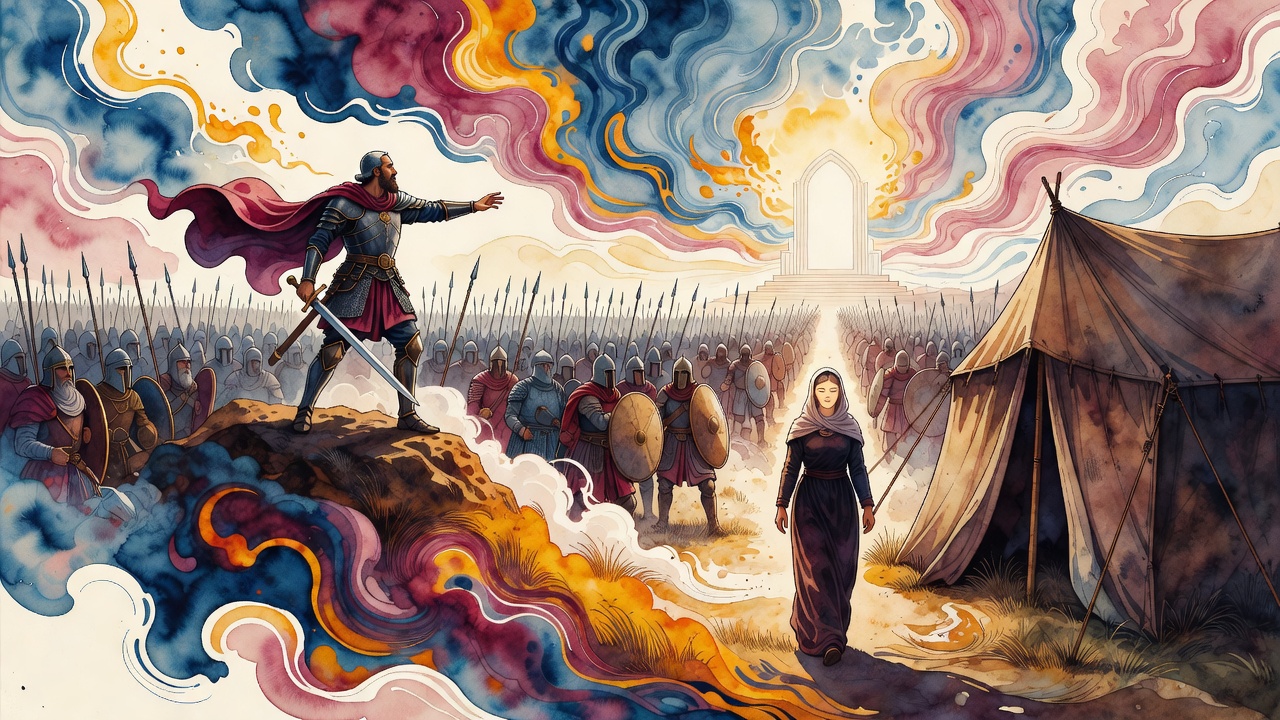
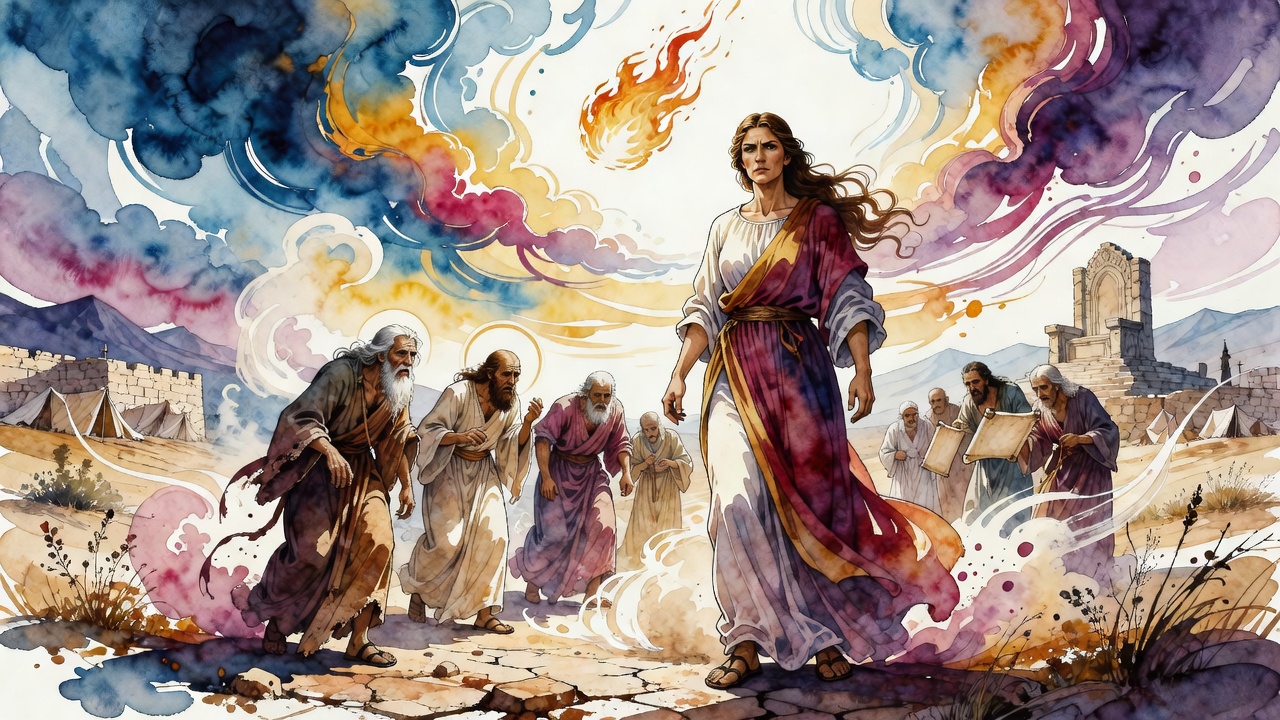
The camp of Holofernes closed around the hill. Water thinned. The elders set a clock of despair and called it piety. Judith came down from the tent, washed, dressed in the beauty she had folded away, and walked out the gate with a maid and a bag. Soldiers who would not have sent a widow as a weapon let her pass because she looked like a gift.
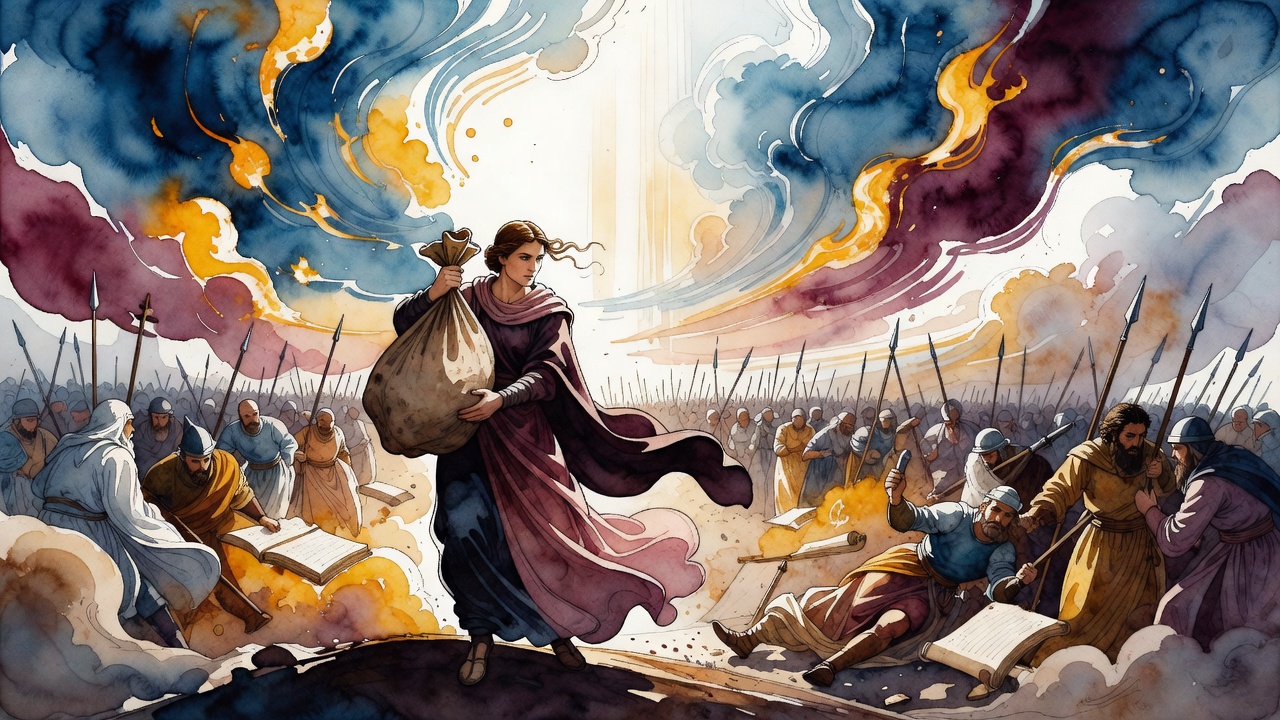
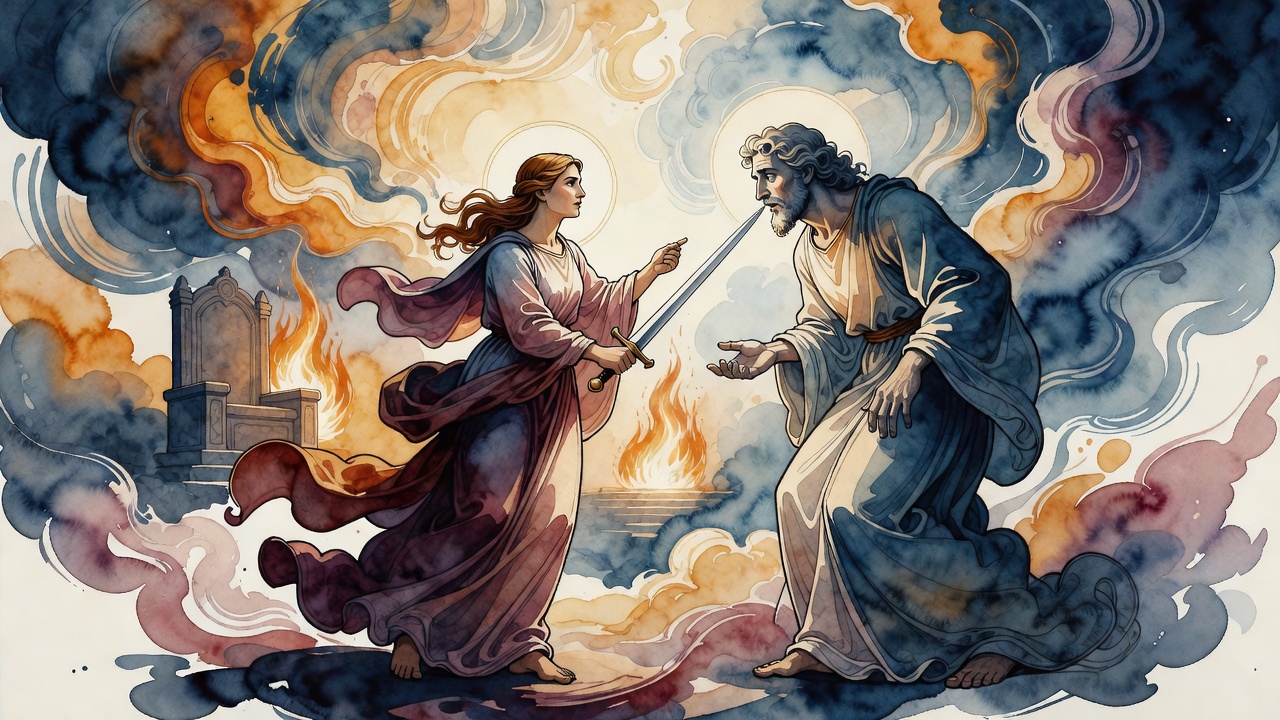
Wine did the rest. Holofernes drank until his neck was unguarded. Judith took his sword, seized his hair, and struck twice. She killed Holofernes in his own tent. The head went into the bag. The camp slept in a safety that was already a lie. She walked back to Bethulia before dawn with the general's head as proof that the roof had not been wasted years.
The elders who had counted days until surrender stared at what she carried. A widow had gone where they would not send a soldier, and she had come back with the siege in a sack.
Fear Changed Sides
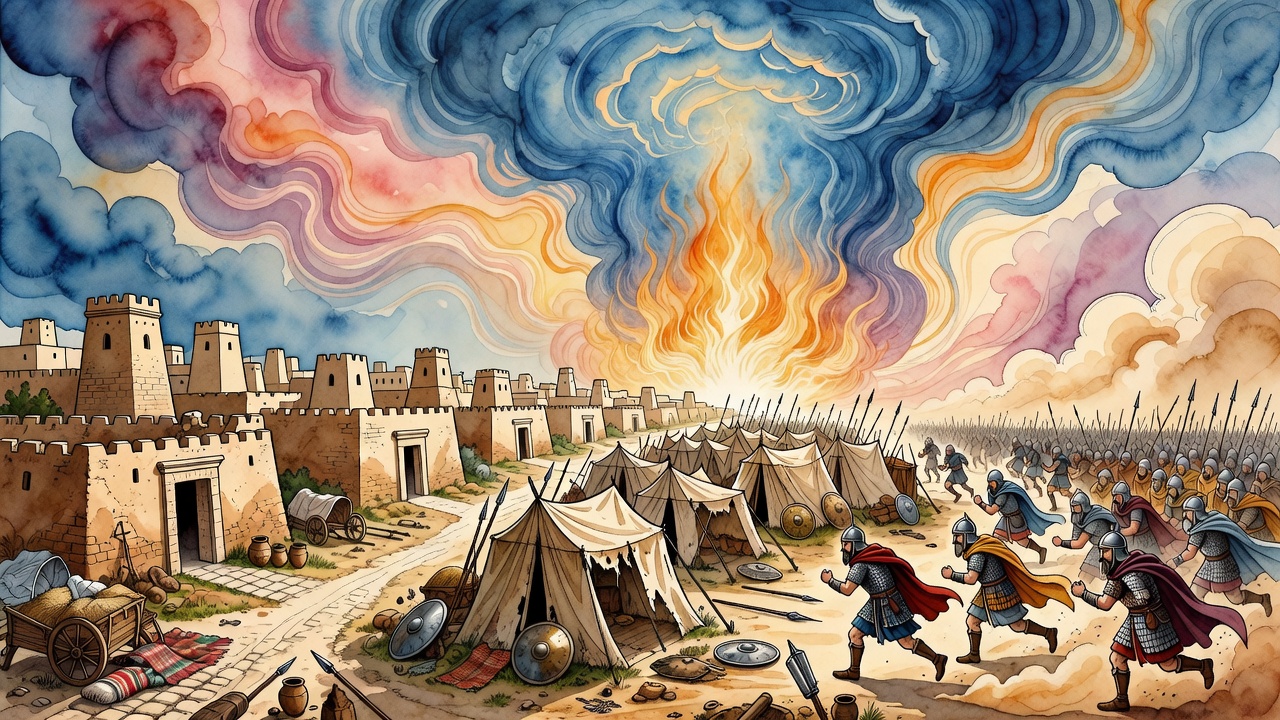
They hung the head on the wall. The army that had come to crush a small town scattered when it found its master dead. Judith did not ask for a throne. She went home. She returned the beauty to the chest. The tent still stood on the roof, but the city no longer needed her to live only there.
Israel had elders and speeches. It did not have another night like that one. Children who had hidden in cisterns slept. Men planted. The widow who had practiced hunger as free choice had answered a hunger used as a weapon against her town.
Fear changed sides. The road that had brought chariots now carried rumor in the other direction: a hill town, a woman, a general who did not wake.
Seven Days After She Died
Years later she distributed her goods to the nearest kindred of Manasseh and to her own kin. Inheritance became another defense, a way to keep the living from becoming prey to want after the enemy was gone. Then she died. The house of Israel lamented seven days. That number is public tears, not a private count.
No one made the children of Israel afraid again in the days of Judith, nor for a long time after her death. The roof tent was taken down. The sackcloth was folded away. The field between Dothaim and Balamo still held Manasseh. The city held the memory of a woman who learned solitude before she taught an army how to flee.
Barley grew again. No one watched the horizon for chariots. Victory had been a night. Security was a generation that could harvest without listening for hooves.
← All myths