Korah Dug Up Joseph's Buried Gold and the Ground Took It Back
Joseph hid gold in empty country and told no one. A Levite named Korah found one cache. He spent it on a quarrel, and the ground opened its mouth.
Table of Contents
 Click for full size
Joseph Buried Gold in Four Places
They came to Joseph smeared with clay so he would see how poor they were.
The famine had gone on long enough that the money was gone, then the cattle, then the fields. Men stood in front of the viceroy of Egypt covered in mud and said, my lord, look at me, look at what I have left. Pharaoh had grain in his own storehouses and would not open them. The people in the street cursed him for it and blessed Joseph, who sold to anyone who came with a hand out. He fed a whole world through those years the way a shepherd feeds a flock, one day at a time.
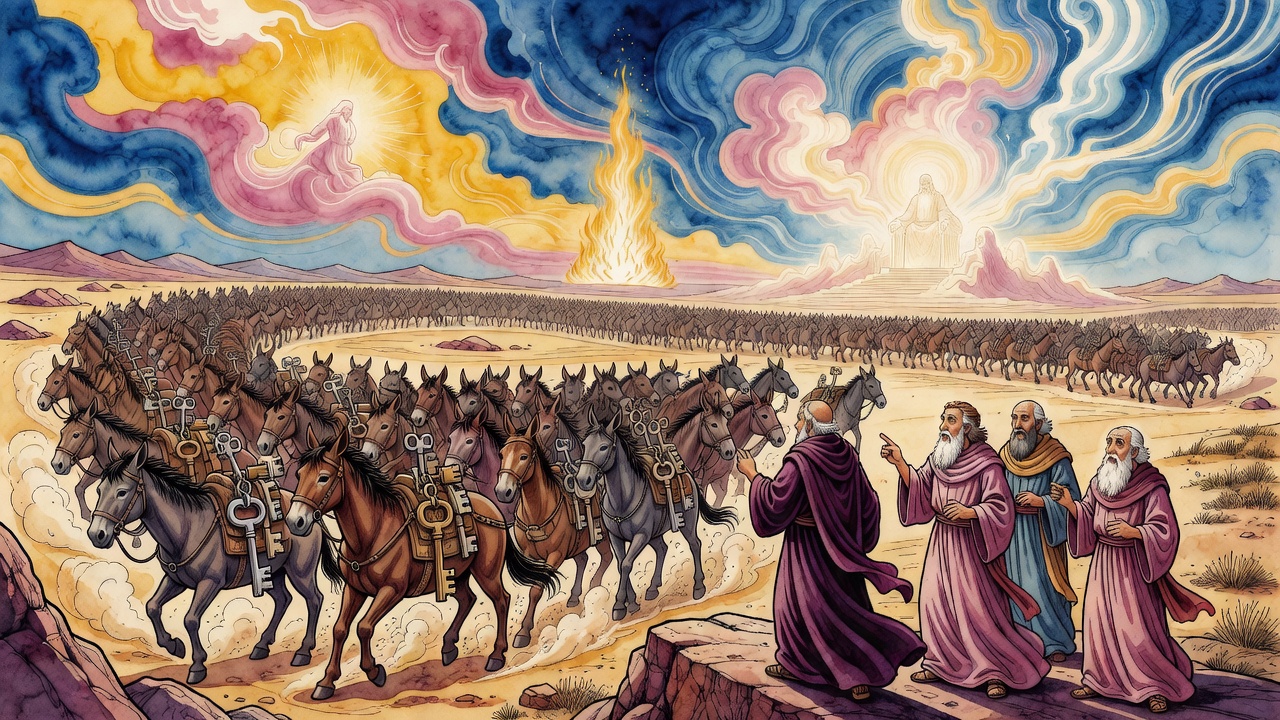
The money that came back through his hands was enormous. Some of it he gave to his brothers. Some he handed to Pharaoh's treasury. One portion, gold and silver and cut stones, he took out into empty country and put in the ground.
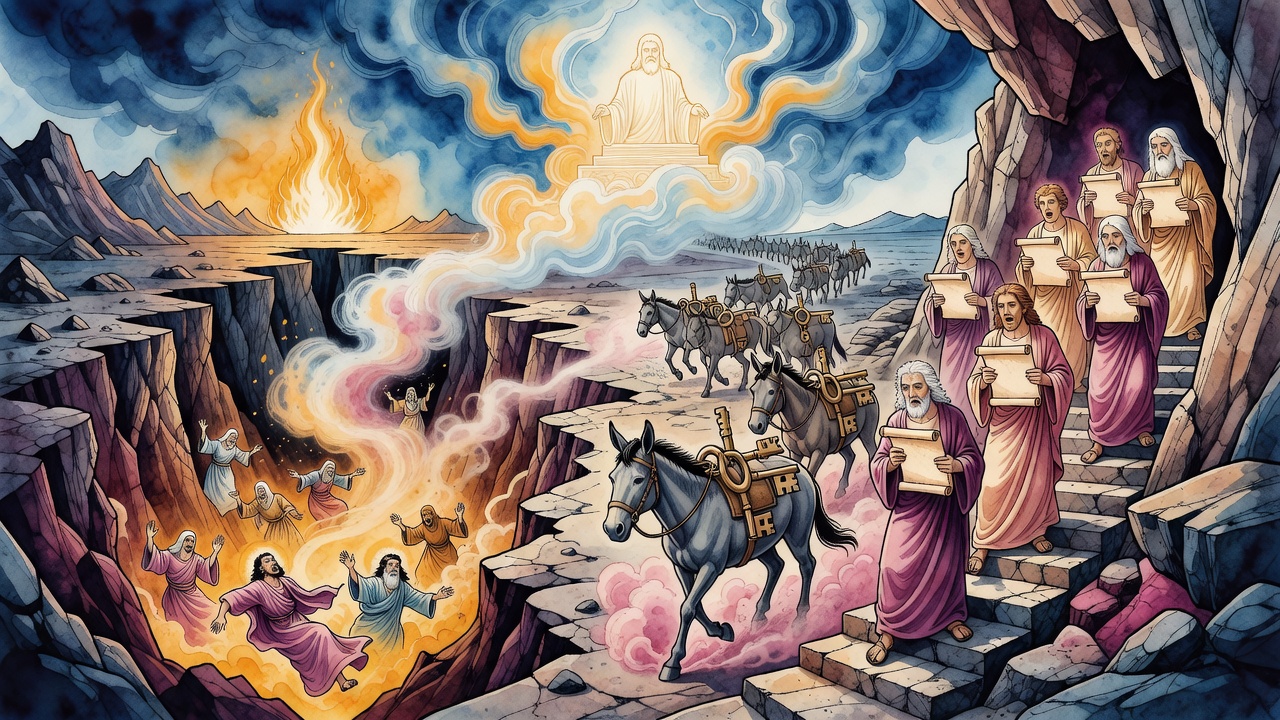
He buried it in four places. One in the desert near the Red Sea. One on the bank of the Euphrates. Two more out in the waste toward Persia and Media. Then he went back to Egypt and said nothing about any of them.
Two of those four have never been found and never will be, because they are being held for the pious, for the days of the Messiah. One was turned up centuries later by a Roman emperor, Antoninus, the son of Severus. And one was found in the wilderness by a Levite.
A Levite Dug in the Right Sand
Korah was Levi's great-grandson, a cousin of Moses and Aaron, camped with the rest of Israel in a desert where nobody owned anything but a tent and a share of manna.
He dug in the right place.
What came up out of that hole made him the richest man in the camp by a distance nobody could measure. Everyone else in that wilderness was equally poor and equally fed. Korah walked around it carrying Joseph's gold. He looked at Moses giving orders and at the chests in his own tent, and the ranking started to look wrong to him.
Joseph had put treasure into the earth and used the rest to keep a starving world alive. Korah had taken treasure out of the earth and begun to count who ought to be in charge.
Korah Put His Hand Out Against Moses
He gathered men. Many of them, and not the fringe of the camp either. Two hundred and fifty princes, known in the congregation, men of name.
He stood them up in front of Moses and Aaron and the whole congregation and quarreled. The quarrel was not about food. It was not about the road. It was not about Egypt. It was about the two men who taught Israel what was just and who had been put in front of them to do it.
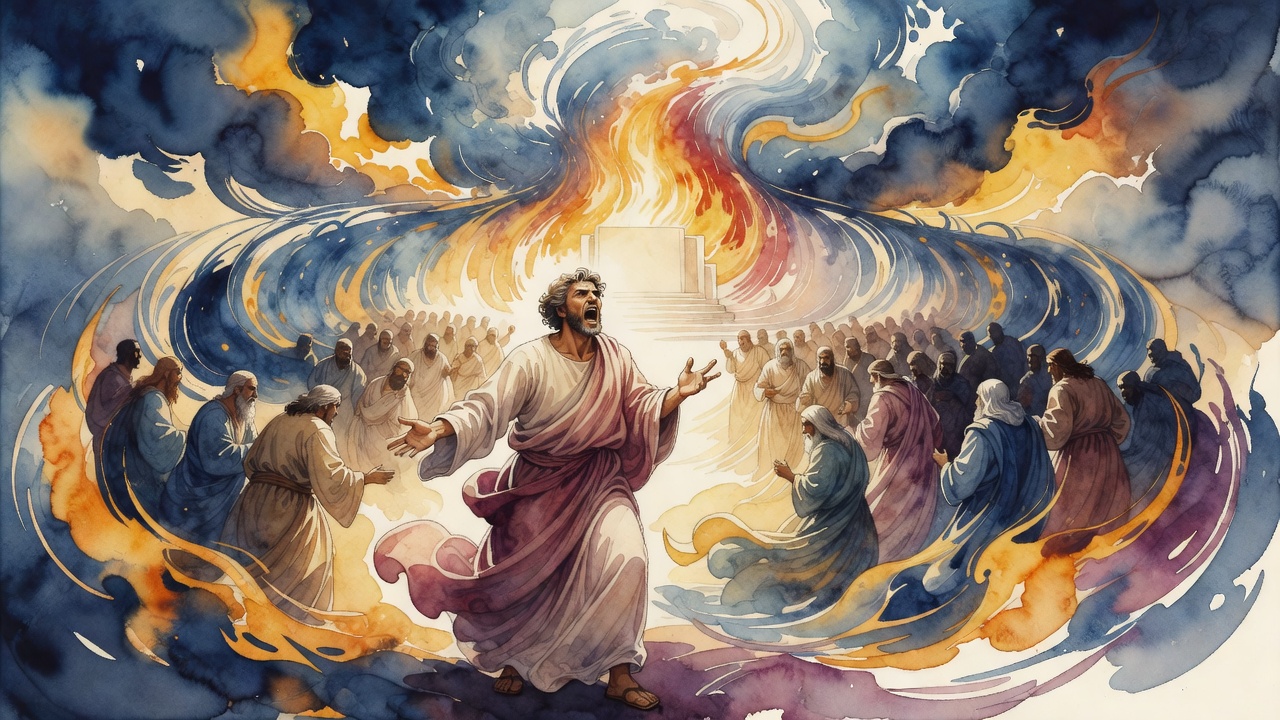
Moses fell on his face. Then he rose and drew a line. Tomorrow, he said, bring pans and fire, and God will show whose incense He takes. Korah did not step back. He had gold in his tents and cousins in the priesthood and a crowd at his back. He put out his hand against Moses and Aaron in public, and he did not pull it in.
The Ground Took the Gold Back
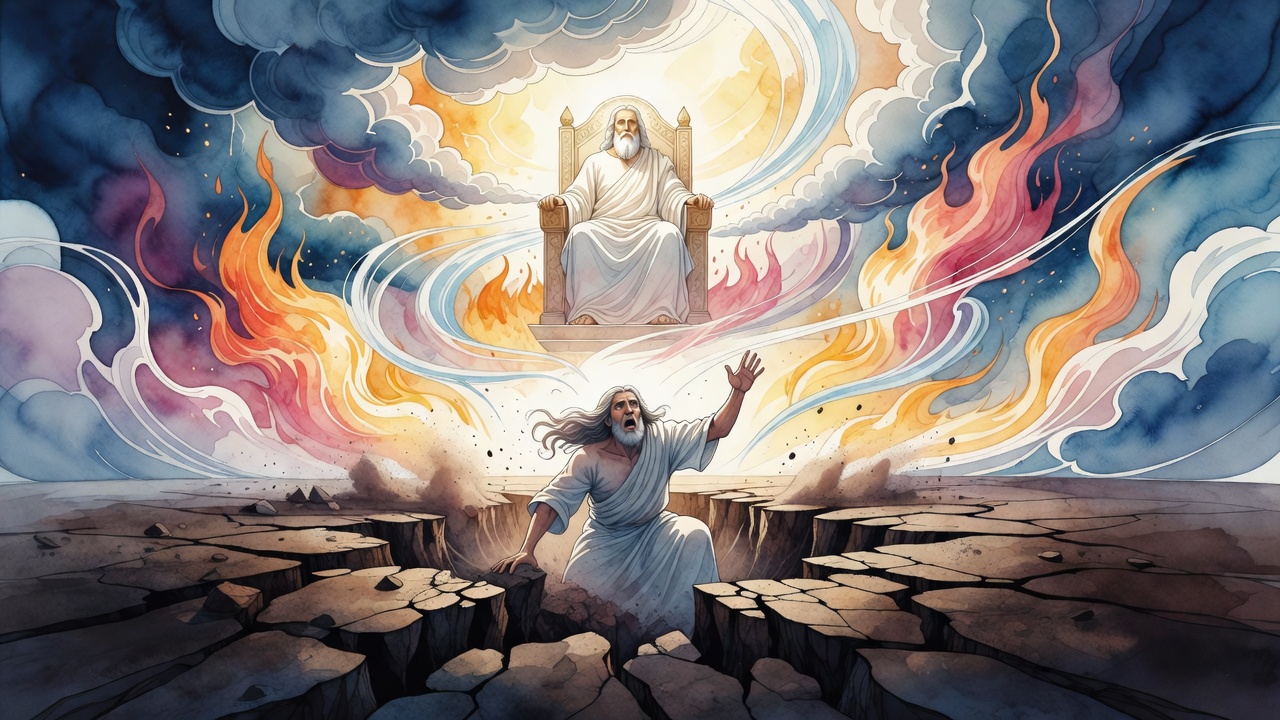
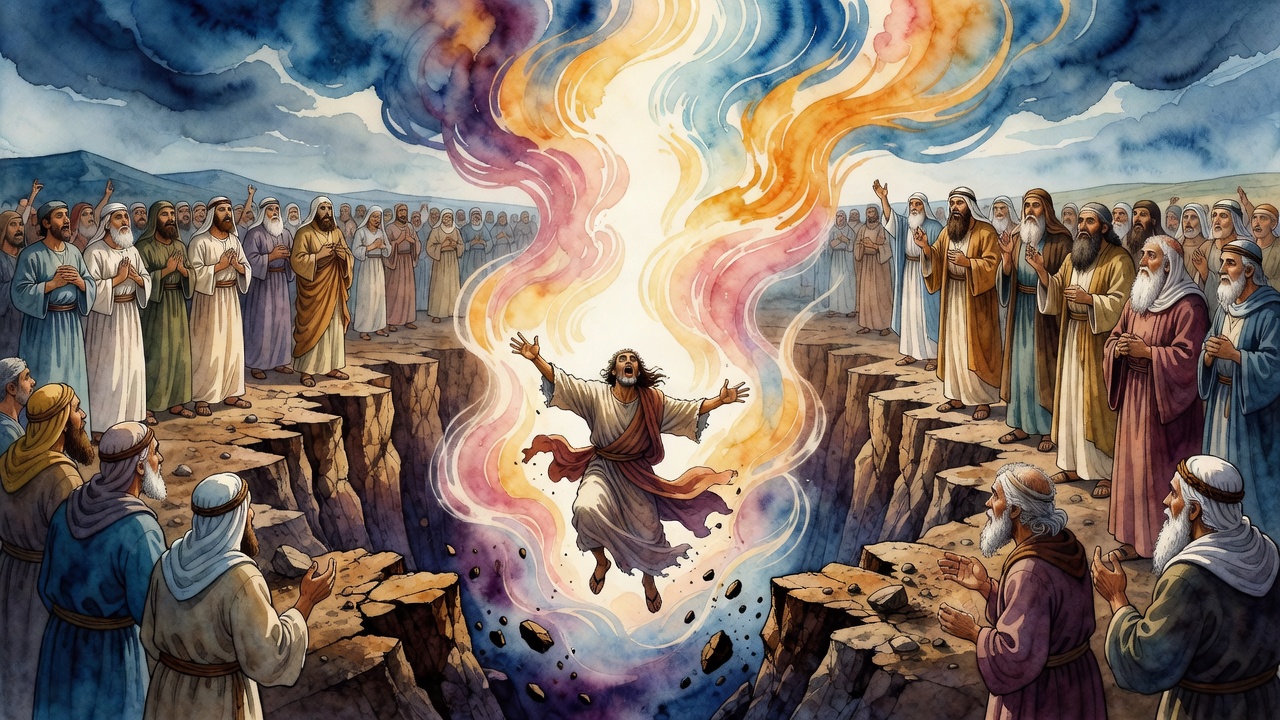
The earth split under his feet.
It opened its mouth, the way a living thing opens a mouth, and it took him. It took the men who had come out to stand with him. It took their households, their tents, their wives and their children, and it took everything belonging to them. The gold went down too, every coin and every stone of it, back into the ground it had been lifted out of.
The earth that had received Adam's dust now opened for a living man. Korah went down into the depths of Sheol (the underworld of the dead) with his mouth still open. Joseph's cache, dug up in the sand, went with him. The ground kept them both honest. It closed over the second man while the first man's grain was still in the memory of every nation that had come begging for it.
The Sons Looked Up
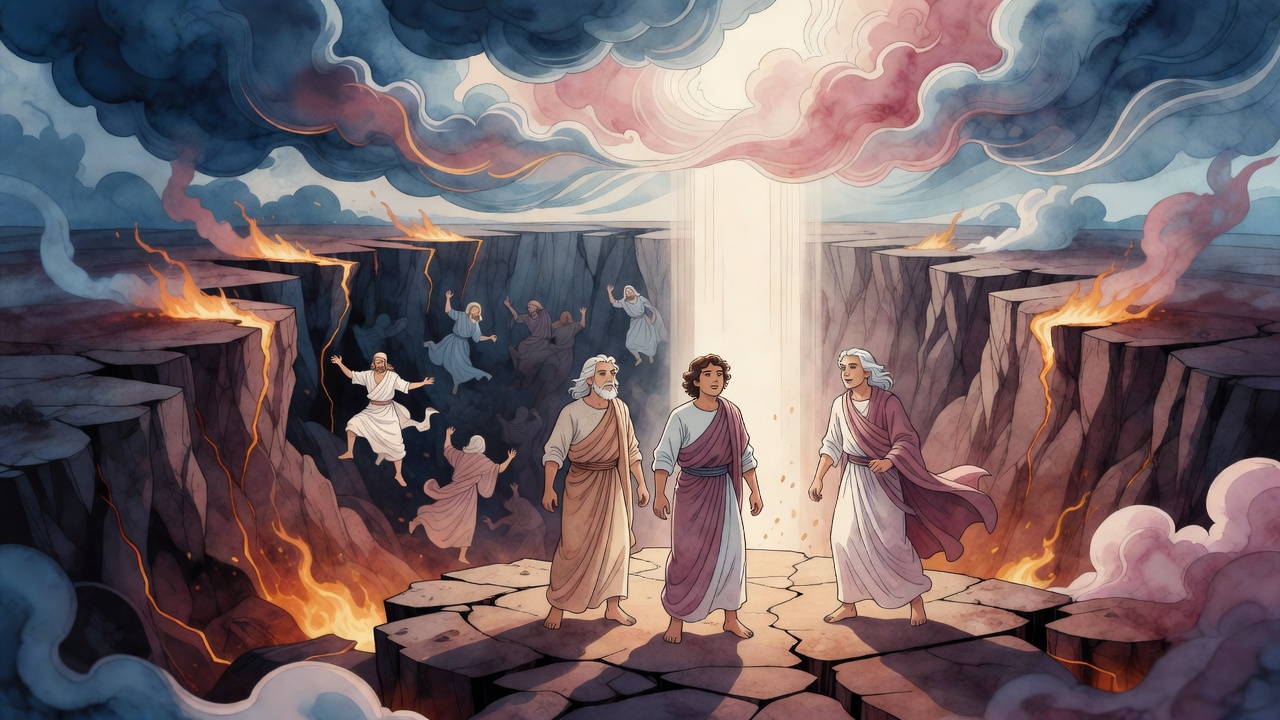
Korah's sons were standing there when it happened.
They had come out with their father. They were on the ground that was going. In the last moment before it took them, they looked up.
That was all. No speech. No offering. No argument. They raised their faces and they were not swallowed. Their father had spent his last hour looking sideways at Moses and downward at his own worth. He went down alive. They stood at the lip of the crack with their faces raised while his fortune went past them into the dark.
David looked up out of his own worst hour and was covered. Even Nebuchadnezzar, who had eaten grass like an ox, lifted his eyes to heaven afterward and his reason came back to him. The sons of Korah did the same small thing at the edge of a hole. Their songs are still being sung. The gold is not.
← All myths