5 min read

Mastema Attacked Moses and the Coffin Waited Four Centuries

On the road to Egypt, an angel tries to kill Moses before the Exodus can begin, while Joseph's bones wait in a sunken ark.

Curated by Arthur · Told by Maggid ·
Table of Contents
  1. Something on the Road to Egypt
  2. The Angel Who Prosecuted Moses on the Road
  3. The Oath Joseph Had Extracted
  4. Three Days at the River
  5. Mastery Over Two Obligations

Something on the Road to Egypt

Moses had set out from Midian with his wife Zipporah and his sons, with his staff and the words God had given him at the burning bush. He knew what he was going back to face. He had grown up in Pharaoh's palace, been exiled from it, spent forty years in the wilderness, and now God had sent him back into the empire that had enslaved his people. He was walking straight into the teeth of that.

He did not make it far before something tried to stop him.

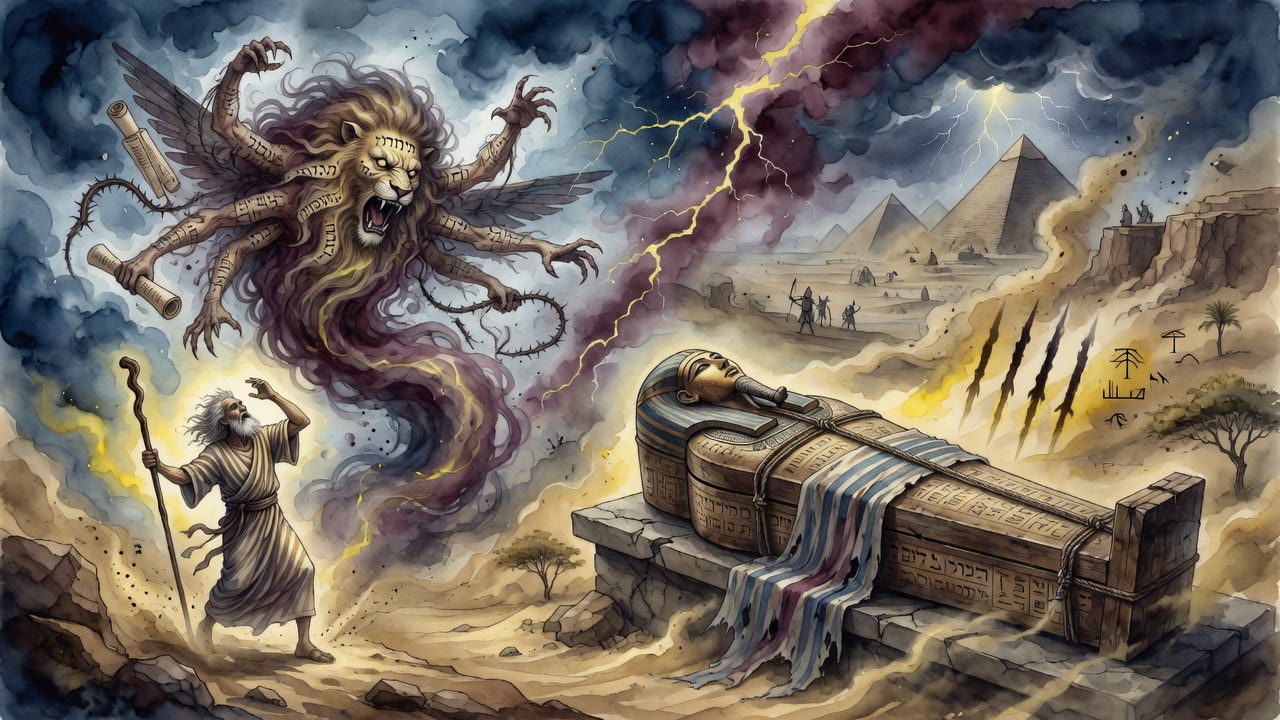
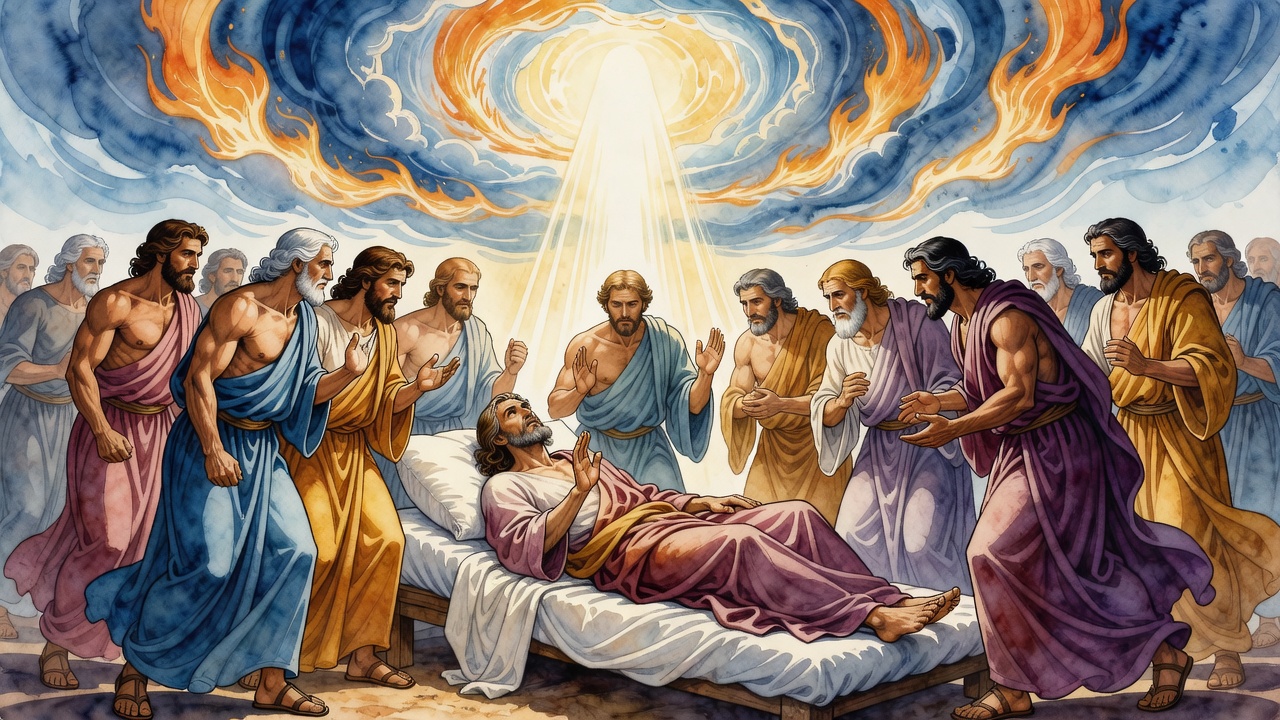
The book of Jubilees, written around the second century BCE, names the attacker as Mastema, the Prince of Accusation, the angel assigned to prosecute human beings before the heavenly court. Mastema had been watching Moses. He had heard the voice at the burning bush, understood what was coming, and moved to prevent it before it began. An Israelite was walking back to Egypt. If he reached it, an empire would crack.

The Angel Who Prosecuted Moses on the Road

The Torah in Exodus 4:24 records the attack in two sentences and does not explain it. God, or an angel acting in God's name, met Moses at a lodging place and sought to kill him. Zipporah acted immediately: she circumcised their son, touched the foreskin to Moses's feet, and said the blood had accomplished something. The threat withdrew.

Jubilees names Mastema as the aggressor and makes his motivation explicit. Moses had not yet circumcised his son. The covenant that bound Abraham's descendants had not been sealed on this child's body. Mastema used this as the legal basis for his prosecution. He stood before the heavenly court and argued that Moses had forfeited his right to carry out the redemption. A man who had failed to mark his own son with the covenant sign had no standing to bring covenant obligations to Pharaoh's court.

Zipporah's action closed the case. The blood of circumcision was the answer to the accusation. Mastema's legal argument collapsed, and Moses walked on toward Egypt.

The Oath Joseph Had Extracted

There was another obligation waiting for Moses in Egypt, one older than his own mission. Before Joseph died, he had extracted an oath from his brothers and from the generation that would come after them. The Israelites would not leave Egypt without him. When God remembered them, when the redemption finally came, they would carry his bones out of the country. "Take me with you," he had said. "Do not leave me here."

For four hundred years that oath had been waiting in the ground.

When the night of the Exodus finally came and the Israelites prepared to leave, Moses went looking for the coffin. The other Israelites were collecting Egyptian gold and silver and jewelry, as God had commanded them to strip Egypt of its wealth. Moses was searching for bones.

Three Days at the River

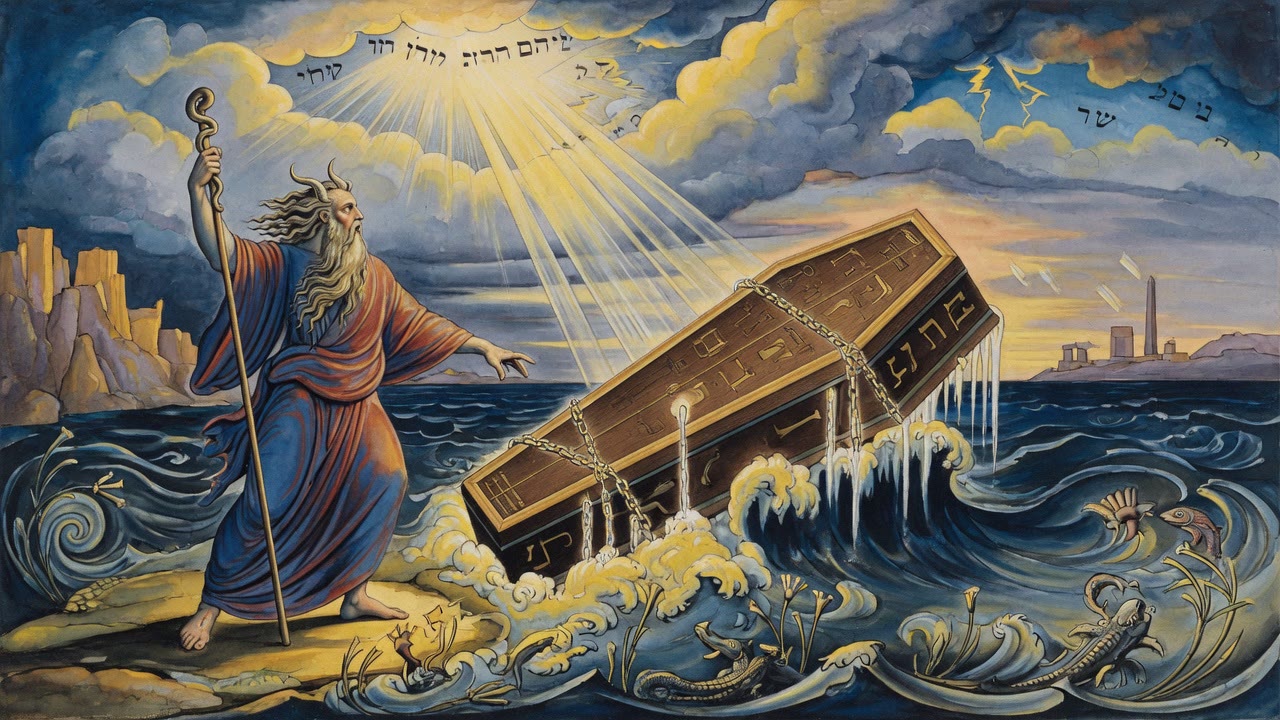
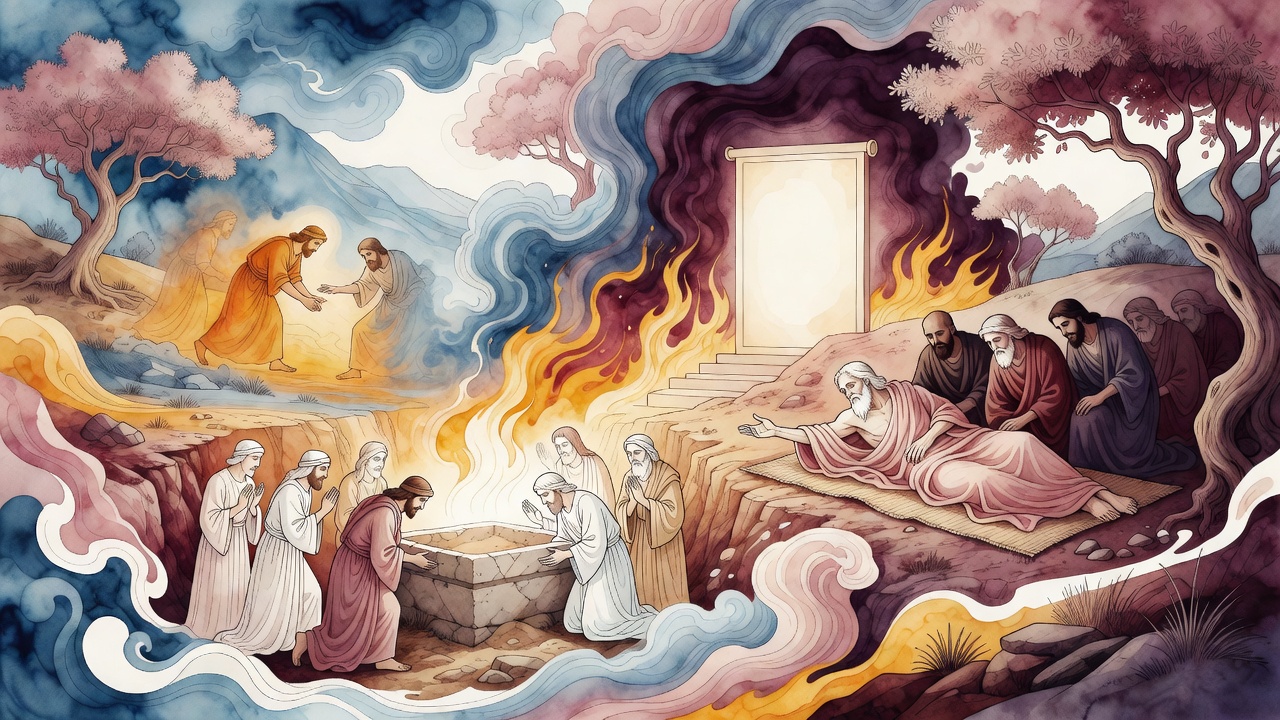
Joseph's coffin was not easy to find. According to the account in Legends of the Jews, the Egyptians had sunk it in the Nile, both to honor Joseph and to bind the Israelites to the river that had fed and sustained their captivity. Moses searched for three days and three nights before he found it.

He stood at the bank of the Nile and called out: "Joseph, the time has come. God is fulfilling the oath. Your descendants are leaving Egypt tonight. The oath you made them swear is being kept. If you are willing, rise."

The coffin floated to the surface.

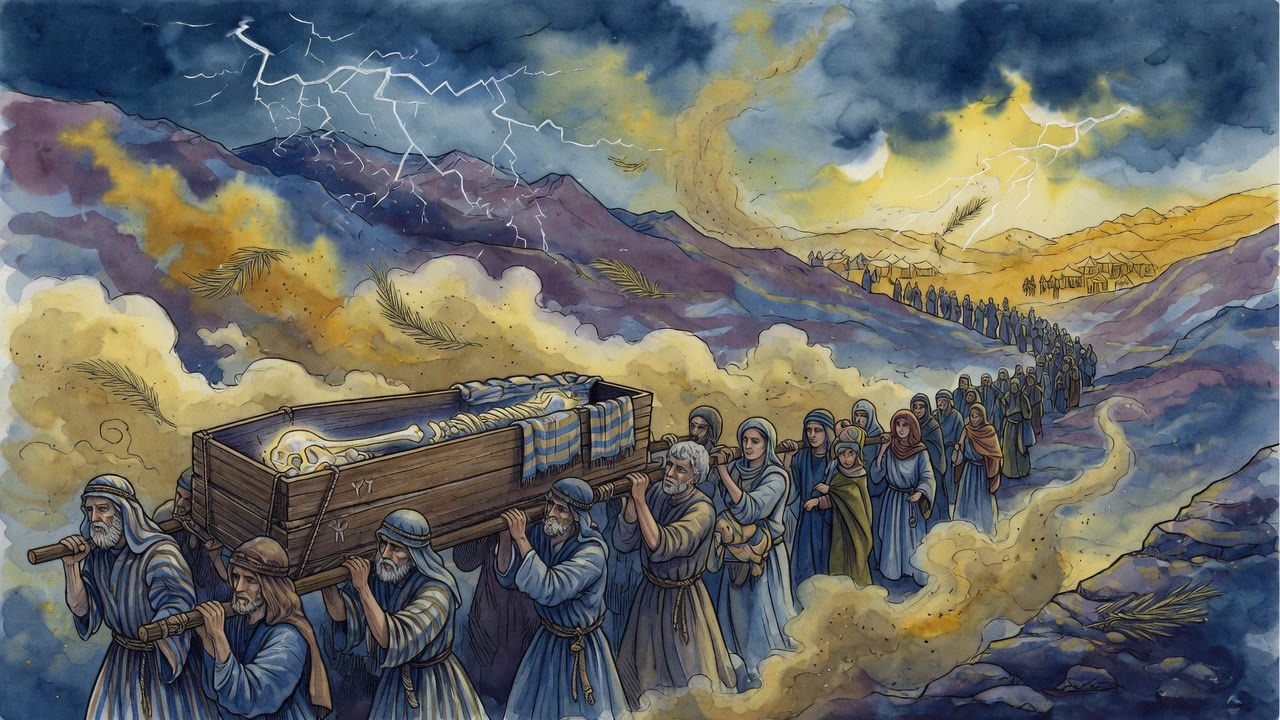
Moses took it and carried it on his shoulders while the rest of Israel carried gold. The contrast was deliberate and noticed. Two arks traveled through the desert together: the ark of the covenant containing the Torah, and the coffin of Joseph containing the bones of a patriarch who had made his people promise not to forget him. The living law and the faithful dead, side by side.

Mastery Over Two Obligations

The rabbis saw in Moses's three days at the river something more than the difficulty of finding a lost grave. He had come out of Egypt carrying obligations in both directions. Toward the living: lead the people to freedom, bring them through the desert to the promised land, give them the law. Toward the dead: keep the oath, do not leave Joseph behind, carry what earlier generations trusted later ones to carry.

Mastema had tried to stop Moses before he could fulfill either obligation. The attack on the road was not random violence. It was the last attempt by the force of accusation to find a legal flaw in Moses, a reason to declare the redemption void before it began. Zipporah closed that door with a flint knife and a piece of skin.

Joseph's coffin closed another door. You could not properly leave Egypt without the bones. The Exodus was incomplete without them. Moses understood this when no one else was looking for anything but gold.


← All myths

From the tradition

Sources

4 sources

The texts this telling draws on, in full. Open a card to read inline, or expand it for a wider, quieter read.

Book of Jubilees 48:5Book of Jubilees

The familiar story is this: Moses leading the Israelites out of Egypt, the parting of the Red Sea, the giving of the Torah at Mount Sinai. Epic. But what about the moments before all that? The near misses?

The Book of Jubilees, a fascinating text from around the 2nd century BCE, gives us a peek behind the curtain. It fills in gaps and offers a unique perspective on familiar biblical narratives. And it tells us about a very close call for Moses.

Jubilees 48 opens with Moses's return to Egypt. It states, matter-of-factly: "And thou didst return into Egypt in the second week in the second year in the fiftieth jubilee." This chronological marker situates the event within the larger framework of Jubilees' unique calendrical system. Okay, helpful for placing it in time… but what happened?

That's where it gets interesting. God reminds Moses of a dangerous encounter on his way back to Egypt, an encounter many of us may have missed completely. "And thou thyself knowest what He spake unto thee on Mount Sinai, and what prince Mastêmâ desired to do with thee when thou wast returning into Egypt on the way when thou didst meet him at the lodging-place."

Mastêmâ? Who's that?

Well, Mastêmâ is a figure often associated with the Satan, the accuser or adversary. In Jubilees, he's a powerful, rebellious angel who seeks to thwart God's plans. And here, he's aiming to take out Moses.

The text continues, "Did he not with all his power seek to slay thee and deliver the Egyptians out of thy hand when he saw that thou wast sent to execute judgment and vengeance on the Egyptians?" Mastêmâ, seeing Moses as a threat to his agenda, tried to kill him. He wanted to prevent the Exodus, to keep the Israelites enslaved in Egypt. The stakes were incredibly high! This wasn’t just a personal attack; it was an attempt to derail God's entire plan for liberation.

What was Mastêmâ’s motivation? According to Jubilees, he saw Moses’s mission as a direct threat to his influence. He wanted to protect the Egyptians from the plagues and ultimately, maintain the status quo. He wanted to prevent the judgement and vengeance that was about to be unleashed.

Thankfully, the story doesn't end there. God intervened. "And I delivered thee out of his hand, and thou didst perform the signs and wonders which thou wast sent to perform in Egypt against Pharaoh, and against all his house, and against his servants and his people."

God protected Moses, allowing him to fulfill his mission. This passage highlights the constant struggle between good and evil, between God's will and the forces that oppose it. It shows us that even the greatest leaders face immense challenges and that divine intervention is sometimes necessary to overcome them.

It makes you wonder, doesn't it? About the battles we don't see. About the forces working against us, and the unseen hand that guides us through. The story of Moses and Mastêmâ reminds us that even in moments of great purpose, we may be facing opposition we don't even realize is there. And that sometimes, just sometimes, we need a little help from above.

Full source
Legends of the Jews 1:493Legends of the Jews

Legends of the Jews turns to Moses Searched Three Days for Joseph's Sunken Coffin.

Moses knew something crucial: the Israelites couldn't truly be free until they fulfilled the oath they’d made to Joseph so long ago. That oath? To take his bones with them when they finally left Egypt for the Promised Land. (Genesis 50:25) But there was a problem. A big one.

For three whole days and three nights, Moses, the man who would lead his people out of bondage, searched high and low across the land of Egypt. He was desperately seeking Joseph’s coffin. According to Ginzberg’s retelling in Legends of the Jews, Moses knew that the Exodus couldn't happen without it. But it was nowhere to be found! Imagine the pressure.

Can you picture Moses, exhausted, weary, his hope dwindling with each passing hour? Then, in his despair, he meets Serah, the daughter of Asher. She sees his distress and asks what troubles him. He tells her of his fruitless quest, his inability to locate Joseph's final resting place.

And here’s where the story takes a fascinating turn. Serah knows the secret. She leads Moses to the Nile River. There, she reveals that the Egyptians, in a desperate attempt to keep the Israelites from leaving, had sunk Joseph’s leaden coffin in the river.

But why the Nile? Why hide a coffin there?

Well, the Egyptians didn't act alone. They were aided and abetted by their magicians, those practitioners of ancient arts and secret knowledge. These magicians knew the power of Joseph's oath. They understood that the Israelites were bound to it. So, they used their magic – their kishuf, as it might have been called – to hide the coffin in a place where it seemed impossible to retrieve. They sealed the coffin on all sides and sank it deep within the river.

It’s a cunning plan. Trap the Israelites with their own promise. Keep them bound to Egypt forever. But as we know, the story doesn’t end there. How Moses manages to retrieve the coffin from the depths of the Nile is a story for another time! But the very fact that the Egyptians went to such lengths shows just how powerful a simple promise can be.

What does this tell us? Perhaps that even in the face of seemingly insurmountable obstacles, even when magic and power conspire against us, the bonds of faith and the weight of our promises can lead us on a quest, a search for something essential to our freedom. And sometimes, just sometimes, we need a little help from an unexpected source to find what we're looking for.

Full source
Legends of the Jews 1:495Legends of the Jews

The story of Joseph, his coffin, and Moses is one such tale. It's a powerful reminder that even in the chaos of escape and liberation, honoring a pledge matters deeply.

The scene: The Israelites are finally leaving Egypt, laden with riches they've received from their former oppressors. Gold, silver… a whirlwind of activity as they prepare for their long-awaited exodus. But amidst this frenzy, Moses has something else on his mind. Something incredibly important.

Joseph, centuries before, had made his brothers swear an oath. He knew his bones didn't belong in Egypt. “God will surely remember you,” he told them, “and carry you out of this land to the land which He swore to Abraham, to Isaac, and to Jacob.” (Genesis 50:25). He wanted to be buried in the Promised Land. This was no small request; it was a sacred trust.

So, how do you find a coffin lost in the vastness of the Nile? Well, according to the legends, it wasn't easy. The Zohar, that foundational text of Jewish mysticism, hints at the magical means employed. Moses didn't just stumble upon it. He had to work for it.

The story goes that Moses fashioned several golden plates, each bearing a different symbol. The first had the figure of an eagle. He threw it into the water, calling upon Joseph to rise. Nothing. Then a plate with the figure of a bull. Again, silence. A third plate followed. Still, the coffin remained stubbornly submerged.

It wasn't until the fourth plate, the one bearing the image of a human, that something finally happened. With this plate and the fourth invocation, Joseph’s coffin floated to the surface! Moses, overcome with joy, seized it. Ginzberg, in his Legends of the Jews, tells us that while the rest of Israel were busy gathering their newfound wealth, Moses was solely focused on fulfilling Joseph’s wish.

Why this elaborate ritual? Why these specific symbols? We can only speculate. Perhaps the symbols represented different aspects of the Egyptian world, and only the human symbol resonated with Joseph's spirit, his connection to his people. Or maybe, as we find in Midrash Rabbah, it was a test of Moses's faith and dedication.

The tale emphasizes a powerful message: Keeping promises, especially to the deceased, is a sacred act. It speaks to the enduring power of memory, loyalty, and the importance of honoring our commitments, no matter the obstacles.

What promises are we holding onto? What commitments are we striving to fulfill, even when they seem difficult or inconvenient? Perhaps the story of Moses and Joseph’s coffin can inspire us to reflect on the enduring power of our word.

Full source
Jasher 76Book of Jasher

Chapter 76 opens with Moses reigning as king in Cush, apparently thriving and ruling with justice for forty years! According to Jasher, "all the children of Cush loved Moses… and all the inhabitants of the land… were greatly afraid of him." Sounds like a good king. But trouble was brewing. Queen Adoniah, wife of the previous king, stirred things up. She pointed out the obvious: Moses hadn't exactly embraced Cushite culture, nor had he shown her any…ahem…kingly attention. "For forty years," she declares, "this man has not approached me, nor has he served the gods of the children of Cush." Ouch. Double

Adoniah argued that her son, Menacrus, would be a much better fit. And wouldn’t you know it, the people listened. So, after forty years of rule, the Cushites replaced Moses with Menacrus.

Get this: The people of Cush were afraid to harm Moses, because "the Lord was with Moses." Plus, they remembered the oath they’d sworn to him. So, instead of a coup, they sent him off with presents and great honor! Can you A peaceful transition of power, complete with parting gifts? It sounds almost…civilized.

The Book of Jasher says this was all part of God’s plan. "The thing was from the Lord," the text explains, "for the period had arrived which he had appointed in the days of old, to bring forth Israel from the affliction of the children of Ham." It was time for Moses to move on to his true destiny.

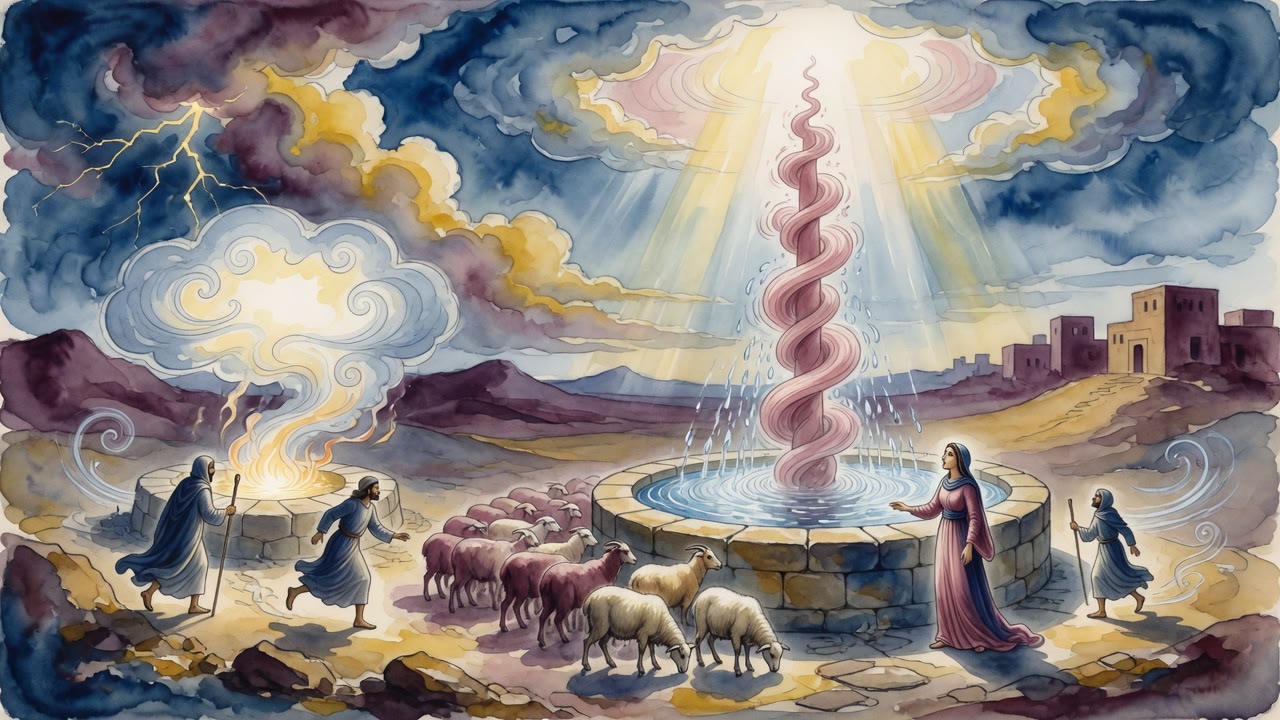
So, where does a former king go? Midian, apparently. Fearing to return to Egypt because of Pharaoh, Moses ends up at a well, where he encounters the seven daughters of Reuel, a Midianite priest. Some shepherds were giving them trouble, and good ol’ Moses steps in, helps them water their flock, and earns himself an invitation to their home.

He tells Reuel about his adventures in Egypt and Cush. Reuel, being the cautious type, decides to throw Moses in prison, thinking it would curry favor with the Cushites. Talk about gratitude!

But wait, there's more! Moses spends ten years in the slammer. The only bright spot? Reuel’s daughter, Zipporah, takes pity on him and secretly provides him with food and water. This is, of course, the Zipporah who later becomes Moses' wife. So, prison wasn’t all bad, I guess.

Meanwhile, back in Egypt, things are going from bad to worse for the Israelites. The Book of Jasher emphasizes the severity of their suffering. Pharaoh, you see, has come down with a nasty case of leprosy, "from the sole of his foot to the crown of his head," as the text vividly puts it.

His wise men suggest a truly horrific cure: the blood of little children. Pharaoh, in his desperation, agrees. A staggering 375 Israelite children were murdered for this macabre experiment.

But, surprise, surprise, it doesn't work. God doesn't listen to the physicians of Pharaoh, and the plague only gets worse. For ten years, Pharaoh suffers, and then things really escalate. He gets tumors, stomach sickness, and boils.

His ministers report that the Israelites are slacking off at work, likely due to Pharaoh’s illness. Enraged, Pharaoh decides to go see for himself. But on the way, his horse falls, the chariot overturns, and Pharaoh is severely injured. The text is quite graphic: "The flesh of the king was torn from him, and his bones were broken."

Knowing his end is near, Pharaoh appoints his son Adikam as his successor. The Book of Jasher makes a point of describing Adikam as "cunning and wise" but also "of unseemly aspect, thick in flesh, and very short in stature; his height was one cubit." You can almost picture him, can't you?

Pharaoh dies "in shame, disgrace, and disgust," and is buried without the usual embalming because his flesh was so putrid. The Book of Jasher is clear: this was divine retribution for his cruelty to the Israelites. "For the Lord had requited him evil for the evil which in his days he had done to Israel."

So, there you have it. Moses’ unlikely reign in Cush, his stint in a Midianite prison, and the gruesome demise of Pharaoh. The stage is now set for the Exodus. The Book of Jasher gives us a glimpse into the backstory, filling in the gaps and reminding us that even before the burning bush, Moses' life was anything but ordinary. It makes you wonder: what seemingly random events in our lives are actually part of a larger plan?

Full source