5 min read

Michael Lifted Levi Before His Tribe Had a Name

Michael lifted Levi into heaven before the Levites had a name, and God's stretched hand turned one son into a tribe fed by holy gifts.

Curated by Arthur · Told by Maggid ·
Table of Contents
  1. The Tenth Was Brought Near
  2. The Hand Stretched Out
  3. Creation Waited Before It Produced
  4. Michael Asked for the Servants' Bread
  5. The Tribe Descended Inside One Son

Michael lifted Levi before there was a tribe to lift.
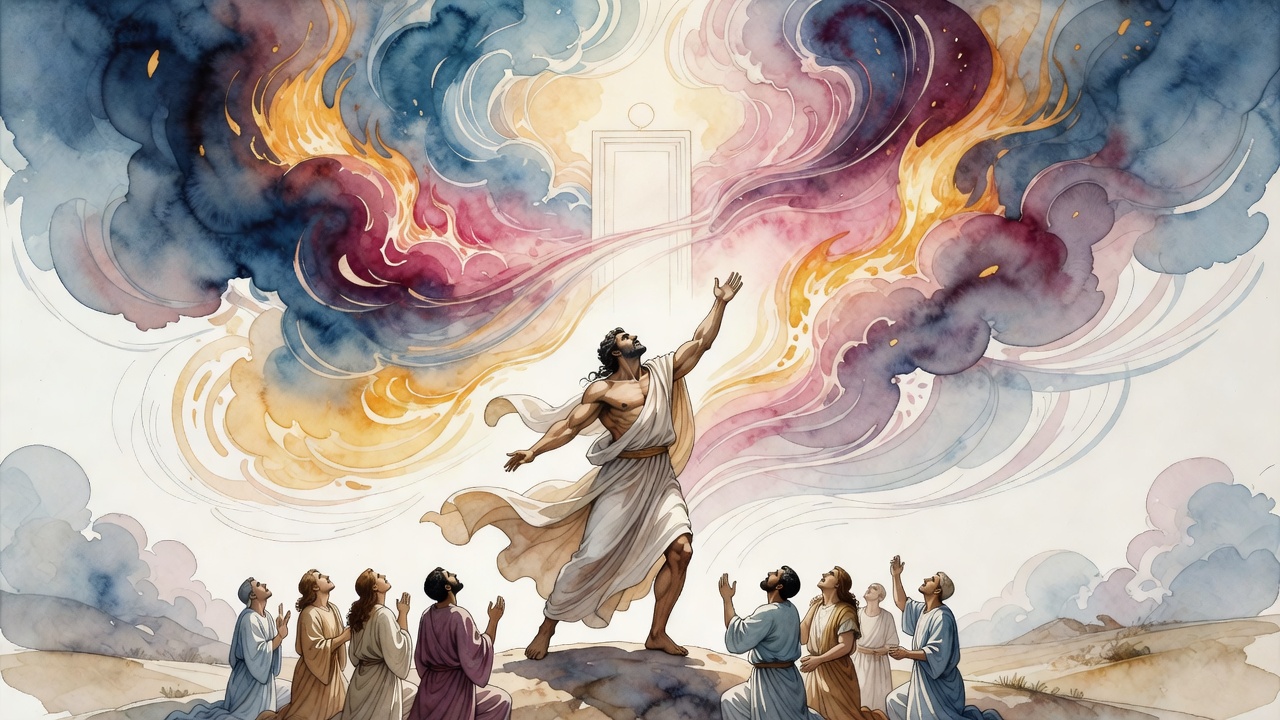
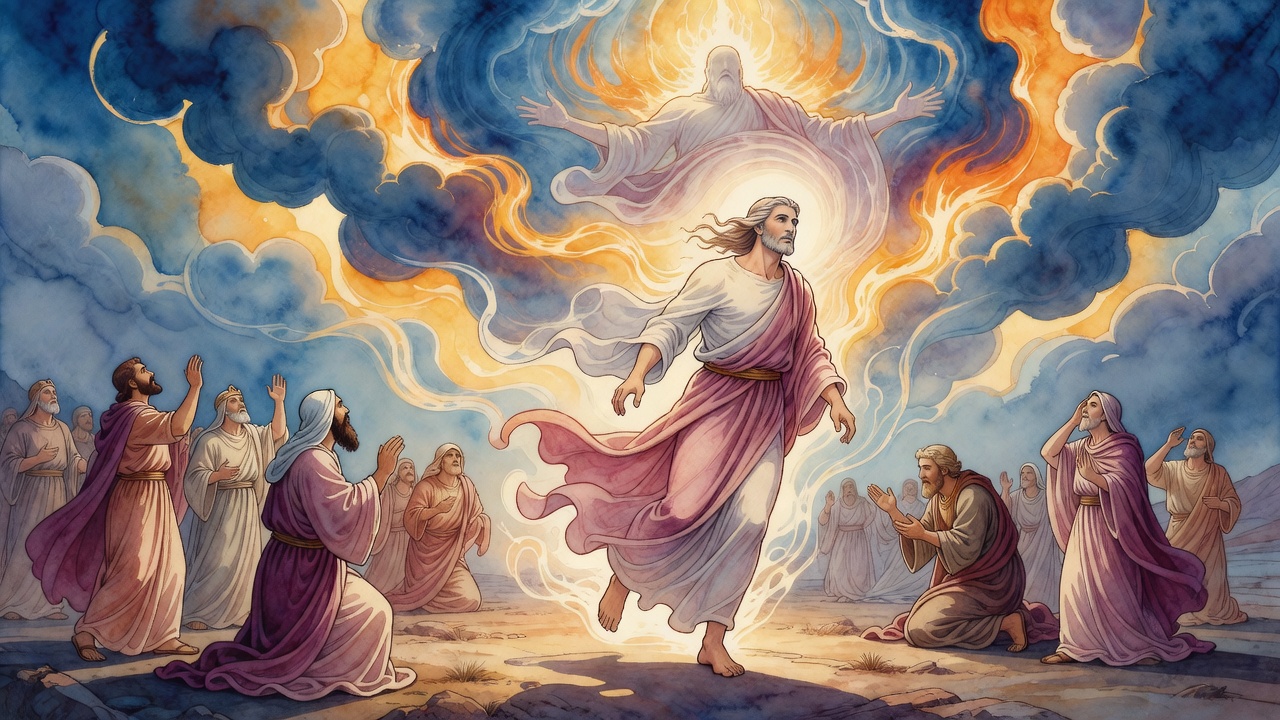
The young son of Jacob was still breathing earth's air when the archangel took him upward. Below him were tents, brothers, flocks, dust, quarrels, hunger, and all the ordinary noise of a family that did not yet know what its children would become. Above him waited the court where service had no sleep.

The Tenth Was Brought Near

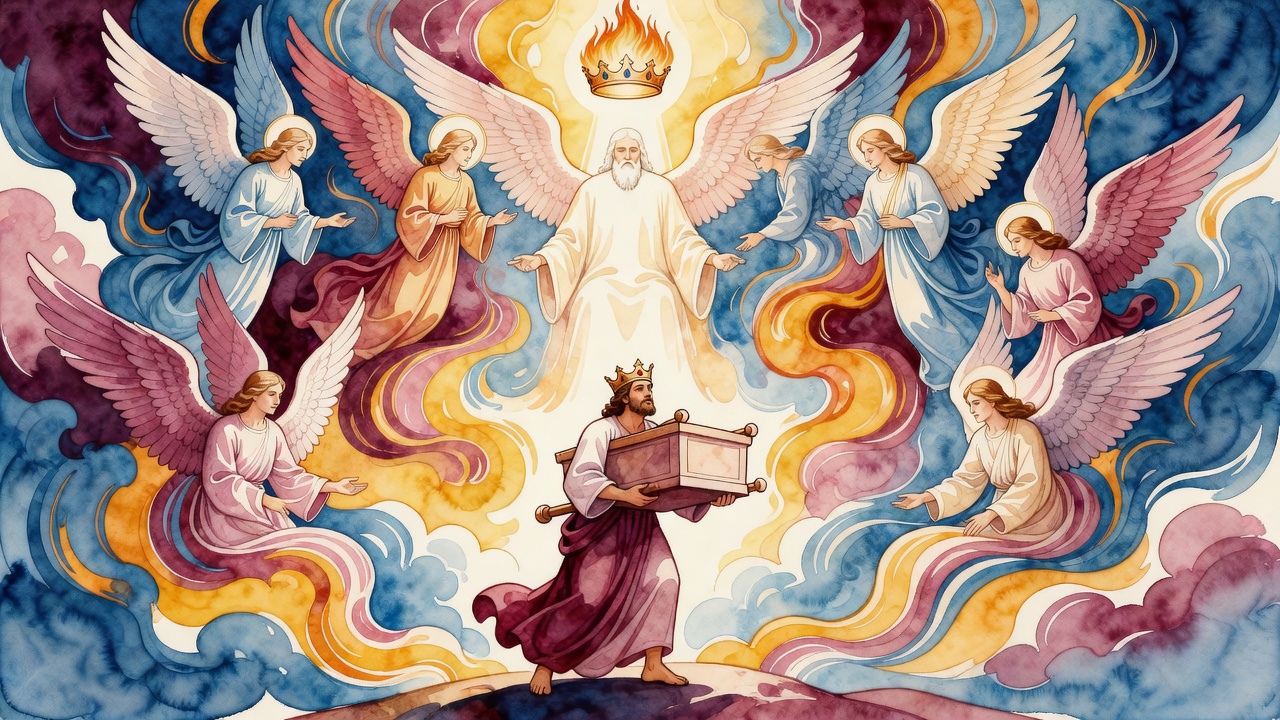
Michael did not bring Levi as a guest. He brought him like an offering already counted.

Before God, the archangel named him: this one is Your lot, the tenth that belongs to You. The words landed with the force of a tithe. One son out of the sons. One portion separated before the fields had been harvested, before the sanctuary had curtains, before any Levite had stood guard at a holy threshold.

Levi had not built an altar there. He had not asked for rank. Heaven chose him before his descendants could choose their work.

The Hand Stretched Out

God stretched out His hand and blessed him.

That gesture changed Levi's bloodline. His children would serve below as angels served above. They would stand where ordinary Israelites could not stand. They would carry, guard, sing, receive, and make a life near holy danger.

Service is not softness. A holy thing can burn. A boundary can kill the careless. Levi's blessing did not place his descendants on cushions. It placed them beside the fire and told them to stay awake.

Still, the hand remained over him. A tribe had begun inside one young man's body, though no census had counted it and no camp had made space for it.

Creation Waited Before It Produced

The world itself knew how to wait.

Earth came first, but it did not pour out everything at once. It held its force through three days and then brought forth trees, vegetation, and the Garden of Eden. The firmament waited after its own making, then gave the world the sun, the moon, and the constellations. Water waited too. On the fifth day it released birds, fish, and Leviathan, the great sea creature whose name sounds like Levi's own name echoing through the deep.

Creation did not rush its hidden assignments. It carried them until the proper day opened.

So Levi carried a tribe before the tribe had language for itself. He came down from heaven with nothing visible enough for his brothers to measure. No badge. No crown. No tent of meeting in his hands. Only a blessing, and the future pressing quietly inside it.

Nothing about the choice made Levi look larger when his feet touched earth again. Early blessing can arrive before the world builds any vessel for it. A man has to live for years with a future no one else can count.

Michael Asked for the Servants' Bread

Michael was not finished.

A king feeds the servants who stand before him. The archangel brought the question into heaven with the bluntness of a steward counting loaves. If Levi's children belonged to divine service, then their hunger belonged in the same decree. They could not guard holiness while scraping for bread like abandoned laborers outside the gate.

The answer came with the shape of Israel's future offerings. Holy things would sustain them. Tithes. Gifts. Portions brought near because the people had fields, flocks, grain, oil, and first yield to return to God.

The Levites would not receive an ordinary inheritance in the same way as the other tribes. Their table would be set from what Israel made holy.

The Tribe Descended Inside One Son

When Levi returned to earth, the tents had not changed. The brothers still carried their own heat. Jacob's household still had trouble waiting in its walls.

But heaven had already counted Levi differently.

From then on, his line moved toward service even before the service had a building. The blessing waited through generations. It waited through sons and grandsons, through Egypt, through the wilderness, through the day when a sanctuary would need hands trained for nearness.

Other tribes would fight for land, wells, borders, and harvest. Levi's children would live from the holy share. Their portion would be close enough to the altar to smell the smoke.

A young man had gone up alone. A tribe came down hidden in him.


← All myths
From the tradition

Sources

2 sources

The texts this telling draws on, in full. Open a card to read inline, or expand it for a wider, quieter read.

Legends of the Jews 6:193Legends of the Jews

Remember him? One of Jacob's sons? According to Legends of the Jews, Michael, the archangel himself, took Levi up to heaven! A whirlwind trip to the celestial court.

Once there, Michael presents Levi to God with these powerful words: "O Lord of the world, this one is Thy lot, and the tenth belonging unto Thee." It's a declaration, a dedication. God, in response, stretches forth His hand and blesses Levi. But this isn't just any blessing. It's a promise that Levi's descendants would be God's servants on Earth, just as the angels serve Him in the heavens. Think about the implications! The Levites, set apart for sacred service.

It doesn’t end there. Michael, ever the advocate, continues, "Doth not a king provide for the sustenance of his servants?" It's a rhetorical question, of course. And God’s answer is to designate for the Levites all that is holy. Meaning, they would be supported by the gifts and offerings brought to the Temple. A divine provision for a divine purpose.

Let’s shift gears a bit. Jacob, our patriarch, he of the famous dream and the even more famous wrestling match. He had a question, a deep one that gnawed at him. Remember how he received the blessing intended for Esau? It was… complicated, to say the least.

So, Jacob turns to an angel – likely the same angel he wrestled with – and asks point-blank: "My father conferred the blessing upon me that was intended for Esau, and now I desire to know whether thou wilt acknowledge the blessing as mine, or wilt bring charges against me on account of it." He wants validation. He needs to know if this blessing, obtained under less-than-ideal circumstances, is truly his.

The angel's reply is powerful. "I acknowledge the blessing to be thine by right." No hesitation. No ambiguity. "Thou didst not gain it by craft and cunning, and I and all the heavenly powers recognize it to be valid, for thou hast shown thyself master over the mighty powers of the heavens as over Esau and his legions."

Wow.

The angel acknowledges that Jacob's struggle, his wrestling – both literal and metaphorical – proved his worthiness. He overcame not just Esau, but the very forces of heaven. He demonstrated a strength, a resilience, that made the blessing rightfully his. It wasn't about trickery; it was about earning it.

What are we to make of all this? Perhaps it’s about the intertwining of the earthly and the divine. About how blessings aren't just given, but sometimes fought for, negotiated for, and ultimately, validated by something larger than ourselves. The stories in Legends of the Jews, like this one, are so fascinating because they remind us that even the most sacred narratives are deeply human, filled with questions, struggles, and the constant search for meaning.

Full source
Bereshit Rabbah 12:5Bereshit Rabbah

Rabbi Nehemya of Kefar Sihon starts us off by referencing (Exodus 20:11): "For in six days the Lord made the heavens and the earth, [the sea]…" He focuses on three essential elements: the Earth, the Heavens (or firmament), and Water. According to Rabbi Nehemya, each of these waited three days and then produced its key creations.

Think of it like this: the Earth was created on day one (according to Beit Hillel, as we learn in Bereshit Rabbah 1:15). It then "waited" through days one, two, and three, and on the third day, it brought forth three things: trees, vegetation, and the Garden of Eden.

The Firmament, created on day two, went through a similar process. After its "waiting" period, it produced the sun, the moon, and the constellations on day four.

Water, created on day three, "waited" and then, on day five, brought forth birds, fish, and the mythical Leviathan, that gigantic sea monster we sometimes hear about in Jewish lore.

Now, Rabbi Azarya offers a slightly different perspective. He points out that the verse states, "on the day that the Lord God made the earth and the heavens." According to him, only these two – Earth and Heavens – are the foundational elements. Each, again, "waited" three days, completing their work on the fourth and sixth days, respectively.

According to this view, the Heavens were created on the first day (this time following the opinion of Beit Shammai, as also mentioned in Bereshit Rabbah 1:15). They "waited" and their work was completed on the fourth day with the creation of the celestial lights.

The Earth, created on the third day – remember, "The earth brought forth vegetation, etc." (Genesis 1:12), which is seen as its essential act of creation – "waited" until the sixth day. And what was the culmination of its labor? Humankind! As it says in (Isaiah 45:12): "I made the earth and created man upon it."

So, what does all this mean? Why this emphasis on the three-day "waiting" period?

Perhaps it's about emphasizing that creation wasn't instantaneous, but a process. A process of gestation, of development. Maybe it’s about showing us that everything has a proper time, a designated moment for its fullest expression. Or perhaps it’s a way of illustrating the inherent order and structure within the seemingly chaotic act of bringing the universe into being.

Whatever the reason, this passage from Bereshit Rabbah invites us to look beyond the surface of the creation story and contemplate the deeper rhythms and patterns that underlie all of existence. It's a reminder that even in the grandest of cosmic events, there is a sense of timing, of patience, and of purposeful unfolding. And maybe, just maybe, we can apply that same understanding to our own lives, recognizing that even our own creations and endeavors require time, patience, and a little bit of "waiting" before they can fully come to fruition.

Full source