Parshat Shemot5 min read

Moses Prophesied Through a Clear Bright Lens

Moses did not speak like every other prophet. A basket, a palace, and a burning bush trained him for the clear bright lens.

Curated by Arthur · Told by Maggid ·
Table of Contents
  1. The Basket on the Nile
  2. The Palace That Could Not Keep Him
  3. The Desert Taught Him Distance
  4. Aaron Heard Through His Brother
  5. This Is the Thing

Other prophets said, "Thus says the Lord."

Moses said, "This is the thing."

The difference sounds small until the mouth tries to say it. Thus says means a message has crossed a distance. This is means the thing stands in front of the speaker, bright enough to point at. Moses did not become that kind of prophet in a single flash. He was trained for it by water, danger, exile, sheep, fire, and the women who refused to let Pharaoh's decree decide his name.

The Basket on the Nile

Before Moses spoke clearly, his mother had to act clearly.

Jochebed heard Pharaoh's command against Hebrew boys and hid her son for three months. Every cry could betray him. Every neighbor's footstep could become a soldier's knock. When hiding no longer held, she sealed a little ark and placed him on the river that had been turned into a weapon against children.

The basket was not surrender. It was a mother's last strategy inside a kingdom built for death. Miriam watched from the reeds. Pharaoh's daughter came down to bathe. The child cried at exactly the moment when a cry could still save him.

The princess reached into the river and pulled out the future wound in her father's empire.

The Palace That Could Not Keep Him

Pharaoh's daughter made room for Moses where no Hebrew boy was supposed to live.

In later telling, she protected him so completely that the palace accepted him as her own. Royal clothes, royal rooms, royal speech. Egypt tried to wrap him in its symbols. He grew up close enough to power to learn its smell, its fear, its way of turning commands into normal life.

But a palace can feed a child without owning his sight. Moses went out to his brothers and saw an Egyptian beating a Hebrew. Saw, not glanced. Saw until the sight demanded action. He struck the Egyptian and fled because the palace had taught him power, but his own people taught him pain.

The clear bright lens began with that refusal to look away.

The Desert Taught Him Distance

Midian stripped Moses of court noise.

He became a shepherd. The work was slow, repetitive, and exacting. Sheep do not explain themselves. They wander, panic, thirst, and collapse. A shepherd learns to read small movements before they become disasters. He learns the weight of weather, the danger hidden in a ravine, the difference between a flame that consumes and a flame that calls.

Forty years of desert sight prepared him for one bush.

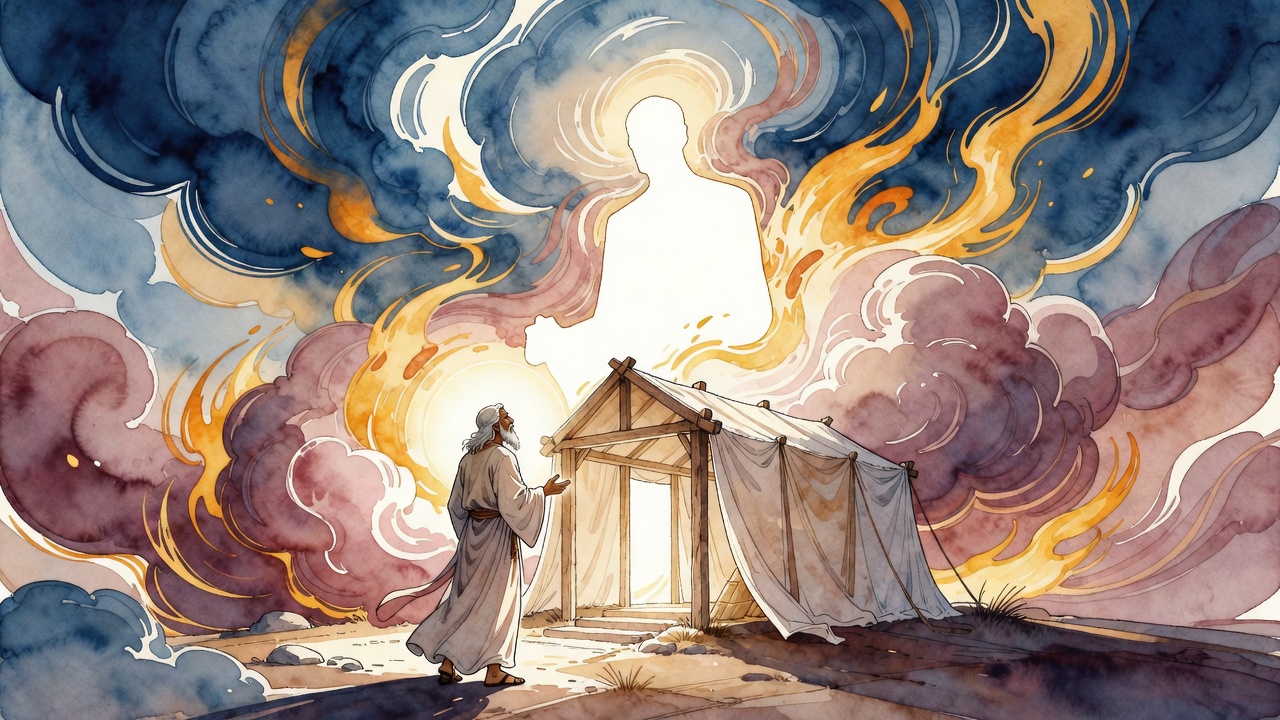
It burned and was not burned up. Moses turned aside. That turn mattered. A man still drunk on palace urgency might have rushed past. A man afraid of wonder might have run. Moses stopped long enough for the impossible to become a voice.

Aaron Heard Through His Brother

Later, even Aaron would hear hard divine news through Moses.

Aaron had stood beside him before Pharaoh, lifted his hands beside him in the wilderness, failed beside him, suffered beside him. When Aaron's death approached, Moses had to carry the word to his brother. Not as a cold decree. Not as a softened lie. He had to speak what God had said in a way a human being could bear.

That was part of the bright lens too. Clarity is not bluntness. Moses could receive without distortion and still deliver with compassion. He could stand close to heaven and close to a grieving brother in the same breath.

This Is the Thing

Moses did not speak differently because he was less humble than other prophets. He spoke differently because distance had been burned out of his calling.

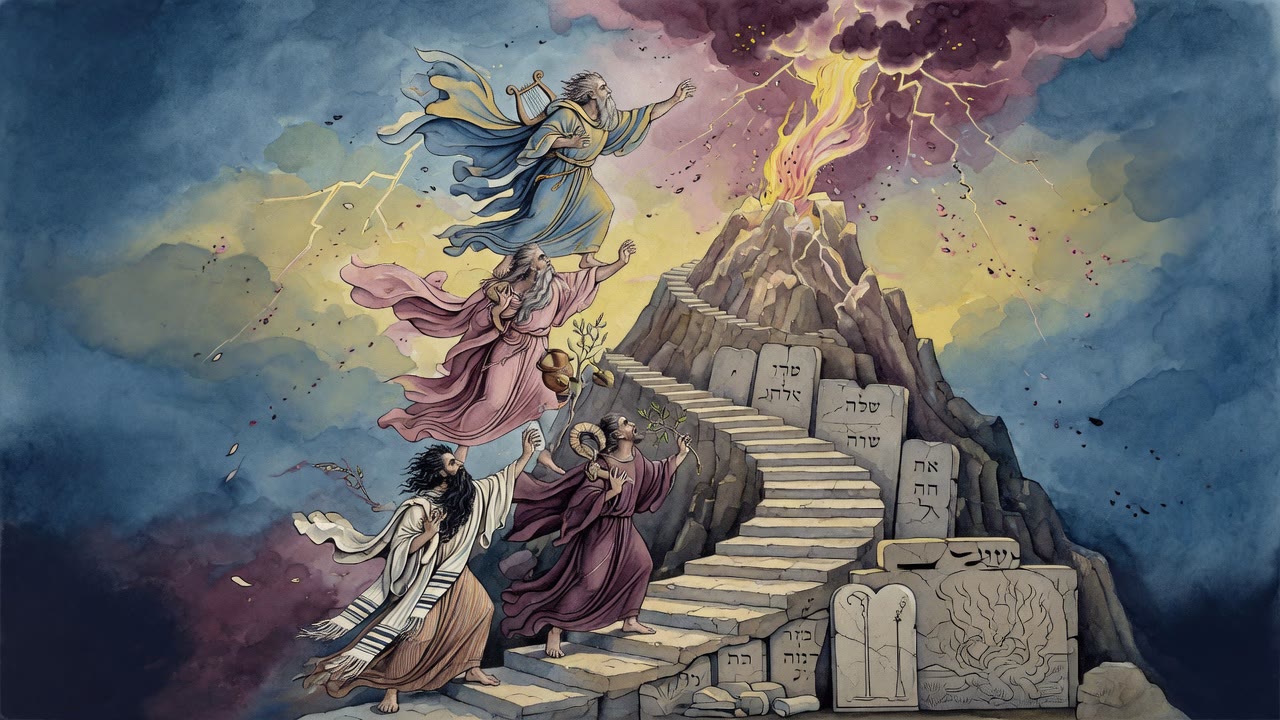
The river had carried him away from death. The palace had shown him power from the inside. The desert had taught him attention. The bush had trained his eyes on a fire that did not behave like fire. Sinai would complete what the Nile began.

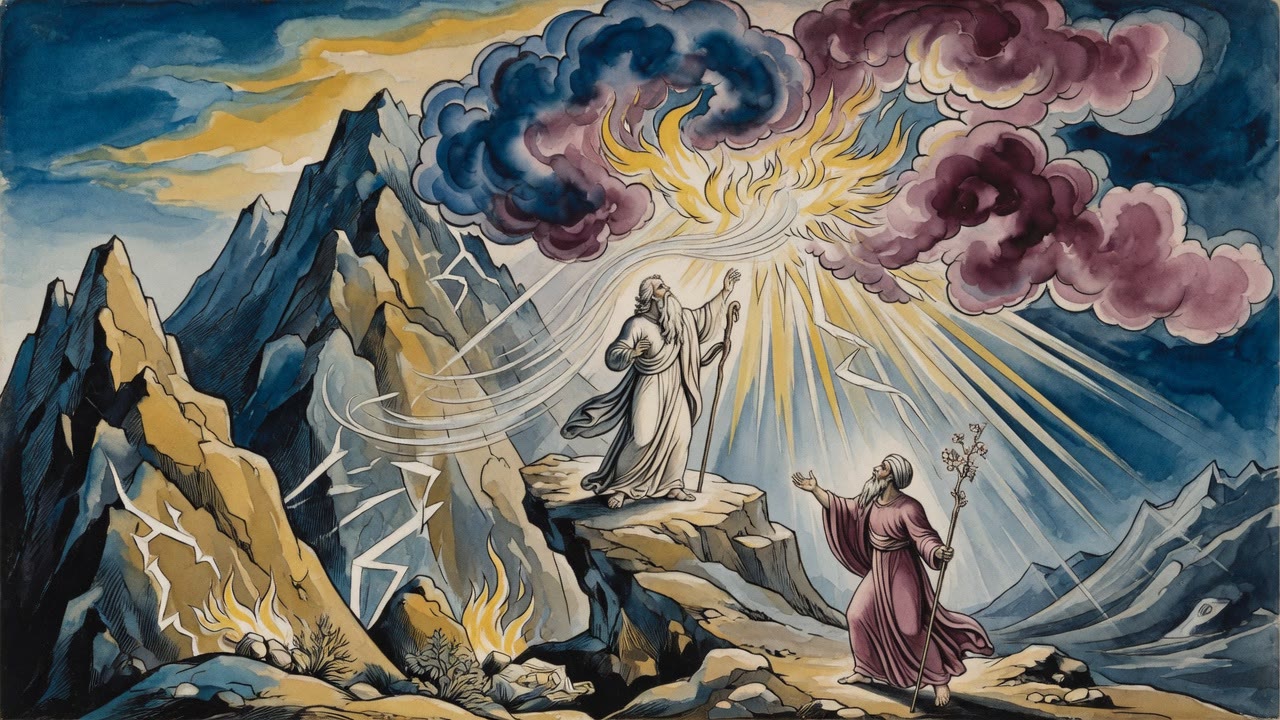
When Moses said, "This is the thing," he was not boasting. He was pointing. The thing stood before him with a clarity other prophets could only report from farther off. A child drawn from water had become the man through whom Israel would hear Torah without the message dimming on the way down.


← All myths
From the tradition

Sources

4 sources

The texts this telling draws on, in full. Open a card to read inline, or expand it for a wider, quieter read.

Sifrei Bamidbar 153:2Sifrei Bamidbar

A fascinating little puzzle found in Sifrei Bamidbar, a collection of legal interpretations on the Book of Numbers.

The verse But what "thing" are we talking about? According to Sifrei Bamidbar 153, this phrase teaches us something profound about the nature of prophecy itself. Just as the prophets delivered messages prefaced with "Thus said the L-rd," so too did Moses receive divine instruction, adding his own unique voice, “This is the thing.” See, for example, (Exodus 11:4).

The interpretation doesn't stop there. The text offers another intriguing understanding: "This is the 'word' (for the absolution of vows)." Ah, vows! That takes us into the complex realm of promises and obligations, specifically within the context of marriage.

The Torah, in Numbers 30, outlines how a husband can annul certain vows made by his wife. He can mefer (Hebrew for "annul") her vows. But, interestingly, a sage – a learned religious authority – cannot. Conversely, a sage can matir (Hebrew for "permit" or release) someone from a vow. But a husband, in this specific instance, cannot.

Confused yet? That's perfectly normal! The text itself anticipates this confusion, and addresses it head-on with a brilliant piece of rabbinic logic.: if someone who doesn't have the power to annul a vow does have the power to permit it, wouldn't it stand to reason that someone who does have the power to annul a vow should certainly have the power to permit it? And on the flip side, if someone who doesn't have the power to permit can annul, shouldn't one who can permit be able to annul even more so?

It seems logical. But the Torah explicitly divides these authorities. So why this division of labor?

This is where the phrase "This is the 'word' that the L-rd has commanded" becomes crucial. It’s not about simple logic. It's about divine decree. The husband annuls; the sage does not. The sage permits; the husband does not.

What are we meant to learn from this seemingly paradoxical distinction? Perhaps it speaks to the importance of respecting different forms of authority and expertise. A husband's authority stems from his marital role and responsibility, while a sage's authority derives from their knowledge of Jewish law and tradition. Each has their own sphere of influence, and neither can encroach on the other's territory.

Or maybe, just maybe, it’s a reminder that not everything in life needs to be perfectly logical. Sometimes, the rules are simply the rules, given to us by a higher power. Our job isn't always to understand why, but to respect the boundaries and work through the complexities with wisdom and humility.

Full source
Legends of the Jews 4:19Legends of the Jews

Pharaoh, had a problem. He was terrified of the growing Israelite population in Egypt. His solution? A truly horrific decree: kill all newborn Hebrew boys. But even the cruelest plans sometimes have flaws.

The verse reads, "though a man may marry many wives, each woman can marry but one husband." So, the thinking went, reducing the number of men wouldn’t be as devastating to the Israelite future as reducing the number of women. It was a twisted, calculating logic… thankfully, it wasn’t going to work.

Enter Jochebed, the mother of Moses, and Miriam, his sister. These weren't just any women; they were midwives, entrusted with bringing life into the world, even as Pharaoh sought to extinguish it. They were commanded to kill the baby boys, but they feared God more than Pharaoh, and refused. As (Exodus 1:17) puts it: "But the midwives feared God, and did not as the king of Egypt commanded them, but saved the men children alive."

When they were summoned before Pharaoh, Miriam, young as she was, didn't hold back. Imagine this scene. According to Legends of the Jews, Miriam, filled with righteous anger, cried out, "Woe be to this man when God visits retribution upon him for his evil deeds!"

Talk about speaking truth to power!

Pharaoh, unsurprisingly, was enraged. He wanted her dead. But Jochebed, quick-thinking and wise, stepped in. "Why dost thou pay heed to her words?" she pleaded. "She is but a child, and knows not what she speaks."

Now, here's where it gets even more amazing. Ginzberg's Legends of the Jews tells us that Miriam was only five years old at this time! Five years old! And yet, she possessed the courage to stand up to the most powerful man in Egypt.

And even at that tender age, Miriam was already helping her mother. While Jochebed washed and bathed the newborns, Miriam, this little girl with a lion's heart, gave food to the babies. She was already a guardian of life, a protector of her people.

It’s a powerful image, isn't it? This tiny girl, filled with such fierce love and loyalty. It reminds us that courage isn't about age or size. It's about conviction, about standing up for what's right, even when it's terrifying. Miriam's story, even before the Exodus, is a evidence of the strength and resilience of the women who helped shape the destiny of the Jewish people. What can we learn from her example today?

Full source
Legends of the Jews 4:68Legends of the Jews

Legends of the Jews turns to Bithiah Pretended to Be Pregnant Then Produced Moses.

One charming detail, found in Ginzberg's Legends of the Jews, is how Bithiah, Pharaoh's daughter, orchestrated Moses' arrival at court. To ensure he received the treatment befitting a prince, she pretended to be pregnant for quite some time before "miraculously" producing him, having him brought from his true parents. Imagine the lengths she went to protect this child!

Once he was with her, she couldn't bear to let him out of her sight. She showered him with affection, constantly caressing and kissing him. Why? Because, as the aggadah emphasizes, Moses was exceptionally beautiful. So beautiful, in fact, that people couldn't stop staring at him! Bithiah, understandably, was protective.

It wasn't just his looks. Even as a young child, Moses displayed an extraordinary intellect. His teachers marveled at his quick comprehension, far beyond what was expected of a child his age. According to the legends, all his actions in infancy hinted at the greatness he would later achieve. Even at three years old, God blessed him with remarkable stature. people would literally stop in their tracks, abandoning their tasks, just to gaze at him as he was carried through the streets. The child’s loveliness was so captivating that it held their gaze. It’s a powerful image, isn’t it?

Pharaoh's daughter, recognizing that Moses was no ordinary child, decided to adopt him as her own, since she was childless. She approached her father, Pharaoh, with a proposition: "I have brought up a child, who is divine in form and of an excellent mind, and as I received him through the bounty of the river in a wonderful way, I have thought it proper to adopt him as my son and as the heir of thy kingdom." This adoption narrative is recounted in Legends of the Jews, drawing from earlier midrashic (rabbinic interpretive commentary) sources.

And how did Pharaoh react? He took the infant Moses into his arms and hugged him close to his chest. Can you imagine the scene? The most powerful man in Egypt, embracing the future liberator of the Israelites, completely unaware of the destiny that awaited this beautiful, intelligent child. It's a moment pregnant with irony, isn't it? A reminder that even the mightiest rulers are often blind to the forces of history unfolding before their very eyes.

Full source
Bamidbar Rabbah 19:17Bamidbar Rabbah

"Aaron will be gathered to his people," God tells Moses, "for he will not come into the land that I have given to the children of Israel, because you defied My directive at the waters of dispute."

Bamidbar Rabbah, a collection of rabbinic teachings on the Book of Numbers, uses this verse as a springboard to explore some profound ideas about leadership, legacy, and divine communication. It suggests that the righteous are informed of the day of their death, giving them time to pass on their "crown" – their wisdom, their mantle of leadership – to their successors. It's a beautiful image, isn't it? A chance to prepare, to say goodbye, to ensure continuity.

Why was Aaron's death announced so openly, while Miriam's death remained a mystery, with no one knowing the exact circumstances? Bamidbar Rabbah poses this very question. And the answer? It's all about position and responsibility.

The text draws an analogy to a king with two treasurers. Neither could act without the king's knowledge. One held a very significant position before the king, and when the time came to replace him, the king wouldn't simply remove him without warning. No, he would inform him beforehand, out of respect for his service.

Similarly, Moses and Aaron held significant positions before God. As the verse states, "These two elders, they did not do anything without My knowledge. Now that I am removing them, I will not remove them until I inform them." That's why the verse explicitly states, "Aaron will be gathered." It's a divine courtesy, a recognition of their years of service and devotion.

The text even hints at Moses' plea to God: "My Master, leave him with the children of Reuben and the children of Gad." But God's response is firm: "That I have given to the children of Israel" – 'his death is delaying the giving of the land. Is it your desire that he not die and Israel will not enter the land?' That is why it is stated: “That I have given to the children of Israel.”

It emphasizes a difficult truth: sometimes, even the most beloved leaders must make way for the future. Their time has come, and their passing, however painful, is necessary for the next chapter to unfold. It’s a poignant reminder that even in leadership, there is a time to step aside. The land, the promise, awaited fulfillment. Aaron's departure, while mourned, was an integral part of that journey.

So, what does this all mean for us? Perhaps it’s a call to appreciate the leaders in our lives, to recognize their contributions, and to learn from their wisdom while they are still with us. And maybe, just maybe, it's a reminder that even in death, there can be dignity, purpose, and a lasting legacy.

Full source