Moses Watched Rebellion Sink Into Its Own Grave
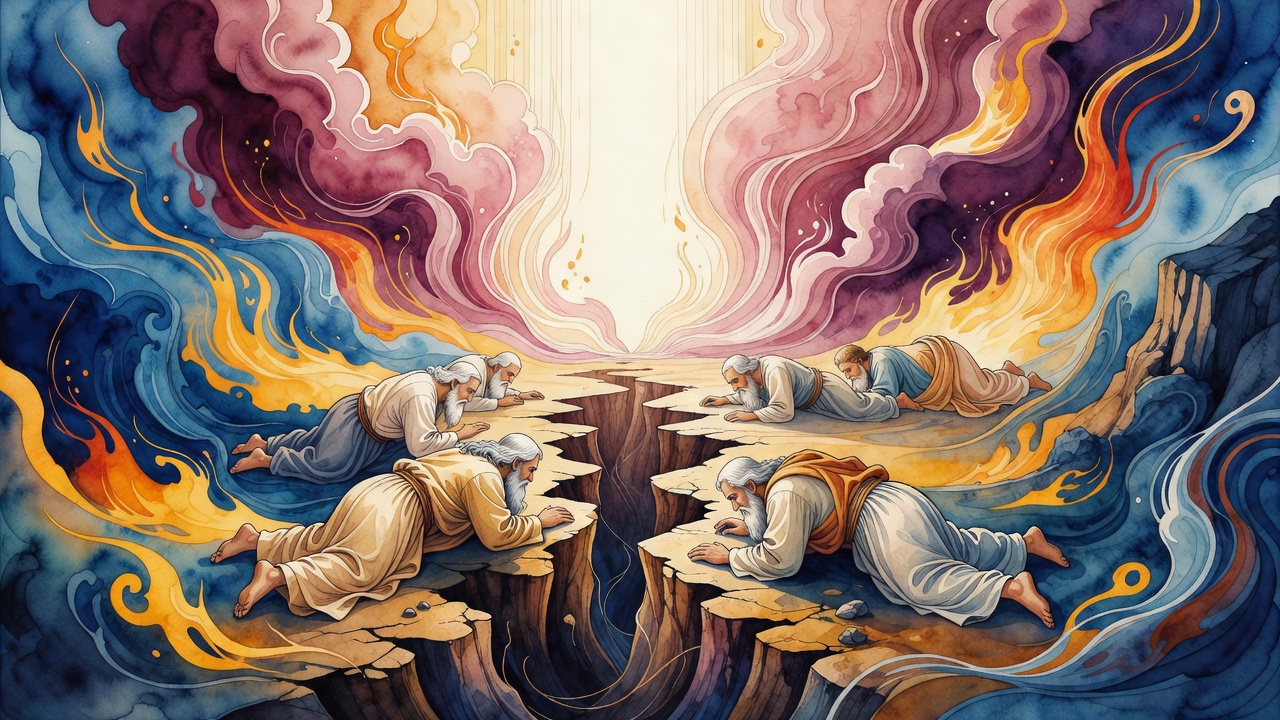
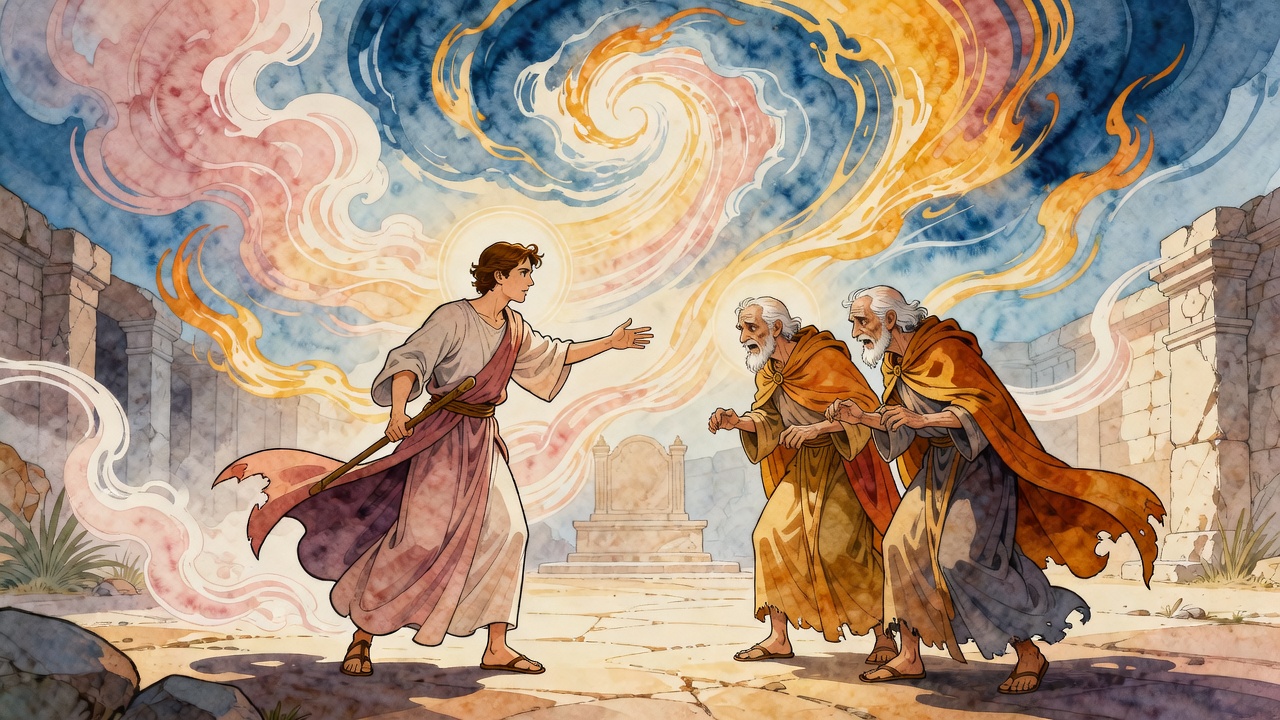
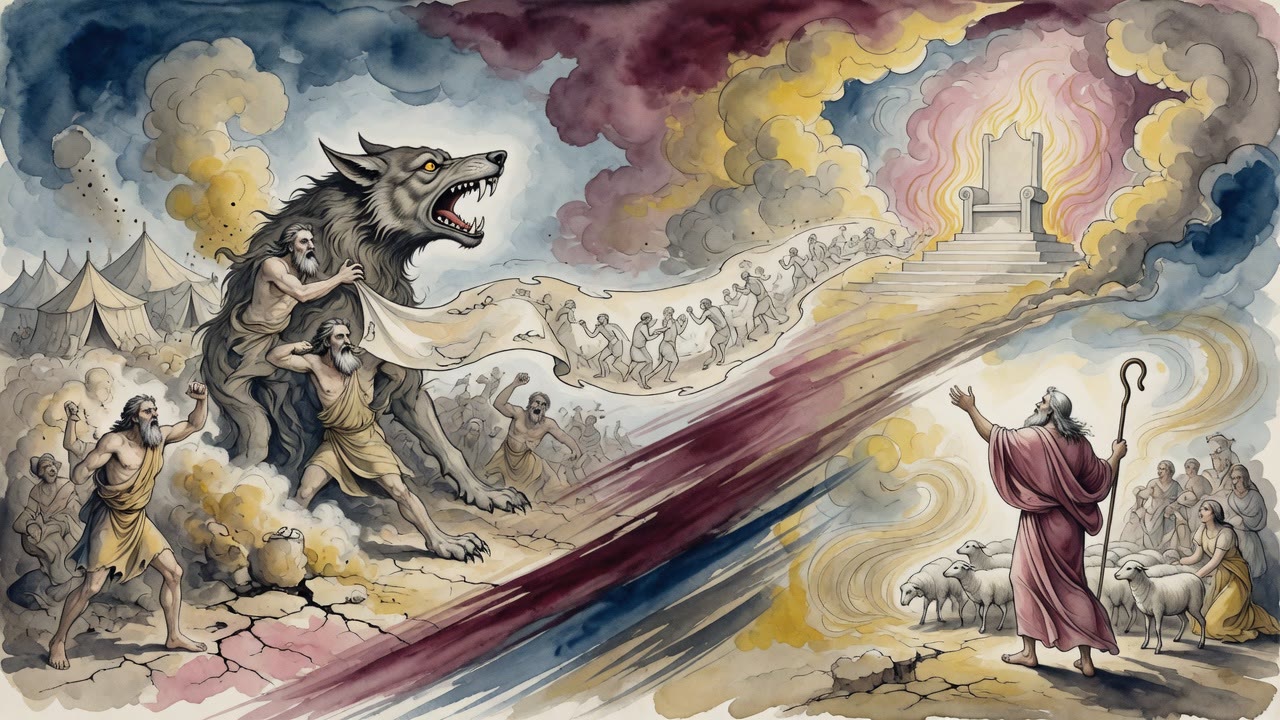
Moses summoned Dathan and Abiram to be heard. Their answer came back: we will not come up. The ground opened and swallowed them and their households.
Table of Contents
 Click for full size
Egypt's Water Turned Against Its Own Mouths
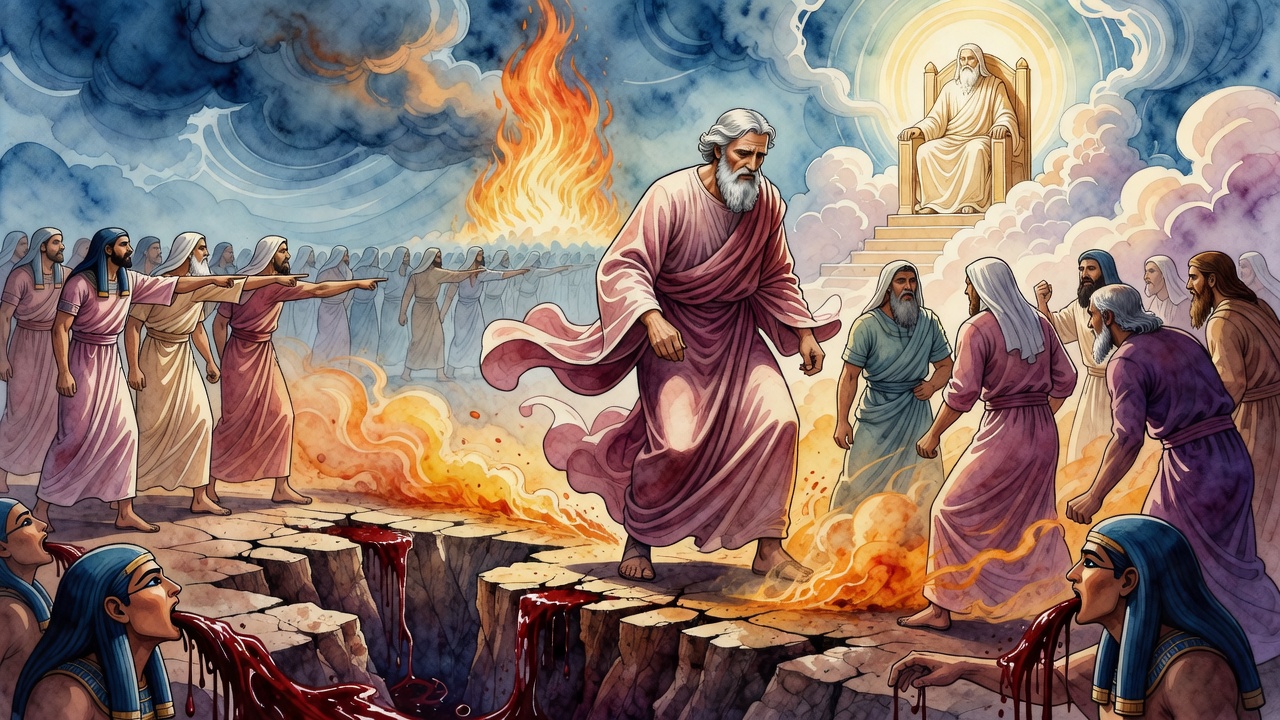
The first plague did not merely change rivers. It changed mouths. Legends of the Jews preserves a tradition that when the blood plague struck Egypt, it was not confined to the Nile and the canals and the vessels. Egyptian spit became blood the moment it left Egyptian mouths. If an Egyptian drank from the same trough as an Israelite, the Egyptian's portion turned to blood while the Israelite's remained water. An Egyptian who pressed an Israelite to sell clean water paid the people he had enslaved for relief from the judgment on his own body. Egypt had drowned Israelite babies in the Nile. Now the Nile became the medium of restitution. Even the idols bled, as if Egypt's gods were being made to testify against their own worshippers. The plague was not a detached punishment. It was a map of exactly what Egypt had done, drawn in the same color as the crime.
Abraham's Merit Held Open the Door Gehenna Used on Egypt
When the mixed swarm arrived as one of the later plagues, the Midrash traced its logic back to Egypt's own forced mixing of peoples. Israel had been mixed into Egyptian society against its will, its labor folded into Egyptian wealth, its identity pressed into Egyptian slavery. God answered with a plague of mixed creatures that turned Egypt's principle of forced incorporation back on the incorporators. The connection to Abraham and the fires of Gehenna runs deeper. Abraham had held closed the gate of Gehenna so that the circumcised would not descend there. Egypt's dead, who had participated in the system that murdered Israelite children, did not benefit from that mercy. The gates that Abraham's covenant had sealed for his descendants stood open for those who had worked against them.
The Spies Condemned a Generation to the Desert
The scouts returned from Canaan carrying an enormous cluster of grapes and a report that the land ate its inhabitants. The people who were there were giants. We were like grasshoppers in our own eyes, they said, and in their eyes too. The Midrash fixes the date: the night Israel wept at the spies' report was the ninth of Av, the same night that would mark both Temple destructions. God said: you have wept for nothing on this night. I will set aside a weeping for this night for generations. The generation that had seen Egypt's plagues, crossed the sea, received Torah at Sinai, eaten manna from the sky, and drunk water from the rock was condemned to die in the wilderness because it looked at its destination and decided it was impossible.
Dathan and Abiram Refused to Come
When Korah's rebellion broke out, Moses tried to use the court to resolve it. He summoned Dathan and Abiram to be heard. They sent a message back: we will not come up. The phrasing mattered. Moses was asking them to come up for judgment. They refused not only Moses but the mechanism of law itself. They rehearsed their grievances, you have brought us out of a land flowing with milk and honey to kill us in the wilderness, and called Egypt what God had always used to describe Canaan. They had reversed the world's moral geography. Egypt was milk and honey. The wilderness was death. God was the killer. Moses was a fraud. The Midrash notes that when the ground opened and swallowed Dathan, Abiram, and their households, it was as precise as all the other judgments. They had refused to come up. They went down instead. The refusal to be heard by justice became its own sentence.
Moses Feared Joshua Would Forget Him
Near the end of his life, Moses stood before God and worried about something smaller than the wilderness, the spies, or the rebellions. He worried that Joshua would forget him. Joshua had been beside him for forty years, had carried his instructions, had stood at the entrance of the tent while Moses spoke with God inside, had been named in public as the successor before all of Israel. And Moses still feared erasure. God reassured him. But the fear itself is remarkable. The man who had stood before Pharaoh, who had raised his staff over the sea, who had broken the first set of tablets and returned to carve the second, was afraid that the person who came after him would not keep his name alive. Greatness is not immune to the fear of being forgotten. Moses, who would be remembered in every generation, went to his death still carrying that particular anxiety as if it were a stone in his robe.
← All myths