Mother Bird Sent Away from a Roadside Nest
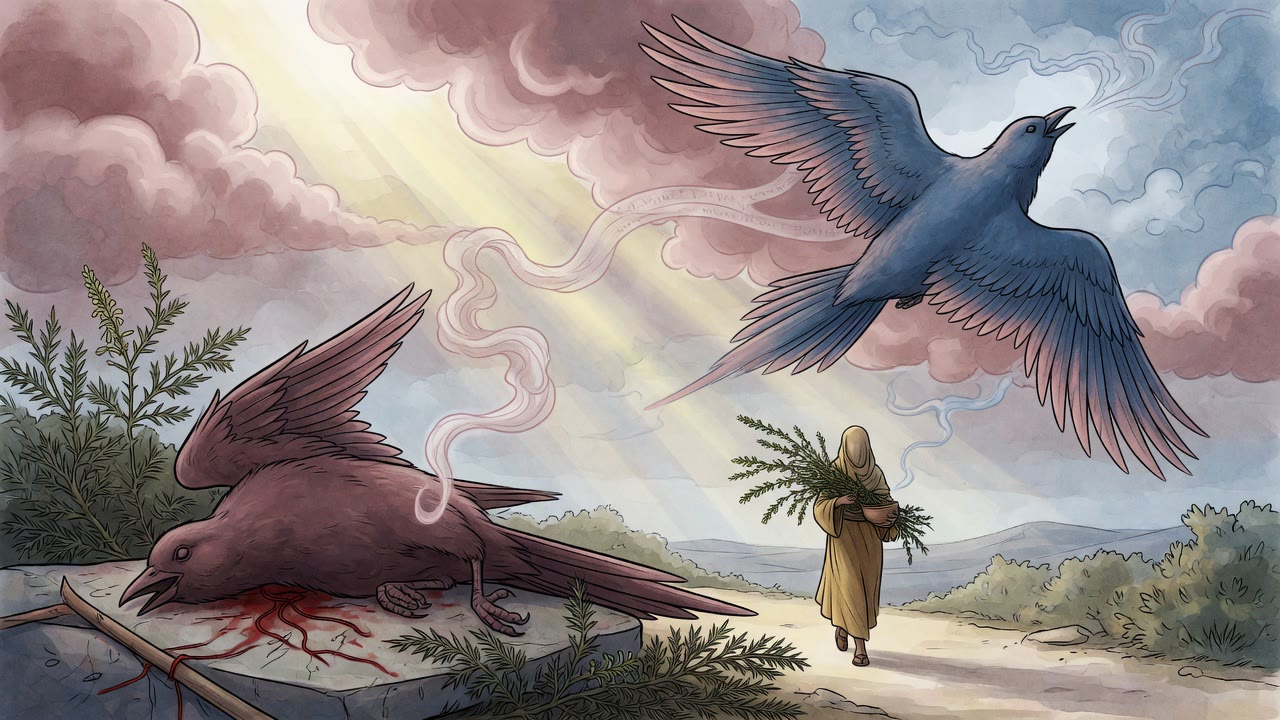
A traveler found eggs under a wild mother on the road, drove her off with both hands shaking, and only then took what the nest still held.
Table of Contents
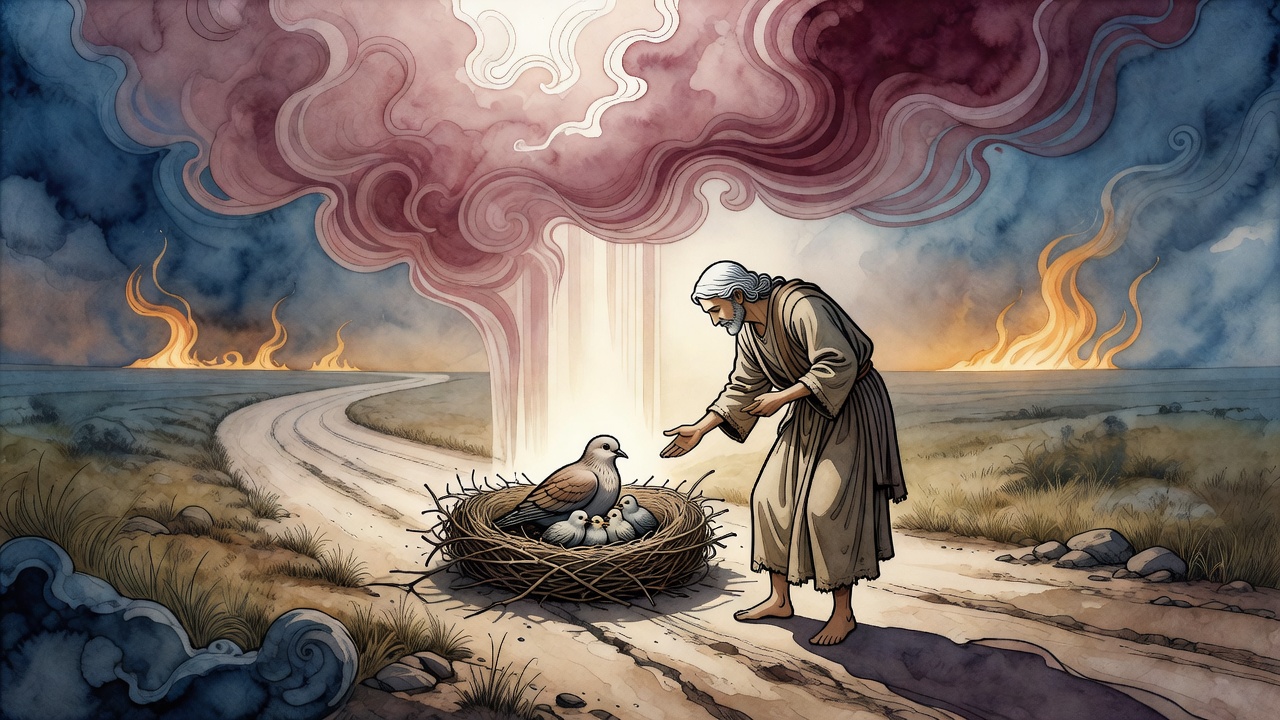
The nest sat low in a thorn bush beside the road, close enough that a walking man could have crushed it without meaning to. The mother bird flattened herself over the eggs and did not move until his shadow crossed her like a cloud with weight.
 Click for full size
Chance, Not a Hunt
"If you happen upon a bird's nest before you on the way," the Torah said, and the midrash heard accident, not a planned raid with a sack and a map of trees (Deuteronomy 22:6). A man who climbed and searched until he found a nest had already stepped outside the scene the verse painted. This man had not searched. The nest found his eyes first, and hunger found his hands a breath later.
Wild birds only. A dove in a house cote, a bird fattened for the table, a nest under full human ownership, those were another world with other rules. The commandment of shiluach ha-ken guarded the wild mother on the way, in a tree or on the ground, sitting on eggs or young, a small fierce body between the traveler and what he wanted.
He stopped. His stomach argued. The verse argued. Thorns had already drawn a thin line of blood on his wrist, as if the bush itself were taking a first tithe.
A cart passed and did not slow. The driver glanced and saw only a man standing in dust. He did not see the nest. Most of the world's cruelty is invisible from a moving seat.
Send, You Shall Send
He could not take mother and children together. That double seizure was the banned act, the clean cruelty of emptying a family in one grab while the mother still felt the heat of her eggs. "Send away, you shall send the mother," the doubled verb said, and the midrash treated the doubling as work: drive her off, make the sending real, not a polite wave that leaves her circling two cubits away.
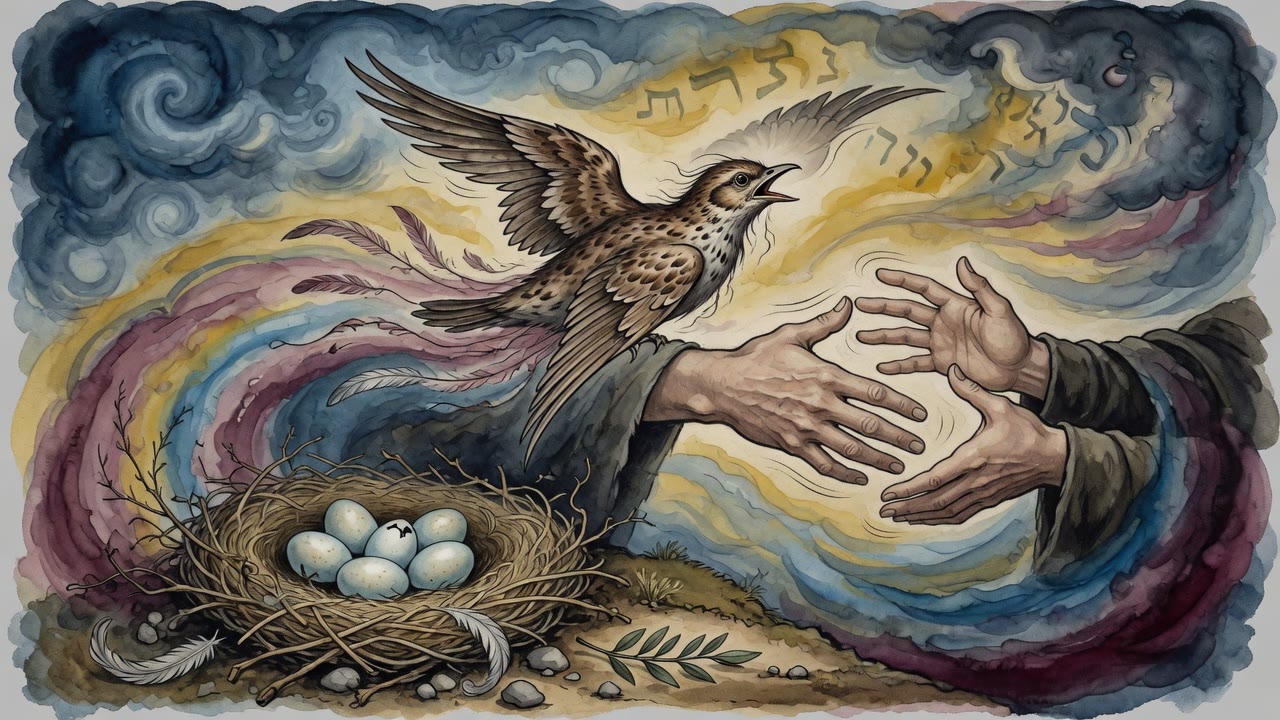
He clapped once. She lifted and circled with a cry that scraped the air. He clapped again and stepped in until she fled farther than a short feint, far enough that the nest was no longer under her body when his hands arrived. Only then did his fingers go to the eggs.
His hands shook. Not from fear of wings near his eyes. From the knowledge that the law had just made him perform mercy with the same hands that meant to take food, a split duty in one pair of palms.
One egg broke against a thorn as he lifted it. Yolk ran into the dust like a failed offering. He cursed softly and still did not grab for the mother as she watched from a farther branch, a dark comma against the sky.
The Impostor on Another's Eggs
Later teachers argued a stranger case for the study hall: a male partridge sitting on eggs that were not his, an impostor parent warming another lineage. Rabbi Eliezer said the sending still applied, because the scene of a bird on eggs still demanded the doubled send. The sages said the Torah named a mother-bird and excluded the impostor from the commandment's exact face.
The roadside man did not need that debate to finish his hour. His bird was clearly mother, clearly wild, clearly on her own clutch. Still, the argument showed how tightly the commandment clung to the image of maternal presence. The law was not a vague kindness to all feathers. It was a specific refusal to make a mother watch her young seized beneath her body while she could still fight or flee.
He put two eggs in his cloth and left one in the nest, not because the verse required a remainder, but because his stomach had already lost a little of its urgency to the shaking in his hands and the cry still hanging in the thorns.
Long Life on a Small Road
The promise attached to the act was large for such a small scene: that it would go well with him, and that days would lengthen (Deuteronomy 22:7). A man on a dusty road with thorn pricks in his wrist was being told that heaven watches how he handles a nest he could have robbed in silence with no elder to see.
He walked on. Behind him the mother returned in a hard flutter, found the broken pattern of her nest, and cried the thin cry birds use when the world has been rearranged by larger hands. She settled on what remained as if warmth could renegotiate theft.
He did not look back twice. Looking back twice would have turned obedience into theater for his own conscience. Once was enough to know she lived and that the law had used him as its instrument whether he felt holy or only hungry and constrained.
By evening he roasted the eggs and tasted more than food. He tasted a limit. Limits are how a people stay human on roads where no one is watching.
← All myths