Akiva Swept the Floor of a Forgotten Student
A student lay sick in a corner while the house stepped around him. Akiva walked in, and care returned. At Eliezer's bed he named suffering as a gift that turns.
Table of Contents
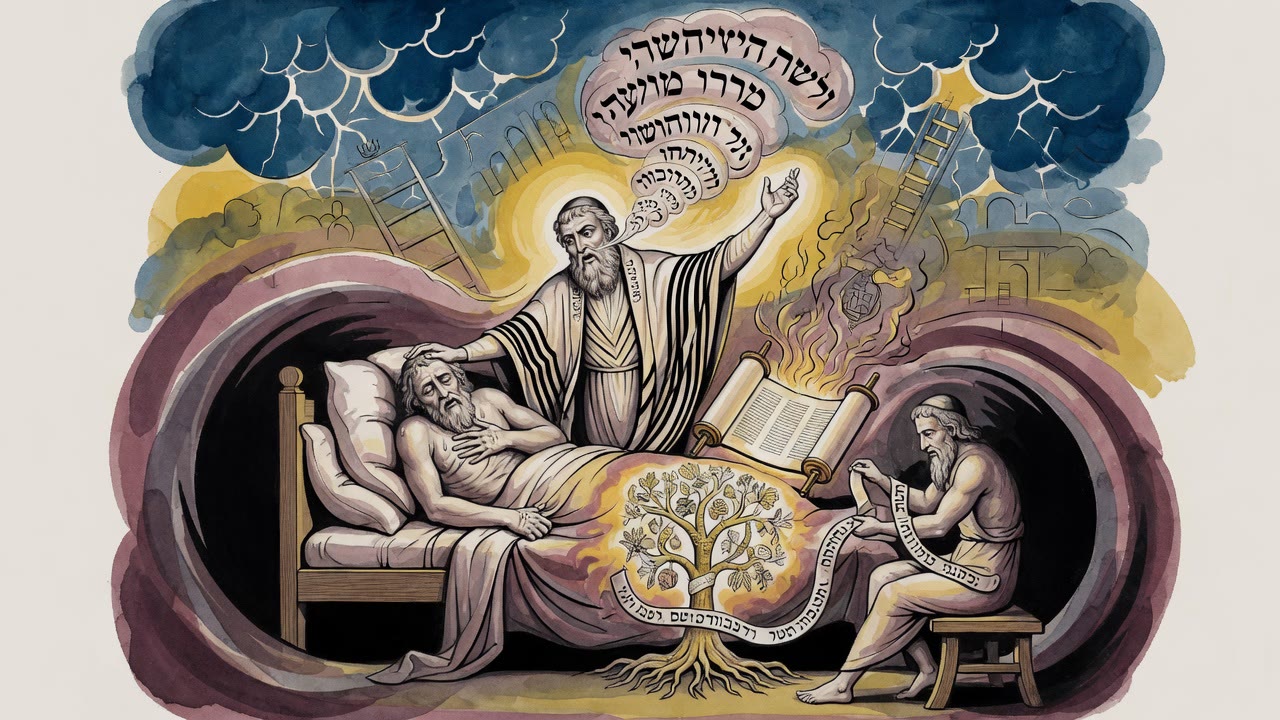
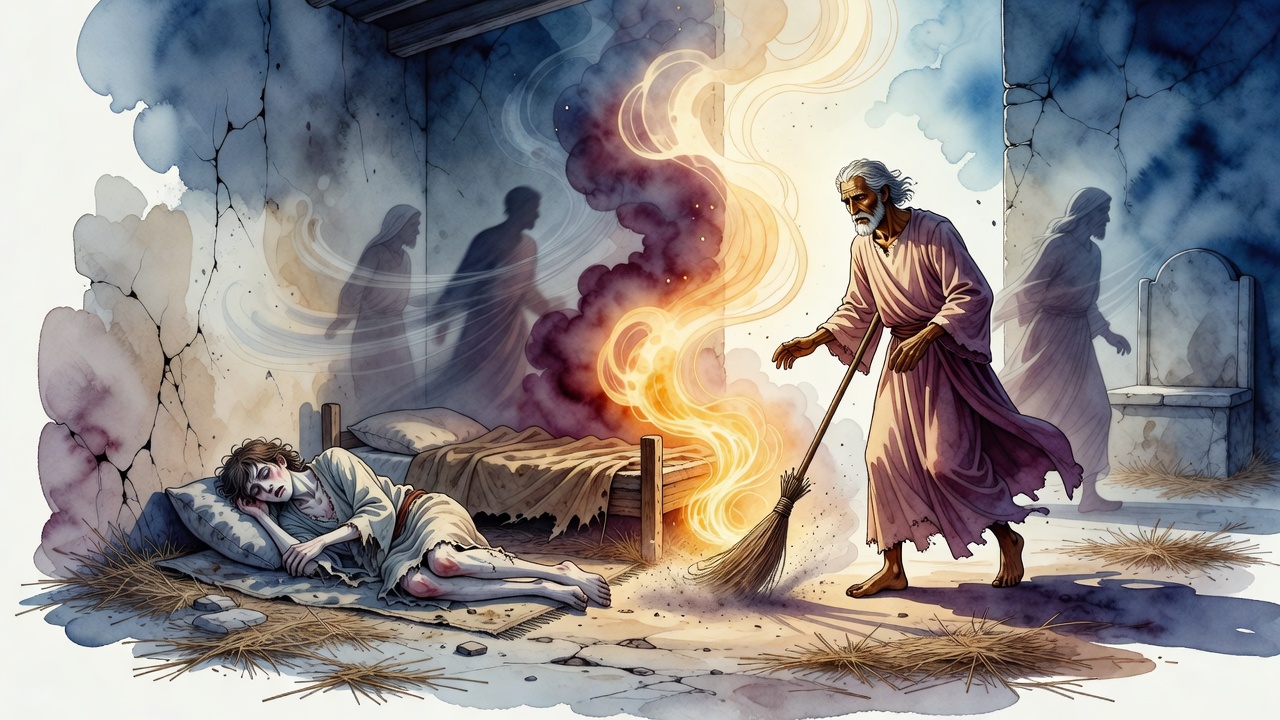
The student lay in the corner like a broom someone had forgotten to hang up. The household stepped around him. The fever did its work without witnesses. Then Rabbi Akiva ducked through the door, and the whole room had to rearrange its eyes around a body it had trained itself not to see.
 Click for full size
The Visit That Taught the House
One of Akiva's students had fallen gravely ill. No one in the lodging thought to care for him. Illness makes people busy with their own fear, and a junior student is easy to demote into furniture. Akiva heard. He dropped what he was doing, the work that fills a famous teacher's day, and went. The landlady saw the most famous sage of the generation sit down beside a young man she had been ignoring, and shame arrived faster than any sermon about lovingkindness.
If Akiva thought this student worth attending, she had misjudged in a way that could not be hidden. She brought water. She brought broth. She moved him into a better room where air moved and light reached the floor. Under that new attention the student recovered, not because the fever feared a rabbi, but because a body that is seen often fights better than a body that has been filed under inconvenience.
Akiva did not heal him with a miracle formula whispered over the bed. He healed him by noticing. The noticing rippled until the people around the bed noticed too. The rabbis say visiting the sick removes one-sixtieth of the illness. Sometimes more. Sometimes it is the only medicine the body will accept, because isolation is its own fever.
The student later said he remembered the sound of the door more than the fever. The hinge complained. Akiva's sandals crossed the floor. For the first time in days someone sat close enough that the sick man could smell outdoor air on a cloak. That nearness did more for his pulse than the broth that followed, though the broth mattered too. Bodies keep score of who bothers to arrive.
Four Comforts That Fell Flat
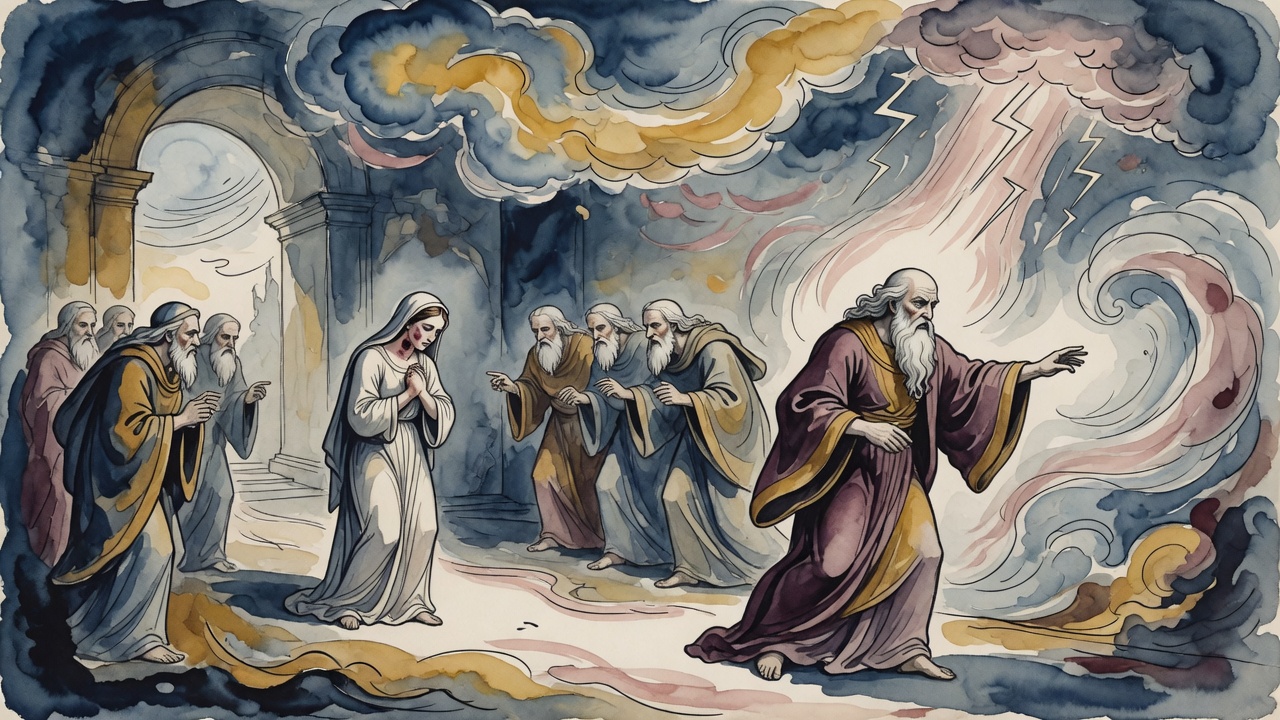
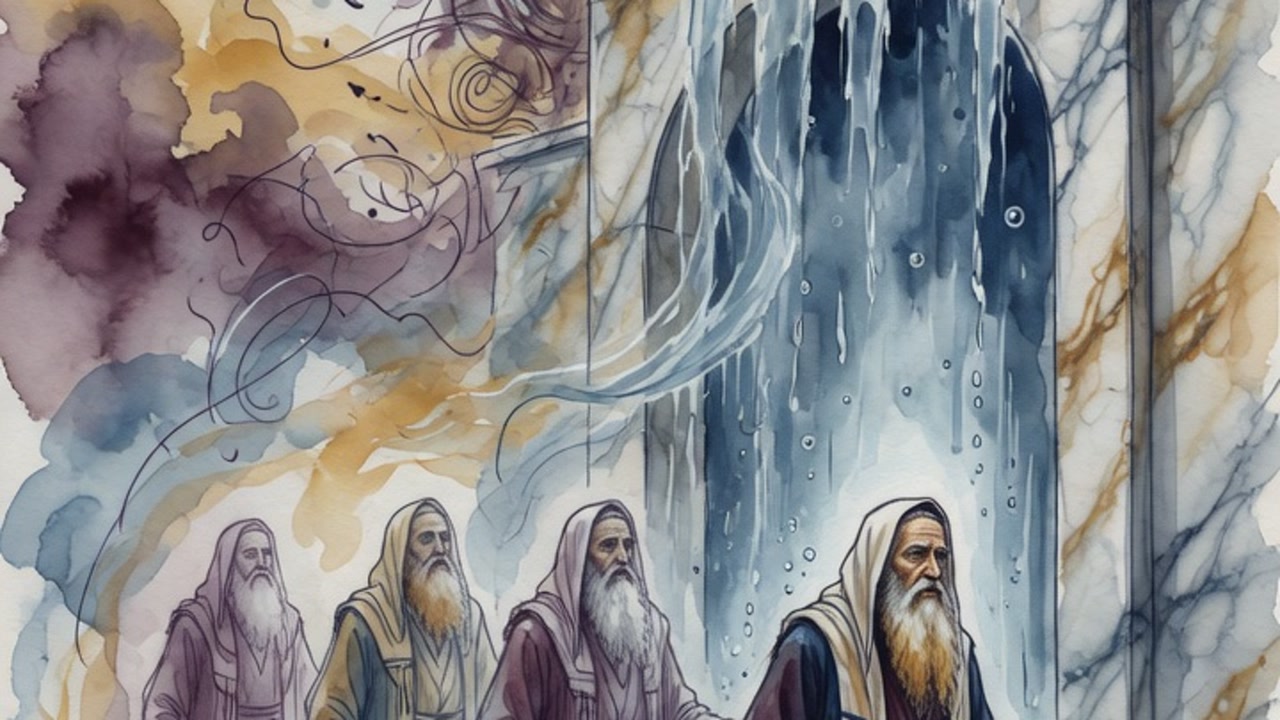
On another day Rabbi Eliezer ben Hyrcanus lay ill, and four colleagues came with the best words they owned. Rabbi Tarfon said Eliezer was more precious to Israel than a drop of rain. Rabbi Yehoshua said more precious than the sun. Rabbi Elazar ben Azaryah said more precious than a father and mother. Lovely lines, polished enough for a eulogy. None of them reached the mattress. Praise bounced off pain the way light bounces off a shuttered window.
Then Akiva, youngest among them, the shepherd who had learned his letters at forty and never forgot what it meant to be late to books, spoke a harder sentence. "Suffering is precious."
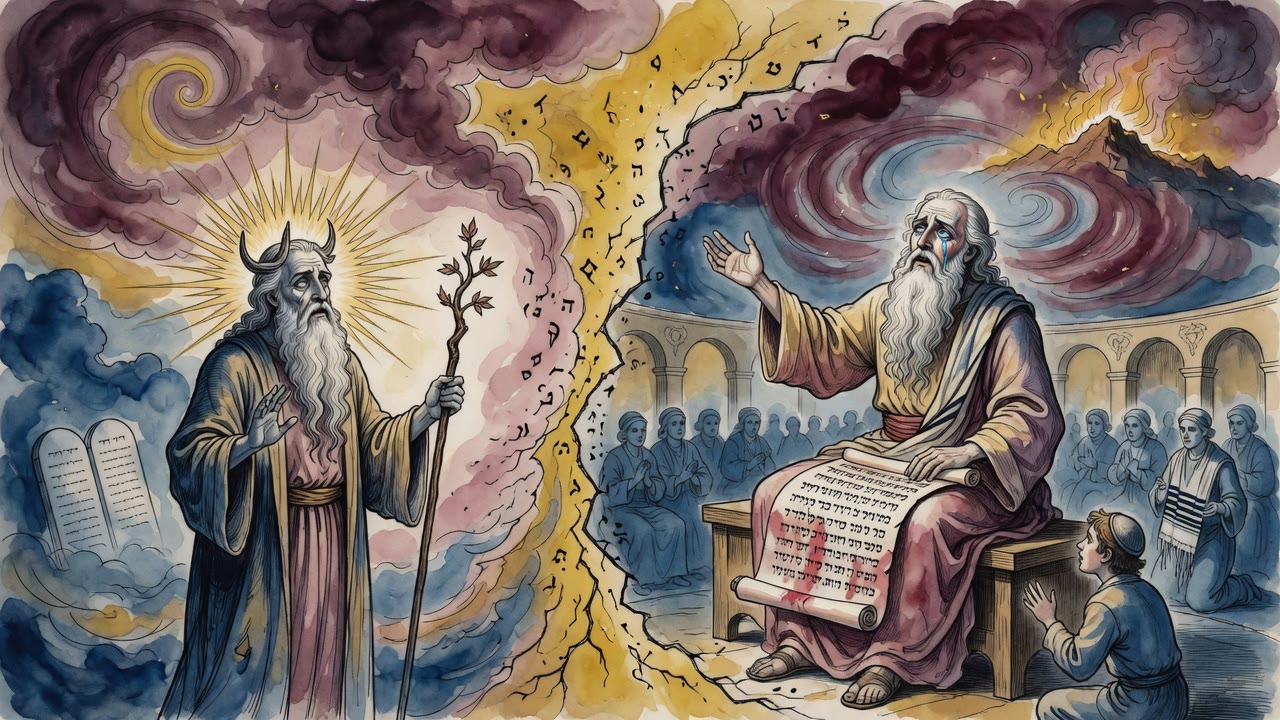
He did not praise the patient into a statue. He did not deny the pain or compete with metaphors. He named the suffering itself as a gift because suffering, he taught, begets teshuvah, return. Illness is the teacher a stubborn student cannot dismiss, the one that cancels travel plans and forces a man to meet himself. The others had tried to lift Eliezer above his pain. Akiva sat inside the pain and called it a door, not a decoration.
At Eliezer's house the score was different. The room was full of honor and still empty of help until Akiva refused the contest of compliments. Suffering, he insisted, is not an insult to a sage. It is a tool heaven still uses when softer teachers have been ignored. The bed became a beit midrash of one hard sentence.
Two Kinds of Attention
At the student's corner, attention is practical: water, broth, a cleaner bed, a hand that adjusts a pillow. At Eliezer's bedside, attention is theological: what is this pain for, and will you use it before it leaves? Akiva practices both without treating either as lesser. He will not let a junior body rot in neglect while the house debates who is important. He will not let a senior body receive only flattery while the fever works and the soul sits unaddressed.
Praise that does not change the sheets is noise. Theology that does not sit down is noise. Akiva sits down. He brings the status of his name into a corner so the corner becomes a place again. He brings a hard word to a master's bed so the bed becomes a place of turning rather than a stage for compliments.
What Students Learn Without a Lecture
The landlady learned more from Akiva's entrance than from a dozen discourses on chesed. The four sages at Eliezer's bed learned that comfort is not a contest of metaphors. The forgotten student learned he was not forgotten, which is sometimes half the cure. Eliezer heard that his pain was not wasted if it turned him toward the work only pain can force.
Years later, when Akiva's own flesh would face iron combs and a public death, the tradition would remember a man who had already practiced presence in smaller rooms. The corner and the master's bed were rehearsals for a life that refused to look away, first from a student, then from a teacher, then from the cost of teaching under empire.
Sweep the corner. Name the suffering. Leave no student invisible. Leave no elder comforted only with pretty comparisons. The visit is the teaching. The hard sentence is the visit's other face.
← All myths