5 min read

Beloved Are Sufferings Spoken at the Sickbed

Tarfon called the dying master more precious than the sun. Elazar called him dearer than father and mother. Akiva spoke next, and the sick man sat up.

Curated by Arthur · Told by Maggid ·
Table of Contents
  1. Three Gifts Bought With Pain
  2. Mercy Woven Into Correction
  3. Torah as Medicine for the Soul
  4. What the Sickbed Demands
  5. After the Master Sits Up

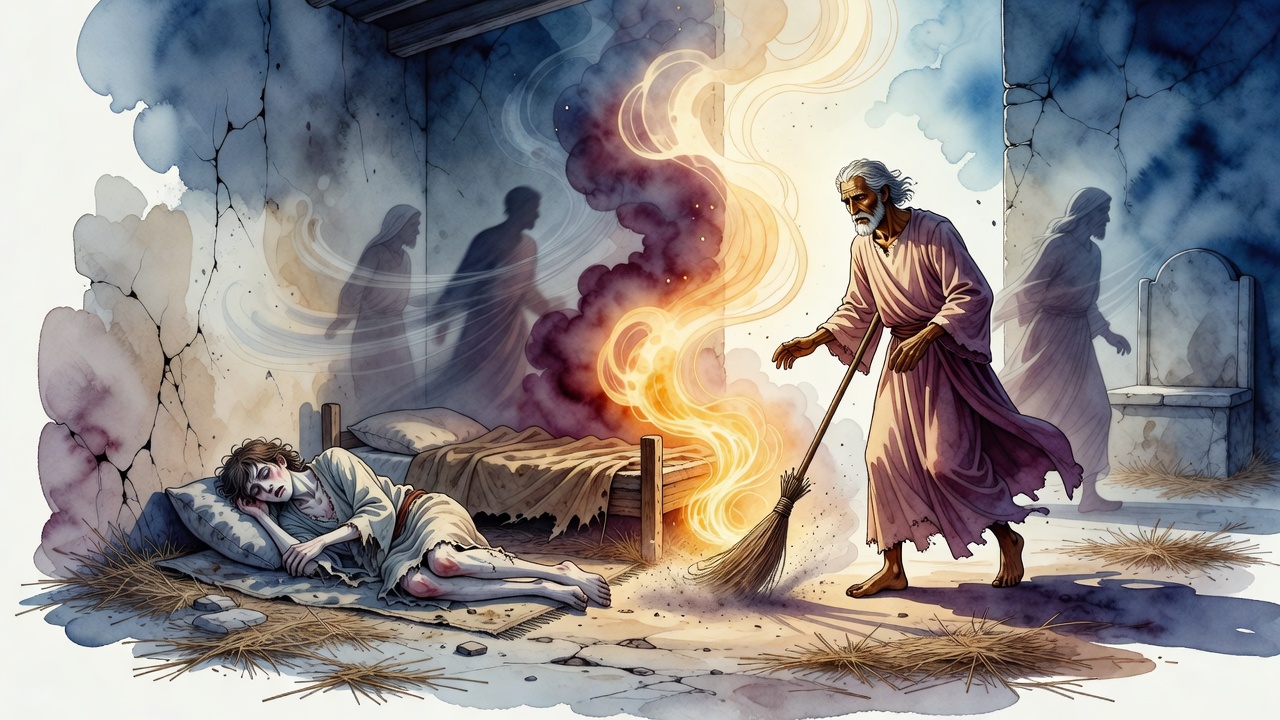
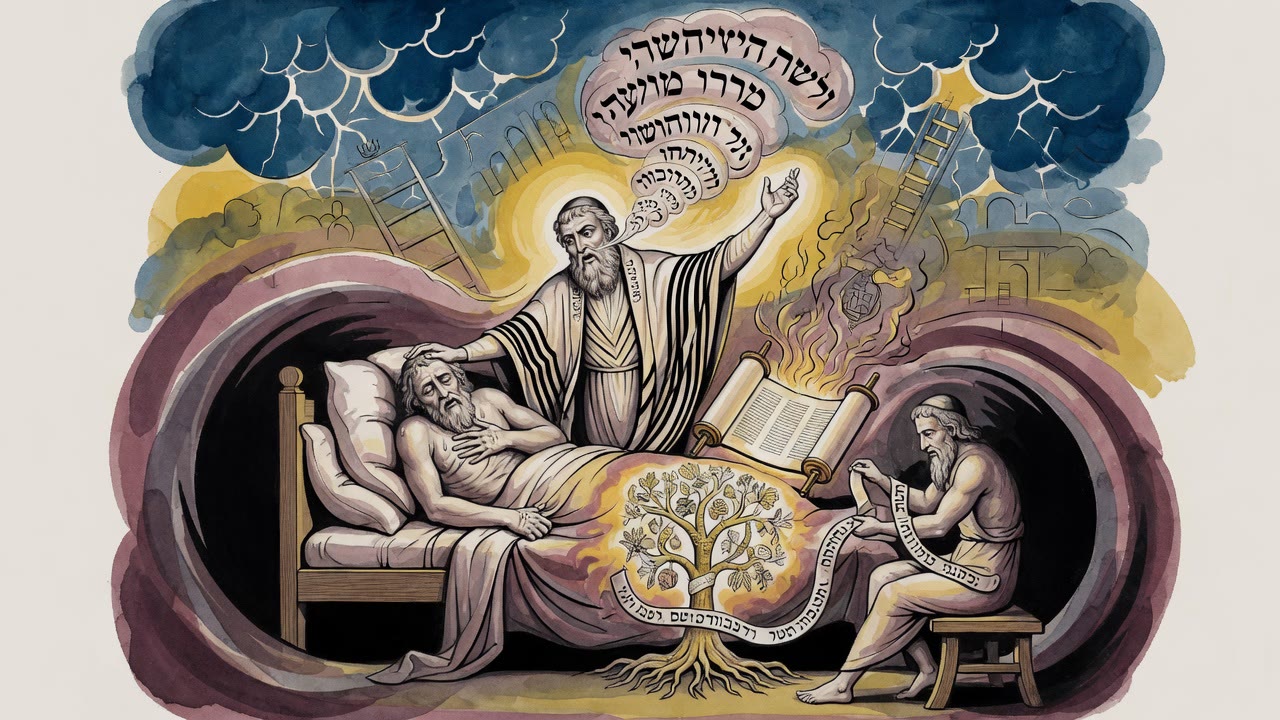
Four sages crowded a sickbed and argued over how to praise the dying master. Tarfon called him more precious than the sun. Elazar ben Azariah called him dearer than father and mother. Then Akiva spoke the line that made the sick man sit up.
Beloved Are Sufferings Spoken at the Sickbed Click for full size

"Beloved are sufferings."

The room changed temperature. Praise had been comfort. Akiva offered a harder gift and asked to be heard to the end.

Three Gifts Bought With Pain

Rabbi Shimon ben Yochai counted three prizes the nations envy Israel for, each purchased only through hardship: the Torah, the Land of Israel, and the World to Come. Soft roads do not lead to those doors. The midrash will not romanticize the bruises, but it refuses to call them pointless.

Suffering here is not a fetish. It is the price the sources keep finding attached to the largest gifts. A people that wants only ease will not carry a Torah that cuts, a land that demands, or a future world that judges the present one.

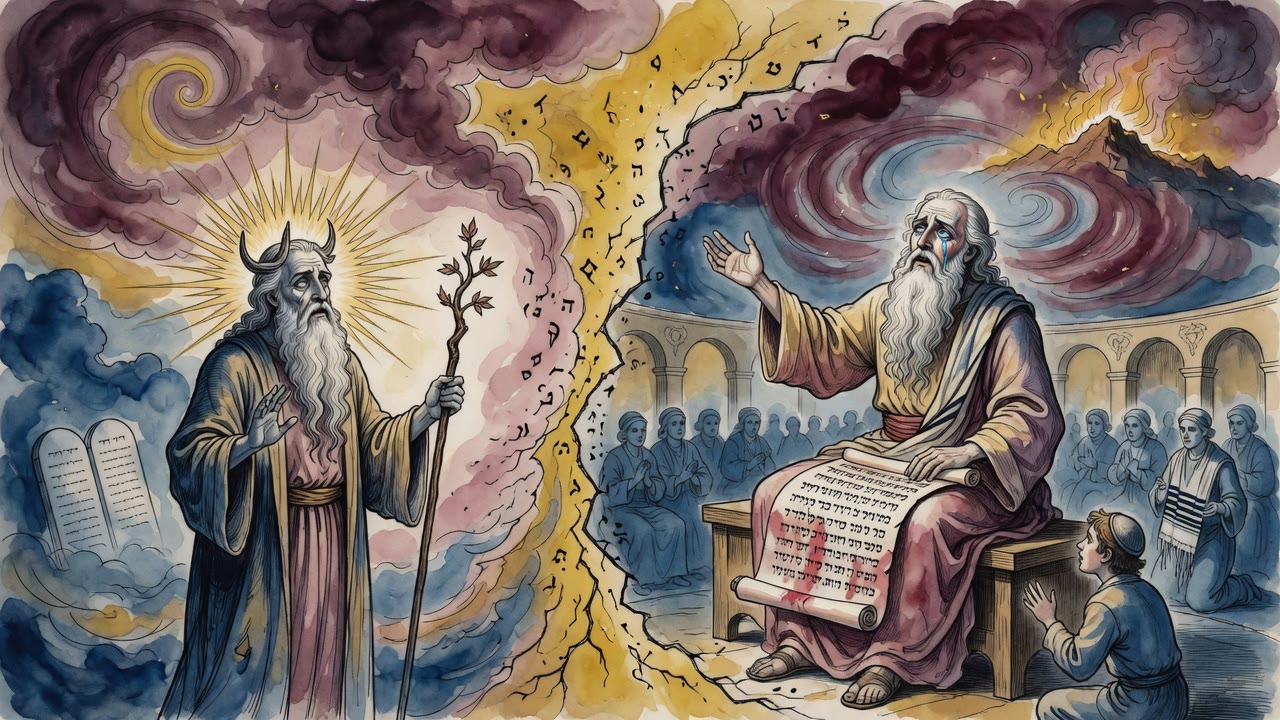
Akiva proved the claim from King Manasseh. Raised by righteous Hezekiah on Torah, Manasseh turned wicked anyway. Instruction failed. What finally broke him open and turned him back was distress. Affliction did what the curriculum could not. The sick master heard that and asked for more, because a teaching that can reclaim Manasseh can reclaim anyone.

Mercy Woven Into Correction

Ben Sira refused to split mercy from discipline. The same God who corrects also binds up. Reproof is not the opposite of love in his book. It is love with a spine. A father who never restrains a child is not kinder than a father who trains one. He is only quieter while the child walks toward a pit.

Ben Sira's wisdom walks the line between despair and indulgence. Accept correction. Do not call the wound the whole story. The bandage is already in the same hand that held the rod. Mercy is woven into the correction the way thread is woven into cloth, not glued on afterward as an apology.

On the sickbed, Akiva's "beloved are sufferings" and Ben Sira's mercy-in-correction shake hands. Pain is not celebrated. Pain is refused the last word.

Torah as Medicine for the Soul

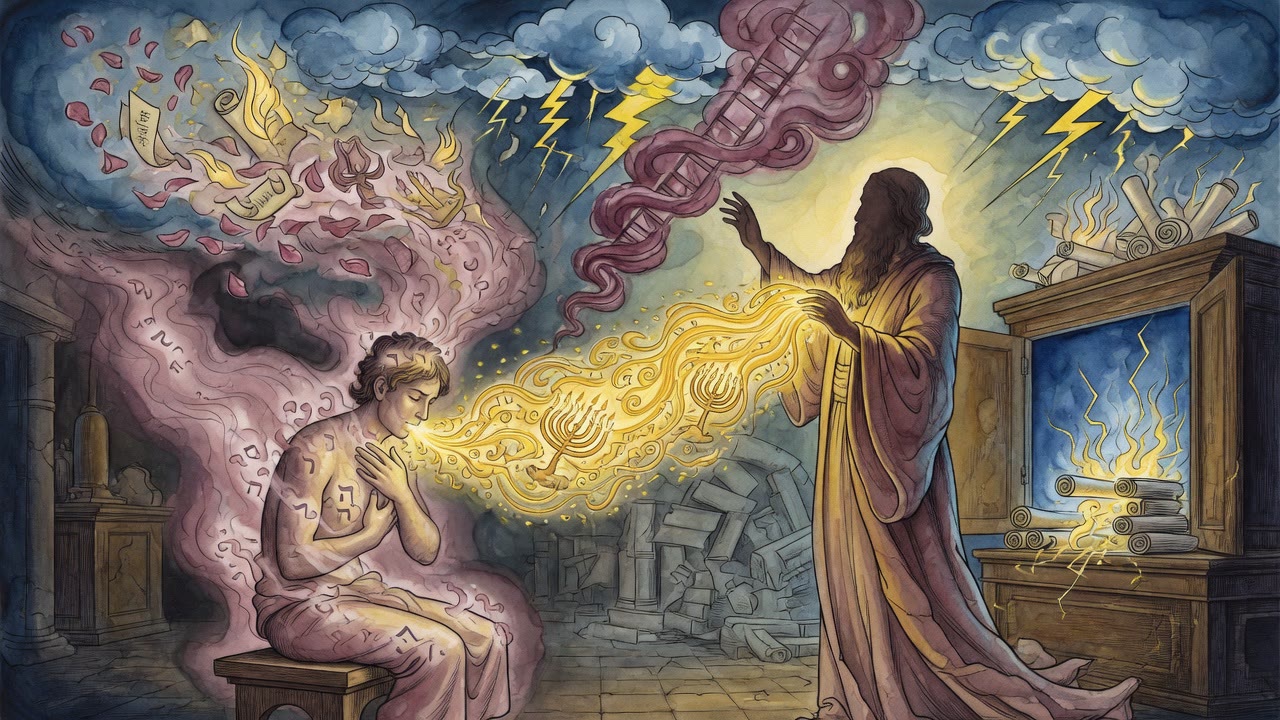
The sages call Torah a medicine for the soul, a drug that heals if taken as prescribed and harms if swallowed wrong. A person who studies for pride can turn the remedy into poison. A person who studies to live can find the same words stitching what life tore.

On a bed where the body is failing, the argument about suffering becomes an argument about dosage. Is the illness only damage? Or is it also, somehow, treatment the patient would never have chosen and still must use? Akiva risks the second reading without denying the first hurt.

Medicine tastes bitter. That does not make it optional when the illness is real. The midrash that loves sufferings is not cheering for fever. It is refusing to waste the fever if it can drive a king like Manasseh back through the door he barred.

What the Sickbed Demands

Tarfon's sun and Elazar's parents are true honors. Akiva's sentence is a different order of help. It gives the sufferer a way to hold the pain without calling God cruel or calling the pain meaningless. Beloved does not mean pleasant. It means not discarded by Heaven.

The nations envy the three gifts and rarely envy the invoice. Israel carries both. Ben Sira keeps mercy inside the invoice so the account does not become pure terror. Torah-as-medicine keeps the work practical: take the dose, do not perform the dose for show.

After the Master Sits Up

The story ends with a man in pain asking to hear more of a teaching about pain. That is the turn. Suffering stops being only something done to him and becomes something he can think with. Thinking is not healing, but it is no longer pure collapse.

Beloved are sufferings. The phrase still startles. It should. Softened into a slogan it becomes a lie. Held on a sickbed between rivals in love, it becomes a last tool for a soul that still wants God more than it wants ease.

The four sages did not come to the bed to invent theology. They came to honor a life. Akiva's gift was to honor the pain without lying about it. Ben Sira would have recognized the move. Mercy that never corrects abandons. Correction that never mercies crushes. Sufferings that are beloved sit in the narrow space between those failures.

Take the medicine. Do not perform it. Carry the three gifts knowing what they cost. When the master asks to hear more, answer him. The teaching is not finished until the one who hurts can use it without being used up by it.


← All myths
From the tradition

Sources

3 sources

The texts behind this telling. Some cards carry a translation of the source; others are our own retelling of it, and each card says which. Every card links out to the original.

Yalkut Shimoni on Torah 303:1Yalkut Shimoni on Torah

Translation of the source text.Torat Emet (Yalkut Shimoni) · CC-BY-NC

Rabbi Meir says: "And you shall consider in your heart, that as a man chastens his son, so the LORD your God chastens you" (Deuteronomy 8:5), let your heart know the deeds that you have done and the sufferings that I have brought upon you, that I did not bring the sufferings upon you according to your deeds. Rabbi Jonathan says: Beloved are sufferings, for just as a covenant is sealed for the land, so a covenant is sealed for sufferings, as it is said, "The LORD your God chastens you," and it says, "For the LORD your God brings you into a good land" (Deuteronomy 8:7). Rabbi Shimon ben Yochai says: Beloved are sufferings, for three good gifts were given to Israel which the nations of the world covet, and they were given only through sufferings, and these are: the Torah, the Land of Israel, and the World to Come.

Where do we learn the Torah? As it is said, "To know wisdom and chastening, to perceive the words of understanding" (Proverbs 1:2), and it says, "Happy is the man whom You chasten, O LORD, and teach out of Your Torah" (Psalms 94:12). Where do we learn the Land of Israel? Scripture teaches, "The LORD your God chastens you," and it says, "For the LORD your God brings you into a good land" (Deuteronomy 8:7). Where do we learn the World to Come? Scripture teaches, "For the commandment is a lamp and the Torah is light" and so on (Proverbs 6:23). You may say: Go out and see which path brings a person to the life of the World to Come. You must say: this is sufferings.

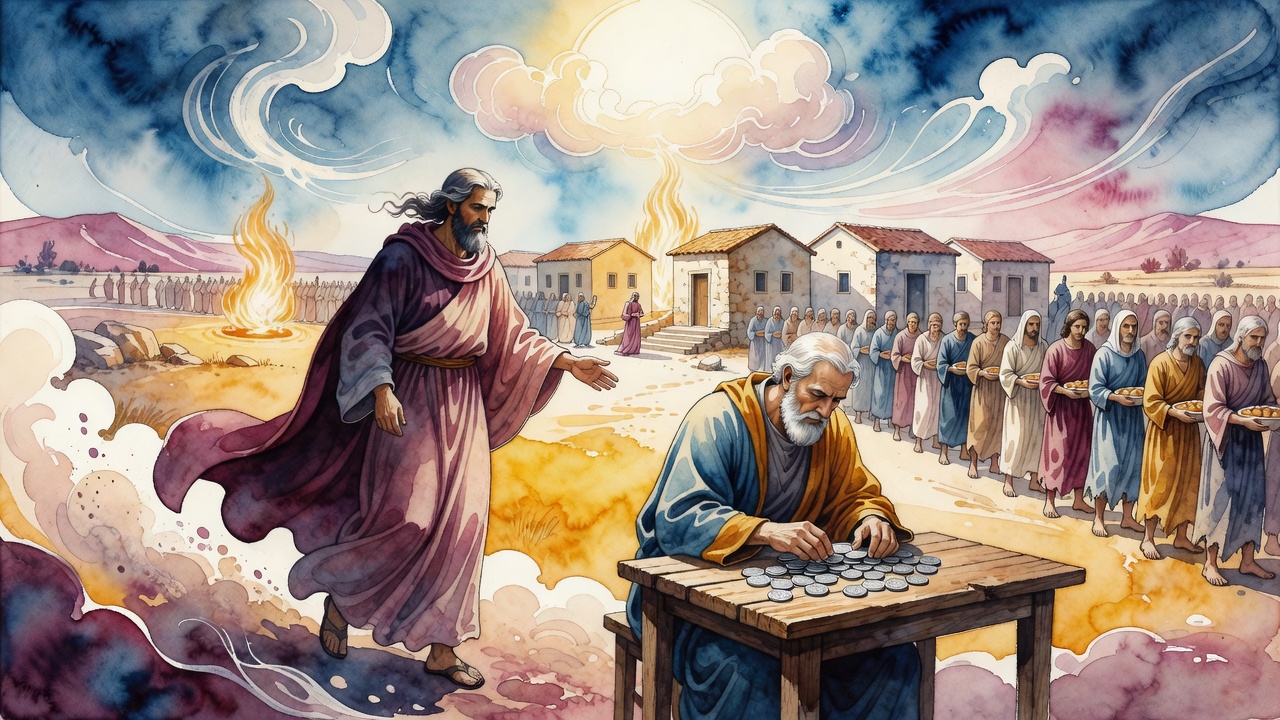
Rabbi Nehemiah says: Beloved are sufferings, for just as the sacrifices make atonement, so sufferings make atonement. Of sacrifices what does it say? "And it shall be accepted for him to make atonement for him" (Leviticus 1:4). Of sufferings what does it say? "And they shall make amends for their iniquity" (Leviticus 26:43). And not only that, but sufferings atone more than sacrifices, because sacrifices are with money while sufferings are with the body. And so it says, "Skin for skin, all that a man has" and so on (Job 2:4).

And it once happened that Rabbi Eliezer was ill, and four elders came in to visit him: Rabbi Tarfon, Rabbi Joshua, Rabbi Elazar ben Azariah, and Rabbi Akiva. Rabbi Tarfon responded and said: My teacher, you are more beloved to Israel than the sphere of the sun, for the sphere of the sun gives light in this world, but you have given us light in this world and in the World to Come. Rabbi Elazar ben Azariah responded and said: You are more beloved to Israel than father and mother, for father and mother bring a person into this world, but you bring us into this world and the World to Come. Rabbi Akiva responded and said: Beloved are sufferings. Rabbi Eliezer said to his students: Support me. Rabbi Eliezer sat up. He said to him: Speak, Akiva. He said: Behold it says, "Manasseh was twelve years old when he began to reign, and he reigned fifty-five years" and so on (2 Kings 21:1), and it says, "These also are proverbs of Solomon, which the men of Hezekiah copied out" (Proverbs 25:1). Now did it ever enter Hezekiah king of Judah's mind to teach all Israel Torah and not to teach Torah to his own son Manasseh? Rather say from now: that all the teaching he taught him and all the labor he labored over him availed him nothing, and what availed him? You must say: sufferings, as it is said, "And the LORD spoke to Manasseh and to his people... and when he was in distress he entreated the favor of the LORD his God... and prayed to Him" and so on (2 Chronicles 33:10-13). Thus you have learned that sufferings are beloved.

"Gods of silver and gods of gold" (Exodus 20:20): Why is it stated? Because it says, "And you shall make two cherubim of gold" (Exodus 25:18). One might say: behold I will make four; therefore Scripture teaches "gods of gold", if you add to the two they are like gods of gold. Why is "gods of silver" stated? Has it not already said "gods of gold"? Because we find that all the vessels of the eternal House, if they have none of gold, they make them of silver; one might hear that the two cherubim are likewise; therefore Scripture teaches "gods of silver", so that if you change them from gold they are like gods of silver. "You shall not make for yourselves": that you should not say, since the Torah granted permission to make them in the eternal House, behold we shall make them in synagogues and study houses; therefore Scripture teaches "You shall not make for yourselves."

Full source
Ben Sira 16:16Ben Sira

Retold in our words. Read the original at the link below.The Wisdom of Ben Sira, Cambridge University Press (1899) · CC-BY

What he offers us is both comforting and challenging.

"According to the greatness of his mercy," Ben Sira tells us, "so is his correction; He will judge each according to his doings. God's mercy isn’t a free pass; it's woven into the very fabric of how we are held accountable. It suggests a loving, albeit firm, hand guiding us. A cosmic parent, if you will, who disciplines not out of anger, but out of love and a desire for our growth.

He continues, "He will not let the wrong-doer escape with plunder; Neither will he frustrate the desire of the righteous for ever." This isn't always easy to see in our day-to-day lives, is it? Sometimes, it feels like the wicked prosper and the good suffer. But Ben Sira reminds us of a deeper, more enduring truth. That ultimately, justice will prevail. The scales will balance. The Zohar, that foundational text of Jewish mysticism, speaks of a hidden accounting, a ledger kept by the Divine. Ben Sira echoes this sentiment, assuring us that no deed goes unnoticed.

Then, a beautiful affirmation: "Whosoever doeth righteousness, there is a reward for him; And according to his works shall every man go forth before him." It's a simple statement, yet profound. Doing good matters. Our actions have consequences, not just for ourselves, but for the world around us. Every act of kindness, every moment of compassion, ripples outward, creating a wave of positivity.

But here's where it gets interesting. Ben Sira throws in a curveball: "The Lord hardened the heart of Pharaoh, who knew him not." Wait a minute… wasn't Pharaoh responsible for his own stubbornness? Why would God harden his heart? This verse has puzzled scholars for centuries. Some, like Maimonides, argue that God merely gave Pharaoh the opportunity to choose evil, knowing his heart was already inclined that way. Others, drawing on Midrashic (rabbinic interpretive commentary) traditions, suggest that Pharaoh's initial cruelty led to a point of no return, where Divine intervention sealed his fate. It serves as a cautionary tale about the choices we make and the potential for those choices to define us.

Finally, Ben Sira brings it all together: "Whose works are manifest under heaven; His mercies are seen of all his creatures; And his light and his darkness hath he apportioned to the sons of men." God's presence, God's influence, is everywhere, in both the light and the shadow. We see it in the grand sweep of history and in the smallest acts of kindness.

It's a reminder that we are all part of something bigger than ourselves, and that our choices, our actions, have consequences that ripple through eternity. So, what kind of ripples are you creating?

Full source
Devarim Rabbah 8:4Devarim Rabbah

Retold in our words. Read the original at the link below.The Sefaria Midrash Rabbah, 2022 · CC-BY

Devarim Rabbah, a collection of rabbinic teachings on the book of Deuteronomy, opens our eyes to just how deeply Torah can impact us.

It starts with a verse from Proverbs (4:22): “For they are life for those who find them…” And the rabbis, in their beautiful way, unpack what that really means. Rabbi Ḥiyya suggests it's not just metaphorical. It's a salve for the eye, a remedy for a wound, a tonic for the gut! He connects it to verses like, "The commandment of the Lord is pure, it enlightens the eyes" (Psalms 19:9), and "It will bring health to your body" (Proverbs 3:8). It's as though the wisdom within the Torah has the power to heal us, body and soul.

It gets even more interesting. The Rabbis play with the Hebrew word lemotzeihem ("to find them"). They suggest it also refers to "one who issues them [words of Torah] out of his mouth." In other words, studying quietly isn't enough! We need to speak the words, wrestle with them, let them resonate aloud.

There's a story about a disciple of Rabbi Eliezer ben Yaakov who learned everything in an hour, but silently. He fell ill and forgot it all! Only after Rabbi Eliezer prayed for him and his learning was restored did he realize the importance of vocalizing the words of Torah. It’s a potent reminder: learning isn't passive; it's an active, engaging process.

And it doesn't stop there. Motzeihem can also mean "for one who imparts it to others." Torah isn't meant to be hoarded; it's meant to be shared, discussed, and taught.

Then, there's the interpretation that motzeihem refers to someone who "completes all the mitzvot (commandments)." What does it mean to complete all the mitzvot? Devarim Rabbah connects it to the verse, "All the mitzvah" (Deuteronomy 8:1), suggesting that it means to strive to fulfill every single commandment.

But what happens if you start a mitzvah and don't finish it? Rabbi Ḥiyya bar Abba has a strong view: it can lead to hardship. He uses the example of Judah, who convinced his brothers not to kill Joseph, but didn't go far enough – he didn't insist on returning Joseph to their father. Because he only partially completed the mitzvah, the text implies, he suffered the loss of his wife and children. A pretty stark warning. However, Rabbi Levi, in the name of Rabbi Ḥama bar Ḥanina, offers a different perspective: if you start a mitzvah and someone else finishes it, the credit goes to the one who completed it. He uses the story of Moses and Joseph's bones. Moses took Joseph's bones out of Egypt (Exodus 13:19), a significant act of loyalty and remembrance. But because Moses didn't bring them into the Land of Israel, the honor of finally burying them in Shekhem (Joshua 24:32) went to the children of Israel.

The text then adds a fascinating layer, comparing the brothers selling Joseph to thieves who steal wine: “Enjoy it, but… after you drink the wine, return the barrel to its place.” God essentially tells them: You sold him from Shekhem, now return him to Shekhem.

So, what do we take away from all this? It seems to me that Devarim Rabbah is urging us to engage fully with Torah – to speak it, to share it, and to strive to complete the good deeds we begin. It’s a reminder that our actions, even the incomplete ones, have consequences, and that the act of completion can be incredibly powerful. It's a call to not just be students of Torah, but active participants in bringing its wisdom to life.

Full source