Translation of the source text.Torat Emet (Yalkut Shimoni) · CC-BY-NC
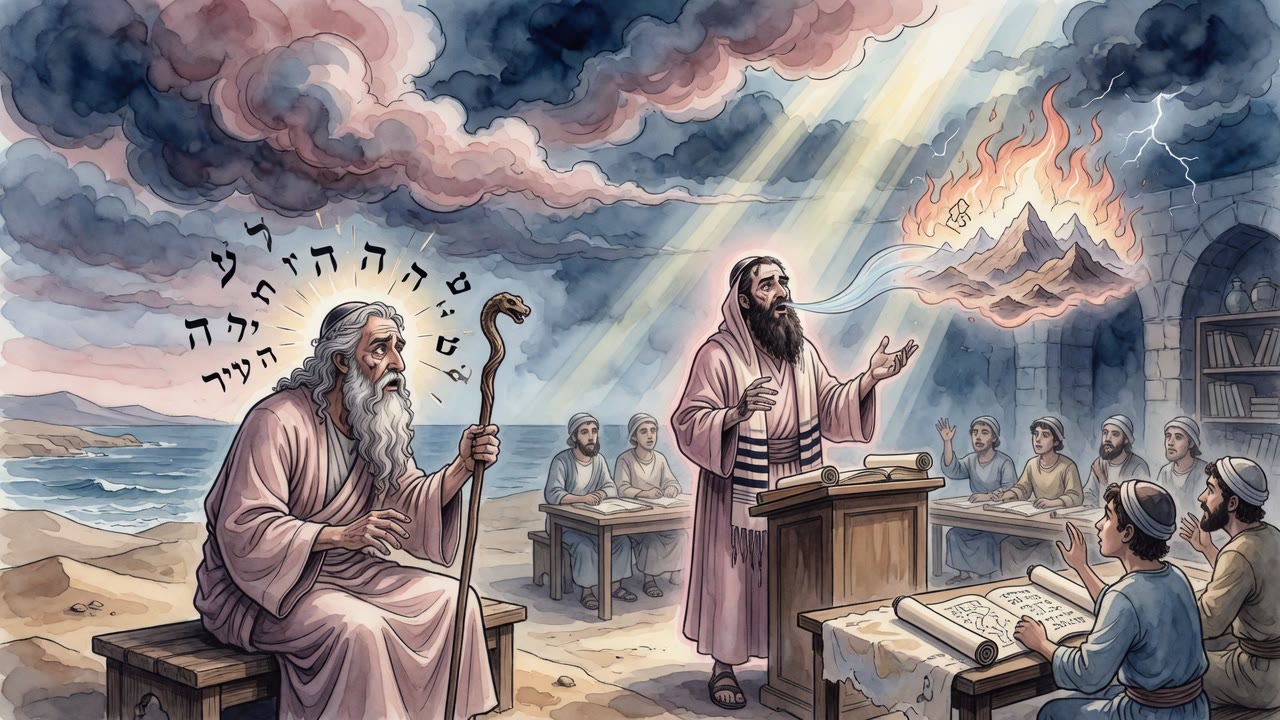
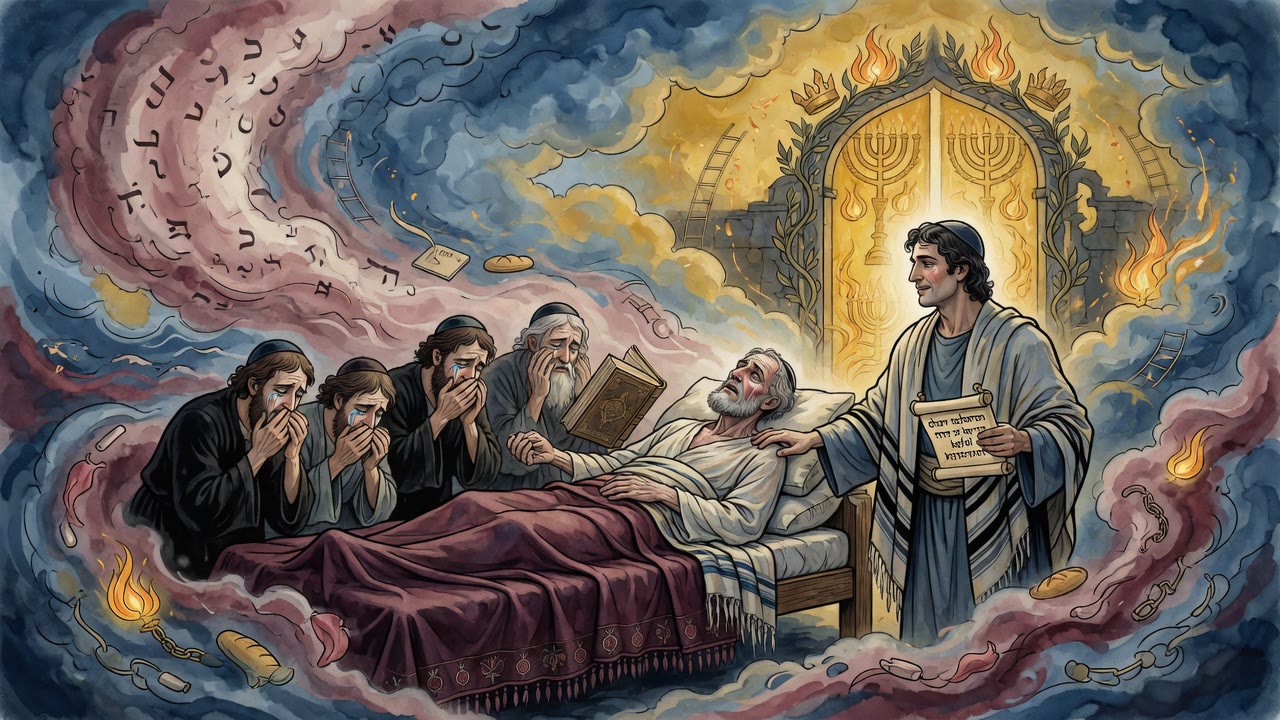
It was taught: one does not suspend Torah study until his soul departs. When Shimon, the son of Rabbi Akiva, died, a great assembly gathered to bury him. Rabbi Akiva said to them, "Bring out a bench for me among the graves." He sat on it and expounded, saying, "Our brothers, Israel, listen to me. It is not because I am wise, for there are wiser men here than I. It is not because I am rich, for there are richer men here than I. The men of the South know Rabbi Akiva. From where do the men of the Galilee know him? The men know Akiva. From where do the women and the children know him? I know that your reward is great, for you did not trouble yourselves and come except for the sake of a commandment. I am comforted, for if I had seven sons and buried them, I would know that my son is a son of the World to Come, because he brought merit to the many."
Moses merited and brought merit to the many, and so on, as it is said, "He executed the justice of the LORD" (Deuteronomy 33:21). Jeroboam sinned, and so on. Israel were fit to receive the Torah had Moses and Aaron not arisen, as it is said, "He layeth up sound wisdom for the righteous" (Proverbs 2:7). Israel were fit to be redeemed from Egypt had Moses and Aaron not arisen, as it is said, "And afterward shall they come out with great substance" (Genesis 15:14). The section of judges was fit to be said through Moses had Jethro not arisen. The section of inheritances was fit to be said through Moses had the daughters of Zelophehad not merited it. The Second Passover was fit to be said had the impure persons not arisen. The Temple was fit to be built, as it is said, "The sanctuary, O Lord, which thy hands have established" (Exodus 15:17), had David and Solomon not arisen. Israel were fit to be redeemed in the days of Haman, as it is said, "And yet for all that," and so on (Leviticus 26:44), had Mordecai and Esther not arisen. Israel were fit to be enslaved, as it is said, "And they shall serve them; and they shall afflict them" (Genesis 15:13), had Pharaoh and Egypt not arisen as the agents. Israel were fit to serve idolatry, as it is said, "And this people will rise up, and go astray" (Deuteronomy 31:16), had Jeroboam not arisen as the agent. The section of the blasphemer was fit to come had the son of the Israelite woman not arisen. The section of Sabbath was fit to come had the wood-gatherer not arisen. Israel were fit to fall by the sword, as it is said, "By the sword shall die all the sinners of my people" (Amos 9:10), had Balaam not arisen as the agent. Jerusalem was fit to be destroyed and the Temple to be burned, as it is said, "Therefore shall Zion for your sake be plowed as a field" (Micah 3:12), had Nebuchadnezzar and his companions not arisen as the agents.
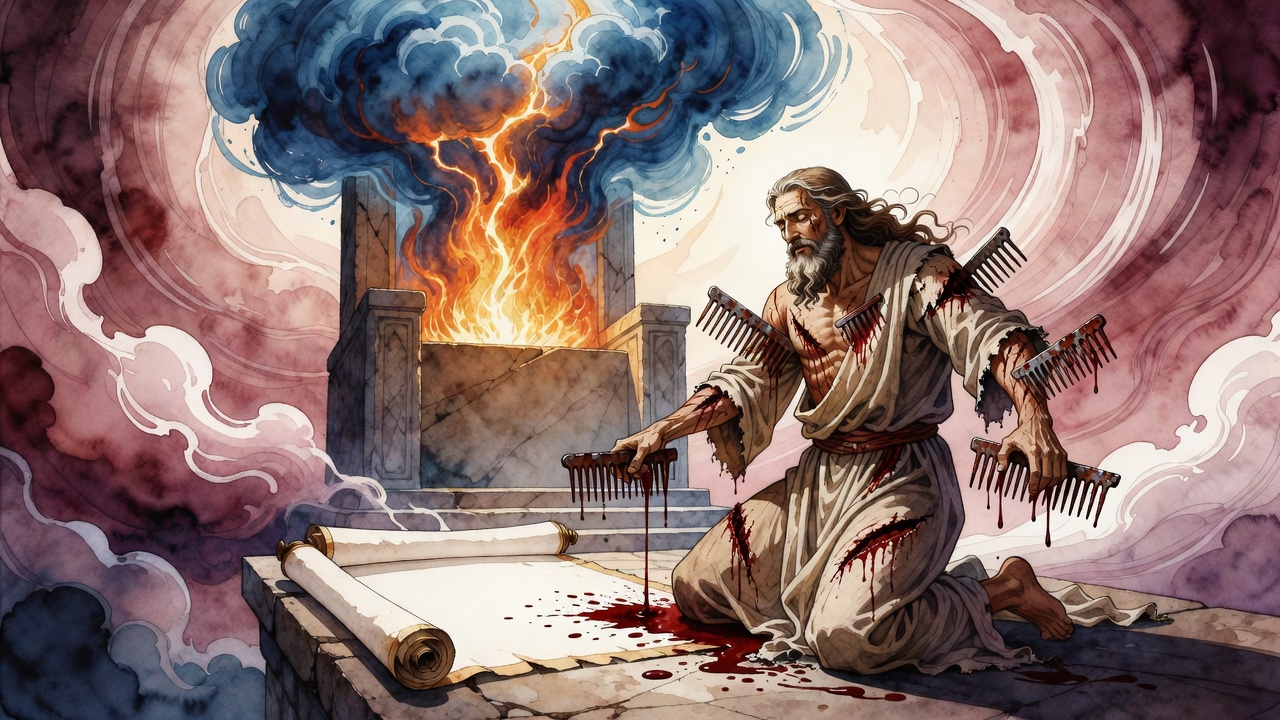
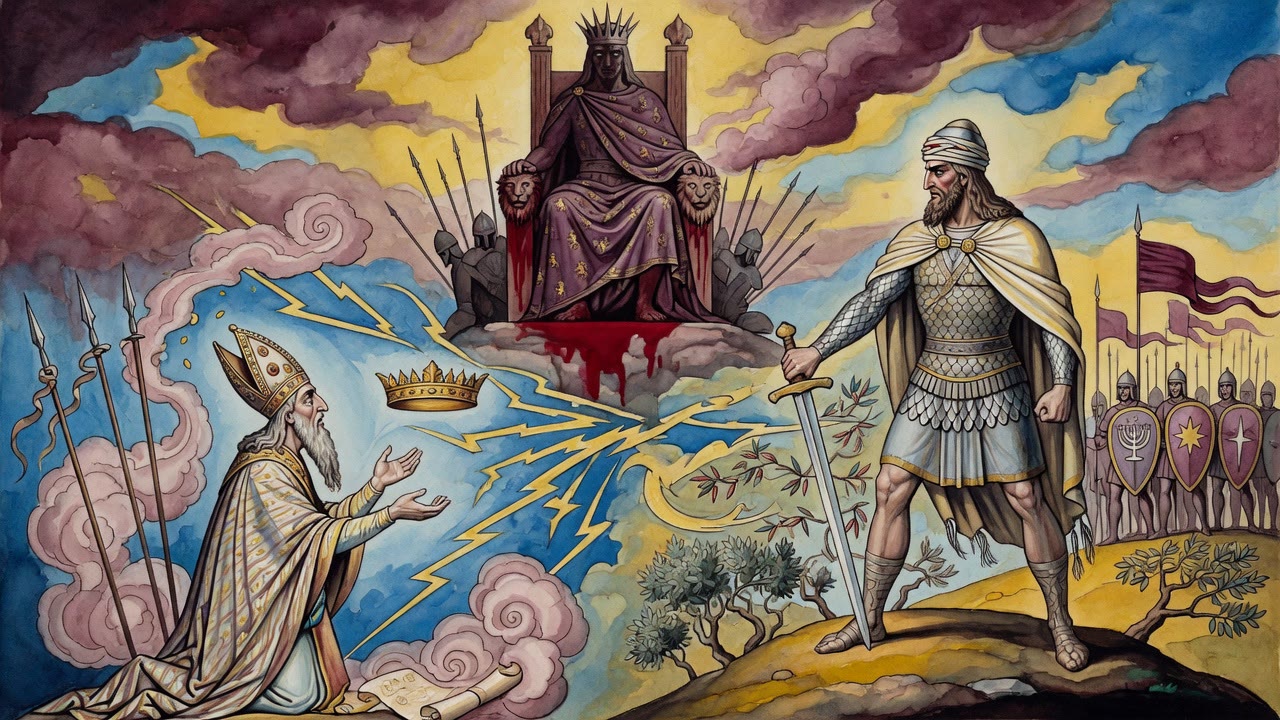
When Trajan killed Pappus and Lulianus his brother in Lodkiya, he said to them, "If you are from the people of Hananiah, Mishael, and Azariah, let their God come and save you from my hand." They said to him, "Hananiah, Mishael, and Azariah were worthy, and Nebuchadnezzar was a fitting king, and it was fitting that a miracle be done through him. But you are wicked, and it is not fitting that a miracle be done through you. We are liable to death from Heaven, and if you do not kill us, there are many lions, many snakes, many scorpions that can come and strike us. But when we die, know that we are from the descendants of Hananiah, Mishael, and Azariah." They said: they did not die until they saw people gouging out his eyes.
"And thou shalt place over them rulers of thousands" (Exodus 18:21): six hundred. "Rulers of hundreds": six thousand. "Rulers of fifties": twelve thousand. "Rulers of tens": sixty thousand. All the judges of Israel were found to be seventy-eight thousand six hundred.
Civil-law cases are judged by day and completed by night, for Scripture says, "And let them judge the people at all seasons" (Exodus 18:22), and it is written, "And it shall be, in the day when he maketh his sons to inherit" (Deuteronomy 21:16). How is this so? Day is for the beginning of judgment, and night is for the completion of judgment. The Mishnah is not according to Rabbi Eleazar, as it was taught that Rabbi Eleazar would say, and so on. And Rabbi Eleazar, what does he derive from this phrase, "And let them judge"? To include a cloudy day. And Rabbi Meir, what does he do with this phrase, "In the day when he maketh his sons to inherit"? He needs it to teach that inheritances are assigned by day and are not assigned by night, and so on.
"And let them judge the people at all seasons" (Exodus 18:22). Rabbi Joshua says: people who are free from their work should judge the people at all seasons. "And it shall be, that every great matter they shall bring unto thee" (Exodus 18:22): great matters they shall bring to you, and small matters they shall judge themselves. Do you say this, or is it only that the matters of great people they shall bring to you, while the matters of small people they shall judge themselves? When it says, "The hard cause they brought unto Moses" (Exodus 18:26), it is not speaking of people; Scripture is speaking of their matters.
One does not judge a tribe except in a court of seventy-one. This tribe that sinned, in what did it sin? If you say that it desecrated the Sabbath, say that the Merciful One distinguished between individuals and multitudes with regard to idolatry, but did He distinguish in other commandments? Rather, it refers to a tribe that was led astray. Is this to say that we judge it with the law of a multitude? According to whom? Not according to Rabbi Josiah and not according to Rabbi Jonathan. For it was taught: how many people make an idolatrous city? From ten to one hundred, these are the words of Rabbi Josiah. Rabbi Jonathan says: from one hundred to the majority of a tribe. And even Rabbi Jonathan said only the majority, but not all of it.
Rav Matna said: here we are dealing with a prince of a tribe who sinned. Did Rav Adda bar Ahavah not say, "Every great matter they shall bring unto thee" means the matter of a great person? This one, too, is great. Ulla said that Rabbi Eleazar said: it refers to people who come over matters of inheritance, and it is like the beginning of the Land of Israel. Just as at its beginning there were seventy-one, so here there are seventy-one. If so, just as at its beginning there were lots, Urim and Thummim, and all Israel, so here there should be lots, Urim and Thummim, and all Israel. Rather, the clearer explanation is like Rav Matna.
Ravina said: actually, it refers to a tribe that was led astray. And as for what is difficult for you, whether we judge it with a public court, yes. Even though we execute individuals, we judge it with a public court. Did Rabbi Hiyya bar Yose not say in the name of Rav Hoshaya, concerning "Then shalt thou bring forth that man," and so on (Deuteronomy 17:5): a man and a woman you bring out to your gates, but you do not bring out an entire city to your gates. Here, too, a man and a woman you bring out to your gates, but you do not bring an entire tribe to your gates.
One does not judge a High Priest except by seventy-one. From where are these words derived? Rav Adda bar Ahavah said: for Scripture says, "Every great matter they shall bring unto thee" (Exodus 18:22), meaning the matter of a great person. They raised an objection: a great matter means a hard matter. Or perhaps it means the matter of a great person? When it says, "The hard cause they brought unto Moses" (Exodus 18:26), a hard matter has already been stated. He said this according to that tanna, as it was taught: a great matter means the matter of a great person. Or perhaps it is only a hard matter? When it says, "The hard matter," a hard matter has already been stated. How, then, do I uphold "great matter"? As the matter of a great person. And this other tanna, why do I need two verses? One is for the command, and one is for the performance. And the other says: if so, let Scripture write either great and great, or hard and hard. Why great and why hard? Learn two things from it.
Rabbi Eleazar asked: the ox of a High Priest, by how many judges is it judged? Do we compare it to the death of its owner, or perhaps do we compare it to the death of an ordinary owner? Abaye said: from the fact that he asks about his ox, by implication his money is obvious to him. Is it obvious? You might have said that since it is written, "Every great matter," all matters of a great person require this. Therefore it teaches us otherwise.
It was taught: a High Priest who violated a positive commandment or a negative commandment is like an ordinary person in all his matters. Is this not obvious? It might have entered your mind to say: since we learned that one does not judge a High Priest except in a court of seventy-one, and Rav Adda bar Ahavah said, "Every great matter they shall bring unto thee" means the matter of a great person, I might say all matters of a great person require this. Therefore it teaches us otherwise. But say that it is so. Is it written, "the matters of a great person"? It is written, "the great matter," meaning an actually great matter.
"So shall it be easier for thyself, and they shall bear with thee" (Exodus 18:22). One does not examine lineage from the Sanhedrin and upward. What is the reason? Rav Nahman said: "And they shall bear with thee" means those who are like you.
"If thou shalt do this thing, and God command thee" (Exodus 18:23): go out and take counsel with the Power. "And God command thee, then thou shalt be able to endure": if He agrees with you, you are able to endure; if not, you are not able to endure. "And all this people": Aaron, Nadab, and Abihu.
There was a man who was losing his case and leaving the court. He took up his cloak, sang, and went on his way. Shmuel said to Rav Yehuda, "Sharp one, Scripture is written: 'And all this people shall also go to their place in peace' (Exodus 18:23)."
"So Moses hearkened" (Exodus 18:24). Rabbi Eleazar of Modiin says: he certainly hearkened to the voice of his father-in-law, "and did all that God had said."
"And Moses let his father-in-law depart" (Exodus 18:27). Rabbi Joshua says: he sent him away from the glory of the world. Rabbi Eleazar of Modiin says: he gave him many gifts, for from the reply you learn that he gave him, as it says, "And he said, Leave us not, I pray thee" (Numbers 10:31). Moses said to him, "You gave us good counsel and beautiful counsel, and the Omnipresent agreed with your words. Leave us not, I pray thee." Jethro said to him, "Does a lamp give benefit except in a place of darkness? What does a lamp benefit between the sun and the moon? You are the sun and Aaron is the moon. What will a lamp do between the sun and the moon? Rather, I will go to my land, convert all the people of my province, bring them to study, and draw them near beneath the wings of the Shekhinah."
Could one think that he went and did not do this? Scripture says, "And the children of the Kenite, Moses' father-in-law," and so on, "went up ... and went and dwelt among the people" (Judges 1:16). There is no "people" here except wisdom, as it is said, "No doubt but ye are the people, and wisdom shall die with you" (Job 12:2).
"And Moses let his father-in-law depart" (Exodus 18:27), and afterward, "In the third month" (Exodus 19:1). Solomon said, "The heart knoweth his own bitterness; and a stranger doth not intermeddle with his joy" (Proverbs 14:10). The Holy One, blessed be He, said: My children were enslaved with mortar and bricks, and Jethro was sitting inside his house in safety and quiet, and he came to see the joy of the Torah with My children. Therefore "Moses let his father-in-law depart," and afterward, "In the third month."
Why was it so? Moses expounded a kal va-chomer: if for one commandment, when the Holy One, blessed be He, came to give the commandment of Passover, the Torah said, "There shall no stranger eat thereof" (Exodus 12:43), then for the 613 commandments that He wants to give to Israel, should Jethro be here and see them? Therefore "Moses let his father-in-law depart," and afterward, "In the third month."
On "In the third month" (Exodus 19:1-2), this is what Scripture says: "Have not I written to thee shalishim," threefold matters (Proverbs 22:20). The Torah is threefold, and its letters are threefold, and the fathers are threefold, and the tribe through which it was given is third, and Moses is third among them and his name has three letters, and there are three siblings, and he was hidden for three months. The Torah is threefold: Torah, Prophets, and Writings. Its letters are threefold: alef, bet, gimel. The fathers are threefold: Abraham, Isaac, and Jacob. The third tribe is Levi: Reuben, Simeon, and Levi, and its name has three letters. Moses is third among them, as it says, "I stood between the LORD and you" (Deuteronomy 5:5). His name has three letters: Moses. There were three siblings: Moses, Aaron, and Miriam. He was hidden for three months, as it says, "And she hid him three months" (Exodus 2:2). "For the third day" (Exodus 19:11), and "in the third month," as it is said, "In the third month" (Exodus 19:1).
Why in the third month, and not in the second month, and not in the fourth month, and not in another month? Rabbi Hoshaya said: Rabbi Hiyya the Great taught me that a captive woman and a freed woman may not marry and may not be betrothed until three months have passed. So too Israel were called sojourners, as it is said, "For ye were strangers" (Exodus 23:9); captives, as it is said, "And they shall take them captives, whose captives they were" (Isaiah 14:2); and freed persons, as it is said, "I am the LORD your God, which brought you out of the land of Egypt, from being their bondmen" (Leviticus 26:13). The Holy One, blessed be He, said: I will wait three months for them, and afterward I will give them the Torah.

 Click for full size