Rabbi Akiva Kept Teaching and the Fish Would Not Leave the Water
Pappos found him teaching in the street after the ban. The fox's offer sounded kind. The fish knew dry land was a faster death.
Table of Contents
 Click for full size
Students in the Open
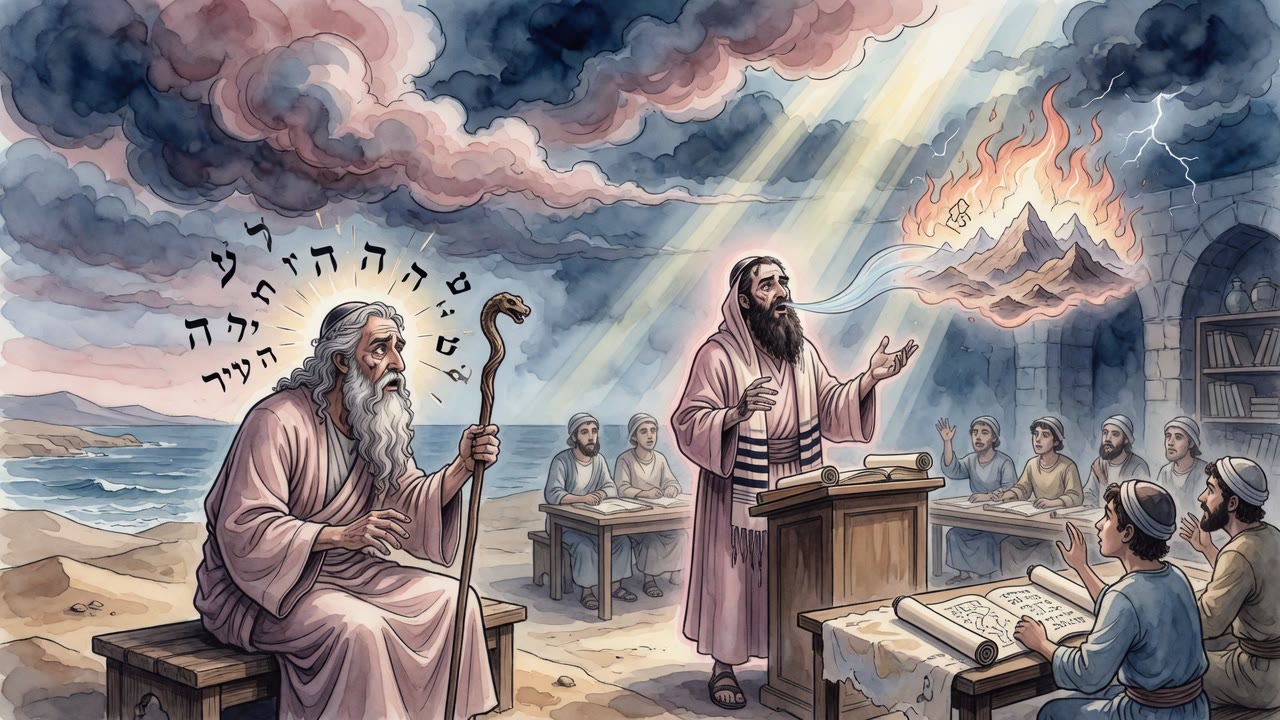
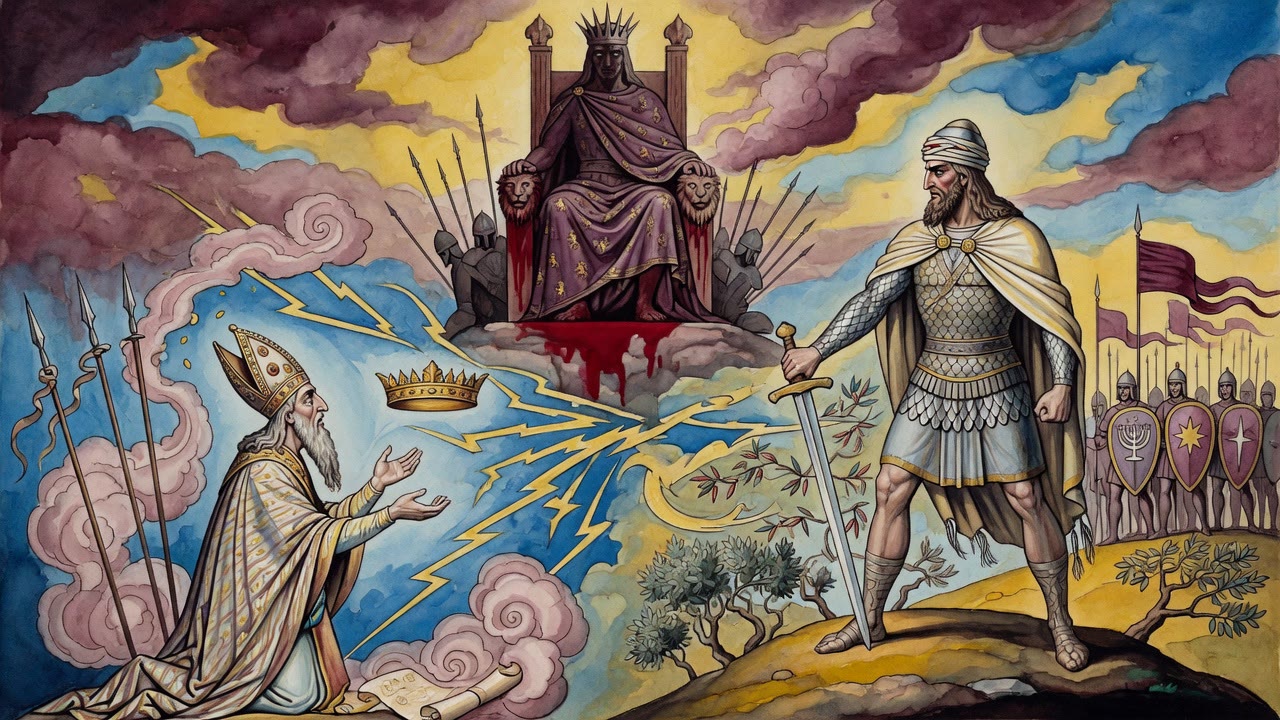
After the Bar Kokhba revolt collapsed in 135 CE, Hadrian banned Torah study. Anyone caught learning, teaching, or gathering around a text risked execution. Rabbi Akiva kept gathering crowds in public and kept teaching.
Pappos ben Yehuda found him at it and could not keep quiet. "Are you not afraid of the government?" The question was not empty. Rome had soldiers, prisons, informers, and a record of public deaths used as lessons. Akiva was making himself visible in exactly the way the decree required him not to be.
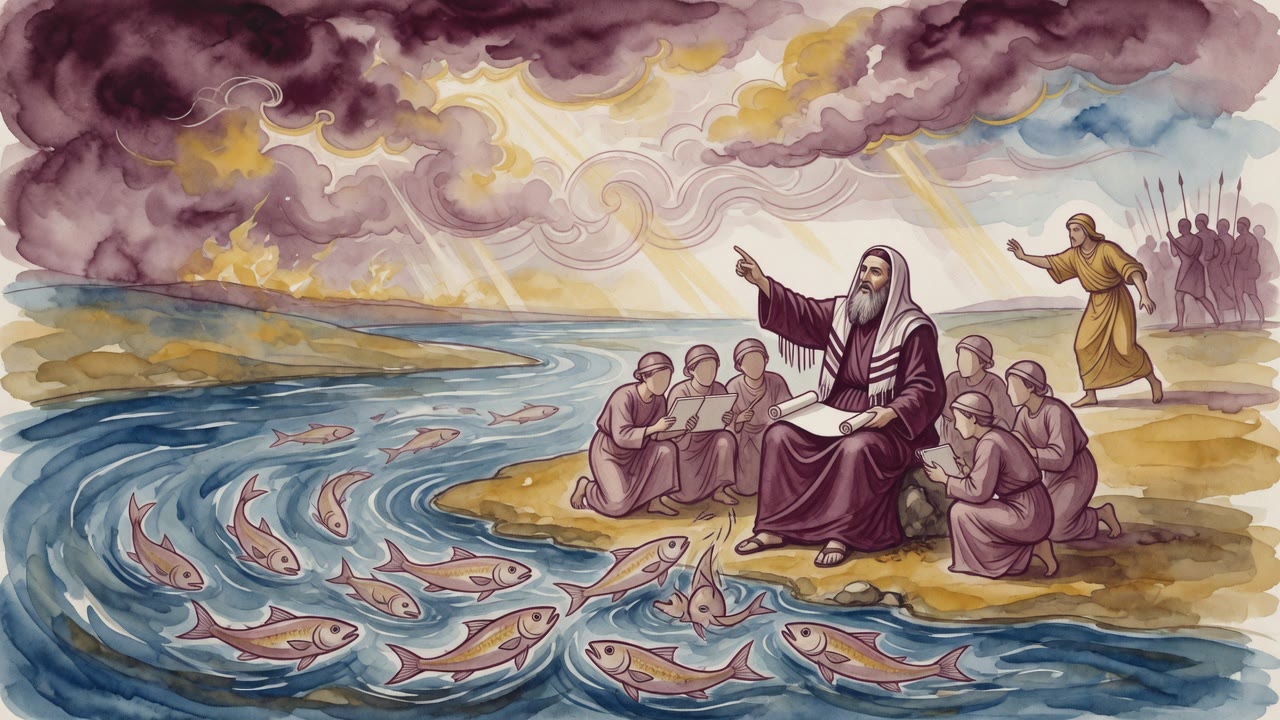
Akiva looked at the students, then at Pappos, and answered with a story about fish.
The Fox at the Shore
A fox walked the water's edge. He saw fish darting from one spot to another, fleeing nets, hooks, lines under the surface.
"Come up to dry land," the fox called. "There are no nets here. Live with me in the clefts of the rocks. I will keep you safe."
The fish answered together. "You are supposed to be the cleverest animal. You are thinking like a fool. If we are afraid here in the water, where we live and breathe, how much more sure are we to die on dry land?"
Akiva turned the parable on Pappos. "We are those fish. Torah is the water. For it is your life and the length of your days" (Deuteronomy 30:20). "If we are at risk while learning, and we are, how much more at risk are we if we stop? What happens to a fish pulled onto dry land is not survival. It is a faster death than the net."
Pappos had no second question that day. He left the street. The students stayed.
Two Men in One Prison
A few days later they seized them both. They sat in the same cell. The warning had reversed.
Pappos looked at Akiva and said he was fortunate. Akiva had been arrested for the study of the law. "Woe to Pappos," he said of himself, "who was taken for idle things."
The man who had feared the water now envied the one who had refused to leave it. The cell made the difference between their crimes plain. One had stayed in the element that kept him alive. One had tried to climb onto sand, and the sand had not saved him.
Night in the prison sounded like iron and breathing. Akiva recited. Pappos listened. The fox's dry land was a stone floor, and it was not kinder than the river.
The Word One
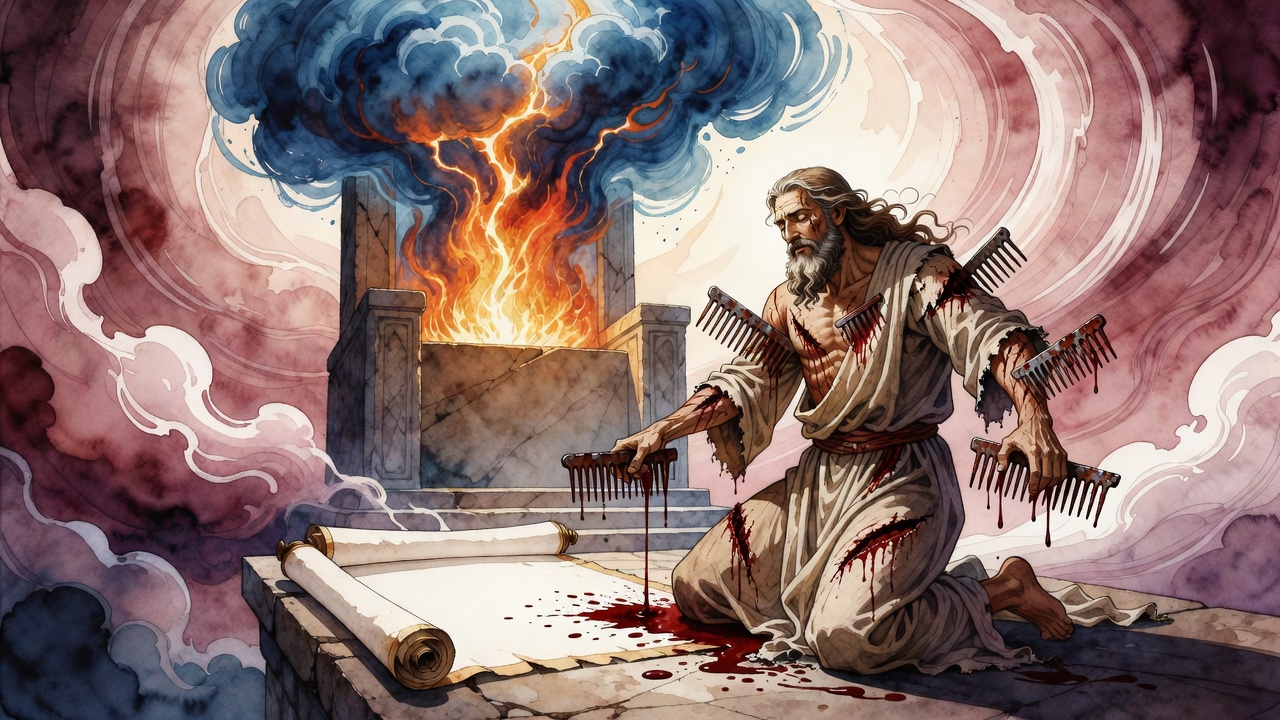
They led Akiva out at the hour of the morning Shema (שמע), Hear O Israel. They combed his flesh with iron combs. He began to recite anyway, accepting the yoke of heaven while they worked. He drew out the word echad (אחד), One, holding it, stretching the final syllable until his breath ran out on it.
His students asked how he could bear it. All his life he had wondered when he would be able to love God with his whole soul, even if that soul were taken from him. Now the chance had come.
The moment his soul left, a voice from heaven spoke. Blessed is Akiva, whose soul departed on the word One.
The Candle in the Cavern
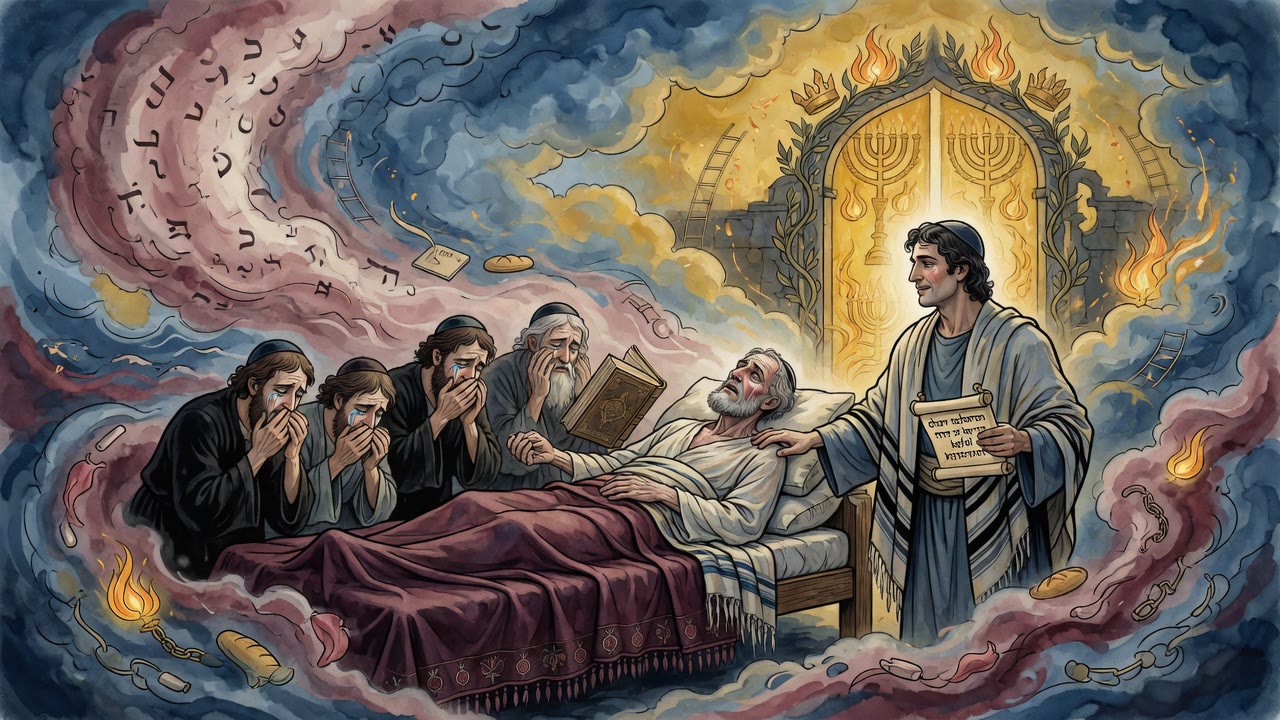
After the body lay in the prison, Elijah appeared to Rabbi Yehoshua HaGarsi, Akiva's attendant, and led him to the place. They wrapped the body. They lifted it onto their shoulders and carried it through the night, moving through streets while the city slept, until they came to a cavern.
Inside, a bed, a table, and a candle were already waiting, as if an unseen host had arranged a room for an honored guest. They laid Akiva down on the bed. The candle burned.
Rome had taken the teacher. It had not taken the burial. The man who would not leave the water was carried out of the empire's reach at last, and the light in the cave did not need a Roman permission to stay lit.
← All myths