Akiva Smiled While Rabbi Eliezer Lay Dying
The room smelled of vinegar cloths and a lamp burned too long. Everyone around Eliezer's bed was weeping. One face in the circle looked almost glad.
Table of Contents
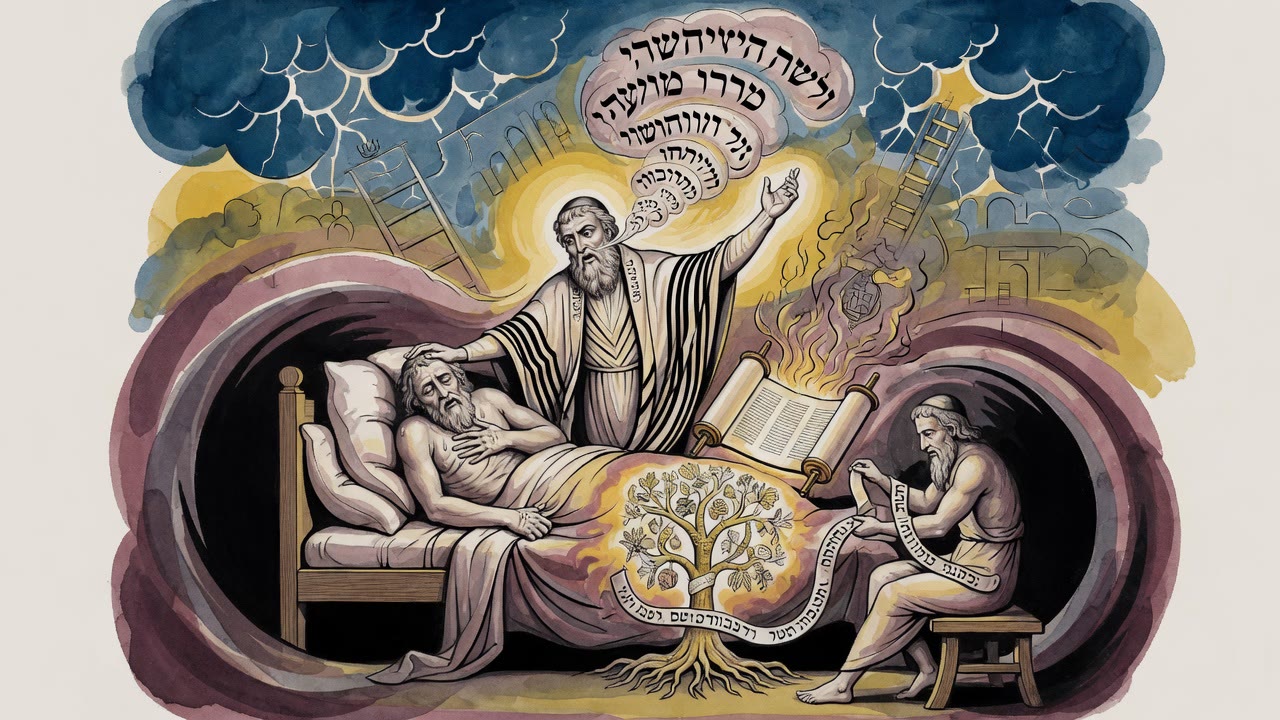
Rabbi Eliezer lay between breath and no breath. The room smelled of sweat, vinegar cloths, and the metal of a lamp burned too long. Disciples filled the walls. Friends who had argued with him for decades now could not finish a sentence. Weeping took the air and would not give it back.
 Click for full size
One face in that circle did not match the room. Rabbi Akiva looked almost glad. Not loud. Not dancing. The set of his mouth refused the pure despair the others wore like a second cloak.
The Charge Against a Smile
They rounded on him. Voices cracked. A hand gestured at the bed as if the fact of dying were evidence enough.
"Why do you look happy? Our master is suffering."
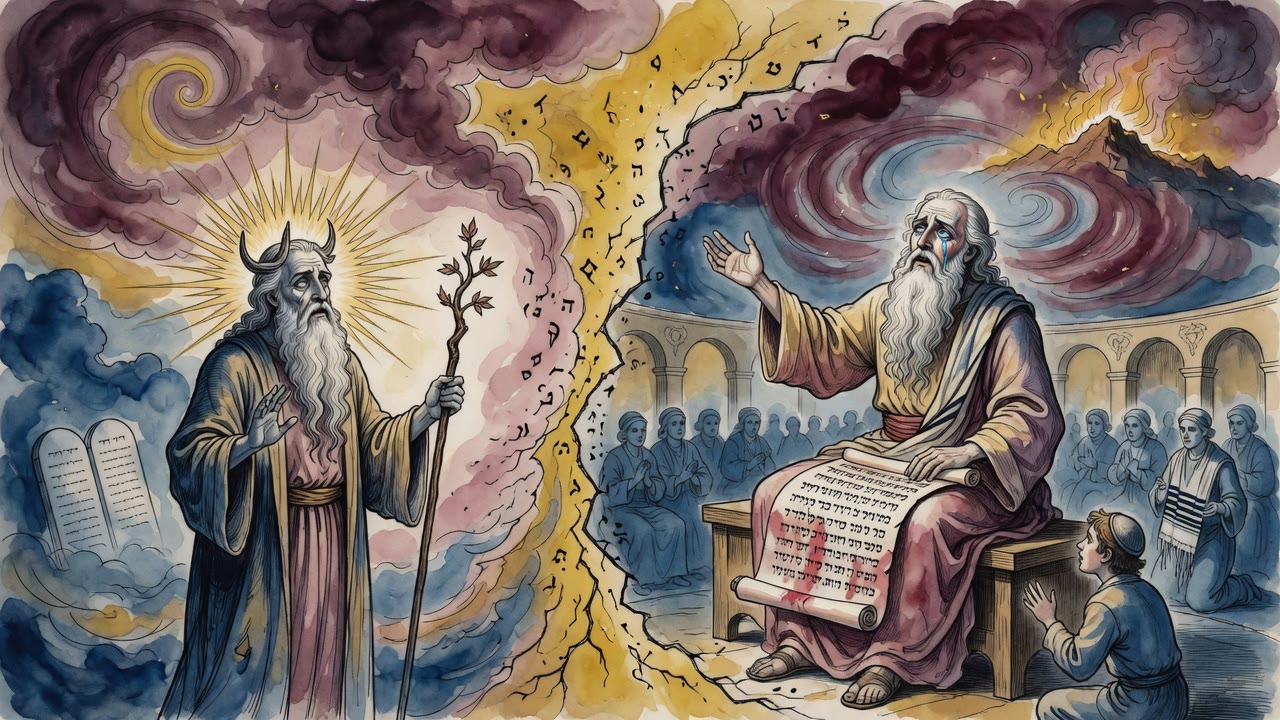
Akiva did not deny the suffering. Eliezer's body was doing hard work in public. Pain moved under the blanket in small, ugly waves. The great teacher who had trained a generation was leaving through a narrow gate of flesh, and the flesh was not kind.
Akiva answered with care, each word set down like a stone that had to bear weight.
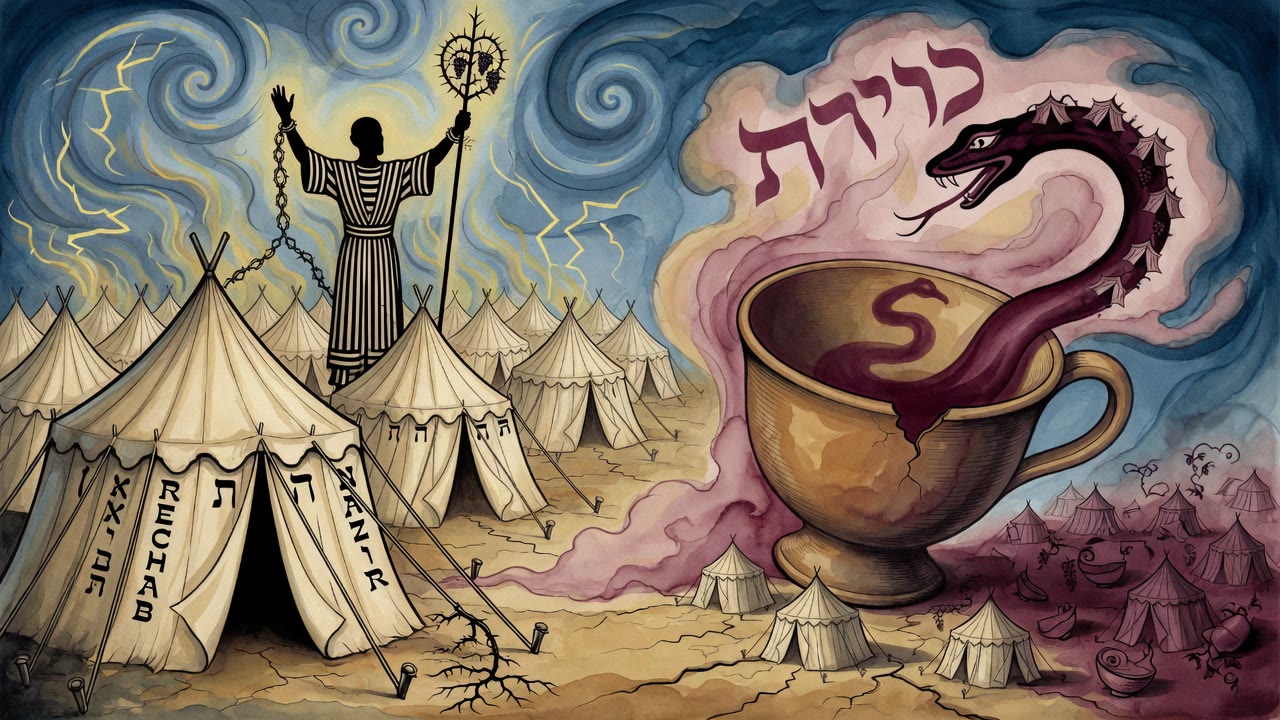
"Do not weep. Be glad. If I saw that his wine had not grown sour, that his flag had not been struck down, I would fear for him. I would think he has already received his reward on earth, and nothing remains for him in the world to come. But now I see my teacher suffering. He taught us himself that the most righteous among us still commit some sin. So let him bear it here, in this bed, in this hour. In the world to come he will have peace."
The Teacher Who Refused a Clean Ledger
Eliezer had never pretended the righteous were glass without a scratch. He had taught the opposite. A life of Torah does not buy immunity from the last accounting. It buys a different kind of fear: that ease without fracture might mean the reward was already spent in orchards and honor and quiet nights.
Akiva had watched that teaching live in his master's mouth for years. Now he watched it live in his master's ribs. The smile was not cruelty. It was the relief of a student who sees the lesson applied at the worst possible time and finds it still true.
Someone in the corner kept weeping anyway. Grief does not always accept bookkeeping. Akiva did not order the tears to stop as a police matter. He only refused to let the tears become a verdict that Heaven had abandoned the bed.
Outside, a donkey brayed in the street. A woman called a child. Inside, the lamp guttered and was fed again. Eliezer's hand opened and closed once on the sheet.
Two Portions for Every Soul
Another argument, held in another hour, sharpened what Akiva saw on that bed. Acher pressed Rabbi Meir with a hard verse: "God also has set the one over against the other" (Ecclesiastes 7:14). The pairing would not leave Acher alone.
Meir gave the plain map first. The Holy One made nothing without its counterpart. Mountains and seas. Day and night. The world is stitched in pairs.
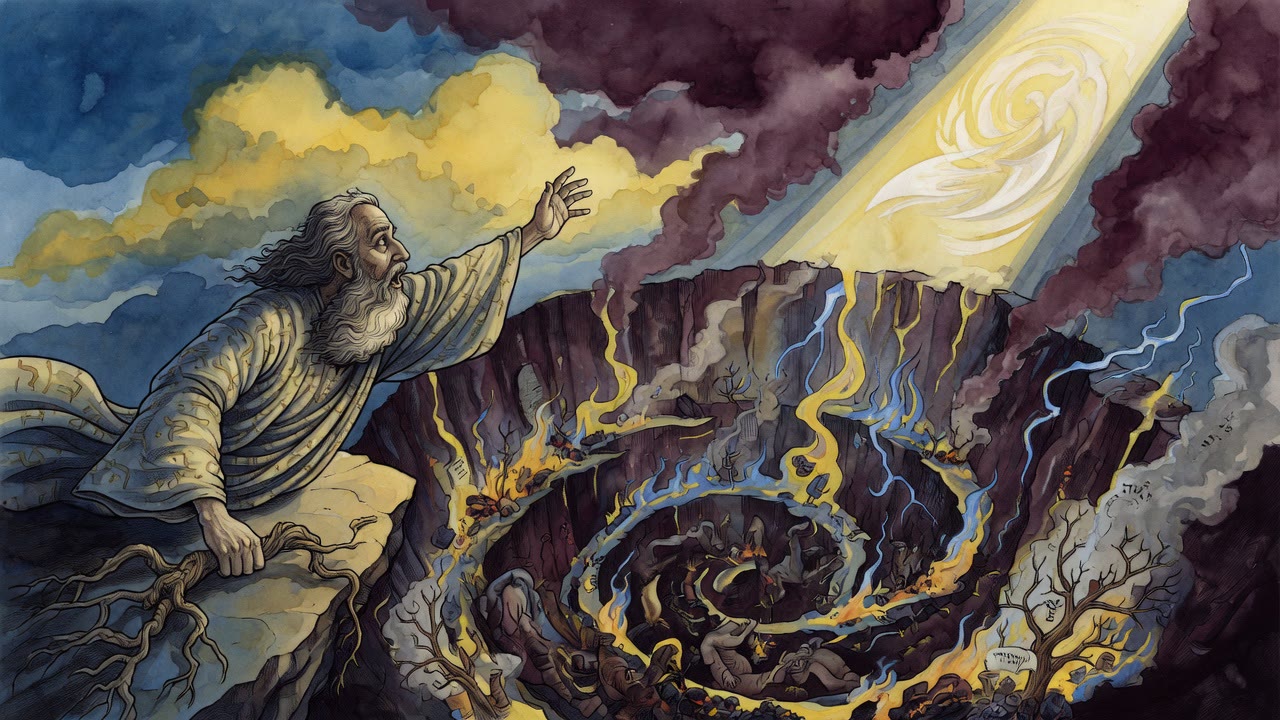
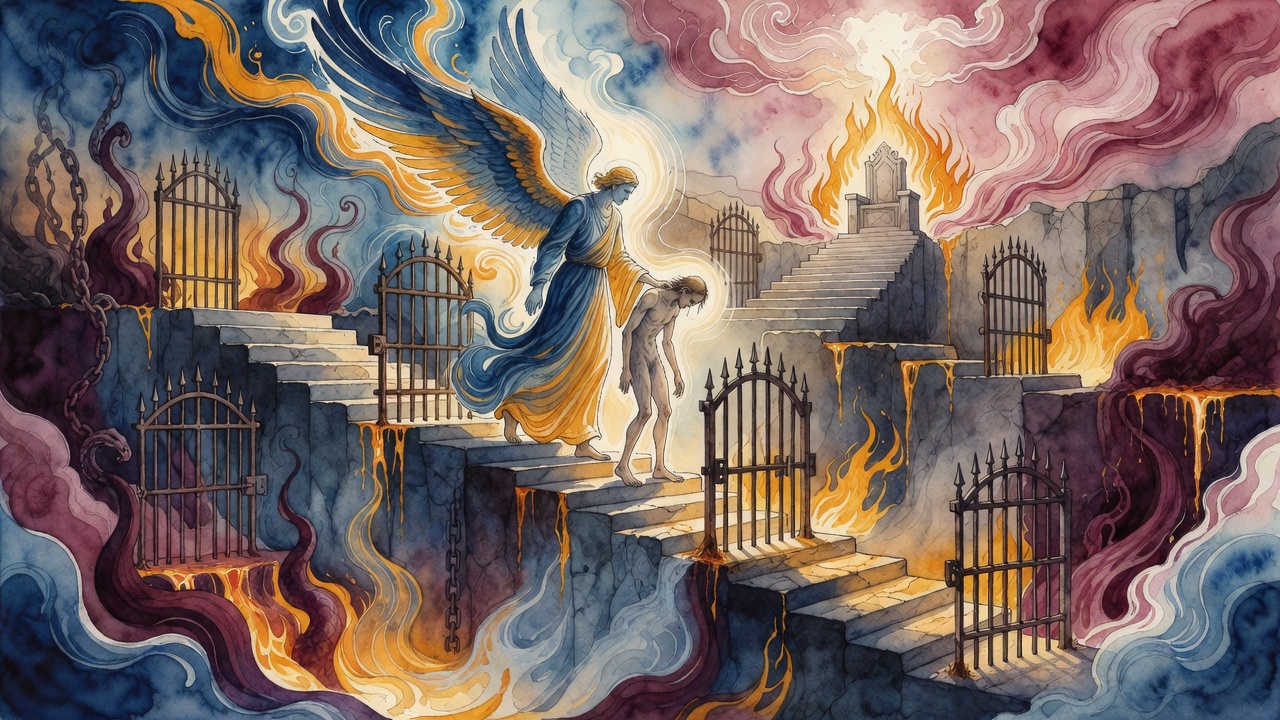
Acher shook his head. He had learned from Akiva a stranger reading. God created the righteous and the wicked. God created paradise and Gehinnom (the place of punishment after death). Every soul receives two portions, one in each. When a righteous person dies with merit intact, that soul carries its own share of paradise and also the share a wicked neighbor forfeited. When a wicked person dies, that soul drags its own share of Gehinnom and also the share the righteous neighbor never needed to claim.
Rav Mesharshia asked for scripture. They answered with Isaiah's promise, "they shall possess the double" (Isaiah 61:7), and Jeremiah's warning, "destroy them with double destruction" (Jeremiah 17:18). A portion is never only private property. Merit and ruin spill across the line between neighbors.
On Eliezer's bed the double math ran quiet. Suffering here could mean a cleaner claim there. Akiva's near-smile was the face of a man who trusted that arithmetic more than the room's panic.
What the Bed Finally Held
Eliezer's breathing thinned. The disciples who had come to learn one more ruling learned instead how a body leaves. Akiva stayed inside his reading. Wine gone sour. Flag struck down. A life that had known blows. Those were not proofs of divine neglect. They were the last small coins paid on a road that still opened upward.
When the breath stopped, the weeping rose again and found no answer that felt like enough. Akiva did not announce a tour of paradise. He had already given the only sentence that could stand beside that silence. Peace waits where a righteous man's last debts have been finished in sight of students who wanted ease for him more than they wanted him clear forever.
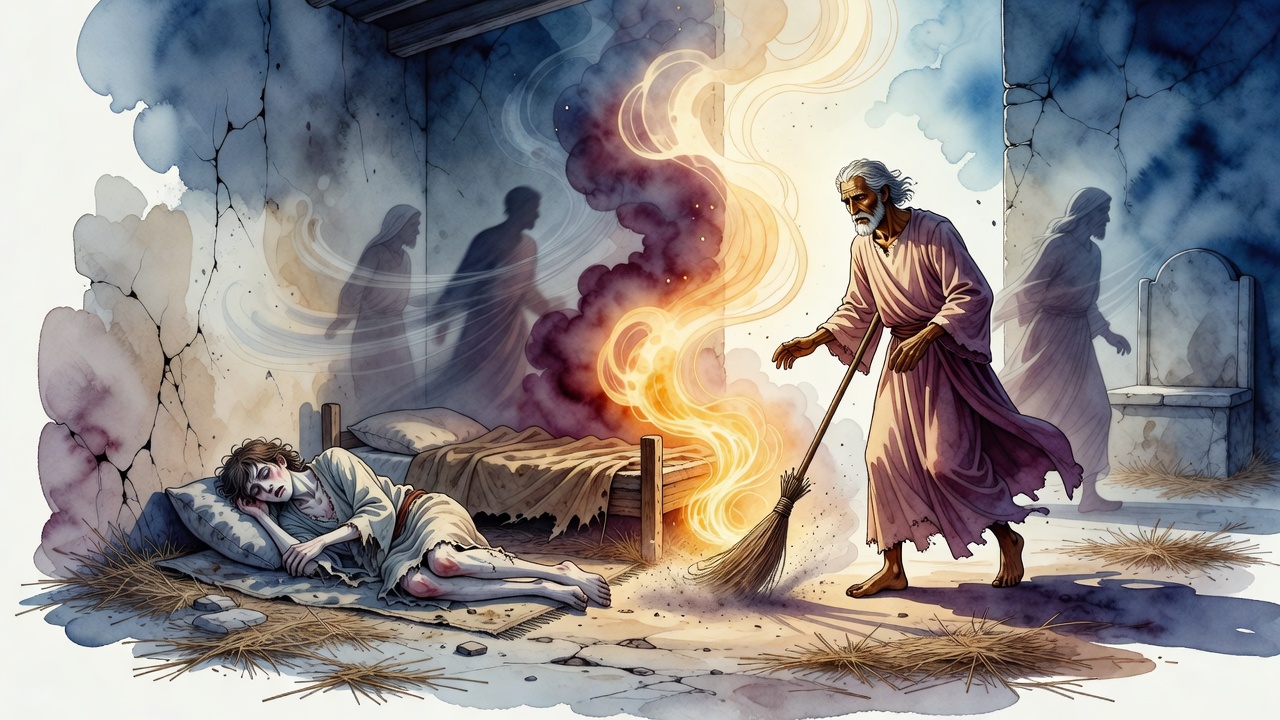
The lamp finally died without a hand to feed it. Dawn found the street and did not ask permission. Akiva left the room with the look of a man who had watched a teacher pay the last coin and walk on richer than the tears could measure.
← All myths