5 min read

Abraham Looked Into Gehinnom and Still Asked Mercy

Abraham saw judgment, hospitality, circumcision, and the furnace of Gehinnom together, then kept pressing heaven for mercy.

Curated by Arthur · Told by Maggid ·
Table of Contents
  1. God Opened the Heat Below
  2. The Furnace Waited in the Covenant
  3. He Asked to See the Destroyed Generations
  4. Justice Needed a Guarantee

Abraham was recovering from circumcision when the road went empty.

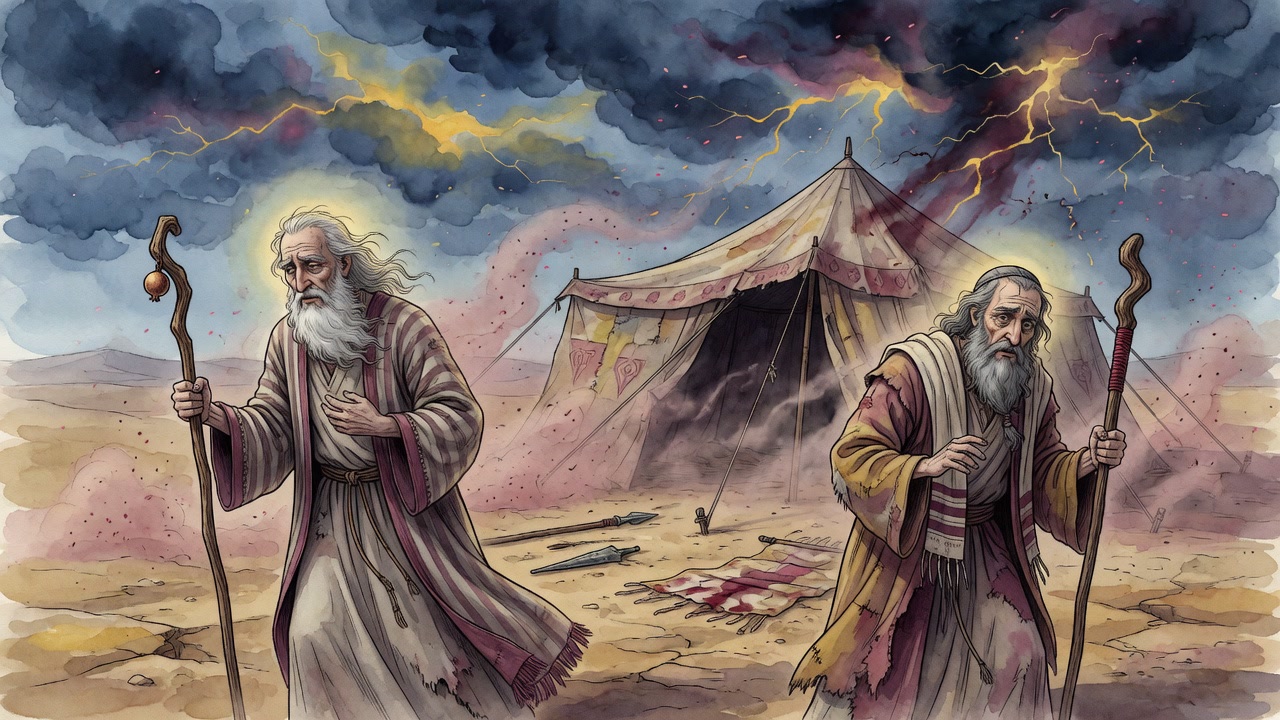
The heat pressed on the tents. No traveler came. No dust rose in the distance. No stranger waited to be washed, fed, shaded, and called guest. For Abraham, the silence of the road was its own pain. His body hurt, but the absence of wayfarers hurt differently. A tent with no one to welcome had become almost unlivable.
So he sent Eliezer to look.

God Opened the Heat Below

Eliezer came back empty-handed, and Abraham did not trust the search. He prepared to go out himself, wounded and burning, because hospitality had become the instinct by which he moved through the world.

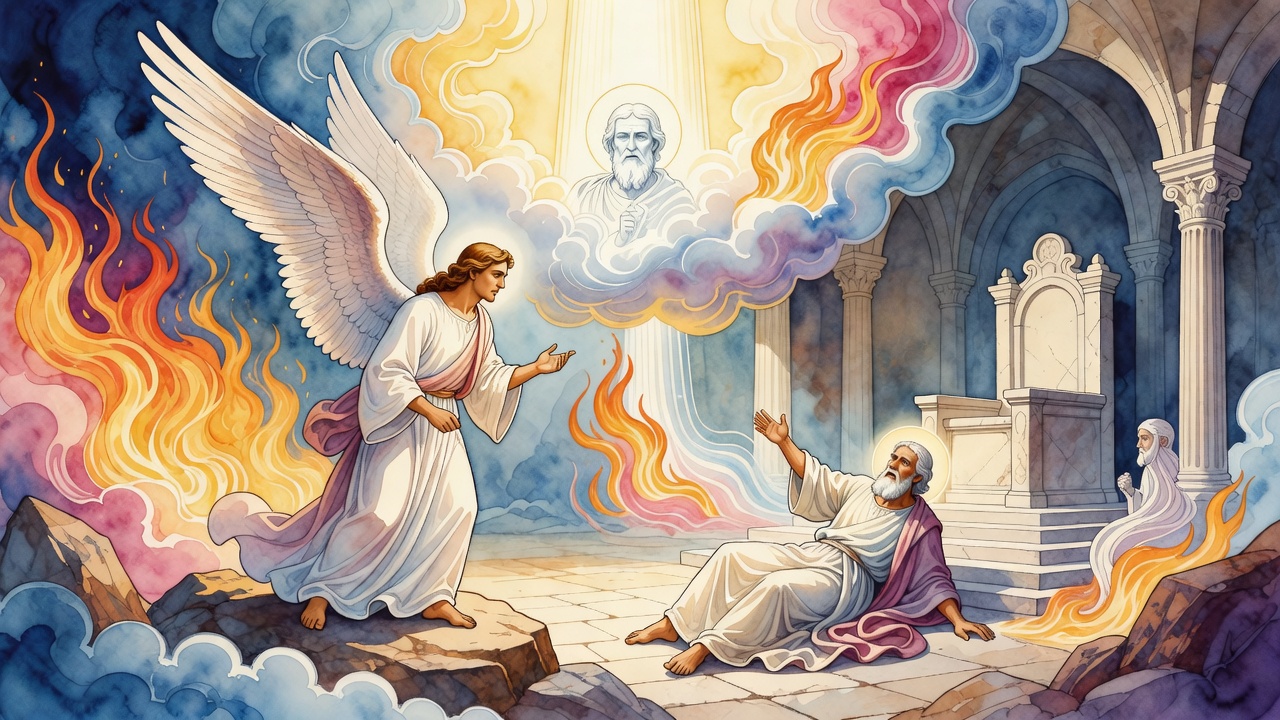
Then God appeared with angels.

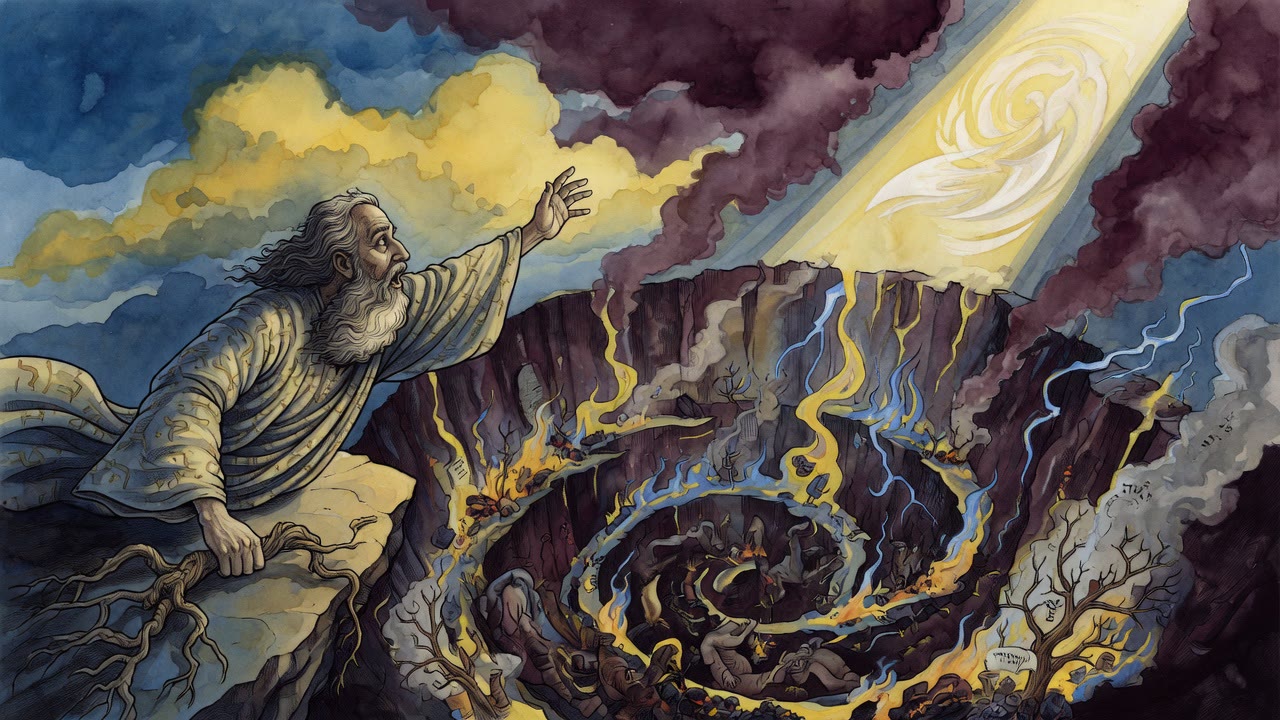
The sages make the moment stranger. God had opened a hole in Gehinnom so the heat would keep travelers away and spare Abraham the burden of guests while he healed. The mercy misfired against Abraham's own nature. He did not want rest if rest meant no one came through the tent. He would rather rise in pain than let hospitality lie unused.

He tried to stand before God. God stopped him. Sit, God told him, and Abraham protested because one does not sit while the King stands present. The answer turned the tent into a promise. Children of Abraham would one day sit in synagogues and schools while the Divine Presence rested among them.

The Furnace Waited in the Covenant

Gehinnom was not only heat under a road.

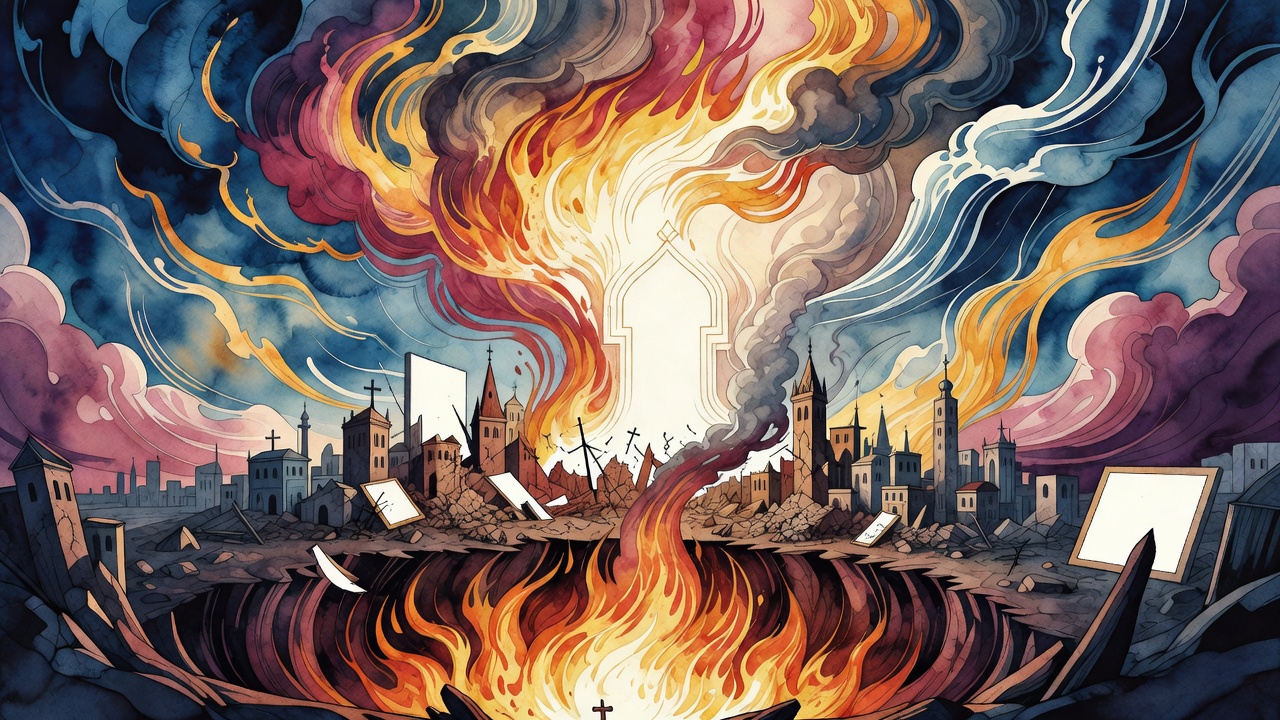
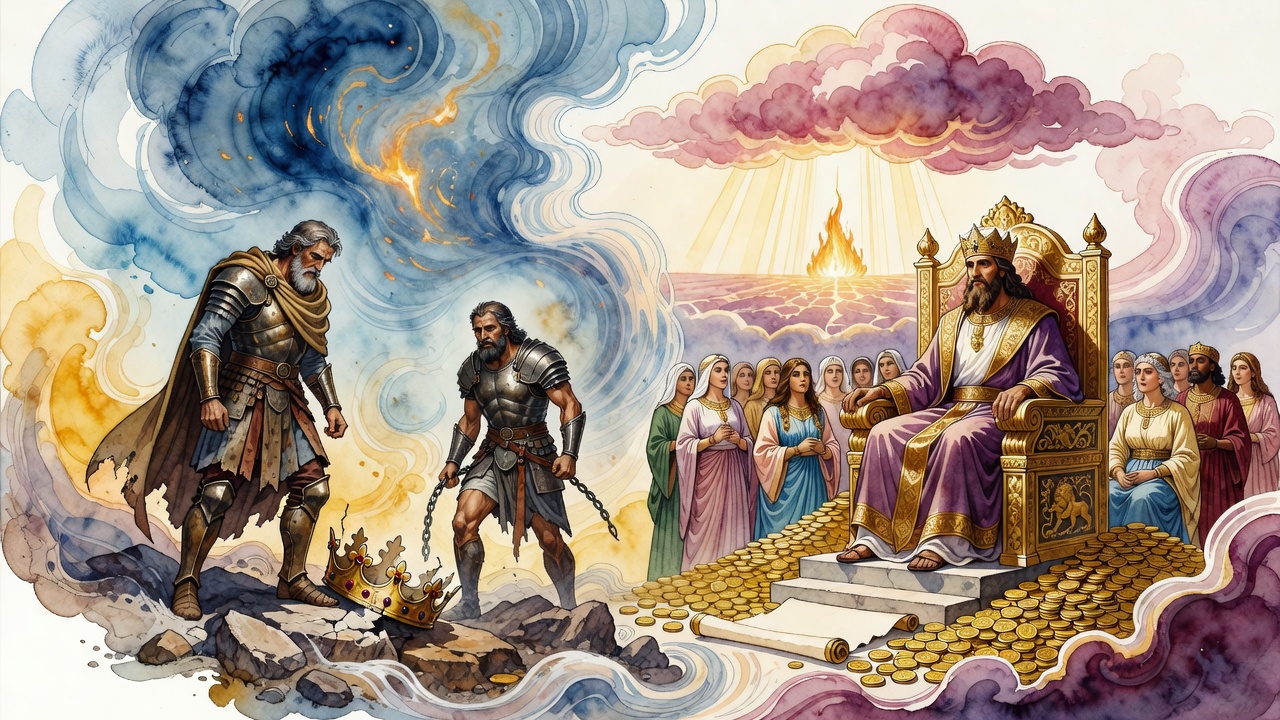
In the covenant between the pieces, Abraham had seen a smoking furnace and a flaming torch pass through the darkness. The sages heard that furnace as Gehinnom itself, the place where kingdoms with all their pomp become fuel. Empires love their own weight. Judgment knows how to burn weight into ash.

Abraham's own body had entered covenant through the knife. At ninety-nine, he was told to walk before God and be whole. Circumcision came late in his life, not as ornament, but as a cut that marked belonging. The private wound and the cosmic furnace stood closer than comfort allows. Flesh, empire, inheritance, judgment, mercy. Abraham's life held all of it at once.

He did not become tender because he ignored fire. He became tender while knowing fire was real.

He Asked to See the Destroyed Generations

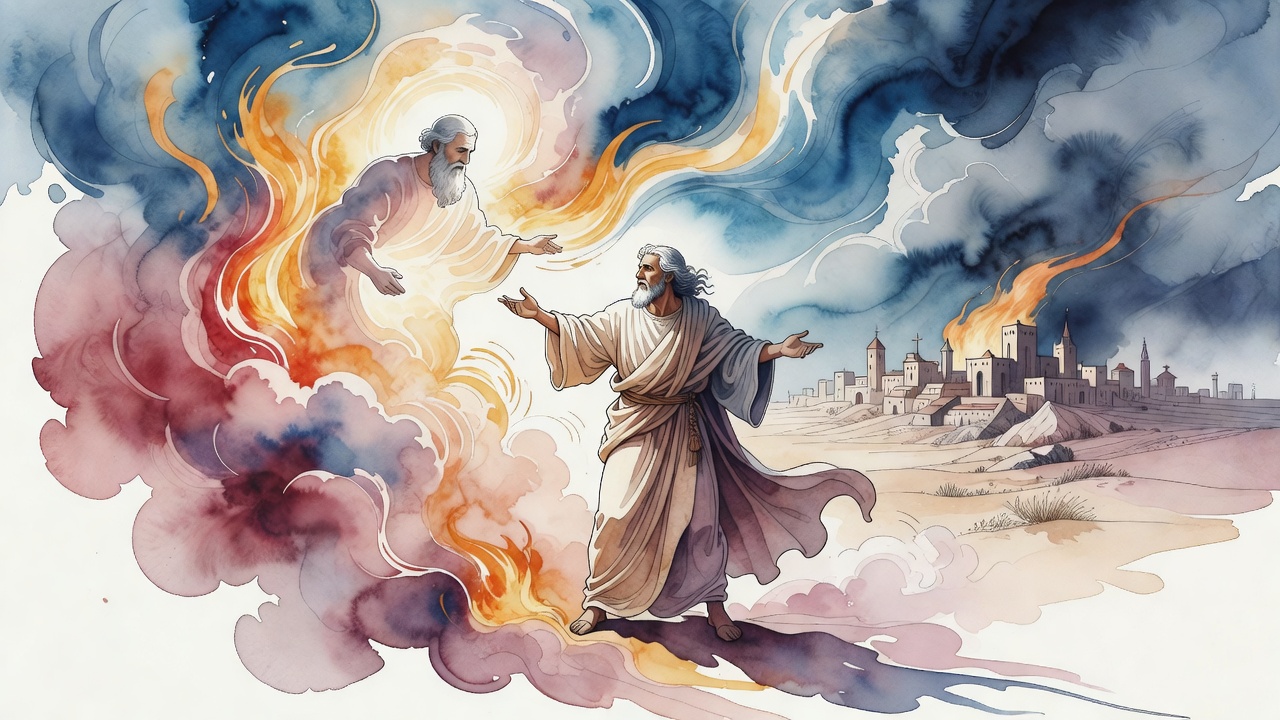
God let the destroyed generations pass before him.

Abraham had challenged divine justice, so God showed him what had been done and what had been withheld. The punishments had not exceeded the measure. Abraham had to admit that justice had not been diminished or distorted in this world or the next.

That should have ended the matter.

It did not.

Abraham turned from the destroyed generations toward the cities still standing. What if there are fifty righteous. What if forty-five. Forty. Thirty. Twenty. Ten. The man who had seen enough judgment to concede its fairness still would not stop searching for a remnant that could keep a city alive.

He had looked into justice and came out bargaining for mercy.

Justice Needed a Guarantee

Later Israel would pray in Abraham's shadow.

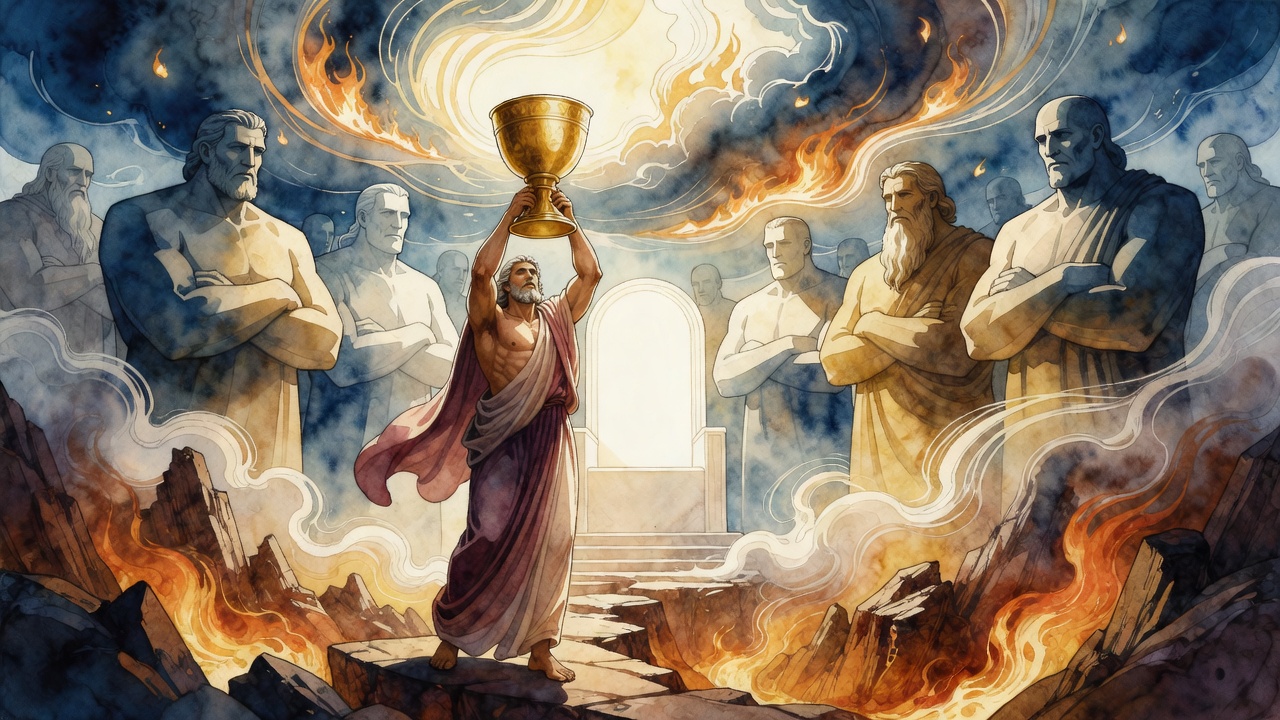
I have done justice and righteousness. Do not leave me to my oppressors. The plea asks for a guarantee, a surety against the descent into Gehinnom. Abraham had a divine assurance that he would command his children after him to keep the way of justice and righteousness. Israel stood after him asking God to honor that path and not let righteousness fall through the floor.

The plea is not soft. It assumes a court, a furnace, and an accuser. It also assumes that a life of justice leaves a trace strong enough to be named before heaven. Abraham's children do not ask for rescue because fire is unreal. They ask because their ancestor taught them to stand near judgment and still speak.

That is why Abraham belongs at the mouth of fire in these traditions. Not as a warden. Not as a man who denies judgment. He knows the furnace exists. He knows kingdoms burn. He knows a human body must be cut into covenant. He knows whole generations can be shown and judged.

Still he looks down the road for guests. Still he argues for cities. Still he teaches his descendants to sit before God without terror, as children in a schoolhouse, while the Presence rests among them.


← All myths

From the tradition

Sources

4 sources

The texts this telling draws on, in full. Open a card to read inline, or expand it for a wider, quieter read.

Legends of the Jews 5:136Legends of the Jews

Legends of the Jews turns to God Opened a Hole in Hell to Keep Visitors Away from Abraham.

Here's the kicker: Abraham is distressed precisely because no one is visiting! His whole life is about welcoming strangers, offering kindness. The absence of wayfarers causes him great vexation.

So, what does he do? First, he sends his servant Eliezer to scout for travelers. When Eliezer returns empty-handed, Abraham, despite his pain and the scorching heat, decides to go out himself. He couldn't fully trust Eliezer anyway, thinking “No truth among slaves,” as the saying went. It reveals a bit about the cultural biases of the time, doesn't it? But more importantly, it emphasizes Abraham's burning desire to fulfill the mitzvah of hachnasat orchim (הכנסת אורחים), the commandment of welcoming guests.

It's at this very moment, as Abraham prepares to venture out, that God appears to him, surrounded by angels.

Abraham, of course, tries to rise in respect. But God stops him. He tells Abraham not to worry about standing on ceremony. Abraham protests, saying it's inappropriate to sit in God's presence. And God responds with this incredible promise: "As thou livest, thy descendants at the age of four and five will sit in days to come in the schools and in the synagogues while I reside therein."

What a beautiful, intimate moment! God essentially says, "Your dedication to hospitality, your desire to connect, is so profound that I will waive my own honor. Your children, your descendants, will be comfortable in my presence, just as you strive to make others comfortable."

As we find in Midrash Rabbah, this encounter highlights the immense value God places on acts of kindness and hospitality. It's not just about following rules or performing rituals; it's about the genuine desire to connect with others, to offer comfort and welcome.

This story isn't just an ancient tale; it's a reminder that even in our own discomfort, even when we feel we have nothing to offer, the impulse to connect, to welcome, is a powerful and sacred act. And sometimes, in those very moments, we find ourselves in the presence of the Divine. What does it mean to you to strive to connect even when it's difficult? Where do you see opportunities to welcome others into your life, as Abraham did?

Full source
Legends of the Jews 5:160Legends of the Jews

In the Legends of the Jews, Ginzberg retells this powerful moment where Abraham challenges God's justice. Can you Arguing with the Almighty!

God, having already destroyed generations, offers Abraham a glimpse into their fates. "I will let all the generations I have destroyed pass before thee," God says, "that thou mayest see they have not suffered the extreme punishment they deserved." It's a stunning offer, a chance to witness divine judgment firsthand.

God essentially says, "Look, I'll show you. If you still think I'm wrong, tell me how to do better. I'll listen."

Abraham, seeing this, "had to admit that God had not diminished in aught the justice due to every creature in this world or the other world." Powerful words. He sees the full picture and acknowledges the inherent fairness.

But Abraham, being Abraham, doesn't stop there. He's not just concerned with past justice, but with the potential for future mercy.

He presses further. "Wilt Thou consume the cities, if there be ten righteous men in each?" Abraham asks. He's bargaining, negotiating for the innocent, for even a small spark of goodness to save a whole community. This, right here, is tikkun (spiritual repair) olam in action, repairing the world.

And God responds, "No, if I find fifty righteous therein, I will not destroy the cities." It’s not just a negotiation. It’s a conversation about the very nature of justice and mercy. It speaks to the power we have, even in the face of seemingly insurmountable odds, to advocate for what's right.

What does it mean to stand up for your beliefs, even when facing the Divine? And what does it mean that even the Divine is open to hearing our arguments?

Maybe, just maybe, it means that the universe is listening, and that even the smallest voice can make a difference.

Full source
Midrash Tehillim 119:30Midrash Tehillim

That feeling resonates deeply within Jewish tradition, particularly in our prayers and meditations on justice, righteousness, and redemption. to a fascinating exploration of Psalm 119 through the lens of Midrash Tehillim, a collection of homiletic interpretations on the Book of Psalms.

The verse that sparks this particular midrash (rabbinic interpretive commentary) is (Psalm 119:121): "I have done justice and righteousness; do not leave me to my oppressors." It's a cry for help, a plea for divine intervention after fulfilling one's obligations. But what does it really mean to "do justice and righteousness," and how does that connect to redemption?

The midrash draws a powerful connection between justice, righteousness, and the promise of redemption. The prophet Isaiah proclaimed, "Zion shall be redeemed with justice" (Isaiah 1:27). And God Himself, according to the midrash, said that if Israel does justice and righteousness, their redemption will come immediately. God promises to punish their enemies, echoing again, "Zion shall be redeemed with justice" (Isaiah 1:27), followed by a stark warning: "But transgressors and sinners shall be destroyed."

King David, the traditional author of Psalms, also chimes in, emphasizing the vital link: "They shall be redeemed with justice," and urging us to "Keep justice and do righteousness" (Psalm 119:121).

But here's where it gets really interesting. The midrash presents a vulnerability, a doubt. Israel, speaking collectively, laments that they haven't acted with the same assurance as their forefather Abraham, who had a divine guarantee: "For I have known him, that he will command his children" (Genesis 18:19). We, the people of Israel, made our guarantee – we’ve strived for justice and righteousness – so we ask God to make His. Guarantee the welfare of Your servant!

And what's this "guarantee" they're seeking? It's intensely personal: "That I will not descend into Gehenna (Hell); if you do not guarantee me, who will guarantee me?" It's a plea for ultimate salvation, a hope that righteousness will protect them from eternal damnation.

This idea of needing collateral, a guarantee of divine favor, is echoed by both Hezekiah and Job. Hezekiah, in his illness, cries out, comparing himself to a chirping bird, his eyes raised in supplication (Isaiah 38:14). Job, in his suffering, asks, "Please put up collateral for me with yourself; who is there that will shake hands with me?" (Job 17:3).

The midrash beautifully interprets Job's plea. If it were money, silver, gold, or even shoes, Job would offer them as collateral. But who can offer their soul? Who would give their soul for a friend? Who can put up collateral when you have nothing left to offer?

This brings us back to (Psalm 119:122): "Pledge Yourself on behalf of Your servant for good." The meaning? That we will do God’s will, and in return, God will bring us good and protect us from the wicked. It's a reciprocal promise, a divine handshake.

The cry continues in (Psalm 119:82): "My eyes fail from looking for Your salvation." To which God responds, referencing (Isaiah 43:2-3), "When you walk through fire, you shall not be scorched… For I am the Lord your God, the Holy One of Israel, your Savior." And further, from (Ezekiel 34:22), "I will save My flock." Save us, the Psalmist pleads, as You have promised!

But what if we don’t deserve it? What if we lack the good deeds, the merit? The midrash offers a comforting answer: "You have done kindness with us, as it is said, 'Do with Your servant according to Your kindness' (Psalm 119:124)." The first ones whom You redeemed were not redeemed through their own deeds, but through Your kindness. As (Exodus 15:13) says, "You have led with Your kindness." Just as You did with the first ones, do with us. Therefore it is said, "Do with Your servant according to Your kindness."

It all comes down to this: sometimes, even when we strive for justice and righteousness, we need to rely on divine grace, on God's unwavering kindness. Redemption isn't always earned; sometimes, it's a gift. And that's a powerful thought to hold onto, especially when we feel lost and overwhelmed. It reminds us that even in our imperfections, we are worthy of love, compassion, and ultimately, redemption.

Full source
Pirkei DeRabbi Eliezer 29:1Pirkei DeRabbi Eliezer

Rabbi Ẓe'era had a rather fiery take on it. He suggested that these earthly kingdoms, with all their pomp and power, were ultimately created as nothing more than fuel for Gehinnom (the place of spiritual purification after death) – often translated as Hell. Where does he get this idea? Well, he points to (Genesis 15:17): "Behold, a smoking furnace, and a flaming torch that passed." Rabbi Ẓe'era interprets this "furnace" as a direct reference to Gehinnom. He bolsters his interpretation by referencing (Isaiah 31:9), "Saith the Lord, whose fire is in Zion, and his furnace in Jerusalem," further cementing the link between the concept of a furnace and divine judgment. It's a pretty vivid image, isn't it? All that worldly ambition, all that striving for power, ultimately reduced to kindling.

Let's shift gears a bit. The Pirkei DeRabbi Eliezer then brings us to another fascinating story: the trials of Abraham. Specifically, the eighth trial. Now, we know Abraham faced many tests of faith, but this one is particularly… intimate.

"And when Abram was ninety-nine years old," (Genesis 17:1) tells us, God says to him "You're not quite perfect yet." What's the missing piece? Circumcision. God commands him to circumcise the flesh of his foreskin, and to "walk before me, and be thou perfect."

Why this commandment, at this stage in Abraham's life? The text suggests the foreskin itself is a mark of imperfection, even a "reproach." It quotes (Genesis 34:14), "For that is a reproach unto us," linking the uncircumcised state to shame or defilement. It even goes further, citing (Isaiah 52:1): "For henceforth there shall no more come into thee the uncircumcised and the unclean." The implication is that the foreskin is considered more unclean than all other unclean things, a "blemish above all blemishes."

So, the message is clear: Circumcise yourself, Abraham, and then you will be perfect. It’s a powerful statement about the importance of this ritual, not just as a physical act, but as a step toward spiritual wholeness. It’s a fascinating juxtaposition: empires burning as fuel for Gehinnom, and the intimate act of circumcision as a path to perfection. Both, in their own way, speak to the transient nature of worldly power and the enduring quest for spiritual meaning. What do these stories tell us about our own striving for perfection, and the legacies we hope to leave behind?

Full source