When the Mother Bird Is Sent and Years Lengthen
A traveler finds a nest on the road, mother still on her young. One mitzvah frees her, promises long life, and opens a deeper map of mercy.
Table of Contents
 Click for full size
The Nest on the Road
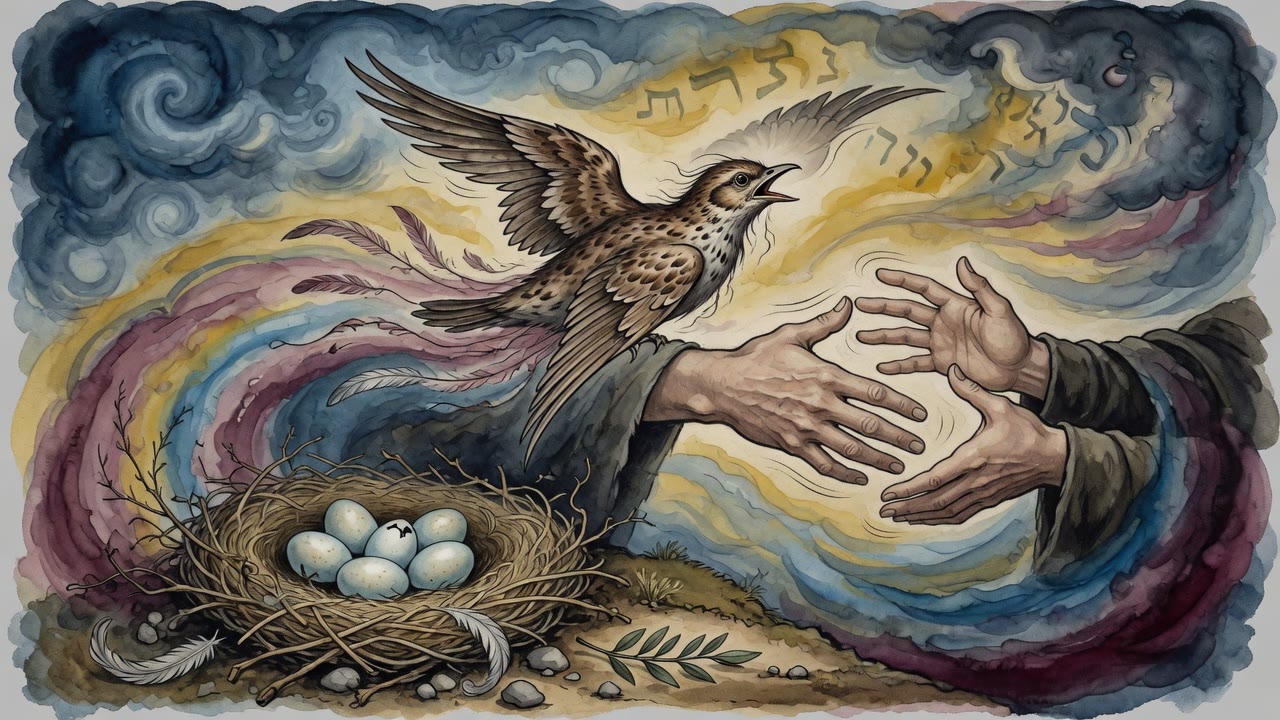
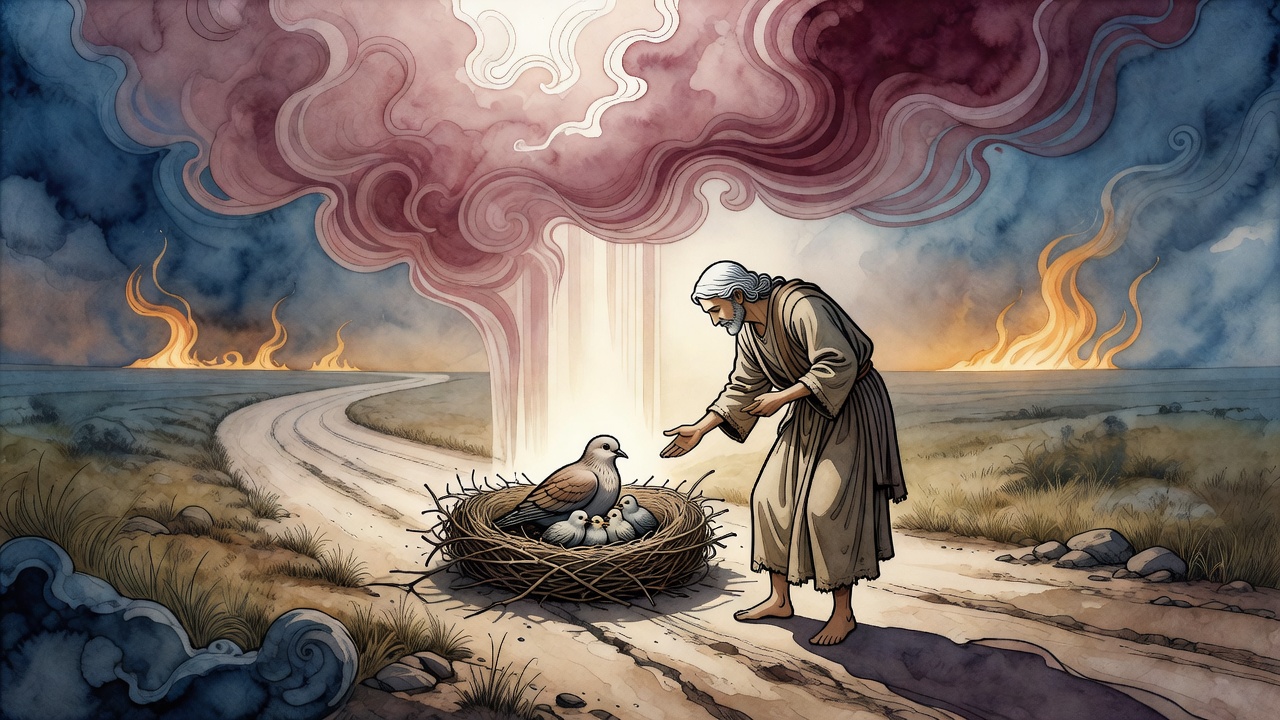
The traveler almost stepped past it. A low branch, a rough cup of twigs, and under a gray wing two eggs still warm. The mother bird did not fly. She sat as if the whole road belonged to her clutch, and her eye fixed on the man who had found her by accident on the way to a field (Deuteronomy 22:6-7).
He could have closed his hand over bird and eggs together. The law forbade that grab. Send the mother. Take only the young. Do it so that it may go well with you, and so that your days may lengthen. The promise sat strangely large beside a nest that weighed less than a loaf.
He crouched until the dust of the road marked his knees. The mother hissed once, a thin sound, then froze. For a breath he felt the old hunter's reflex, the wish to finish the matter in one motion. The verse stood between his hand and that motion like a second person on the road.
Rabbi Elazar once pressed the hard edge of the command. Why should the Torah spend breath on a bird's terror? The answer did not come as a lecture about kindness in the abstract. The Holy One answered from the glory of the world itself. This bird has entered the work of continuation. She has put life into the next generation. For that alone she is worthy of rescue.
What a Bird Earns Without a Covenant
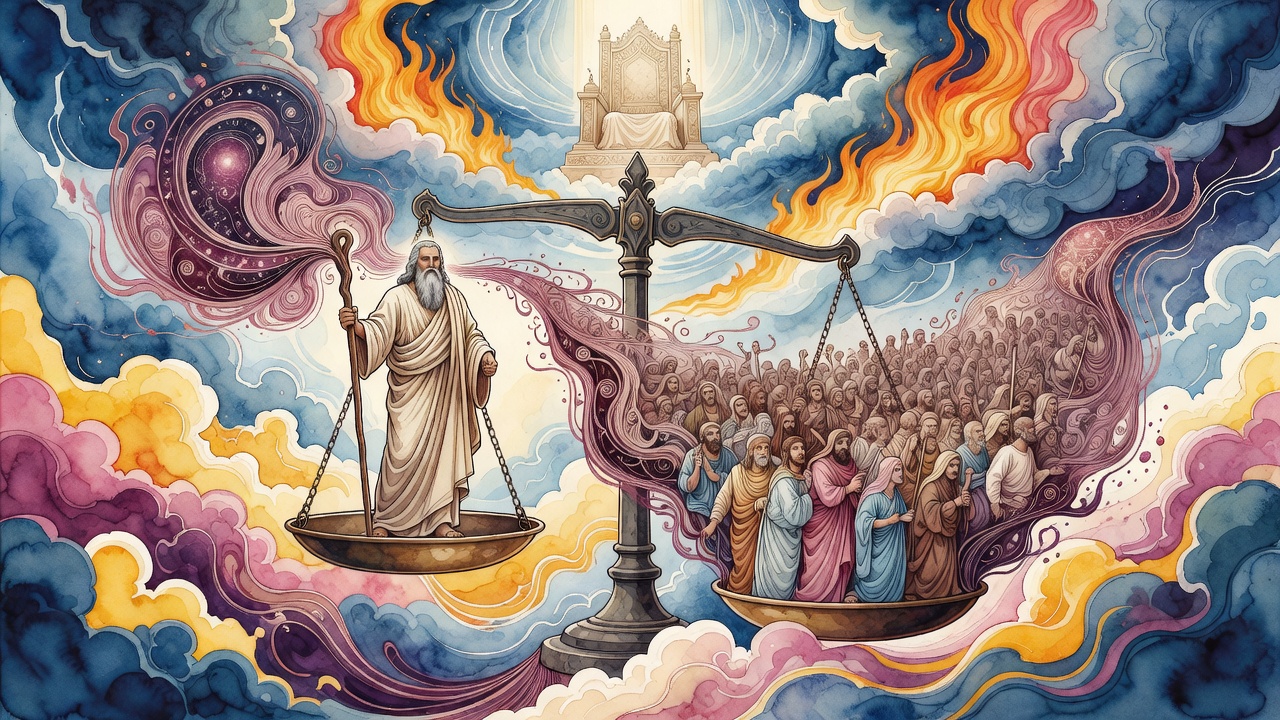
Rabbi Hiyya pushed the thought further. The bird has no covenant like Abraham, no binding like Isaac, no name wrestled into dawn like Jacob. She has only eggs and the stubborn refusal to leave them. Even so, the midrash says her offspring can atone for her. If a creature without patriarchs can win mercy by keeping the world going, how much more the children of those who carried the promises?
The road becomes a test of scale. A man who can open his hand for a sparrow's mother is practicing the same muscle the Holy One uses when Israel stumbles and still has children. Mercy is not a mood. Mercy is the refusal to take mother and young in one fist.
He stood and waved her off. She burst upward in a chaos of feathers, circled once, and cried from a higher branch. The eggs looked suddenly naked. He took what the law allowed, carefully, as if the promise of long life could crack if he were clumsy, and walked on with the heat of the nest still on his palms.
Behind him the mother returned. That return is part of the mitzvah's afterimage. The command is not only about the human who gains years. It is about a world that still has mothers willing to sit.
The Mother Named Shekhinah
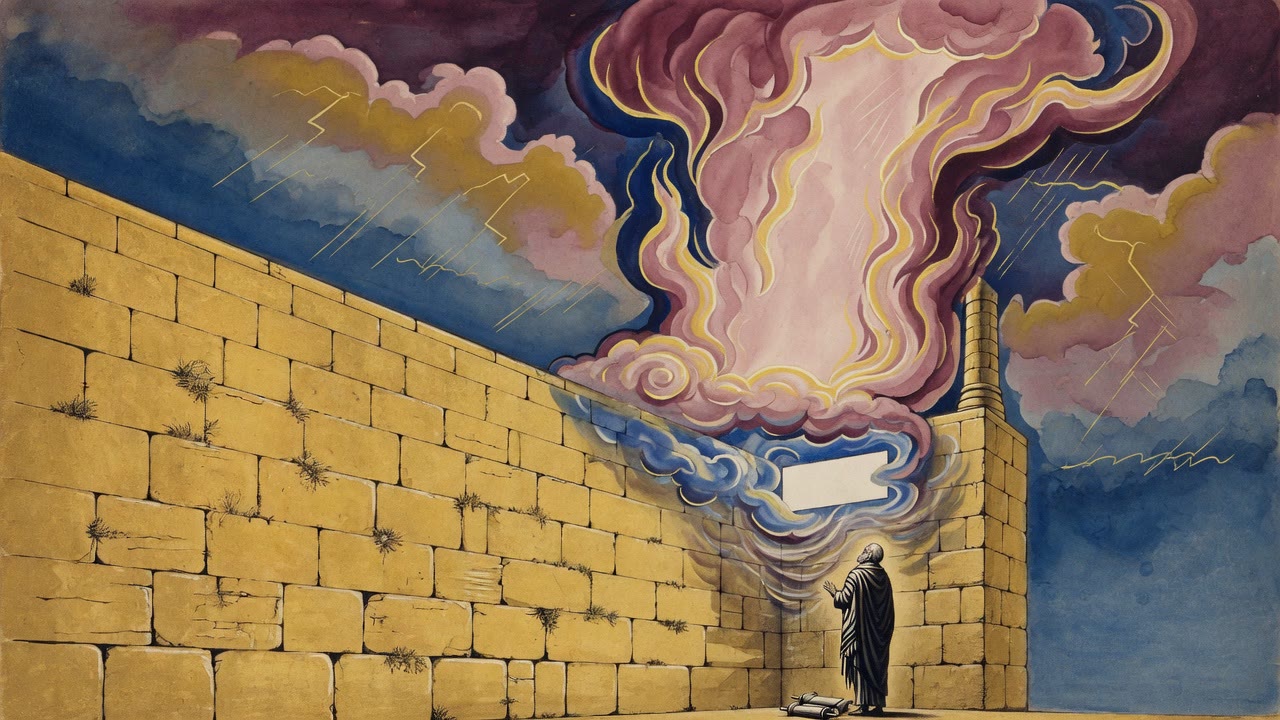
Later teachers refused to leave the nest on the roadside alone. In the Tikkunei Zohar the mother is not only a bird. She is the Shekhinah (שכינה), the divine presence that sits close to the world the way a hen sits close to heat. The children are the emanations that depend on her staying.
"Do not take the mother with the young" becomes a map of cosmic care. When Israel studies Written and Oral Torah with love and with awe, the upper and lower stay joined. The mother is not ripped from what she covers. When love cools and awe thins, the warning flips. "You shall surely send the mother away." Separation opens inside the divine pattern. The nest on the road was already teaching exile.
A person who tears presence from the things it covers is not only cruel to birds. He is rehearsing a cosmic divorce. The Zohar's hard reading makes the traveler's open hand into liturgy. Every ordinary mercy trains the hand that either unites or tears.
Shabbat as a Second Nest
The same teaching braids the nest into Shabbat. Remember and Observe, zakhor and shamor, are two wings. Keep both, and the blessing holds. Drop one wing, and the mother is dismissed twice over. A man who guards the seventh day with half a heart is practicing the same violence as the traveler who bags bird and eggs together for convenience.
So the nest is small and the stakes are not. Long life is not a bribe for soft feelings. It is the natural length that comes when a person refuses to collapse mother into child, presence into plunder, Shabbat into a day like any other.
Imagine the same traveler later, candles lit, work set down. The wings of the week fold. If he has learned the nest, he does not snatch rest and labor in one greedy gesture. He lets one cover the other in turn.
The Hand That Opens
Years later he may not remember the eggs. He may remember the moment his fist unclenched. The sources leave that gesture on the table. Not a sermon about animals alone, not a chart of sefirot (the ten divine emanations of Kabbalah) alone, but a single motion on a dusty road.
Open the hand. Let the mother go. Live longer in a world that still has mothers willing to sit. The length of days arrives the way the bird returned, not as a trophy, but as a creature coming back to what was not destroyed.
← All myths