Ruth Watched the Shoe Leave the Foot at the Gate
Chaff blew across the stones at Bethlehem's gate. The nearer kinsman would not take the field or the widow. A sandal left a man's foot.
Table of Contents
 Click for full size
Dust and a Single Sandal
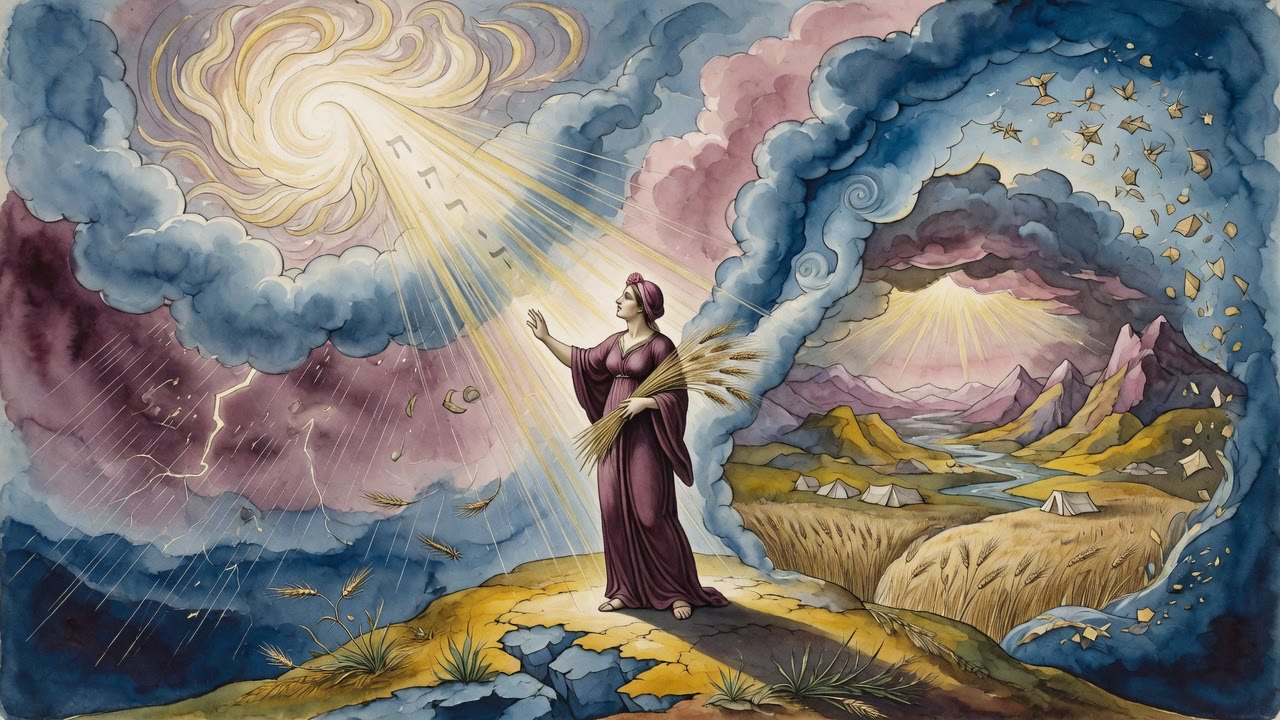
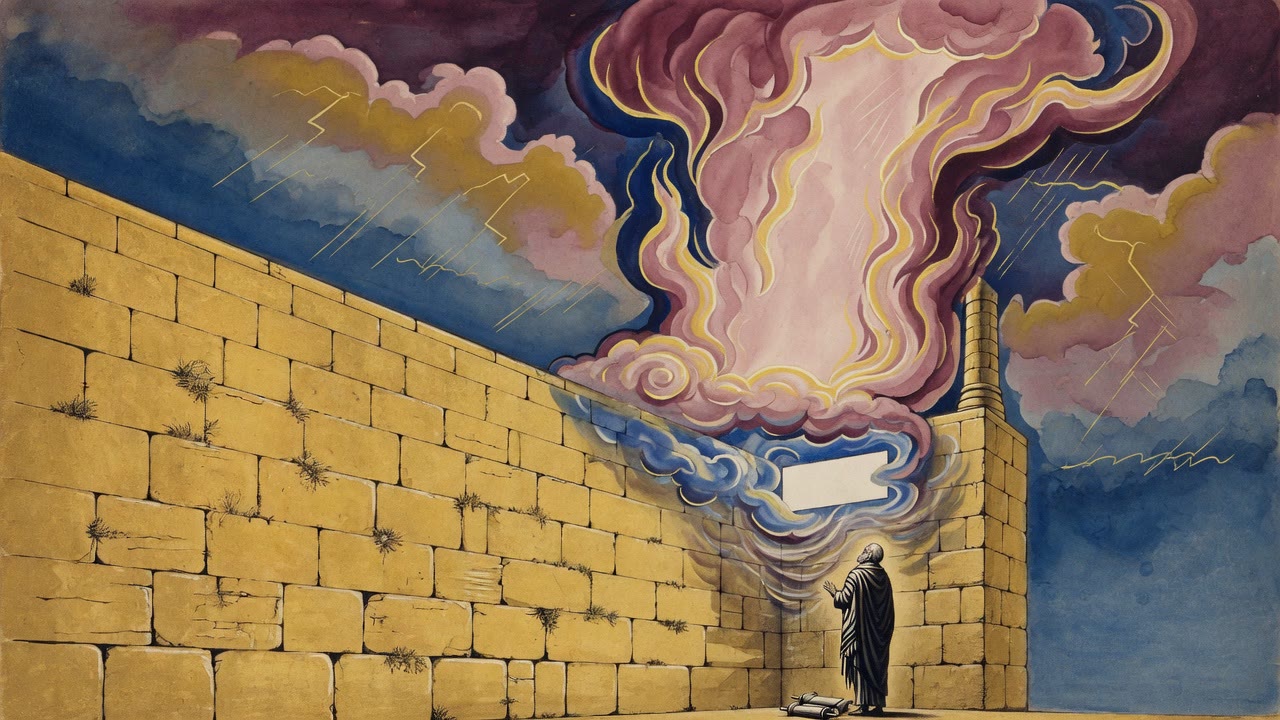
Ruth stood at the gate of Bethlehem while men argued over a field and a name. Wind pushed chaff across stone. She had already left Moab. She had already gleaned behind reapers. She had already lain at a man's feet in the dark with a request that could have ruined her. Now the public work began.
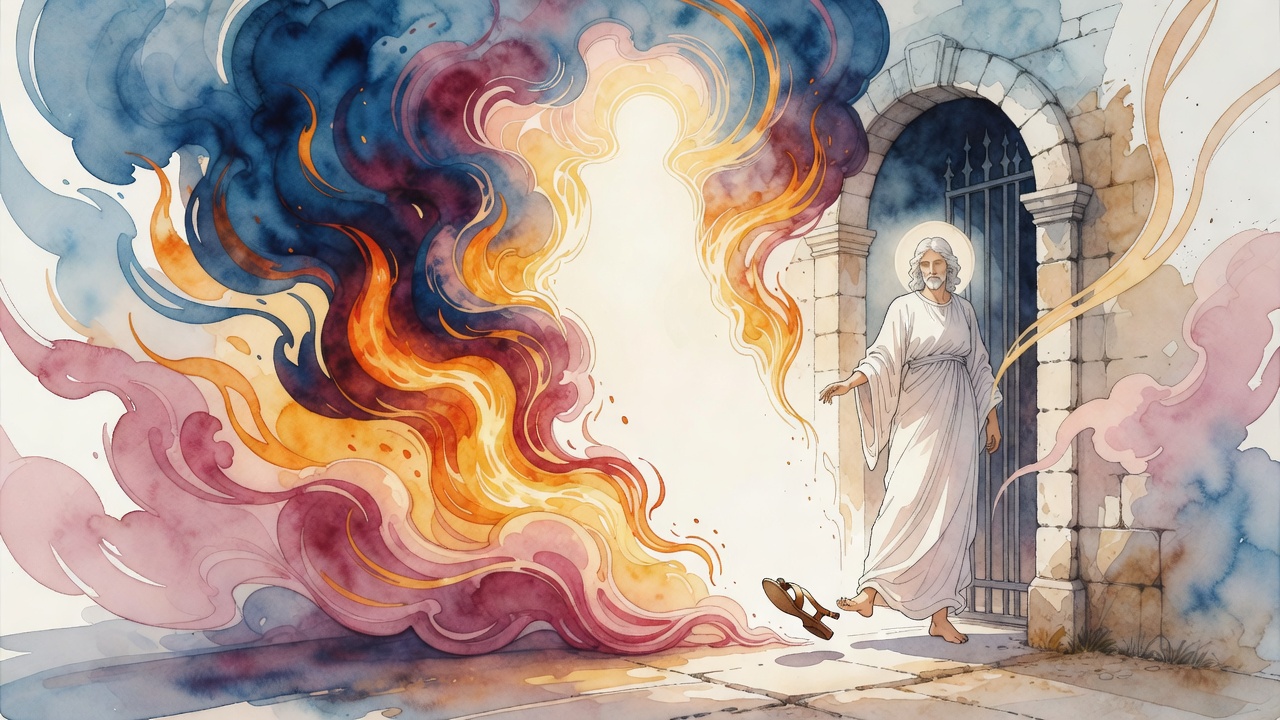
A sandal came off. In Israel this was how a matter was sealed before witnesses: a man removed his shoe and gave it to his fellow, and the transfer of right became visible. Ruth watched the leather leave the foot. The air changed, as if a second, larger removal were happening above the marketplace.
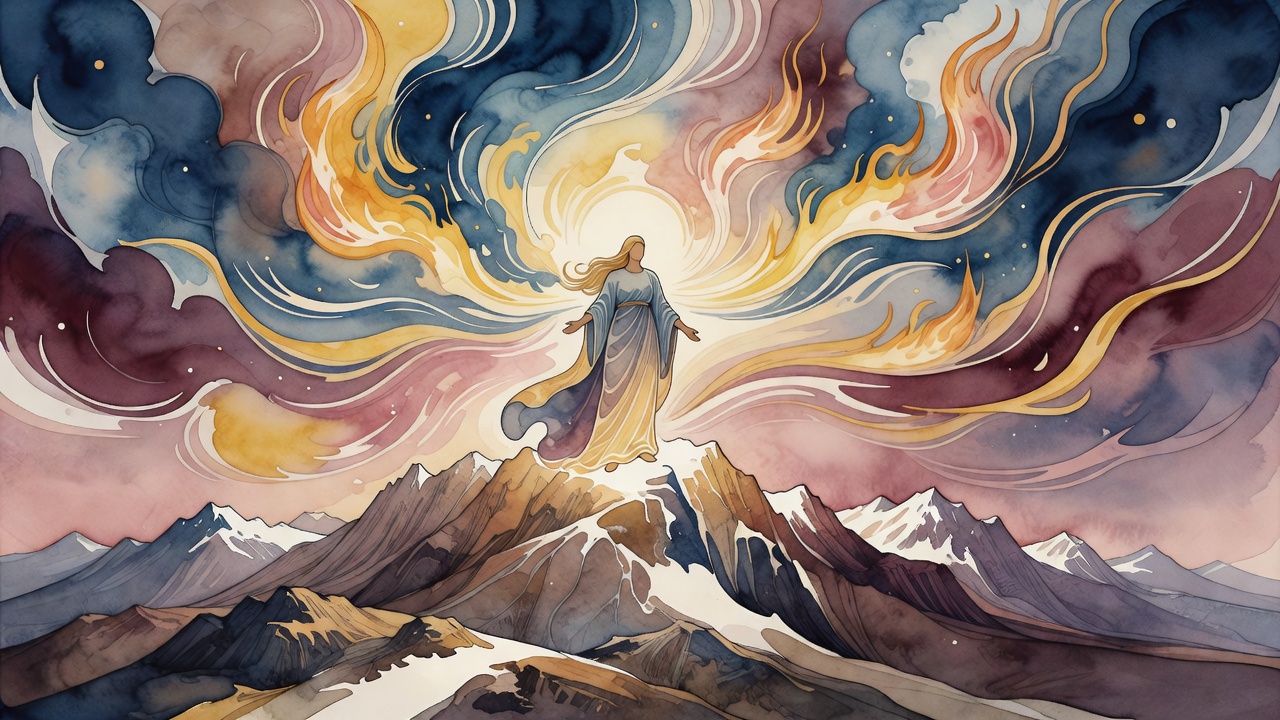
The Shekhinah (שכינה), God's Presence dwelling in the world, reached for a shoe as well. Not Ruth's. The shoe of the Blessed Holy One. Halitzah (חליצה), the removal that frees a widow, lifted as a barrier so union can occur. At the gate Ruth knew only that her life was being decided by customs older than her grief.
What the Shoe Blocks and What It Frees
Moses once heard at the bush, remove your shoe, for the place is holy ground. A shoe is useful. A shoe is also a layer between skin and sanctity. The gate of Bethlehem was not Sinai, yet the same logic pressed. Something had to come off before inheritance and marriage could stand clean.
The nearer redeemer refused the full duty. He would not take the field if the widow came with it. Boaz took what the other would not hold. Ruth's future swung on that refusal and that acceptance the way a door swings on one pin. She wanted a name to live in Israel. She did not speak of locked gardens or holy names. She stood still and let the men finish.
Above the bargain, an old call sounded. Rise, O patriarchs, masters of the covenant, for zot, this covenant of yours still stands. Abraham, Isaac, and Jacob were summoned whenever exile made the promise look thin. The shoe on the stones was a small answer to a large summons.
Refuse in the Fathers, Wholeness in Jacob
Abraham and Isaac left "refuse" that became nations who later pressed Israel hard. Jacob carried a wholeness that lets Israel dwell securely alone even in the long night of exile. Ruth, a daughter of Moab, walked into that argument with her body.
She was not refuse. She was a choice. The field, the sandal, the witnesses, the blessing of the elders all turned a foreign woman into a hinge of Judah's house. Blood alone did not decide. Faithfulness rewrote a lineage in public view.
Boaz spoke carefully. The elders answered. Ruth's face stayed steady while her pulse did not. A people that keeps the patriarchs must also keep the women who force the covenant to show its mercy in the street and not only in the study hall.
Solomon Called, and the Young Keeper of Keys
The same cry that raises the patriarchs also raises Solomon, called her perfection, and a young figure who holds keys to the king's treasuries and weapons. Rise. Open the chamber. Ruth would not live to see the Temple. Her great-grandson would sing, and farther down the line a temple builder would rise. The shoe at the gate was already a key turning in a lock she could not yet name.
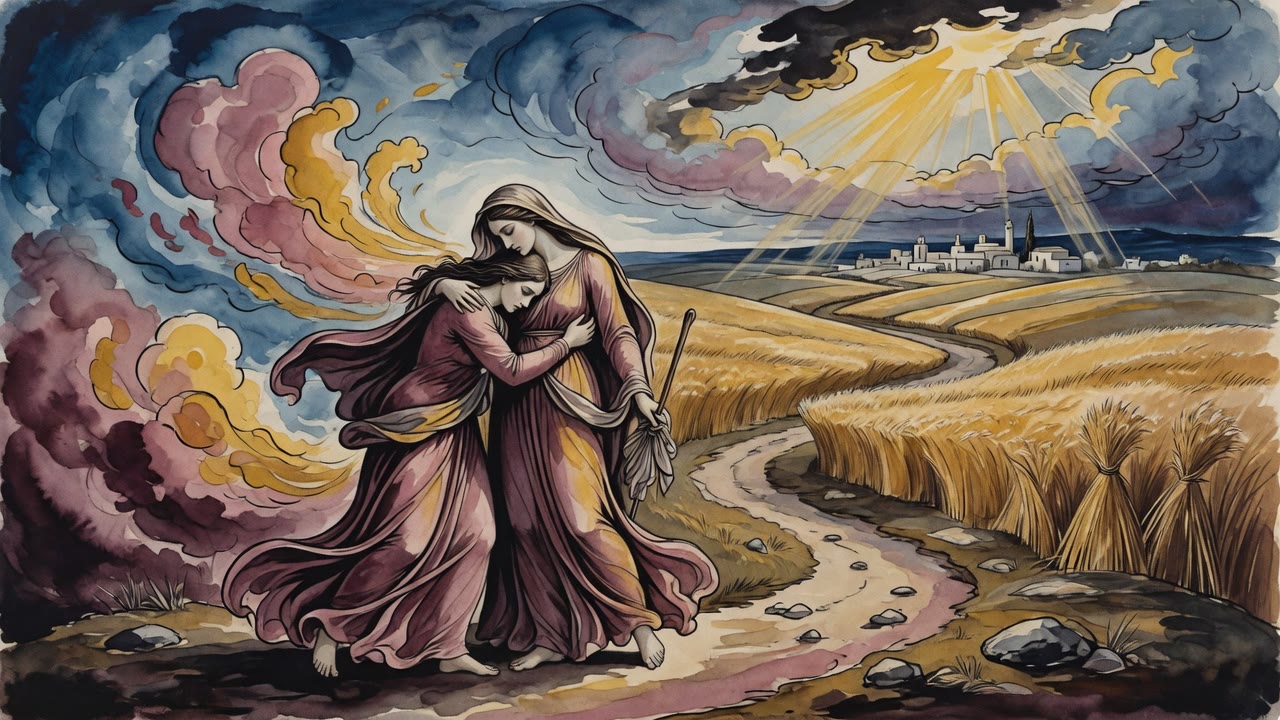
She walked home under a sky that looked ordinary. Ordinary skies are where covenants either become gossip or become history. Naomi took her hands without speech for a long moment. Two widows had gambled on law and kindness and won a future measured in harvests and sons.
The Gate After Dark
When the market closed, a child traced the outline of a sandal print left in dust and laughed, not knowing what the print had decided. Ruth washed grain dust from her ankles and felt the place where a shoe is not worn, the bare contact that holy ground demands. Naomi set a bowl near her and did not fill the silence with praise. Praise can cheapen a risk that nearly failed.
Far above any Bethlehem stone, the Presence and the Name moved through removal and reunion. Below, a woman from Moab slept in a house that had decided to keep her. The covenant the patriarchs kept did not stay only with the patriarchs. It found a gate, a sandal, and a stranger willing to stand still while men finished speaking.
Boaz walked the field edge once in the dark, counting sheaves like a man counting vows he has now made public. In the morning she would return to ordinary work. The shoe would be forgotten by most. Heaven keeps better records than markets. The print in the dust faded. The line that ran through her did not. Years later a child of her line would run the same gate stones barefoot in summer, and the old women would say only that his grandmother had once watched a sandal decide a house without raising her voice.
← All myths