His Coin Opened the River Flowing from Eden
A beggar held out a cracked palm. Copper left a householder's fist. Above the street, a river left Eden and went looking for a garden.
Table of Contents
The beggar's palm was cracked along the life lines as if someone had scored clay and left it to dry. The householder had already walked past twice, because looking would have cost him a coin, and a coin was a small thing until it left the hand. On the third pass his fingers found copper without asking his pride for permission, so the coin left his fist. The beggar closed on it and said nothing fancy except "Bless you," and the street kept its noise.
 Click for full size
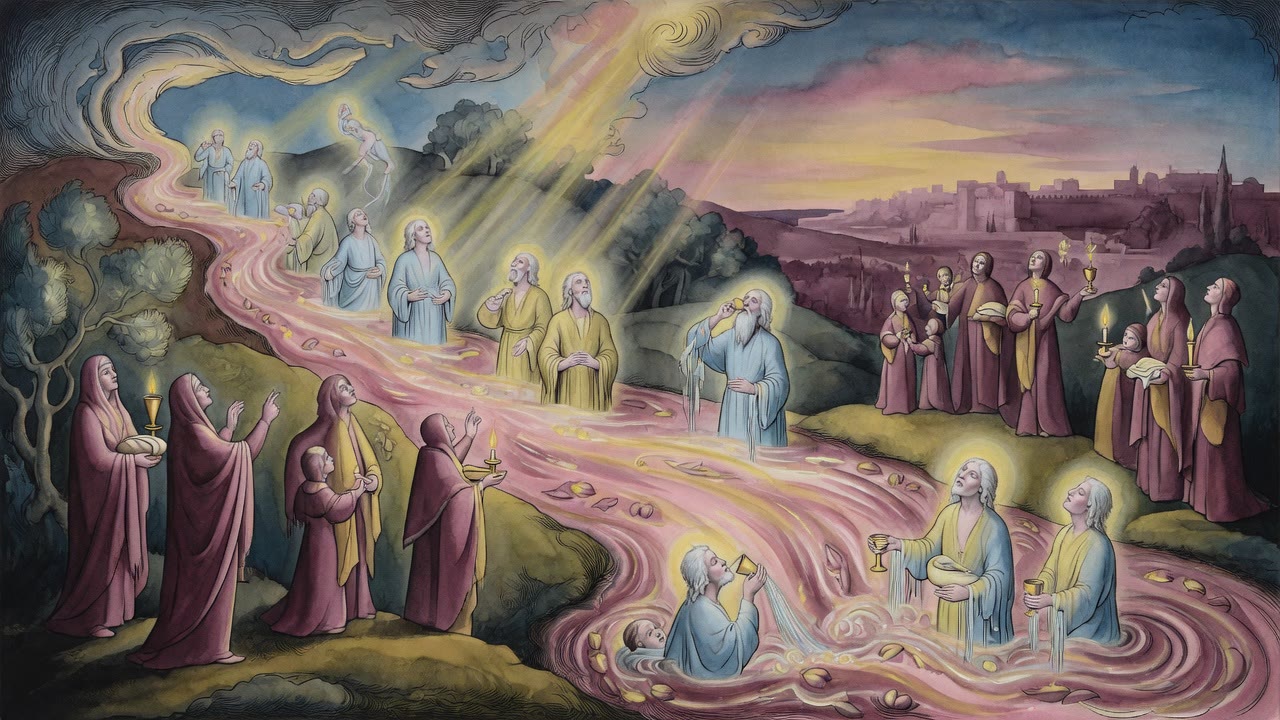
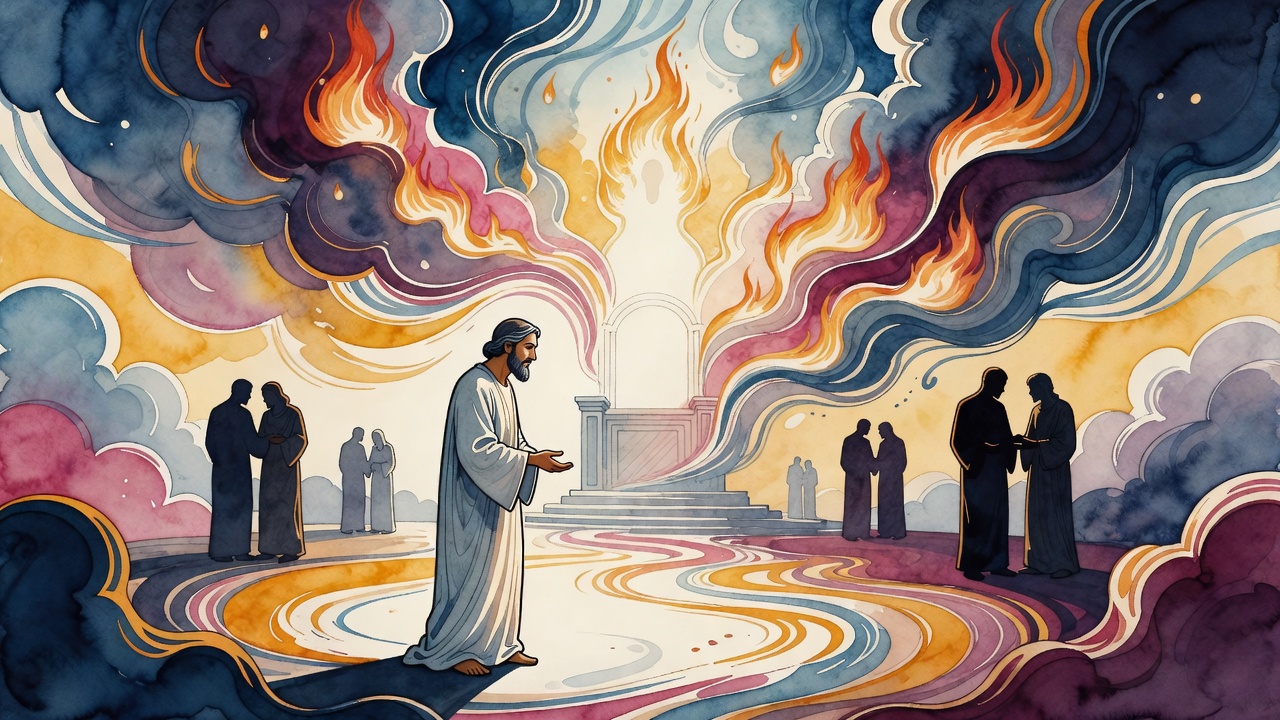
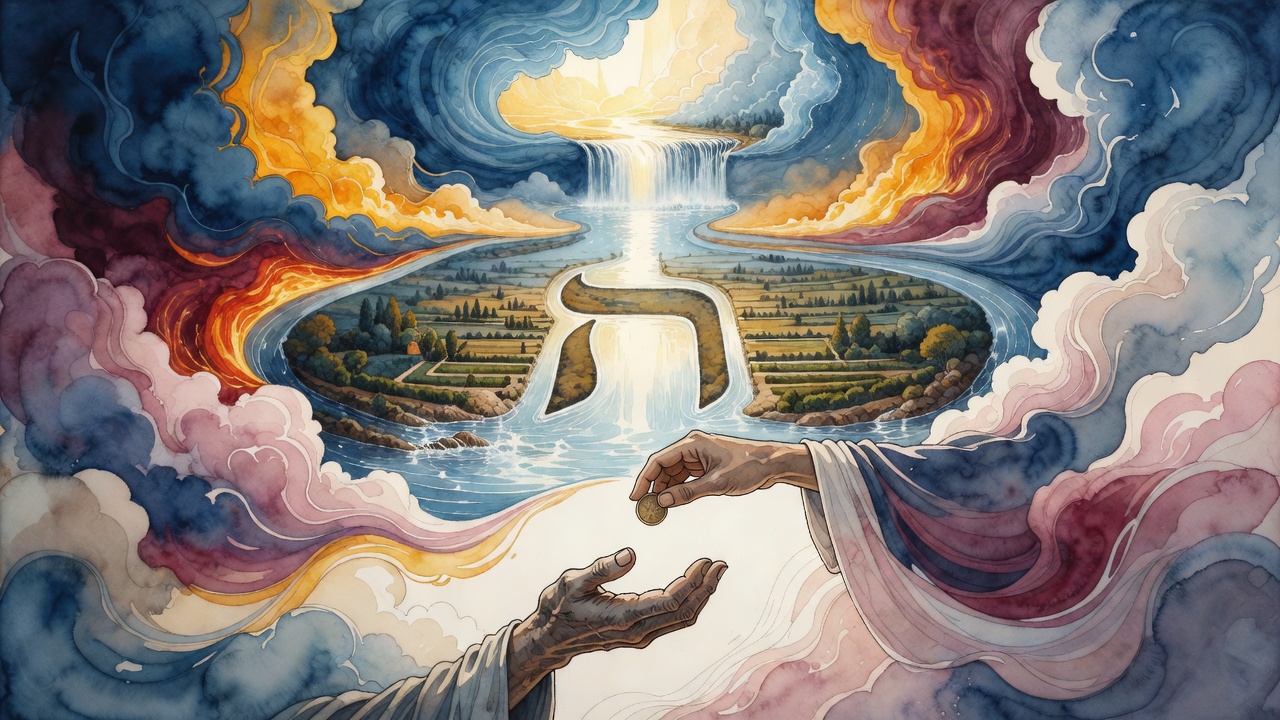
Above the street a river moved, though it was not water that wets shoes. It was a river drawn from Eden, the current the upper world calls Binah (בינה), understanding that pours. The coin did not buy the river. The coin opened a channel the river had been waiting to use, because charity for the impoverished is how that current finds a garden that has been thirsty longer than one man's embarrassed silence.
The Garden Shaped Like Dalet
The garden is the letter dalet (ד). The letter stands open on one side like a door that cannot close itself. Without flow it is a shape of lack. With flow it becomes a plot that can grow roots instead of dust. The householder did not see Hebrew letters in the air. He saw a man whose knees shook when the wind turned. That was enough for the upper accounting.
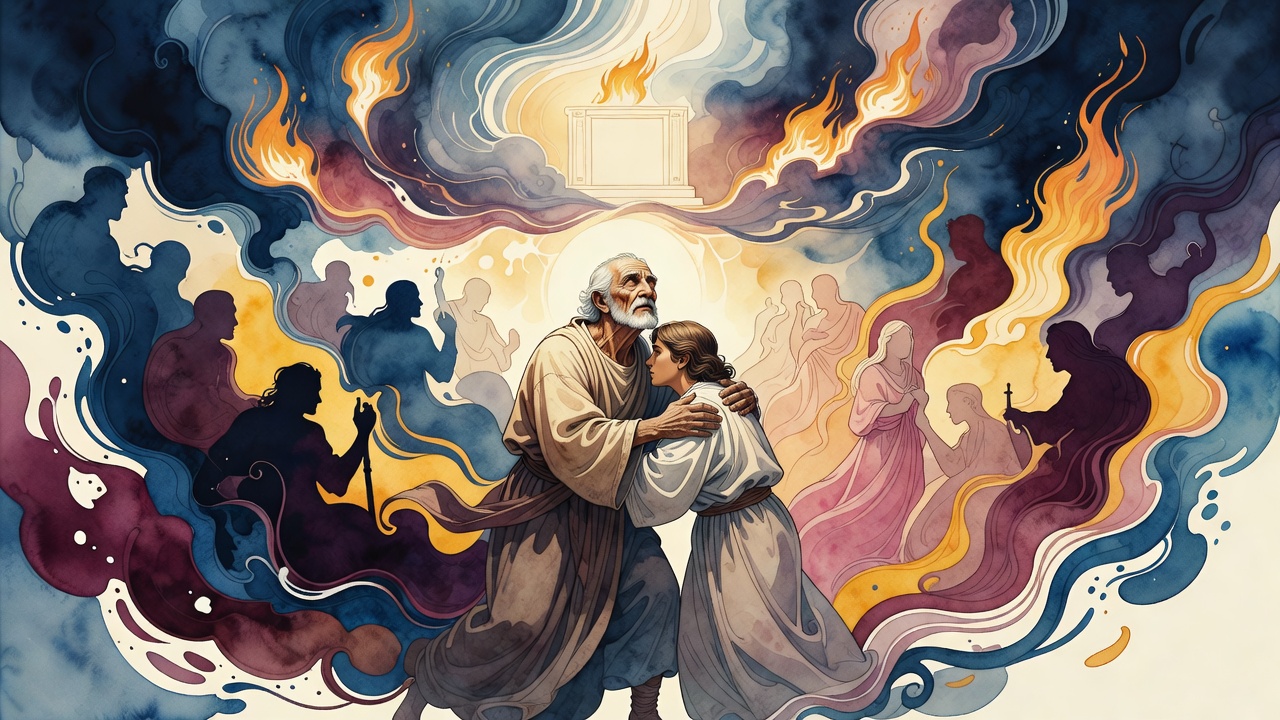
He walked on with a lighter pocket, but the cracked palm stayed in his eye. He had felt thin for weeks. Prayers like dry bread. Business clever and joyless. Sleep without rest. He did not diagnose a cord cut from Eden. He only knew his own name had stopped sounding solid in his mouth. The coin had been a crack in the wall he had built around his hand, so the river had somewhere to go.
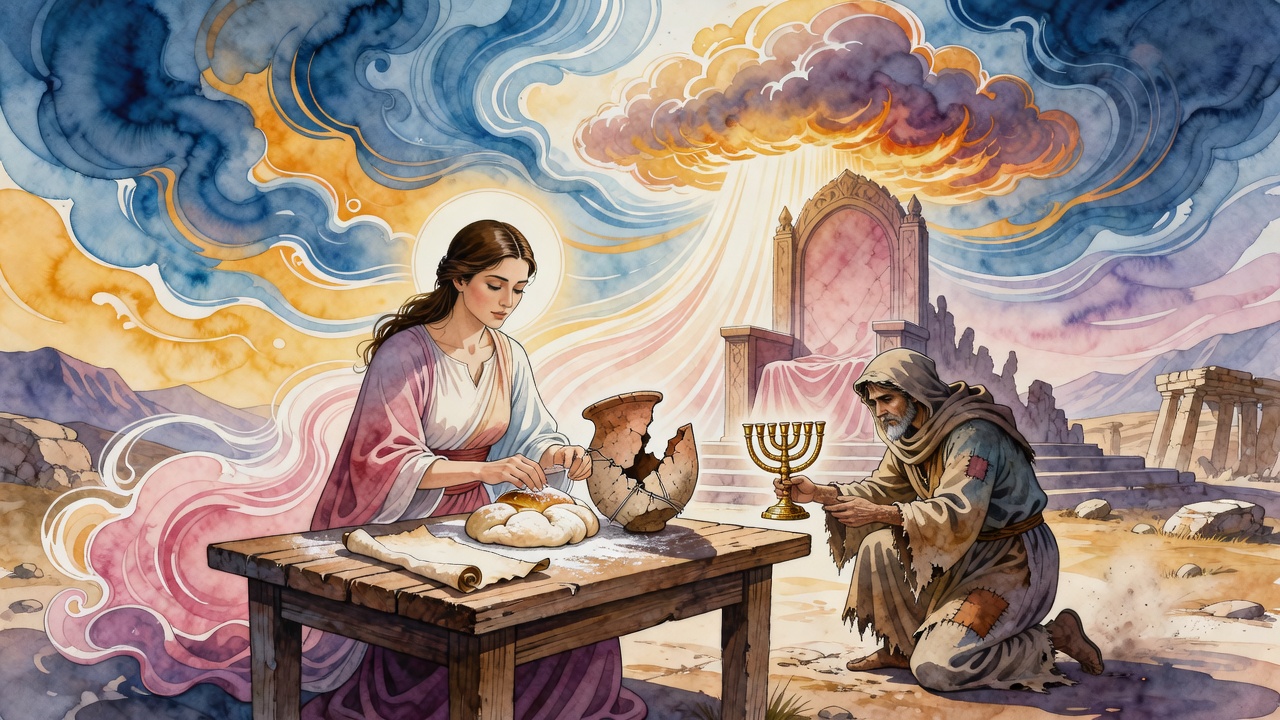
A pauper is also the Sabbath day. Shabbat, full of white cloth and song, sits like a dalet waiting for irrigation from above. If the river fails, even the holy day sits poor, a guest at a table with rows drawn and no water between them. Feast tables can still look rich while the upper garden cracks. He did not know that yet. He only knew the copper had left, and something above him had moved because it left.
The Blessing That Landed
Power in that world is called koach (כח), and it thins when a person is cut off from the source. Twenty-eight parts of speech, the limbs of utterance, go weak when the cord frays. A man can still talk and still count coins and still look successful while the inner pressure that makes speech live drains away into clever emptiness. The householder had been living in that thinness without a name for it.
The next blessing he spoke over bread did not float, but landed. He noticed the difference while chewing, which is a strange place to meet a repair, and therefore a good one. Simple blessings straighten pipes the speaker never tours. A word of thanks can open what spectacle would only force. He swallowed, and the bread tasted like bread. He sat a moment longer than habit allowed, because the mouth that had gone thin had weight in it again.
He did not tell anyone. If he had, he would have sounded like a man bragging about a coin. He wiped the crumbs, stacked the plate, and went back to the invoices, but the hand that reached for the ledger remembered the crack.
Shabbat Waits Like a Poor Guest
Friday came. He set the table with more attention than usual, not because he had become pure, but because he now suspected the day itself might be hungry for the river. He set out candles, salt, and a loaf. Before sundown he gave another coin to a woman collecting for orphans. The act felt less like heroism than housekeeping for a guest who cannot ask twice and will not shame the host in public.
Above, the garden-letter drank, and below, the meal tasted like food instead of schedule. Children argued over the last date. He did not correct every line, because the river's work is not to make families angelic. It is to keep the world from becoming a sealed jar where even holy time goes thirsty. He sang softer than last week, and soft was enough. The guest at the table was the day itself, and the day is a pauper who becomes wealthy only when Eden's current reaches the dalet.
His wife asked why he had stopped at the corner again. He said the woman was collecting. She nodded and poured wine, and neither of them named a river, but the candles held and the loaf tore, and the house did not feel like a tax.
The Hand Remembers the Channel
Monday returned with invoices. He almost sealed the hand again, because Monday always argues for a closed fist. Then he saw the cracked palm in memory and felt the risk of a shut hand in a world whose letters need water. He walked to work with less drama than the heavens had used. Quiet copper, an open palm, and flow continuing after both men have forgotten each other's faces, so that only the garden remembers that the weather changed.
He passed the same corner, but it was empty today. The channel stayed open anyway, waiting for the next cracked palm the street would send, and for the next blessing that would land instead of float. A closed hand, he knew now, is a drought that starts in the fingers and climbs until even Shabbat goes thirsty. He kept a coin where his pride could not veto it as fast. The river did not praise him, but irrigated, and that was the whole of the payment, and it was enough.
← All myths