5 min read

The Dead Rise When Shabbat Blessing Is Spoken

Between afternoon and evening prayers, the dead of Israel drink from Eden's river and rise to rest with the living.

Curated by Arthur · Told by Maggid ·
Table of Contents
  1. The River That Leaves Eden
  2. Crowds That Sing Between Worlds
  3. Rules That Keep the Day Inside the Body
  4. What the Living Blessing Unlocks
  5. Friday Light on Living Windows

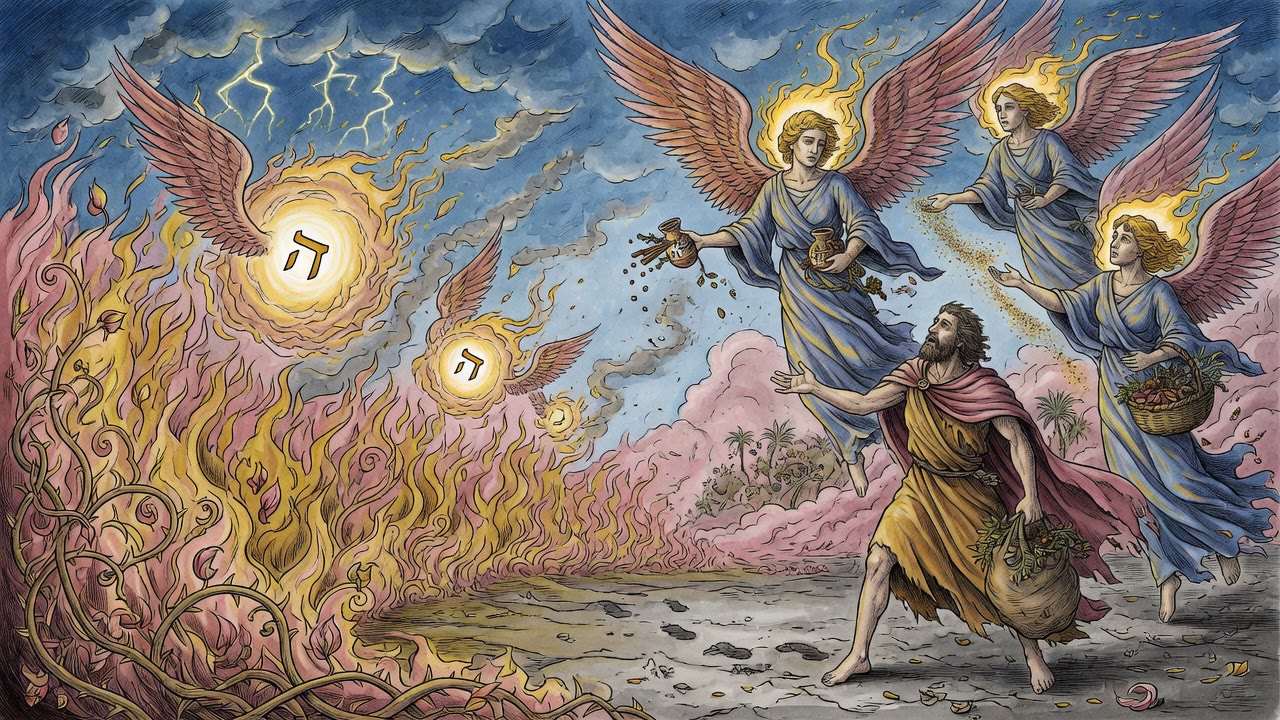
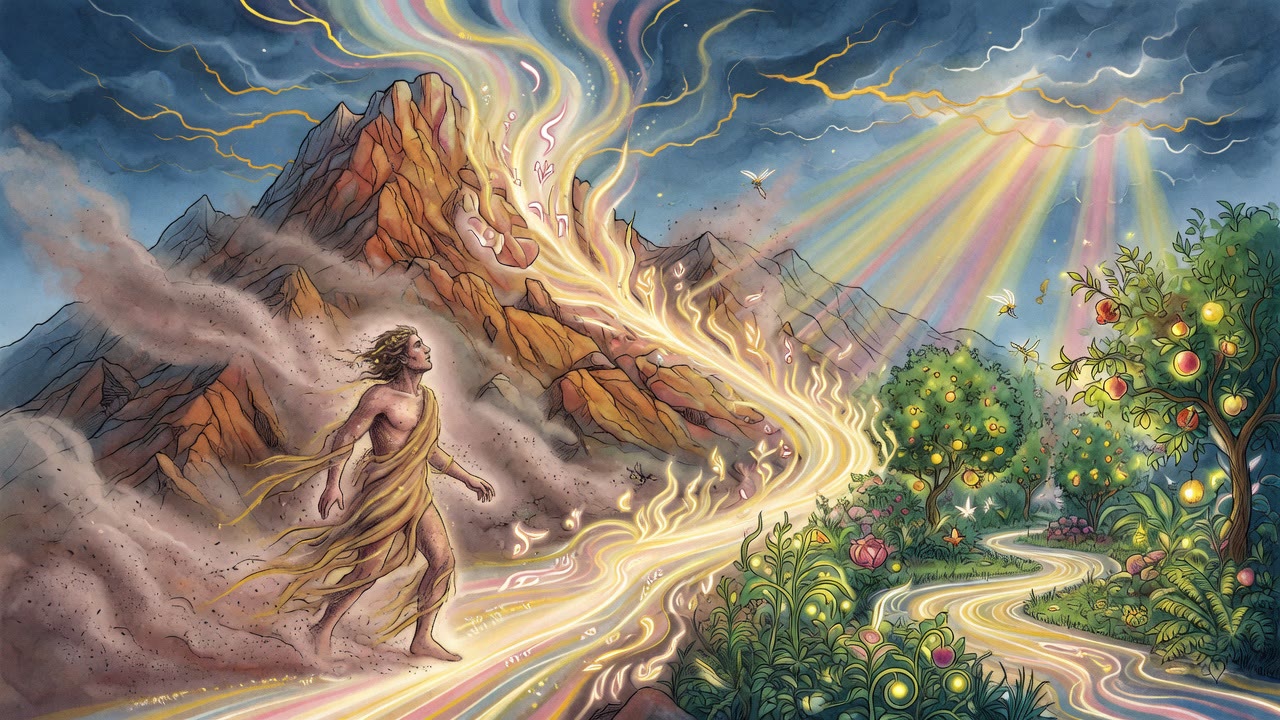
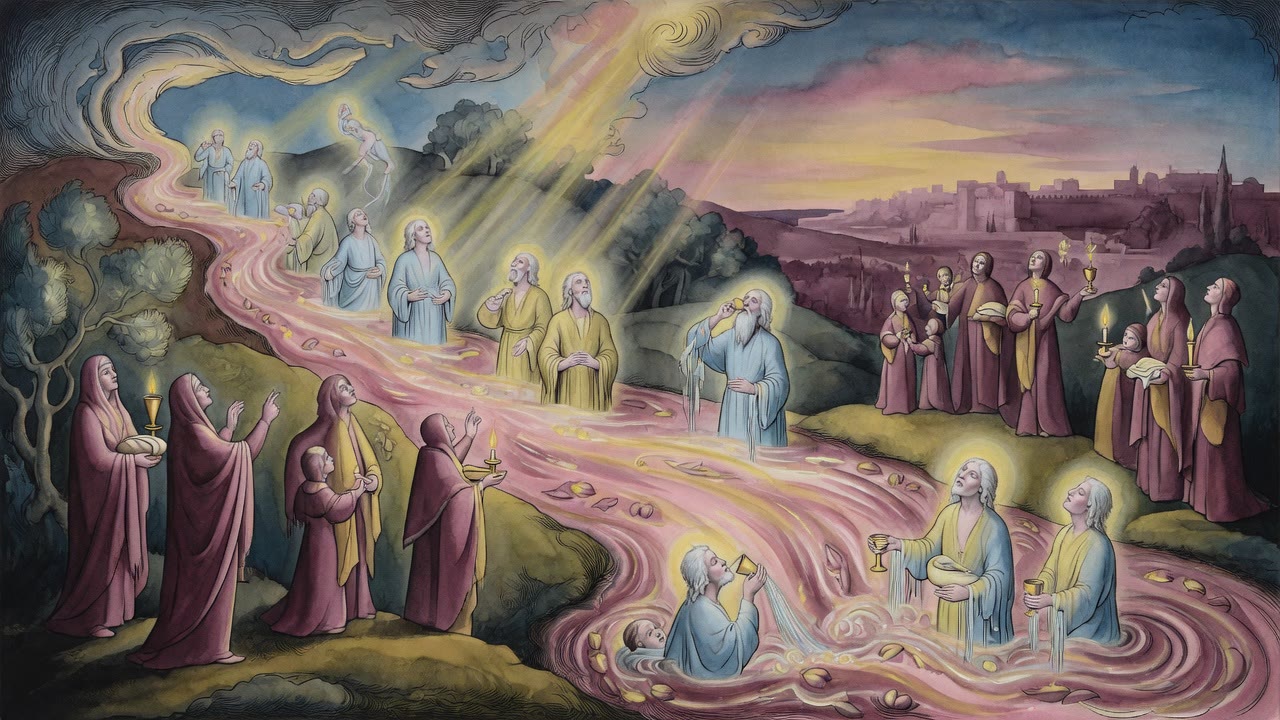
The last light thinned over the field. Between afternoon prayer and evening, the spirits of the dead of Israel were led along a path only the dying and the already-dead could see. A river ran there. It did not rise from any mountain spring. It ran out of the Garden of Eden itself.
The Dead Rise When Shabbat Blessing Is Spoken Click for full size

They drank. Cold water, heavy with a taste no living tongue keeps after waking. Then the living congregation on earth lifted its voice: "Blessed is the Lord who is blessed." At that exact sound, the dead were returned to their graves. God raised them. They stood again, whole for one night, and the Sabbath held them as it holds the living.

The River That Leaves Eden

All week the spirits wait in a place the midrash names only by distance from joy. When Friday begins to close, they are guided to the field beside the river. The water is life that has not forgotten its source. One drink is not medicine for the body. It is permission for the soul to wear a body again for the holy day.

No trumpet sounds. No angel blows a horn for this weekly rising. The signal is ordinary synagogue speech. A blessing said below opens a door above. The graves open as if they have been waiting all week for that one sentence.

They rise. Not as a nightmare army. As a people who know how to rest.

Crowds That Sing Between Worlds

The resurrected dead do not scatter into private rooms. They gather in crowds. They sing praise in the presence of God. They enter synagogues. They prostrate themselves. They behold the Shekhinah (שכינה), the Divine Presence, and bow. The living pray without seeing them. The dead pray as if the living are the thin edge of the same assembly.

Above, Knesset Yisrael gathers the heavenly camps the way a treasury gathers coin before it is spent. Blessing does not pour out raw. It pools, waits, and is measured according to what the lower world can hold. The assembly below, ten voices or ten thousand, is the echo of that gathering. When the living declare the blessing, the measured nearness of Shabbat reaches even the dead.

For one night the veil thins. Rest is not only for those who still breathe.

Rules That Keep the Day Inside the Body

The living keep the day with small acts that look like habit and work like fences. Warm food prepared before sunset. A table set before the light goes out. The body taught not to chase work across the border of holy time. These are not ornaments. They are how a mortal frame becomes a vessel that can hold an extra weight of soul without cracking.

The dead need no cooking fire. Their law is different and the same. They rest. They praise. They do not labor in the week's markets. When the Sabbath ends, the life that was lent for the day is taken back, and they return to their rest under the earth until the next Friday draws them again to the river.

A person who keeps Shabbat carelessly leaves the day outside the skin. A person who keeps it in the limbs and the mouth makes room for a presence that the midrash says the dead also share.

What the Living Blessing Unlocks

The hinge of the whole scene is not a secret Name. It is a public line. "Blessed is the Lord who is blessed." Said by a congregation that may be tired, late, or half-distracted, that line still reaches the field by Eden's water. God ties the dead's rising to the living's praise, so that Israel above and below lean on the same hinge.

Parents who cannot visit graves on a winter Friday still speak words that pull their dead into rest. Children who never knew a grandfather still stand inside a blessing that once stood him upright for a night. The river does not ask for pedigree. It asks for the day.

When the stars of the week return, the synagogues empty of that unseen crowd. The living go home with leftover wine and cold cholent. The dead go back under stone. The field by the river grows quiet until the next border between Friday and holy night.

Friday Light on Living Windows

In a house across from the graveyard, a woman covers the challah and lights two candles. She does not know the midrash of the river. She only knows the blessing her mother taught her. The same hour that her match flares, the spirits are already walking the field. Her words and their rising share a clock. The tradition insists on that shared clock so that Shabbat is never only private comfort for the living.

A boy asks why graves look the same on Saturday as on Thursday. The father has no vision to offer. He has only the teaching: they rose and returned while we sang. The stones keep their counsel. The law of rest still covers both sides of the dust.


← All myths
From the tradition

Sources

3 sources

The texts behind this telling. Some cards carry a translation of the source; others are our own retelling of it, and each card says which. Every card links out to the original.

Seder Gan Eden in Beit ha-Midrash 5:43Beit HaMidrash (Jellinek)

Retold in our words. Read the original at the link below.Sefaria-hosted English translation · CC-BY

Jewish tradition has always grappled with the mysteries of life, death, and what lies beyond. And when we explore some of the lesser-known corners of our folklore, we find some truly fascinating ideas about the Sabbath and the departed.

One such idea, preserved in the Seder Gan Eden (found in Beit ha-Midrash (rabbinic interpretive commentary) 5:43), paints a vivid picture of a weekly resurrection. Imagine this: every Friday evening, as the sun begins to dip below the horizon and we prepare to welcome Shabbat (the Sabbath) Kodesh (the Holy Sabbath), something extraordinary is happening in the realm of souls.

In this tradition, between the afternoon and evening prayers – that liminal space where the work week fades and the Sabbath’s peace descends – the spirits of the dead are led to a very special place. It's a field near a river… a river that flows directly from the Garden of Eden itself.

These spirits, wherever they may reside during the week (perhaps in a place akin to Sheol, the ancient Hebrew concept of the underworld), are given a chance to drink from this life-giving river. Then, as the living congregation on Earth proclaims, "Blessed is the Lord who is blessed," a truly miraculous event unfolds.

The dead are returned to their graves. And God resurrects them.

They rise up, alive, from their resting places. Every Sabbath, all the dead of Israel experience this renewal, this return to life. They rest on the Sabbath, just as we do. But their rest is punctuated by this incredible moment of resurrection.

And it doesn't end there. The resurrected dead gather in crowds, singing praises in God's presence. They enter synagogues, prostrating themselves, beholding the Shekhinah (the Divine Presence) and bowing before it. They participate in the Sabbath alongside the living, a spiritual congregation bridging the worlds.

What does this myth tell us? Well, on the surface, it offers a powerful image of the Sabbath as a time of universal rest and rejuvenation, extending even to those who have passed beyond this world. It suggests that the connection between the living and the dead isn't severed, but rather, that the Sabbath provides a unique opportunity for communion and shared experience.

It also highlights the profound importance of communal prayer. The moment of resurrection is tied directly to the congregation's declaration of blessing.

The Seder Gan Eden presents a beautiful and thought-provoking image: the Sabbath is not just a day for the living, but for the dead as well. It’s a time when the veil between worlds thins, and all of Israel, living and departed, can come together in praise and rest.

Full source
Kabbalistic Sabbath customsHebraic Literature (1901)

Retold in our words. Read the original at the link below.Project Gutenberg eBook #14368, Hebraic Literature · PD-US-pre-1929

The mystics of Kabbalah did not just rule on large questions of Sabbath law, they drew a whole day of living around the smallest gestures. Here is a sample.

Geese, fowl, cats, dogs, do not handle them on Shabbat. In an unwalled town, leave pocket handkerchiefs and spectacles at home rather than carry them outside. Do not salt radishes in a bowl at once; dip each piece in salt separately and eat it that way.

After the Shabbat meal, sleep. Take a siesta. The letters of the Hebrew word shinah, sleep, form an acronym, Sheinah BeShabbat Ta'anug, "sleep on the Sabbath is a delight" (Isaiah 58:13). Before you lie down, recite the last verse of Psalm 90 and all of Psalm 91.

The greeting on Shabbat is not "good morning" but "Shabbat shalom", "good Sabbath", because (Exodus 20:8) says, "Remember the Sabbath day to keep it holy," and memory begins with what you call it. Do not rise as early on Shabbat as on a weekday; the day is longer because you carry it slower.

Be careful with fur garments, not to pull a hair loose. Do not scratch your head or touch your beard vigorously, for the same reason. Do not wash your hands with salt or soap. Do not play ball.

None of this is a cage. It is a shape. The mystics believed Shabbat was a bride received into your house, and a bride deserves a house prepared in every detail, from the salt on the radish to the siesta after lunch.

Full source
Pardes Rimmonim 23:11:21Pardes Rimonim

Retold in our words. Read the original at the link below.Sefaria Community Translation · CC0

Knesset Yisrael, the Assembly of Israel, is not only a name for the people below.

In Pardes Rimmonim 23:11:21, Cordovero identifies Knesset Yisrael with Shekhinah and Malkhut. She is called an assembly because she gathers the heavenly camps within herself. She is also called an assembly because divine abundance pools in her before it is given outward.

The image is intimate and restrained. Blessing does not pour into the world all at once. It gathers, waits, and is released little by little. The reason is not stinginess. It is order. The lower world can receive only according to its merit and capacity.

This does not turn Israel into a divine being. It says that Israel below is bound to a name above, and that the covenant has a heavenly shape. The people assemble in prayer because abundance itself is assembled before it descends. The assembly below is an echo of the gathering above.

Shekhinah becomes the treasury of nearness. All the camps are bound to her beauty, and all blessing must pass through her measured hand. Israel's assembly below mirrors an assembly above, where divine presence gathers what the world is ready to receive.

Full source