5 min read

When the Moon Shed Its Dark Husks on Shabbat

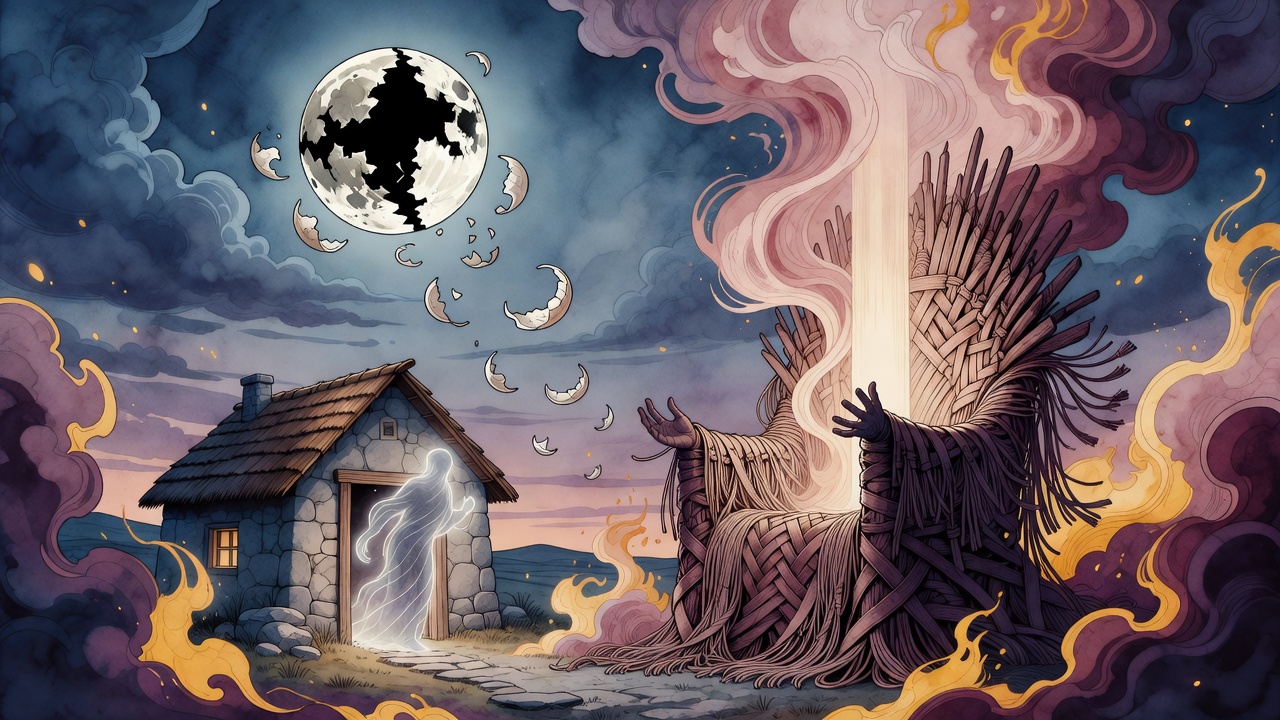
Friday dusk peeled black shells from the moon's face. An extra soul entered the house, and a throne of mercy was built from fringes and straps.

Curated by Arthur · Told by Maggid ·
Table of Contents
  1. Husks Falling from a Silver Face
  2. A Throne Built of Ordinary Mitzvot
  3. Silence at the Gate
  4. Morning After the Peeling

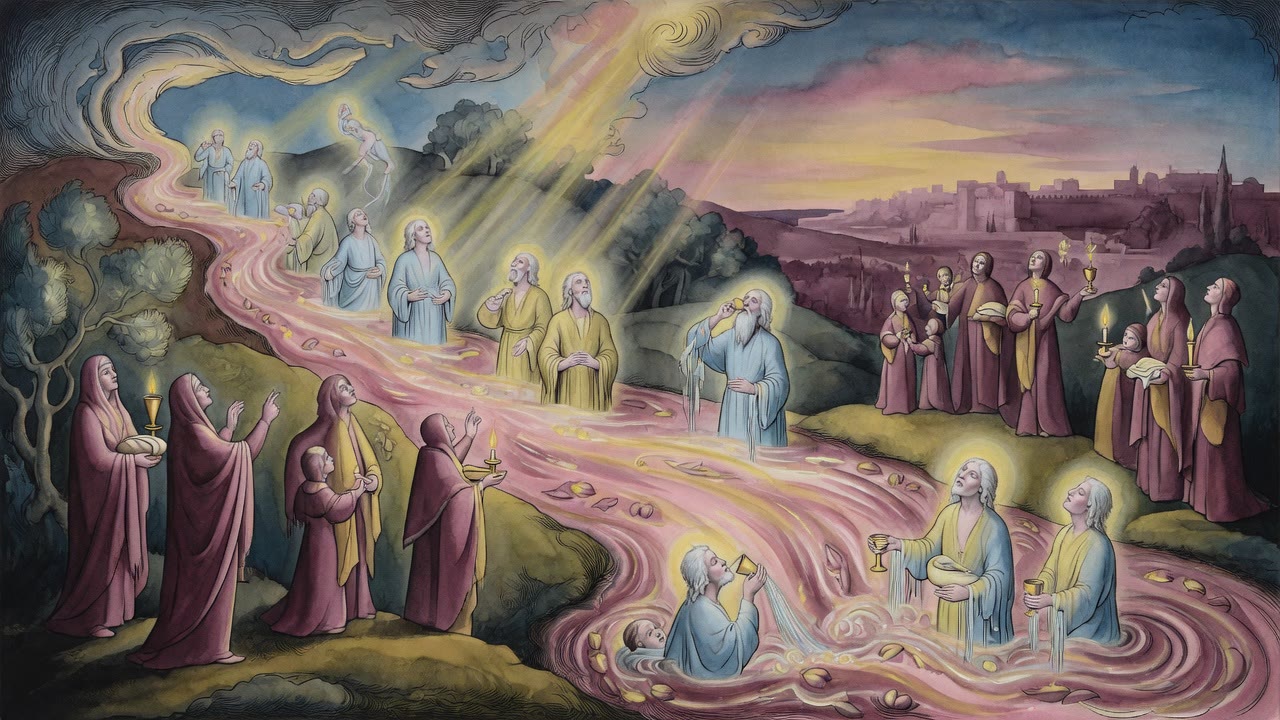
Miriam lit the second candle and watched the kitchen wall take a softer gold. Outside, the moon looked thinner of shadow, as if someone had peeled a black skin from its edge. Inside her ribs, a second breath arrived that did not belong to weekday lungs.

When the Moon Shed Its Dark Husks on Shabbat Click for full size

She did not invent that breath. Shabbat brought it. The extra soul, the neshamah (the higher soul) yeteirah (נשמה יתרה), settled like a guest who knows the house better than the hosts.

Her youngest stopped mid-complaint about chores. Even the complaint felt the change and lost interest in itself.

Husks Falling from a Silver Face

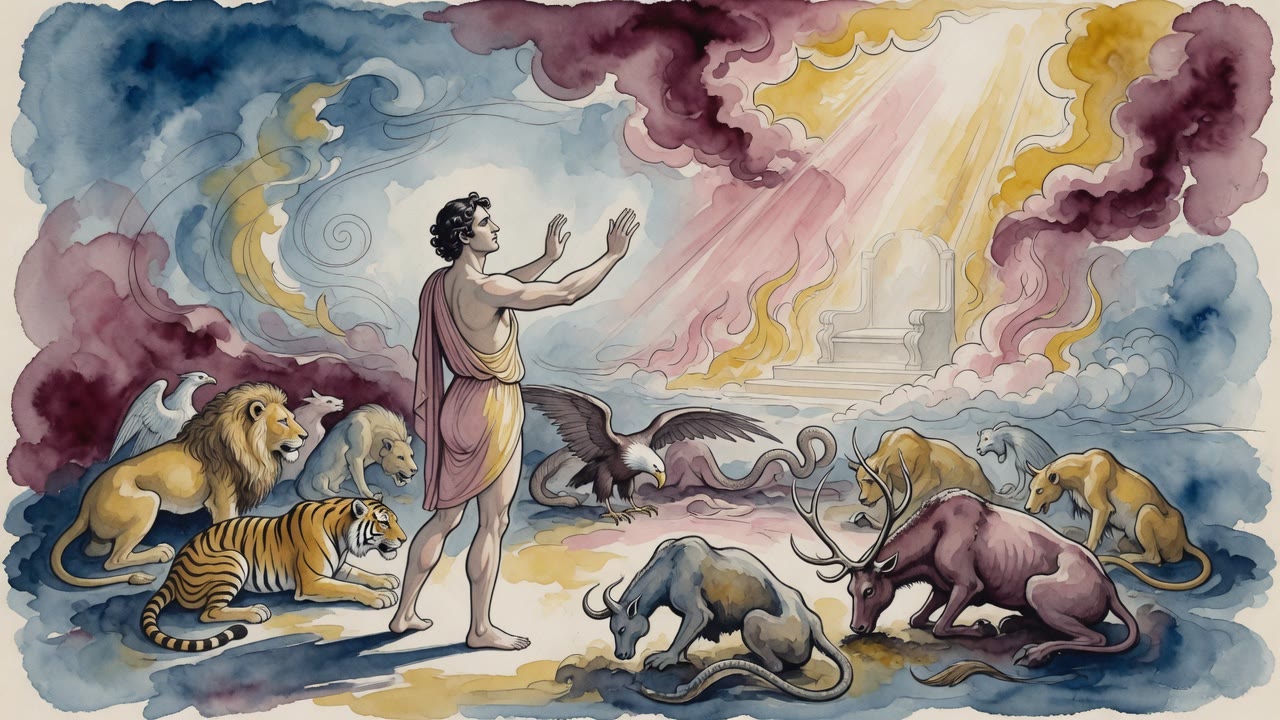
All week the moon had worn dark husks, klipot that dull light. At the turn into rest those husks loosened. The sources speak of the moon renewed with beautiful clothes, the way Tamar once removed her widow's garments and stepped into a risk that would open the future (Genesis 38:14). Renewal is not costume. It is the courage to drop a dead skin.

"Your youth shall be restored like an eagle" (Psalm 103:5). Miriam felt none of the eagle's wings in her tired feet, only the promise that light can return after diminishment. The moon's cycle is not astronomy alone in this telling. It is a map for a soul that has been lessened and can be dressed again.

Her husband came in with dust on his sleeves and stopped when he felt the air change. Weekday arguments thinned. The house remembered a different gravity. He washed with more water than thrift usually allowed, as if clean hands were part of the moon's new clothes.

Miriam thought of months when the moon seemed permanently dulled and of people who live whole years that way. Shabbat is a weekly protest against permanent dullness. The protest is quiet. It still counts.

A Throne Built of Ordinary Mitzvot

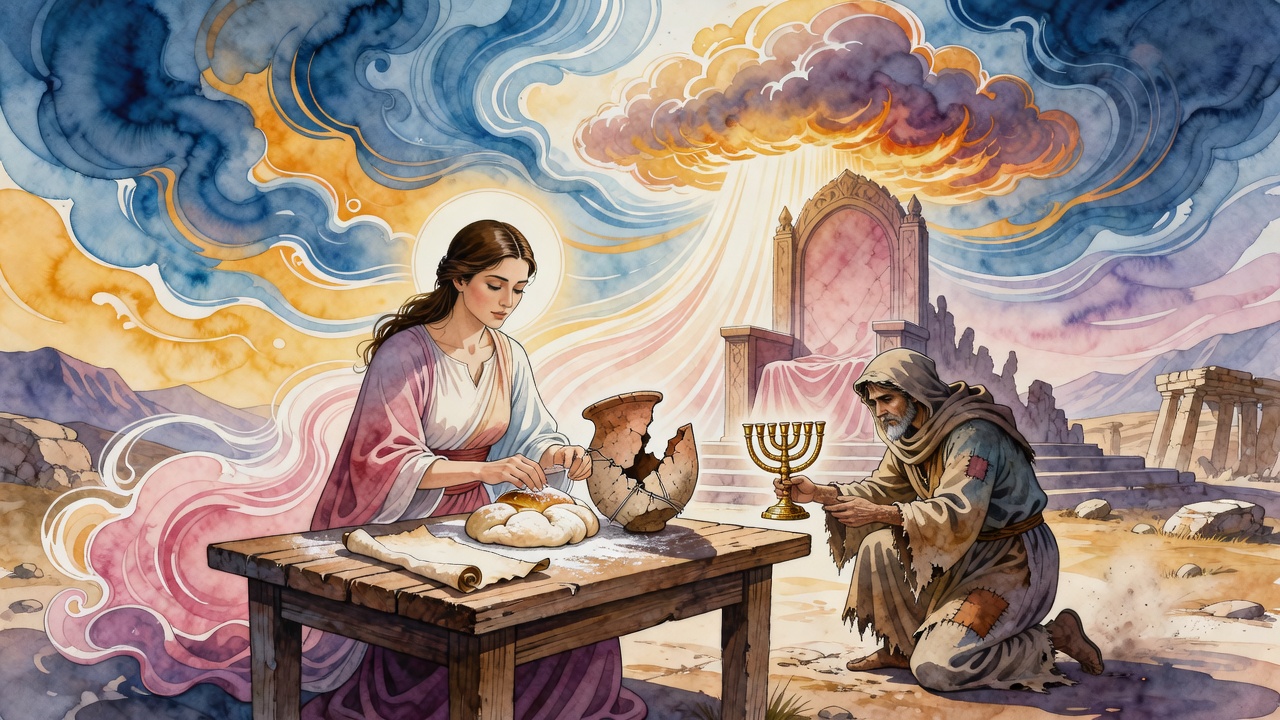
Above them, when God sits upon the throne, the chorus names mercy. Below them, the completely righteous lower that King into nearness with tzitzit and tefillin, then stand in prayer. Fringes at the corners. Straps on arm and head. A throne is not always gold. Sometimes it is linen and leather used with clean intent.

Miriam's husband wrapped his arm and spoke the words he always spoke, slower tonight. Each knot felt like a peg driven into a seat for presence. The claim is stark: the righteous fix a throne for the Blessed Holy One. Repair is not a speech. It is a body performing a command until heaven has somewhere to sit in the week.

She watched the fringes move and thought of birds nesting in a tree of Torah, souls finding branches in a teacher who has grown strong in learning. The house was no academy. Still, the candles made a small canopy, and the extra soul perched there without shame.

Their older son asked why the prayers felt longer. "They are the same length," his father said. "You are less late inside them." The boy frowned, then nodded, half understanding, which is often how holiness first arrives.

Silence at the Gate

Later, behind a closed door, the night asked for humility. The sources demand that intimacy between partners on such nights carry fear, trembling, sweat, and shame that is holy rather than ugly, as if a shed force pressed them, a force the texts tie to the Name Shaddai watching at the gate. Demons and rivers and land of the Shekhinah (שכינה) braid in those pages. The point in the kitchen after candles is simpler: the body is not a back room of the soul. It is a checkpoint where holiness either enters or is mocked.

They kept their voices low. The extra soul does not love loud triumph. It loves a room that makes space.

Miriam thought of the mezuzah (a case holding a small parchment of Torah verses) on the doorpost as a tiny land deed for the Presence. She had rushed past it all week. Tonight she touched it twice, once for habit, once for apology.

Morning After the Peeling

Shabbat morning the moon was gone from the sky, but the husks had not climbed back onto Miriam's mind. Bread tasted thicker. Rest was not emptiness. It was a filled quiet. When the third meal ended and the extra soul began to lift, she felt the weekday returning like a coat she still had to wear, now with a tear repaired at the seam.

She swept crumbs and saved the memory of black shells falling from light. Next Friday she would watch for the peeling again, and build whatever throne two candles and a willing house can hold.

On Sunday a quarrel started over money. Mid-sentence she remembered the eagle and the peeled moon and closed her mouth long enough for the quarrel to lose its best fuel. The money problem remained. The fire under it cooled one degree. Sometimes one degree is the whole miracle available on a weekday.

At the next new moon she stood in the yard and blessed the silver face without needing a sermon. The face looked already half dressed for the next Shabbat. She went inside to hide the matches where the children could not waste them before candle time.


← All myths
From the tradition

Sources

3 sources

The texts behind this telling. Some cards carry a translation of the source; others are our own retelling of it, and each card says which. Every card links out to the original.

Tikkunei Zohar 72:22Tikkunei Zohar

Retold in our words. Read the original at the link below.Sefaria-hosted English translation · CC-BY

Jewish mysticism offers a powerful, beautiful image of renewal – a vision tied to the cycles of the moon itself. It's an image that speaks directly to the heart of our desire for change and growth.

The Tikkunei (spiritual repair) Zohar, a central text of Kabbalah (Jewish mysticism), paints a picture of the moon shedding its "dark husks" and being "renewed with beautiful clothes." What does this mean? This isn't just about astronomy; it's a profound metaphor for our own potential for transformation. It’s about casting off the things that hold us back, the negativity and stagnation that cling to us like old, worn garments.

The Tikkunei Zohar even links this lunar renewal to the story of Tamar in Genesis (38:14): "And she removed her widow’s garments from upon her.." Tamar, a woman who bravely took control of her destiny, serves as an example of shedding a past identity to embrace a new future. It’s a bold act of self-creation, mirroring the moon's own cyclical rebirth.

It doesn't stop there. The text draws another connection, this time to (Psalm 103:5): "..your youth shall be restored like an eagle." Imagine that – the soaring, powerful image of an eagle, its youth and vitality renewed. That's the promise held within this mystical understanding of the moon's cycle. It's a promise of resilience, of the capacity to rise above challenges and reclaim our inner strength.

But here’s where it gets really interesting. According to the Tikkunei Zohar, this renewal isn't just a personal experience. It has cosmic implications. As soon as the moon is renewed prophecies about Israel will be fulfilled. Specifically, it references (Ezekiel 36:27): "And My spirit I shall place in your midst.." And (Ezekiel 36:26): "And I shall place in you a new heart, and a new spirit I shall place within you.." And also, from the prophet Joel (3:1): "..and your sons and daughters will prophesy.."

What does this mean? The renewal of the moon, the shedding of the old and embracing of the new, opens the door to prophecy. It allows for a greater connection to the divine, a deeper understanding of our purpose. It suggests that when we embrace our own potential for transformation, we contribute to a larger, collective awakening. When we change, everything changes.

Remember the image of shedding dark husks, of being clothed in beauty, of soaring like an eagle. Remember the potential for renewal that lies within each of us, a potential that can not only transform our own lives but also contribute to the fulfillment of prophecy. What "dark husks" are you ready to shed? What new garments are you ready to put on?

Full source
Tikkunei Zohar 51:12Tikkunei Zohar

Retold in our words. Read the original at the link below.Sefaria-hosted English translation · CC-BY

The Tikkunei (spiritual repair) Zohar, a profoundly mystical companion to the Zohar itself, peeks behind the curtain. It gives us a glimpse into how the truly righteous connect with the Divine. It suggests that when God sits upon the throne, the heavenly chorus proclaims: “EL, the King, sitting upon the throne of mercy, and acting with kindness…” (based on the sliḥot, or Penitential Prayers).

What does this mean? It's not just a nice sentiment. It’s about action, about tikkun – repair.

This particular tikkun, this act of mending the world, is reserved, according to the Tikkunei Zohar, for the "completely righteous." These are the individuals who actively "fix a throne" for the Blessed Holy One. How do they do this? Through the tzitzit (ritual fringes worn on garments) and tefillin (leather phylacteries worn during prayer). Tzitzit are the fringes on the corners of a prayer shawl, a visual reminder of the commandments. Tefillin are the phylacteries, the small leather boxes containing scriptural verses that are bound to the arm and head during weekday morning prayers.

The Tikkunei Zohar says that the righteous "lower Him with the phylacteries, and stand before Him in prayer." This is powerful imagery. It suggests that through these ritual acts, the righteous draw God closer, making the Divine presence more accessible to the world. They create a space, a throne, for mercy and kindness to manifest.

But what about the rest of us? What about those who aren't "completely righteous"?

Here, the text takes a turn, offering a rather sobering comparison. For "average people," it says, tzitzit and tefillin can be "like an ox to the yoke, and a donkey to its burden." Ouch.

It's not saying that these rituals are meaningless for the average person. Rather, it suggests that without the right intention, without the deep connection and understanding, these acts can become mere obligations, burdens we carry without truly internalizing their significance. They become rote, losing their power to transform us and, by extension, the world around us.

And then there's the Sabbath. The text quotes (Exodus 23:12): "...in order that your ox and your donkey should rest..." What’s the connection? The implication is clear: just as we give our animals respite from their burdens, so too should we find rest from the "burden" of ritual when the Sabbath arrives. The Sabbath is a time for a different kind of connection, a connection rooted in joy, contemplation, and spiritual renewal, not just obligation.

So, what’s the takeaway? Perhaps it's a call to examine our own relationship with ritual. Are our tzitzit and tefillin a burden, or are they a bridge to something deeper? Are we merely going through the motions, or are we actively participating in the work of tikkun olam, repairing the world and drawing closer to the Divine? The Tikkunei Zohar challenges us to strive for a connection that transforms us and allows us to help create a throne of mercy and kindness in this world.

Full source
Tikkunei Zohar 46:21Tikkunei Zohar

Retold in our words. Read the original at the link below.Sefaria-hosted English translation · CC-BY

The Tikkunei (spiritual repair) Zohar, a profound exploration of the Zohar, one of the central texts of Kabbalah (Jewish mysticism), offers just such a vision. It paints a picture of a cosmic tree, a Tree of Life, flourishing with souls nourished by the Torah, and it uses a striking image: birds nesting in its branches.

The passage It’s not just any tree; it's a metaphor for the interconnectedness of all things, for the power of Torah to nurture and sustain. The verse quoted, "The tree grew and became strong.." (Daniel 4:8), highlights this idea of continuous growth and increasing strength.

What does this voice say? It addresses a "Rabbi! Rabbi!" – a figure representing wisdom and Torah learning. This Rabbi, it declares, is the tree! "You are the tree that grows and becomes mighty in Torah!" It's a powerful statement about the responsibility and potential inherent in learning and teaching.

The Rabbi's "branches," we're told, "are holy limbs," and within them dwell "many 'birds' of holy souls!" These birds aren't just chirping away; they represent the souls that find sustenance and shelter in the Rabbi's teachings. The text explicitly draws a parallel to (Daniel 4:9), "...and in its branches dwelt the birds of the heavens..." suggesting a mirroring between the earthly and the celestial, a connection between our world and the divine.

It’s a beautiful image: the Rabbi's wisdom acting as a sanctuary, a place of growth and nourishment for countless souls. Like a literal tree providing shelter and food, the Rabbi, through Torah, provides spiritual sustenance.

And the final line? "And many people below shall be sustained from this." The impact of this wisdom extends far beyond the immediate circle. It ripples outwards, benefiting "many people below" – all of us. The knowledge, the teachings, the very essence of the Rabbi's connection to Torah becomes a source of sustenance for the world.

So, what does this all mean for us? Perhaps it's a reminder that our actions, our learning, our dedication to wisdom have a profound impact. We, too, can become branches of this cosmic tree, offering shelter and sustenance to those around us. We can be a source of light, knowledge, and comfort, nourishing the souls that seek refuge in our wisdom.

Isn't that a powerful thought? That we are all interconnected, that our individual growth contributes to the flourishing of the whole? The Tikkunei Zohar invites us to consider our place in this grand, interconnected web of existence and challenges us to become sources of nourishment for the world around us.

Full source