Parshat Acharei Mot5 min read

An Angel Wore Solomon's Face and Took His Throne

Solomon multiplied wives, horses, and gold against the king's law. Heaven sent an angel wearing his face, and the real king ate grits.

Curated by Arthur · Told by Maggid ·
Table of Contents
  1. The Laugh of Justice
  2. The Face That Was Not His
  3. How Many Wives Break a Heart
  4. Brother, Not Stranger
An Angel Wore Solomon's Face and Took His Throne Click for full size

The Laugh of Justice

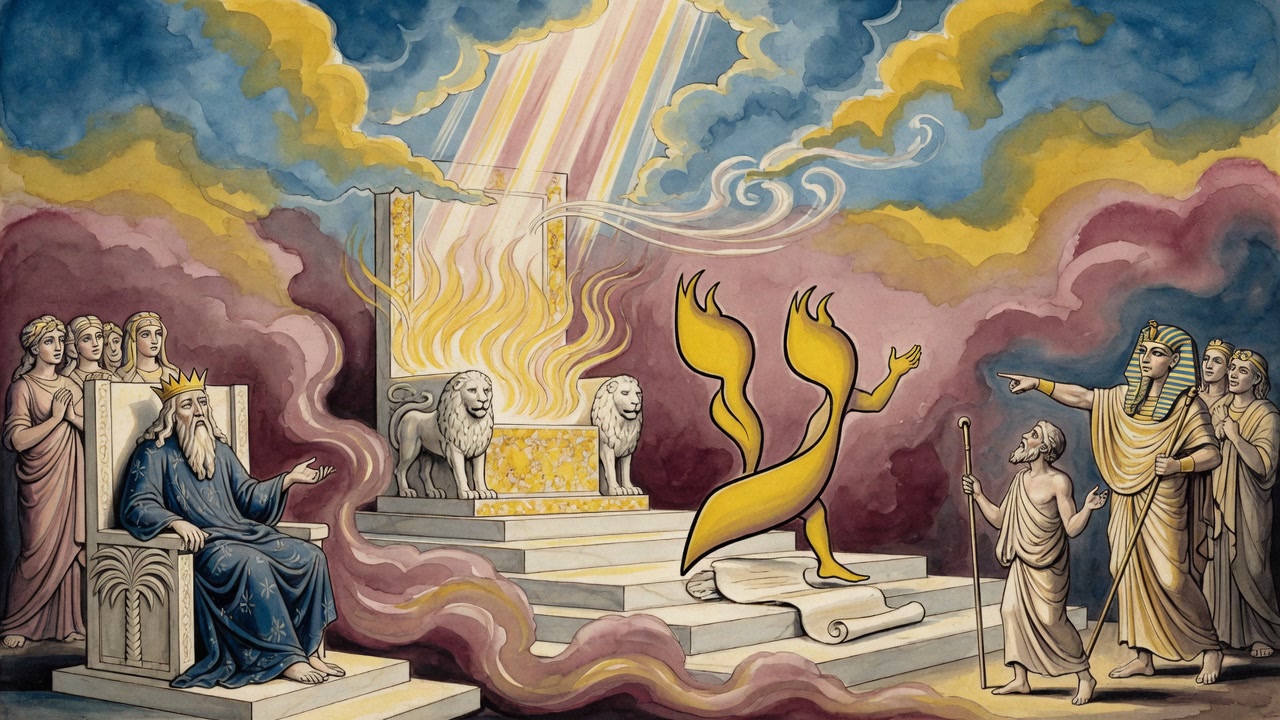
Rabbi Aha taught that Solomon wrote of things over which the attribute of justice itself laughs. The Torah had already drawn the lines for any king of Israel. Do not multiply wives. Do not multiply horses. Do not pile silver and gold until the heart turns (Deuteronomy 17). The law was plain. The throne was not a free hand.

Solomon gathered seven hundred royal wives. Forty thousand stalls of horses. Silver so thick in Jerusalem it lay like stones in the street. Rabbi Yose bar Hanina said his ingots were so heavy none could steal them. Rabbi Shimon ben Yohai said even his weights were gold. The law had said stop. The king had said more.

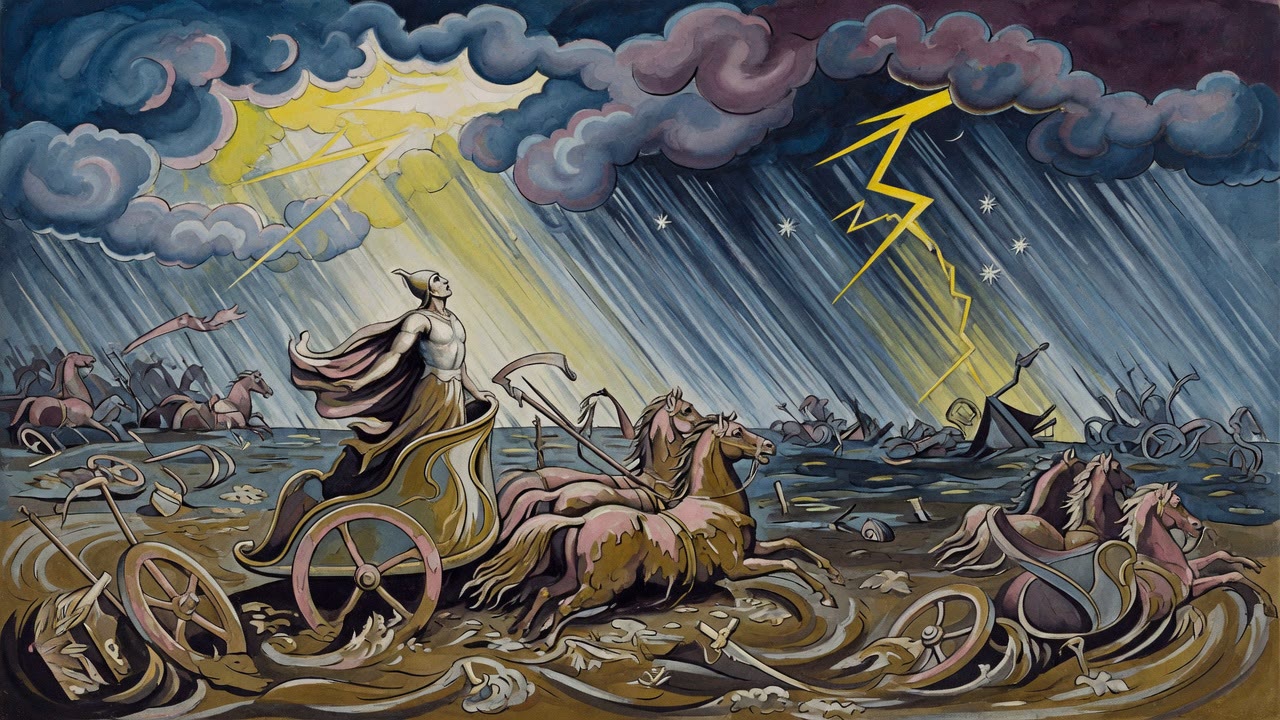
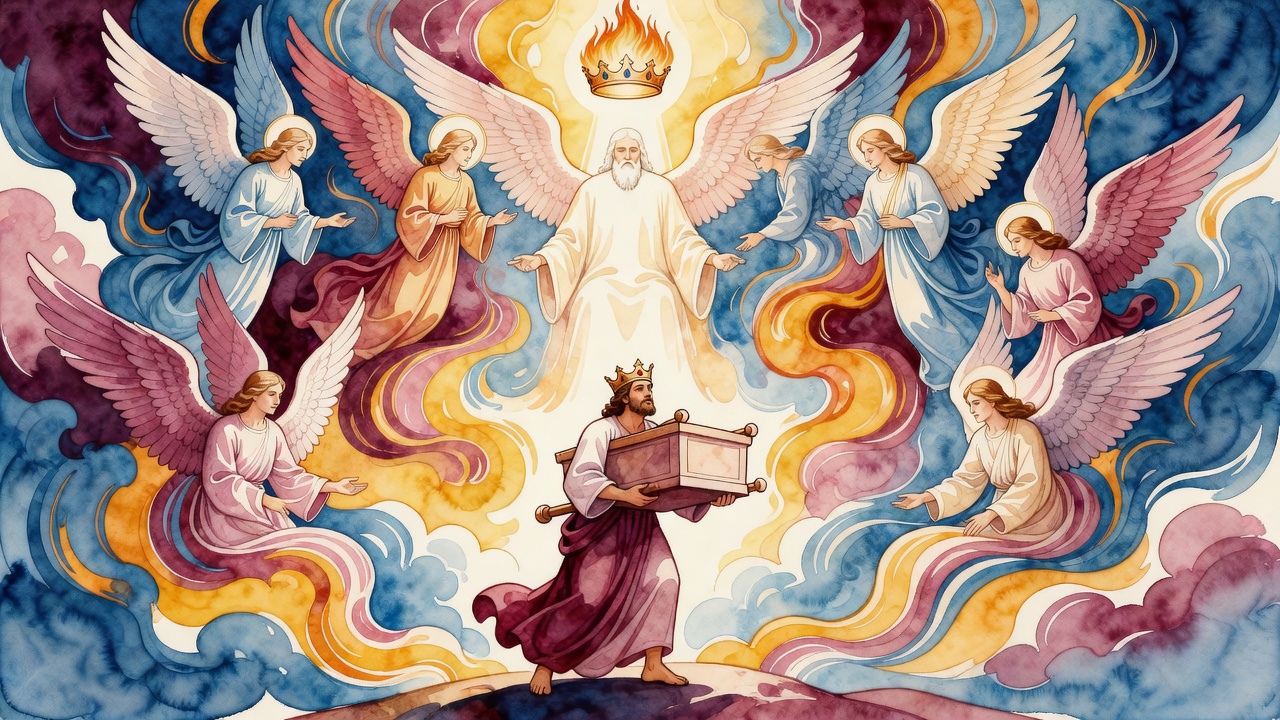
Then a verse turns like a knife. "Of rejoicing, what does this do?" The Holy One looked at the man under the crown and asked a question no courtier would dare. What is this crown doing in your hand? Get down from your throne.

The Face That Was Not His

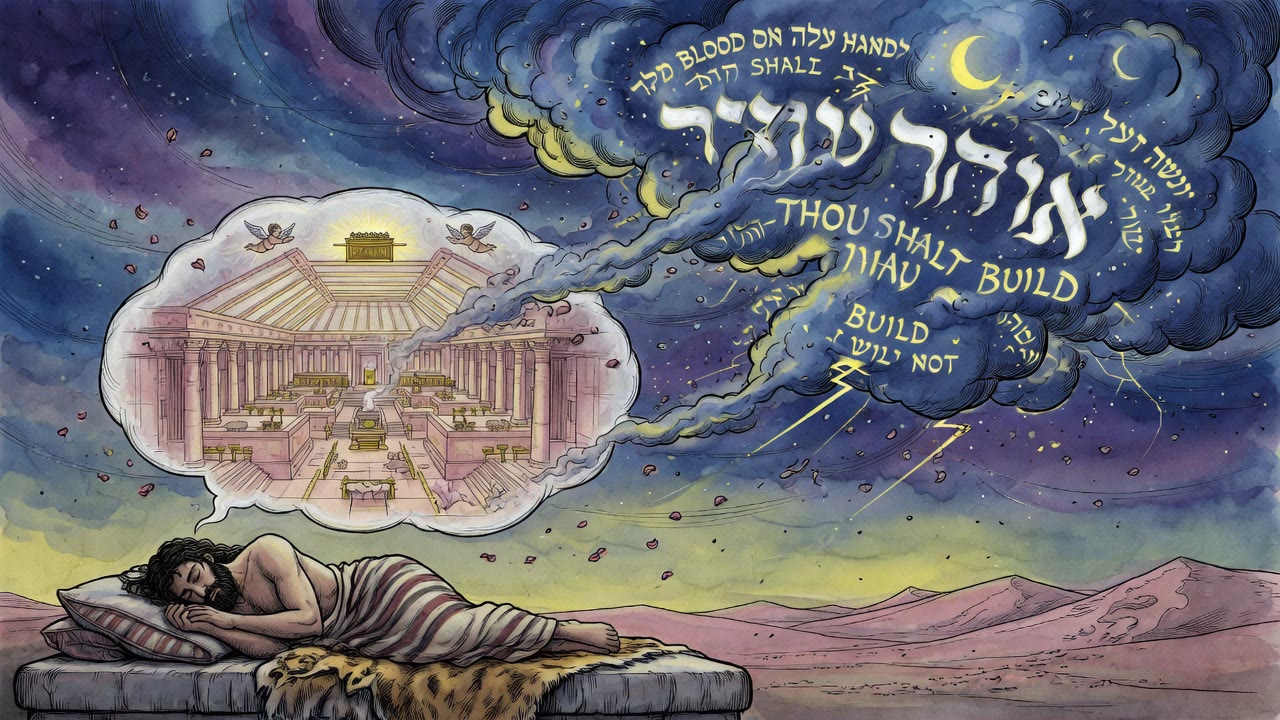
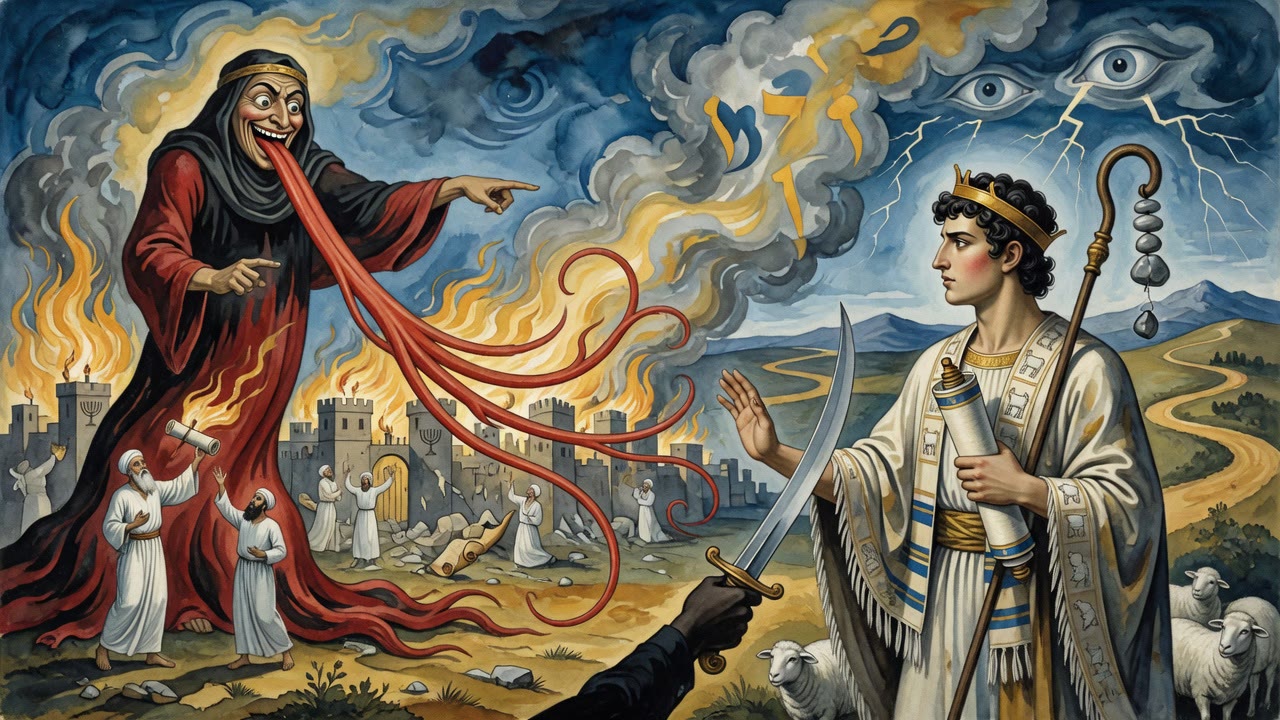
An angel descended in the very likeness of Solomon and sat. The true king walked out into his own city as a stranger. He went from synagogue to study house crying the line that would become scripture in his mouth. "I, Kohelet, was king over Israel in Jerusalem!"

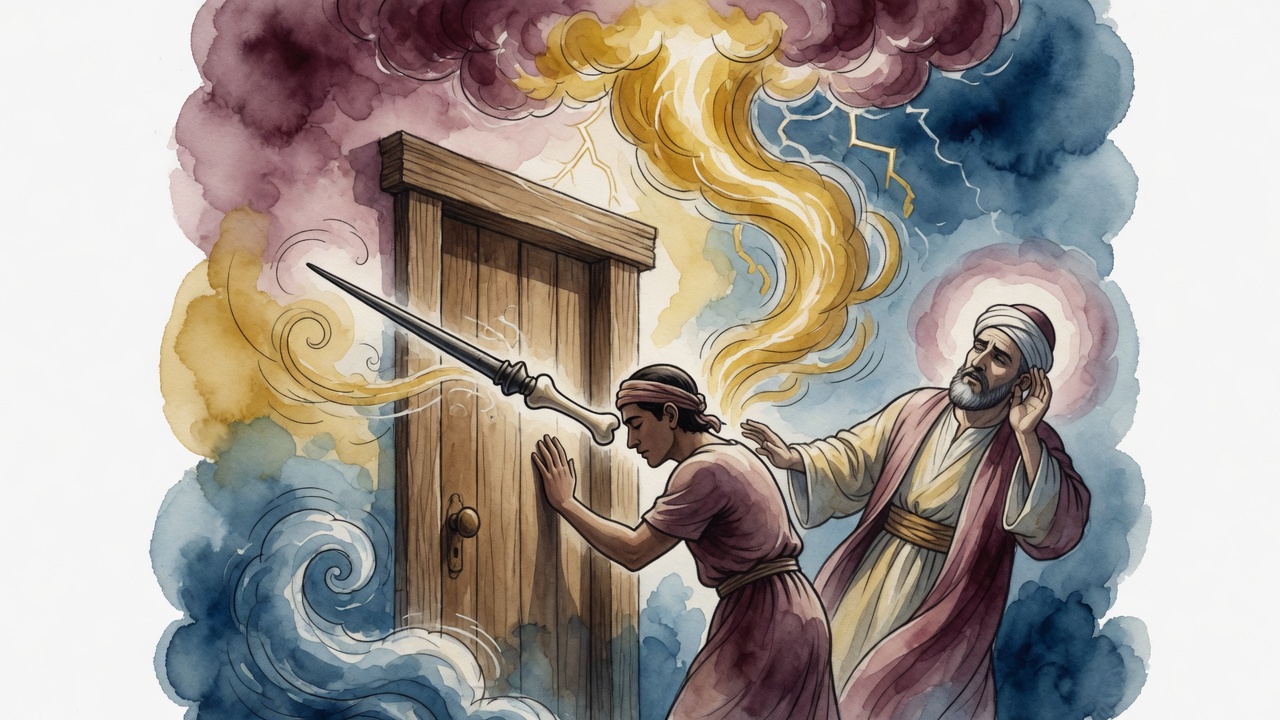
The people looked at the throne. A Solomon sat there. They looked at the man in the street. They beat him with a reed. They set a beggar's bowl of grits before him. King Solomon sits upon his throne, they said, and you grow madder by the day.

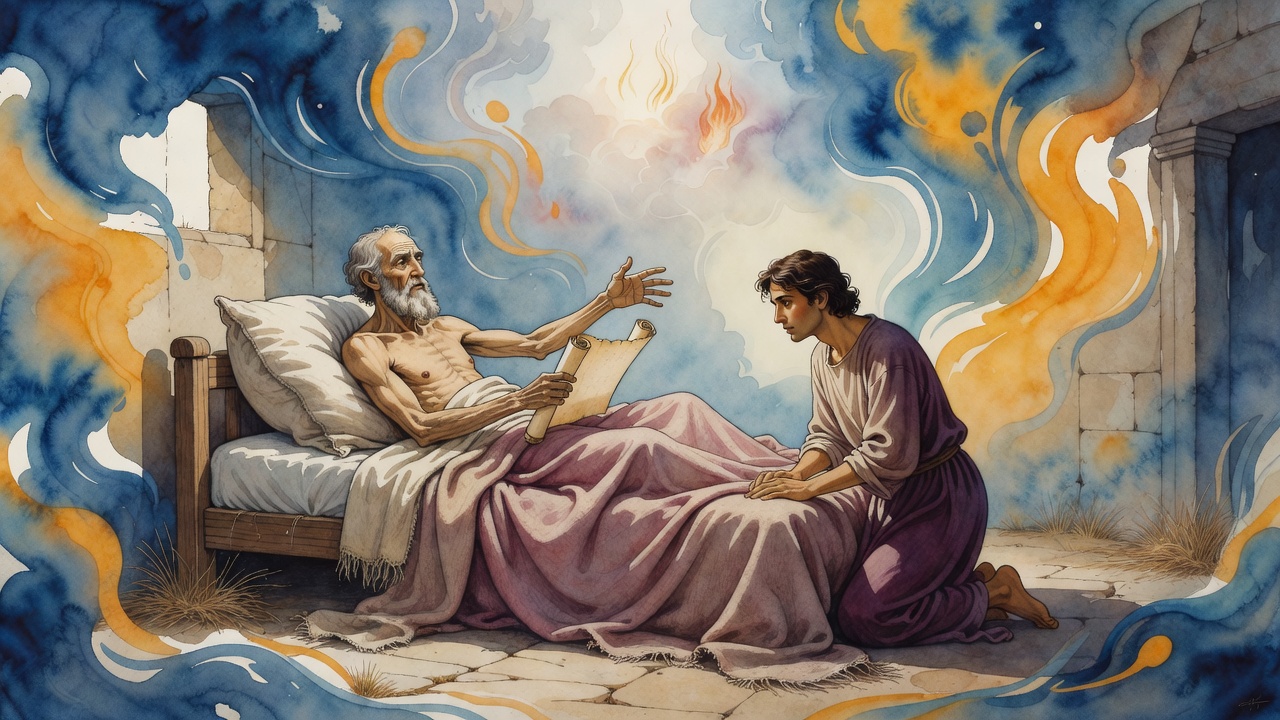
In that hour the builder of the Temple understood his own proverb from the underside. "And this was my portion from all my labor." The portion was grits. The labor had bought him an angel's mockery of his face. Wisdom without obedience becomes a street joke told with a stick.

He who had judged two mothers over one child now could not persuade a single doorkeeper that he was still king. The double on the throne needed no clever verdict. Presence was enough. Likeness was enough. The city trusted the seat, not the cry.

How Many Wives Break a Heart

Long before the angel sat, the sages of Sifrei Devarim argued over the king's limits as if the throne were still empty and the law could still save it. Rabbi Yehudah heard the clause "that his heart not turn astray" and ruled that number is not the whole crime. A king may have more than one wife if none of them turn his heart from God. The danger is not the count. The danger is the turn.

Rabbi Shimon refused that door. Even one wife who turns the heart is already too many. The Torah's warning is not a tax on excess. It is a wall around the king's inner room. Silver and horses take the same reading. Wealth that hardens the heart is already rebellion, whether the treasury is full or only beginning to fill.

Solomon's story is what happens when the wall is treated as a suggestion. Seven hundred wives. Horses like a second nation. Gold so common it loses its name. The heart turned. The angel took the seat the heart had already left.

Brother, Not Stranger

The same scroll that limits a king also insists that Israel must have one. "From the midst of your brothers shall you place over yourself a king." The sages call it a positive command, not a permission. And its pair is a ban. You shall not set over yourself a strange man who is not your brother. Strange, they say, means an idolator. A leader is not appointed unless his mother is an Israelite.

When King Agrippa heard that verse read, he wept. His father had not been of Israel. The people saw the tears and cried out twice, "Fear not, Agrippa, you are our brother, you are our brother!" His mother made him brother enough. The law that could have cast him out became, in that moment, a public claim of belonging.

Solomon had been brother of the people by blood and by wisdom. The angel who wore his face taught a different rule. Kinship of birth is not enough if the heart multiplies what the Torah forbids. Agrippa wept and was named brother. Solomon multiplied and was named madman in his own streets.

The crown returned, the tradition says, after the rebuke had bitten. But the image remains: a king beaten with a reed while his double rules, learning that justice laughs when power treats Deuteronomy as optional poetry. The throne of Israel is a seat under law, not above it. Gold weights do not outweigh a turned heart. Grits in a bowl can teach what a palace forgot.


← All myths
From the tradition

Sources

3 sources

The texts behind this telling. Some cards carry a translation of the source; others are our own retelling of it, and each card says which. Every card links out to the original.

Midrash Tanchuma Buber, Achrei Mot 2:2Midrash Tanchuma Buber, Achrei Mot

Translation of the source text.Midrash Tanchuma (Buber), Public Domain, on Sefaria · CC-BY-SA

Another interpretation of (Ecclesiastes 2:2): "Of laughter I said: It is mad!" Rabbi Aha said: Solomon said there are things over which the attribute of justice laughed. It is written (Deuteronomy 17:17): "He shall not multiply wives for himself," and it is written (1 Kings 11:3): "And he had seven hundred royal wives, etc." It is written (Deuteronomy 17:16): "He shall not multiply horses for himself," and it is written (1 Kings 5:6): "And Solomon had forty thousand stalls of horses." It is written (Deuteronomy 17:17): "And silver and gold he shall not greatly multiply for himself," and it is written (1 Kings 10:27): "And the king made silver, etc." But were they not stolen? Rabbi Yose bar Hanina said: They were like stones of ten cubits and like stones of eight cubits. Rabbi Shimon ben Yohai taught: Even the weights that were in the days of Solomon were of gold.

(Ecclesiastes 2:2): "And of rejoicing, what does this do?" The Holy One, blessed be He, said to him: What is this crown doing in your hand? Get down from your throne. Immediately an angel descended in the likeness of Solomon and sat upon his throne, and Solomon went around among the synagogues and the houses of study, and he would say (Ecclesiastes 1:12): "I, Kohelet, was king over Israel in Jerusalem." But they would say to him: King Solomon is sitting on his throne, and you go about acting like a madman. And they would strike him with a reed and set before him a bowl of grits. In that hour Solomon said (Ecclesiastes 2:10): "And this was my portion from all my labor."

Full source
Sifrei Devarim 159:4Sifrei Devarim

Retold in our words. Read the original at the link below.Sifrei by Rabbi Shraga Silverstein · CC-BY

Honestly, their debates still resonate today. to a fascinating discussion from Sifrei Devarim, a collection of early rabbinic legal interpretations on the Book of Deuteronomy. Here, they’re confronting some very specific directives laid out for a future king of Israel, particularly concerning wives and wealth. It’s all about keeping a leader’s heart in the right place, focused on the people, not on personal indulgence.

The passage Sounds straightforward. Except, as always, the rabbis find nuance and complexity.

Rabbi Yehudah offers a fascinating take on the "wives" part. He says a king can actually have multiple wives, so long as they don't cause his heart to stray from God. The key, according to Rabbi Yehudah, lies in the phrase "that his heart not turn astray.” Basically, it's not the number of wives, but the effect they have on the king’s spiritual compass. It’s a bit like saying, "You can have your cake and eat it too… as long as it doesn't make you sick!"

Then Rabbi Shimon comes along and throws a wrench into the whole thing. He argues that a king shouldn't marry even one woman if she’s likely to lead his heart astray. Ouch. So, why the verse about "not multiplying wives"? Rabbi Shimon says it applies even to someone as virtuous as Avigail. Yes, that Avigail, the wise and beautiful woman who later became King David’s wife. Even a woman of such high caliber could potentially distract a king from his duties! It’s a pretty radical stance, suggesting that even the best relationship can be a slippery slope for someone in a position of power.

Now, let’s talk about the bling. The Torah also cautions against a king accumulating excessive silver and gold. But what does "excessive" even mean? Could a king not amass wealth even to, say, provision his army? The text anticipates this objection. It clarifies "he shall not multiply for himself" – meaning the king can accumulate wealth for the good of the kingdom, like equipping soldiers, but not for personal aggrandizement.

The emphasis is on intention. Is the accumulation serving a higher purpose, or is it just feeding ego and greed?

What I find so compelling about this passage from Sifrei Devarim is how relevant it remains. We might not have kings in the traditional sense, but we certainly have leaders, CEOs, influencers – people with power and resources. And the question of how much is too much, and what motivates the accumulation, is still incredibly relevant. Are we building something for the common good, or are we just building our own empires?

Full source
Sifrei Devarim 157:10Sifrei Devarim

Retold in our words. Read the original at the link below.Sifrei by Rabbi Shraga Silverstein · CC-BY

It’s about belonging, identity, and the very soul of the community.

The Sifrei Devarim, a collection of legal interpretations on the Book of Deuteronomy, lays down some pretty clear rules about who can be king. It says, "from the midst of your brothers shall you place over yourself a king." Sounds straightforward. The Sifrei emphasizes that this is a mitzvah asei, a positive commandment. It's not just allowed; it's something we’re obligated to do.

Then comes the flip side: "You shall not be able to place over yourself a strange man, who is not your brother." This, A prohibition. So, who exactly is this "strange man?"

The text clarifies: a "strange man" is an idolator. Someone who worships other gods. And tucked within that definition, we find a ruling that resonates through the ages: "A leader is not appointed for the congregation unless his mother is an Israelite." This speaks volumes about lineage, belonging, and the maternal line in defining Jewish identity.

But it's the story that follows that truly brings this law to life.

The Sifrei recounts the tale of King Agrippas. Now, Agrippas found himself in a tough spot. His father was a non-Jew. And when he came across this very verse, the one about not placing a "strange man" as king, he reportedly burst into tears. The potential exclusion, the feeling of not fully belonging, despite his position?

But here's where the story takes a beautiful turn. The people of Israel, witnessing Agrippas's anguish, cried out, "Fear not, Agrippas; you are our brother, you are our brother!" Because his mother was Jewish, he was considered part of the community.

This isn't just a heartwarming anecdote. It's a powerful statement about the complexities of identity and acceptance. It highlights the significance of matrilineal descent in Jewish law, a concept that's debated and understood in various ways even today.: the law seems rigid, almost exclusionary. Yet, the people, in their compassion, found a way to embrace Agrippas, affirming his belonging despite the potential obstacle of his paternal lineage.

So, what does this all mean for us? It shows us the tension between strict adherence to the letter of the law and the compassionate embrace of community. And perhaps most importantly, it prompts us to consider: who do we consider our brother? Who do we consider our sister? And how do we create communities where everyone feels they truly belong?

Full source