5 min read

The Egypt Road Runs Through the Royal Stable

A king may keep two horses and eighteen wives, the Targum warns, because excess cavalry and desire open the road back to Egypt.

Curated by Arthur · Told by Maggid ·
Table of Contents
  1. The Numbers on the Law
  2. Eighteen and the Line of David
  3. What Pleasure Does to a Ruler
  4. Temples That Must Fall
  5. The Stable at Dusk

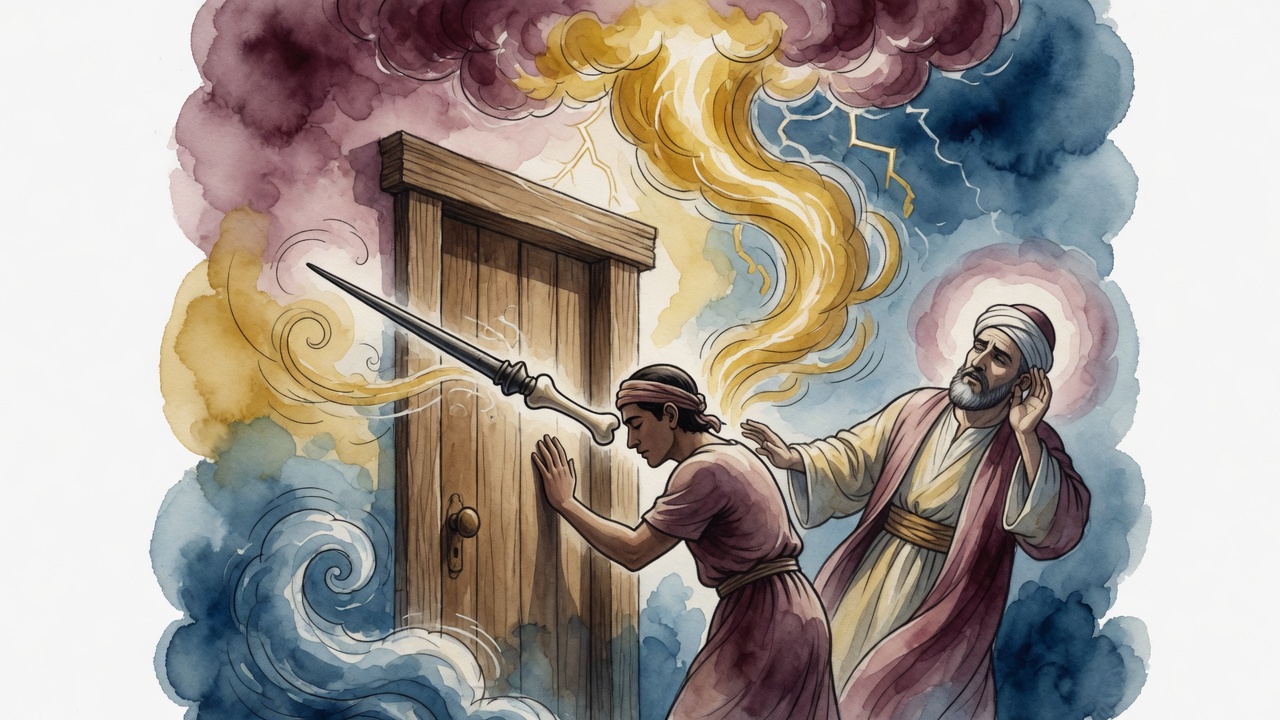
The new king walked the length of the royal stable before he took the throne room. Rows of stalls waited for horses he did not yet own. Advisers spoke of chariots, of speed, of the look of power on a parade day. He ran a hand along empty wood and felt the pull already starting.
The Egypt Road Runs Through the Royal Stable Click for full size

The Numbers on the Law

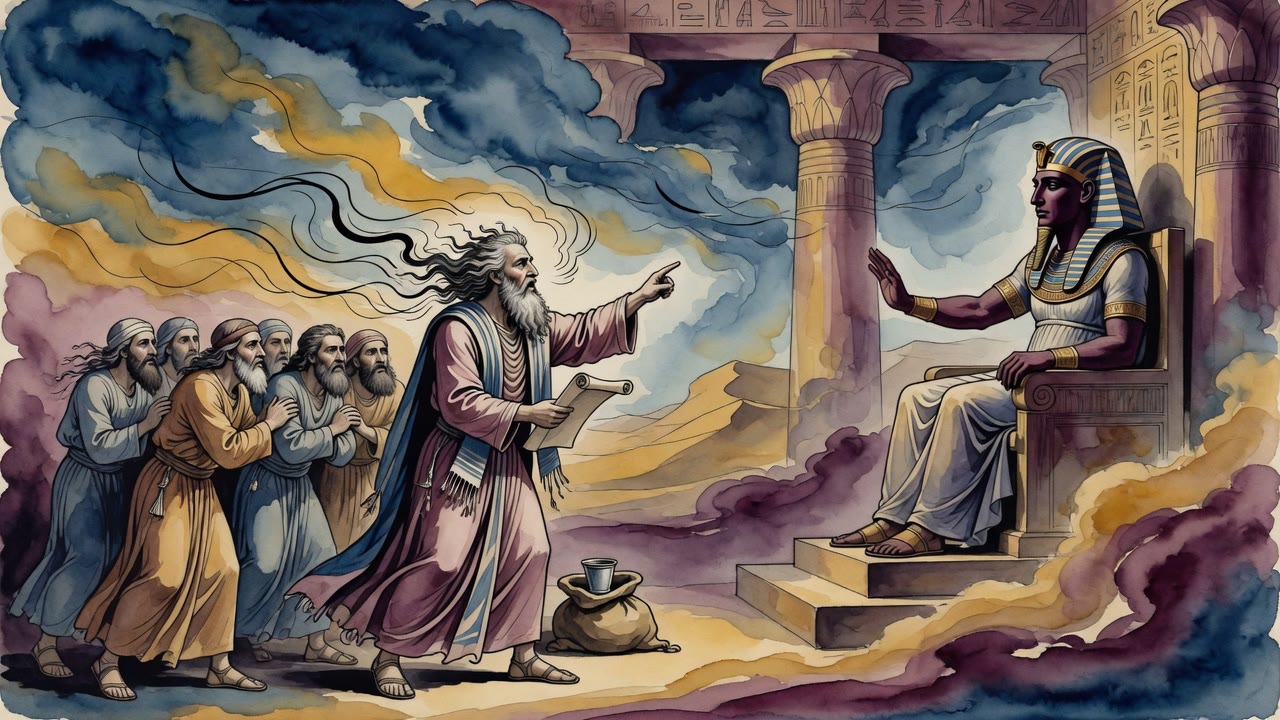
The Torah had already set the fence. A king of Israel must not multiply horses. He must not multiply wives. He must not heap silver and gold until his heart lifts and turns. The Aramaic reading of Deuteronomy makes the fence into hard numbers: two horses, not a herd; eighteen wives, not a court of hundreds. The horse limit carries a reason as sharp as a bit. Too many mounts, and princes learn pride. Pride neglects the words of the law. Neglect opens the road back toward the captivity of Mizraim.

By that way you shall return no more. The verse is not travel advice. It is a map of the soul. Egypt is not only a place behind the people. It is a direction the heart can take when power feels like appetite.

Eighteen and the Line of David

Eighteen wives is not a random figure. The tradition sets it against David, who held that count as the outer edge of what a king may carry without the law calling him a multiplier. Solomon would later blow past the fence with hundreds, and the story of his heart would not stay straight. The Targum's number is a warning dressed as arithmetic: here is the maximum that still looks like David; beyond it the crown begins to look like Egypt's court.

Wives can pervert a heart. Silver can lift a heart until it rebels against the God of heaven. The titles shift when the king is addressed. The law speaks to a man who might forget he is still under command.

What Pleasure Does to a Ruler

A Jewish thinker in Alexandria, writing while Rome held the world, named the deeper slavery. A man can be free in the market and chained to pleasure. Desire multiplies itself. Each satisfaction invents the next hunger. Extreme misery, he said, grows from that chase, because the self that serves only appetite cannot stand upright under heaven.

A king has more tools for that slavery than a common man. Stables. Treasuries. Marriages that look like alliances and feel like collections. The law does not trust the crown to invent its own limits. It writes the limits first, while the stalls are still empty.

Temples That Must Fall

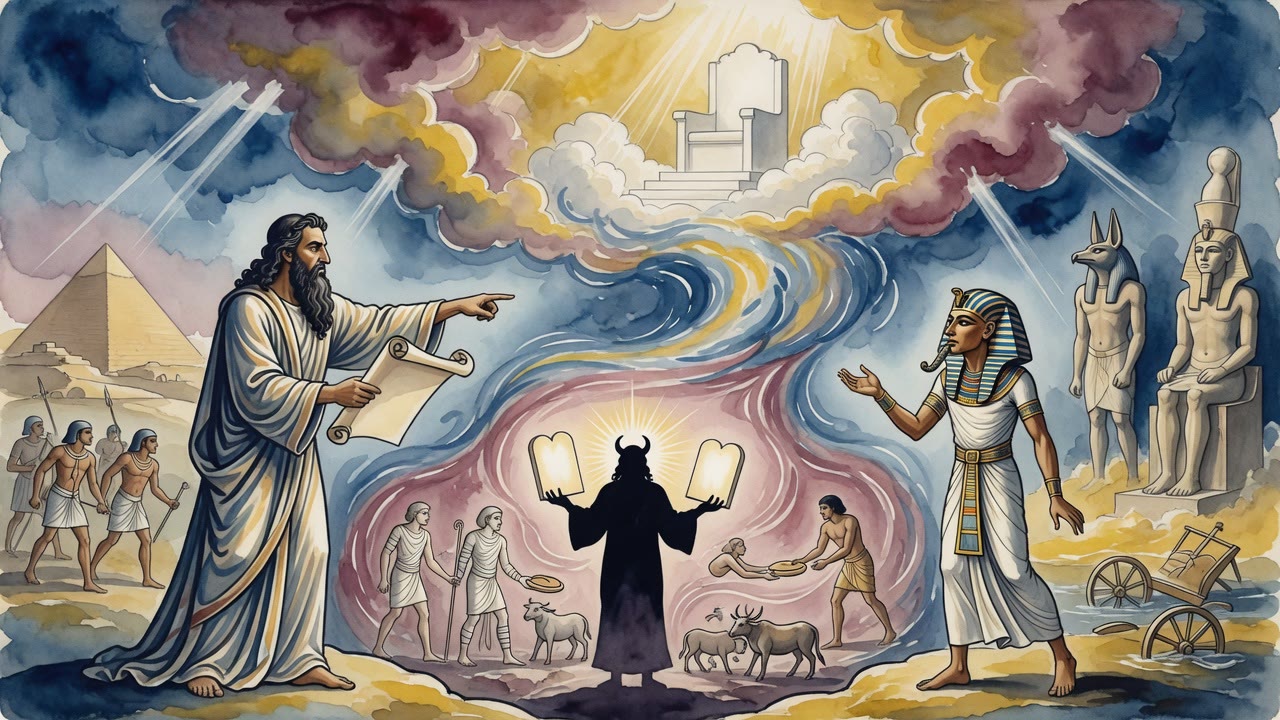
When Israel enters the Land, another command waits beside the royal fence. Do not worship their idols. Do not serve them. Do not imitate their works. Demolish the houses of their worship. Break the statues. A shrine left standing becomes familiar. Familiarity becomes curiosity. Curiosity becomes participation. Generations later, children stand before a pillar their fathers refused to topple, and the pillar has already won a slow victory.

The king who multiplies horses and the people who leave shrines upright are walking the same slope. Both treat excess as safety. Both call compromise by softer names. Both risk a return that the Torah already forbade on the map.

The Stable at Dusk

The new king left the empty stalls without ordering a single purchase that day. Outside, the city waited for a crown. Inside his chest the numbers still sounded: two horses, eighteen wives, enough silver for rule and not for rebellion. He could already hear the advisers who would call those numbers small. He could already feel how easy it would be to answer them with more wood, more flesh, more glitter.

The road to Egypt does not always begin with a chariot race south. Sometimes it begins with a second horse that no one needs, a nineteenth marriage signed for politics, a foreign shrine left standing because demolition seemed extreme. The stable holds that beginning in its quiet. The law holds the answer in its numbers. Between them stands a man who must decide whether the crown is a service or a collection.

Night settled on the beams. Somewhere a single horse stamped, enough for travel, enough for war if war came under heaven's terms. Two would be the edge. A herd would be the old empire whispering through bit and bridle.

He closed the stable door and walked toward the place where the scroll would be read to him again, as the Torah commands for every king, so that the heart would not lift above his brothers. The empty stalls stayed empty one more night. That night was already a kind of reign.


← All myths
From the tradition

Sources

3 sources

The texts behind this telling. Some cards carry a translation of the source; others are our own retelling of it, and each card says which. Every card links out to the original.

Targum Jonathan on Deuteronomy 17Targum Jonathan

Retold in our words. Read the original at the link below.The Targum of Jonathan ben Uzziel, trans. J. W. Etheridge, London, 1862 · Public Domain

The Targum Jonathan on (Deuteronomy 17) puts hard numbers on royal power. The Hebrew says the king shall not "multiply horses" or "multiply wives." But how many is too many? The Targum answers with precision: no more than two horses, and no more than eighteen wives.

The horse limit comes with a specific reason. The king may have only two, "lest his princes ride upon them, and become proud, neglect the words of the law, and commit the sin of the captivity of Mizraim." Excess horses lead to pride, which leads to Torah neglect, which leads to Egypt. The Targum draws a straight line from cavalry to spiritual collapse. And it ends with a devastating callback: "By that way ye shall return no more." The road to Egypt runs through the royal stable.

Eighteen wives is a number that directly references King David, who according to rabbinic tradition had exactly eighteen wives. The Targum sets David's practice as the maximum legal limit. Solomon, who had hundreds, exceeded the law. And the Targum adds that the danger is not merely personal but political: too many wives "pervert his heart." Silver and gold are also limited, "lest his heart be greatly lifted up, and he rebel against the God of heaven." The Targum uses "God of heaven" rather than "the Lord your God", a more imperial-sounding title appropriate for addressing a king.

The legal system described earlier in the chapter creates a detailed judicial hierarchy. When a case is too difficult for local courts, involving "unclean and clean blood, cases of life or of money, or between a plague of leprosy or of the scall", the case goes up to the central court at the Temple. The Targum calls the local courts "your beth din" and the central authority "the priests of the tribe of Levi and the judge who will be in those days."

Defying the court's ruling carries the death penalty. "The man who will act with presumption, and not obey the judge or the priest", the Targum says this is necessary so that "all the people will hear, and be afraid, and not do wickedly again." Judicial authority is enforced through public deterrence.

The chapter ends with the king's primary obligation. He must keep a Torah scroll "at his side" and "read it all the days of his life." The elders must write "the section of this law" for him specifically. The Targum envisions a king defined not by his army or his wealth but by his daily reading of the Torah, a monarch whose power is bounded by the book he carries.

Full source
Targum Pseudo-Jonathan on Exodus 23:24Targum Pseudo-Jonathan on Exodus

Retold in our words. Read the original at the link below.The Targum of Jonathan ben Uzziel, trans. J. W. Etheridge, London, 1862 · Public Domain

When Israel enters the Land, the Torah expects a specific kind of work, not only settlement, but demolition.

Targum Pseudo-Jonathan on Exodus (Exodus 23:24) commands: Thou shalt not worship their idols, nor serve them, nor do after their evil works; but thou shalt utterly demolish the house of their worship, and break the statues of their images.

Why the Temples Must Fall

The Torah is not satisfied with a quiet refusal. It demands active dismantling. Every temple of a foreign god must come down. Every pillar and statue must be broken. The Land cannot hold two loyalties.

The logic is psychological. Shrines that remain become familiar. Familiarity becomes curiosity. Curiosity becomes participation. Generations later, Israel's children stand in front of a shrine their ancestors failed to demolish, and the shrine has worked its slow pull. So the Torah closes the door before it opens, by reducing the door to rubble.

The Threefold Prohibition

Notice the sequence. Do not worship. Do not serve. Do not imitate. The three steps by which idolatry infects a culture. Worship is the formal act. Service is the embedded habit. Imitation, do not do after their evil works, is the subtlest. You may not even adopt the moral frameworks of peoples whose gods you have rejected. Their ethics carry the residue of their theology.

The Takeaway

Exclusivity of worship in the Torah is not a preference, it is a demolition project. The Land is holy because of what is built on it and, equally, because of what is not allowed to remain standing.

Full source
The Midrash of Philo 17:2The Midrash of Philo

Retold in our words. Read the original at the link below.The Works of Philo Judaeus, trans. C. D. Yonge, London, H. G. Bohn, 1854-1890 · Public Domain

In a fascinating passage attributed to Philo of Alexandria, a Jewish philosopher who lived in the first century CE, we find a powerful explanation for why readers often feel so…empty.

Philo suggests that the root of human corruption lies in our enslavement to pleasure and desire. We become so fixated on fleeting gratification that we lose sight of what truly matters. We become slaves to our impulses, constantly chasing the next thrill, the next possession, the next fleeting moment of satisfaction. And what's the result? A life of "extreme misery." Ouch.

Then Philo throws in a fascinating detail about where the breath of life resides: "under heaven."

Why "under heaven"? It's not a geographical statement, but a philosophical one. Philo is hinting at something profound about the relationship between the earthly and the divine. He implies that there are living beings in heaven, beings of pure intellect and spirit. A happy body, Philo argues, wasn't made from a heavenly substance, as if they were uniquely superior. Instead, heaven was made for those divine beings.

Think of it like this: the celestial realm, populated by "admirable and divine living beings," isn't just some distant, unattainable place. It's a source of vitality that permeates all of existence. These "intellectual spirits" share their essence, their very life force, with the creatures of the earth. They give life to all who are capable of receiving it.

A vision of a cosmos teeming with life, where the earthly and the divine are interconnected and interdependent.

Perhaps it's a reminder that true fulfillment isn't found in the endless pursuit of pleasure. Maybe, just maybe, it lies in connecting with that divine essence that resides within us all. It might be about tapping into something bigger than ourselves, something that transcends the fleeting desires of the moment. How do we do this? Perhaps through contemplation, through acts of kindness, through seeking wisdom and understanding.

Philo doesn't give us a simple answer. But he does offer a profound insight: that the key to overcoming our "extreme misery" might just lie in looking beyond the earthly realm and recognizing the spark of the divine that animates us all.

Full source