The Letter Yod Sued Solomon Before the Throne
Solomon read the ban on many wives the way a man reads a door he will not lock. The smallest letter of the verse sued him anyway.
Table of Contents
Solomon stood over the verse about wives, horses, and gold, and shrugged. The king shall not multiply wives, nor horses, nor silver and gold (Deuteronomy 17:16-17). He read it the way a man reads a door he has decided not to lock. "I will multiply, and my heart will not turn."
 Click for full size
Errands heaven never assigned pressed him from every side. Marriages that sealed treaties. Stables that flattered neighbors. Treasuries that sang when they should have been silent. Oppression makes a wise man foolish, Kohelet said, and the oppression here was a calendar full of work that was never needed.
Many wives turned his heart in old age the way a slow leak turns a beam soft. The warning had been plain. The shrug had been louder than the warning.
The Smallest Letter Goes to Court
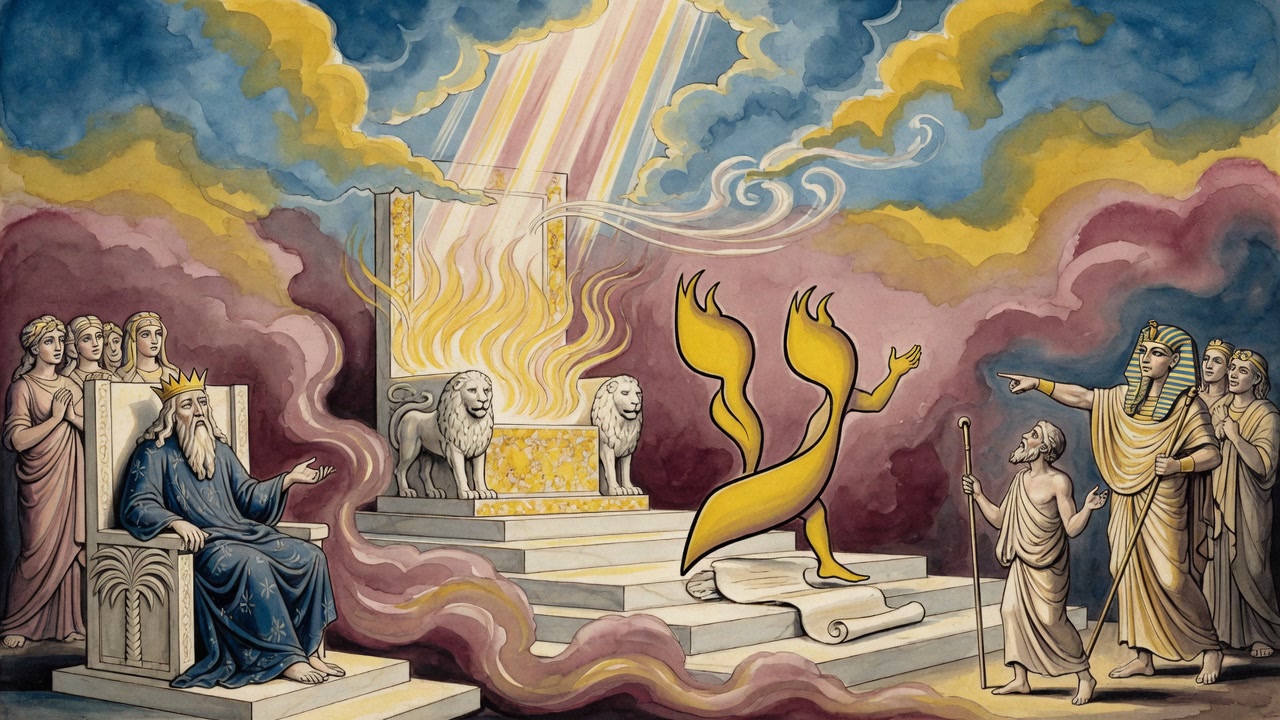
A letter rose. The tiny yod of the commandment prostrated itself before the Holy One, smaller than a fingernail, larger than a king's excuse. "Have You written one letter of Your Torah in vain?" it asked.
Deuteronomy itself climbed after it. The whole scroll cried that Solomon sought to uproot a yod from its place, as if a consonant could be bargained out of existence by a crown. Forty thousand stalls of horses. Seven hundred royal wives. Silver made common as stones in Jerusalem. The letter had the numbers. The king had the shrug.
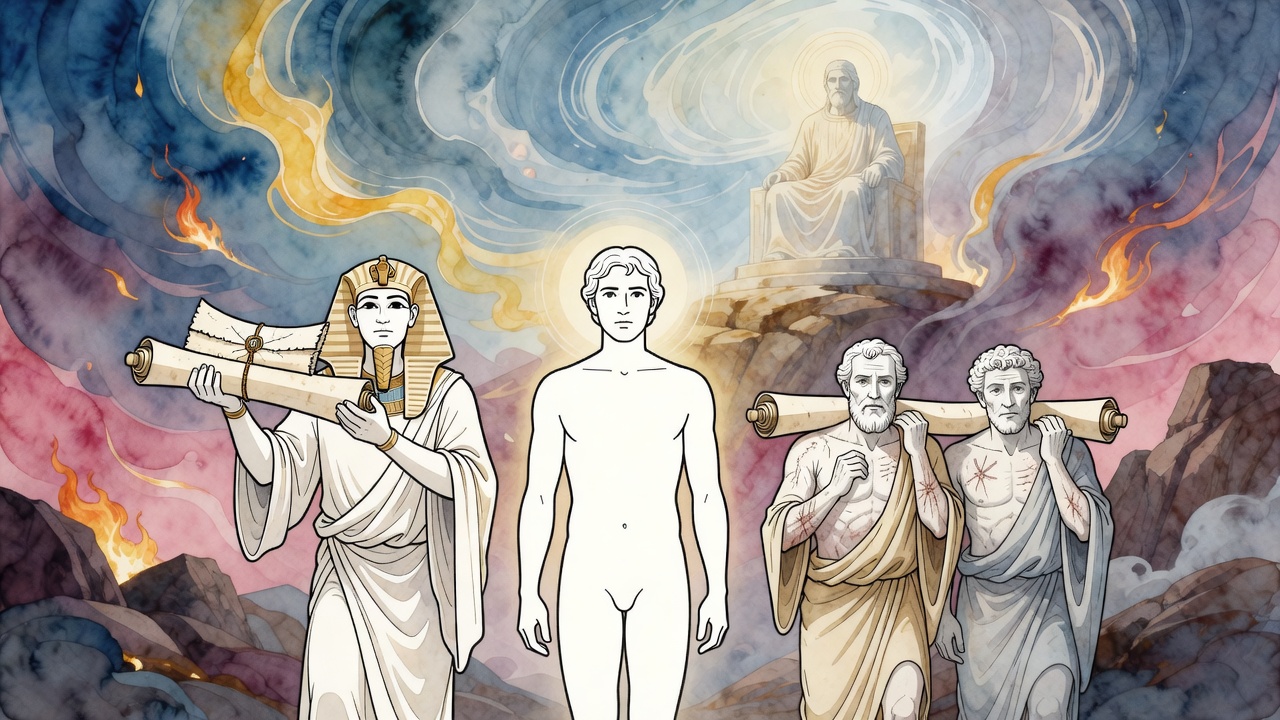
The throne room of letters is not polite. Ink has no court manners. The Holy One answered with a life-oath that made the air hard. By your life, Solomon and a hundred kings like him will pass away, but not one letter shall be nullified. Crowns rust and get melted for the next head. Ink does not negotiate.
The wisest mouth on earth had less standing than a consonant the size of a thorn. The yod sued, and the Throne took the case. Solomon's shrug met a lawsuit it could not settle with gold.
Pharaoh Counted Crowns at the Gate
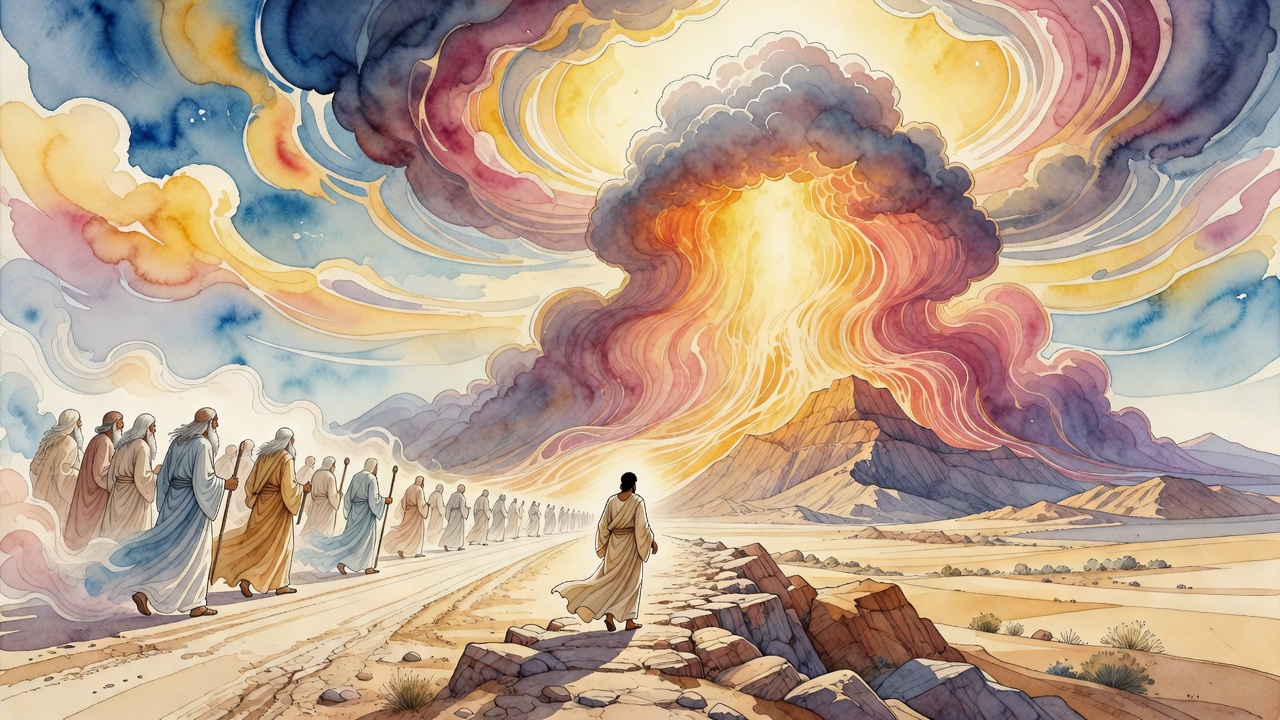
Years before that shrug, another mouth had already measured speech by metal. When Moses and Aaron came before Pharaoh on the day monarchs brought crowns to the ruler of the world, the two elders stood at the gate empty-handed. Staffs for tools. No metal for flattery.
"No crowns?" said Pharaoh. "Let them enter last." The queue of kings glittered. The two Hebrews waited like an insult the palace had not yet decoded.
When they spoke God's demand, "Send out My people," Pharaoh sneered with the ease of a man who has never been refused by a river. "Who is the Lord, that He sends no crown, only words?" He could not hear a kingdom that traveled in speech. He only knew metal that bowed and flesh that bled on command.
Words would break his river. Crowns would not save him. The empty hands at the gate were not poverty. They were a different treasury.
A Servant Bought Tongue Twice
"Death and life are in the power of the tongue" (Proverbs 18:21). Rabbi Shimon ben Gamliel sent Tavi, his servant, to the market. "Purchase a good cut of meat." Tavi came back with tongue. "Purchase a bad cut." Tavi came back with tongue again.
"What is this?" the master asked. Tavi held up the same organ twice. "Good comes from it and bad comes from it. When it is good, there is nothing better. When it is bad, there is nothing worse."
A man sat before a coal on a hearth. He blew. The house caught. He spat. The coal died into ash. One mouth. Two fates. An untithed loaf still warm from the oven waited on another table. Name it wrongly, eat it wrongly, and the tongue has already chosen a side before the teeth begin.
Solomon's shrug was a tongue-act with a kingdom's weight behind it. Pharaoh's sneer was a tongue-act with an empire's confidence. Moses' demand was a tongue-act that carried a people through water. Heaven sided with the letter, not with the shrug, not with the sneer.
Scarlet Lips Pointed at the Sea
Later the Song would praise lips like a scarlet thread and speech that is lovely. At the sea those lips opened. "Then sang Moses and the children of Israel" (Exodus 15:1). Fingers pointed at a Presence no crown could buy. "This is my God and I will glorify Him" (Exodus 15:2).
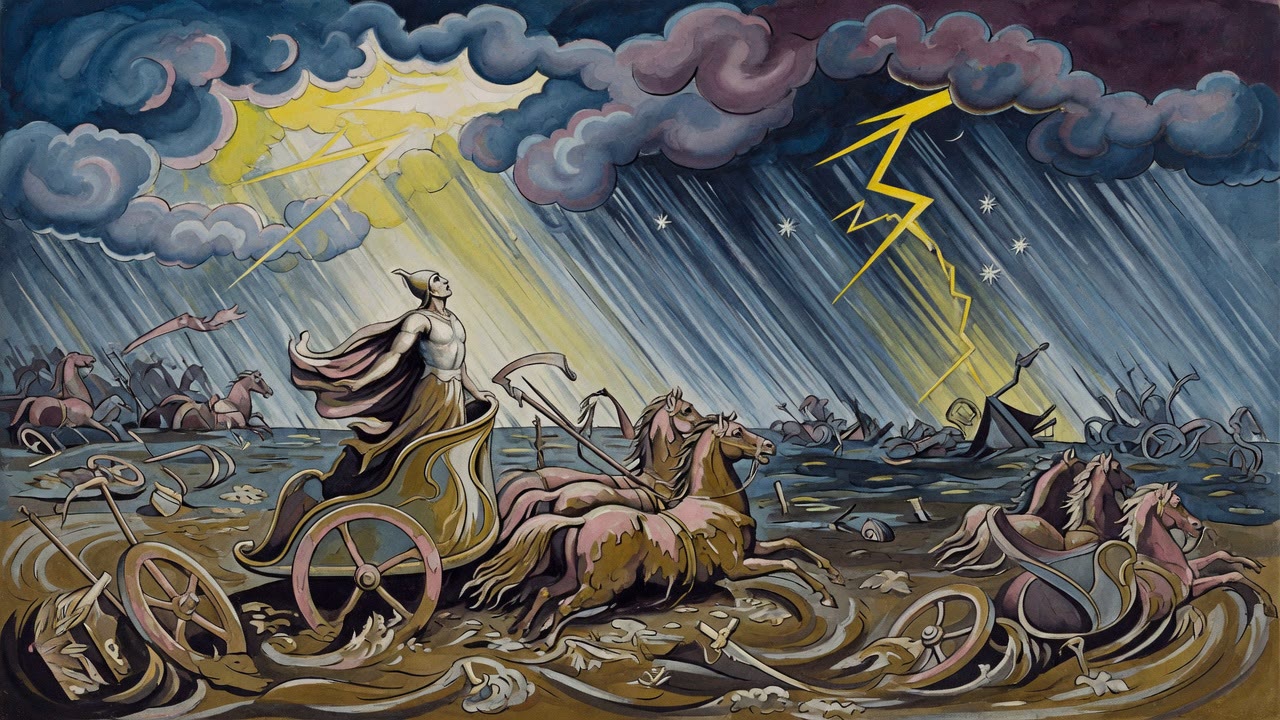
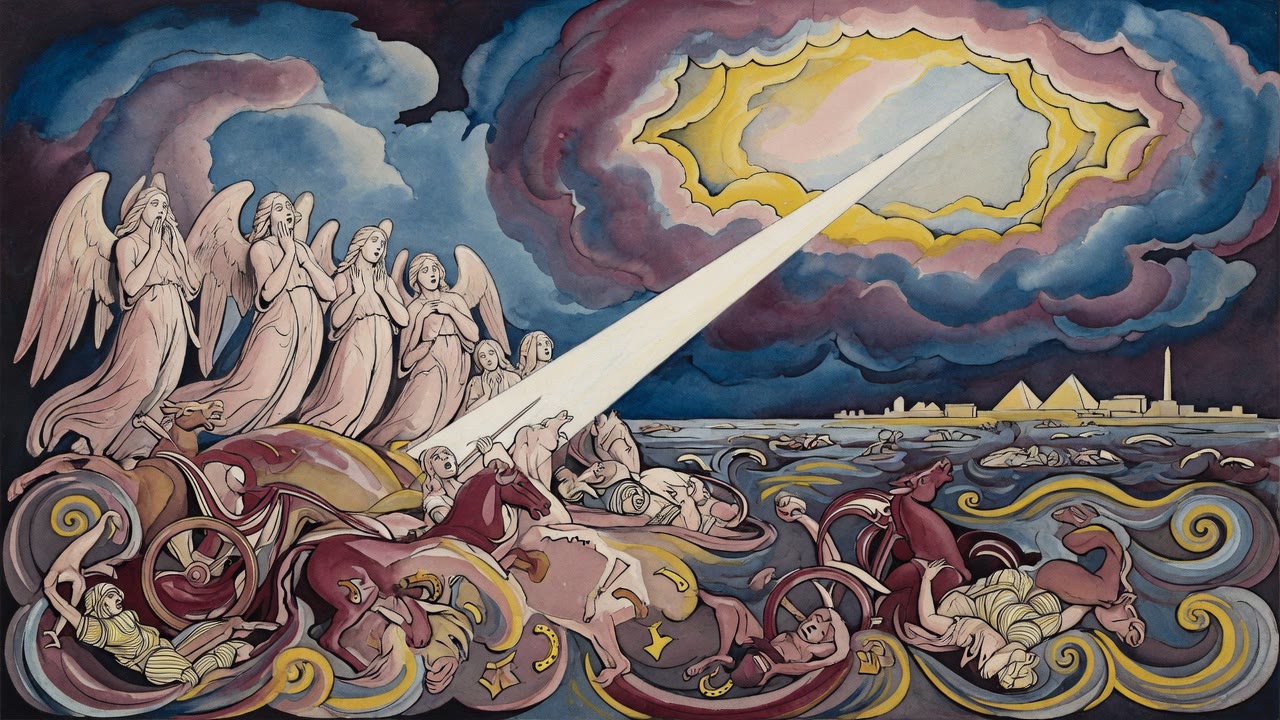
Beautiful speech is not flattery of a king who wants gifts on his reception day. Beautiful speech is a people naming God after water stands like walls and a tyrant's horses learn to drown. Even the empty among them, packed like a pomegranate, had enough mitzvot (commandments) in the mouth to point and say This.
Solomon began in that lineage of song and ended arguing with a yod. Pharaoh began counting gold and ended under a Name that needed no gift at the gate. Between them the tongue kept its double edge. The smallest letter kept its case open before the Throne, still prostrate, still winning, still refusing to be uprooted by a shrug.
← All myths